Preliminary System Analysis and Design Report - PEP
VerifiedAdded on  2022/08/26
|12
|1843
|33
Report
AI Summary
This report presents a preliminary system analysis and design for Precision Electronic Parts (PEP), a small private business experiencing growth-related challenges. The analysis identifies inefficiencies in inventory management, payment processes, and customer billing, stemming from increased order volume and departmental strain. The report proposes implementing an Enterprise Resource Planning (ERP) system, including modules for inventory, finance, marketing, and supply chain management, to integrate various departments and streamline operations. The findings detail the scope, constraints, and fact-finding processes, along with a feasibility analysis considering financial, technical, and organizational aspects. Recommendations include a Gantt chart and a cost-benefit analysis, demonstrating a positive return on investment. The report concludes that the ERP system is financially, technically, and organizationally feasible, offering significant benefits in terms of efficiency and cost savings for PEP. The break-even analysis further supports the viability of the proposed system, projecting positive cash flow and overall net present value.
Running head: SYSTEM ANALYSIS AND DESIGN
SYSTEM ANALYSIS AND DESIGN
Name of student
Name of university
Author’s note:
SYSTEM ANALYSIS AND DESIGN
Name of student
Name of university
Author’s note:
Paraphrase This Document
Need a fresh take? Get an instant paraphrase of this document with our AI Paraphraser

1
SYSTEM ANALYSIS AND DESIGN
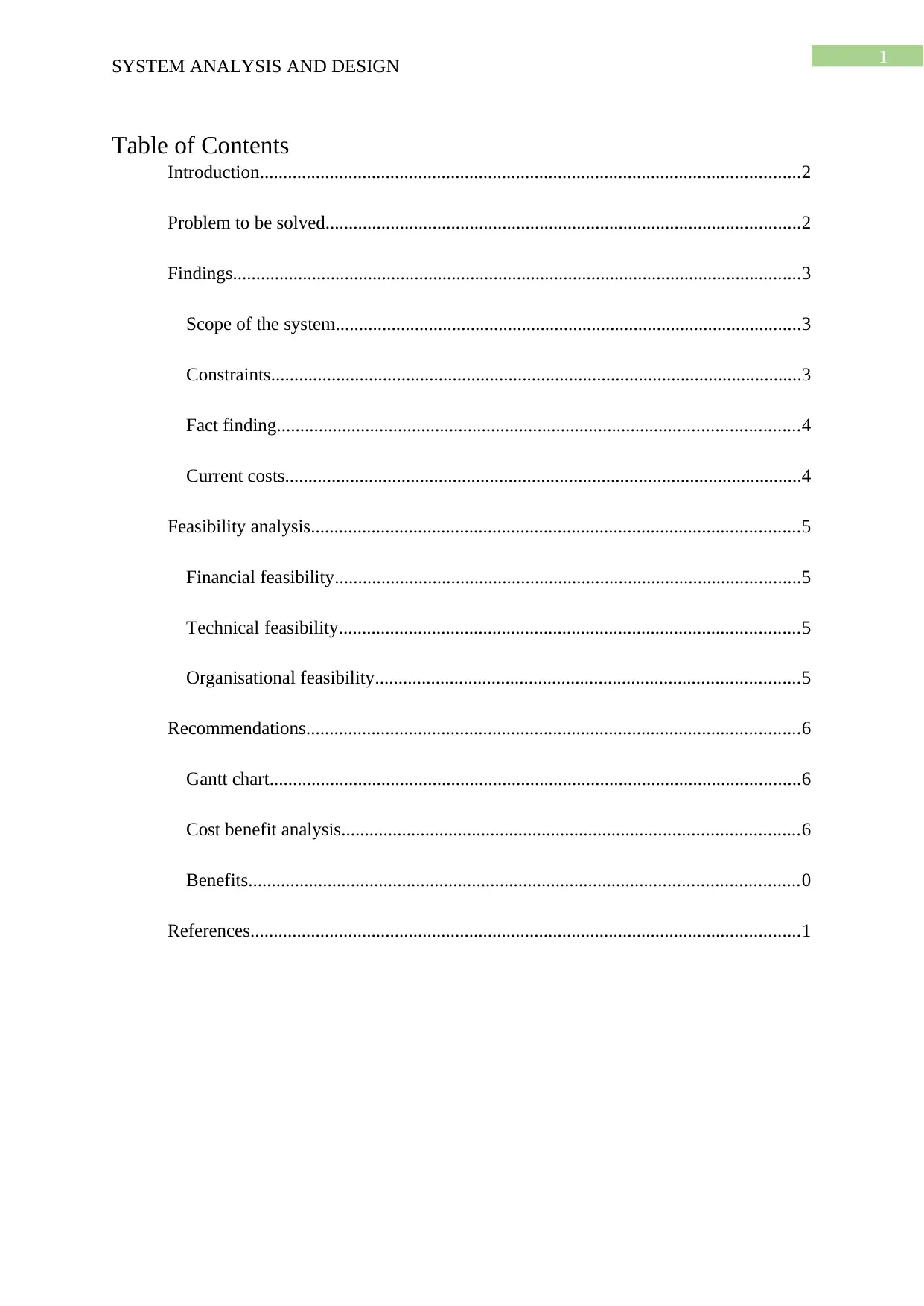
Table of Contents
Introduction....................................................................................................................2
Problem to be solved......................................................................................................2
Findings..........................................................................................................................3
Scope of the system....................................................................................................3
Constraints..................................................................................................................3
Fact finding................................................................................................................4
Current costs...............................................................................................................4
Feasibility analysis.........................................................................................................5
Financial feasibility....................................................................................................5
Technical feasibility...................................................................................................5
Organisational feasibility...........................................................................................5
Recommendations..........................................................................................................6
Gantt chart..................................................................................................................6
Cost benefit analysis..................................................................................................6
Benefits......................................................................................................................0
References......................................................................................................................1
SYSTEM ANALYSIS AND DESIGN
Table of Contents
Introduction....................................................................................................................2
Problem to be solved......................................................................................................2
Findings..........................................................................................................................3
Scope of the system....................................................................................................3
Constraints..................................................................................................................3
Fact finding................................................................................................................4
Current costs...............................................................................................................4
Feasibility analysis.........................................................................................................5
Financial feasibility....................................................................................................5
Technical feasibility...................................................................................................5
Organisational feasibility...........................................................................................5
Recommendations..........................................................................................................6
Gantt chart..................................................................................................................6
Cost benefit analysis..................................................................................................6
Benefits......................................................................................................................0
References......................................................................................................................1

2
SYSTEM ANALYSIS AND DESIGN
Introduction
With the increase in the number of the customers in various businesses, the need of
implementing the modern technologies is presently rising. The company Precision Electronic
Parts is the small private business that has gained the specialisation in the manufacturing of
electronics parts. The precision electronic components have been developed by the company
and it has gained extensive popularity among the customers and the clients. Presently, with
the increase in the customers, the company is facing several issues, such as the improper
inventory management, the inefficiency of the payment process and the customer billing
process. This report intends to suggest the implementation of a new system for Precision
Electronic Parts that would help with the elimination of the major issues of the company.
Problem to be solved
Earlier with the restricted number of customers in the company, the company was
able to manage their business appropriately, but with the increase in the number of the
customer, the company is presently experiencing the extensive rise in the number of the
orders for motors. The expansion of the manufacturing facilities has been done along with the
enlargement of the marketing and sales teams. Due to the sudden increase in the various
departments of the organisation, the Ordering and shipping department along with the
Inventory Management Department is being strained significantly due to the lack of the
employees for working in these departments. The Finance department is also facing
significant issues in maintaining the bills and the payment invoices of the customers and the
suppliers and it is causing the loss of significant revenue of the company. The problem that
are needed to be resolved in the business immediately are the inefficiency of the marketing
department, lack of support of the inventory department, the inefficiency of the finance
management and the inefficiency of the suppliers management in the company.
SYSTEM ANALYSIS AND DESIGN
Introduction
With the increase in the number of the customers in various businesses, the need of
implementing the modern technologies is presently rising. The company Precision Electronic
Parts is the small private business that has gained the specialisation in the manufacturing of
electronics parts. The precision electronic components have been developed by the company
and it has gained extensive popularity among the customers and the clients. Presently, with
the increase in the customers, the company is facing several issues, such as the improper
inventory management, the inefficiency of the payment process and the customer billing
process. This report intends to suggest the implementation of a new system for Precision
Electronic Parts that would help with the elimination of the major issues of the company.
Problem to be solved
Earlier with the restricted number of customers in the company, the company was
able to manage their business appropriately, but with the increase in the number of the
customer, the company is presently experiencing the extensive rise in the number of the
orders for motors. The expansion of the manufacturing facilities has been done along with the
enlargement of the marketing and sales teams. Due to the sudden increase in the various
departments of the organisation, the Ordering and shipping department along with the
Inventory Management Department is being strained significantly due to the lack of the
employees for working in these departments. The Finance department is also facing
significant issues in maintaining the bills and the payment invoices of the customers and the
suppliers and it is causing the loss of significant revenue of the company. The problem that
are needed to be resolved in the business immediately are the inefficiency of the marketing
department, lack of support of the inventory department, the inefficiency of the finance
management and the inefficiency of the suppliers management in the company.
⊘ This is a preview!⊘
Do you want full access?
Subscribe today to unlock all pages.

Trusted by 1+ million students worldwide

3
SYSTEM ANALYSIS AND DESIGN
Findings
Scope of the system
The proposed system that could be implemented in the organisation is the ERP
system. The ERP system could be described as the combined platform that helps in the
integration of the various departments of this company. The modules of typical ERP system
namely, the inventory management system, finance management system, marketing
management system and the supply chain management system are required to be
implemented in the organisation (Shukla et al., 2016). The inventory module of the ERP
system could be effectively used for tracking the appropriate stock of the items and the items
could be easily identified by the distinct serial numbers (Li, Chang & Yen, 2017). With the
help of the distinct numbers, the inventory management system could help in keeping track of
the items as well as trace the present location within the organisation (Volkoff, 2020). The
sales and the marketing modules could be helpful in managing the processes such as the Sales
queries & inquiry analysis & handling, the quotation drafting, accommodating the sales
orders, the dispatch or shipment of the services or materials (Hiebl, Gärtner & Duller, 2017).
The complete inflow as well as the outflow of the money could be managed by the finance
module of the ERP system. This particular module mainly helps in keeping track of all the
transactions that are associated with the accounts, such as the expenditures, the balance
sheets, the budgeting, the balance sheet as well as the bank statements (Alcivar & Abad,
2016). The system would allow the production of various reports but it would not allow the
access to the database (Fredrick & Christopher, 2019).
Constraints
The implementation of typical ERP system that could be executed in the organisation
could face the following constraints:
SYSTEM ANALYSIS AND DESIGN
Findings
Scope of the system
The proposed system that could be implemented in the organisation is the ERP
system. The ERP system could be described as the combined platform that helps in the
integration of the various departments of this company. The modules of typical ERP system
namely, the inventory management system, finance management system, marketing
management system and the supply chain management system are required to be
implemented in the organisation (Shukla et al., 2016). The inventory module of the ERP
system could be effectively used for tracking the appropriate stock of the items and the items
could be easily identified by the distinct serial numbers (Li, Chang & Yen, 2017). With the
help of the distinct numbers, the inventory management system could help in keeping track of
the items as well as trace the present location within the organisation (Volkoff, 2020). The
sales and the marketing modules could be helpful in managing the processes such as the Sales
queries & inquiry analysis & handling, the quotation drafting, accommodating the sales
orders, the dispatch or shipment of the services or materials (Hiebl, Gärtner & Duller, 2017).
The complete inflow as well as the outflow of the money could be managed by the finance
module of the ERP system. This particular module mainly helps in keeping track of all the
transactions that are associated with the accounts, such as the expenditures, the balance
sheets, the budgeting, the balance sheet as well as the bank statements (Alcivar & Abad,
2016). The system would allow the production of various reports but it would not allow the
access to the database (Fredrick & Christopher, 2019).
Constraints
The implementation of typical ERP system that could be executed in the organisation
could face the following constraints:
Paraphrase This Document
Need a fresh take? Get an instant paraphrase of this document with our AI Paraphraser

4
SYSTEM ANALYSIS AND DESIGN
Time creep: The allocated time might not be sufficient for properly implement
proposed ERP system in the organisation.
Budget creep: The allocated budget for the project might not be sufficient for
implementing this new system in the organisation.
Scope creep: The pre-determined project goal of the project might change during the
project duration and it could direct to the ineffective implementation of proposed ERP
system.
Fact finding
It has been determined from the interviews the that customer billing is presently being
handled by the invoicing department who are facing the shortage of employees for handling
all the bills and the transactions. This department primarily reports tot eh VP, and the
business administrations. The management as well as the recording of the customer bill
payment as well as the bills is being done in the in-house developed Microsoft Access
database that is presently causing significant issues in updating and retrieving. Monthly
reports are sent by the Ordering and shipping department for invoicing with the information
of where products have been ordered as well as shipped along with the codes that are entered
in the invoicing module. The computation of the prices is being done on the basis of the
product codes as well as the entered quantities.
Current costs
The installation service that are offered as provided at the permanent price fee for the
small businesses. The greater installations are being billed on the basis of the pre-defined rate
hourly. The volume discounts are not being offered presently but there is planning in the
marketing department to provide the discount.
SYSTEM ANALYSIS AND DESIGN
Time creep: The allocated time might not be sufficient for properly implement
proposed ERP system in the organisation.
Budget creep: The allocated budget for the project might not be sufficient for
implementing this new system in the organisation.
Scope creep: The pre-determined project goal of the project might change during the
project duration and it could direct to the ineffective implementation of proposed ERP
system.
Fact finding
It has been determined from the interviews the that customer billing is presently being
handled by the invoicing department who are facing the shortage of employees for handling
all the bills and the transactions. This department primarily reports tot eh VP, and the
business administrations. The management as well as the recording of the customer bill
payment as well as the bills is being done in the in-house developed Microsoft Access
database that is presently causing significant issues in updating and retrieving. Monthly
reports are sent by the Ordering and shipping department for invoicing with the information
of where products have been ordered as well as shipped along with the codes that are entered
in the invoicing module. The computation of the prices is being done on the basis of the
product codes as well as the entered quantities.
Current costs
The installation service that are offered as provided at the permanent price fee for the
small businesses. The greater installations are being billed on the basis of the pre-defined rate
hourly. The volume discounts are not being offered presently but there is planning in the
marketing department to provide the discount.

5
SYSTEM ANALYSIS AND DESIGN
Feasibility analysis
Financial feasibility
As this system does not comprise any kind of multimedia data transfer, the bandwidth
that is needed for operation of the application is significantly small. The system would
effectively track the standards of freeware software. There would be no additional cost
charged from any of potential customers. The maintenance and the bug fixing would have the
associated cost.
From this aspect, it could be considered that the ERP system project is financially
feasible.
Technical feasibility
The system would be procured from the online vendors who host the ERP application
in the cloud. The initial cost of the system would be significantly high as the cloud providers
would take the hosting fee but with time the cost would be reduced and there would be no
maintenance costs. The time limitations of the product development as well as the ease of the
implementation of the technology have been synchronised appropriately.
From this aspect, it could be considered that the ERP system project is technically
feasible.
Organisational feasibility
It could be considered that the IT team would be provided with all the required basic
notes and guidelines that are required for properly using the system and integrate all the
departments of the organisation. The employees would be provided with the required training
for properly handling all the increased customer demands as well as the bills that are
generated.
SYSTEM ANALYSIS AND DESIGN
Feasibility analysis
Financial feasibility
As this system does not comprise any kind of multimedia data transfer, the bandwidth
that is needed for operation of the application is significantly small. The system would
effectively track the standards of freeware software. There would be no additional cost
charged from any of potential customers. The maintenance and the bug fixing would have the
associated cost.
From this aspect, it could be considered that the ERP system project is financially
feasible.
Technical feasibility
The system would be procured from the online vendors who host the ERP application
in the cloud. The initial cost of the system would be significantly high as the cloud providers
would take the hosting fee but with time the cost would be reduced and there would be no
maintenance costs. The time limitations of the product development as well as the ease of the
implementation of the technology have been synchronised appropriately.
From this aspect, it could be considered that the ERP system project is technically
feasible.
Organisational feasibility
It could be considered that the IT team would be provided with all the required basic
notes and guidelines that are required for properly using the system and integrate all the
departments of the organisation. The employees would be provided with the required training
for properly handling all the increased customer demands as well as the bills that are
generated.
⊘ This is a preview!⊘
Do you want full access?
Subscribe today to unlock all pages.

Trusted by 1+ million students worldwide

6
SYSTEM ANALYSIS AND DESIGN
From this aspect, it could be considered that the ERP system project is
organisationally feasible.
Recommendations
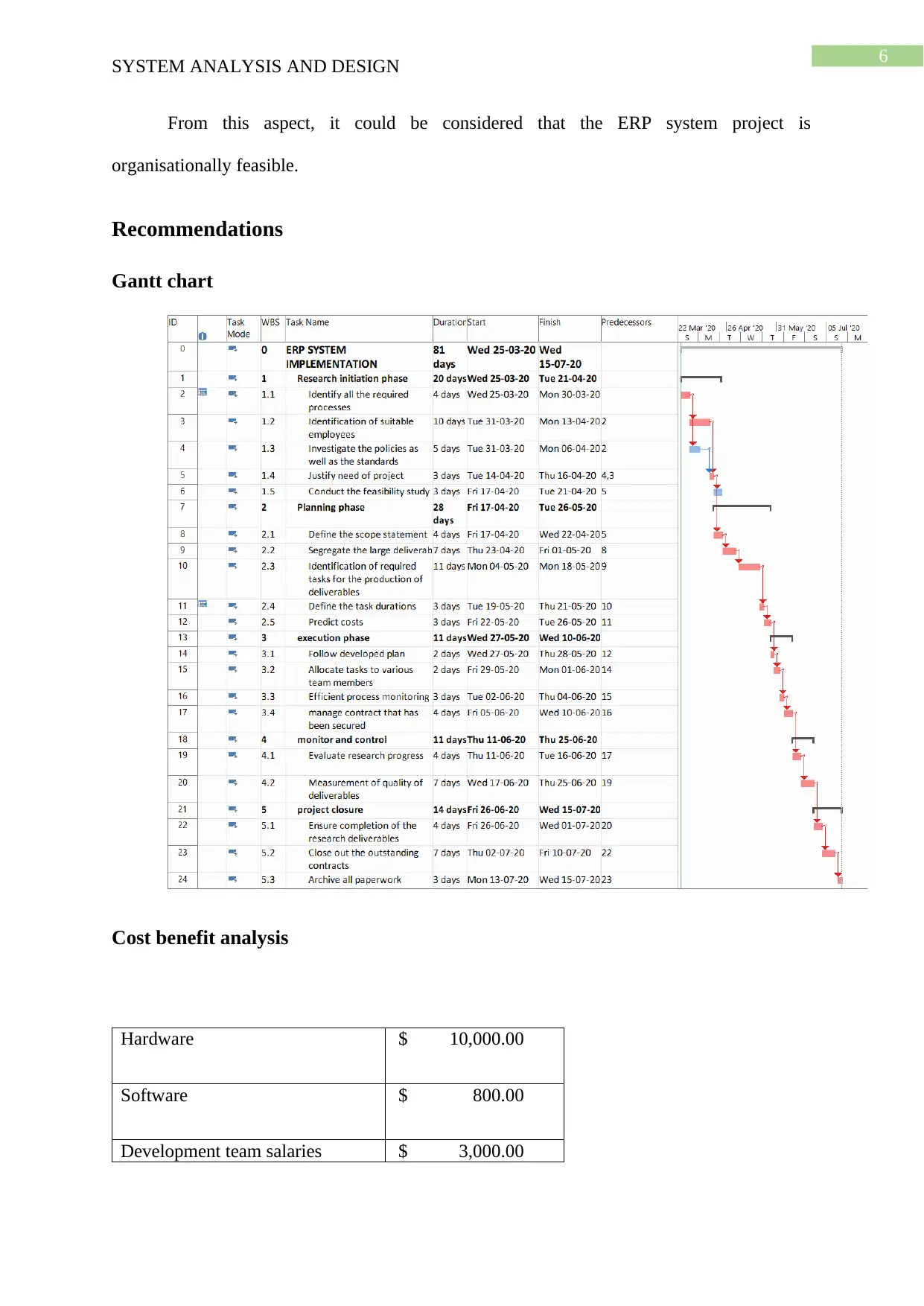
Gantt chart
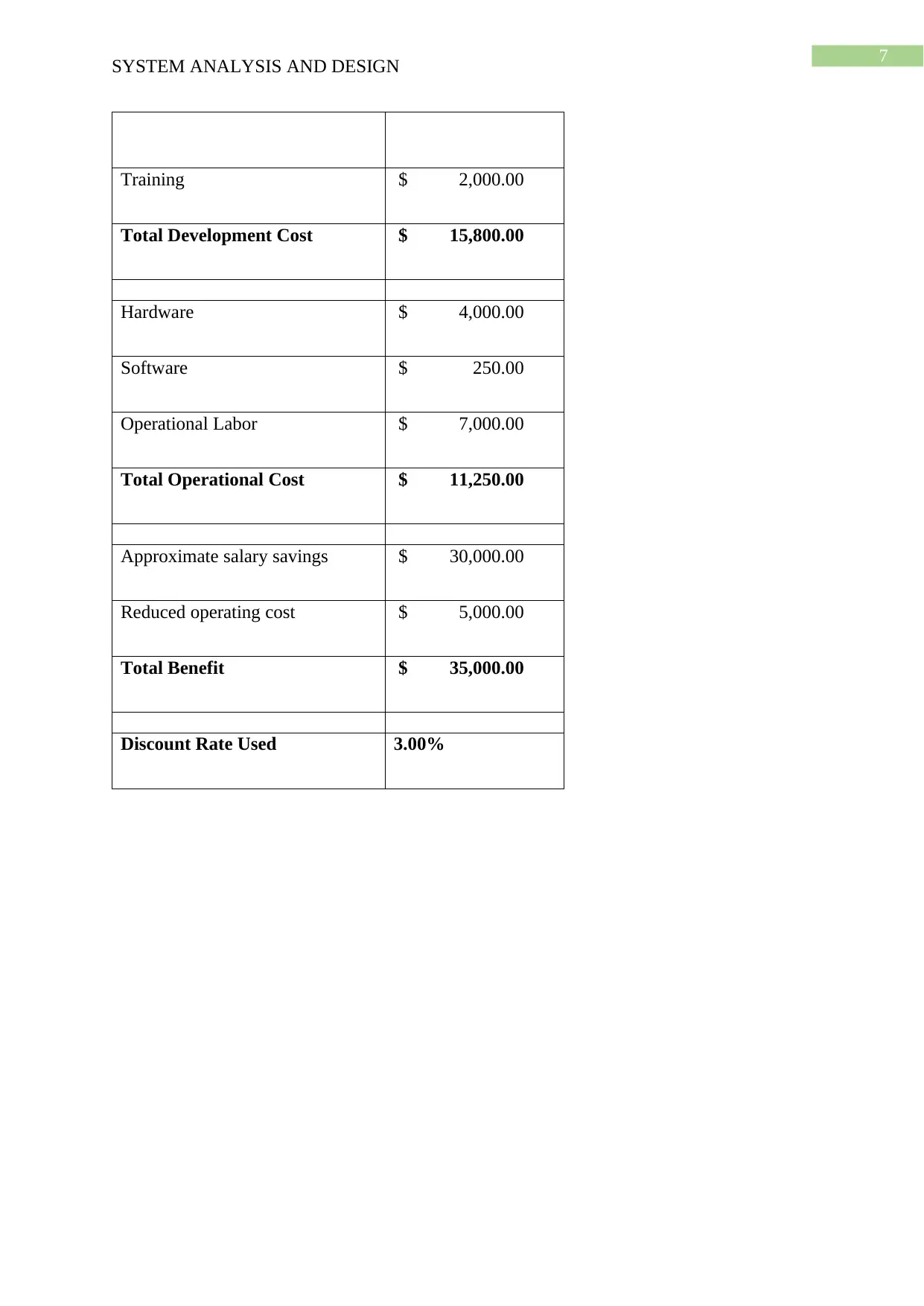
Cost benefit analysis
Hardware $ 10,000.00
Software $ 800.00
Development team salaries $ 3,000.00
SYSTEM ANALYSIS AND DESIGN
From this aspect, it could be considered that the ERP system project is
organisationally feasible.
Recommendations
Gantt chart
Cost benefit analysis
Hardware $ 10,000.00
Software $ 800.00
Development team salaries $ 3,000.00
Paraphrase This Document
Need a fresh take? Get an instant paraphrase of this document with our AI Paraphraser

7
SYSTEM ANALYSIS AND DESIGN
Training $ 2,000.00
Total Development Cost $ 15,800.00
Hardware $ 4,000.00
Software $ 250.00
Operational Labor $ 7,000.00
Total Operational Cost $ 11,250.00
Approximate salary savings $ 30,000.00
Reduced operating cost $ 5,000.00
Total Benefit $ 35,000.00
Discount Rate Used 3.00%
SYSTEM ANALYSIS AND DESIGN
Training $ 2,000.00
Total Development Cost $ 15,800.00
Hardware $ 4,000.00
Software $ 250.00
Operational Labor $ 7,000.00
Total Operational Cost $ 11,250.00
Approximate salary savings $ 30,000.00
Reduced operating cost $ 5,000.00
Total Benefit $ 35,000.00
Discount Rate Used 3.00%

8
SYSTEM ANALYSIS AND DESIGN
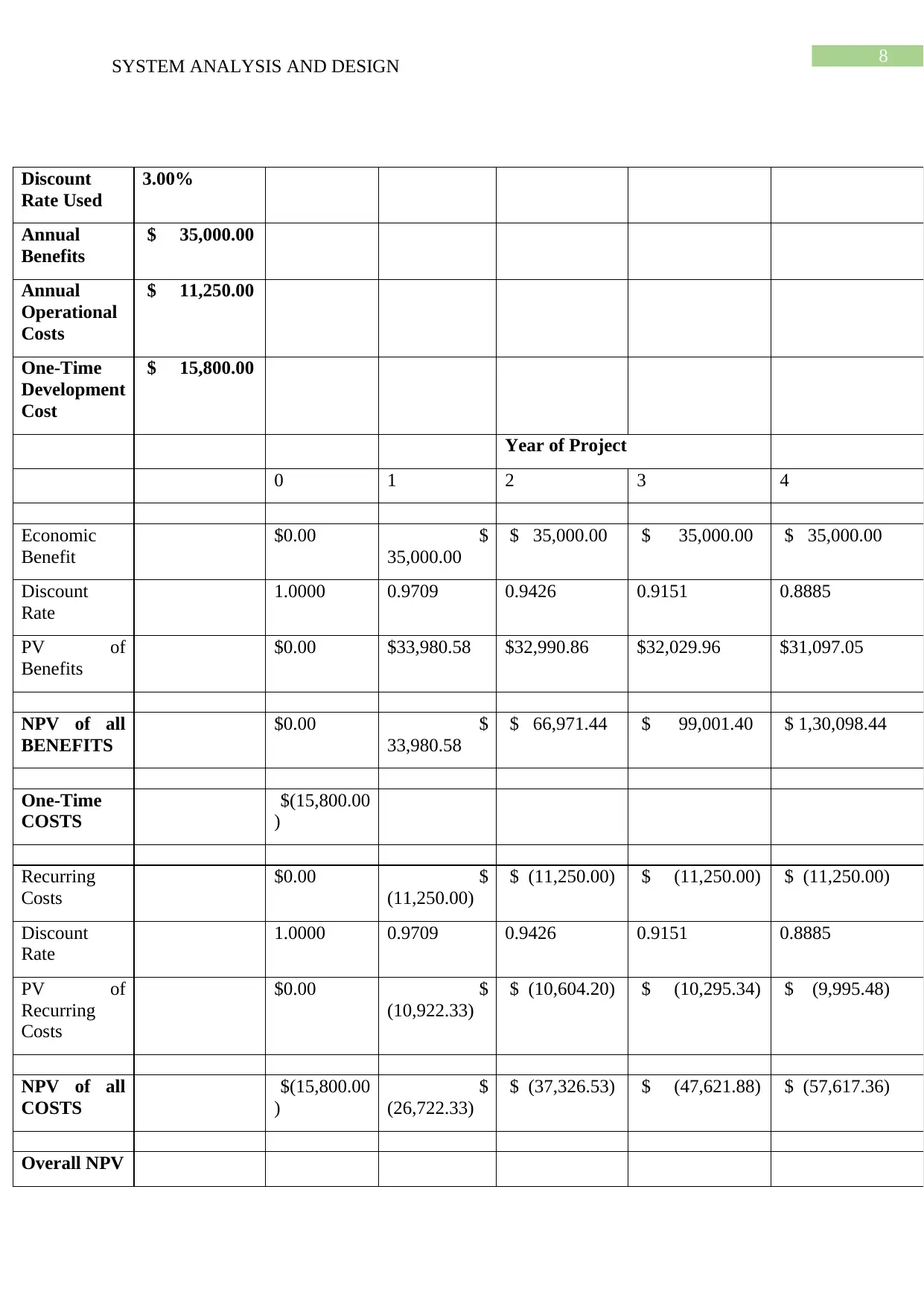
Discount
Rate Used
3.00%
Annual
Benefits
$ 35,000.00
Annual
Operational
Costs
$ 11,250.00
One-Time
Development
Cost
$ 15,800.00
Year of Project
0 1 2 3 4
Economic
Benefit
$0.00 $
35,000.00
$ 35,000.00 $ 35,000.00 $ 35,000.00
Discount
Rate
1.0000 0.9709 0.9426 0.9151 0.8885
PV of
Benefits
$0.00 $33,980.58 $32,990.86 $32,029.96 $31,097.05
NPV of all
BENEFITS
$0.00 $
33,980.58
$ 66,971.44 $ 99,001.40 $ 1,30,098.44
One-Time
COSTS
$(15,800.00
)
Recurring
Costs
$0.00 $
(11,250.00)
$ (11,250.00) $ (11,250.00) $ (11,250.00)
Discount
Rate
1.0000 0.9709 0.9426 0.9151 0.8885
PV of
Recurring
Costs
$0.00 $
(10,922.33)
$ (10,604.20) $ (10,295.34) $ (9,995.48)
NPV of all
COSTS
$(15,800.00
)
$
(26,722.33)
$ (37,326.53) $ (47,621.88) $ (57,617.36)
Overall NPV
SYSTEM ANALYSIS AND DESIGN
Discount
Rate Used
3.00%
Annual
Benefits
$ 35,000.00
Annual
Operational
Costs
$ 11,250.00
One-Time
Development
Cost
$ 15,800.00
Year of Project
0 1 2 3 4
Economic
Benefit
$0.00 $
35,000.00
$ 35,000.00 $ 35,000.00 $ 35,000.00
Discount
Rate
1.0000 0.9709 0.9426 0.9151 0.8885
PV of
Benefits
$0.00 $33,980.58 $32,990.86 $32,029.96 $31,097.05
NPV of all
BENEFITS
$0.00 $
33,980.58
$ 66,971.44 $ 99,001.40 $ 1,30,098.44
One-Time
COSTS
$(15,800.00
)
Recurring
Costs
$0.00 $
(11,250.00)
$ (11,250.00) $ (11,250.00) $ (11,250.00)
Discount
Rate
1.0000 0.9709 0.9426 0.9151 0.8885
PV of
Recurring
Costs
$0.00 $
(10,922.33)
$ (10,604.20) $ (10,295.34) $ (9,995.48)
NPV of all
COSTS
$(15,800.00
)
$
(26,722.33)
$ (37,326.53) $ (47,621.88) $ (57,617.36)
Overall NPV
⊘ This is a preview!⊘
Do you want full access?
Subscribe today to unlock all pages.

Trusted by 1+ million students worldwide

9
SYSTEM ANALYSIS AND DESIGN
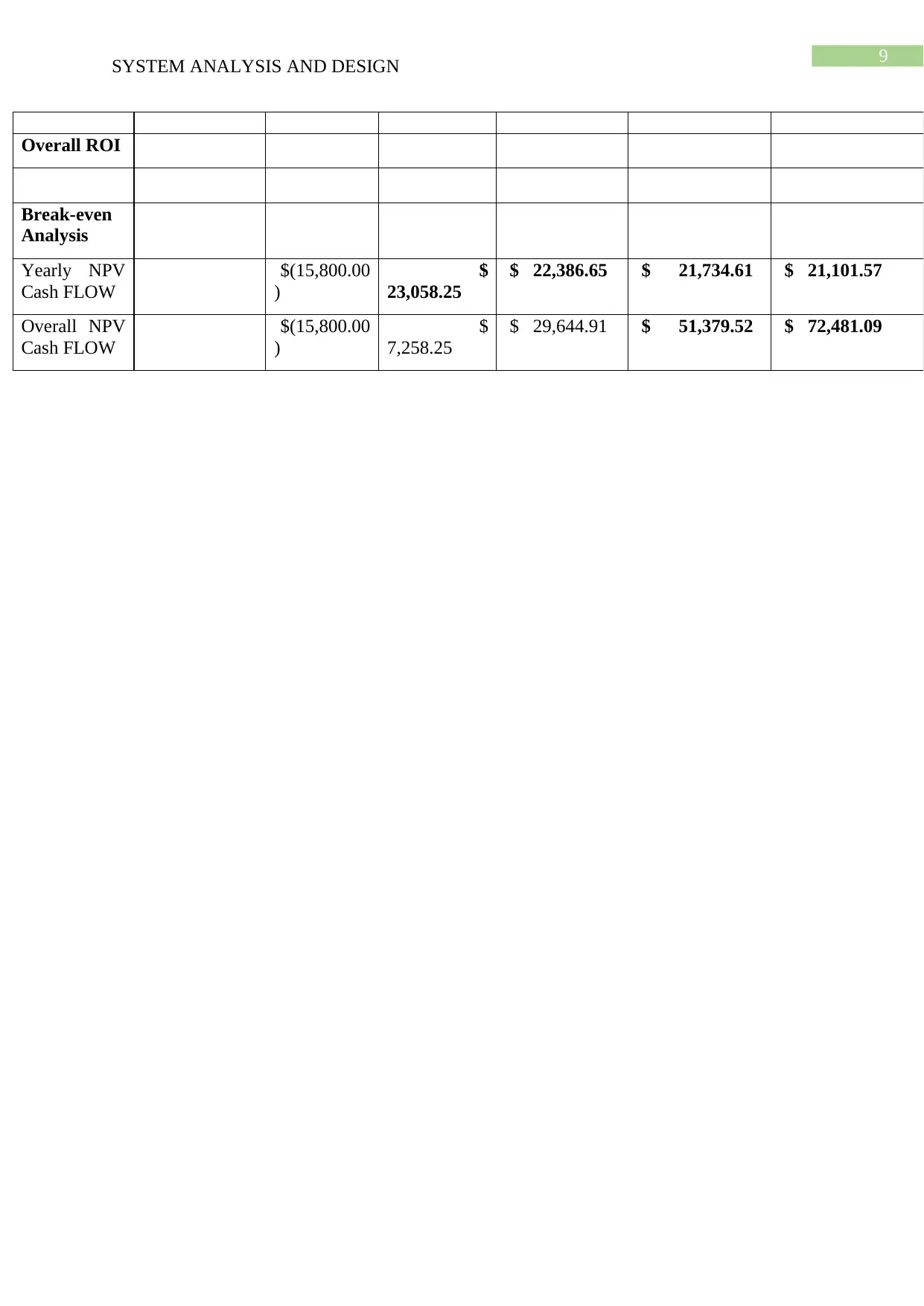
Overall ROI
Break-even
Analysis
Yearly NPV
Cash FLOW
$(15,800.00
)
$
23,058.25
$ 22,386.65 $ 21,734.61 $ 21,101.57
Overall NPV
Cash FLOW
$(15,800.00
)
$
7,258.25
$ 29,644.91 $ 51,379.52 $ 72,481.09
SYSTEM ANALYSIS AND DESIGN
Overall ROI
Break-even
Analysis
Yearly NPV
Cash FLOW
$(15,800.00
)
$
23,058.25
$ 22,386.65 $ 21,734.61 $ 21,101.57
Overall NPV
Cash FLOW
$(15,800.00
)
$
7,258.25
$ 29,644.91 $ 51,379.52 $ 72,481.09
Paraphrase This Document
Need a fresh take? Get an instant paraphrase of this document with our AI Paraphraser

Running head: SYSTEM ANALYSIS AND DESIGN

Running head: SYSTEM ANALYSIS AND DESIGN
Benefits
The ERP implementation in the organisation would help in the management of the
business with increased efficiency and as per the cost benefit analysis, it could be observed
that the ROI of proposed ERP system in the organisation is favourable.
Benefits
The ERP implementation in the organisation would help in the management of the
business with increased efficiency and as per the cost benefit analysis, it could be observed
that the ROI of proposed ERP system in the organisation is favourable.
⊘ This is a preview!⊘
Do you want full access?
Subscribe today to unlock all pages.

Trusted by 1+ million students worldwide
1 out of 12
Related Documents
Your All-in-One AI-Powered Toolkit for Academic Success.
 +13062052269
info@desklib.com
Available 24*7 on WhatsApp / Email
Unlock your academic potential
Copyright © 2020–2025 A2Z Services. All Rights Reserved. Developed and managed by ZUCOL.