MN611 Project: Designing the System Architecture for Shared Documents

Verified

Added on  2022/12/27

|11
|1195
|1
Project
AI Summary
This project analyzes the system architecture of a shared document application, similar to Google Docs. The project begins with a description of the application's features, including voice input, formatting options, and offline capabilities, and then describes the three-tier architecture (presentation, business logic, and data access layers) used for its development. It details the implementation using the RAD methodology and includes UML diagrams such as class, activity, sequence, and use-case diagrams, as well as a user interface design. The report then discusses system robustness, fault tolerance, minimal recovery time, scalability, and security aspects. The application is designed to be robust, fault-tolerant, and scalable, capable of handling multiple users and ensuring data security through encryption. The report concludes with a bibliography of relevant sources.
Document Page
Running head: DATABASE
System Architecture
Name of Student-
Name of University-
Author’s Note-
tabler-icon-diamond-filled.svg

Paraphrase This Document

Need a fresh take? Get an instant paraphrase of this document with our AI Paraphraser
Document Page
1DATABASE
Table of Contents
Title..................................................................................................................................................3
Section 1..........................................................................................................................................3
1.1 Description of the application...............................................................................................3
1.2 Tiers of system.......................................................................................................................3
1.3 Overall structure of Implementation.....................................................................................4
Section 2..........................................................................................................................................5
2.1 Class Diagram.........................................................................................................................5
2.2 Activity Diagram.....................................................................................................................6
2.3 Sequence Diagram.................................................................................................................7
2.4 Use-Case Diagram..................................................................................................................8
2.5 User Interface Design............................................................................................................9
Section 3..........................................................................................................................................9
3.1 System robustness.................................................................................................................9
3.2 Fault Tolerant.........................................................................................................................9
3.3 Minimal Recovery Time.......................................................................................................10
3.4 Scalable................................................................................................................................10
3.5 Security................................................................................................................................10
Bibliography...................................................................................................................................11
Document Page
2DATABASE
Title: Developing Shared Document Application similar as Google Docs
Section 1
1.1 Description of the application
The application system that is analyzed in this system is shared document system similar to that
that of Google Docs. There are many features that is application provides to their users. This application
take voice input from the users for typing the text, provides clear formatting, enables the users to
change fonts of writing. The users can tag someone using google doc in the comment and has the ability
to bookmark the documents. This works in offline mode and has the ability to edit the documents and
share them as per the user’s will.
1.2 Tiers of system
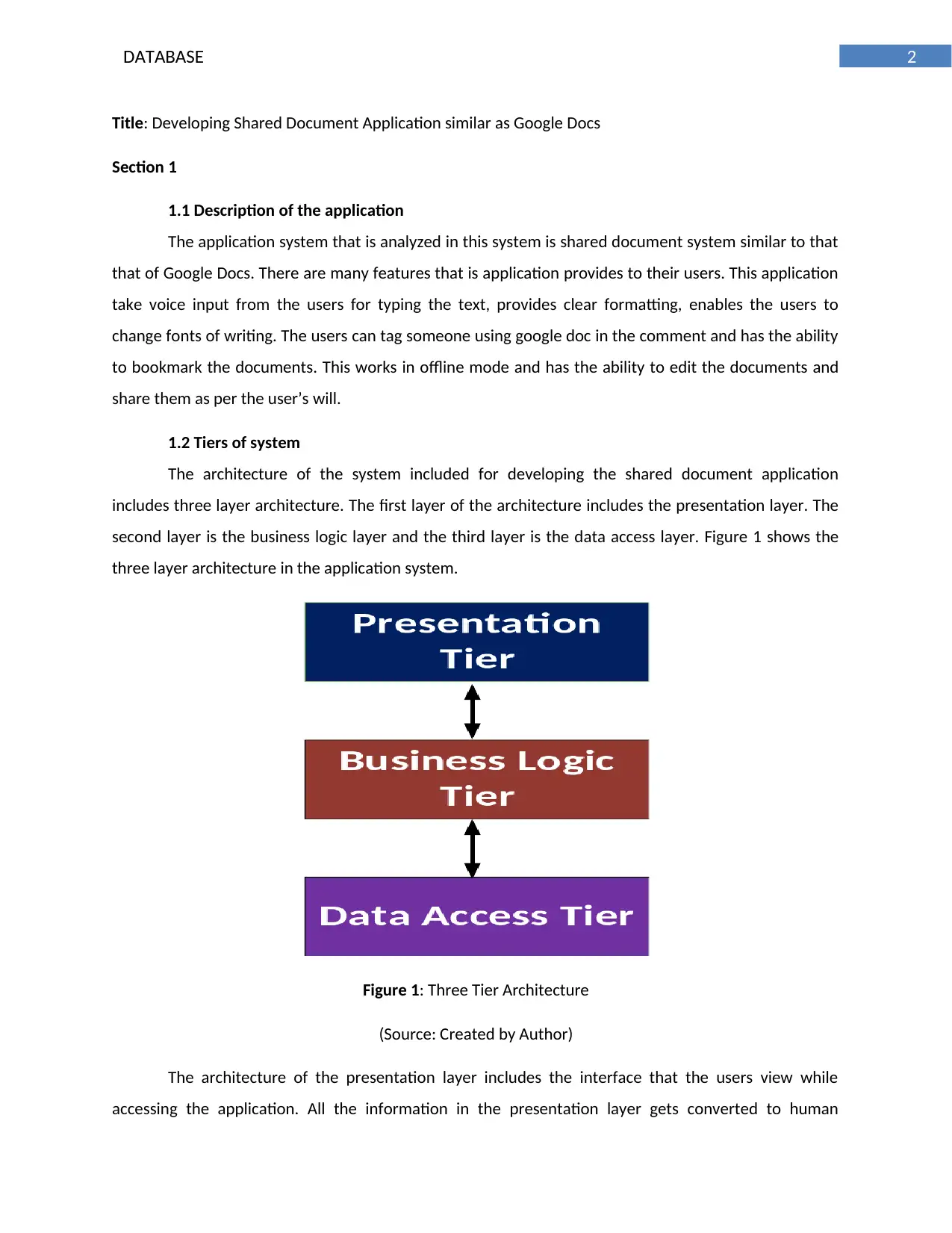
The architecture of the system included for developing the shared document application
includes three layer architecture. The first layer of the architecture includes the presentation layer. The
second layer is the business logic layer and the third layer is the data access layer. Figure 1 shows the
three layer architecture in the application system.
Figure 1: Three Tier Architecture
(Source: Created by Author)
The architecture of the presentation layer includes the interface that the users view while
accessing the application. All the information in the presentation layer gets converted to human
Document Page
3DATABASE
readable information so that the users can understand the information provided by the system. The
information that is shown in this layer includes the information about what the user can do in this
application and shows different activities that the user can use in the system. This layer is mainly done
by ASP.NET and is mainly used by the users using the application.
The second layer is the business layer. In the business layer the information mainly gets
transformed to human level language from where the user gets to know the information related to their
documents. There are database servers in this layer and information related to the system documents
are included in this business layer. All the information are stored in this business layer and is retrieved
when necessary. This layer is developed using the programming C language.
The last layer is the data access layer. This layer includes servers of database that includes all
information about the system data. This database servers mainly includes SQL server 2000.
1.3 Overall structure of Implementation
The implementation of this application system is done by implementing the RAD (Rapid
Application Development) methodology of project management. This system is mainly based on the
prototypes of the application system that is to be built. The teams that are included in this methodology
is very small and needs experience of the team for developing the system.
tabler-icon-diamond-filled.svg

Paraphrase This Document

Need a fresh take? Get an instant paraphrase of this document with our AI Paraphraser
Document Page
4DATABASE
Section 2
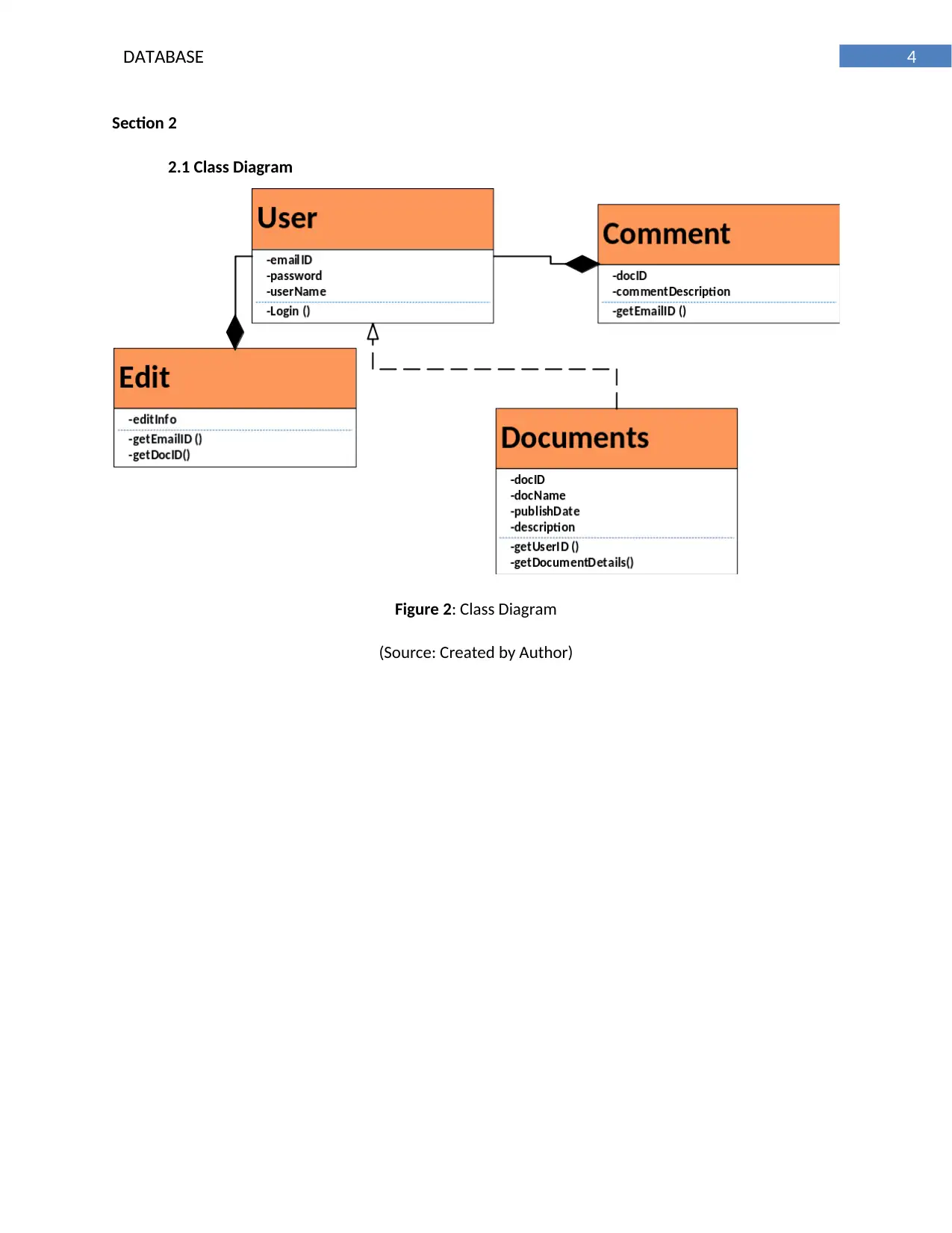
2.1 Class Diagram
Figure 2: Class Diagram
(Source: Created by Author)
Document Page
5DATABASE
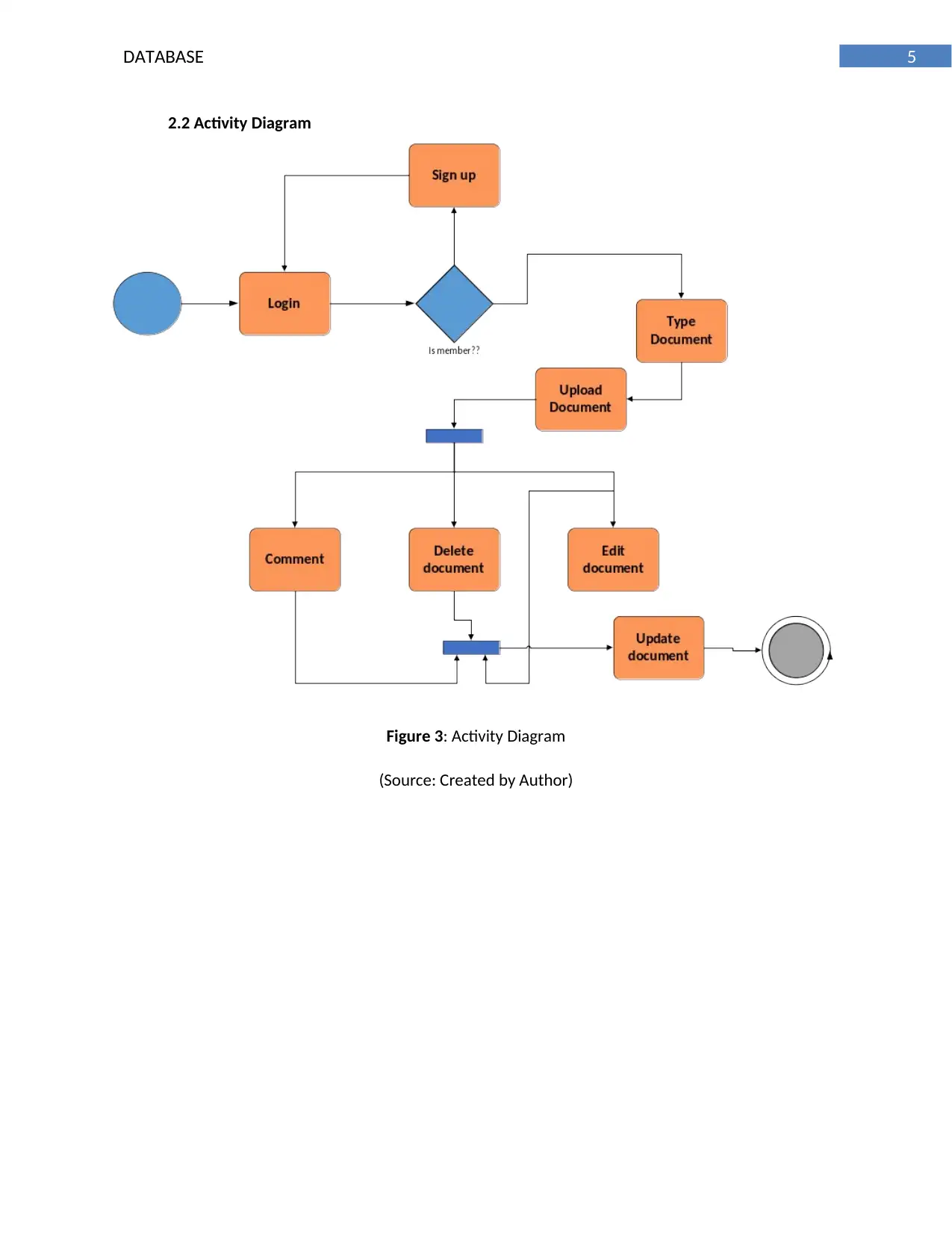
2.2 Activity Diagram
Figure 3: Activity Diagram
(Source: Created by Author)
Document Page
6DATABASE
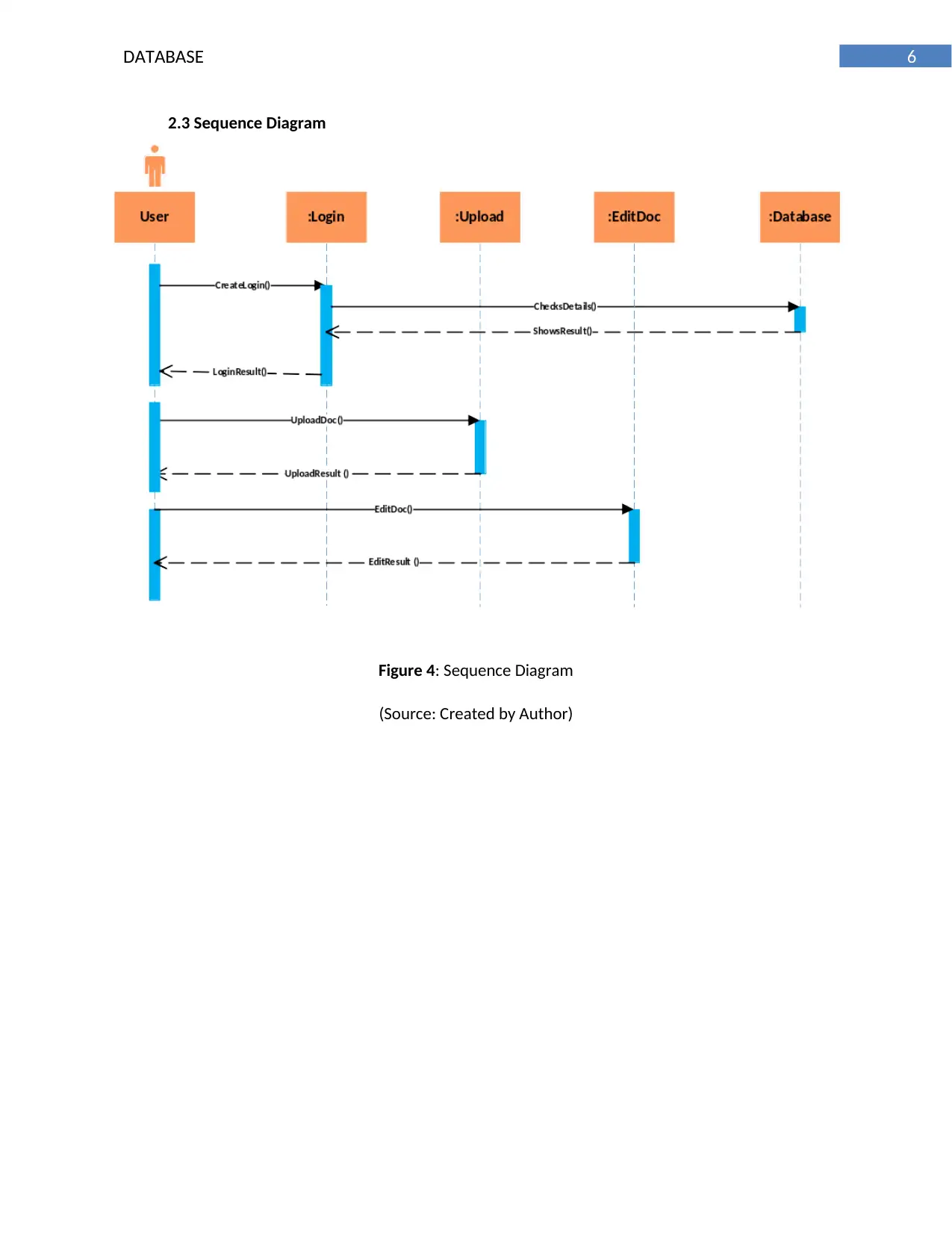
2.3 Sequence Diagram
Figure 4: Sequence Diagram
(Source: Created by Author)
tabler-icon-diamond-filled.svg

Paraphrase This Document

Need a fresh take? Get an instant paraphrase of this document with our AI Paraphraser
Document Page
7DATABASE
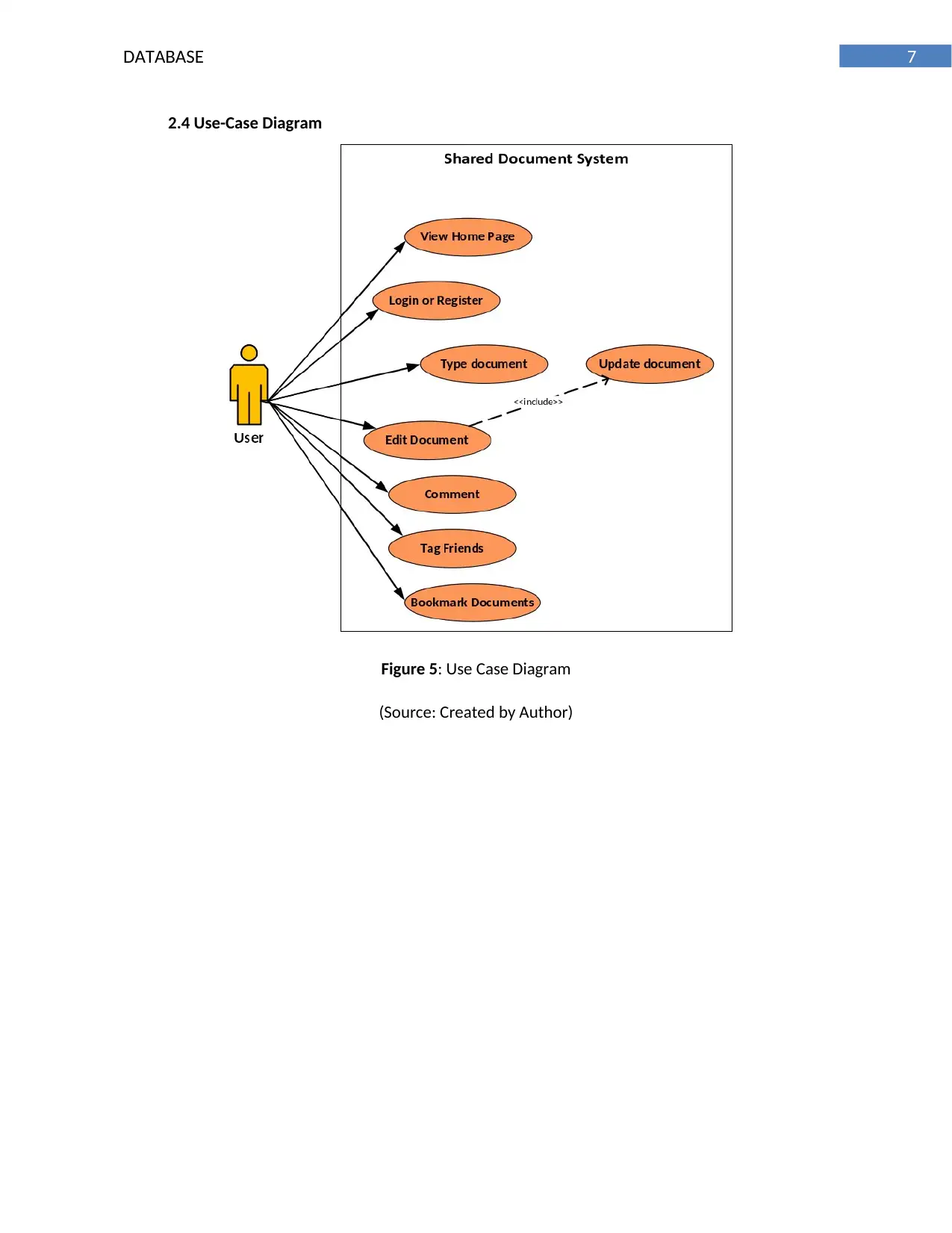
2.4 Use-Case Diagram
Figure 5: Use Case Diagram
(Source: Created by Author)
Document Page
8DATABASE
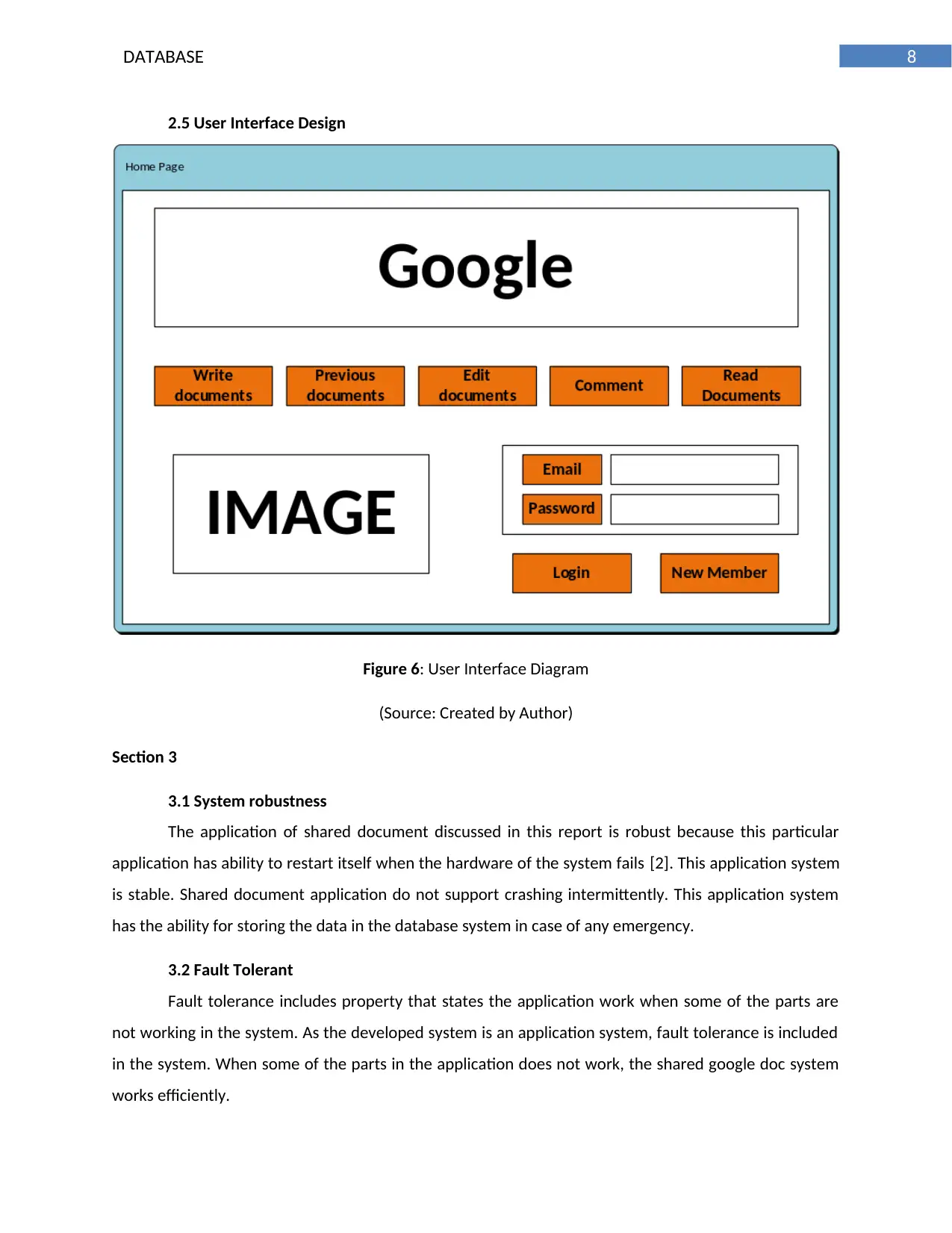
2.5 User Interface Design
Figure 6: User Interface Diagram
(Source: Created by Author)
Section 3
3.1 System robustness
The application of shared document discussed in this report is robust because this particular
application has ability to restart itself when the hardware of the system fails [2]. This application system
is stable. Shared document application do not support crashing intermittently. This application system
has the ability for storing the data in the database system in case of any emergency.
3.2 Fault Tolerant
Fault tolerance includes property that states the application work when some of the parts are
not working in the system. As the developed system is an application system, fault tolerance is included
in the system. When some of the parts in the application does not work, the shared google doc system
works efficiently.
Document Page
9DATABASE
3.3 Minimal Recovery Time
The application that is developed includes the recovery time in the application. This
application includes minimal recovery when the system fails. This application system includes
processing of work in case of system failure. The application system recovers faster if there is
any problem.
3.4 Scalable
The shared document application is scalable because the system has the ability to
support many users at the same time [1]. There are many users who access the shared
document at the same time and the application should have the ability to support all the users.
This system also supports addition of more hardware as well as adding of software for designing
the application system.
3.5 Security
The application of shared document is secured. There are many people who login in the
system and their data credentials are to be kept safe in the database of the system [3]. This
application provides security to the users by storing their document safely in the system. The
security process of the application uses the encryption technique so that the data are kept safe
in database.
tabler-icon-diamond-filled.svg

Paraphrase This Document

Need a fresh take? Get an instant paraphrase of this document with our AI Paraphraser
Document Page
10DATABASE
Bibliography
[1] J.P. Deane, F. Gracceva, A. Chiodi, M. Gargiulo, and B.P. Gallachóir, Assessing power system security.
A framework and a multi model approach. International Journal of Electrical Power & Energy
Systems, 73, 2015, pp.283-297.
[2] H. Jain, M.A. Rothenberger, and V. Sugumaran, A platform-based design approach for flexible
software components. JITTA: Journal of Information Technology Theory and Application, 18(2), 2017,
p.29.
[3] J., Wensveen, Air transportation: A management perspective. Routledge, 2018.
[4] S. Al-Fedaghi, Context-aware software systems: toward a diagrammatic modelling
foundation. Journal of Theoretical and Applied Information Technology, 95(4), 2017, p.936.
[5] M.F. Granda, N. Condori-Fernández, T.E. Vos, and O. Pastor, Mutation operators for UML class
diagrams. In International Conference on Advanced Information Systems Engineering (pp. 325-341).
Springer, Cham, 2016, June.
chevron_up_icon
1 out of 11
circle_padding
hide_on_mobile
zoom_out_icon
[object Object]