Comprehensive Analysis of Talent Management in Tesco's Operations
VerifiedAdded on 2023/01/04
|28
|6902
|3
Report
AI Summary
This report provides a comprehensive analysis of talent management strategies within Tesco, a leading British multinational retailer. It begins with an introduction to talent management and its importance, followed by a detailed exploration of the project's aims, objectives, and rationale. The report outlines a project management plan, including cost analysis, scope definition, timelines, quality control measures, communication strategies, risk assessment, and resource allocation. Furthermore, it presents a work breakdown structure and a Gantt chart to visualize the project's phases. The research methodology includes both qualitative and quantitative approaches, along with a review of relevant literature. The report also covers primary and secondary research methods used to gather data, presenting findings, and data analysis using appropriate tools and techniques. Finally, it offers recommendations based on the research findings, reflecting on the project's outcomes and the learning experiences gained throughout the process, with references to support the analysis.
Managing a Successful
Business Project
Business Project

Paraphrase This Document
Need a fresh take? Get an instant paraphrase of this document with our AI Paraphraser
Table of Contents
INTRODUCTION...........................................................................................................................3
TASK 1............................................................................................................................................3
P1. Devising aims and objectives of project of selected scenario...............................................3
P2. Producing project management plan which covers aim and deliverables, time, quality,
communication, risk and resources.............................................................................................6
P3. Producing work breakdown structure as well as Gantt Chart...............................................7
TASK 2..........................................................................................................................................11
P4. Carrying out small scale research through applying primary and secondary methods to
meet project aims and objectives..............................................................................................11
P5. Presenting findings and data using appropriate tools and techniques.................................13
P6. Communicating appropriate recommendations as result of findings and data analysis valid
and meaning conclusion............................................................................................................20
TASK 4..........................................................................................................................................22
P7. Reflecting on values of undertaking the project to meet states objectives and own learning
as well as performance..............................................................................................................22
References......................................................................................................................................24
INTRODUCTION...........................................................................................................................3
TASK 1............................................................................................................................................3
P1. Devising aims and objectives of project of selected scenario...............................................3
P2. Producing project management plan which covers aim and deliverables, time, quality,
communication, risk and resources.............................................................................................6
P3. Producing work breakdown structure as well as Gantt Chart...............................................7
TASK 2..........................................................................................................................................11
P4. Carrying out small scale research through applying primary and secondary methods to
meet project aims and objectives..............................................................................................11
P5. Presenting findings and data using appropriate tools and techniques.................................13
P6. Communicating appropriate recommendations as result of findings and data analysis valid
and meaning conclusion............................................................................................................20
TASK 4..........................................................................................................................................22
P7. Reflecting on values of undertaking the project to meet states objectives and own learning
as well as performance..............................................................................................................22
References......................................................................................................................................24
INTRODUCTION
Talent is said to be the capability of an individual to perform some thing or an activity
with mere perfection. Talent can be inborn or it can be develop and learn with the time. Talent
management refers to an activity in which the organisation attracts, retain or manages the
workforce in such a way it integrates the goals and objectives of both the parties i.e. the
organisation and the employees. For reference purpose this report has taken an example of a
company, Tesco. This research is upon the talent management and the aim to is discuss whether
the Tesco company effectively manages its talent management or not.
Tesco is a British multinational company which has engage its business in retailing
business. The company has the 3rd position in retailing business within UK. Tesco was
established in the year 1919 by Jack Cohen. The company however managed to locate itself at
6800 shops. Apart from this the company secures the 9th position in world's largest retailing
market chain. Tesco sells the products related with groceries and general merchandise in the
market. The retailing store of the company operates in around other 11 countries. It has opened
the its retailing business through supermarkets, hypermarkets, superstores and also from
convenience shops.
TASK 1
P1. Devising aims and objectives of project of selected scenario
Project aim:
The aim of the project is to “ identify the talent management strategies in Tesco for attracting
and retaining the talented employees in the organisation.” It is a study which is performed by
Tesco PLC ltd.
Objectives of the project:
Development of the basic knowledge for the concept of talent management in the
organisation
To identify the strategies related to talent management which can benefit the organisation
To identify with the ways which can contribute to the retaining employees in the
organisation
To determine the effectiveness of talent management strategies for retaining and also
inviting the talented candidates in the work place.
Talent is said to be the capability of an individual to perform some thing or an activity
with mere perfection. Talent can be inborn or it can be develop and learn with the time. Talent
management refers to an activity in which the organisation attracts, retain or manages the
workforce in such a way it integrates the goals and objectives of both the parties i.e. the
organisation and the employees. For reference purpose this report has taken an example of a
company, Tesco. This research is upon the talent management and the aim to is discuss whether
the Tesco company effectively manages its talent management or not.
Tesco is a British multinational company which has engage its business in retailing
business. The company has the 3rd position in retailing business within UK. Tesco was
established in the year 1919 by Jack Cohen. The company however managed to locate itself at
6800 shops. Apart from this the company secures the 9th position in world's largest retailing
market chain. Tesco sells the products related with groceries and general merchandise in the
market. The retailing store of the company operates in around other 11 countries. It has opened
the its retailing business through supermarkets, hypermarkets, superstores and also from
convenience shops.
TASK 1
P1. Devising aims and objectives of project of selected scenario
Project aim:
The aim of the project is to “ identify the talent management strategies in Tesco for attracting
and retaining the talented employees in the organisation.” It is a study which is performed by
Tesco PLC ltd.
Objectives of the project:
Development of the basic knowledge for the concept of talent management in the
organisation
To identify the strategies related to talent management which can benefit the organisation
To identify with the ways which can contribute to the retaining employees in the
organisation
To determine the effectiveness of talent management strategies for retaining and also
inviting the talented candidates in the work place.
⊘ This is a preview!⊘
Do you want full access?
Subscribe today to unlock all pages.

Trusted by 1+ million students worldwide
Questions of the project
An enquiry about the concept of talent management in the context of organisation
Examination of various talent management strategies which could be used by the
organisation in managing the employees into the workplace.
What is the importance to develop the strategies for talent management in the
organisation?
What could be the possible effects upon the company's performance through the
strategies used by the company in respect to retaining and attracting the talented
employees?
Rationale of the project: The major objective of this project is to check for the importance
of talent management in the organisation. Apart from this the report is also helping in forming
the view about the application of talent management into the organisation for attracting and
retaining the talented workforce.
Literature Review
The concept of talent management in the context of organisation
According to Zhang and Chen, (2019), talent management is an activity of anticipating
the required human capital that would need by an organisation for fulfilling its job or goals.
Through this activity an organisation can manage their employees in the most effective and
efficient way. As in the context of Tesco Company, the organisation uses this concept to attract
and retain the talented workforce in the organisation. They do so by properly aligning the
objectives of employees with the type of work they performed in the workplace. The
organisation tries to allot the work to the employees according to their forte or interest so that the
motivation level among these employees get maintain.
Various talent management strategies which could be used by the organisation in
managing the employees into the workplace.
There are various strategies which can be used by the organisation to improve the talent
management in the organisation. Some of these strategies may include integration of employee
and organisation objectives, providing the appropriate motivational methods like the system of
rewards and recognitions, policies regarding retaining the employees in the work place, and
much more.
An enquiry about the concept of talent management in the context of organisation
Examination of various talent management strategies which could be used by the
organisation in managing the employees into the workplace.
What is the importance to develop the strategies for talent management in the
organisation?
What could be the possible effects upon the company's performance through the
strategies used by the company in respect to retaining and attracting the talented
employees?
Rationale of the project: The major objective of this project is to check for the importance
of talent management in the organisation. Apart from this the report is also helping in forming
the view about the application of talent management into the organisation for attracting and
retaining the talented workforce.
Literature Review
The concept of talent management in the context of organisation
According to Zhang and Chen, (2019), talent management is an activity of anticipating
the required human capital that would need by an organisation for fulfilling its job or goals.
Through this activity an organisation can manage their employees in the most effective and
efficient way. As in the context of Tesco Company, the organisation uses this concept to attract
and retain the talented workforce in the organisation. They do so by properly aligning the
objectives of employees with the type of work they performed in the workplace. The
organisation tries to allot the work to the employees according to their forte or interest so that the
motivation level among these employees get maintain.
Various talent management strategies which could be used by the organisation in
managing the employees into the workplace.
There are various strategies which can be used by the organisation to improve the talent
management in the organisation. Some of these strategies may include integration of employee
and organisation objectives, providing the appropriate motivational methods like the system of
rewards and recognitions, policies regarding retaining the employees in the work place, and
much more.
Paraphrase This Document
Need a fresh take? Get an instant paraphrase of this document with our AI Paraphraser
In accordance to Basu (2019), one of talent management strategy is Talent Cultivation in
which managers identify unique set of needs of potential and prospective talent. Through this
strategy, managers of Tesco manage available talent through providing regular as well as
objective feedback in order to keep track of required number of manpower. At same time, other
talent management strategy is providing ongoing training and development opportunities to
potential employees. Training and development plays key function in enhancing skills,
capabilities and competence of a person. In this, managers of Tesco holds regular meetings with
existing talent in order to discuss, analyse and provide improvement practices in required areas.
The importance to develop the strategies for talent management in the organisation
According to Sheehan, Grant and Garavan, (2018), there are various importance for using
the strategies which an organisation could perform with respect to the talent management. The
strategies which are performed by the organisation are very different and unique which would
lead to the attainment of the objectives. As in the case with Tesco company, the company uses
various strategies to maintain the employee motivation level, retaining of talented employs in the
organisation, strategies regarding the training and development program of the employees so that
their skills can get cope up with the market requirements and much more.
The possible effects upon the company's performance through the strategies used by the
company in respect to retaining and attracting the talented employees
According to Swailes, (2016), through the appropriate application of talent management
the organisation can be benefited from various advantages. The employee motivation would be
high form the same, the organisation would be able to retain its talented candidates in the
workplace by providing the necessaries to them. The teams can also get managed properly
through the use of this concept. The working environment which the company would be
providing to the employees would be very comfortable and healthy for the employee's mental
and emotional health. As in the context with Tesco company, the organisation gets benefited
with all these merits which are mentioned above. Therefore the company always try their best to
apply the proper strategies with regard to talent management in the company.
P2. Producing project management plan which covers aim and deliverables, time, quality,
communication, risk and resources
Project management plan: To perform this project various things and elements are
present which needs to take under consideration. Some of them may include:
which managers identify unique set of needs of potential and prospective talent. Through this
strategy, managers of Tesco manage available talent through providing regular as well as
objective feedback in order to keep track of required number of manpower. At same time, other
talent management strategy is providing ongoing training and development opportunities to
potential employees. Training and development plays key function in enhancing skills,
capabilities and competence of a person. In this, managers of Tesco holds regular meetings with
existing talent in order to discuss, analyse and provide improvement practices in required areas.
The importance to develop the strategies for talent management in the organisation
According to Sheehan, Grant and Garavan, (2018), there are various importance for using
the strategies which an organisation could perform with respect to the talent management. The
strategies which are performed by the organisation are very different and unique which would
lead to the attainment of the objectives. As in the case with Tesco company, the company uses
various strategies to maintain the employee motivation level, retaining of talented employs in the
organisation, strategies regarding the training and development program of the employees so that
their skills can get cope up with the market requirements and much more.
The possible effects upon the company's performance through the strategies used by the
company in respect to retaining and attracting the talented employees
According to Swailes, (2016), through the appropriate application of talent management
the organisation can be benefited from various advantages. The employee motivation would be
high form the same, the organisation would be able to retain its talented candidates in the
workplace by providing the necessaries to them. The teams can also get managed properly
through the use of this concept. The working environment which the company would be
providing to the employees would be very comfortable and healthy for the employee's mental
and emotional health. As in the context with Tesco company, the organisation gets benefited
with all these merits which are mentioned above. Therefore the company always try their best to
apply the proper strategies with regard to talent management in the company.
P2. Producing project management plan which covers aim and deliverables, time, quality,
communication, risk and resources
Project management plan: To perform this project various things and elements are
present which needs to take under consideration. Some of them may include:
Cost: It is the total expense which would get incurred to perform the project. The cost
which may required for conducting this project may be as follows:
Total forecasted budget
Particular 2019-20($)
The cost for technology 120
The cost incurred with respect to promotional
activities
60
The cost related to expense 25
Distribution of catalogues 200
The charges related to training 65
Total cost 290
Scope: Scope refers to the area which gets covered in the project. The scope for the
project is very broad as the researcher has the opportunity to gain a lot of knowledge
with regard to this concept.
Time: Time refers to the total time which required or needed in completion of task or
project. The time required to complete this project is approximately 40 days. Within this
time period the researcher has to complete the mentioned project.
Quality: To perform this project the quality is the major factor which needs to take care
very specifically. The activities should be completed with the type of quality standardized
for them. The quality can be measure by getting it matched with the standard which is set
for the project and i.e. proper conducting of research program so that the above
mentioned questions can get address. Quantitative research will be used for gaining
quality results. This will help the researcher in collecting of reliable and quality
information that turn to impact in achieving the research aim and objectives.
Communication: Communication is the major factor in performing any activity or
project. Through open and effective communication the barriers or any risks can get
minimised also, the confusion or misunderstanding can get clear and the like. Within the
which may required for conducting this project may be as follows:
Total forecasted budget
Particular 2019-20($)
The cost for technology 120
The cost incurred with respect to promotional
activities
60
The cost related to expense 25
Distribution of catalogues 200
The charges related to training 65
Total cost 290
Scope: Scope refers to the area which gets covered in the project. The scope for the
project is very broad as the researcher has the opportunity to gain a lot of knowledge
with regard to this concept.
Time: Time refers to the total time which required or needed in completion of task or
project. The time required to complete this project is approximately 40 days. Within this
time period the researcher has to complete the mentioned project.
Quality: To perform this project the quality is the major factor which needs to take care
very specifically. The activities should be completed with the type of quality standardized
for them. The quality can be measure by getting it matched with the standard which is set
for the project and i.e. proper conducting of research program so that the above
mentioned questions can get address. Quantitative research will be used for gaining
quality results. This will help the researcher in collecting of reliable and quality
information that turn to impact in achieving the research aim and objectives.
Communication: Communication is the major factor in performing any activity or
project. Through open and effective communication the barriers or any risks can get
minimised also, the confusion or misunderstanding can get clear and the like. Within the
⊘ This is a preview!⊘
Do you want full access?
Subscribe today to unlock all pages.
Trusted by 1+ million students worldwide
working of this project all the staff members who are indulge in the project needs to
practice the open communication. It can be performed through emails, messages,
meetings, and etc. All the communication would get done among the members who are
involved in the projects. All the members will inform the mentor and the mentors will
inform the project manager.
Risk: These are taken as a threat for the project as they can damages the project
performed. The risks associated with this project could be shortage of time and
unavailability of resources. The risk of manipulation about the data or information
retrieve by the investigator is the biggest risk the researcher can have. Other risk may
include completion of work before time, proper availability of required resource and etc.
Resources: Many resources need to perform this project, some of them may include
books, technological system, journals and etc (Gardas, 2019).
P3. Producing work breakdown structure as well as Gantt Chart
Work breakdown structure:
The work break down structure is a process where the whole project or work is divided
into small parts or activities. This process helps the project in performing the work in certain
parts and steps to ensure clarity and performs the work in a more manageable manner. The work
breakdown structure for this particular project can be as :
practice the open communication. It can be performed through emails, messages,
meetings, and etc. All the communication would get done among the members who are
involved in the projects. All the members will inform the mentor and the mentors will
inform the project manager.
Risk: These are taken as a threat for the project as they can damages the project
performed. The risks associated with this project could be shortage of time and
unavailability of resources. The risk of manipulation about the data or information
retrieve by the investigator is the biggest risk the researcher can have. Other risk may
include completion of work before time, proper availability of required resource and etc.
Resources: Many resources need to perform this project, some of them may include
books, technological system, journals and etc (Gardas, 2019).
P3. Producing work breakdown structure as well as Gantt Chart
Work breakdown structure:
The work break down structure is a process where the whole project or work is divided
into small parts or activities. This process helps the project in performing the work in certain
parts and steps to ensure clarity and performs the work in a more manageable manner. The work
breakdown structure for this particular project can be as :
Paraphrase This Document
Need a fresh take? Get an instant paraphrase of this document with our AI Paraphraser
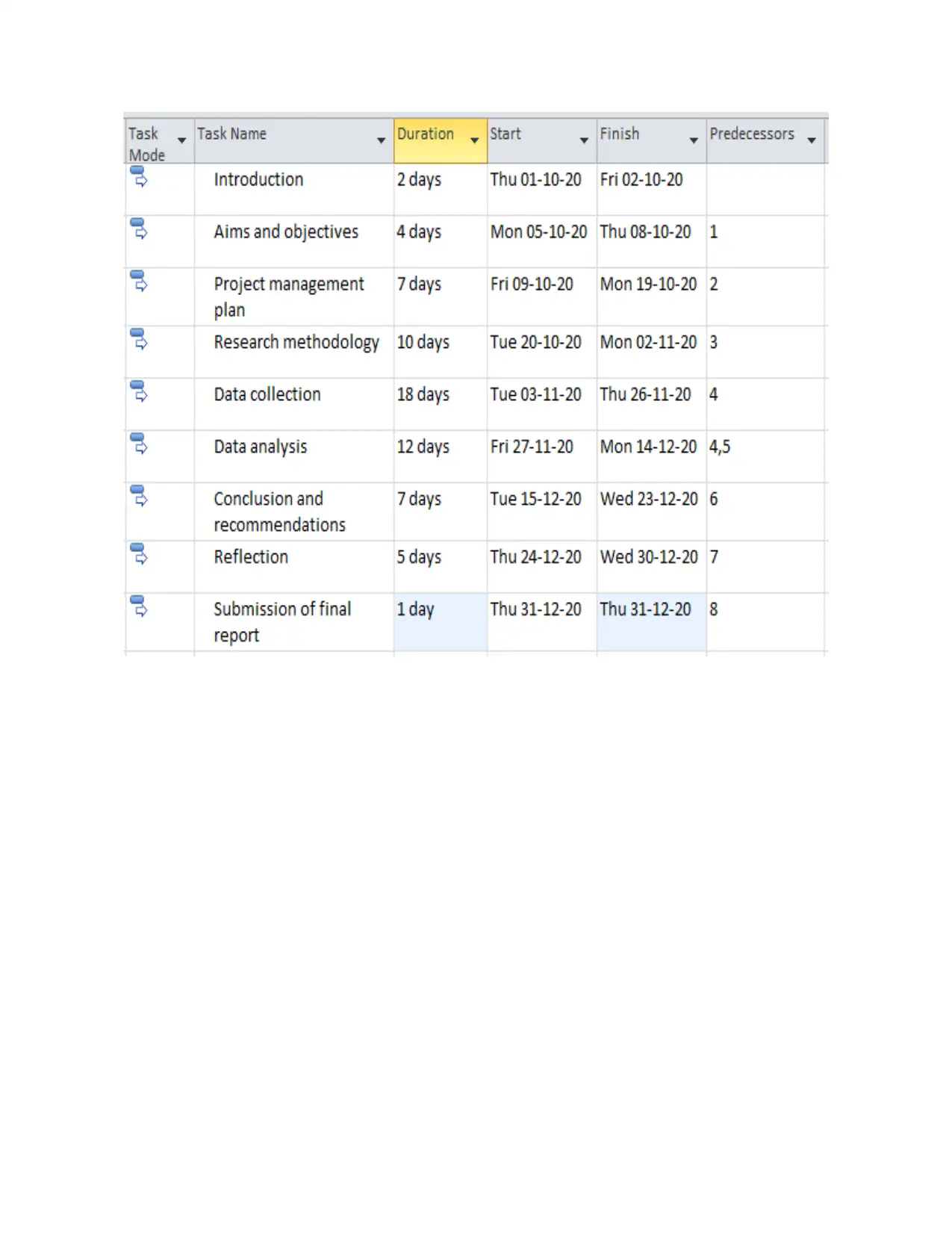
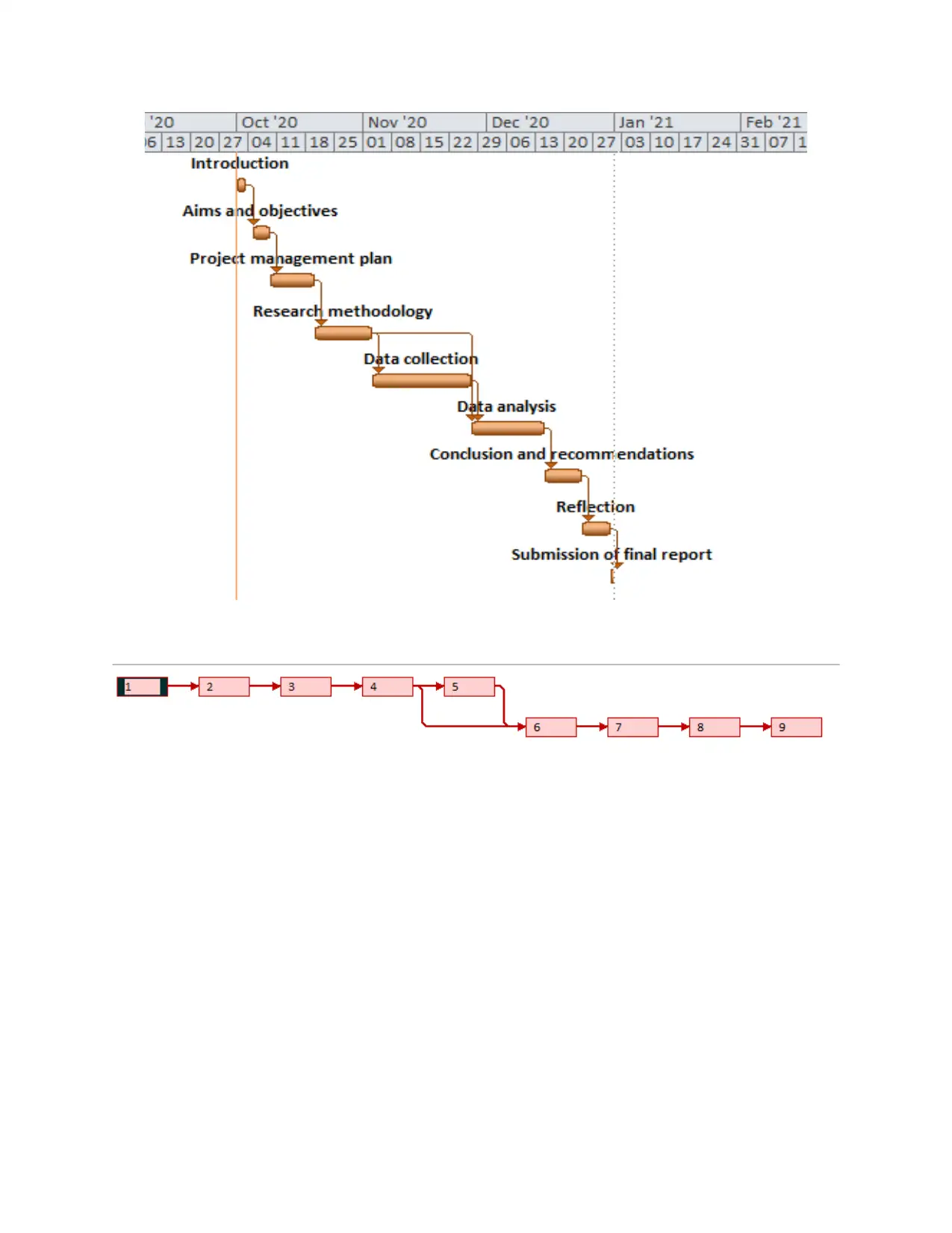
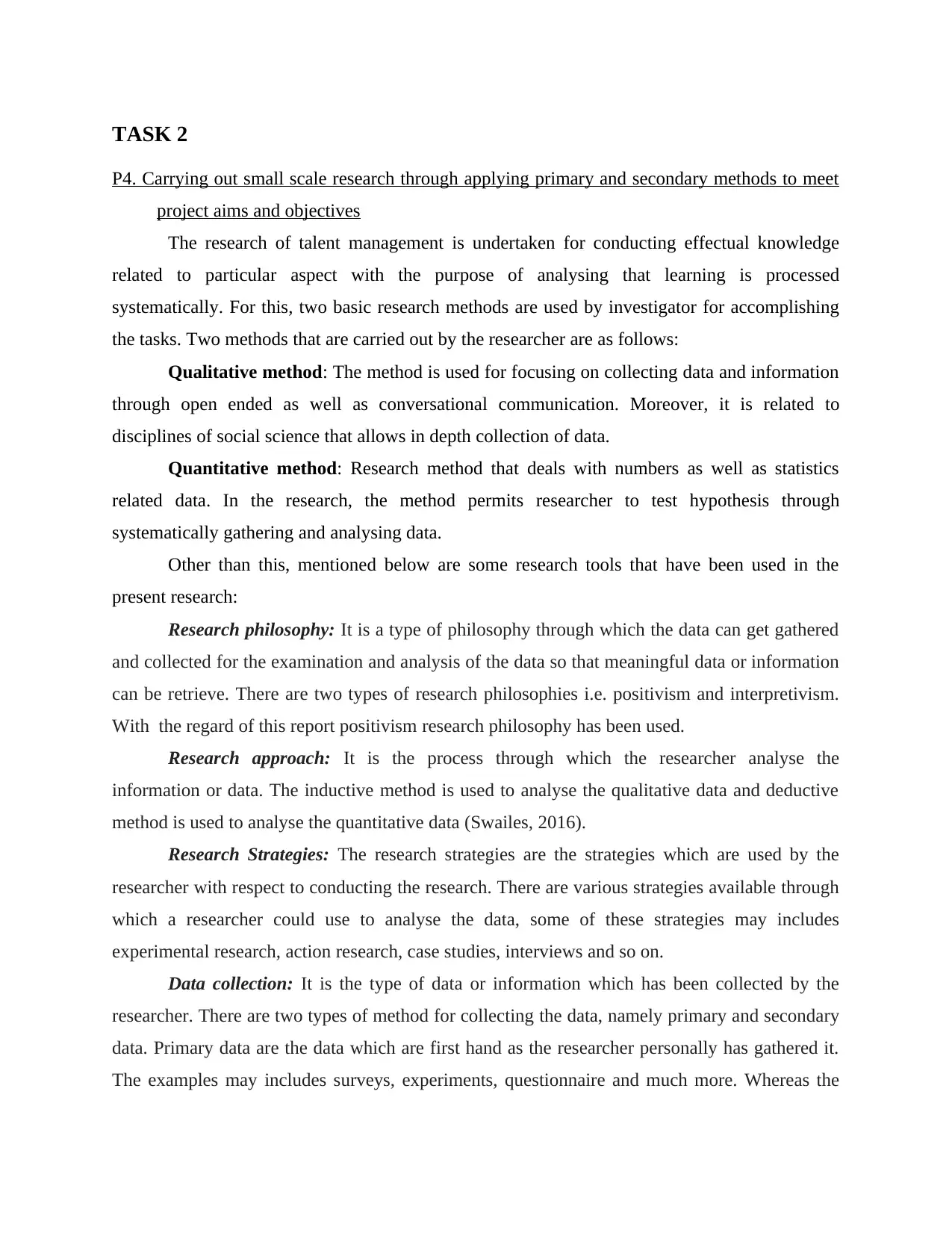
Gantt chart:
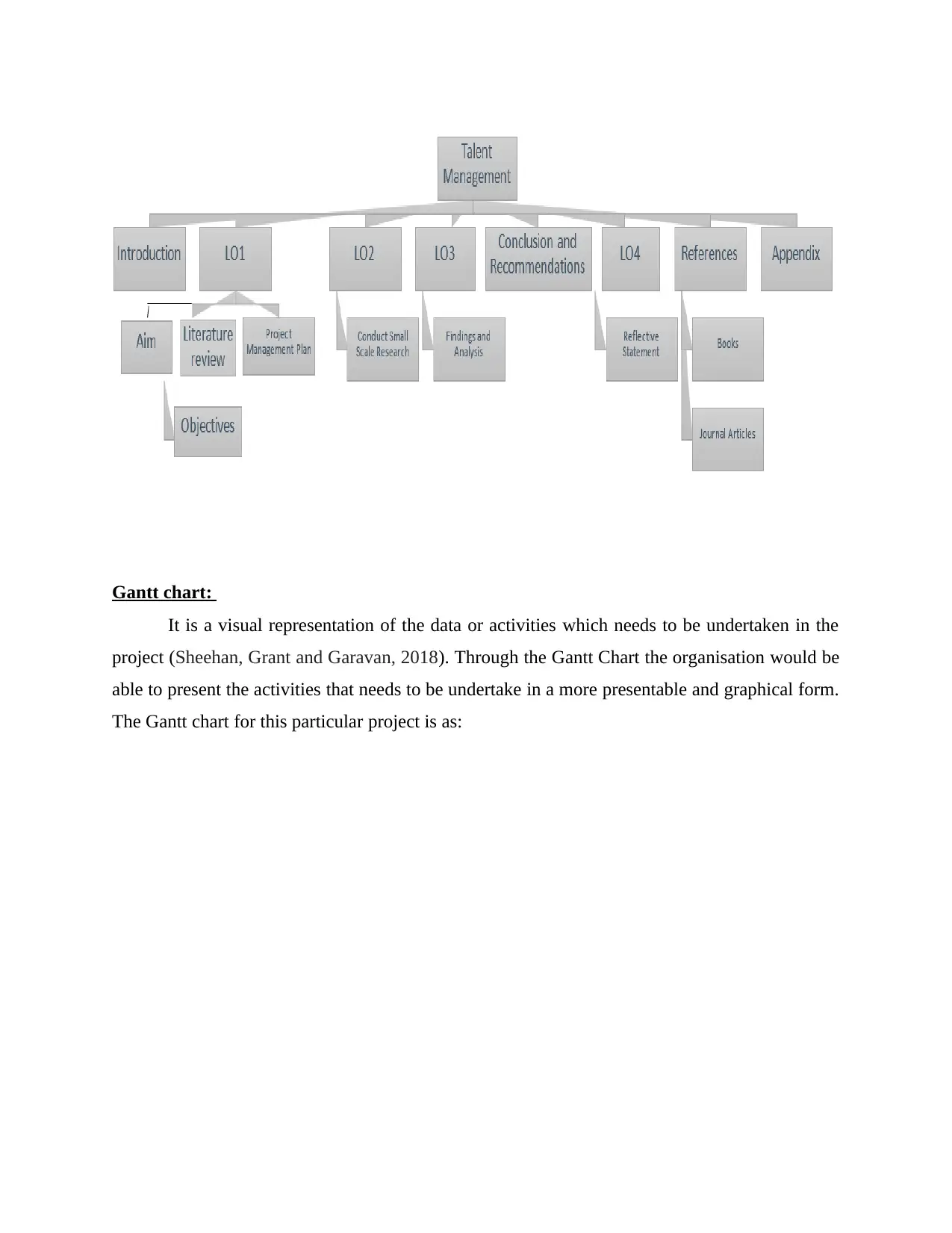
It is a visual representation of the data or activities which needs to be undertaken in the
project (Sheehan, Grant and Garavan, 2018). Through the Gantt Chart the organisation would be
able to present the activities that needs to be undertake in a more presentable and graphical form.
The Gantt chart for this particular project is as:
It is a visual representation of the data or activities which needs to be undertaken in the
project (Sheehan, Grant and Garavan, 2018). Through the Gantt Chart the organisation would be
able to present the activities that needs to be undertake in a more presentable and graphical form.
The Gantt chart for this particular project is as:
⊘ This is a preview!⊘
Do you want full access?
Subscribe today to unlock all pages.
Trusted by 1+ million students worldwide
Paraphrase This Document
Need a fresh take? Get an instant paraphrase of this document with our AI Paraphraser
TASK 2
P4. Carrying out small scale research through applying primary and secondary methods to meet
project aims and objectives
The research of talent management is undertaken for conducting effectual knowledge
related to particular aspect with the purpose of analysing that learning is processed
systematically. For this, two basic research methods are used by investigator for accomplishing
the tasks. Two methods that are carried out by the researcher are as follows:
Qualitative method: The method is used for focusing on collecting data and information
through open ended as well as conversational communication. Moreover, it is related to
disciplines of social science that allows in depth collection of data.
Quantitative method: Research method that deals with numbers as well as statistics
related data. In the research, the method permits researcher to test hypothesis through
systematically gathering and analysing data.
Other than this, mentioned below are some research tools that have been used in the
present research:
Research philosophy: It is a type of philosophy through which the data can get gathered
and collected for the examination and analysis of the data so that meaningful data or information
can be retrieve. There are two types of research philosophies i.e. positivism and interpretivism.
With the regard of this report positivism research philosophy has been used.
Research approach: It is the process through which the researcher analyse the
information or data. The inductive method is used to analyse the qualitative data and deductive
method is used to analyse the quantitative data (Swailes, 2016).
Research Strategies: The research strategies are the strategies which are used by the
researcher with respect to conducting the research. There are various strategies available through
which a researcher could use to analyse the data, some of these strategies may includes
experimental research, action research, case studies, interviews and so on.
Data collection: It is the type of data or information which has been collected by the
researcher. There are two types of method for collecting the data, namely primary and secondary
data. Primary data are the data which are first hand as the researcher personally has gathered it.
The examples may includes surveys, experiments, questionnaire and much more. Whereas the
P4. Carrying out small scale research through applying primary and secondary methods to meet
project aims and objectives
The research of talent management is undertaken for conducting effectual knowledge
related to particular aspect with the purpose of analysing that learning is processed
systematically. For this, two basic research methods are used by investigator for accomplishing
the tasks. Two methods that are carried out by the researcher are as follows:
Qualitative method: The method is used for focusing on collecting data and information
through open ended as well as conversational communication. Moreover, it is related to
disciplines of social science that allows in depth collection of data.
Quantitative method: Research method that deals with numbers as well as statistics
related data. In the research, the method permits researcher to test hypothesis through
systematically gathering and analysing data.
Other than this, mentioned below are some research tools that have been used in the
present research:
Research philosophy: It is a type of philosophy through which the data can get gathered
and collected for the examination and analysis of the data so that meaningful data or information
can be retrieve. There are two types of research philosophies i.e. positivism and interpretivism.
With the regard of this report positivism research philosophy has been used.
Research approach: It is the process through which the researcher analyse the
information or data. The inductive method is used to analyse the qualitative data and deductive
method is used to analyse the quantitative data (Swailes, 2016).
Research Strategies: The research strategies are the strategies which are used by the
researcher with respect to conducting the research. There are various strategies available through
which a researcher could use to analyse the data, some of these strategies may includes
experimental research, action research, case studies, interviews and so on.
Data collection: It is the type of data or information which has been collected by the
researcher. There are two types of method for collecting the data, namely primary and secondary
data. Primary data are the data which are first hand as the researcher personally has gathered it.
The examples may includes surveys, experiments, questionnaire and much more. Whereas the
secondary data are the data which can be collected from the available sources. They are the
topics upon which the research has already been performed by the various researchers. Some of
the examples of secondary data may include books, journals, newspapers, articles, already
performed surveys and much more. For this research, primary source that is used to collect
information to meet the objectives is questionnaire. At same time, secondary sources that are
used in the present research for meeting aims and objectives of the research includes books,
journals and websites. While taking the primary data, the actual information about the
company’s talent management can get fetch. The company’s employees can give more actual
information about the topic which becomes easy and more accurate for the researcher to analyse.
In the primary data a questionnaire has been formed in which several question about talent
management has been asked to the participants. In this research secondary research has been
used, the secondary source has been researched about the topic. These secondary sources may
include books, journals, various articles, theories and etc.
Time horizon: Time horizon is refers to the importance of time with respect to the
project. As in the respect to this particular case the time plays an important role as the company
has to perform this task within the time period of 40 days so that they can analyse the data and
take the corrective actions in time accordingly (Zhang, Jia and Chen, 2019).
Research Instruments: For the project, the research instruments like preparation of
questionnaire, conduction of surveys has been used.
Data analysis: Various methods are available for analysing the data. For the analysis of
the data, this report has used the method name frequency distribution method.
Ethical issues: The report which has been formed by the researcher and the method for
conducting the methods should be in the ethical. The personal information about the participant
or the respondents should not get leaked by him. The privacy should be respected and
maintained.
Sampling: It is the process through which the researcher selects a part of the population
for the research purpose. The process of selecting the candidates or the participants which has
been gathered is known as sampling. For the existing research, selected sample size is 40
employees of Tesco. For this report, random sampling from probabilistic sample tool has used
for collecting data has been used. Random approach is the part of probabilistic approach. The
sample has collected form 40 participants and all these participants are the employees of Tesco
topics upon which the research has already been performed by the various researchers. Some of
the examples of secondary data may include books, journals, newspapers, articles, already
performed surveys and much more. For this research, primary source that is used to collect
information to meet the objectives is questionnaire. At same time, secondary sources that are
used in the present research for meeting aims and objectives of the research includes books,
journals and websites. While taking the primary data, the actual information about the
company’s talent management can get fetch. The company’s employees can give more actual
information about the topic which becomes easy and more accurate for the researcher to analyse.
In the primary data a questionnaire has been formed in which several question about talent
management has been asked to the participants. In this research secondary research has been
used, the secondary source has been researched about the topic. These secondary sources may
include books, journals, various articles, theories and etc.
Time horizon: Time horizon is refers to the importance of time with respect to the
project. As in the respect to this particular case the time plays an important role as the company
has to perform this task within the time period of 40 days so that they can analyse the data and
take the corrective actions in time accordingly (Zhang, Jia and Chen, 2019).
Research Instruments: For the project, the research instruments like preparation of
questionnaire, conduction of surveys has been used.
Data analysis: Various methods are available for analysing the data. For the analysis of
the data, this report has used the method name frequency distribution method.
Ethical issues: The report which has been formed by the researcher and the method for
conducting the methods should be in the ethical. The personal information about the participant
or the respondents should not get leaked by him. The privacy should be respected and
maintained.
Sampling: It is the process through which the researcher selects a part of the population
for the research purpose. The process of selecting the candidates or the participants which has
been gathered is known as sampling. For the existing research, selected sample size is 40
employees of Tesco. For this report, random sampling from probabilistic sample tool has used
for collecting data has been used. Random approach is the part of probabilistic approach. The
sample has collected form 40 participants and all these participants are the employees of Tesco
⊘ This is a preview!⊘
Do you want full access?
Subscribe today to unlock all pages.
Trusted by 1+ million students worldwide

1 out of 28


Related Documents


Your All-in-One AI-Powered Toolkit for Academic Success.
+13062052269
info@desklib.com
Available 24*7 on WhatsApp / Email
![[object Object]](/_next/static/media/star-bottom.7253800d.svg)
Unlock your academic potential
Copyright © 2020–2026 A2Z Services. All Rights Reserved. Developed and managed by ZUCOL.