Project Management Analysis: The Failure of Target Canada's Expansion
VerifiedAdded on 2023/04/23
|24
|7087
|458
Report
AI Summary
This report analyzes the failure of Target Canada's expansion into the Canadian market. It begins with an introduction to the context, highlighting the company's ambitious plans and eventual withdrawal after incurring significant losses. The report provides an overview of the project's inception, including the acquisition of Zellers stores and the stakeholders involved. It then delves into the project's status, detailing the timeline from the initial agreement to the eventual closure of stores. Critical questions are posed to evaluate the causes of failure, including issues with pricing, competition, supply chain management, and technology implementation. The analysis examines the key factors contributing to Target Canada's downfall, such as logistical challenges, consumer perception, and organizational culture. The report concludes with lessons learned and recommendations for future business ventures, emphasizing the importance of thorough market research, adaptable strategies, and robust project management. The report highlights the importance of understanding local market dynamics, adapting to consumer preferences, and ensuring effective operational execution. The findings provide valuable insights into the complexities of international expansion and the critical role of effective project management in achieving business success. The report is a case study contributed by a student on Desklib.
1
PROJECT MANAGEMENT
PROJECT MANAGEMENT

Paraphrase This Document
Need a fresh take? Get an instant paraphrase of this document with our AI Paraphraser
2
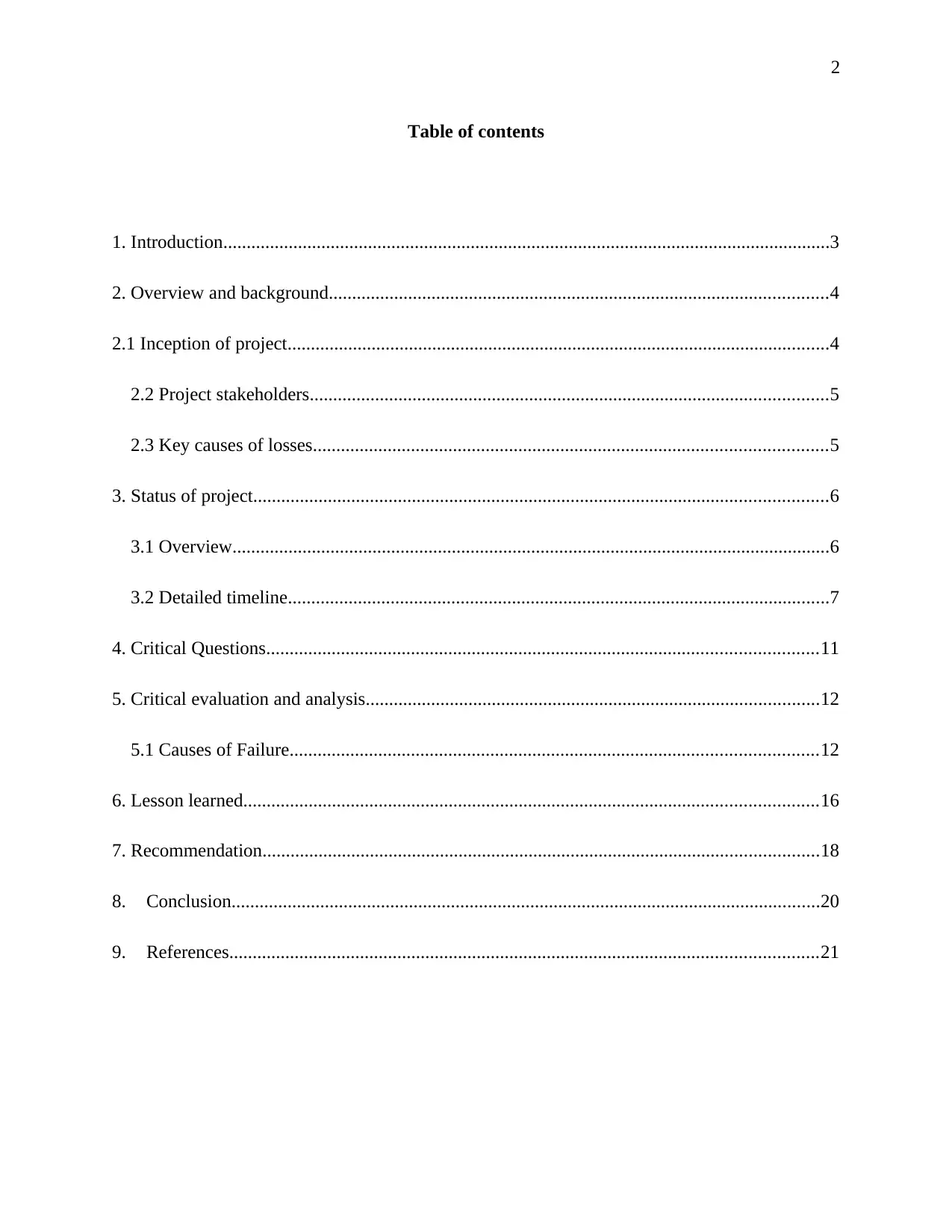
Table of contents
1. Introduction..................................................................................................................................3
2. Overview and background...........................................................................................................4
2.1 Inception of project....................................................................................................................4
2.2 Project stakeholders...............................................................................................................5
2.3 Key causes of losses..............................................................................................................5
3. Status of project...........................................................................................................................6
3.1 Overview................................................................................................................................6
3.2 Detailed timeline....................................................................................................................7
4. Critical Questions......................................................................................................................11
5. Critical evaluation and analysis.................................................................................................12
5.1 Causes of Failure.................................................................................................................12
6. Lesson learned...........................................................................................................................16
7. Recommendation.......................................................................................................................18
8. Conclusion..............................................................................................................................20
9. References..............................................................................................................................21
Table of contents
1. Introduction..................................................................................................................................3
2. Overview and background...........................................................................................................4
2.1 Inception of project....................................................................................................................4
2.2 Project stakeholders...............................................................................................................5
2.3 Key causes of losses..............................................................................................................5
3. Status of project...........................................................................................................................6
3.1 Overview................................................................................................................................6
3.2 Detailed timeline....................................................................................................................7
4. Critical Questions......................................................................................................................11
5. Critical evaluation and analysis.................................................................................................12
5.1 Causes of Failure.................................................................................................................12
6. Lesson learned...........................................................................................................................16
7. Recommendation.......................................................................................................................18
8. Conclusion..............................................................................................................................20
9. References..............................................................................................................................21
3
1. Introduction
Target Corporation had to abandon the 4.4 billion dollar expansion in Canada within 2 years of
its initiation in 2013. The super retailer had to pull out of the business from the country because
it racked up over two billion dollars in losses. In its effort to please the investor's Target had
promised that the Canadian business was expected to become profitable by the end of 2013. This
seems to be a good case study to evaluate how are a multinational business fails and identify the
several causes that are associated with it. The Canadian subsidiary of Target Corporation was
Target Canada and it was the second largest retailer store in the United States.
It was formerly headquarters in the state of Ontario and was formed by exploiting an acquisition
deal of locations of Zellers with The Hudson's Bay Company in the year of 2011 and began the
operations by 2013. At the end of its Run, Target Canada was operating over 130 locations.
Target Canada was unsuccessful due to a very aggressive initiative for expansion complemented
by high prices and a very limited selection of the products they were selling. They were also
overrun by the local market chains like Loblaws as well as there rival, Walmart. Target Canada
was indeed an outstanding failure.
The present report will try to understand the overview as well as the background that led to the
demise of Target Canada. In order to do so is necessary to conduct an overview of the company
and provide the background leading to the disaster. This will be followed by analysing the
project status as well as a detailed timeline until the business was closed. In order to make
inferences, critical questions will be based on which the causes of failures will be evaluated and
recommendations would be provided on the basis of the lessons that were learnt in the process.
1. Introduction
Target Corporation had to abandon the 4.4 billion dollar expansion in Canada within 2 years of
its initiation in 2013. The super retailer had to pull out of the business from the country because
it racked up over two billion dollars in losses. In its effort to please the investor's Target had
promised that the Canadian business was expected to become profitable by the end of 2013. This
seems to be a good case study to evaluate how are a multinational business fails and identify the
several causes that are associated with it. The Canadian subsidiary of Target Corporation was
Target Canada and it was the second largest retailer store in the United States.
It was formerly headquarters in the state of Ontario and was formed by exploiting an acquisition
deal of locations of Zellers with The Hudson's Bay Company in the year of 2011 and began the
operations by 2013. At the end of its Run, Target Canada was operating over 130 locations.
Target Canada was unsuccessful due to a very aggressive initiative for expansion complemented
by high prices and a very limited selection of the products they were selling. They were also
overrun by the local market chains like Loblaws as well as there rival, Walmart. Target Canada
was indeed an outstanding failure.
The present report will try to understand the overview as well as the background that led to the
demise of Target Canada. In order to do so is necessary to conduct an overview of the company
and provide the background leading to the disaster. This will be followed by analysing the
project status as well as a detailed timeline until the business was closed. In order to make
inferences, critical questions will be based on which the causes of failures will be evaluated and
recommendations would be provided on the basis of the lessons that were learnt in the process.
⊘ This is a preview!⊘
Do you want full access?
Subscribe today to unlock all pages.

Trusted by 1+ million students worldwide
4
2. Overview and background
Even before Target Corporation was able to initiate the activities in the Canadian market there
was a large volume of retailers who without any affiliation from the company made use of the
brand Target (Midgets & Schuster). Before entering the Canadian market, Target Corporation
tried to solidify its brand name by purchasing the Canadian TM right of the businesses that were
using the brand name as well as new applications for their own. The Trademark issues with
Target continued and the expansion activities undertaken by Target Corporation was under
Jeopardy due to a rival party which has claimed the Canadian right for the brand name Target in
the context of Apparels and clothing.
The trademark was registered to Dylex Ltd. a company which defunctioned in 2010. However,
these rights had been acquired by Fairweather Ltd. In the year 2012 after a long ordeal in courts,
it was announced that both the parties had reached an agreement which stated that Fairweather
Ltd. was to cease the use of the TM Target apparel by the year 2013 which actually provided
Target Canada with the complete ownership of the brand in Canada. As pointed out by Yoder,
Visich & Rustambekov (2016), it should be noted that rumours were in circulation pertaining to
the expansion activities of Target Corporation since 2004. The rumours also claimed that Target
Corporation would try to acquire Zellers.
2.1 Inception of project
In 2010 the long term International expansion plans were released in the public domain by the
company. This plan also included Canadian expansion. In the year 2011, Target Corporation
officially announced that it was planning to purchase lease agreements of over 200 Zeller store
for a sum of nearly 2 billion Canadian dollars. The agreement between the two parties stated that
Zellers was to sublease their property and had the permission to continue the operations as
2. Overview and background
Even before Target Corporation was able to initiate the activities in the Canadian market there
was a large volume of retailers who without any affiliation from the company made use of the
brand Target (Midgets & Schuster). Before entering the Canadian market, Target Corporation
tried to solidify its brand name by purchasing the Canadian TM right of the businesses that were
using the brand name as well as new applications for their own. The Trademark issues with
Target continued and the expansion activities undertaken by Target Corporation was under
Jeopardy due to a rival party which has claimed the Canadian right for the brand name Target in
the context of Apparels and clothing.
The trademark was registered to Dylex Ltd. a company which defunctioned in 2010. However,
these rights had been acquired by Fairweather Ltd. In the year 2012 after a long ordeal in courts,
it was announced that both the parties had reached an agreement which stated that Fairweather
Ltd. was to cease the use of the TM Target apparel by the year 2013 which actually provided
Target Canada with the complete ownership of the brand in Canada. As pointed out by Yoder,
Visich & Rustambekov (2016), it should be noted that rumours were in circulation pertaining to
the expansion activities of Target Corporation since 2004. The rumours also claimed that Target
Corporation would try to acquire Zellers.
2.1 Inception of project
In 2010 the long term International expansion plans were released in the public domain by the
company. This plan also included Canadian expansion. In the year 2011, Target Corporation
officially announced that it was planning to purchase lease agreements of over 200 Zeller store
for a sum of nearly 2 billion Canadian dollars. The agreement between the two parties stated that
Zellers was to sublease their property and had the permission to continue the operations as
Paraphrase This Document
Need a fresh take? Get an instant paraphrase of this document with our AI Paraphraser
5
Zellers till 2012 (Koi-Akrofi, 2016). This retailer chain was not completely bought out by Target
and Zellers was left with operating only 64 stores in locations which were less desirable.
2.2 Project stakeholders
The parent company of the brand, HBC was unable to overcome the geographical constraints and
in 2012 they closed all the remaining stores. In 2011, Target Corporation notified the consumers
that 105 stores had been chosen that would be converted to outlets of Target Corporation. By the
end of 2011, Target announced an additional 89 stores for selections, converting 189 Zellers
stores to Target. According to Zhou, Xie & Wang (2016), the company had a plan to initiate the
first store opening cycle in March or April of 2013. They would be followed by 4 additional
store opening cycle later in the year.
In order to convert the stores, the outlets were closed for 6 to 9 months and subjected to a
significant amount of remodelling as well as renovation. In order to run the stores, Target
Corporation had announced that it would hire over 25,000 new employees for supporting the
expansion move in the Canadian market in addition to 5000 from Quebec (Freeman, 2016). The
food, as well as grocery items, was procured from Sobey’s for the Canadian market.
2.3 Key causes of losses
The stores that were acquired from Hudson's Bay had been located in shopping centres that were
rundown and thus, hard to access. In comparison to the US counterpart, the Target stores in
Canada were smaller and in order to expand and convert to the brand endorsed layout required
more money. The Canadian consumers also complained that the Target was conducting unfair
pricing policies as they noted that the overall value proposition of visiting a Canadian Target
Store is lesser than that going to the US stores or buying online. According to Johnston (2014),
Zellers till 2012 (Koi-Akrofi, 2016). This retailer chain was not completely bought out by Target
and Zellers was left with operating only 64 stores in locations which were less desirable.
2.2 Project stakeholders
The parent company of the brand, HBC was unable to overcome the geographical constraints and
in 2012 they closed all the remaining stores. In 2011, Target Corporation notified the consumers
that 105 stores had been chosen that would be converted to outlets of Target Corporation. By the
end of 2011, Target announced an additional 89 stores for selections, converting 189 Zellers
stores to Target. According to Zhou, Xie & Wang (2016), the company had a plan to initiate the
first store opening cycle in March or April of 2013. They would be followed by 4 additional
store opening cycle later in the year.
In order to convert the stores, the outlets were closed for 6 to 9 months and subjected to a
significant amount of remodelling as well as renovation. In order to run the stores, Target
Corporation had announced that it would hire over 25,000 new employees for supporting the
expansion move in the Canadian market in addition to 5000 from Quebec (Freeman, 2016). The
food, as well as grocery items, was procured from Sobey’s for the Canadian market.
2.3 Key causes of losses
The stores that were acquired from Hudson's Bay had been located in shopping centres that were
rundown and thus, hard to access. In comparison to the US counterpart, the Target stores in
Canada were smaller and in order to expand and convert to the brand endorsed layout required
more money. The Canadian consumers also complained that the Target was conducting unfair
pricing policies as they noted that the overall value proposition of visiting a Canadian Target
Store is lesser than that going to the US stores or buying online. According to Johnston (2014),
6
unfair pricing complemented by ruthless competition by Walmart Canada did not bore well for
the Target.
Perhaps the biggest blow to the brand image was the fact that the store shelves were disorganised
or empty since the selection of products was limited. In order to fill the shelves, the company
build half of the entire aisle with only a single product which irked a lot of consumers. As
already mentioned, Walmart which and expanded into Canada two years before the Target had
been giving a tough time to the company (Austen, 2014). Walmart was able to establish itself as
a house household name for its willingness to engage in discounting. In the hindsight, it can be
said that Target was overambitious in its efforts which can be evident from the fact that they had
opened over 120 stores in a little over 10 months of entering the Canadian market.
Tony Fisher was the president of Target Canada and he was sure of the fact that Canadian
consumer will still go to purchase from Target stores located in the United States. As observed
by Luce (2013), he was also the person to acknowledge the fact that the price parity between the
US and Canadian stores will not be same as the transportation cost, distribution cost, fuel cost,
wage rates, tax rates, duties and cost of goods were higher in Canada in comparison to the United
States. The Canadian market is very different from the densely populated Marketplace in the
United States and due to the legal complexities, the existing distribution network of the retail
chain giant was not of much use in Canada.
3. Status of project
3.1 Overview
Let's take a look at the journey of Target Canada from acquiring the leases for the stores till it
pulled down the shutters. This is a brief overview with summarises the entire project from its
initiation in 2011 till its failure in 2015.
unfair pricing complemented by ruthless competition by Walmart Canada did not bore well for
the Target.
Perhaps the biggest blow to the brand image was the fact that the store shelves were disorganised
or empty since the selection of products was limited. In order to fill the shelves, the company
build half of the entire aisle with only a single product which irked a lot of consumers. As
already mentioned, Walmart which and expanded into Canada two years before the Target had
been giving a tough time to the company (Austen, 2014). Walmart was able to establish itself as
a house household name for its willingness to engage in discounting. In the hindsight, it can be
said that Target was overambitious in its efforts which can be evident from the fact that they had
opened over 120 stores in a little over 10 months of entering the Canadian market.
Tony Fisher was the president of Target Canada and he was sure of the fact that Canadian
consumer will still go to purchase from Target stores located in the United States. As observed
by Luce (2013), he was also the person to acknowledge the fact that the price parity between the
US and Canadian stores will not be same as the transportation cost, distribution cost, fuel cost,
wage rates, tax rates, duties and cost of goods were higher in Canada in comparison to the United
States. The Canadian market is very different from the densely populated Marketplace in the
United States and due to the legal complexities, the existing distribution network of the retail
chain giant was not of much use in Canada.
3. Status of project
3.1 Overview
Let's take a look at the journey of Target Canada from acquiring the leases for the stores till it
pulled down the shutters. This is a brief overview with summarises the entire project from its
initiation in 2011 till its failure in 2015.
⊘ This is a preview!⊘
Do you want full access?
Subscribe today to unlock all pages.
Trusted by 1+ million students worldwide
7
Timeline Event
12th January 2011 The signing of an agreement between Target
and Hudson's Bay company.
26th May 2011 First 105 of sites selected announced.
23rd September 2011 Partnership with Sobeys and announcement of
the final 84 sites selected.
31st January 2012 Target Canada requires vacated store
locations.
5th March 2013 First Store opens.
15th January 2015 Target company announces that it was
stopping all activities in Canadian retail
operations and in time had plans to close the
remaining outlets.
3.2 Detailed timeline
As it has been already mentioned, Target Corporation announced its International expansion
plans in the year 2010. The real expansion activity started in early 2011. Target Corporation
quickly signed the agreement and preceded with the announcement of the sale of $1.8 billion. As
noted by Richman & Simpson (2016), within 4 months of entering the market, Target
Corporation announced the first lot of sites that had been selected for conversion and projected
costs of up to $1 billion, estimating $10 million per site. Within the next 4 months, the company
Timeline Event
12th January 2011 The signing of an agreement between Target
and Hudson's Bay company.
26th May 2011 First 105 of sites selected announced.
23rd September 2011 Partnership with Sobeys and announcement of
the final 84 sites selected.
31st January 2012 Target Canada requires vacated store
locations.
5th March 2013 First Store opens.
15th January 2015 Target company announces that it was
stopping all activities in Canadian retail
operations and in time had plans to close the
remaining outlets.
3.2 Detailed timeline
As it has been already mentioned, Target Corporation announced its International expansion
plans in the year 2010. The real expansion activity started in early 2011. Target Corporation
quickly signed the agreement and preceded with the announcement of the sale of $1.8 billion. As
noted by Richman & Simpson (2016), within 4 months of entering the market, Target
Corporation announced the first lot of sites that had been selected for conversion and projected
costs of up to $1 billion, estimating $10 million per site. Within the next 4 months, the company
Paraphrase This Document
Need a fresh take? Get an instant paraphrase of this document with our AI Paraphraser
8
proceeded with the announcement of the final batch of sites that have been selected as outlets
(O’Faircheallaigh & Ali, 2017). During this time they also engaged in a partnership with Sobeys.
By August 31st, Target Canada had kick started their hiring campaign in which is expected to
hire over 150 employees is beside which sums up to 20000 staff members. On September 23rd
2011, Walmart announced the completion of the acquisition deal from Target Canada regarding
the leases of the 39 locations that were being occupied by Zellers.
Target Corporation started the expansion with a bang and was allocating resources and
manpower without a second thought. However, there was immense pressure on those working in
the project. The timeline was super crunched and even then, the company tried to remove the
barriers to ensure quick decision making so that the progress did not slow down (Sciara, Lovejoy
& Handy, 2018). The target was highly ambitious as it undertook to construct three distribution
centers from scratch within two years when the only one takes at least a few years (Wahba,
2015). The most important decision was pertaining to technology. Target Canada needed to
ensure that they had a good technology that would allow them to order directly from vendors,
process the goods through their houses and promptly get them to the shelves.
The target was not keen on sharing the technology that is used in the US. It is also to be noted
that the technology that was used in the Target stores of United States Were are not set up for
dealing with the operations of a foreign country and this means that it had to be customised by
taking into account the Canadian Dollar as well as the French characters. Since such
customisation would require a significant amount of time, Target Corporation did not have
enough time in their hands to make the changes. As observed by Ziobro & Trichur (2015). this
meant that the company was willing to utilise a readymade solution which could be implemented
quickly even if no one in the company was even a bit of an expert in using it.
proceeded with the announcement of the final batch of sites that have been selected as outlets
(O’Faircheallaigh & Ali, 2017). During this time they also engaged in a partnership with Sobeys.
By August 31st, Target Canada had kick started their hiring campaign in which is expected to
hire over 150 employees is beside which sums up to 20000 staff members. On September 23rd
2011, Walmart announced the completion of the acquisition deal from Target Canada regarding
the leases of the 39 locations that were being occupied by Zellers.
Target Corporation started the expansion with a bang and was allocating resources and
manpower without a second thought. However, there was immense pressure on those working in
the project. The timeline was super crunched and even then, the company tried to remove the
barriers to ensure quick decision making so that the progress did not slow down (Sciara, Lovejoy
& Handy, 2018). The target was highly ambitious as it undertook to construct three distribution
centers from scratch within two years when the only one takes at least a few years (Wahba,
2015). The most important decision was pertaining to technology. Target Canada needed to
ensure that they had a good technology that would allow them to order directly from vendors,
process the goods through their houses and promptly get them to the shelves.
The target was not keen on sharing the technology that is used in the US. It is also to be noted
that the technology that was used in the Target stores of United States Were are not set up for
dealing with the operations of a foreign country and this means that it had to be customised by
taking into account the Canadian Dollar as well as the French characters. Since such
customisation would require a significant amount of time, Target Corporation did not have
enough time in their hands to make the changes. As observed by Ziobro & Trichur (2015). this
meant that the company was willing to utilise a readymade solution which could be implemented
quickly even if no one in the company was even a bit of an expert in using it.
9
Target went along with SAP (Reynaldo, Rumanti & Wiratmadja, 2018). However, a few
numbers of vendors of Target Canada like Sobeys and Loblaw had implemented the same system
earlier. Due to complications in the system and unreliability of data fed into the system, this
initiative was scrapped by the vendors. In order to effectively start its operation, Target Canada
had an impossible job even though they had acquired external help to integrate and implement
the system in its supply and distribution channel.
In order man the storefronts, Target Canada gave top priority to hiring. The company had a well
established organisational culture in the United States which has been considered as one of the
primary factors of the success of the company. In order to make things work in Canada, the
organisational leaders decided to replicate the environment and importance was given to attitude
as well as the soft skill of an individual rather than experience (Kopun & Sparks, 2015).
However, the individuals who were hired in Canada did not have significant experience and had
received training for only a few weeks. The team which was here heading Target’s expansion in
Canada were pressed for time and did not have enough manpower.
Target began facing troubles in 2012. Missing and incomplete tariff codes, products not fitting
into the shipping containers, inability to process merchandise in the distribution centre for
shipping it to a store were only a few of the bunch of problems that Target was facing. As
pointed out by Harris & Perlroth (2014), the supply chain software of the company which was
responsible for monitoring and governing the inventory movement contained several flaws and
for this reason, the company had to spend a lot of money as well as time to fix the problem and
recover from the same.
In March 2013, the first Target Canada Store opened in Guelph, Milton and Fergus in the
southern part of Ontario. By 19th March, Target opened up even more store in Ontario which
Target went along with SAP (Reynaldo, Rumanti & Wiratmadja, 2018). However, a few
numbers of vendors of Target Canada like Sobeys and Loblaw had implemented the same system
earlier. Due to complications in the system and unreliability of data fed into the system, this
initiative was scrapped by the vendors. In order to effectively start its operation, Target Canada
had an impossible job even though they had acquired external help to integrate and implement
the system in its supply and distribution channel.
In order man the storefronts, Target Canada gave top priority to hiring. The company had a well
established organisational culture in the United States which has been considered as one of the
primary factors of the success of the company. In order to make things work in Canada, the
organisational leaders decided to replicate the environment and importance was given to attitude
as well as the soft skill of an individual rather than experience (Kopun & Sparks, 2015).
However, the individuals who were hired in Canada did not have significant experience and had
received training for only a few weeks. The team which was here heading Target’s expansion in
Canada were pressed for time and did not have enough manpower.
Target began facing troubles in 2012. Missing and incomplete tariff codes, products not fitting
into the shipping containers, inability to process merchandise in the distribution centre for
shipping it to a store were only a few of the bunch of problems that Target was facing. As
pointed out by Harris & Perlroth (2014), the supply chain software of the company which was
responsible for monitoring and governing the inventory movement contained several flaws and
for this reason, the company had to spend a lot of money as well as time to fix the problem and
recover from the same.
In March 2013, the first Target Canada Store opened in Guelph, Milton and Fergus in the
southern part of Ontario. By 19th March, Target opened up even more store in Ontario which
⊘ This is a preview!⊘
Do you want full access?
Subscribe today to unlock all pages.
Trusted by 1+ million students worldwide
10
included the East York Town Centre, Cloverdale Mall, Aurora Shopping Centre, Central Mall,
Cambridge Centre, Shopper world Brampton to name a few. Over the next few days many other
locations were opened for business (Peterson, 2015). Target Canada demanded that all the
locations that were acquired from Zellers were to be vacated 31st March 2013.
The year of 2013 was completely overrun by locations opening. By 7th May 2013, Target
Canada had opened up even more stores in locations like British Columbia, Manitoba and
Alberta. By this time Target was opening stores left, right and centre. In the month of July,
Target Canada opened 2 more stores in British Columbia and Alberta, three stores were opened
in Saskatchewan and 11 in Ontario. In the month of July September October and November,
Target launched all the stores in Thunder Bay, Kingston, Brampton, Quebec, Nova Scotia, New
Brunswick, Prince Edward Island, Newfoundland and lastly Labrador.
The year 2014 was also almost similar to 2013 as Target continued to open the converted stores
all over Canada. The problems related to faulty data was still persistent in the day to day
operations of Target. It was further complicated due to the fact that the system implemented in
the company was new and no one had experience regarding its functions (Ainsworth et al. 2016).
The warehouse software in Manhattan was unable to communicate properly with the system in
Canada and this resulted in the creation of a severe bottleneck which hit the distribution centres,
all at the same time. In early 2015, Target announced that it was seizing all its retail activities
and operations in Canada. By 23rd January, Target shut down all the Starbucks outlets that were
present in the stores. In the month of February Target received approval from the court to initiate
the liquidation process and within a few hours, all the stores were directed to start the liquidation
process as well. In order to make up for the losses, Target sold its coveted store locations to
individual buyers.
included the East York Town Centre, Cloverdale Mall, Aurora Shopping Centre, Central Mall,
Cambridge Centre, Shopper world Brampton to name a few. Over the next few days many other
locations were opened for business (Peterson, 2015). Target Canada demanded that all the
locations that were acquired from Zellers were to be vacated 31st March 2013.
The year of 2013 was completely overrun by locations opening. By 7th May 2013, Target
Canada had opened up even more stores in locations like British Columbia, Manitoba and
Alberta. By this time Target was opening stores left, right and centre. In the month of July,
Target Canada opened 2 more stores in British Columbia and Alberta, three stores were opened
in Saskatchewan and 11 in Ontario. In the month of July September October and November,
Target launched all the stores in Thunder Bay, Kingston, Brampton, Quebec, Nova Scotia, New
Brunswick, Prince Edward Island, Newfoundland and lastly Labrador.
The year 2014 was also almost similar to 2013 as Target continued to open the converted stores
all over Canada. The problems related to faulty data was still persistent in the day to day
operations of Target. It was further complicated due to the fact that the system implemented in
the company was new and no one had experience regarding its functions (Ainsworth et al. 2016).
The warehouse software in Manhattan was unable to communicate properly with the system in
Canada and this resulted in the creation of a severe bottleneck which hit the distribution centres,
all at the same time. In early 2015, Target announced that it was seizing all its retail activities
and operations in Canada. By 23rd January, Target shut down all the Starbucks outlets that were
present in the stores. In the month of February Target received approval from the court to initiate
the liquidation process and within a few hours, all the stores were directed to start the liquidation
process as well. In order to make up for the losses, Target sold its coveted store locations to
individual buyers.
Paraphrase This Document
Need a fresh take? Get an instant paraphrase of this document with our AI Paraphraser
11
The stores which could not be sold where close down. By April 12th 2015, all the Target Canada
stores had been shut down. Target s competitive Rival Walmart also joined the foray and
acquired leases for 13 store locations as well as distribution centers in Ontario for a sizable
amount of 165 million dollars which in turn resulted in job creation for about 3400 individuals.
Other retail chains operating in Canada take part in sharing the remaining Assets of Target
Canada.
4. Critical Questions
The critical questioning process determines questions which are to be put out to determine the
causes of success and failure for a particular project. In the current Scenario of Target close
down there are some key drivers which derive questions and based on which failure of the
company in the Canadian market will be evaluated and the drivers are
a) supply chain of the company in Canada
b) Acquisitions management of Target,
c) Operational management,
d) Product differentiation concept in the US and;
e) the role of competitions within the market. These major drivers have created major bedrocks
and parameter based on which the questions have been developed which guide the evaluation on
the causes which lead to failure of Target within the Canadian market and the question are as
follows:
1. How were the purchases of Zellers proved to be wrong to the company’s entrance in the
Canadian market?
2. How the company entered the market without adequate remodeling of the leases it bought
for opening stores in Canada?
The stores which could not be sold where close down. By April 12th 2015, all the Target Canada
stores had been shut down. Target s competitive Rival Walmart also joined the foray and
acquired leases for 13 store locations as well as distribution centers in Ontario for a sizable
amount of 165 million dollars which in turn resulted in job creation for about 3400 individuals.
Other retail chains operating in Canada take part in sharing the remaining Assets of Target
Canada.
4. Critical Questions
The critical questioning process determines questions which are to be put out to determine the
causes of success and failure for a particular project. In the current Scenario of Target close
down there are some key drivers which derive questions and based on which failure of the
company in the Canadian market will be evaluated and the drivers are
a) supply chain of the company in Canada
b) Acquisitions management of Target,
c) Operational management,
d) Product differentiation concept in the US and;
e) the role of competitions within the market. These major drivers have created major bedrocks
and parameter based on which the questions have been developed which guide the evaluation on
the causes which lead to failure of Target within the Canadian market and the question are as
follows:
1. How were the purchases of Zellers proved to be wrong to the company’s entrance in the
Canadian market?
2. How the company entered the market without adequate remodeling of the leases it bought
for opening stores in Canada?
12
3. How well did the supply chain management of the company performed in the Canadian
market?
4. How well the stores of Target located to the population of the customer in Canada?
5. How will the company perform to the customers who were known to the company from
the US market?
6. How well the company did advertised itself to the unknown populations of customers?
7. How was the competition in the Canadian market?
Based on these question further evaluation of the failure of Target will be discussed to analyze
the key and major issues which played a significant role in the failure of the company in their
Canadian Market.
5. Critical evaluation and analysis
5.1 Causes of Failure
The failure of Target within the market of Canada is due to various mismanagement and series of
flawed operations which the company conducted while entering into the market. The causes of
such failure resulted in the pull-down of 133 stores within the Canadian Market and the causes
are is discussed below:
Causes: Purchase of Zeller’s leases of stores
It is considered as one of the initial mistakes which were committed by the company to enter the
Canadian market. The company purchased leases of Zellers to open their stores within the
country (Vardeny et al. 2016). The Zellers Store was under humongous financial downturn and
were not profitable and were to be remodelled in an effective way so that there can incur profit.
Regardless of these things the company purchased these leases which started the entry of Target
in a Negative way as the company has already invested in a non-profitable investment of non-
3. How well did the supply chain management of the company performed in the Canadian
market?
4. How well the stores of Target located to the population of the customer in Canada?
5. How will the company perform to the customers who were known to the company from
the US market?
6. How well the company did advertised itself to the unknown populations of customers?
7. How was the competition in the Canadian market?
Based on these question further evaluation of the failure of Target will be discussed to analyze
the key and major issues which played a significant role in the failure of the company in their
Canadian Market.
5. Critical evaluation and analysis
5.1 Causes of Failure
The failure of Target within the market of Canada is due to various mismanagement and series of
flawed operations which the company conducted while entering into the market. The causes of
such failure resulted in the pull-down of 133 stores within the Canadian Market and the causes
are is discussed below:
Causes: Purchase of Zeller’s leases of stores
It is considered as one of the initial mistakes which were committed by the company to enter the
Canadian market. The company purchased leases of Zellers to open their stores within the
country (Vardeny et al. 2016). The Zellers Store was under humongous financial downturn and
were not profitable and were to be remodelled in an effective way so that there can incur profit.
Regardless of these things the company purchased these leases which started the entry of Target
in a Negative way as the company has already invested in a non-profitable investment of non-
⊘ This is a preview!⊘
Do you want full access?
Subscribe today to unlock all pages.
Trusted by 1+ million students worldwide

1 out of 24


Related Documents


Your All-in-One AI-Powered Toolkit for Academic Success.
+13062052269
info@desklib.com
Available 24*7 on WhatsApp / Email
![[object Object]](/_next/static/media/star-bottom.7253800d.svg)
Unlock your academic potential
Copyright © 2020–2026 A2Z Services. All Rights Reserved. Developed and managed by ZUCOL.