Detailed Analysis of McDonald v FC of T Case - BBAL501 Taxation Law

Verified

Added on  2023/06/10

|9
|679
|262
Report
AI Summary
This report provides a comprehensive analysis of the McDonald v FC of T case, focusing on the central issue of capital gains tax. The case revolves around the taxpayers, Mr. and Mrs. McDonald, and their liability for capital gains tax following the disposition of a property. The core legal question concerns the interpretation of Section 160U (3) of the ITAA 1936, specifically addressing when an asset is considered acquired. The taxpayer argued an oral contract predated the tax introduction, while the court considered the written contract's exchange date. The report examines the arguments presented by both the applicant and the court, including the tribunal's dismissal of the appeal and the Federal Court's affirmation. The conclusion underscores the dismissal of the appeal, the court's adherence to the enforceable contract, and the absence of any legal errors in the tribunal's judgement. The report also references key legal sources and precedents relevant to the case.
Document Page
Taxation
tabler-icon-diamond-filled.svg

Paraphrase This Document

Need a fresh take? Get an instant paraphrase of this document with our AI Paraphraser
Document Page
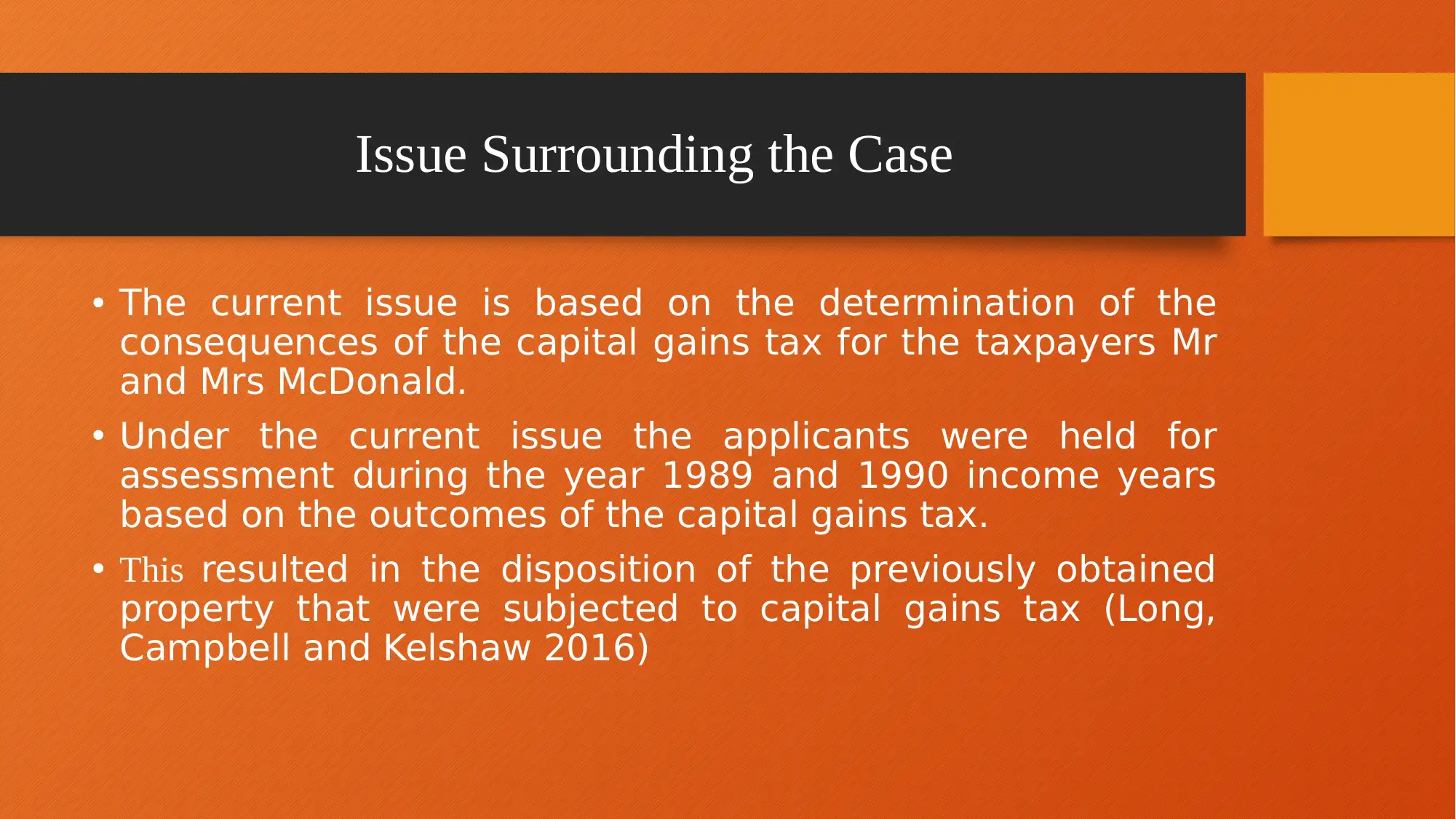
Issue Surrounding the Case
The current issue is based on the determination of the
consequences of the capital gains tax for the taxpayers Mr
and Mrs McDonald.
Under the current issue the applicants were held for
assessment during the year 1989 and 1990 income years
based on the outcomes of the capital gains tax.
This resulted in the disposition of the previously obtained
property that were subjected to capital gains tax (Long,
Campbell and Kelshaw 2016)
Document Page
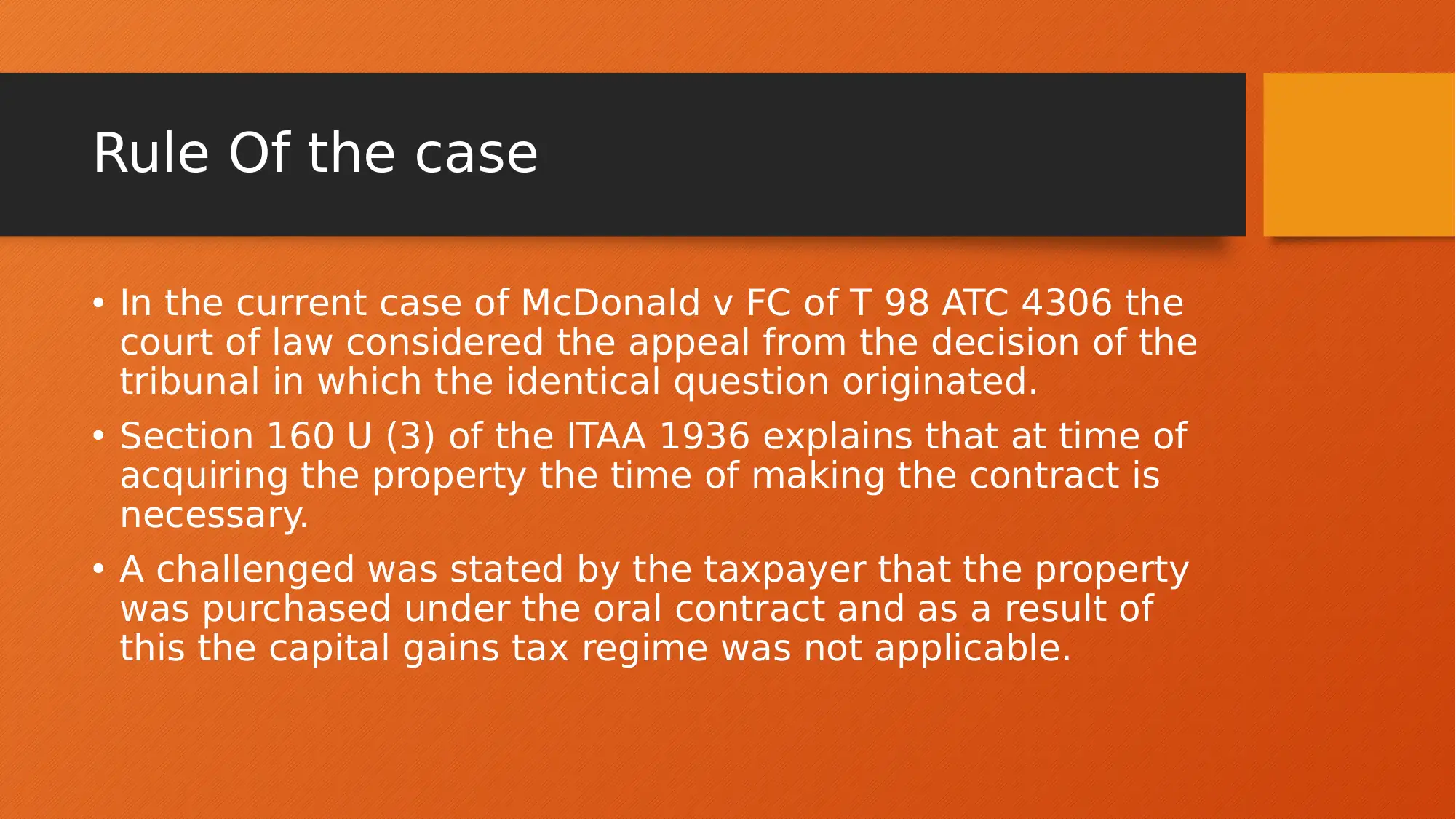
Rule Of the case
In the current case of McDonald v FC of T 98 ATC 4306 the
court of law considered the appeal from the decision of the
tribunal in which the identical question originated.
Section 160 U (3) of the ITAA 1936 explains that at time of
acquiring the property the time of making the contract is
necessary.
A challenged was stated by the taxpayer that the property
was purchased under the oral contract and as a result of
this the capital gains tax regime was not applicable.
Document Page
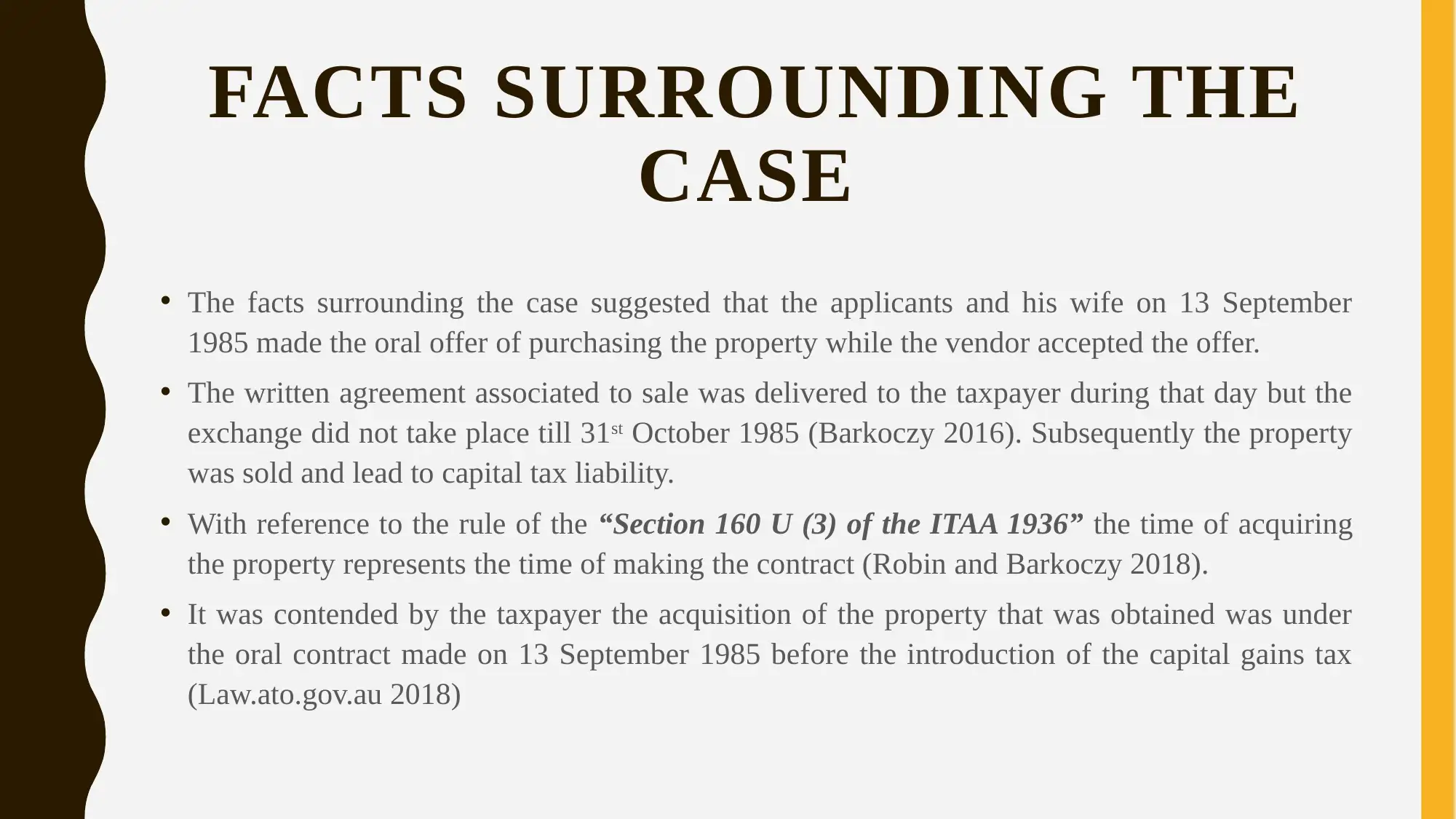
FACTS SURROUNDING THE
CASE
The facts surrounding the case suggested that the applicants and his wife on 13 September
1985 made the oral offer of purchasing the property while the vendor accepted the offer.
The written agreement associated to sale was delivered to the taxpayer during that day but the
exchange did not take place till 31st October 1985 (Barkoczy 2016). Subsequently the property
was sold and lead to capital tax liability.
With reference to the rule of the “Section 160 U (3) of the ITAA 1936” the time of acquiring
the property represents the time of making the contract (Robin and Barkoczy 2018).
It was contended by the taxpayer the acquisition of the property that was obtained was under
the oral contract made on 13 September 1985 before the introduction of the capital gains tax
(Law.ato.gov.au 2018)
tabler-icon-diamond-filled.svg

Paraphrase This Document

Need a fresh take? Get an instant paraphrase of this document with our AI Paraphraser
Document Page
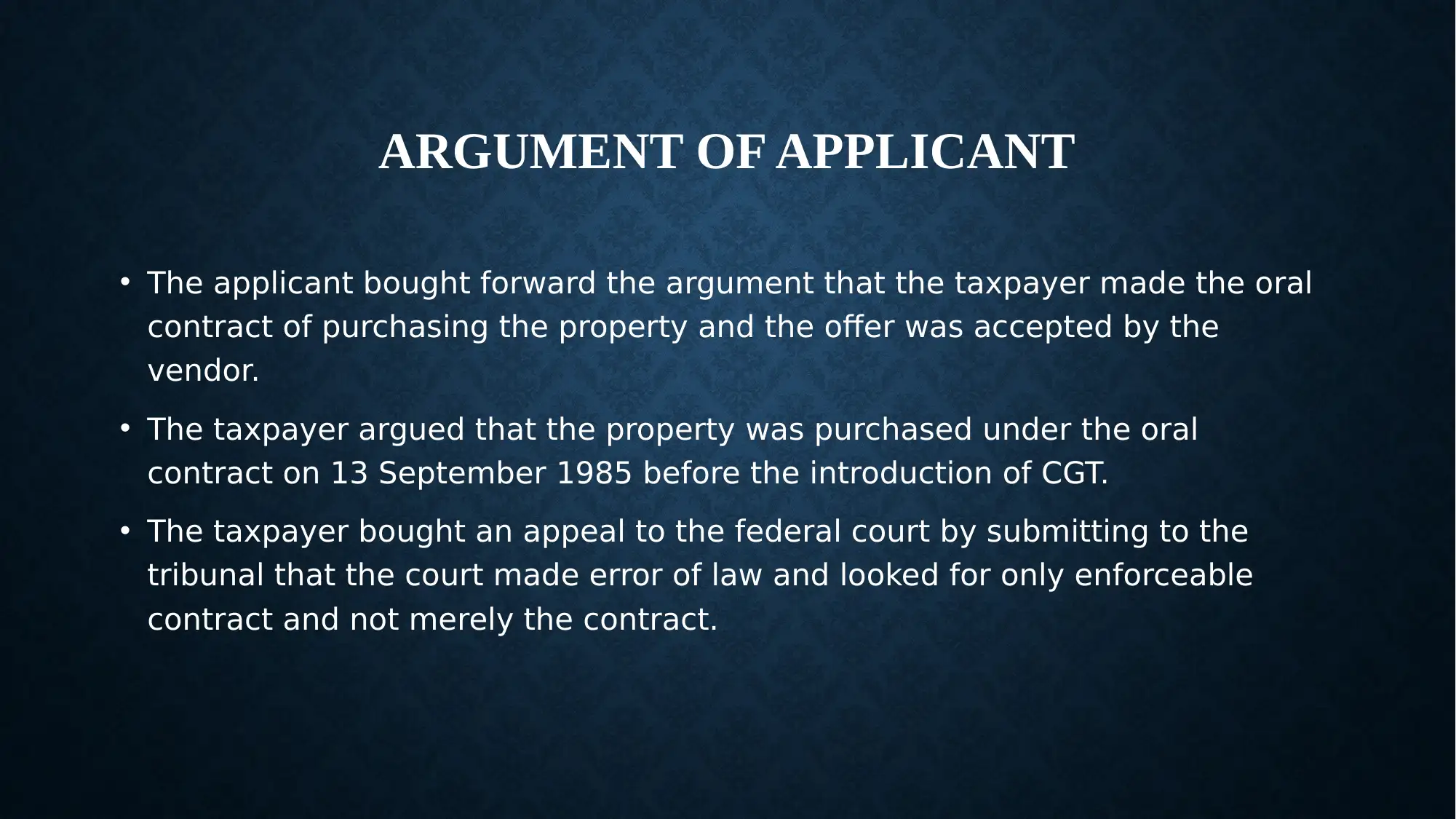
ARGUMENT OF APPLICANT
The applicant bought forward the argument that the taxpayer made the oral
contract of purchasing the property and the offer was accepted by the
vendor.
The taxpayer argued that the property was purchased under the oral
contract on 13 September 1985 before the introduction of CGT.
The taxpayer bought an appeal to the federal court by submitting to the
tribunal that the court made error of law and looked for only enforceable
contract and not merely the contract.
Document Page
Argument of Court
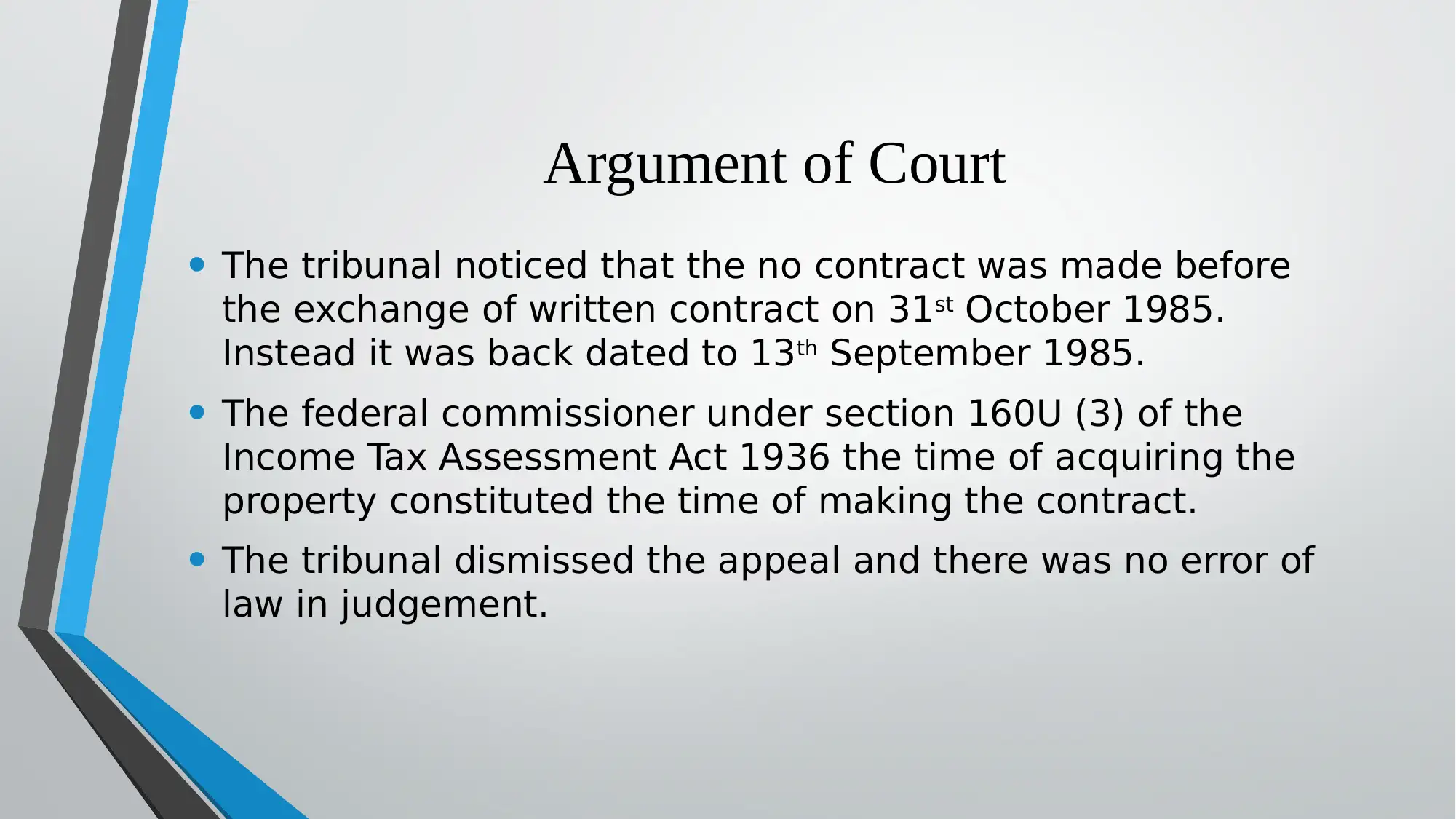
The tribunal noticed that the no contract was made before
the exchange of written contract on 31st October 1985.
Instead it was back dated to 13th September 1985.
The federal commissioner under section 160U (3) of the
Income Tax Assessment Act 1936 the time of acquiring the
property constituted the time of making the contract.
The tribunal dismissed the appeal and there was no error of
law in judgement.
Document Page
CONCLUSION
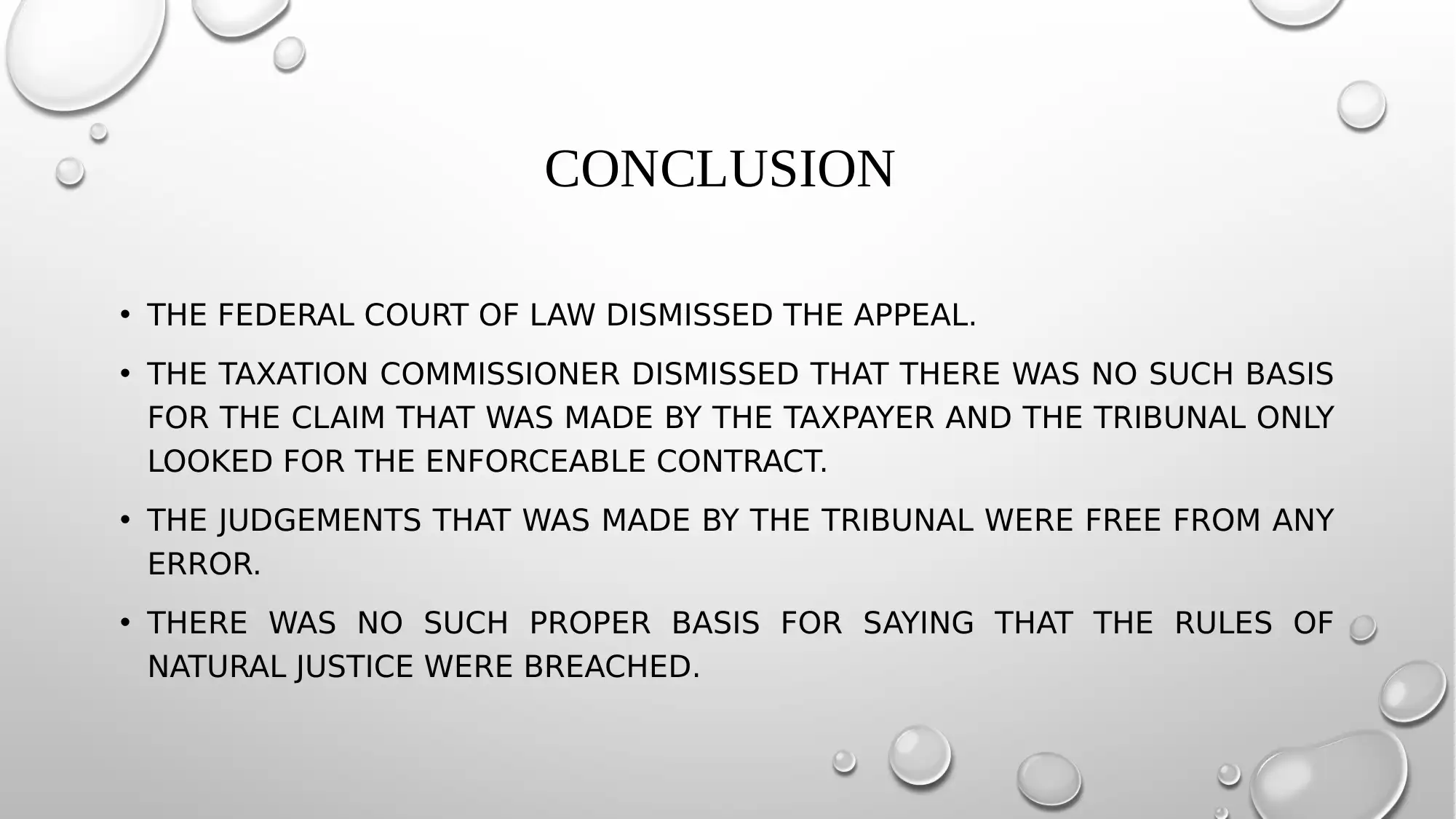
THE FEDERAL COURT OF LAW DISMISSED THE APPEAL.
THE TAXATION COMMISSIONER DISMISSED THAT THERE WAS NO SUCH BASIS
FOR THE CLAIM THAT WAS MADE BY THE TAXPAYER AND THE TRIBUNAL ONLY
LOOKED FOR THE ENFORCEABLE CONTRACT.
THE JUDGEMENTS THAT WAS MADE BY THE TRIBUNAL WERE FREE FROM ANY
ERROR.
THERE WAS NO SUCH PROPER BASIS FOR SAYING THAT THE RULES OF
NATURAL JUSTICE WERE BREACHED.
tabler-icon-diamond-filled.svg

Paraphrase This Document

Need a fresh take? Get an instant paraphrase of this document with our AI Paraphraser
Document Page
REFERENCES
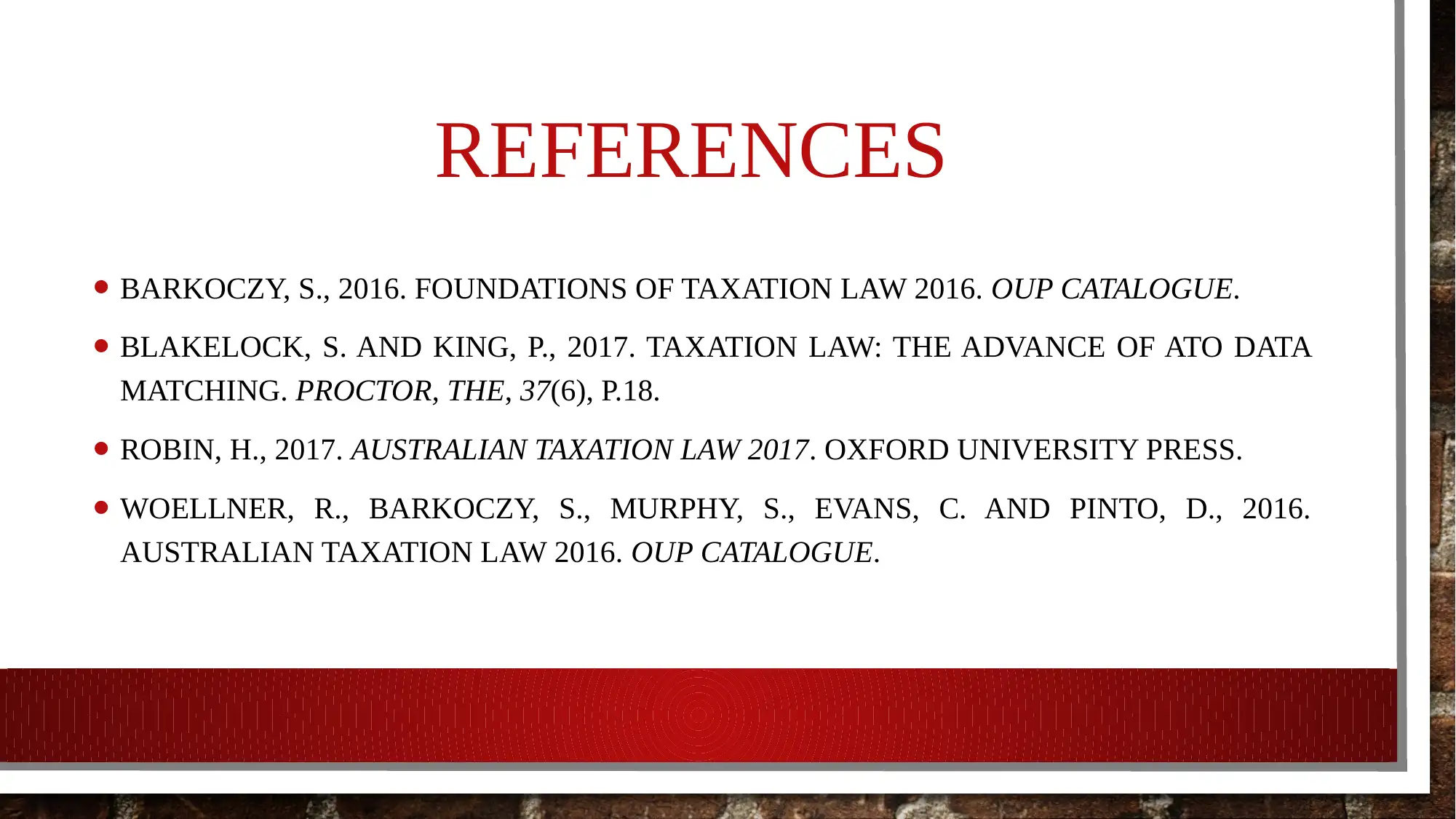
BARKOCZY, S., 2016. FOUNDATIONS OF TAXATION LAW 2016. OUP CATALOGUE.
BLAKELOCK, S. AND KING, P., 2017. TAXATION LAW: THE ADVANCE OF ATO DATA
MATCHING. PROCTOR, THE, 37(6), P.18.
ROBIN, H., 2017. AUSTRALIAN TAXATION LAW 2017. OXFORD UNIVERSITY PRESS.
WOELLNER, R., BARKOCZY, S., MURPHY, S., EVANS, C. AND PINTO, D., 2016.
AUSTRALIAN TAXATION LAW 2016. OUP CATALOGUE.
Document Page
THANK YOU
chevron_up_icon
1 out of 9
circle_padding
hide_on_mobile
zoom_out_icon
[object Object]