Non-profit Company Employee Commitment and Expectations
VerifiedAdded on 2022/10/04
|79
|18109
|18
Dissertation
AI Summary
This dissertation investigates techniques for managing employee commitment and expectations within non-profit organizations, particularly in the UAE context. The research addresses the unique challenges non-profits face due to their social objectives rather than financial gain, focusing on employee engagement, satisfaction, and turnover. The study encompasses a literature review, research methodology involving surveys and interviews, data analysis, and discussion. It examines factors affecting commitment, identifies effective management techniques like clear communication and recruitment, and offers recommendations for improving employee engagement and expectation management in non-profit settings. The dissertation also explores the research gap in the context of UAE and its potential social contributions.
Running head: DISSERTATION
Techniques wherein a non-profit company manages employee commitment and expectations
Name of the student
Name of the University
Author’s note:
Techniques wherein a non-profit company manages employee commitment and expectations
Name of the student
Name of the University
Author’s note:

Paraphrase This Document
Need a fresh take? Get an instant paraphrase of this document with our AI Paraphraser
1
DISSERTATION
Acknowledgement
Thank you to all of those who have helped listened and encouraged me throughout this study. I
am indebted to my supervisor ……………………. whose guidance, advice and patience have
been immeasurable. My sincere thanks to all members of the…………… [Mention your
university/college name], both staff and students, whose continuous support have made this
thesis possible.
I would like to thank all of the participants in the study: students, teachers and Local Education
Authorities, for the time and help given throughout. Without their participation, this research
would not have been possible. In this context, I am also thankful to them, whose research work
helped me to execute this paper well.
Finally, I thank my family, without whom this thesis would not have been started or completed!
Your encouragement and support have never faltered; thank you.
DISSERTATION
Acknowledgement
Thank you to all of those who have helped listened and encouraged me throughout this study. I
am indebted to my supervisor ……………………. whose guidance, advice and patience have
been immeasurable. My sincere thanks to all members of the…………… [Mention your
university/college name], both staff and students, whose continuous support have made this
thesis possible.
I would like to thank all of the participants in the study: students, teachers and Local Education
Authorities, for the time and help given throughout. Without their participation, this research
would not have been possible. In this context, I am also thankful to them, whose research work
helped me to execute this paper well.
Finally, I thank my family, without whom this thesis would not have been started or completed!
Your encouragement and support have never faltered; thank you.
2
DISSERTATION
Abstract
The aim of the research is to investigate the technique those can be used in non-profit companies
for managing commitment of the employees as well as their expectations. The role of the
employees in the success of an organization is undeniable and has been widely researched in the
past. The employees are the key internal stakeholders whose effort and hard work determines
organizational success. Hence, having a motivated, engaged, committed and satisfied workforce
is beneficial for the business organizations because it improves the organizational performance.
However, the case for nonprofit companies is different because their business objectives do not
signify financial gain but social gain. As a result, the nonprofit companies use the surpluses of
the revenue for achieving their social objective in spite of distributing the income or profit
amongst the shareholders.
Employee engagement and commitment is one of the low researched area in the past considering
the pertinent issue of managing commitment and engagement for employees working for
nonprofit organizations. This is because managing employee commitment and engagement is
more related to financial aspect that is not the business characteristics for nonprofit companies.
The past researches have highlighted that the rate of employee turnover is high because of the
emotional burnout regardless of the using monetary techniques for managing employee
commitment and engagement. The ongoing research will also aim towards shedding light on the
fact that managing employee satisfaction suitably is the key to increased productivity for the
companies along with building greater value for the company by creating care, growth and
development. At a global platform, the rate employee engagement and commitment is recorded
higher though this literature finds inadequate information and idea in the context of UAE.
DISSERTATION
Abstract
The aim of the research is to investigate the technique those can be used in non-profit companies
for managing commitment of the employees as well as their expectations. The role of the
employees in the success of an organization is undeniable and has been widely researched in the
past. The employees are the key internal stakeholders whose effort and hard work determines
organizational success. Hence, having a motivated, engaged, committed and satisfied workforce
is beneficial for the business organizations because it improves the organizational performance.
However, the case for nonprofit companies is different because their business objectives do not
signify financial gain but social gain. As a result, the nonprofit companies use the surpluses of
the revenue for achieving their social objective in spite of distributing the income or profit
amongst the shareholders.
Employee engagement and commitment is one of the low researched area in the past considering
the pertinent issue of managing commitment and engagement for employees working for
nonprofit organizations. This is because managing employee commitment and engagement is
more related to financial aspect that is not the business characteristics for nonprofit companies.
The past researches have highlighted that the rate of employee turnover is high because of the
emotional burnout regardless of the using monetary techniques for managing employee
commitment and engagement. The ongoing research will also aim towards shedding light on the
fact that managing employee satisfaction suitably is the key to increased productivity for the
companies along with building greater value for the company by creating care, growth and
development. At a global platform, the rate employee engagement and commitment is recorded
higher though this literature finds inadequate information and idea in the context of UAE.
⊘ This is a preview!⊘
Do you want full access?
Subscribe today to unlock all pages.

Trusted by 1+ million students worldwide
3
DISSERTATION
From the data analysis, it can be inferred that the main purpose of non-profit organizations is to
use the profit generated for fulfilling the social purpose and agenda. However, the role of the
employees cannot be denied when it comes to successful non-profit organizations because they
give their best in achieving the project without any expectations in terms of monetary benefits.
Henceforth, the different techniques those can be used for managing employee commitment,
expectation and engagement are ensuring clarity, recruiting the right one, effective and regular
communication and maintaining transparency within the non-profit organizations. The
employees surveyed and interviewed mentions that being committed and engaged is challenging
and tough. The significant role played by the employees for non-profit organizations cannot be
denied and entities need to work consistently in ensuring development of a committed and
engaged workforce. Similar is the case of the non-profit organizations in UAE wherein
challenges in respect to employee commitment and expectation are common and potential
techniques for overcoming the issue are identified and supported adequately.
DISSERTATION
From the data analysis, it can be inferred that the main purpose of non-profit organizations is to
use the profit generated for fulfilling the social purpose and agenda. However, the role of the
employees cannot be denied when it comes to successful non-profit organizations because they
give their best in achieving the project without any expectations in terms of monetary benefits.
Henceforth, the different techniques those can be used for managing employee commitment,
expectation and engagement are ensuring clarity, recruiting the right one, effective and regular
communication and maintaining transparency within the non-profit organizations. The
employees surveyed and interviewed mentions that being committed and engaged is challenging
and tough. The significant role played by the employees for non-profit organizations cannot be
denied and entities need to work consistently in ensuring development of a committed and
engaged workforce. Similar is the case of the non-profit organizations in UAE wherein
challenges in respect to employee commitment and expectation are common and potential
techniques for overcoming the issue are identified and supported adequately.
Paraphrase This Document
Need a fresh take? Get an instant paraphrase of this document with our AI Paraphraser
4
DISSERTATION
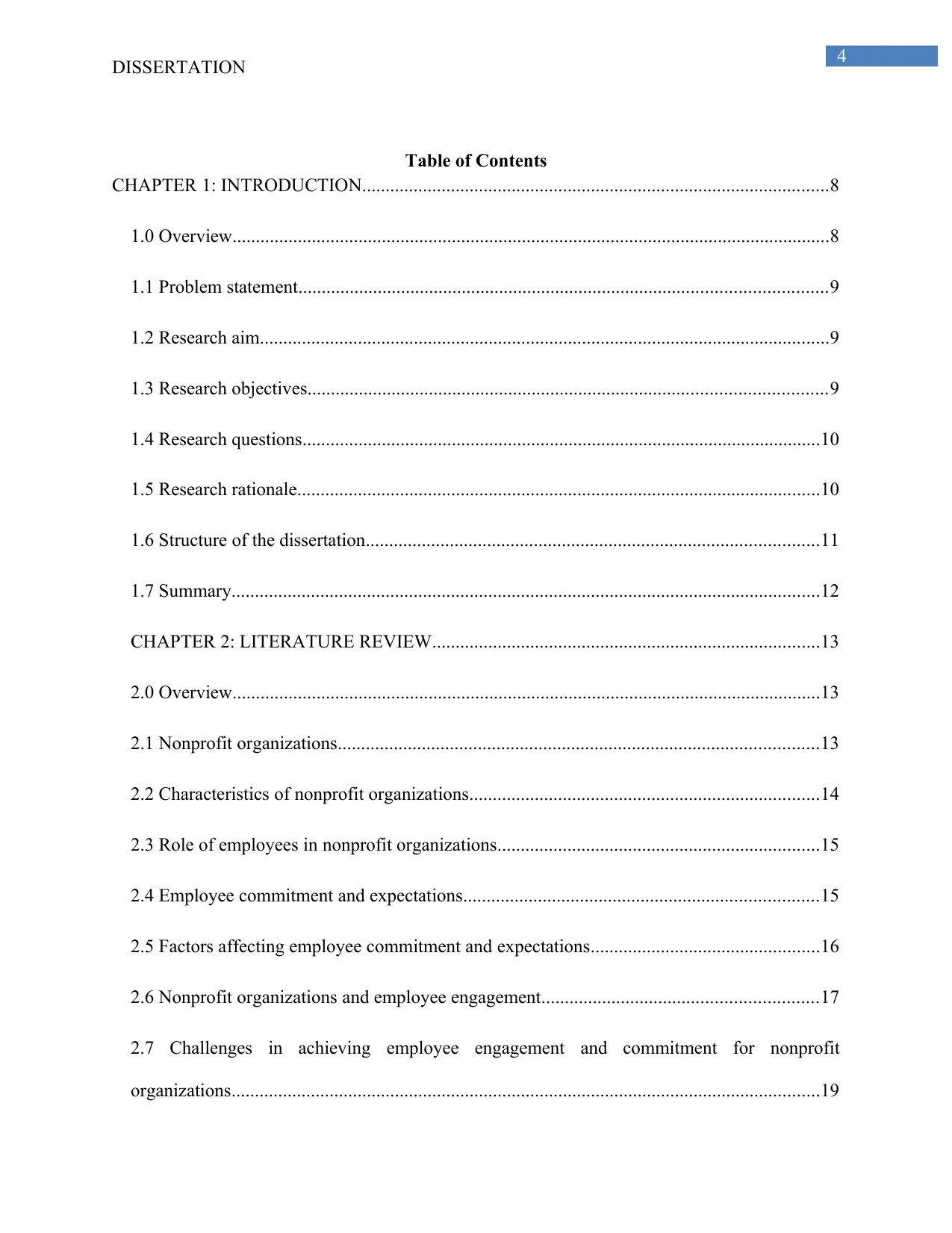
Table of Contents
CHAPTER 1: INTRODUCTION....................................................................................................8
1.0 Overview................................................................................................................................8
1.1 Problem statement.................................................................................................................9
1.2 Research aim..........................................................................................................................9
1.3 Research objectives...............................................................................................................9
1.4 Research questions...............................................................................................................10
1.5 Research rationale................................................................................................................10
1.6 Structure of the dissertation.................................................................................................11
1.7 Summary..............................................................................................................................12
CHAPTER 2: LITERATURE REVIEW...................................................................................13
2.0 Overview..............................................................................................................................13
2.1 Nonprofit organizations.......................................................................................................13
2.2 Characteristics of nonprofit organizations...........................................................................14
2.3 Role of employees in nonprofit organizations.....................................................................15
2.4 Employee commitment and expectations............................................................................15
2.5 Factors affecting employee commitment and expectations.................................................16
2.6 Nonprofit organizations and employee engagement...........................................................17
2.7 Challenges in achieving employee engagement and commitment for nonprofit
organizations..............................................................................................................................19
DISSERTATION
Table of Contents
CHAPTER 1: INTRODUCTION....................................................................................................8
1.0 Overview................................................................................................................................8
1.1 Problem statement.................................................................................................................9
1.2 Research aim..........................................................................................................................9
1.3 Research objectives...............................................................................................................9
1.4 Research questions...............................................................................................................10
1.5 Research rationale................................................................................................................10
1.6 Structure of the dissertation.................................................................................................11
1.7 Summary..............................................................................................................................12
CHAPTER 2: LITERATURE REVIEW...................................................................................13
2.0 Overview..............................................................................................................................13
2.1 Nonprofit organizations.......................................................................................................13
2.2 Characteristics of nonprofit organizations...........................................................................14
2.3 Role of employees in nonprofit organizations.....................................................................15
2.4 Employee commitment and expectations............................................................................15
2.5 Factors affecting employee commitment and expectations.................................................16
2.6 Nonprofit organizations and employee engagement...........................................................17
2.7 Challenges in achieving employee engagement and commitment for nonprofit
organizations..............................................................................................................................19
5
DISSERTATION
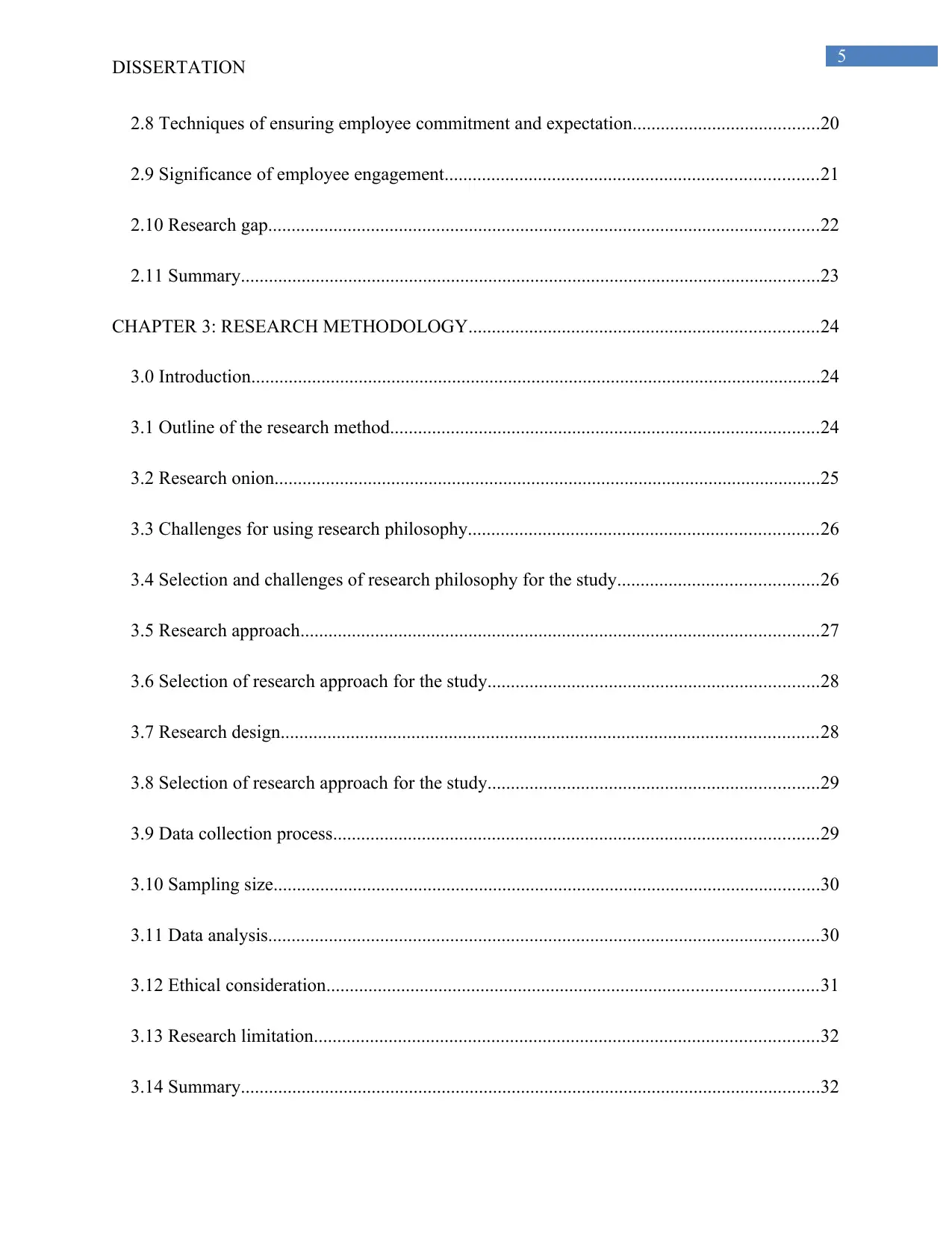
2.8 Techniques of ensuring employee commitment and expectation........................................20
2.9 Significance of employee engagement................................................................................21
2.10 Research gap......................................................................................................................22
2.11 Summary............................................................................................................................23
CHAPTER 3: RESEARCH METHODOLOGY...........................................................................24
3.0 Introduction..........................................................................................................................24
3.1 Outline of the research method............................................................................................24
3.2 Research onion.....................................................................................................................25
3.3 Challenges for using research philosophy...........................................................................26
3.4 Selection and challenges of research philosophy for the study...........................................26
3.5 Research approach...............................................................................................................27
3.6 Selection of research approach for the study.......................................................................28
3.7 Research design...................................................................................................................28
3.8 Selection of research approach for the study.......................................................................29
3.9 Data collection process........................................................................................................29
3.10 Sampling size.....................................................................................................................30
3.11 Data analysis......................................................................................................................30
3.12 Ethical consideration.........................................................................................................31
3.13 Research limitation............................................................................................................32
3.14 Summary............................................................................................................................32
DISSERTATION
2.8 Techniques of ensuring employee commitment and expectation........................................20
2.9 Significance of employee engagement................................................................................21
2.10 Research gap......................................................................................................................22
2.11 Summary............................................................................................................................23
CHAPTER 3: RESEARCH METHODOLOGY...........................................................................24
3.0 Introduction..........................................................................................................................24
3.1 Outline of the research method............................................................................................24
3.2 Research onion.....................................................................................................................25
3.3 Challenges for using research philosophy...........................................................................26
3.4 Selection and challenges of research philosophy for the study...........................................26
3.5 Research approach...............................................................................................................27
3.6 Selection of research approach for the study.......................................................................28
3.7 Research design...................................................................................................................28
3.8 Selection of research approach for the study.......................................................................29
3.9 Data collection process........................................................................................................29
3.10 Sampling size.....................................................................................................................30
3.11 Data analysis......................................................................................................................30
3.12 Ethical consideration.........................................................................................................31
3.13 Research limitation............................................................................................................32
3.14 Summary............................................................................................................................32
⊘ This is a preview!⊘
Do you want full access?
Subscribe today to unlock all pages.
Trusted by 1+ million students worldwide
6
DISSERTATION
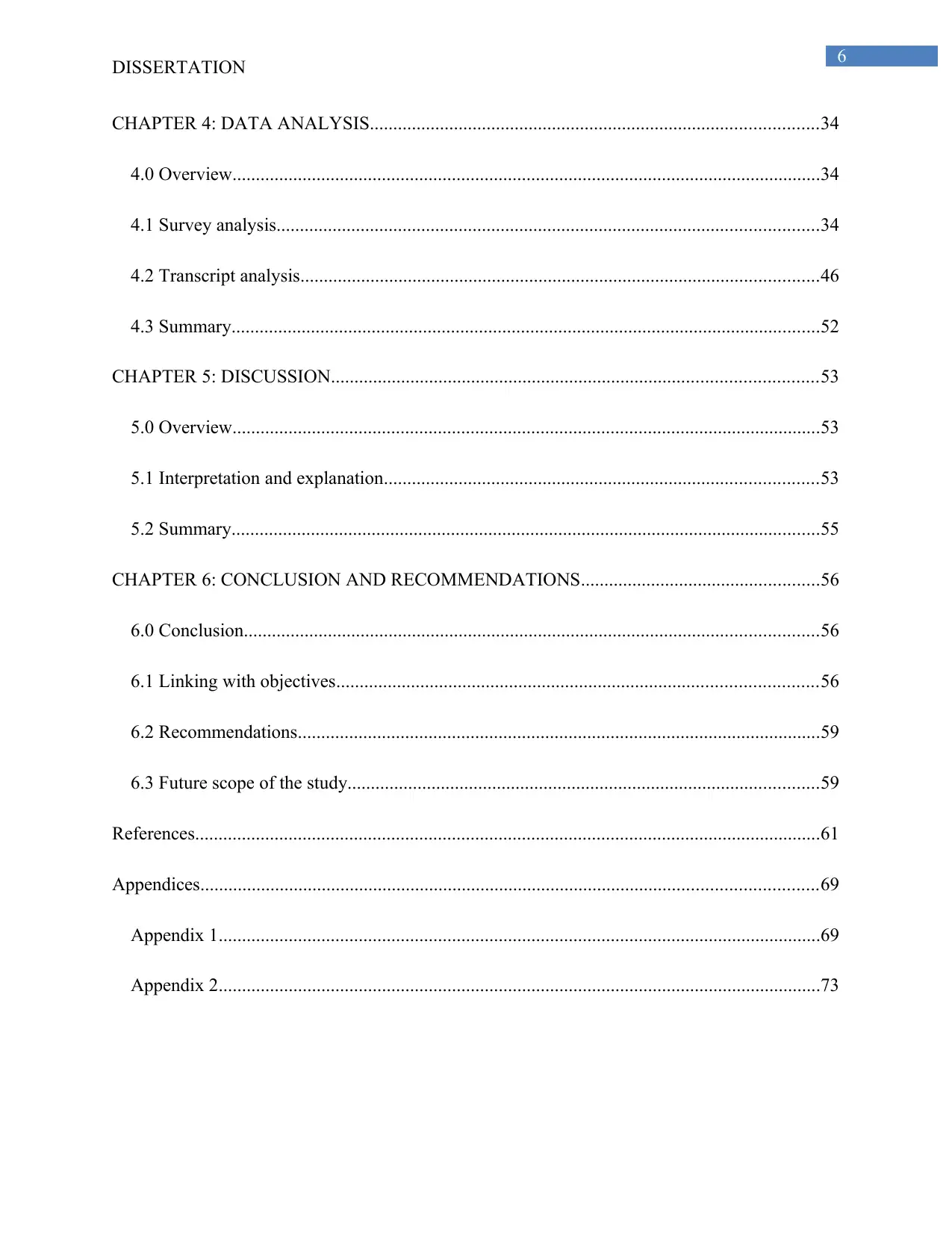
CHAPTER 4: DATA ANALYSIS................................................................................................34
4.0 Overview..............................................................................................................................34
4.1 Survey analysis....................................................................................................................34
4.2 Transcript analysis...............................................................................................................46
4.3 Summary..............................................................................................................................52
CHAPTER 5: DISCUSSION........................................................................................................53
5.0 Overview..............................................................................................................................53
5.1 Interpretation and explanation.............................................................................................53
5.2 Summary..............................................................................................................................55
CHAPTER 6: CONCLUSION AND RECOMMENDATIONS...................................................56
6.0 Conclusion...........................................................................................................................56
6.1 Linking with objectives.......................................................................................................56
6.2 Recommendations................................................................................................................59
6.3 Future scope of the study.....................................................................................................59
References......................................................................................................................................61
Appendices....................................................................................................................................69
Appendix 1.................................................................................................................................69
Appendix 2.................................................................................................................................73
DISSERTATION
CHAPTER 4: DATA ANALYSIS................................................................................................34
4.0 Overview..............................................................................................................................34
4.1 Survey analysis....................................................................................................................34
4.2 Transcript analysis...............................................................................................................46
4.3 Summary..............................................................................................................................52
CHAPTER 5: DISCUSSION........................................................................................................53
5.0 Overview..............................................................................................................................53
5.1 Interpretation and explanation.............................................................................................53
5.2 Summary..............................................................................................................................55
CHAPTER 6: CONCLUSION AND RECOMMENDATIONS...................................................56
6.0 Conclusion...........................................................................................................................56
6.1 Linking with objectives.......................................................................................................56
6.2 Recommendations................................................................................................................59
6.3 Future scope of the study.....................................................................................................59
References......................................................................................................................................61
Appendices....................................................................................................................................69
Appendix 1.................................................................................................................................69
Appendix 2.................................................................................................................................73
Paraphrase This Document
Need a fresh take? Get an instant paraphrase of this document with our AI Paraphraser
7
DISSERTATION
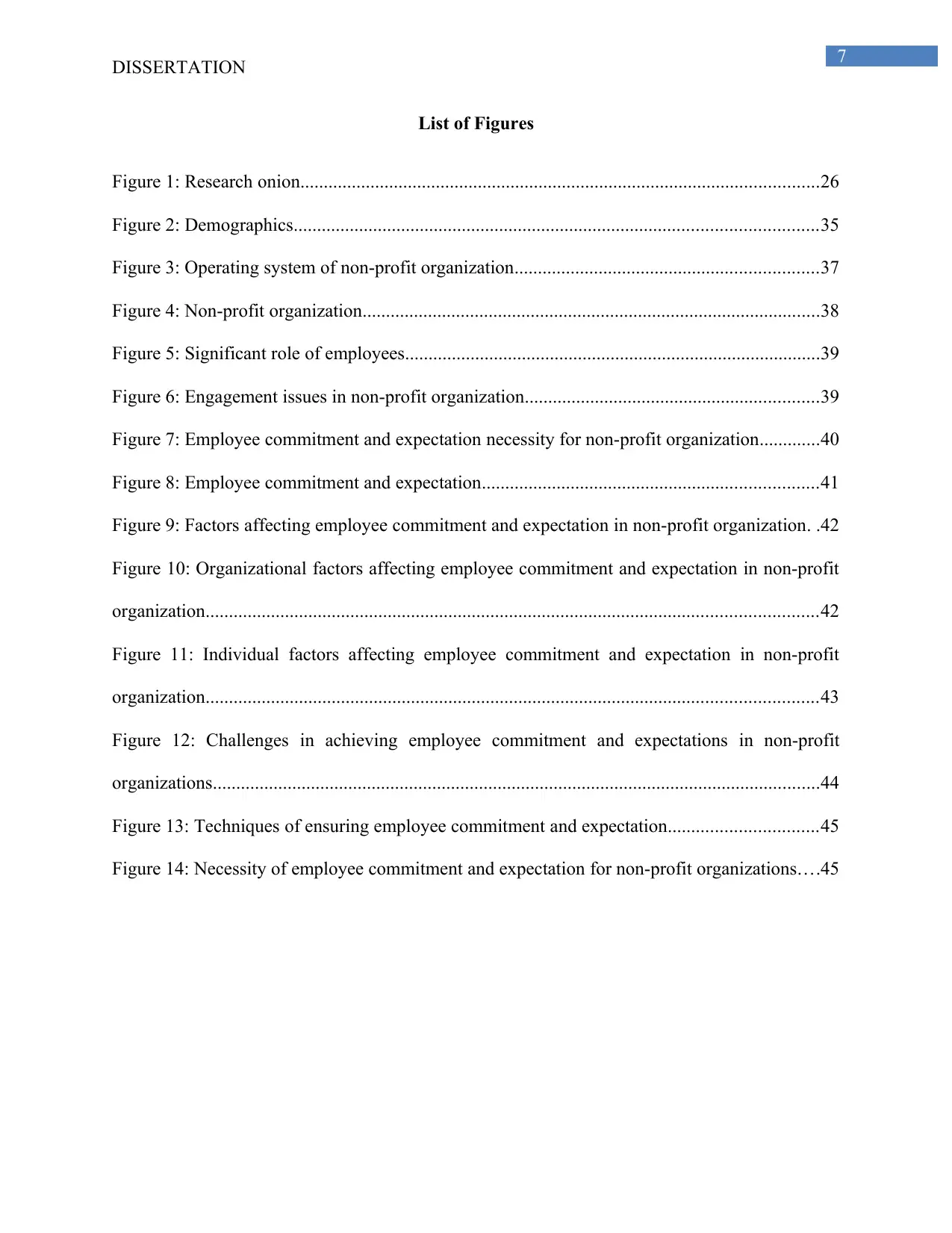
List of Figures
Figure 1: Research onion...............................................................................................................26
Figure 2: Demographics................................................................................................................35
Figure 3: Operating system of non-profit organization.................................................................37
Figure 4: Non-profit organization..................................................................................................38
Figure 5: Significant role of employees.........................................................................................39
Figure 6: Engagement issues in non-profit organization...............................................................39
Figure 7: Employee commitment and expectation necessity for non-profit organization.............40
Figure 8: Employee commitment and expectation........................................................................41
Figure 9: Factors affecting employee commitment and expectation in non-profit organization. .42
Figure 10: Organizational factors affecting employee commitment and expectation in non-profit
organization...................................................................................................................................42
Figure 11: Individual factors affecting employee commitment and expectation in non-profit
organization...................................................................................................................................43
Figure 12: Challenges in achieving employee commitment and expectations in non-profit
organizations..................................................................................................................................44
Figure 13: Techniques of ensuring employee commitment and expectation................................45
Figure 14: Necessity of employee commitment and expectation for non-profit organizations....45
DISSERTATION
List of Figures
Figure 1: Research onion...............................................................................................................26
Figure 2: Demographics................................................................................................................35
Figure 3: Operating system of non-profit organization.................................................................37
Figure 4: Non-profit organization..................................................................................................38
Figure 5: Significant role of employees.........................................................................................39
Figure 6: Engagement issues in non-profit organization...............................................................39
Figure 7: Employee commitment and expectation necessity for non-profit organization.............40
Figure 8: Employee commitment and expectation........................................................................41
Figure 9: Factors affecting employee commitment and expectation in non-profit organization. .42
Figure 10: Organizational factors affecting employee commitment and expectation in non-profit
organization...................................................................................................................................42
Figure 11: Individual factors affecting employee commitment and expectation in non-profit
organization...................................................................................................................................43
Figure 12: Challenges in achieving employee commitment and expectations in non-profit
organizations..................................................................................................................................44
Figure 13: Techniques of ensuring employee commitment and expectation................................45
Figure 14: Necessity of employee commitment and expectation for non-profit organizations....45
8
DISSERTATION
CHAPTER 1: INTRODUCTION
1.0 Overview
The role of the employees in the success of an organization is undeniable and has been
widely researched in the past. As mentioned by Anitha (2014), the employees are the key
internal stakeholders whose effort and hard work determines organizational success and enable
the companies to achieve organizational aim and objectives. Having a motivated, engaged,
committed and satisfied workforce is beneficial for the business organizations because it
improves the organizational performance. Thus, the organizations need to develop strategies and
approaches that can make the employees feel comfortable with their working environment, roles
and responsibilities thereby, giving their best and even take extra initiatives when needed. In
doing so, the business organizations acknowledge or appreciate the hard work of the employees
by giving them perks and benefits. However, the case for nonprofit companies is different
because their business objectives do not signify financial gain but social gain. As a result, the
nonprofit companies use the surpluses of the revenue for achieving their social objective in spite
of distributing the income or profit amongst the shareholders (Akingbola and Van Den Berg
2019).
According to Alfes, Shantz and Bailey (2016), the key aspects of nonprofit organizations
are trustworthiness, honesty, accountability and transparency due to which such companies do
not have anything major to offer in terms of money to the employees. This often becomes an
issue or challenge for managing employee commitment and expectations. Employees who work
for social well-being and for psychological peace can work in such working environment rather
than employees who works only for financial income and stability. Hence, the techniques for
DISSERTATION
CHAPTER 1: INTRODUCTION
1.0 Overview
The role of the employees in the success of an organization is undeniable and has been
widely researched in the past. As mentioned by Anitha (2014), the employees are the key
internal stakeholders whose effort and hard work determines organizational success and enable
the companies to achieve organizational aim and objectives. Having a motivated, engaged,
committed and satisfied workforce is beneficial for the business organizations because it
improves the organizational performance. Thus, the organizations need to develop strategies and
approaches that can make the employees feel comfortable with their working environment, roles
and responsibilities thereby, giving their best and even take extra initiatives when needed. In
doing so, the business organizations acknowledge or appreciate the hard work of the employees
by giving them perks and benefits. However, the case for nonprofit companies is different
because their business objectives do not signify financial gain but social gain. As a result, the
nonprofit companies use the surpluses of the revenue for achieving their social objective in spite
of distributing the income or profit amongst the shareholders (Akingbola and Van Den Berg
2019).
According to Alfes, Shantz and Bailey (2016), the key aspects of nonprofit organizations
are trustworthiness, honesty, accountability and transparency due to which such companies do
not have anything major to offer in terms of money to the employees. This often becomes an
issue or challenge for managing employee commitment and expectations. Employees who work
for social well-being and for psychological peace can work in such working environment rather
than employees who works only for financial income and stability. Hence, the techniques for
⊘ This is a preview!⊘
Do you want full access?
Subscribe today to unlock all pages.
Trusted by 1+ million students worldwide
9
DISSERTATION
managing employee commitment and expectation for nonprofit companies varies largely from
profitable organizations (Gözükara and Şimşek 2015)
1.1 Problem statement
Employee engagement and commitment is one of the low researched area in the past
considering the pertinent issue of managing commitment and engagement for employees
working for nonprofit organizations. Previously, not much attention has been paid on research
techniques for managing employee commitment and expectations. This is because managing
employee commitment and engagement is more related to financial aspect that is not the business
characteristics for nonprofit companies. Managing the expectations of the employees is the most
challenging faced by the human resource management. This is because the nonprofit
organizations or companies do not have any monetary benefits and advantages to offer but offers
psychological peace by making them feel appreciated for the contribution and effort they put in
(De Oliveira and Da Silva 2015).
1.2 Research aim
The aim of the research is to investigate the technique those can be used in non-profit
companies for managing commitment of the employees as well as their expectations.
1.3 Research objectives
The objectives of the research are:
To understand the characteristics of non-profit company
To critically analyze the needs of employee commitment and expectations
To investigate the techniques used for managing employee commitment and expectation
for nonprofit organizations
DISSERTATION
managing employee commitment and expectation for nonprofit companies varies largely from
profitable organizations (Gözükara and Şimşek 2015)
1.1 Problem statement
Employee engagement and commitment is one of the low researched area in the past
considering the pertinent issue of managing commitment and engagement for employees
working for nonprofit organizations. Previously, not much attention has been paid on research
techniques for managing employee commitment and expectations. This is because managing
employee commitment and engagement is more related to financial aspect that is not the business
characteristics for nonprofit companies. Managing the expectations of the employees is the most
challenging faced by the human resource management. This is because the nonprofit
organizations or companies do not have any monetary benefits and advantages to offer but offers
psychological peace by making them feel appreciated for the contribution and effort they put in
(De Oliveira and Da Silva 2015).
1.2 Research aim
The aim of the research is to investigate the technique those can be used in non-profit
companies for managing commitment of the employees as well as their expectations.
1.3 Research objectives
The objectives of the research are:
To understand the characteristics of non-profit company
To critically analyze the needs of employee commitment and expectations
To investigate the techniques used for managing employee commitment and expectation
for nonprofit organizations
Paraphrase This Document
Need a fresh take? Get an instant paraphrase of this document with our AI Paraphraser
10
DISSERTATION
To identify the challenges of managing employee commitment and expectation for
nonprofit organizations
To provide suitable recommendations for improved commitment and expectation of
employees in nonprofit organizations
1.4 Research questions
The questions of the research are:
What are the characteristics of nonprofit company?
What is the need of employee commitment and expectations?
What are the techniques used for managing employee commitment and expectation for
nonprofit organizations?
What are the challenges of managing employee commitment and expectation for
nonprofit organizations?
What are the suitable recommendations for improved commitment and expectation of
employees in nonprofit organizations?
1.5 Research rationale
Undertaking this ongoing research is significant because the future scope it has to offer
towards the society. It is expected that the research will shed light on the factors that results in
emotional satisfaction for the employees thereby, helping to understand the contribution it makes
for the nonprofit business organizations. The past researches have highlighted that the rate of
employee turnover is high because of the emotional burnout regardless of the using monetary
techniques for managing employee commitment and engagement (Curran et al. 2016). As a
result, the ongoing research will be evaluating the large area of employee commitment for
DISSERTATION
To identify the challenges of managing employee commitment and expectation for
nonprofit organizations
To provide suitable recommendations for improved commitment and expectation of
employees in nonprofit organizations
1.4 Research questions
The questions of the research are:
What are the characteristics of nonprofit company?
What is the need of employee commitment and expectations?
What are the techniques used for managing employee commitment and expectation for
nonprofit organizations?
What are the challenges of managing employee commitment and expectation for
nonprofit organizations?
What are the suitable recommendations for improved commitment and expectation of
employees in nonprofit organizations?
1.5 Research rationale
Undertaking this ongoing research is significant because the future scope it has to offer
towards the society. It is expected that the research will shed light on the factors that results in
emotional satisfaction for the employees thereby, helping to understand the contribution it makes
for the nonprofit business organizations. The past researches have highlighted that the rate of
employee turnover is high because of the emotional burnout regardless of the using monetary
techniques for managing employee commitment and engagement (Curran et al. 2016). As a
result, the ongoing research will be evaluating the large area of employee commitment for
11
DISSERTATION
nonprofit organizations. In addition to, the ongoing research will also aim towards shedding light
on the fact that managing employee satisfaction suitably is the key to increased productivity for
the companies along with building greater value for the company by creating care, growth and
development. At a global platform, the rate employee engagement and commitment is recorded
higher though this literature finds inadequate information and idea in the context of UAE. Hence,
this ongoing research will be used for evaluating the identified issue in context of nonprofit
companies in the UAE (Kang 2016).
1.6 Structure of the dissertation
Writing a dissertation with appropriate structure is mandatory so that it can be used as an
authentic source of information for the future researchers. Six chapters comprise the overall
dissertation structure that includes introduction, literature review, research methodology, data
analysis, discussion, conclusion and recommendations. Each of the chapters plays a significant
role and need to be developed chronologically.
The first chapter is the introduction chapter that lays the overall foundation of the
dissertation where an overview about the topic is provided followed by identifying the problem
or the gap. It is based on these information the aim and objectives of the research is formulated
that is further investigated throughout the dissertation. The chapter also justifies the research
purpose and scope of the ongoing research by highlighting the social contribution it can make.
This chapter is followed by the literature review chapter that aim towards reviewing the past
literatures conducted in similar topic and comparing the contrasting the existing information for
developing better understanding about the ongoing research topic. This chapter also helps in
identifying the independent and the dependent variables based on which the entire work is
conducted.
DISSERTATION
nonprofit organizations. In addition to, the ongoing research will also aim towards shedding light
on the fact that managing employee satisfaction suitably is the key to increased productivity for
the companies along with building greater value for the company by creating care, growth and
development. At a global platform, the rate employee engagement and commitment is recorded
higher though this literature finds inadequate information and idea in the context of UAE. Hence,
this ongoing research will be used for evaluating the identified issue in context of nonprofit
companies in the UAE (Kang 2016).
1.6 Structure of the dissertation
Writing a dissertation with appropriate structure is mandatory so that it can be used as an
authentic source of information for the future researchers. Six chapters comprise the overall
dissertation structure that includes introduction, literature review, research methodology, data
analysis, discussion, conclusion and recommendations. Each of the chapters plays a significant
role and need to be developed chronologically.
The first chapter is the introduction chapter that lays the overall foundation of the
dissertation where an overview about the topic is provided followed by identifying the problem
or the gap. It is based on these information the aim and objectives of the research is formulated
that is further investigated throughout the dissertation. The chapter also justifies the research
purpose and scope of the ongoing research by highlighting the social contribution it can make.
This chapter is followed by the literature review chapter that aim towards reviewing the past
literatures conducted in similar topic and comparing the contrasting the existing information for
developing better understanding about the ongoing research topic. This chapter also helps in
identifying the independent and the dependent variables based on which the entire work is
conducted.
⊘ This is a preview!⊘
Do you want full access?
Subscribe today to unlock all pages.
Trusted by 1+ million students worldwide

1 out of 79


Related Documents


Your All-in-One AI-Powered Toolkit for Academic Success.
+13062052269
info@desklib.com
Available 24*7 on WhatsApp / Email
![[object Object]](/_next/static/media/star-bottom.7253800d.svg)
Unlock your academic potential
Copyright © 2020–2026 A2Z Services. All Rights Reserved. Developed and managed by ZUCOL.