Project Proposal: Application of Technology Advancement on Education
VerifiedAdded on 2023/06/15
|10
|1569
|89
Project
AI Summary
This project proposal examines the application of technological advancements in enhancing education effectiveness. It begins by outlining the background, introduction, aim, objectives, research questions, scope, and rationale for the study. The literature review explores the concept of technological advancement in education and evaluates the usefulness of technological applications for professional learning and skills improvement. The research methodology details the research type, approach, philosophy, data collection methods, sampling techniques, and ethical considerations. The proposal concludes with a timeline for the project's activities and a list of references. The study aims to determine the impact of technology on education, focusing on practical learning approaches, skills development, and future benefits for both students and teachers.

Personal and Professional
Development 2 - Project
Proposal
Development 2 - Project
Proposal

Paraphrase This Document
Need a fresh take? Get an instant paraphrase of this document with our AI Paraphraser
Table of content
Topic: Application of technology advancement on education effectiveness................................................4
BACKGOROUND..................................................................................................................................4
INTRODUCTION...................................................................................................................................4
Aim:........................................................................................................................................................4
Objective.................................................................................................................................................4
Research question....................................................................................................................................4
Scope.......................................................................................................................................................5
Rationale.................................................................................................................................................5
LITERATURE REVIEW............................................................................................................................5
Theme 1: Concept of technological advancement on education..............................................................5
Theme 2: Evaluate that technological applications are useful for professional leaning and skills
improvement............................................................................................................................................5
RESEARCH METHODOLOGY................................................................................................................6
Research type..........................................................................................................................................6
Research approach...................................................................................................................................6
Research philosophy................................................................................................................................6
Data collection.........................................................................................................................................7
Sampling.................................................................................................................................................7
Ethical consideration...............................................................................................................................7
TIMELINE..................................................................................................................................................7
REFERENCES........................................................................................................................................8
Topic: Application of technology advancement on education effectiveness................................................4
BACKGOROUND..................................................................................................................................4
INTRODUCTION...................................................................................................................................4
Aim:........................................................................................................................................................4
Objective.................................................................................................................................................4
Research question....................................................................................................................................4
Scope.......................................................................................................................................................5
Rationale.................................................................................................................................................5
LITERATURE REVIEW............................................................................................................................5
Theme 1: Concept of technological advancement on education..............................................................5
Theme 2: Evaluate that technological applications are useful for professional leaning and skills
improvement............................................................................................................................................5
RESEARCH METHODOLOGY................................................................................................................6
Research type..........................................................................................................................................6
Research approach...................................................................................................................................6
Research philosophy................................................................................................................................6
Data collection.........................................................................................................................................7
Sampling.................................................................................................................................................7
Ethical consideration...............................................................................................................................7
TIMELINE..................................................................................................................................................7
REFERENCES........................................................................................................................................8

⊘ This is a preview!⊘
Do you want full access?
Subscribe today to unlock all pages.

Trusted by 1+ million students worldwide
Topic: Application of technology advancement on education effectiveness.
BACKGOROUND
Application of technological tools in education sectors is beneficial for teaching methods
improvement throughout the practical learning approaches and it improve the way of teaching.
So this study will provides information about utilization of technological practices in education
student get learn more innovative and practical things as well as its useful for teachers because
they also get learn various things from it. This study will provide information about why
technological advancement expands more efficiency in education.
INTRODUCTION
Technological tool play major role for working culture improvement and new skills
learning approaches in recent market trend. It gives easier methods for completion of task and
provides easier practices for completion of work (Churiyah and et.al., 2020). Technology
application in education department is best practices for practical learning and it not only useful
for new skills development and improvement but its also provides long term or future benefits.
This study will gives better idea about technological advancement on education and technology
applications useful for professional learning or skills improvement.
Aim:
“To impasct of technological advancement on education effectivness”
Objective
To understand the concept of technological advancement in education.
To evaluate the technological applications useful for professional learning and skill
development.
To recommend the strategies for uses by education institution for uses of technology
tools efforts in learning process.
Research question
What is the concept of technological advancement on education?
BACKGOROUND
Application of technological tools in education sectors is beneficial for teaching methods
improvement throughout the practical learning approaches and it improve the way of teaching.
So this study will provides information about utilization of technological practices in education
student get learn more innovative and practical things as well as its useful for teachers because
they also get learn various things from it. This study will provide information about why
technological advancement expands more efficiency in education.
INTRODUCTION
Technological tool play major role for working culture improvement and new skills
learning approaches in recent market trend. It gives easier methods for completion of task and
provides easier practices for completion of work (Churiyah and et.al., 2020). Technology
application in education department is best practices for practical learning and it not only useful
for new skills development and improvement but its also provides long term or future benefits.
This study will gives better idea about technological advancement on education and technology
applications useful for professional learning or skills improvement.
Aim:
“To impasct of technological advancement on education effectivness”
Objective
To understand the concept of technological advancement in education.
To evaluate the technological applications useful for professional learning and skill
development.
To recommend the strategies for uses by education institution for uses of technology
tools efforts in learning process.
Research question
What is the concept of technological advancement on education?
Paraphrase This Document
Need a fresh take? Get an instant paraphrase of this document with our AI Paraphraser
How technological applications beneficial or useful for professional learning and skills
improvement?
Scope
This project useful for determine the concept of technological advancement useful for
effective approach in education sectors. So this study is useful for knowledge development about
utilization of technological tools in education is effective approach or not.
Rationale
Major reason of this study is to identify that a technological tool has power to develop
new skills and easier to provide new learning concept. This study is very useful for education
department who believes in applies in technology for student learning and also students get idea
that technology software useful for future benefits as well.
LITERATURE REVIEW
Theme 1: Concept of technological advancement on education
As per the view of Gokbulut, (2020) technological advancement provides idea about
practical approaches and gives idea to apply new techniques in learning process. Teachers when
consider to provides education with video creation, presentation, project development with
technological tools and many more its great approach for learning.
Theme 2: Evaluate that technological applications are useful for professional leaning and skills
improvement
According to Chatterjee and Bhattacharjee, (2020) of technological software in education
department makes practical learning and technological skill improvement in inivdiual. Its
beneficial approach for communication, easy to provide information, students learn innovative,
useful for explore new things and many more. Also utilization of digital techniques is student get
learn how project will innovative and creative prepares and complete by uses of technology.
Hoq, (2020) argued that on the basis of recent market trend identification or evaluation,
idea about digital learning is essential term without knowing and considering about digital
improvement?
Scope
This project useful for determine the concept of technological advancement useful for
effective approach in education sectors. So this study is useful for knowledge development about
utilization of technological tools in education is effective approach or not.
Rationale
Major reason of this study is to identify that a technological tool has power to develop
new skills and easier to provide new learning concept. This study is very useful for education
department who believes in applies in technology for student learning and also students get idea
that technology software useful for future benefits as well.
LITERATURE REVIEW
Theme 1: Concept of technological advancement on education
As per the view of Gokbulut, (2020) technological advancement provides idea about
practical approaches and gives idea to apply new techniques in learning process. Teachers when
consider to provides education with video creation, presentation, project development with
technological tools and many more its great approach for learning.
Theme 2: Evaluate that technological applications are useful for professional leaning and skills
improvement
According to Chatterjee and Bhattacharjee, (2020) of technological software in education
department makes practical learning and technological skill improvement in inivdiual. Its
beneficial approach for communication, easy to provide information, students learn innovative,
useful for explore new things and many more. Also utilization of digital techniques is student get
learn how project will innovative and creative prepares and complete by uses of technology.
Hoq, (2020) argued that on the basis of recent market trend identification or evaluation,
idea about digital learning is essential term without knowing and considering about digital
technology it directly impacts on inivdiual future dvelopmeenet because inivdiual corporate
sectors, business has require this approaches for success and new opportunities expansion.
RESEARCH METHODOLOGY
Research type
It is mainly divided into 2 types such as: qualitative and quantitative. Qualitative research is
evaluated by application of interview, questioner, group discussion, observation and many more
approaches. Also, this research technique is useful because it takes less time and less cost (Rafique and
et.al., 2020). Quantitative research is all above determined by knowledge and proper identification of
scientific methodology and graphical data which is not easier approach. In this research researcher applies
questioner approach which useful and beneficial for information collection.
Research approach
There are three types of research approaches: Inductive, Deductive and Abdicative. Inductive
research conducts by questioner and observation practices, Deductive research require methodological
approach and abdicative research is evaluates by combination of other aspects (Cecez-Kecmanovic and
et.al., 2020). Furthermore, in this research inductive research is more suitable concept because its easier
to generate information and research will effectively collect information throughout application of
questioner.
Research philosophy
It has two types: Interpritivism and Positivism. Intenrpretivism research philosophy is based on
principle basis like society play major role in good behavior development in society people. Application
of this term its essential that when researcher uses interpritivism research they mainly focuses on ask
question which not affects individual society background, culture, values and many more (Dickerson
and et.al., 2020). Utilization of this philosophy is effective approach because its easier to evaluate and
collection of information.
Positivism research philosophy identified with natural phenomena and analytics basis with uses
of scientific approaches. In this research interpritisim research is more suitable approach because it
provides idea to not provide harm to society values and their experience provides effective information.
sectors, business has require this approaches for success and new opportunities expansion.
RESEARCH METHODOLOGY
Research type
It is mainly divided into 2 types such as: qualitative and quantitative. Qualitative research is
evaluated by application of interview, questioner, group discussion, observation and many more
approaches. Also, this research technique is useful because it takes less time and less cost (Rafique and
et.al., 2020). Quantitative research is all above determined by knowledge and proper identification of
scientific methodology and graphical data which is not easier approach. In this research researcher applies
questioner approach which useful and beneficial for information collection.
Research approach
There are three types of research approaches: Inductive, Deductive and Abdicative. Inductive
research conducts by questioner and observation practices, Deductive research require methodological
approach and abdicative research is evaluates by combination of other aspects (Cecez-Kecmanovic and
et.al., 2020). Furthermore, in this research inductive research is more suitable concept because its easier
to generate information and research will effectively collect information throughout application of
questioner.
Research philosophy
It has two types: Interpritivism and Positivism. Intenrpretivism research philosophy is based on
principle basis like society play major role in good behavior development in society people. Application
of this term its essential that when researcher uses interpritivism research they mainly focuses on ask
question which not affects individual society background, culture, values and many more (Dickerson
and et.al., 2020). Utilization of this philosophy is effective approach because its easier to evaluate and
collection of information.
Positivism research philosophy identified with natural phenomena and analytics basis with uses
of scientific approaches. In this research interpritisim research is more suitable approach because it
provides idea to not provide harm to society values and their experience provides effective information.
⊘ This is a preview!⊘
Do you want full access?
Subscribe today to unlock all pages.
Trusted by 1+ million students worldwide
Data collection
There are two types of data collection: Primary and Secondary. In this research researcher
use primary research because it develops by qualitative research method which questioner
process (Beveridge and et.al., 2021). In this research researcher collects information with
utilization of primary research with face to face questioner application because its easier to and
recent information collection approach and secondary data collection practice require
mathematical and it also evaluate by old data evaluation activity as well.
Sampling
There are two types of sampling: Probability and non probability. Probability research
researcher has not fix criteria about how much members they have to take and it mainly used in
quantitative research method. In this study non probability sampling will using by researcher
because they decide to collect information from 10 students throughout the random sampling
about technology play effective roles in learning process or not.
Ethical consideration
Its major essential term that when researcher evaluate research they have to develop data
protection with application of passwords and lock methods on laptop otherwise hacker hack the
collected information and it directly impacts on new decision-making. Researcher has major
responsibility that when they take research they not provide harm to society people. Also
students and teachers who provide answer they have to consider that they not share information
to others.
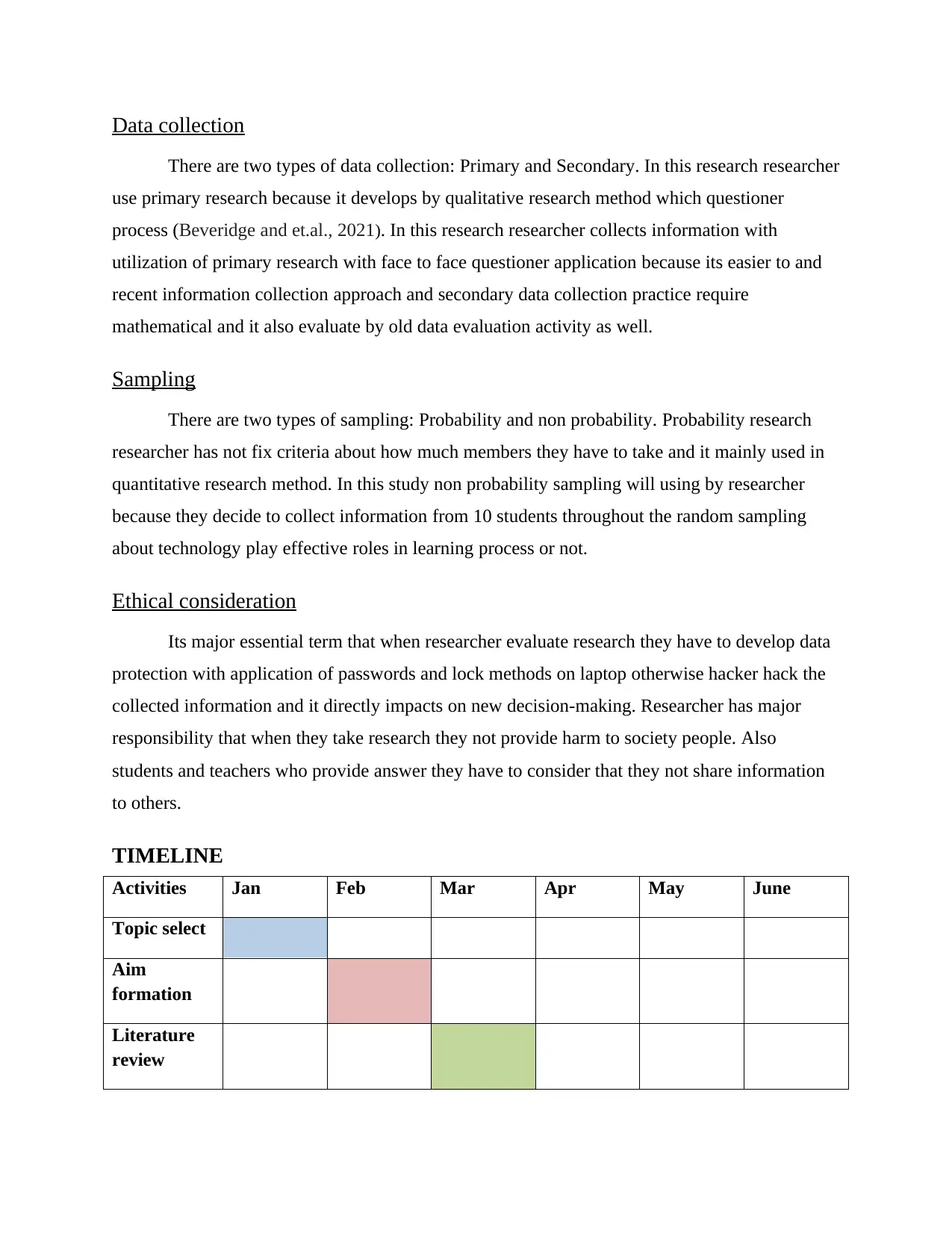
TIMELINE
Activities Jan Feb Mar Apr May June
Topic select
Aim
formation
Literature
review
There are two types of data collection: Primary and Secondary. In this research researcher
use primary research because it develops by qualitative research method which questioner
process (Beveridge and et.al., 2021). In this research researcher collects information with
utilization of primary research with face to face questioner application because its easier to and
recent information collection approach and secondary data collection practice require
mathematical and it also evaluate by old data evaluation activity as well.
Sampling
There are two types of sampling: Probability and non probability. Probability research
researcher has not fix criteria about how much members they have to take and it mainly used in
quantitative research method. In this study non probability sampling will using by researcher
because they decide to collect information from 10 students throughout the random sampling
about technology play effective roles in learning process or not.
Ethical consideration
Its major essential term that when researcher evaluate research they have to develop data
protection with application of passwords and lock methods on laptop otherwise hacker hack the
collected information and it directly impacts on new decision-making. Researcher has major
responsibility that when they take research they not provide harm to society people. Also
students and teachers who provide answer they have to consider that they not share information
to others.
TIMELINE
Activities Jan Feb Mar Apr May June
Topic select
Aim
formation
Literature
review
Paraphrase This Document
Need a fresh take? Get an instant paraphrase of this document with our AI Paraphraser

Research
methodology
Data
collecting
Results
methodology
Data
collecting
Results
REFERENCES
Book and journal
Churiyah, M., and et.al., 2020. Indonesia education readiness conducting distance learning in
Covid-19 pandemic situation. International Journal of Multicultural and Multireligious
Understanding. 7(6). pp.491-507.
Gokbulut, B., 2020. The effect of Mentimeter and Kahoot applications on university students’e-
learning. World Journal on Educational Technology: Current Issues. 12(2). pp.107-116.
Chatterjee, S. and Bhattacharjee, K. K., 2020. Adoption of artificial intelligence in higher
education: A quantitative analysis using structural equation modelling. Education and
Information Technologies. 25(5). pp.3443-3463.
Hoq, M. Z., 2020. E-Learning during the period of pandemic (COVID-19) in the kingdom of
Saudi Arabia: an empirical study. American Journal of Educational Research. 8(7). pp.457-
464.
Rafique, H., and et.al., 2020. Investigating the acceptance of mobile library applications with an
extended technology acceptance model (TAM). Computers & Education. 145. p.103732.
Cecez-Kecmanovic, D., and et.al., 2020. Advancing qualitative IS research methodologies:
Expanding horizons and seeking new paths. Journal of the Association for Information
Systems. 21(1). p.1.
Dickerson, D., and et.al., 2020. Encompassing cultural contexts within scientific research
methodologies in the development of health promotion interventions. Prevention Science.
21(1). pp.33-42.
Beveridge, R., and et.al., 2021. Applying community-based and Indigenous research
methodologies: lessons learned from the Nuxalk Sputc Project. Ecology and Society.
26(4).
Ahmed, M., and et.al., 2021. An overview of Asian cement industry: Environmental impacts,
research methodologies and mitigation measures. Sustainable Production and
Consumption. 28. pp.1018-1039.
Book and journal
Churiyah, M., and et.al., 2020. Indonesia education readiness conducting distance learning in
Covid-19 pandemic situation. International Journal of Multicultural and Multireligious
Understanding. 7(6). pp.491-507.
Gokbulut, B., 2020. The effect of Mentimeter and Kahoot applications on university students’e-
learning. World Journal on Educational Technology: Current Issues. 12(2). pp.107-116.
Chatterjee, S. and Bhattacharjee, K. K., 2020. Adoption of artificial intelligence in higher
education: A quantitative analysis using structural equation modelling. Education and
Information Technologies. 25(5). pp.3443-3463.
Hoq, M. Z., 2020. E-Learning during the period of pandemic (COVID-19) in the kingdom of
Saudi Arabia: an empirical study. American Journal of Educational Research. 8(7). pp.457-
464.
Rafique, H., and et.al., 2020. Investigating the acceptance of mobile library applications with an
extended technology acceptance model (TAM). Computers & Education. 145. p.103732.
Cecez-Kecmanovic, D., and et.al., 2020. Advancing qualitative IS research methodologies:
Expanding horizons and seeking new paths. Journal of the Association for Information
Systems. 21(1). p.1.
Dickerson, D., and et.al., 2020. Encompassing cultural contexts within scientific research
methodologies in the development of health promotion interventions. Prevention Science.
21(1). pp.33-42.
Beveridge, R., and et.al., 2021. Applying community-based and Indigenous research
methodologies: lessons learned from the Nuxalk Sputc Project. Ecology and Society.
26(4).
Ahmed, M., and et.al., 2021. An overview of Asian cement industry: Environmental impacts,
research methodologies and mitigation measures. Sustainable Production and
Consumption. 28. pp.1018-1039.
⊘ This is a preview!⊘
Do you want full access?
Subscribe today to unlock all pages.
Trusted by 1+ million students worldwide


1 out of 10


Related Documents


Your All-in-One AI-Powered Toolkit for Academic Success.
+13062052269
info@desklib.com
Available 24*7 on WhatsApp / Email
![[object Object]](/_next/static/media/star-bottom.7253800d.svg)
Unlock your academic potential
Copyright © 2020–2026 A2Z Services. All Rights Reserved. Developed and managed by ZUCOL.