Technological Changes and Their Effects on Students - COMP640 Capstone
VerifiedAdded on 2022/09/09
|17
|12875
|46
Project
AI Summary
This capstone project investigates the effects of technological changes on students, focusing on the increasing dependency on technology in modern life. The project examines the problem of technology overuse and its impact on student learning and achievement. It explores how technology, including AI and e-learning, has been implemented in classrooms globally and its effects on student engagement and cognitive abilities. The research includes an introduction outlining the problem, research questions, hypotheses, and the purpose, significance, and organization of the study. The project also features a literature review, methodology, findings, and conclusions, along with a list of references and an appendix. The study aims to analyze the impact of technology on students' learning outcomes, considering both the benefits and potential drawbacks of technology integration in educational settings, while also addressing the need for proper referencing and citation.
Full Terms & Conditions of access and use can be found at
https://www.tandfonline.com/action/journalInformation?journalCode=umle20
RMLE Online
Research in Middle Level Education
ISSN: (Print) 1940-4476 (Online) Journal homepage: https://www.tandfonline.com/loi/umle20
The Intersection between 1:1 Laptop
Implementation and the Characteristics of
Effective Middle Level Schools
John M. Downes & Penny A. Bishop
To cite this article: John M. Downes & Penny A. Bishop (2015) The Intersection between 1:1
Laptop Implementation and the Characteristics of Effective Middle Level Schools, RMLE Online,
38:7, 1-16, DOI: 10.1080/19404476.2015.11462120
To link to this article: https://doi.org/10.1080/19404476.2015.11462120
Published online: 25 Aug 2015.
Submit your article to this journal
Article views: 843
View related articles
View Crossmark data
Citing articles: 3 View citing articles
https://www.tandfonline.com/action/journalInformation?journalCode=umle20
RMLE Online
Research in Middle Level Education
ISSN: (Print) 1940-4476 (Online) Journal homepage: https://www.tandfonline.com/loi/umle20
The Intersection between 1:1 Laptop
Implementation and the Characteristics of
Effective Middle Level Schools
John M. Downes & Penny A. Bishop
To cite this article: John M. Downes & Penny A. Bishop (2015) The Intersection between 1:1
Laptop Implementation and the Characteristics of Effective Middle Level Schools, RMLE Online,
38:7, 1-16, DOI: 10.1080/19404476.2015.11462120
To link to this article: https://doi.org/10.1080/19404476.2015.11462120
Published online: 25 Aug 2015.
Submit your article to this journal
Article views: 843
View related articles
View Crossmark data
Citing articles: 3 View citing articles

Paraphrase This Document
Need a fresh take? Get an instant paraphrase of this document with our AI Paraphraser
RMLE Online— Volume 38, No. 7
© 2015 Association for Middle Level Education 11
David C. Virtue, Ph.D., Editor
University of South Carolina
Columbia, South Carolina
2015 • Volume 38 • Number 7 ISSN 1940-4476
The Intersection between 1:1 Laptop Implementation and the
Characteristics of Effective Middle Level Schools
John M. Downes
Penny A. Bishop
University of Vermont
Abstract
The number of middle level schools adopting 1:1
laptop programs has increased considerably during
the past decade (e.g., Lowther, Strahl, Inan, &
Bates, 2007; Storz & Hoffman, 2013; Texas Center
for Educational Research, 2009). The cornerstone
practices of the middle school concept (National
Middle School Association, 2010), therefore, often
serve as the backdrop for 1:1 implementation. The
purpose of this qualitative study was to examine the
intersection between 1:1 program implementation
and the characteristics of effective middle schools
associated with the middle school concept over a four-
year period. Through ongoing participant observation,
individual interviews, focus groups, and reviews of
digital student work and documents, we explored the
implementation of a 1:1 program by one middle school
team that also espoused the middle school concept.
We begin by providing perspectives on 1:1 programs
and on the middle school concept from research and
theoretical lenses. We then describe the qualitative
methodology we employed to conduct this study. Next,
we present an analysis of our findings, illustrating the
opportunities, tensions, and trajectories that appeared
when we examined 1:1 implementation alongside
the characteristics of effective middle level schools.
Finally, we explore the implications of these findings
for middle level educators, school leaders, and other
stakeholders as they adopt 1:1 programs in schools for
young adolescents.
Keywords: middle school concept, technology
integration, 1:1 computing
Introduction
The number of schools adopting 1:1 computing
programs in which each student has access to his/
her own Internet-enabled device has increased
considerably over the past decade (Lowther, Strahl,
Inan, & Bates, 2007; Project Tomorrow, 2014; Storz
& Hoffman, 2013; Texas Center for Educational
Research, 2009). As digital technology becomes
more affordable and as communities recognize the
importance of educational technology, proponents
assert that providing students with ubiquitous
access to computing devices holds great promise for
personalized instruction and enriched curriculum
© 2015 Association for Middle Level Education 11
David C. Virtue, Ph.D., Editor
University of South Carolina
Columbia, South Carolina
2015 • Volume 38 • Number 7 ISSN 1940-4476
The Intersection between 1:1 Laptop Implementation and the
Characteristics of Effective Middle Level Schools
John M. Downes
Penny A. Bishop
University of Vermont
Abstract
The number of middle level schools adopting 1:1
laptop programs has increased considerably during
the past decade (e.g., Lowther, Strahl, Inan, &
Bates, 2007; Storz & Hoffman, 2013; Texas Center
for Educational Research, 2009). The cornerstone
practices of the middle school concept (National
Middle School Association, 2010), therefore, often
serve as the backdrop for 1:1 implementation. The
purpose of this qualitative study was to examine the
intersection between 1:1 program implementation
and the characteristics of effective middle schools
associated with the middle school concept over a four-
year period. Through ongoing participant observation,
individual interviews, focus groups, and reviews of
digital student work and documents, we explored the
implementation of a 1:1 program by one middle school
team that also espoused the middle school concept.
We begin by providing perspectives on 1:1 programs
and on the middle school concept from research and
theoretical lenses. We then describe the qualitative
methodology we employed to conduct this study. Next,
we present an analysis of our findings, illustrating the
opportunities, tensions, and trajectories that appeared
when we examined 1:1 implementation alongside
the characteristics of effective middle level schools.
Finally, we explore the implications of these findings
for middle level educators, school leaders, and other
stakeholders as they adopt 1:1 programs in schools for
young adolescents.
Keywords: middle school concept, technology
integration, 1:1 computing
Introduction
The number of schools adopting 1:1 computing
programs in which each student has access to his/
her own Internet-enabled device has increased
considerably over the past decade (Lowther, Strahl,
Inan, & Bates, 2007; Project Tomorrow, 2014; Storz
& Hoffman, 2013; Texas Center for Educational
Research, 2009). As digital technology becomes
more affordable and as communities recognize the
importance of educational technology, proponents
assert that providing students with ubiquitous
access to computing devices holds great promise for
personalized instruction and enriched curriculum
RMLE Online— Volume 38, No. 7
© 2015 Association for Middle Level Education 2
(Hansen, 2012). One-to-one programs are particularly
abundant in the middle grades (e.g. Lowther et al.,
2007; Storz & Hoffman, 2013; Texas Center for
Educational Research, 2009), when young adolescents
demonstrate a strong affinity for technology and
reflect in their own lives the technological changes
occurring in their cultures and communities (Bishop
& Downes, 2013; Project Tomorrow, 2014).
Because 1:1 initiatives are increasingly prevalent in
the middle grades, they may often be implemented
concurrently with the middle school concept. In its
seminal position statement, This We Believe: Keys
to Educating Young Adolescents, National Middle
School Association (NMSA, now Association for
Middle Level Education [AMLE]) outlined the
middle school concept by grouping the characteristics
of effective middle level schools into three categories:
(1) Curriculum, Instruction, and Assessment; (2)
Leadership and Organization; and (3) Culture and
Community (NMSA, 2010). Because the success of
implementing both the middle school concept and
1:1 initiatives hinges on similar components, such as
collaborative decision making and responsive school
structures, educators might benefit from a deeper
understanding of the ways in which characteristics
of the middle school concept intersect with the
implementation of effective 1:1 programs.
The purpose of this qualitative study was to examine
over a four-year period the intersection between 1:1
program implementation and the characteristics of
effective middle level schools. The research was
guided by the following questions:
1. How does 1:1 program implementation intersect
with the characteristics of effective middle level
schools?
2. What tensions and opportunities arise when
teachers committed to effective middle level
practices confront the challenges of 1:1?
We begin by providing perspectives on 1:1 programs
and on the middle school concept from research and
theoretical lenses. We then describe the qualitative
methodology we employed to conduct this study. Next,
we present an analysis of our findings, illustrating the
opportunities, tensions, and trajectories that appeared
when we examined 1:1 implementation alongside
the characteristics of effective middle level schools.
Finally, we explore the implications of these findings
for middle level educators, school leaders, and other
stakeholders as they adopt 1:1 programs in schools for
young adolescents.
Theoretical and Research Perspectives
Technology Integration
The use of technology in schools has both strong
support and considerable opposition. One of the great
challenges with research on 1:1 programs in particular
is that 1:1 computing, by definition, signifies the level
at which access to technology is available to students.
It declares nothing about actual educational practices.
One-to-one programs are, therefore, problematic
to study and compare, as they describe the ratio
of technology access, not necessarily how that
technology is being used to promote learning.
Because of this challenge, the research on 1:1
programs is understandably polarized. In some cases,
strong evidence of improved student outcomes exists.
For example, researchers have claimed that student
engagement has increased “dramatically in response
to the enhanced educational access and opportunities
afforded by 1:1 computing” (Bebell & Kay, 2010, p.
3). In one of the earliest and largest 1:1 initiatives,
middle level students in Maine demonstrated
increased engagement and reduced behavior referrals
(Muir, Knezek, & Christensen, 2004) as well as a
7.7% increase in attendance during the first year of
the program (Lemke & Martin, 2003). Other studies
similarly have documented improved attendance
(Lane, 2003; Texas Center for Educational Research,
2009), increased engagement (Bebell & Kay, 2010)
and decreased disciplinary problems (Bebell, 2005).
Researchers have also observed relationships between
technology use in schools and improvements in
students’ attitudes toward learning, self-efficacy,
behavior, and technology proficiency (Hsieh, Cho,
Liu, & Schallert, 2008; Shapley, Sheehan, Maloney, &
Caranikas-Walker, 2011; Storz & Hoffman, 2013).
Researchers have suggested that a link exists between
1:1 programs and student achievement, specifically
that students in 1:1 programs earn significantly higher
test scores and grades for writing, English language
arts, mathematics, and overall grade point averages
compared to students in non-1:1 programs (Lemke &
Fadel, 2006). Many others have noted similar positive
findings (Campuzano, Dynarski, Agodini, & Rall,
2009; Eden, Shamir, & Fershtman, 2011; Shapley et
al., 2011; Suhr, Hernandez, Grimes, & Warschauer,
2010; Weston & Bain, 2010).
Yet efforts to link 1:1 computing with positive
student outcomes are inconsistent and complex
(Storz & Hoffman, 2013). Hur and Oh’s (2012)
research indicated greater student engagement, but
© 2015 Association for Middle Level Education 2
(Hansen, 2012). One-to-one programs are particularly
abundant in the middle grades (e.g. Lowther et al.,
2007; Storz & Hoffman, 2013; Texas Center for
Educational Research, 2009), when young adolescents
demonstrate a strong affinity for technology and
reflect in their own lives the technological changes
occurring in their cultures and communities (Bishop
& Downes, 2013; Project Tomorrow, 2014).
Because 1:1 initiatives are increasingly prevalent in
the middle grades, they may often be implemented
concurrently with the middle school concept. In its
seminal position statement, This We Believe: Keys
to Educating Young Adolescents, National Middle
School Association (NMSA, now Association for
Middle Level Education [AMLE]) outlined the
middle school concept by grouping the characteristics
of effective middle level schools into three categories:
(1) Curriculum, Instruction, and Assessment; (2)
Leadership and Organization; and (3) Culture and
Community (NMSA, 2010). Because the success of
implementing both the middle school concept and
1:1 initiatives hinges on similar components, such as
collaborative decision making and responsive school
structures, educators might benefit from a deeper
understanding of the ways in which characteristics
of the middle school concept intersect with the
implementation of effective 1:1 programs.
The purpose of this qualitative study was to examine
over a four-year period the intersection between 1:1
program implementation and the characteristics of
effective middle level schools. The research was
guided by the following questions:
1. How does 1:1 program implementation intersect
with the characteristics of effective middle level
schools?
2. What tensions and opportunities arise when
teachers committed to effective middle level
practices confront the challenges of 1:1?
We begin by providing perspectives on 1:1 programs
and on the middle school concept from research and
theoretical lenses. We then describe the qualitative
methodology we employed to conduct this study. Next,
we present an analysis of our findings, illustrating the
opportunities, tensions, and trajectories that appeared
when we examined 1:1 implementation alongside
the characteristics of effective middle level schools.
Finally, we explore the implications of these findings
for middle level educators, school leaders, and other
stakeholders as they adopt 1:1 programs in schools for
young adolescents.
Theoretical and Research Perspectives
Technology Integration
The use of technology in schools has both strong
support and considerable opposition. One of the great
challenges with research on 1:1 programs in particular
is that 1:1 computing, by definition, signifies the level
at which access to technology is available to students.
It declares nothing about actual educational practices.
One-to-one programs are, therefore, problematic
to study and compare, as they describe the ratio
of technology access, not necessarily how that
technology is being used to promote learning.
Because of this challenge, the research on 1:1
programs is understandably polarized. In some cases,
strong evidence of improved student outcomes exists.
For example, researchers have claimed that student
engagement has increased “dramatically in response
to the enhanced educational access and opportunities
afforded by 1:1 computing” (Bebell & Kay, 2010, p.
3). In one of the earliest and largest 1:1 initiatives,
middle level students in Maine demonstrated
increased engagement and reduced behavior referrals
(Muir, Knezek, & Christensen, 2004) as well as a
7.7% increase in attendance during the first year of
the program (Lemke & Martin, 2003). Other studies
similarly have documented improved attendance
(Lane, 2003; Texas Center for Educational Research,
2009), increased engagement (Bebell & Kay, 2010)
and decreased disciplinary problems (Bebell, 2005).
Researchers have also observed relationships between
technology use in schools and improvements in
students’ attitudes toward learning, self-efficacy,
behavior, and technology proficiency (Hsieh, Cho,
Liu, & Schallert, 2008; Shapley, Sheehan, Maloney, &
Caranikas-Walker, 2011; Storz & Hoffman, 2013).
Researchers have suggested that a link exists between
1:1 programs and student achievement, specifically
that students in 1:1 programs earn significantly higher
test scores and grades for writing, English language
arts, mathematics, and overall grade point averages
compared to students in non-1:1 programs (Lemke &
Fadel, 2006). Many others have noted similar positive
findings (Campuzano, Dynarski, Agodini, & Rall,
2009; Eden, Shamir, & Fershtman, 2011; Shapley et
al., 2011; Suhr, Hernandez, Grimes, & Warschauer,
2010; Weston & Bain, 2010).
Yet efforts to link 1:1 computing with positive
student outcomes are inconsistent and complex
(Storz & Hoffman, 2013). Hur and Oh’s (2012)
research indicated greater student engagement, but
⊘ This is a preview!⊘
Do you want full access?
Subscribe today to unlock all pages.

Trusted by 1+ million students worldwide
RMLE Online— Volume 38, No. 7
© 2015 Association for Middle Level Education 3
no significant difference in test scores, between
students who had been given laptops and those who
had not. Moreover, as the novelty wore off, student
engagement decreased and inappropriate use of
laptops increased. Donovan, Green, and Hartley
(2010) found that increased access to laptops did not
always equate to increased student engagement and,
at times, led to an accompanying range of off-task
behaviors. Still others have identified few or neutral
effects of 1:1 programs (Shapley, Sheehan, Maloney,
& Caranikas-Walker, 2010; Weston & Bain, 2010).
Even when promising interventions are designed and
implemented, the integrity of implementation, not
surprisingly, seems to strongly affect the ultimate
impact. Further, Johnson and Maddux (2006) argued
that implementation is only one of many conditions
that must be satisfied for technology integration.
Middle School Concept
The middle grades are increasingly viewed as a
crucial time for identifying and intervening with
potential dropouts, reinforcing the idea that school
experiences during early adolescence greatly
influence later life outcomes (Balfanz et al., 2014;
Balfanz, Herzog, & Mac Iver, 2007). For decades,
AMLE has underscored the centrality of this
developmental stage for middle level school programs
and has called for them to be developmentally
responsive, challenging, empowering, and equitable
(NMSA, 1982; 1995; 2003; 2010). According to
AMLE, effective middle level schools exhibit
three categories of characteristics that, together,
constitute the middle school concept: (1) relevant and
integrative curricula taught and assessed in varied
ways (Curriculum, Instruction, and Assessment);
(2) schools that are organized to foster healthy
relationships across stakeholder groups and are led
by courageous and collaborative leaders (Leadership
and Organization); and (3) school cultures that are
safe, supportive and inclusive, in which all students’
personal and social needs are addressed by caring
adults specifically prepared to work with the age
group (Culture and Community) (NMSA, 2010).
Although relatively sparse, existing research on
schools employing the middle school concept has
found promising results related to academic and
affective student outcomes (Felner et al., 1997;
Mertens & Anfara, 2006). Students in schools
demonstrating fidelity to the middle school concept,
for example, were found to academically outperform
and exhibit fewer behavior problems than their
peers in schools not implementing the middle school
concept (Felner et al., 1997). Lee and Smith (1993)
also found certain aspects of the middle school
concept to be positively associated with students’
academic achievement and engagement, and the
Center for Prevention Research and Development’s
research suggested that implementing the middle
school concept could positively impact student
achievement (Mertens & Flowers, 2006; Mertens,
Flowers, & Mulhall, 2002).
The majority of research on the middle school concept
has focused on individual aspects of the concept, such
as advisory (e.g., Niska, 2013), principal leadership
(e.g., Gale & Bishop, 2014), teacher dispositions
(e.g., Thornton, 2013), and common planning time
(e.g., Cook & Faulkner, 2010), rather than on holistic
implementation of the concept. Mertens and Anfara
(2006) argued:
In order to answer questions related to the
middle school concept and its effects on student
achievement and socio-emotional development,
middle grades practitioners, researchers, and
policymakers must move beyond this focus on
individual components and look at research that
addresses the reform as an integrated model.
To that end, we chose a holistic approach, using the
three general categories of the middle school concept
delineated in This We Believe (i.e., Curriculum,
Instruction, and Assessment; Leadership and
Organization; and Culture and Community) (NMSA,
2010) as lenses to understand relationships between
1:1 implementation and the middle school concept.
Methodology
This study was conducted over the course of four
years and used a qualitative, instrumental case
study design (Stake, 1995). We relied on participant
observation, teacher and student interviews, meeting
transcripts, and samples of student work to explore
what happens when a team that enacts the middle
school concept tackles the challenge of integrating 1:1
into teaching and learning.
Site and Participants
The site for this research was one team in a middle
school serving a town of roughly 10,000 residents
in the state of Vermont. Compared to other schools
in the same county, the school scored at or near the
bottom in reading, writing, and math on statewide
standardized tests, even accounting for the 20% of
students who receive free and reduced lunch. The
town also consistently ranked near the bottom for
average teacher salary and per pupil expenditures.
© 2015 Association for Middle Level Education 3
no significant difference in test scores, between
students who had been given laptops and those who
had not. Moreover, as the novelty wore off, student
engagement decreased and inappropriate use of
laptops increased. Donovan, Green, and Hartley
(2010) found that increased access to laptops did not
always equate to increased student engagement and,
at times, led to an accompanying range of off-task
behaviors. Still others have identified few or neutral
effects of 1:1 programs (Shapley, Sheehan, Maloney,
& Caranikas-Walker, 2010; Weston & Bain, 2010).
Even when promising interventions are designed and
implemented, the integrity of implementation, not
surprisingly, seems to strongly affect the ultimate
impact. Further, Johnson and Maddux (2006) argued
that implementation is only one of many conditions
that must be satisfied for technology integration.
Middle School Concept
The middle grades are increasingly viewed as a
crucial time for identifying and intervening with
potential dropouts, reinforcing the idea that school
experiences during early adolescence greatly
influence later life outcomes (Balfanz et al., 2014;
Balfanz, Herzog, & Mac Iver, 2007). For decades,
AMLE has underscored the centrality of this
developmental stage for middle level school programs
and has called for them to be developmentally
responsive, challenging, empowering, and equitable
(NMSA, 1982; 1995; 2003; 2010). According to
AMLE, effective middle level schools exhibit
three categories of characteristics that, together,
constitute the middle school concept: (1) relevant and
integrative curricula taught and assessed in varied
ways (Curriculum, Instruction, and Assessment);
(2) schools that are organized to foster healthy
relationships across stakeholder groups and are led
by courageous and collaborative leaders (Leadership
and Organization); and (3) school cultures that are
safe, supportive and inclusive, in which all students’
personal and social needs are addressed by caring
adults specifically prepared to work with the age
group (Culture and Community) (NMSA, 2010).
Although relatively sparse, existing research on
schools employing the middle school concept has
found promising results related to academic and
affective student outcomes (Felner et al., 1997;
Mertens & Anfara, 2006). Students in schools
demonstrating fidelity to the middle school concept,
for example, were found to academically outperform
and exhibit fewer behavior problems than their
peers in schools not implementing the middle school
concept (Felner et al., 1997). Lee and Smith (1993)
also found certain aspects of the middle school
concept to be positively associated with students’
academic achievement and engagement, and the
Center for Prevention Research and Development’s
research suggested that implementing the middle
school concept could positively impact student
achievement (Mertens & Flowers, 2006; Mertens,
Flowers, & Mulhall, 2002).
The majority of research on the middle school concept
has focused on individual aspects of the concept, such
as advisory (e.g., Niska, 2013), principal leadership
(e.g., Gale & Bishop, 2014), teacher dispositions
(e.g., Thornton, 2013), and common planning time
(e.g., Cook & Faulkner, 2010), rather than on holistic
implementation of the concept. Mertens and Anfara
(2006) argued:
In order to answer questions related to the
middle school concept and its effects on student
achievement and socio-emotional development,
middle grades practitioners, researchers, and
policymakers must move beyond this focus on
individual components and look at research that
addresses the reform as an integrated model.
To that end, we chose a holistic approach, using the
three general categories of the middle school concept
delineated in This We Believe (i.e., Curriculum,
Instruction, and Assessment; Leadership and
Organization; and Culture and Community) (NMSA,
2010) as lenses to understand relationships between
1:1 implementation and the middle school concept.
Methodology
This study was conducted over the course of four
years and used a qualitative, instrumental case
study design (Stake, 1995). We relied on participant
observation, teacher and student interviews, meeting
transcripts, and samples of student work to explore
what happens when a team that enacts the middle
school concept tackles the challenge of integrating 1:1
into teaching and learning.
Site and Participants
The site for this research was one team in a middle
school serving a town of roughly 10,000 residents
in the state of Vermont. Compared to other schools
in the same county, the school scored at or near the
bottom in reading, writing, and math on statewide
standardized tests, even accounting for the 20% of
students who receive free and reduced lunch. The
town also consistently ranked near the bottom for
average teacher salary and per pupil expenditures.
Paraphrase This Document
Need a fresh take? Get an instant paraphrase of this document with our AI Paraphraser
RMLE Online— Volume 38, No. 7
© 2015 Association for Middle Level Education 4
The research took place over the course of four
years and focused on a two-teacher or “partner”
team called “Engagers” (all names are pseudonyms)
serving approximately 50 seventh and eighth graders
each year. The teachers brought to their classrooms
a deep understanding of the middle school concept.
Both were licensed specifically for middle grades
teaching; both earned these licenses through a
teacher preparation program built on AMLE program
standards that was nationally accredited for middle
grades teaching. One teacher had seven years of
experience prior to the study. She was licensed to
teach English language arts and social studies in the
middle grades. The other was a new teacher who was
licensed to teach middle grades mathematics and
science and whose first year of teaching was the first
year in the study. A special educator with six years of
experience was added to the team midway through
the study, and his addition brought the total number
of educators on this team to three.
As a result of a university/private foundation
partnership, this team received extensive technology
resources and professional development to infuse
its practice with 21st century tools. In contrast to
other teams in the school, each student and teacher
on the Engagers received laptops for 1:1 wireless
computing. The team space was outfitted with media
production technology, presentation equipment, and a
wide variety of software. A Web portal served as the
program’s Web presence and as a central location for
curriculum resources. The team teachers were chosen
because of their commitment to using technology
within an integrative curriculum that emphasized
individualization, choice, and project-based learning.
The teachers were free to pursue any learning
objectives consistent with these commitments and
their appreciation for the needs and capacities of
young adolescents. There were no explicit standards
or objectives added to those already in place across
the school. One of the team teachers described the
purpose of the project: “I guess I feel like it’s adding
the 21st century learner to what is already good
middle school, middle level practice.”
The teachers participated in long term, embedded
professional development focused on integrating
technology in meaningful ways. A coach provided
by the university offered modeling, support, and
mentoring twice weekly through the first two years
of implementation. The coach came to the project
with 10 years of experience providing professional
development focused on the middle school concept
and on the integration of technology across the
curriculum and in classrooms with ready access to
personal computers and mobile technologies.
Data Collection
The university coach acted as an embedded
researcher who engaged in participant observation,
recording field notes twice weekly during the first
two years of the program and twice monthly for the
latter two years. Teachers and students participated in
formal interviews and focus groups twice per year for
these four years, averaging approximately one hour
per session. Further, informal interviews, reviews
of school and district documents, and examinations
of digital data were ongoing throughout the four
years. Digital data played a particularly important
role as much of the students’ work was in this
form, including photo stories, digital movies, blogs,
podcasts, and the team’s Web portal.
Data Analysis
We used NVivo, a qualitative data analysis software
package, to analyze the digital data, interview and
focus group transcriptions, and field notes. This
tool enabled rich analysis of the large volume of
data generated over four years. We used NVivo to
conduct open and axial coding (Strauss & Corbin,
1998) and to identify codes and categories across the
multiple data sets to classify emerging patterns. We
then created an indexing system to identify themes
within and across data sets (Patton, 2002). We
aligned the pertinent findings with three categories
of characteristics associated with effective middle
level schools (NMSA, 2010). Finally, we examined
the themes for trustworthiness in light of related
literature, triangulation across data types, and
member-checking through subsequent interviews
and consultations with participants and colleagues
(Lincoln & Guba, 1985).
Limitations
This study has several limitations. A qualitative
methodology was appropriate for the descriptive and
analytical purposes of this research, but the findings
should not be generalized to other populations or
settings. For example, the study occurred in a rural
location with a predominantly White population.
Because the sample reflected a relatively low level of
racial/ethnic diversity, one might anticipate different
themes and issues arising from urban or diverse
settings. Further, the presence and participation of the
researchers at the site may have affected participants’
actions and responses. The rapport researchers
developed with participants over the course of four
years may have helped alleviate some of this effect, yet
© 2015 Association for Middle Level Education 4
The research took place over the course of four
years and focused on a two-teacher or “partner”
team called “Engagers” (all names are pseudonyms)
serving approximately 50 seventh and eighth graders
each year. The teachers brought to their classrooms
a deep understanding of the middle school concept.
Both were licensed specifically for middle grades
teaching; both earned these licenses through a
teacher preparation program built on AMLE program
standards that was nationally accredited for middle
grades teaching. One teacher had seven years of
experience prior to the study. She was licensed to
teach English language arts and social studies in the
middle grades. The other was a new teacher who was
licensed to teach middle grades mathematics and
science and whose first year of teaching was the first
year in the study. A special educator with six years of
experience was added to the team midway through
the study, and his addition brought the total number
of educators on this team to three.
As a result of a university/private foundation
partnership, this team received extensive technology
resources and professional development to infuse
its practice with 21st century tools. In contrast to
other teams in the school, each student and teacher
on the Engagers received laptops for 1:1 wireless
computing. The team space was outfitted with media
production technology, presentation equipment, and a
wide variety of software. A Web portal served as the
program’s Web presence and as a central location for
curriculum resources. The team teachers were chosen
because of their commitment to using technology
within an integrative curriculum that emphasized
individualization, choice, and project-based learning.
The teachers were free to pursue any learning
objectives consistent with these commitments and
their appreciation for the needs and capacities of
young adolescents. There were no explicit standards
or objectives added to those already in place across
the school. One of the team teachers described the
purpose of the project: “I guess I feel like it’s adding
the 21st century learner to what is already good
middle school, middle level practice.”
The teachers participated in long term, embedded
professional development focused on integrating
technology in meaningful ways. A coach provided
by the university offered modeling, support, and
mentoring twice weekly through the first two years
of implementation. The coach came to the project
with 10 years of experience providing professional
development focused on the middle school concept
and on the integration of technology across the
curriculum and in classrooms with ready access to
personal computers and mobile technologies.
Data Collection
The university coach acted as an embedded
researcher who engaged in participant observation,
recording field notes twice weekly during the first
two years of the program and twice monthly for the
latter two years. Teachers and students participated in
formal interviews and focus groups twice per year for
these four years, averaging approximately one hour
per session. Further, informal interviews, reviews
of school and district documents, and examinations
of digital data were ongoing throughout the four
years. Digital data played a particularly important
role as much of the students’ work was in this
form, including photo stories, digital movies, blogs,
podcasts, and the team’s Web portal.
Data Analysis
We used NVivo, a qualitative data analysis software
package, to analyze the digital data, interview and
focus group transcriptions, and field notes. This
tool enabled rich analysis of the large volume of
data generated over four years. We used NVivo to
conduct open and axial coding (Strauss & Corbin,
1998) and to identify codes and categories across the
multiple data sets to classify emerging patterns. We
then created an indexing system to identify themes
within and across data sets (Patton, 2002). We
aligned the pertinent findings with three categories
of characteristics associated with effective middle
level schools (NMSA, 2010). Finally, we examined
the themes for trustworthiness in light of related
literature, triangulation across data types, and
member-checking through subsequent interviews
and consultations with participants and colleagues
(Lincoln & Guba, 1985).
Limitations
This study has several limitations. A qualitative
methodology was appropriate for the descriptive and
analytical purposes of this research, but the findings
should not be generalized to other populations or
settings. For example, the study occurred in a rural
location with a predominantly White population.
Because the sample reflected a relatively low level of
racial/ethnic diversity, one might anticipate different
themes and issues arising from urban or diverse
settings. Further, the presence and participation of the
researchers at the site may have affected participants’
actions and responses. The rapport researchers
developed with participants over the course of four
years may have helped alleviate some of this effect, yet
RMLE Online— Volume 38, No. 7
© 2015 Association for Middle Level Education 5
it may also have introduced other complicating factors.
We attempted to minimize potential bias through the
ongoing use of triangulation and member-checking.
Findings
We discuss our findings in three sections aligned
with the categories of characteristics of effective
middle level schools in This We Believe (NMSA,
2010): (1) Culture and Community Characteristics;
(2) Curriculum, Instruction, and Assessment
Characteristics; and (3) Leadership and Organizational
Characteristics. Rather than provide an exhaustive
review of how each This We Believe characteristic
intersects with the implementation of the 1:1 initiative,
we highlight the intersections we believe have the
greatest potential to inform efforts to integrate
technology in the best interest of young adolescents.
Culture and Community Characteristics
Efforts of Engagers teachers to implement team
development strategies varied considerably and
met with mixed results during the four years of the
study. When the teachers viewed team development
as a high priority and a prerequisite to student
learning, both teachers and students reported a more
welcoming and inclusive classroom climate and
greater satisfaction and success with teaching and
learning. However, team development was not always
a high priority. Throughout the study, technology
played a critical role in shaping team culture and
community but did not, in itself, compensate for a
lack of attention to intentional team building and
development.
Years 1–3 and the struggle for team culture. In
interviews and planning meetings, the teachers
regularly discussed their common belief in the
importance of team building as central to effective
teaming, teaching, and student learning. However,
during the first two years of the study, the teachers
did not implement a comprehensive team-building
program. Minimal attention was given to team-
building tasks or to the collaborative development
of norms. Symptoms of a poor team climate
were particularly evident in Year 2. According to
observation notes from a planning day halfway into
that school year, for instance, teachers described
turning to the building principal to intervene in
serious social conflicts, particularly among girls on
the team. In addition, the teachers enlisted the help of
an outside consultant to meet with the girls and design
opportunities for them to work and play effectively
together. In a planning meeting three months later,
the team was still wishing for a better support system
from beyond the team, including from the building
principal, psychologist and behavior interventionist,
and special educator. At that meeting, teachers were
already voicing concerns about the impact of current
students on incoming students in the next school year.
In a focus group with eighth graders a month later,
students appeared to share their teachers’ perceptions
of the climate, referring to pervasive “slacking off,”
routine off-task computer use, and group project work
described by one student as “a living hell.” With only
six weeks left in the school year, the lead teacher
conceded, “Things are calmer lately.”
As the teachers anticipated, Year 3 team building
suffered from the effects of returning students
carrying the weak culture from the previous year.
As one teacher observed, “Seventh graders coming
into a new environment, watching some of the eighth
graders, got into some bad habits that way.” Although
teachers designed an appropriate team-building
agenda, including technology-rich projects, such
as Portrait of a Teen podcasts, and My Home Town
videos, the team building process was implemented
slowly due to conflicting demands on teachers’ time
and attention. One Engagers teacher described the
dilemma he perceived in Year 3:
The beginning of the year seems like it’s kind
of a balance because … you want to do team
building [but] we have the [NCLB-mandated
standardized testing in October] and it’s …
really kind of hard to get in a rhythm in terms of
actually doing, producing work.
The conflicting demands of testing and team building
led teachers to delay critical team-building activities,
such as a field trip to a ropes course, until after the
testing. However, by the time teachers were able to
implement the team-building field trip, they observed
“some disrespect toward adults. There was just
kind of a lack of high expectations in terms of work
production, standards of work.” By mid-December,
after the field trip and the culmination of the podcast
and video projects, teachers reported that they
finally were seeing a more positive climate develop.
“Looking at the seventh graders and kind of where
they’ve come,” one teacher noted, “I see some strong
interests, adding to the culture of the team, adding
to that kind of culture of a work ethic and higher
expectations. … I’d say there’s more kind of this
collective sense of belonging.”
We observed a clear intersection between the
implementation of technology and the team climate.
Marked by behavior problems and a lack of trust
© 2015 Association for Middle Level Education 5
it may also have introduced other complicating factors.
We attempted to minimize potential bias through the
ongoing use of triangulation and member-checking.
Findings
We discuss our findings in three sections aligned
with the categories of characteristics of effective
middle level schools in This We Believe (NMSA,
2010): (1) Culture and Community Characteristics;
(2) Curriculum, Instruction, and Assessment
Characteristics; and (3) Leadership and Organizational
Characteristics. Rather than provide an exhaustive
review of how each This We Believe characteristic
intersects with the implementation of the 1:1 initiative,
we highlight the intersections we believe have the
greatest potential to inform efforts to integrate
technology in the best interest of young adolescents.
Culture and Community Characteristics
Efforts of Engagers teachers to implement team
development strategies varied considerably and
met with mixed results during the four years of the
study. When the teachers viewed team development
as a high priority and a prerequisite to student
learning, both teachers and students reported a more
welcoming and inclusive classroom climate and
greater satisfaction and success with teaching and
learning. However, team development was not always
a high priority. Throughout the study, technology
played a critical role in shaping team culture and
community but did not, in itself, compensate for a
lack of attention to intentional team building and
development.
Years 1–3 and the struggle for team culture. In
interviews and planning meetings, the teachers
regularly discussed their common belief in the
importance of team building as central to effective
teaming, teaching, and student learning. However,
during the first two years of the study, the teachers
did not implement a comprehensive team-building
program. Minimal attention was given to team-
building tasks or to the collaborative development
of norms. Symptoms of a poor team climate
were particularly evident in Year 2. According to
observation notes from a planning day halfway into
that school year, for instance, teachers described
turning to the building principal to intervene in
serious social conflicts, particularly among girls on
the team. In addition, the teachers enlisted the help of
an outside consultant to meet with the girls and design
opportunities for them to work and play effectively
together. In a planning meeting three months later,
the team was still wishing for a better support system
from beyond the team, including from the building
principal, psychologist and behavior interventionist,
and special educator. At that meeting, teachers were
already voicing concerns about the impact of current
students on incoming students in the next school year.
In a focus group with eighth graders a month later,
students appeared to share their teachers’ perceptions
of the climate, referring to pervasive “slacking off,”
routine off-task computer use, and group project work
described by one student as “a living hell.” With only
six weeks left in the school year, the lead teacher
conceded, “Things are calmer lately.”
As the teachers anticipated, Year 3 team building
suffered from the effects of returning students
carrying the weak culture from the previous year.
As one teacher observed, “Seventh graders coming
into a new environment, watching some of the eighth
graders, got into some bad habits that way.” Although
teachers designed an appropriate team-building
agenda, including technology-rich projects, such
as Portrait of a Teen podcasts, and My Home Town
videos, the team building process was implemented
slowly due to conflicting demands on teachers’ time
and attention. One Engagers teacher described the
dilemma he perceived in Year 3:
The beginning of the year seems like it’s kind
of a balance because … you want to do team
building [but] we have the [NCLB-mandated
standardized testing in October] and it’s …
really kind of hard to get in a rhythm in terms of
actually doing, producing work.
The conflicting demands of testing and team building
led teachers to delay critical team-building activities,
such as a field trip to a ropes course, until after the
testing. However, by the time teachers were able to
implement the team-building field trip, they observed
“some disrespect toward adults. There was just
kind of a lack of high expectations in terms of work
production, standards of work.” By mid-December,
after the field trip and the culmination of the podcast
and video projects, teachers reported that they
finally were seeing a more positive climate develop.
“Looking at the seventh graders and kind of where
they’ve come,” one teacher noted, “I see some strong
interests, adding to the culture of the team, adding
to that kind of culture of a work ethic and higher
expectations. … I’d say there’s more kind of this
collective sense of belonging.”
We observed a clear intersection between the
implementation of technology and the team climate.
Marked by behavior problems and a lack of trust
⊘ This is a preview!⊘
Do you want full access?
Subscribe today to unlock all pages.
Trusted by 1+ million students worldwide
RMLE Online— Volume 38, No. 7
© 2015 Association for Middle Level Education 6
between teachers and students, the poor climate
in Year 3 undermined teachers’ confidence that
they could implement technology-rich projects,
particularly those that might emphasize independent
or community-based learning. In turn, students
expressed disappointment that projects weren’t more
purposeful and meaningful, as in this exchange
among eighth graders in Year 3:
Student 1: Me and [my friend] really wanted
to do like an Audacity [audio software] project
about a place that we chose but [the teacher said]
we have to choose a place in the school, but we
wanted to do outside the school because her
grandfather and my dad works at [a hardware
store in town].
Student 2: We were supposed to do something
outside of school but we never did.
Student 3: My mom keeps driving me crazy
about that; it’s like, when are you going out in the
community?
Student 2: And they said clearly that we were.
Student 4: They said a lot of stuff and it never
really works out.
In short, neglecting key culture and community
characteristics nominally embraced by the teachers
triggered a downward spiral that undermined the
team’s efforts: teachers didn’t emphasize team
development; team climate suffered accordingly;
frustrated with student behavior, teachers backed away
from intensive, student-directed technology projects;
and students felt betrayed that teachers’ promises of
engaging, technology-rich learning were not fulfilled.
Year 4 and a renewed commitment. In contrast to the
previous years, in Year 4 Engagers teachers planned
and implemented intensive team building at the start of
the school year. One teacher described the process of
just the taking first three weeks … we didn’t
initiate any true academics. We did a lot of
academic type things but taking the first three
weeks, going to [a nearby summer camp] for
overnight was the absolute key, I think, to starting
the year off really, really, really well. Being able
to have meals together not in the school building.
Outdoors, playing. It was gorgeous weather. And
it was just—it just let everybody’s shoulders
down at the beginning of the year, especially. …
They weren’t trusting at first—some were, but
not all. But that trip was the key.
During the fourth year, technology strongly
supported the community building efforts. Instead
of withholding technology due to a difficult climate,
as in earlier years, teachers integrated it as a way
to establish the team culture. Students generated
personal timelines using xTimeline (xtimeline.
com); explored digital photography and Voicethread
(voicethread.com) to identify an image to represent
the team; created personal speaking avatars using
Voki (voki.com); and chose from Prezi (prezi.com),
PowerPoint, or Moviemaker to create presentations
about what they wanted to be when they grow up.
The impact of the teachers’ efforts, including a winter
outing to a ski area, lasted throughout the year. As
one teacher indicated in an April interview,
Just the effort at community building and
whatnot, it lends itself to strong relationships
between students. And I’ve heard students just
kind of hanging out together with each other and
saying, “This is the best team; this is us, I love
this team. I love hanging out with you guys.”
The team’s identity as a high-tech team was further
bolstered by the use of Evernote (evernote.com) for
personal note taking, Google Docs for collaborative file
sharing, and a Google Domain that included student
e-mail accounts and collaboratively constructed web
pages. This package of tools provided a communication
and workflow system among students and teachers
that was almost entirely electronic. This was widely
described as having transformed the organizational
lives of students, to their great relief. It also provided
a team culture based on common language,
communication patterns, and processes.
The teachers suggested that these efforts early in
the year contributed to an almost complete cultural
turnaround from the tumult of previous years. As one
teacher said,
Taking the first three weeks and having big …
character-building, identity-building projects
really helped. … I mean, just from seeing how the
students felt about themselves and the team from
the start of things ‘til now. … There’s some people
that are just extremely proud of what they do.
Using technology in team building appeared to
hold substantial benefits for students, particularly
those who had trouble engaging with their peers.
Technology introduced a new dimension of relevance
that made a difference in the schooling experience of
otherwise disengaged students. For example, while
© 2015 Association for Middle Level Education 6
between teachers and students, the poor climate
in Year 3 undermined teachers’ confidence that
they could implement technology-rich projects,
particularly those that might emphasize independent
or community-based learning. In turn, students
expressed disappointment that projects weren’t more
purposeful and meaningful, as in this exchange
among eighth graders in Year 3:
Student 1: Me and [my friend] really wanted
to do like an Audacity [audio software] project
about a place that we chose but [the teacher said]
we have to choose a place in the school, but we
wanted to do outside the school because her
grandfather and my dad works at [a hardware
store in town].
Student 2: We were supposed to do something
outside of school but we never did.
Student 3: My mom keeps driving me crazy
about that; it’s like, when are you going out in the
community?
Student 2: And they said clearly that we were.
Student 4: They said a lot of stuff and it never
really works out.
In short, neglecting key culture and community
characteristics nominally embraced by the teachers
triggered a downward spiral that undermined the
team’s efforts: teachers didn’t emphasize team
development; team climate suffered accordingly;
frustrated with student behavior, teachers backed away
from intensive, student-directed technology projects;
and students felt betrayed that teachers’ promises of
engaging, technology-rich learning were not fulfilled.
Year 4 and a renewed commitment. In contrast to the
previous years, in Year 4 Engagers teachers planned
and implemented intensive team building at the start of
the school year. One teacher described the process of
just the taking first three weeks … we didn’t
initiate any true academics. We did a lot of
academic type things but taking the first three
weeks, going to [a nearby summer camp] for
overnight was the absolute key, I think, to starting
the year off really, really, really well. Being able
to have meals together not in the school building.
Outdoors, playing. It was gorgeous weather. And
it was just—it just let everybody’s shoulders
down at the beginning of the year, especially. …
They weren’t trusting at first—some were, but
not all. But that trip was the key.
During the fourth year, technology strongly
supported the community building efforts. Instead
of withholding technology due to a difficult climate,
as in earlier years, teachers integrated it as a way
to establish the team culture. Students generated
personal timelines using xTimeline (xtimeline.
com); explored digital photography and Voicethread
(voicethread.com) to identify an image to represent
the team; created personal speaking avatars using
Voki (voki.com); and chose from Prezi (prezi.com),
PowerPoint, or Moviemaker to create presentations
about what they wanted to be when they grow up.
The impact of the teachers’ efforts, including a winter
outing to a ski area, lasted throughout the year. As
one teacher indicated in an April interview,
Just the effort at community building and
whatnot, it lends itself to strong relationships
between students. And I’ve heard students just
kind of hanging out together with each other and
saying, “This is the best team; this is us, I love
this team. I love hanging out with you guys.”
The team’s identity as a high-tech team was further
bolstered by the use of Evernote (evernote.com) for
personal note taking, Google Docs for collaborative file
sharing, and a Google Domain that included student
e-mail accounts and collaboratively constructed web
pages. This package of tools provided a communication
and workflow system among students and teachers
that was almost entirely electronic. This was widely
described as having transformed the organizational
lives of students, to their great relief. It also provided
a team culture based on common language,
communication patterns, and processes.
The teachers suggested that these efforts early in
the year contributed to an almost complete cultural
turnaround from the tumult of previous years. As one
teacher said,
Taking the first three weeks and having big …
character-building, identity-building projects
really helped. … I mean, just from seeing how the
students felt about themselves and the team from
the start of things ‘til now. … There’s some people
that are just extremely proud of what they do.
Using technology in team building appeared to
hold substantial benefits for students, particularly
those who had trouble engaging with their peers.
Technology introduced a new dimension of relevance
that made a difference in the schooling experience of
otherwise disengaged students. For example, while
Paraphrase This Document
Need a fresh take? Get an instant paraphrase of this document with our AI Paraphraser
RMLE Online— Volume 38, No. 7
© 2015 Association for Middle Level Education 7
discussing one of these disengaged students, an
Engagers teacher shared the following:
[The student’s guardian] just said as far as socially
and emotionally this year, he has completely
come up. He’s still very shy. He’s still not
one to take social risks but she said his social
development has just been exponential. I think [the
explanation is] two pronged. I think, one, he loves
technology. He’s so into what he’s doing. He’s had
opportunities to contribute, not so much … on an
academic level, but beyond, been able to make
contributions to the team, whether it’s updating
the website or having a little bit higher purpose.
But the other thing is that I think it’s been socially
responsive for him. He feels safer with the students
that he’s around and the teachers.
In this case, technology motivated a reluctant student
to participate in school and offered him an outlet
through which he could shine.
Team-building activities infused with technology
also helped convey the team’s democratic educational
philosophy:
We started with [digital] photography and
Voicethread [for] team building, identifying an
image that represents the team. We voted on it and
talked about being democratic and that kind of set
the stage for how this team was going to work—
nothing happens without your say, nothing works
without your input—and we meant it. And it was
nice to have that real, authentic, human-to-human,
not teacher-to-student, but just like hey, we have
an organization to run here and the three of us
[teachers] aren’t going to run it. We’re all going to
run it together if it’s going to work.
In this study, we observed frequent interplay between
effective team building and thoughtful technology
integration. Members of the Engagers spoke of
how these high-tech projects immediately engaged
students, helped team members know each other
and learn to work together, and shaped their overall
identity as a high-tech team. Team building activities
contributed to a more positive team climate and led
to more ambitious use of technology. The decision
to begin the school year with an intensive agenda
of technology and team-building activities was
particularly beneficial to the team and its students.
Curriculum, Instruction, and Assessment
According to This We Believe, effective middle
level schools exhibit certain characteristics related
to curriculum, instruction, and assessment (NMSA,
2010). We observed numerous intersections between
these characteristics and 1:1 implementation with
the Engagers team. From the time the Engagers
team was formed, the curriculum was designed to
be technologically ambitious. During individual
interviews and focus groups, students consistently
identified technology-rich projects as their favorite
learning activities. Their preferences ranged across
all projects rather than with one particular project,
and nearly all students believed they learned more
through the technology-rich work.
Students consistently emphasized how technology
marked their team as unique. “A lot of our projects
aren’t really like a lot of other teams,” said one
student. “Like we use a lot of technology during
the year. It’s like I can only think of one or two
projects where we didn’t use technology.” In Year 4,
students used more—and more varied—technology
than ever. Students were given more flexibility in
choosing technologies to use for each project. Some
students openly admitted that they sometimes chose
a particular approach—creating a PowerPoint, for
instance—because it was easier and faster than
creating a Prezi or video. Yet, they were quick
to acknowledge that the latter are more rich and
interesting; and when they were motivated by the
topic and had adequate time in their work schedules,
they enjoyed more complicated technologies.
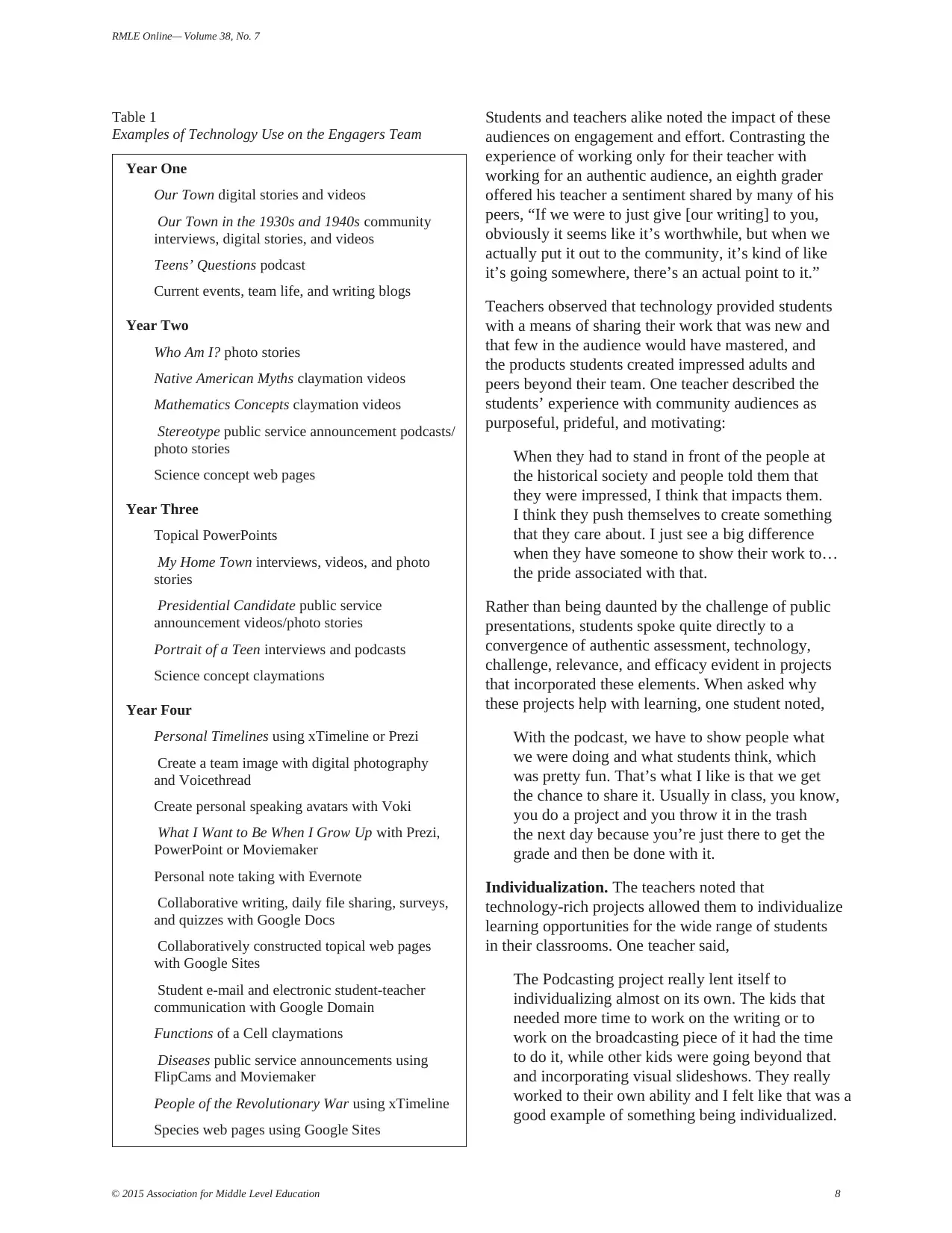
Table 1 depicts examples of technology the Engagers
team used during the four years of this study. The use
of technology within the curriculum connected with
the middle school concept in four key ways: authentic
assessment, opportunities for individualization,
substantial engagement, and a sense of purposeful
learning and meaningful student involvement.
Authentic assessment. The surrounding town played
an important role as an authentic audience for the
team’s work, and technology was particularly well
suited to sharing student work with audiences beyond
the school. Senior citizens and other guests assembled
in the town’s historical society, for example, to watch
and listen to students’ Photo Stories and videos about
town life in the years of depression and war during
the 20th century. The team also hosted an evening
at a local coffee house to share with the community
podcasts students developed for inquiries into issues
of personal concern to them, such as bullying,
stereotypes applied to their town, and safety in online
social networks. Parents, neighbors, schoolmates,
administrators, other teachers, and a reporter for the
town newspaper were among the guests.
© 2015 Association for Middle Level Education 7
discussing one of these disengaged students, an
Engagers teacher shared the following:
[The student’s guardian] just said as far as socially
and emotionally this year, he has completely
come up. He’s still very shy. He’s still not
one to take social risks but she said his social
development has just been exponential. I think [the
explanation is] two pronged. I think, one, he loves
technology. He’s so into what he’s doing. He’s had
opportunities to contribute, not so much … on an
academic level, but beyond, been able to make
contributions to the team, whether it’s updating
the website or having a little bit higher purpose.
But the other thing is that I think it’s been socially
responsive for him. He feels safer with the students
that he’s around and the teachers.
In this case, technology motivated a reluctant student
to participate in school and offered him an outlet
through which he could shine.
Team-building activities infused with technology
also helped convey the team’s democratic educational
philosophy:
We started with [digital] photography and
Voicethread [for] team building, identifying an
image that represents the team. We voted on it and
talked about being democratic and that kind of set
the stage for how this team was going to work—
nothing happens without your say, nothing works
without your input—and we meant it. And it was
nice to have that real, authentic, human-to-human,
not teacher-to-student, but just like hey, we have
an organization to run here and the three of us
[teachers] aren’t going to run it. We’re all going to
run it together if it’s going to work.
In this study, we observed frequent interplay between
effective team building and thoughtful technology
integration. Members of the Engagers spoke of
how these high-tech projects immediately engaged
students, helped team members know each other
and learn to work together, and shaped their overall
identity as a high-tech team. Team building activities
contributed to a more positive team climate and led
to more ambitious use of technology. The decision
to begin the school year with an intensive agenda
of technology and team-building activities was
particularly beneficial to the team and its students.
Curriculum, Instruction, and Assessment
According to This We Believe, effective middle
level schools exhibit certain characteristics related
to curriculum, instruction, and assessment (NMSA,
2010). We observed numerous intersections between
these characteristics and 1:1 implementation with
the Engagers team. From the time the Engagers
team was formed, the curriculum was designed to
be technologically ambitious. During individual
interviews and focus groups, students consistently
identified technology-rich projects as their favorite
learning activities. Their preferences ranged across
all projects rather than with one particular project,
and nearly all students believed they learned more
through the technology-rich work.
Students consistently emphasized how technology
marked their team as unique. “A lot of our projects
aren’t really like a lot of other teams,” said one
student. “Like we use a lot of technology during
the year. It’s like I can only think of one or two
projects where we didn’t use technology.” In Year 4,
students used more—and more varied—technology
than ever. Students were given more flexibility in
choosing technologies to use for each project. Some
students openly admitted that they sometimes chose
a particular approach—creating a PowerPoint, for
instance—because it was easier and faster than
creating a Prezi or video. Yet, they were quick
to acknowledge that the latter are more rich and
interesting; and when they were motivated by the
topic and had adequate time in their work schedules,
they enjoyed more complicated technologies.
Table 1 depicts examples of technology the Engagers
team used during the four years of this study. The use
of technology within the curriculum connected with
the middle school concept in four key ways: authentic
assessment, opportunities for individualization,
substantial engagement, and a sense of purposeful
learning and meaningful student involvement.
Authentic assessment. The surrounding town played
an important role as an authentic audience for the
team’s work, and technology was particularly well
suited to sharing student work with audiences beyond
the school. Senior citizens and other guests assembled
in the town’s historical society, for example, to watch
and listen to students’ Photo Stories and videos about
town life in the years of depression and war during
the 20th century. The team also hosted an evening
at a local coffee house to share with the community
podcasts students developed for inquiries into issues
of personal concern to them, such as bullying,
stereotypes applied to their town, and safety in online
social networks. Parents, neighbors, schoolmates,
administrators, other teachers, and a reporter for the
town newspaper were among the guests.
RMLE Online— Volume 38, No. 7
© 2015 Association for Middle Level Education 8
Students and teachers alike noted the impact of these
audiences on engagement and effort. Contrasting the
experience of working only for their teacher with
working for an authentic audience, an eighth grader
offered his teacher a sentiment shared by many of his
peers, “If we were to just give [our writing] to you,
obviously it seems like it’s worthwhile, but when we
actually put it out to the community, it’s kind of like
it’s going somewhere, there’s an actual point to it.”
Teachers observed that technology provided students
with a means of sharing their work that was new and
that few in the audience would have mastered, and
the products students created impressed adults and
peers beyond their team. One teacher described the
students’ experience with community audiences as
purposeful, prideful, and motivating:
When they had to stand in front of the people at
the historical society and people told them that
they were impressed, I think that impacts them.
I think they push themselves to create something
that they care about. I just see a big difference
when they have someone to show their work to…
the pride associated with that.
Rather than being daunted by the challenge of public
presentations, students spoke quite directly to a
convergence of authentic assessment, technology,
challenge, relevance, and efficacy evident in projects
that incorporated these elements. When asked why
these projects help with learning, one student noted,
With the podcast, we have to show people what
we were doing and what students think, which
was pretty fun. That’s what I like is that we get
the chance to share it. Usually in class, you know,
you do a project and you throw it in the trash
the next day because you’re just there to get the
grade and then be done with it.
Individualization. The teachers noted that
technology-rich projects allowed them to individualize
learning opportunities for the wide range of students
in their classrooms. One teacher said,
The Podcasting project really lent itself to
individualizing almost on its own. The kids that
needed more time to work on the writing or to
work on the broadcasting piece of it had the time
to do it, while other kids were going beyond that
and incorporating visual slideshows. They really
worked to their own ability and I felt like that was a
good example of something being individualized.
Table 1
Examples of Technology Use on the Engagers Team
Year One
Our Town digital stories and videos
Our Town in the 1930s and 1940s community
interviews, digital stories, and videos
Teens’ Questions podcast
Current events, team life, and writing blogs
Year Two
Who Am I? photo stories
Native American Myths claymation videos
Mathematics Concepts claymation videos
Stereotype public service announcement podcasts/
photo stories
Science concept web pages
Year Three
Topical PowerPoints
My Home Town interviews, videos, and photo
stories
Presidential Candidate public service
announcement videos/photo stories
Portrait of a Teen interviews and podcasts
Science concept claymations
Year Four
Personal Timelines using xTimeline or Prezi
Create a team image with digital photography
and Voicethread
Create personal speaking avatars with Voki
What I Want to Be When I Grow Up with Prezi,
PowerPoint or Moviemaker
Personal note taking with Evernote
Collaborative writing, daily file sharing, surveys,
and quizzes with Google Docs
Collaboratively constructed topical web pages
with Google Sites
Student e-mail and electronic student-teacher
communication with Google Domain
Functions of a Cell claymations
Diseases public service announcements using
FlipCams and Moviemaker
People of the Revolutionary War using xTimeline
Species web pages using Google Sites
© 2015 Association for Middle Level Education 8
Students and teachers alike noted the impact of these
audiences on engagement and effort. Contrasting the
experience of working only for their teacher with
working for an authentic audience, an eighth grader
offered his teacher a sentiment shared by many of his
peers, “If we were to just give [our writing] to you,
obviously it seems like it’s worthwhile, but when we
actually put it out to the community, it’s kind of like
it’s going somewhere, there’s an actual point to it.”
Teachers observed that technology provided students
with a means of sharing their work that was new and
that few in the audience would have mastered, and
the products students created impressed adults and
peers beyond their team. One teacher described the
students’ experience with community audiences as
purposeful, prideful, and motivating:
When they had to stand in front of the people at
the historical society and people told them that
they were impressed, I think that impacts them.
I think they push themselves to create something
that they care about. I just see a big difference
when they have someone to show their work to…
the pride associated with that.
Rather than being daunted by the challenge of public
presentations, students spoke quite directly to a
convergence of authentic assessment, technology,
challenge, relevance, and efficacy evident in projects
that incorporated these elements. When asked why
these projects help with learning, one student noted,
With the podcast, we have to show people what
we were doing and what students think, which
was pretty fun. That’s what I like is that we get
the chance to share it. Usually in class, you know,
you do a project and you throw it in the trash
the next day because you’re just there to get the
grade and then be done with it.
Individualization. The teachers noted that
technology-rich projects allowed them to individualize
learning opportunities for the wide range of students
in their classrooms. One teacher said,
The Podcasting project really lent itself to
individualizing almost on its own. The kids that
needed more time to work on the writing or to
work on the broadcasting piece of it had the time
to do it, while other kids were going beyond that
and incorporating visual slideshows. They really
worked to their own ability and I felt like that was a
good example of something being individualized.
Table 1
Examples of Technology Use on the Engagers Team
Year One
Our Town digital stories and videos
Our Town in the 1930s and 1940s community
interviews, digital stories, and videos
Teens’ Questions podcast
Current events, team life, and writing blogs
Year Two
Who Am I? photo stories
Native American Myths claymation videos
Mathematics Concepts claymation videos
Stereotype public service announcement podcasts/
photo stories
Science concept web pages
Year Three
Topical PowerPoints
My Home Town interviews, videos, and photo
stories
Presidential Candidate public service
announcement videos/photo stories
Portrait of a Teen interviews and podcasts
Science concept claymations
Year Four
Personal Timelines using xTimeline or Prezi
Create a team image with digital photography
and Voicethread
Create personal speaking avatars with Voki
What I Want to Be When I Grow Up with Prezi,
PowerPoint or Moviemaker
Personal note taking with Evernote
Collaborative writing, daily file sharing, surveys,
and quizzes with Google Docs
Collaboratively constructed topical web pages
with Google Sites
Student e-mail and electronic student-teacher
communication with Google Domain
Functions of a Cell claymations
Diseases public service announcements using
FlipCams and Moviemaker
People of the Revolutionary War using xTimeline
Species web pages using Google Sites
⊘ This is a preview!⊘
Do you want full access?
Subscribe today to unlock all pages.
Trusted by 1+ million students worldwide
RMLE Online— Volume 38, No. 7
© 2015 Association for Middle Level Education 9
The teachers continued to note the advantages of
matching specific technologies to the unique needs
of some students. Particular technologies resonated
strongly with some students, a phenomenon that
especially caught teachers’ attention when it involved
otherwise disengaged students.
Claymation can be so engaging for some. They
could work on it for 3 hours straight. For some—
the kind of artistic piece, the creation, trying to
come up with this overall vision can be tough and
kind of daunting and they end up making Play
Doh snakes all class. But Andy, for example,
he just basically asks me every week, “Are we
going to do Claymation soon? Are we going to do
Claymation soon?”
Relevant and engaging curriculum. Students
regularly noted the significance of technology
in contributing to more diversified and engaging
learning. One student explained,
Yeah, this year has been fun for me because we
do a lot of projects as a group and as a team and
have a lot of fun in the process. Like, we made
claymations [portraying Native American stories
and myths] in the beginning of the year and it
was fun because I was with a lot of my friends
and we have a lot of fun making the figures and
shooting it.
When asked about which projects she found
particularly engaging, another student offered,
The Home Town [project] because something
I feel very strongly about is being connected
to your hometown and being able to make that
podcast and have people see it. Maybe it changed
people’s opinion about [the town]. Because
every picture I took was people smiling. Not like
gangsters from [our town] that people think are
here, [which] so aggravates me.
Yet another student described the use of technology
on the team in this way:
If you have like a short attention span or
something and you really don’t like sitting and
listening to somebody talk; if you learn better
actually doing something, you will have a better
idea of what it is because you’re actually like
doing it yourself, you know? Like the whole
podcasting thing that we did? I mean a trip to [the
local public radio station] and actually creating
the podcast itself and when you got to research
your own topic. That made it more interesting for
me doing whatever it was.
Students on the Engagers Team learned from these
technology-rich projects and appeared encouraged
by them. As one teacher noted, “I think day-to-day
they’re getting some real life skills that maybe in
more traditional classrooms they don’t get.” She
was impressed by the range of students engaged by
technology, such as in the podcasting project. “Half
of me is looking at the kids who are flying and half
of me is looking at the kids who need more support.
Both are doing more than I think they would in a
traditional classroom.”
The teachers appeared to appreciate the role
technology played in the success of the program
generally and in project-based learning in particular.
The adults were of one mind that technology
“hooks the kids;” “gives students another avenue to
demonstrate learning;” and, with opportunities such
as podcasts and digital movies, “touches on people’s
artistic sides, engaging the mind and teaching
students.” As one teacher surmised,
What we saw is, if we gave students a choice
in their learning and assisted them with some
pretty high tech technology, that would help
them buy into the system, take ownership of their
own learning, and make it their own and sort of
change their ways.
Purposeful learning and student involvement.
Engagers teachers noted the role of purposeful learning
in students’ engagement and success. One teacher
observed, “I definitely saw a difference between
producing work for just the teacher or for classmates,
but then having something open to the community. I
think it ups the ante even further; it has … real purpose
beyond just that event.” Another agreed,
We’re not just completing projects and then moving
on to the next thing. The desire is that everybody
has a role and purpose and is excited to come in
so they can fulfill that role and that purpose. It’s
trying… to build self-esteem by purpose.
The teachers saw technology as opening avenues for
purposeful learning and, while only in its nascent
stages of development, they imagined examples that
appeared feasible and sustainable.
But one of the things that we’ve been thinking
about …was the idea of students having a role
not only in the classroom, but … (creating) some
© 2015 Association for Middle Level Education 9
The teachers continued to note the advantages of
matching specific technologies to the unique needs
of some students. Particular technologies resonated
strongly with some students, a phenomenon that
especially caught teachers’ attention when it involved
otherwise disengaged students.
Claymation can be so engaging for some. They
could work on it for 3 hours straight. For some—
the kind of artistic piece, the creation, trying to
come up with this overall vision can be tough and
kind of daunting and they end up making Play
Doh snakes all class. But Andy, for example,
he just basically asks me every week, “Are we
going to do Claymation soon? Are we going to do
Claymation soon?”
Relevant and engaging curriculum. Students
regularly noted the significance of technology
in contributing to more diversified and engaging
learning. One student explained,
Yeah, this year has been fun for me because we
do a lot of projects as a group and as a team and
have a lot of fun in the process. Like, we made
claymations [portraying Native American stories
and myths] in the beginning of the year and it
was fun because I was with a lot of my friends
and we have a lot of fun making the figures and
shooting it.
When asked about which projects she found
particularly engaging, another student offered,
The Home Town [project] because something
I feel very strongly about is being connected
to your hometown and being able to make that
podcast and have people see it. Maybe it changed
people’s opinion about [the town]. Because
every picture I took was people smiling. Not like
gangsters from [our town] that people think are
here, [which] so aggravates me.
Yet another student described the use of technology
on the team in this way:
If you have like a short attention span or
something and you really don’t like sitting and
listening to somebody talk; if you learn better
actually doing something, you will have a better
idea of what it is because you’re actually like
doing it yourself, you know? Like the whole
podcasting thing that we did? I mean a trip to [the
local public radio station] and actually creating
the podcast itself and when you got to research
your own topic. That made it more interesting for
me doing whatever it was.
Students on the Engagers Team learned from these
technology-rich projects and appeared encouraged
by them. As one teacher noted, “I think day-to-day
they’re getting some real life skills that maybe in
more traditional classrooms they don’t get.” She
was impressed by the range of students engaged by
technology, such as in the podcasting project. “Half
of me is looking at the kids who are flying and half
of me is looking at the kids who need more support.
Both are doing more than I think they would in a
traditional classroom.”
The teachers appeared to appreciate the role
technology played in the success of the program
generally and in project-based learning in particular.
The adults were of one mind that technology
“hooks the kids;” “gives students another avenue to
demonstrate learning;” and, with opportunities such
as podcasts and digital movies, “touches on people’s
artistic sides, engaging the mind and teaching
students.” As one teacher surmised,
What we saw is, if we gave students a choice
in their learning and assisted them with some
pretty high tech technology, that would help
them buy into the system, take ownership of their
own learning, and make it their own and sort of
change their ways.
Purposeful learning and student involvement.
Engagers teachers noted the role of purposeful learning
in students’ engagement and success. One teacher
observed, “I definitely saw a difference between
producing work for just the teacher or for classmates,
but then having something open to the community. I
think it ups the ante even further; it has … real purpose
beyond just that event.” Another agreed,
We’re not just completing projects and then moving
on to the next thing. The desire is that everybody
has a role and purpose and is excited to come in
so they can fulfill that role and that purpose. It’s
trying… to build self-esteem by purpose.
The teachers saw technology as opening avenues for
purposeful learning and, while only in its nascent
stages of development, they imagined examples that
appeared feasible and sustainable.
But one of the things that we’ve been thinking
about …was the idea of students having a role
not only in the classroom, but … (creating) some
Paraphrase This Document
Need a fresh take? Get an instant paraphrase of this document with our AI Paraphraser
RMLE Online— Volume 38, No. 7
© 2015 Association for Middle Level Education 10
sort of content site that is somehow informing
(others)… turning and sharing and expressing
artistic ideas, sharing research, sharing insights
into different types of math concepts or whatnot.
Student involvement appeared to be central to the
teachers’ emerging plan. One teacher wondered, “I
think student involvement is huge. So we think we
have this great idea. How do we get students to not
only buy into it but also kind of co-create it?”
In spite of the challenges associated with integrating
technology, the teachers expressed confidence that
their students could embrace the technical challenges
that may lie ahead.
We have certain capabilities that other teams
might not have, I think. Just being—having the
technology, being around it every day. I think
students don’t have an idea how technologically
savvy they are compared to other students,
compared to other teachers in the school. … I’ve
heard anecdotes about students going (to high
school) and basically teaching the rest of their
classes how to do stuff.
The Engagers teachers also spoke of untapped
pedagogical opportunities worth exploring, such as
students’ out-of-school technology use.
I have a student that did his project … in Google
Sketchup, 3D. So he did it all at home. And I
said, this is great. And he said, yeah, I use it all
the time at home. … And hearing that he uses it
all the time at home starts me thinking, why? …
Why is he much more inclined to be motivated to
do something at home on his own free [time]? …
Are we really giving students the opportunity to
do something purposeful and contribute?
As he posed this question, “What’s he doing with it at
home that he’s not doing here?”, this teacher pondered
what he, and the team as a whole, might learn from
students’ out-of-school technology use that could
inform in-school technology use. As one Engagers
teacher observed,
I just think there’s so much power in the
technology … But it’s kind of being fitted to …
the usual framework of school. …How do we go
beyond that? …I want students to be motivated to
use technology in a way that’s going to contribute.
The teachers saw this “usual framework,” that of
established standards and curriculum, as impeding
their ability to fully exploit the power of technology.
When asked what they require in order to achieve
their vision for meaningful, high-tech learning, one
teacher said,
[I need] some sort of liberation… There’s
always this voice in the back of my head that
says, “You’ve got to do CMP [Connected Math
Program]. You’ve got to – there’s these standards,
there’s these standards, there’s these standards.
This is the district curriculum.” So making
the decision: … Is our curriculum driving our
product rather than our product driving our
curriculum? Best practice, backward design,
would say let the product drive the curriculum,
but the State [tests] and other folks would say let
the curriculum drive the product.
This quandary is somewhat familiar to teachers
trying to create more responsive middle grades
classrooms, but the potential of student technology
use seemed to exacerbate the conflict between
established curriculum, standards, and the promising
innovations these educators and their students
wanted to pursue. Indeed, for students as well,
exposure to the engaging, creative, and self-directed
potential of technology-rich learning placed more
traditional pedagogy in stark relief. The special
educator associated with the Engagers shared potent
observations about the interactions among pedagogy,
technology, and one particular student as he wondered
what it was like for students to be in a technology rich
environment and then move into classes that were not.
As a kid it’s got to suck that one minute you’re
really excited and you’re fired up and you’re,
“Oh, cool, we’re going to be working with
Google Sketch Up and I get to finish my photo
story,” to [a different class where] “I’m on
Google searching images.” You know?
The Engagers infused technology into the curriculum,
instruction, and assessment, and in many ways their
approach reflected the type of pedagogy espoused by
many middle grades advocates and This We Believe
(NMSA, 2010): individualized and engaging work for
a genuine purpose and audience.
Leadership and Organizational Characteristics
The Engagers team reflected some of the
organizational characteristics of effective middle
grades schooling (NMSA, 2010), but it fell short
of others. For the purposes of core academics, the
teachers functioned as a partner team. The special
educator assigned to the Engagers was dedicated
© 2015 Association for Middle Level Education 10
sort of content site that is somehow informing
(others)… turning and sharing and expressing
artistic ideas, sharing research, sharing insights
into different types of math concepts or whatnot.
Student involvement appeared to be central to the
teachers’ emerging plan. One teacher wondered, “I
think student involvement is huge. So we think we
have this great idea. How do we get students to not
only buy into it but also kind of co-create it?”
In spite of the challenges associated with integrating
technology, the teachers expressed confidence that
their students could embrace the technical challenges
that may lie ahead.
We have certain capabilities that other teams
might not have, I think. Just being—having the
technology, being around it every day. I think
students don’t have an idea how technologically
savvy they are compared to other students,
compared to other teachers in the school. … I’ve
heard anecdotes about students going (to high
school) and basically teaching the rest of their
classes how to do stuff.
The Engagers teachers also spoke of untapped
pedagogical opportunities worth exploring, such as
students’ out-of-school technology use.
I have a student that did his project … in Google
Sketchup, 3D. So he did it all at home. And I
said, this is great. And he said, yeah, I use it all
the time at home. … And hearing that he uses it
all the time at home starts me thinking, why? …
Why is he much more inclined to be motivated to
do something at home on his own free [time]? …
Are we really giving students the opportunity to
do something purposeful and contribute?
As he posed this question, “What’s he doing with it at
home that he’s not doing here?”, this teacher pondered
what he, and the team as a whole, might learn from
students’ out-of-school technology use that could
inform in-school technology use. As one Engagers
teacher observed,
I just think there’s so much power in the
technology … But it’s kind of being fitted to …
the usual framework of school. …How do we go
beyond that? …I want students to be motivated to
use technology in a way that’s going to contribute.
The teachers saw this “usual framework,” that of
established standards and curriculum, as impeding
their ability to fully exploit the power of technology.
When asked what they require in order to achieve
their vision for meaningful, high-tech learning, one
teacher said,
[I need] some sort of liberation… There’s
always this voice in the back of my head that
says, “You’ve got to do CMP [Connected Math
Program]. You’ve got to – there’s these standards,
there’s these standards, there’s these standards.
This is the district curriculum.” So making
the decision: … Is our curriculum driving our
product rather than our product driving our
curriculum? Best practice, backward design,
would say let the product drive the curriculum,
but the State [tests] and other folks would say let
the curriculum drive the product.
This quandary is somewhat familiar to teachers
trying to create more responsive middle grades
classrooms, but the potential of student technology
use seemed to exacerbate the conflict between
established curriculum, standards, and the promising
innovations these educators and their students
wanted to pursue. Indeed, for students as well,
exposure to the engaging, creative, and self-directed
potential of technology-rich learning placed more
traditional pedagogy in stark relief. The special
educator associated with the Engagers shared potent
observations about the interactions among pedagogy,
technology, and one particular student as he wondered
what it was like for students to be in a technology rich
environment and then move into classes that were not.
As a kid it’s got to suck that one minute you’re
really excited and you’re fired up and you’re,
“Oh, cool, we’re going to be working with
Google Sketch Up and I get to finish my photo
story,” to [a different class where] “I’m on
Google searching images.” You know?
The Engagers infused technology into the curriculum,
instruction, and assessment, and in many ways their
approach reflected the type of pedagogy espoused by
many middle grades advocates and This We Believe
(NMSA, 2010): individualized and engaging work for
a genuine purpose and audience.
Leadership and Organizational Characteristics
The Engagers team reflected some of the
organizational characteristics of effective middle
grades schooling (NMSA, 2010), but it fell short
of others. For the purposes of core academics, the
teachers functioned as a partner team. The special
educator assigned to the Engagers was dedicated
RMLE Online— Volume 38, No. 7
© 2015 Association for Middle Level Education 11
to the team, occupied a desk in one of the team’s
adjoining classrooms, and was therefore intimately
connected with the students and their primary
teachers. However, inadequate common planning
time and poorly coordinated professional development
hampered the team’s progress.
Common planning time. One oft-cited cornerstone
of the middle school concept is interdisciplinary team
organization supported by collaborative time for
planning (NMSA, 2010). When asked how they would
design a team like Engagers based on what they’ve
learned over four years, one teacher noted—and his
colleague agreed—
One of the places where we fall short, and it
seems to be the story of our lives … is just
kind of uninterrupted time … where we can
collaborate as professionals…. Common planning
time … it’s just been very tough to do.
In addition to 45 minutes of personal prep time each
day, the team had one hour and 40 minutes (including
lunch time) every Wednesday afternoon for common
planning. Also, Friday afternoons were available
once each month for common planning time. Because
administrators eliminated daily common planning
time just prior to the beginning of the Engagers
program, the team fell well short of the quantity and
quality of planning time associated with many of
the documented benefits of this key organizational
structure: interdisciplinary practices, increased
teacher satisfaction, and improved student learning
(Mertens, Flowers, Anfara, & Caskey, 2010). Limited
common planning time can undermine collaborative
professional growth and coherent pedagogy across the
team (Haverback & Mee, 2013), and these are critical
elements for serving individual students, particularly
those who are disengaged. Further, teachers noted
frustration about how they used their common
planning time. In Year 3, one teacher described the
Wednesday meetings as “mostly focused on students”
and “nagging issues.” The Friday meetings were
described as “like an extra team meeting. We don’t
ever get to planning. It’s like the planning gets pushed
off. … I think we all just stressed over the fact that
time goes by and we still haven’t had a chance to
really talk about coming together in a project.”
This study illustrates that the need for collaboration
may be acute with the rapid infusion of technology.
The Engagers teachers faced steep learning curves
as they grappled with a wide array of technologies
and integrated technology into the curriculum and
daily life of the team. Further, as they transformed
their work, their practice was ripe for reflection and
inquiry. In an ideal setting, effective daily common
planning time creates opportunities to examine
student work collaboratively, as well as discuss the
successes and failures of day-to-day teaching.
Professional development and a shared vision.
Engagers teachers were also concerned about
feeling isolated from colleagues within and beyond
their school as they worked to implement 1:1. They
expressed a desire to “talk to professionals or people
who have done similar things,” or to be part of a
teacher network. Instead, the Engagers teachers’
extensive collaboration with their peers was poorly
aligned with the needs of their team. For instance,
Engagers teachers were expected to participate on
district curriculum committees tasked with producing
new, vertically aligned, separate-subject curricula and
common assessments. As dual-endorsed teachers well
respected by their colleagues, each Engagers teacher
was asked by their principal to serve on two of these
subject-area committees that met for a full day once
per month, in part so they might infuse committee
discussions with innovative thinking. However,
the priorities of the district committees contrasted
with the Engagers’ efforts to create a responsive
curriculum for a team uniquely outfitted with 1:1
laptops, electronic whiteboards, sets of still and video
cameras, digital voice recorders, and multimedia
production software and hardware. “The whole
idea [of the committees] is common assessment and
everything aligning,” an Engager teacher explained.
“That seems to be everyone’s focus and to not be
focusing on that seems like we’re not in line with
where the district’s going. It doesn’t look the same.”
Moreover, the committee meetings replaced
opportunities for whole-day planning to address their
team’s more relevant and immediate concerns. As one
teacher pointed out, “I think the real stress is that we
don’t have time to do integrated planning as a team.
I’m already out twice a month for [district] curriculum
meetings. It doesn’t really help our classroom
environment to not be in the classroom.” The
district’s priorities to comply with state standards, to
vertically align the curriculum across grades K–12,
and to involve teachers democratically in the work—
all indicative of responsible leadership—nonetheless
ended up at cross-purposes with the innovative 1:1
agenda of the Engagers team. Because they were
working to develop curricula to address the needs
of their generally low-tech district, the energies of
the Engagers teachers were diverted away from
© 2015 Association for Middle Level Education 11
to the team, occupied a desk in one of the team’s
adjoining classrooms, and was therefore intimately
connected with the students and their primary
teachers. However, inadequate common planning
time and poorly coordinated professional development
hampered the team’s progress.
Common planning time. One oft-cited cornerstone
of the middle school concept is interdisciplinary team
organization supported by collaborative time for
planning (NMSA, 2010). When asked how they would
design a team like Engagers based on what they’ve
learned over four years, one teacher noted—and his
colleague agreed—
One of the places where we fall short, and it
seems to be the story of our lives … is just
kind of uninterrupted time … where we can
collaborate as professionals…. Common planning
time … it’s just been very tough to do.
In addition to 45 minutes of personal prep time each
day, the team had one hour and 40 minutes (including
lunch time) every Wednesday afternoon for common
planning. Also, Friday afternoons were available
once each month for common planning time. Because
administrators eliminated daily common planning
time just prior to the beginning of the Engagers
program, the team fell well short of the quantity and
quality of planning time associated with many of
the documented benefits of this key organizational
structure: interdisciplinary practices, increased
teacher satisfaction, and improved student learning
(Mertens, Flowers, Anfara, & Caskey, 2010). Limited
common planning time can undermine collaborative
professional growth and coherent pedagogy across the
team (Haverback & Mee, 2013), and these are critical
elements for serving individual students, particularly
those who are disengaged. Further, teachers noted
frustration about how they used their common
planning time. In Year 3, one teacher described the
Wednesday meetings as “mostly focused on students”
and “nagging issues.” The Friday meetings were
described as “like an extra team meeting. We don’t
ever get to planning. It’s like the planning gets pushed
off. … I think we all just stressed over the fact that
time goes by and we still haven’t had a chance to
really talk about coming together in a project.”
This study illustrates that the need for collaboration
may be acute with the rapid infusion of technology.
The Engagers teachers faced steep learning curves
as they grappled with a wide array of technologies
and integrated technology into the curriculum and
daily life of the team. Further, as they transformed
their work, their practice was ripe for reflection and
inquiry. In an ideal setting, effective daily common
planning time creates opportunities to examine
student work collaboratively, as well as discuss the
successes and failures of day-to-day teaching.
Professional development and a shared vision.
Engagers teachers were also concerned about
feeling isolated from colleagues within and beyond
their school as they worked to implement 1:1. They
expressed a desire to “talk to professionals or people
who have done similar things,” or to be part of a
teacher network. Instead, the Engagers teachers’
extensive collaboration with their peers was poorly
aligned with the needs of their team. For instance,
Engagers teachers were expected to participate on
district curriculum committees tasked with producing
new, vertically aligned, separate-subject curricula and
common assessments. As dual-endorsed teachers well
respected by their colleagues, each Engagers teacher
was asked by their principal to serve on two of these
subject-area committees that met for a full day once
per month, in part so they might infuse committee
discussions with innovative thinking. However,
the priorities of the district committees contrasted
with the Engagers’ efforts to create a responsive
curriculum for a team uniquely outfitted with 1:1
laptops, electronic whiteboards, sets of still and video
cameras, digital voice recorders, and multimedia
production software and hardware. “The whole
idea [of the committees] is common assessment and
everything aligning,” an Engager teacher explained.
“That seems to be everyone’s focus and to not be
focusing on that seems like we’re not in line with
where the district’s going. It doesn’t look the same.”
Moreover, the committee meetings replaced
opportunities for whole-day planning to address their
team’s more relevant and immediate concerns. As one
teacher pointed out, “I think the real stress is that we
don’t have time to do integrated planning as a team.
I’m already out twice a month for [district] curriculum
meetings. It doesn’t really help our classroom
environment to not be in the classroom.” The
district’s priorities to comply with state standards, to
vertically align the curriculum across grades K–12,
and to involve teachers democratically in the work—
all indicative of responsible leadership—nonetheless
ended up at cross-purposes with the innovative 1:1
agenda of the Engagers team. Because they were
working to develop curricula to address the needs
of their generally low-tech district, the energies of
the Engagers teachers were diverted away from
⊘ This is a preview!⊘
Do you want full access?
Subscribe today to unlock all pages.
Trusted by 1+ million students worldwide

1 out of 17


Your All-in-One AI-Powered Toolkit for Academic Success.
+13062052269
info@desklib.com
Available 24*7 on WhatsApp / Email
![[object Object]](/_next/static/media/star-bottom.7253800d.svg)
Unlock your academic potential
Copyright © 2020–2026 A2Z Services. All Rights Reserved. Developed and managed by ZUCOL.