A Report on the Impact of Technology on Student Learning in Education
VerifiedAdded on 2020/12/26
|14
|3710
|218
Report
AI Summary
This report examines the multifaceted impact of technology on learning, analyzing both its positive and negative effects on students and educators. The research investigates how technology transforms the learning experience, with a specific focus on the implications for students with disabilities and those engaged in distance or e-learning. The report explores various tools and techniques, such as online resources, digital classrooms, and interactive applications, while also addressing challenges like the need for teacher training and the potential for digital distractions. The methodology includes literature reviews, data collection, and thematic analysis, offering a comprehensive overview of technology's role in modern education and the importance of its integration. The findings highlight the significance of technology in providing accessible education, promoting independent learning, and facilitating innovative teaching methods, ultimately shaping the future of education.
Impact of technology on learning

Paraphrase This Document
Need a fresh take? Get an instant paraphrase of this document with our AI Paraphraser

TABLE OF CONTENTS
TABLE OF CONTENTS
INTRODUCTION...........................................................................................................................1
COMPREHENSIVE LITERATURE REVIEW..............................................................................1
RESEARCH METHODOLOGY....................................................................................................4
Research philosophy....................................................................................................................4
Data collection.............................................................................................................................4
Data analysis................................................................................................................................4
Sampling......................................................................................................................................5
DATA COLLECTED AND RESULTS OBTAINED....................................................................5
ANALYSIS OF RESULTS.............................................................................................................8
UG students with disability.........................................................................................................8
UG students with no disability....................................................................................................8
PG students with disability..........................................................................................................9
PG students with no disability...................................................................................................10
REFERENCES..............................................................................................................................11
TABLE OF CONTENTS
INTRODUCTION...........................................................................................................................1
COMPREHENSIVE LITERATURE REVIEW..............................................................................1
RESEARCH METHODOLOGY....................................................................................................4
Research philosophy....................................................................................................................4
Data collection.............................................................................................................................4
Data analysis................................................................................................................................4
Sampling......................................................................................................................................5
DATA COLLECTED AND RESULTS OBTAINED....................................................................5
ANALYSIS OF RESULTS.............................................................................................................8
UG students with disability.........................................................................................................8
UG students with no disability....................................................................................................8
PG students with disability..........................................................................................................9
PG students with no disability...................................................................................................10
REFERENCES..............................................................................................................................11
INTRODUCTION
Technology and digitalisation is also impacting the way teachers are delivering their
teaching to their students with help of materials and internet as well (5 positive effects technology
has on teaching & learning, 2018). As the tablets, videos, applications and interactive
whiteboards are learning and teaching tool for both student and teacher respectively. There are
number of tools that are used by teachers and lecturer in their teaching sessions like textbooks,
lecture notes and internet which is most widely used technique. Thus technology is also
becoming facilitator within this education of student that is enriching them with wider
experience of options in various fields.
Within this report impact of technology on learning process will be identified by
including both positive and negative effect. Further whole research is based on analysing how
technology is transforming experience of both teachers and students. The research is also
conducted on impact of technology on student who is suffering with disability. The importance
of technology for the student of distance learning or E-learning as well will be evaluated.
Aim:
“To critically analyse significant of impact of integrating technology in learning system”
Objectives:
To analyze the different types of positive impacts of technology on learning
To analyze the different types of negative impacts of technology on learning
To recommend the future perspectives of technology integration in learning
Research how technology can affect students with disabilities
Find out the importance of the use of technology for distance learning students/E-
Learning
COMPREHENSIVE LITERATURE REVIEW
According to view of Han, Capraro and Capraro, (2015) technology is no doubtable
creating and opening new paths for people which is allowing them to grab opportunities and
grow in all fields where they are working. Internet is that one medium which is connecting
peoples that is no longer is binding them with cultural or land borders. Thus, this is helping them
to have knowledge about others culture and created avenue within which all could learn and
grow by themselves only. Technology is also playing essential role in proving to as medium of
exchanging their ideas and thoughts in way of educating students. According to one of the study
1
Technology and digitalisation is also impacting the way teachers are delivering their
teaching to their students with help of materials and internet as well (5 positive effects technology
has on teaching & learning, 2018). As the tablets, videos, applications and interactive
whiteboards are learning and teaching tool for both student and teacher respectively. There are
number of tools that are used by teachers and lecturer in their teaching sessions like textbooks,
lecture notes and internet which is most widely used technique. Thus technology is also
becoming facilitator within this education of student that is enriching them with wider
experience of options in various fields.
Within this report impact of technology on learning process will be identified by
including both positive and negative effect. Further whole research is based on analysing how
technology is transforming experience of both teachers and students. The research is also
conducted on impact of technology on student who is suffering with disability. The importance
of technology for the student of distance learning or E-learning as well will be evaluated.
Aim:
“To critically analyse significant of impact of integrating technology in learning system”
Objectives:
To analyze the different types of positive impacts of technology on learning
To analyze the different types of negative impacts of technology on learning
To recommend the future perspectives of technology integration in learning
Research how technology can affect students with disabilities
Find out the importance of the use of technology for distance learning students/E-
Learning
COMPREHENSIVE LITERATURE REVIEW
According to view of Han, Capraro and Capraro, (2015) technology is no doubtable
creating and opening new paths for people which is allowing them to grab opportunities and
grow in all fields where they are working. Internet is that one medium which is connecting
peoples that is no longer is binding them with cultural or land borders. Thus, this is helping them
to have knowledge about others culture and created avenue within which all could learn and
grow by themselves only. Technology is also playing essential role in proving to as medium of
exchanging their ideas and thoughts in way of educating students. According to one of the study
1
⊘ This is a preview!⊘
Do you want full access?
Subscribe today to unlock all pages.

Trusted by 1+ million students worldwide
conducted in 2004 with help of communication, control and convenience as well students are
being impacted. All student whether they are living in any part of world could now have access
to good and correct education on whichever field it is possible as included by Domingo and
Garganté, (2016).
If any student is having any kind of disability then also just with help of technology and
internet he could be able to gain knowledge this means that it is expanding borders for disabled
student as well. Those students who are living in remote areas and rural or tribal parts of country
so for them it is not possible that they are having easy and fair access to schools, colleges or
learning classes (Impact of Technology on Student Learning, 2018). So for them as well internet
and mobile phones are playing vital role in easily accessible education and gaining knowledge.
There are many studies which show impact of technology on growing need and demand of
education and learning. Voogt and Resta, (2017) indicated that there are many students who due
to having their full-time job or working hours are not able to gain knowledge or college degree.
So with help of distance learning course and their availability of degree from online sources it is
possible. Technology is the most effective and useful tool which is helping the students of
college, schools and universities as well.
This is not only impacting and helping students but it is also helpful for teachers as they
now could teach any student with use of technology. There are many schools which are having
digital classroom with complete facilities like that of internet, projectors, e-learning materials
and tablets as well. As per the view of McKnight, Franey and Bassett, (2016) incorporating all
sort of digital technology and internet within the teaching and learning purpose of student is also
regarded to as tough and challenging task. As it is not always possible that internet or technology
is available at all time and at all places as well but then also number of student taking online
classes are increasing and growing.
Rashid and Asghar, (2016) explained that this effect of mobile and digital technology or
resources is resulted that student knew that their learning process will not be stopping at just after
school hours. They are now been able to take their regular lessons even at time when no teacher
is available or they are far away from reach of their course materials and books. With the help of
this most positive impact is that they do not think learning is been too tough task for them rather
learning is becoming more and more easy and convenient. In addition to this, Henrie, Halverson
and Graham, (2015) added that with inclusive teaching is also becoming more prominent into
2
being impacted. All student whether they are living in any part of world could now have access
to good and correct education on whichever field it is possible as included by Domingo and
Garganté, (2016).
If any student is having any kind of disability then also just with help of technology and
internet he could be able to gain knowledge this means that it is expanding borders for disabled
student as well. Those students who are living in remote areas and rural or tribal parts of country
so for them it is not possible that they are having easy and fair access to schools, colleges or
learning classes (Impact of Technology on Student Learning, 2018). So for them as well internet
and mobile phones are playing vital role in easily accessible education and gaining knowledge.
There are many studies which show impact of technology on growing need and demand of
education and learning. Voogt and Resta, (2017) indicated that there are many students who due
to having their full-time job or working hours are not able to gain knowledge or college degree.
So with help of distance learning course and their availability of degree from online sources it is
possible. Technology is the most effective and useful tool which is helping the students of
college, schools and universities as well.
This is not only impacting and helping students but it is also helpful for teachers as they
now could teach any student with use of technology. There are many schools which are having
digital classroom with complete facilities like that of internet, projectors, e-learning materials
and tablets as well. As per the view of McKnight, Franey and Bassett, (2016) incorporating all
sort of digital technology and internet within the teaching and learning purpose of student is also
regarded to as tough and challenging task. As it is not always possible that internet or technology
is available at all time and at all places as well but then also number of student taking online
classes are increasing and growing.
Rashid and Asghar, (2016) explained that this effect of mobile and digital technology or
resources is resulted that student knew that their learning process will not be stopping at just after
school hours. They are now been able to take their regular lessons even at time when no teacher
is available or they are far away from reach of their course materials and books. With the help of
this most positive impact is that they do not think learning is been too tough task for them rather
learning is becoming more and more easy and convenient. In addition to this, Henrie, Halverson
and Graham, (2015) added that with inclusive teaching is also becoming more prominent into
2
Paraphrase This Document
Need a fresh take? Get an instant paraphrase of this document with our AI Paraphraser
this area of education. This is allowing student to become more independent and empowering
them in taking their own teaching which is good for self-learning.
But Freeman, Jordt and Wenderoth, (2014) said that technologies would only help school
student at time when principal or management of school are having that much skill or support to
leverage them. As the teachers would surely require professional development for this technical
teaching and which is regarded to as one of the most important barrier. There are many teachers
of government schools who are not having knowledge of operating computers, privacy online
and security of student in way of protecting them. As one of the most basic requirement of
schools in implementing digital class is use of broadband that they would require while teaching
students. The most beneficial point in all these impact of technology is its use by student at their
own place as well. As Boaler and Sengupta-Irving, (2016) included that even if they are at home
doing anything they could easily operate technology and internet to learn and even teach others
as well. There are many tools and techniques which are used in this way including online video
lessons, graphics, educational applications, online lesson plan, accessing books and articles with
help of tablets and interactive games as well. According to Tuzovic, Russell-Bennet and Kuhn,
(2016) technologies is allowing both easier and much more complicated task of dealing within
classrooms. So during these times it is possible that teachers would rely on technologies as this
will aid into and turning out to be good and excellent source of teaching material. Teachers
would also take many extra classes to indulge with teaching of students and allowing them to ask
their various types of doubts as well.
Other than this Kirkwood and Price, (2014) explained the role of parents of student into
their learning and educational process that is very much important and essential. They are
playing the role of supports as fostering throughout their growing and learning period. They
would choose the correct applications and textbooks that are helping children in creating and
designing at time of learning or garbing knowledge. In additional, it was also illustrated by
Heflin, Shewmaker and Nguyen, (2017) these technologies is allowing and engaging parents into
the learning process of children with help of tools. With the help of computer classes children
would be able to keep track with the latest technologies and organising their teaching procedures
as well.
Despite the above mention positive side of technology there are certain ill effects of
technology on learning and teaching process as well. It was well explained by Sarkar, Mohapatra
3
them in taking their own teaching which is good for self-learning.
But Freeman, Jordt and Wenderoth, (2014) said that technologies would only help school
student at time when principal or management of school are having that much skill or support to
leverage them. As the teachers would surely require professional development for this technical
teaching and which is regarded to as one of the most important barrier. There are many teachers
of government schools who are not having knowledge of operating computers, privacy online
and security of student in way of protecting them. As one of the most basic requirement of
schools in implementing digital class is use of broadband that they would require while teaching
students. The most beneficial point in all these impact of technology is its use by student at their
own place as well. As Boaler and Sengupta-Irving, (2016) included that even if they are at home
doing anything they could easily operate technology and internet to learn and even teach others
as well. There are many tools and techniques which are used in this way including online video
lessons, graphics, educational applications, online lesson plan, accessing books and articles with
help of tablets and interactive games as well. According to Tuzovic, Russell-Bennet and Kuhn,
(2016) technologies is allowing both easier and much more complicated task of dealing within
classrooms. So during these times it is possible that teachers would rely on technologies as this
will aid into and turning out to be good and excellent source of teaching material. Teachers
would also take many extra classes to indulge with teaching of students and allowing them to ask
their various types of doubts as well.
Other than this Kirkwood and Price, (2014) explained the role of parents of student into
their learning and educational process that is very much important and essential. They are
playing the role of supports as fostering throughout their growing and learning period. They
would choose the correct applications and textbooks that are helping children in creating and
designing at time of learning or garbing knowledge. In additional, it was also illustrated by
Heflin, Shewmaker and Nguyen, (2017) these technologies is allowing and engaging parents into
the learning process of children with help of tools. With the help of computer classes children
would be able to keep track with the latest technologies and organising their teaching procedures
as well.
Despite the above mention positive side of technology there are certain ill effects of
technology on learning and teaching process as well. It was well explained by Sarkar, Mohapatra
3
and Sundarakrishnan, (2017) there will be no more sense to sit into classroom as with this they
would not be having communication with their teachers. Then in the number of pupils who are
having access to internet then during time of free time it is necessary that they are using
technology for studying purpose only. This would be leading to information in wrong from the
view of teacher and parents as well. Technology will also change way in which children is
feeling and thinking as they would be more and more influence by digital gadgets they are then
spending more time on online.
RESEARCH METHODOLOGY
Research philosophy
The positivism research philosophy includes logical and clear analysis if topic that is with
the use of scientific study and the other one which is realism would be focusing on human mind
that is very much independent (McKnight, Franey and Bassett, 2016). Both of these type of
philosophy will be used to analyses the impact of technology and digitalisation on learning and
teaching process. This would be helpful in identifying both negative and positive impact of
technology on learning and teaching with application of realism and positivism philosophy.
Data collection
In way of analysing impact of technology on learning and teaching of students both
primary and secondary method will be used that are most important sources. All type of
sampling techniques, research approaches and data collection techniques are essential to focus on
important research process. The primary data sources will include in house IT and system team
through whose help data could be accessed as staff member. After collecting this data it would
be compared with various other studies already conducted. This is tough task as there is not
complete permission to visit all sites and then extract data only certain type of data is
permissible. Apart from this secondary data is also collected which is done with help of already
available books, journals, government sites and online articles so that impact of technology on
learning and teaching could be analysed. So within this for analysing results both source primary
and secondary of data collection is used and applied.
Data analysis
Only collecting the require set of data will not be sufficient as it requires the
interpretation and analysis of that collected data so that demand and need of aims and objectives
are completely fulfilled. This would help research in finding out results and identifying that
4
would not be having communication with their teachers. Then in the number of pupils who are
having access to internet then during time of free time it is necessary that they are using
technology for studying purpose only. This would be leading to information in wrong from the
view of teacher and parents as well. Technology will also change way in which children is
feeling and thinking as they would be more and more influence by digital gadgets they are then
spending more time on online.
RESEARCH METHODOLOGY
Research philosophy
The positivism research philosophy includes logical and clear analysis if topic that is with
the use of scientific study and the other one which is realism would be focusing on human mind
that is very much independent (McKnight, Franey and Bassett, 2016). Both of these type of
philosophy will be used to analyses the impact of technology and digitalisation on learning and
teaching process. This would be helpful in identifying both negative and positive impact of
technology on learning and teaching with application of realism and positivism philosophy.
Data collection
In way of analysing impact of technology on learning and teaching of students both
primary and secondary method will be used that are most important sources. All type of
sampling techniques, research approaches and data collection techniques are essential to focus on
important research process. The primary data sources will include in house IT and system team
through whose help data could be accessed as staff member. After collecting this data it would
be compared with various other studies already conducted. This is tough task as there is not
complete permission to visit all sites and then extract data only certain type of data is
permissible. Apart from this secondary data is also collected which is done with help of already
available books, journals, government sites and online articles so that impact of technology on
learning and teaching could be analysed. So within this for analysing results both source primary
and secondary of data collection is used and applied.
Data analysis
Only collecting the require set of data will not be sufficient as it requires the
interpretation and analysis of that collected data so that demand and need of aims and objectives
are completely fulfilled. This would help research in finding out results and identifying that
4
⊘ This is a preview!⊘
Do you want full access?
Subscribe today to unlock all pages.
Trusted by 1+ million students worldwide
whether the task is been accomplished or not (Boaler and Sengupta-Irving, 2016). So analysis of
set of data collected is very much essential to reach out to something valid and cohort results and
conclusion. Within this particular research that is dealing with finding out impact of digital
technology on teaching and learning process thematic analysis is most appropriate. This would
help in analysing data collected by the researchers which is very much important for summing up
the data. All the secondary information that is taken under this thematic analysis technique is
used to critically analyse from use of thematic analysis process.
Sampling
This is taking out smaller sample from larger population of identified and similar data so
that it is easy to conduct the research in more proper manner which is very much essential and
important as well. There are basically two types of sampling probabilistic and non-probabilistic
one under which simple random is taken (Han, Capraro and Capraro, 2015). This will help the
researchers to identify the number of sample of student from cohort courses and continuing the
research.
DATA COLLECTED AND RESULTS OBTAINED
UG students with disability
Figure 1: UG students with disability
5
set of data collected is very much essential to reach out to something valid and cohort results and
conclusion. Within this particular research that is dealing with finding out impact of digital
technology on teaching and learning process thematic analysis is most appropriate. This would
help in analysing data collected by the researchers which is very much important for summing up
the data. All the secondary information that is taken under this thematic analysis technique is
used to critically analyse from use of thematic analysis process.
Sampling
This is taking out smaller sample from larger population of identified and similar data so
that it is easy to conduct the research in more proper manner which is very much essential and
important as well. There are basically two types of sampling probabilistic and non-probabilistic
one under which simple random is taken (Han, Capraro and Capraro, 2015). This will help the
researchers to identify the number of sample of student from cohort courses and continuing the
research.
DATA COLLECTED AND RESULTS OBTAINED
UG students with disability
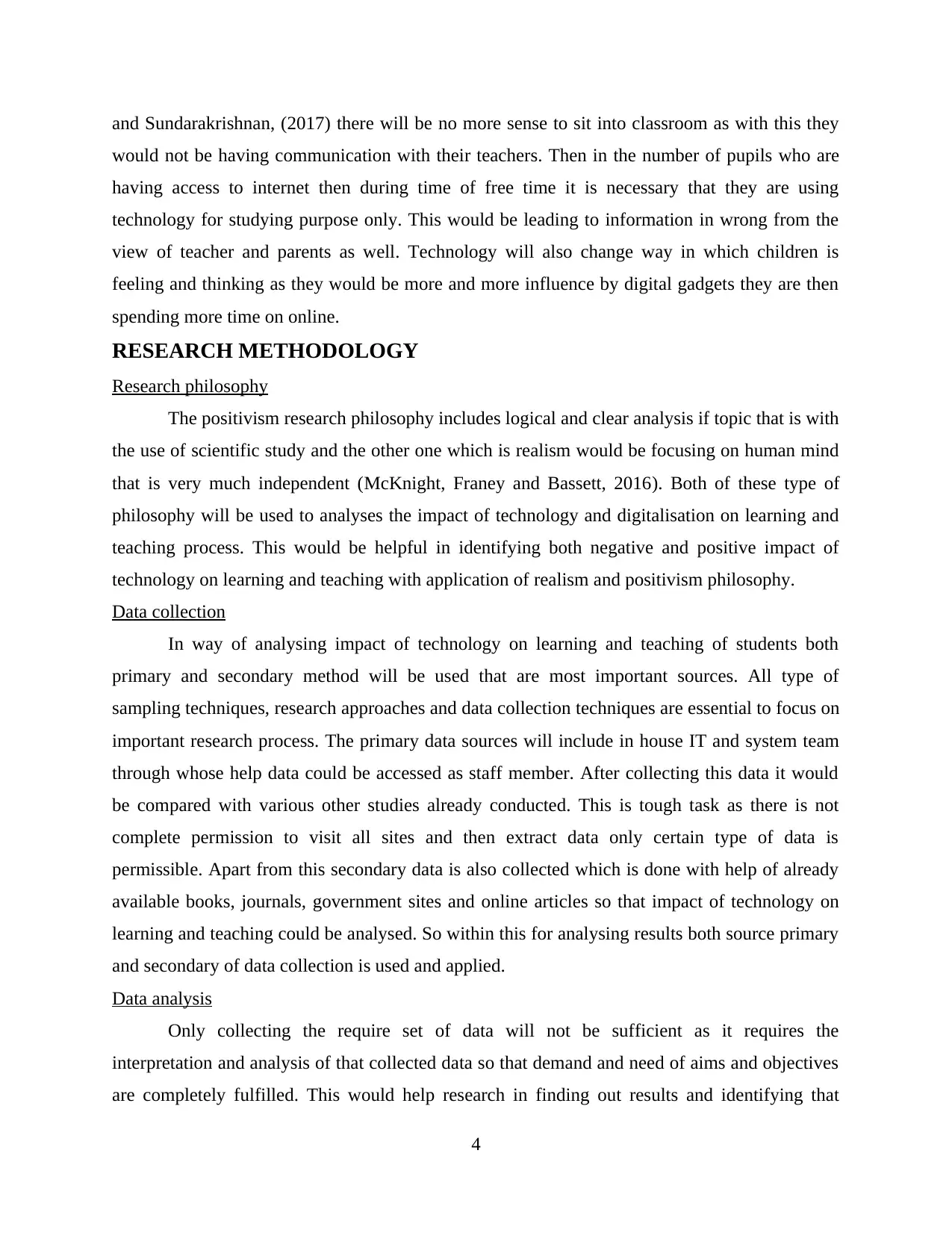
Figure 1: UG students with disability
5
Paraphrase This Document
Need a fresh take? Get an instant paraphrase of this document with our AI Paraphraser
UG students with no disability
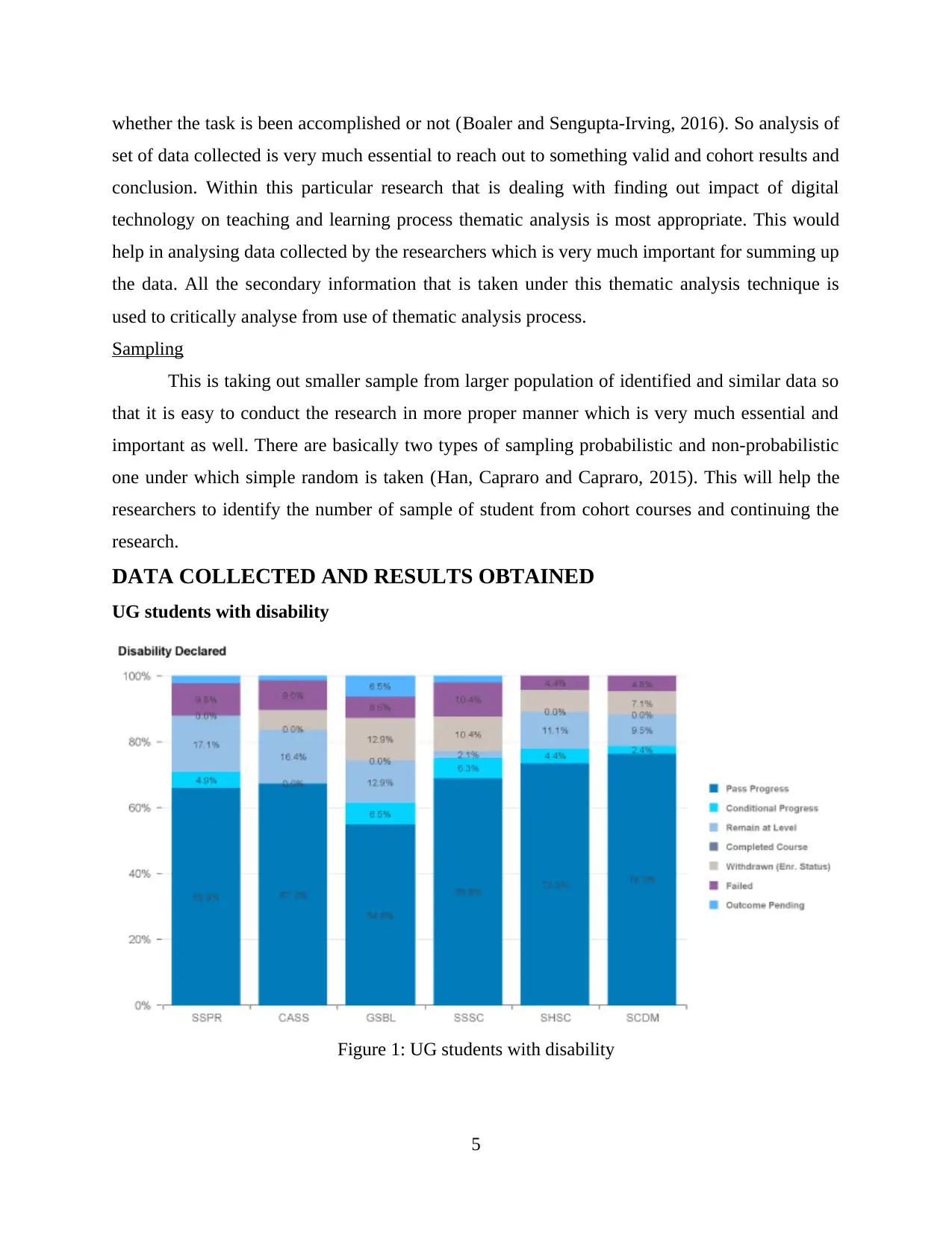
Figure 2: UG students with no disability
PG students with disability
6
Figure 2: UG students with no disability
PG students with disability
6
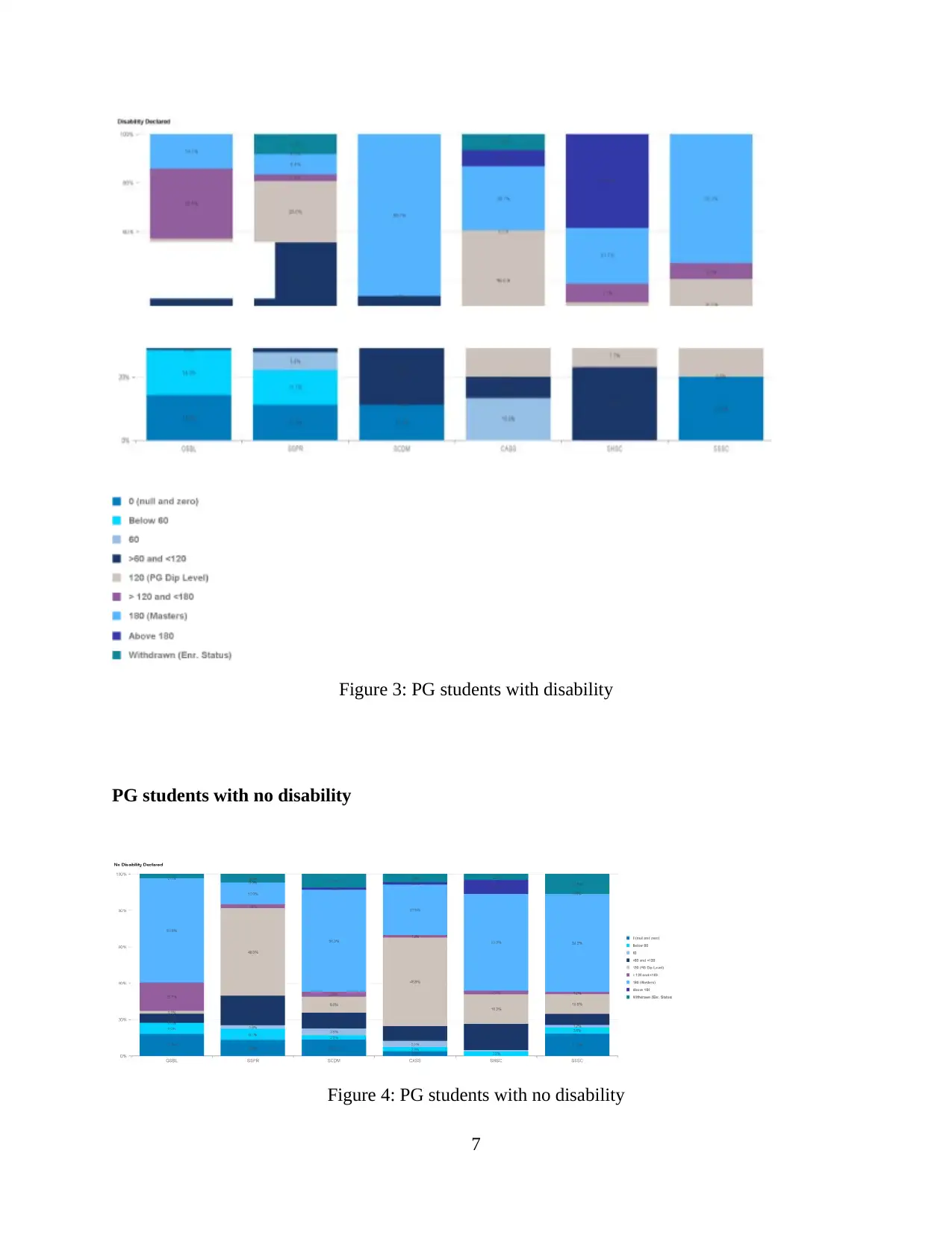
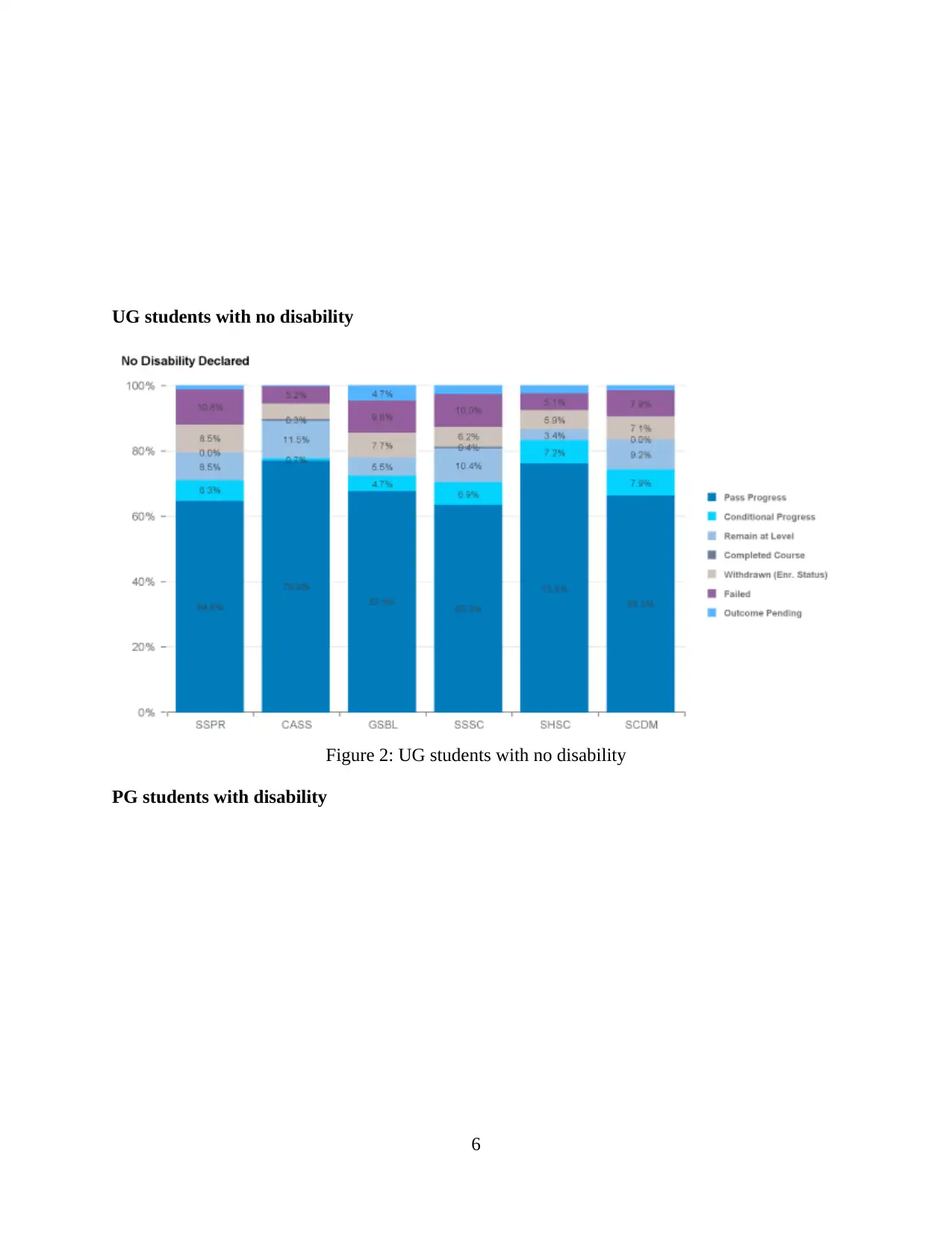
Figure 3: PG students with disability
PG students with no disability
Figure 4: PG students with no disability
7
PG students with no disability
Figure 4: PG students with no disability
7
⊘ This is a preview!⊘
Do you want full access?
Subscribe today to unlock all pages.
Trusted by 1+ million students worldwide
ANALYSIS OF RESULTS
UG students with disability
Number of disabled students using technology
The students who are disable and if they are using technology then number of pass
students are more in all courses like that of SSPR, CASS, GSBL, SSSC, SHSC and SCDM as
well. But the number of pass students in SCDM is highest which 76.2% is in any other areas as
there is most number of folders for each session for students which are available in SCDM that is
18.5. While this is lowest in GSBL that is only 54.8% students are passed in this as the number
of medial recording are less in GSBL which is only 0.19.
From the above graph it is discovered that if technology is there with student who is
having disability then it is having impact in positive manner on teaching and learning. So if
student who is disabled and is using technology then their chance of getting education and
learning will be impacted.
This is also impacting their percentage of failed or withdrawn number as well. As the
number of failed student in SHSC and SCDM is lowest which is 4.4% and 4.8% respectively this
means that which help of technology number of failed student will be low. This is also because
average time user spent per page per minute from beginning of 2017-18 is higher in SHSC and
SCDM that is 16 and 18. But was also analysed that number of students with completed course
are 0 which means that no student is been able to complete the course of any stream.
UG students with no disability
Number of no disabled students using technology
Apart from this the number of student who are using technology and those who are not
having any form of disability are also very high. This means that if students are having good
form of technology and using digital media for studying and completing their course then their
chance of getting pass into that is higher. Like in case of CASS the number of pass progress
student is 76.9% this is due to increased number of menu link available for the course which is
7.32. While in SSSC the pass percentage of student at time when they are using technology is
lowest to 63.3% this is because the average time spent by user on per page per minute from
beginning of 2017-18 is low in SSSC.
From the above graph it is very clear that those students who are having access to internet
and using technology within their studies this would impact on their learning and teaching
8
UG students with disability
Number of disabled students using technology
The students who are disable and if they are using technology then number of pass
students are more in all courses like that of SSPR, CASS, GSBL, SSSC, SHSC and SCDM as
well. But the number of pass students in SCDM is highest which 76.2% is in any other areas as
there is most number of folders for each session for students which are available in SCDM that is
18.5. While this is lowest in GSBL that is only 54.8% students are passed in this as the number
of medial recording are less in GSBL which is only 0.19.
From the above graph it is discovered that if technology is there with student who is
having disability then it is having impact in positive manner on teaching and learning. So if
student who is disabled and is using technology then their chance of getting education and
learning will be impacted.
This is also impacting their percentage of failed or withdrawn number as well. As the
number of failed student in SHSC and SCDM is lowest which is 4.4% and 4.8% respectively this
means that which help of technology number of failed student will be low. This is also because
average time user spent per page per minute from beginning of 2017-18 is higher in SHSC and
SCDM that is 16 and 18. But was also analysed that number of students with completed course
are 0 which means that no student is been able to complete the course of any stream.
UG students with no disability
Number of no disabled students using technology
Apart from this the number of student who are using technology and those who are not
having any form of disability are also very high. This means that if students are having good
form of technology and using digital media for studying and completing their course then their
chance of getting pass into that is higher. Like in case of CASS the number of pass progress
student is 76.9% this is due to increased number of menu link available for the course which is
7.32. While in SSSC the pass percentage of student at time when they are using technology is
lowest to 63.3% this is because the average time spent by user on per page per minute from
beginning of 2017-18 is low in SSSC.
From the above graph it is very clear that those students who are having access to internet
and using technology within their studies this would impact on their learning and teaching
8
Paraphrase This Document
Need a fresh take? Get an instant paraphrase of this document with our AI Paraphraser
process. While the number of failed student with having no disability is also there but in CASS
which is 5.2% this is due to average number of session per user from beginning of 2017-18 is
low. The most number of failure students are in SSPR which is about 10.8% this is due to their
average number of medial recording are less which is about 0.64. It was also witnessed that
technology is playing major and most effective role in teaching and learning process which
enable students to look through all type of sessions and programs. University also lay stress on
more and use of technology within their teaching and learning part so that students are able to
conduct sessions on proper manner.
Technology and digitalisation is very important part in teaching and learning field which
will enable teachers and students to communicate in proper manner. With the help of technology
the students would be able to search on for number of folders, number of medial recording and
number of menu link that are available. If these things are there into teaching and learning then
this would be helpful for all students and teachers as well.
The average number of sessions per user from the beginning of 2017-18 in SHSC was
highest and the in CASS it was lowest. This shows that students are having or spending more
time on their courses which is mostly with help of technology and internet. Whether the student
is having disability or not it could be included that if they are using and studying with use of
internet then this will be very much helpful for them.
PG students with disability
While the somewhat same set of data was also identified from the PG student as those
who are disabled or not. The data is denoted by PG Cert Level which is the level of certificate
that is necessary within the postgraduate level in UK and at level of master’s degree the where
the level if below 60 till 120. While the PG DIP level is defined to as level 7 of postgraduate
diploma which is at level 7 of qualification and awarded to those students who has attained at
least 120 credits towards the master degree at university level.
There are about 65.75% of students who are disabled in SCDM and getting below 60
with help of technology and study with internet only. While SHSC students are having highest of
180 credit which is for about 38.5% of them this also due to use of internet only. Then in case of
SSSC number of students with disability who are having below 60 credit are 53.3%. The
percentage of withdrawal is lower within the person are very low in this PG due to their
disability or not having internet as well.
9
which is 5.2% this is due to average number of session per user from beginning of 2017-18 is
low. The most number of failure students are in SSPR which is about 10.8% this is due to their
average number of medial recording are less which is about 0.64. It was also witnessed that
technology is playing major and most effective role in teaching and learning process which
enable students to look through all type of sessions and programs. University also lay stress on
more and use of technology within their teaching and learning part so that students are able to
conduct sessions on proper manner.
Technology and digitalisation is very important part in teaching and learning field which
will enable teachers and students to communicate in proper manner. With the help of technology
the students would be able to search on for number of folders, number of medial recording and
number of menu link that are available. If these things are there into teaching and learning then
this would be helpful for all students and teachers as well.
The average number of sessions per user from the beginning of 2017-18 in SHSC was
highest and the in CASS it was lowest. This shows that students are having or spending more
time on their courses which is mostly with help of technology and internet. Whether the student
is having disability or not it could be included that if they are using and studying with use of
internet then this will be very much helpful for them.
PG students with disability
While the somewhat same set of data was also identified from the PG student as those
who are disabled or not. The data is denoted by PG Cert Level which is the level of certificate
that is necessary within the postgraduate level in UK and at level of master’s degree the where
the level if below 60 till 120. While the PG DIP level is defined to as level 7 of postgraduate
diploma which is at level 7 of qualification and awarded to those students who has attained at
least 120 credits towards the master degree at university level.
There are about 65.75% of students who are disabled in SCDM and getting below 60
with help of technology and study with internet only. While SHSC students are having highest of
180 credit which is for about 38.5% of them this also due to use of internet only. Then in case of
SSSC number of students with disability who are having below 60 credit are 53.3%. The
percentage of withdrawal is lower within the person are very low in this PG due to their
disability or not having internet as well.
9

PG students with no disability
While students having no disability are also performing very good within this as the
people having 54.2% are having below 60 in SSSC and 53.3% in SHSC.
10
While students having no disability are also performing very good within this as the
people having 54.2% are having below 60 in SSSC and 53.3% in SHSC.
10
⊘ This is a preview!⊘
Do you want full access?
Subscribe today to unlock all pages.
Trusted by 1+ million students worldwide

1 out of 14


Related Documents


Your All-in-One AI-Powered Toolkit for Academic Success.
+13062052269
info@desklib.com
Available 24*7 on WhatsApp / Email
![[object Object]](/_next/static/media/star-bottom.7253800d.svg)
Unlock your academic potential
Copyright © 2020–2026 A2Z Services. All Rights Reserved. Developed and managed by ZUCOL.