TfL Project Management Plan: Gilbert & Sullivan Operetta Staging
VerifiedAdded on 2023/06/12
|11
|1880
|279
Report
AI Summary
This report provides a comprehensive project management plan for Transport for London (TfL) to stage a Gilbert & Sullivan operetta, celebrating the 40th anniversary of the G&S society. It includes an overview of project methodologies such as Agile and Waterfall, a stakeholder analysis identifying key stakeholders like investors, organizers, and the audience, and a network diagram illustrating the project workflow. The report further details a work breakdown structure (WBS) to manage project scope and deliverables, a risk analysis identifying potential issues like power failure and crowd management, and quality control measures. The plan aims to ensure stakeholder satisfaction through effective project management, risk mitigation, and quality assurance, ultimately contributing to the successful staging of the operetta.
TfL project
management plan for
the stagging of one of
the famous operettas
of playwright William
G. Gilbert and
composer Arthur
Sullivan”
1
management plan for
the stagging of one of
the famous operettas
of playwright William
G. Gilbert and
composer Arthur
Sullivan”
1

Paraphrase This Document
Need a fresh take? Get an instant paraphrase of this document with our AI Paraphraser
Contents
INTRODUCTION...........................................................................................................................2
MAIN BODY...................................................................................................................................3
Task 1...............................................................................................................................................3
Project methodologies............................................................................................................3
Task 2...............................................................................................................................................4
Stakeholder’s analysis............................................................................................................4
Task 3...............................................................................................................................................5
Network Diagram...................................................................................................................5
Task 4...............................................................................................................................................7
Work Break Down Structure..................................................................................................7
TASK 5............................................................................................................................................9
Risk Analysis..........................................................................................................................9
TASK 6............................................................................................................................................9
Project Quality........................................................................................................................9
CONCLUSION..............................................................................................................................10
REFRENCES.................................................................................................................................11
2
INTRODUCTION...........................................................................................................................2
MAIN BODY...................................................................................................................................3
Task 1...............................................................................................................................................3
Project methodologies............................................................................................................3
Task 2...............................................................................................................................................4
Stakeholder’s analysis............................................................................................................4
Task 3...............................................................................................................................................5
Network Diagram...................................................................................................................5
Task 4...............................................................................................................................................7
Work Break Down Structure..................................................................................................7
TASK 5............................................................................................................................................9
Risk Analysis..........................................................................................................................9
TASK 6............................................................................................................................................9
Project Quality........................................................................................................................9
CONCLUSION..............................................................................................................................10
REFRENCES.................................................................................................................................11
2
INTRODUCTION
Project management is defined as the process of conducting a project in a systematic
manner which helps account for challenges which can derail the project. Project management
involves and playing proven methodologies tools and technologies to control monitor end plan
project in an effective manner (Aarseth and. et. al., 2017). This report provides project
management plan for completing the project of Transport for London celebrating 40th
anniversary G&S society. Transport for London are inviting project management plan for staging
of one of the famous operators of playwright William Gilbert and composer Arthur Sullivan to
be submitted for consideration which also includes the celebration of 40th anniversary and
unveiling of strategic direction. The event is funded by university student council and will be
completed in collaboration with the council. Project methodology stakeholder analysis network
background work breakdown structure and risk analysis for this project are included in this
report.
MAIN BODY
Task 1
Project methodologies
The project management methodology provides a series of principles and practises which
can act as a guideline for developing projects to ensure high performance and delivery of
high quality results. It is important to select a specific project methodology as the form
work helps in project management in every way possible so their teams and organisations
can be really effective and create a pathway to achieve project goals and objectives. In
relation to Transport for London project methodology is utilised for organising an event
celebrating 40th anniversary of the society which also involves unwilling strategic direction
of the organisation. The different project methodologies which will be utilised in project
management for Transport for London project are explained below:
Agile methods: This project management methodology deviates from linear and traditional
project management methodologies end supports adaption with the project as it progresses
(Alexander, Ackermann and Love, 2019). The focus of this methodology enables teams to
revise their project according to the current needs of the project completion process instead
of waiting to review the project activities at the end. The usage of agile methodology in
3
Project management is defined as the process of conducting a project in a systematic
manner which helps account for challenges which can derail the project. Project management
involves and playing proven methodologies tools and technologies to control monitor end plan
project in an effective manner (Aarseth and. et. al., 2017). This report provides project
management plan for completing the project of Transport for London celebrating 40th
anniversary G&S society. Transport for London are inviting project management plan for staging
of one of the famous operators of playwright William Gilbert and composer Arthur Sullivan to
be submitted for consideration which also includes the celebration of 40th anniversary and
unveiling of strategic direction. The event is funded by university student council and will be
completed in collaboration with the council. Project methodology stakeholder analysis network
background work breakdown structure and risk analysis for this project are included in this
report.
MAIN BODY
Task 1
Project methodologies
The project management methodology provides a series of principles and practises which
can act as a guideline for developing projects to ensure high performance and delivery of
high quality results. It is important to select a specific project methodology as the form
work helps in project management in every way possible so their teams and organisations
can be really effective and create a pathway to achieve project goals and objectives. In
relation to Transport for London project methodology is utilised for organising an event
celebrating 40th anniversary of the society which also involves unwilling strategic direction
of the organisation. The different project methodologies which will be utilised in project
management for Transport for London project are explained below:
Agile methods: This project management methodology deviates from linear and traditional
project management methodologies end supports adaption with the project as it progresses
(Alexander, Ackermann and Love, 2019). The focus of this methodology enables teams to
revise their project according to the current needs of the project completion process instead
of waiting to review the project activities at the end. The usage of agile methodology in
3
⊘ This is a preview!⊘
Do you want full access?
Subscribe today to unlock all pages.

Trusted by 1+ million students worldwide
project management for Transport for London project will help ensure that the project
activities are completed with high quality and new risks are eliminated immediately.
Waterfall approach: Under the waterfall project management methodology the task of the
project are completed in linear manner. The stages of sequence included in the waterfall
methodology are project requirement project analysis project design project construction
project testing project deployment and maintenance (Chua and. et. al., 2017). This project
methodology is used in case of Transport for London project as the goals are clearly defined
and interests of stakeholder in the project are clearly known.
Task 2
Stakeholder’s analysis
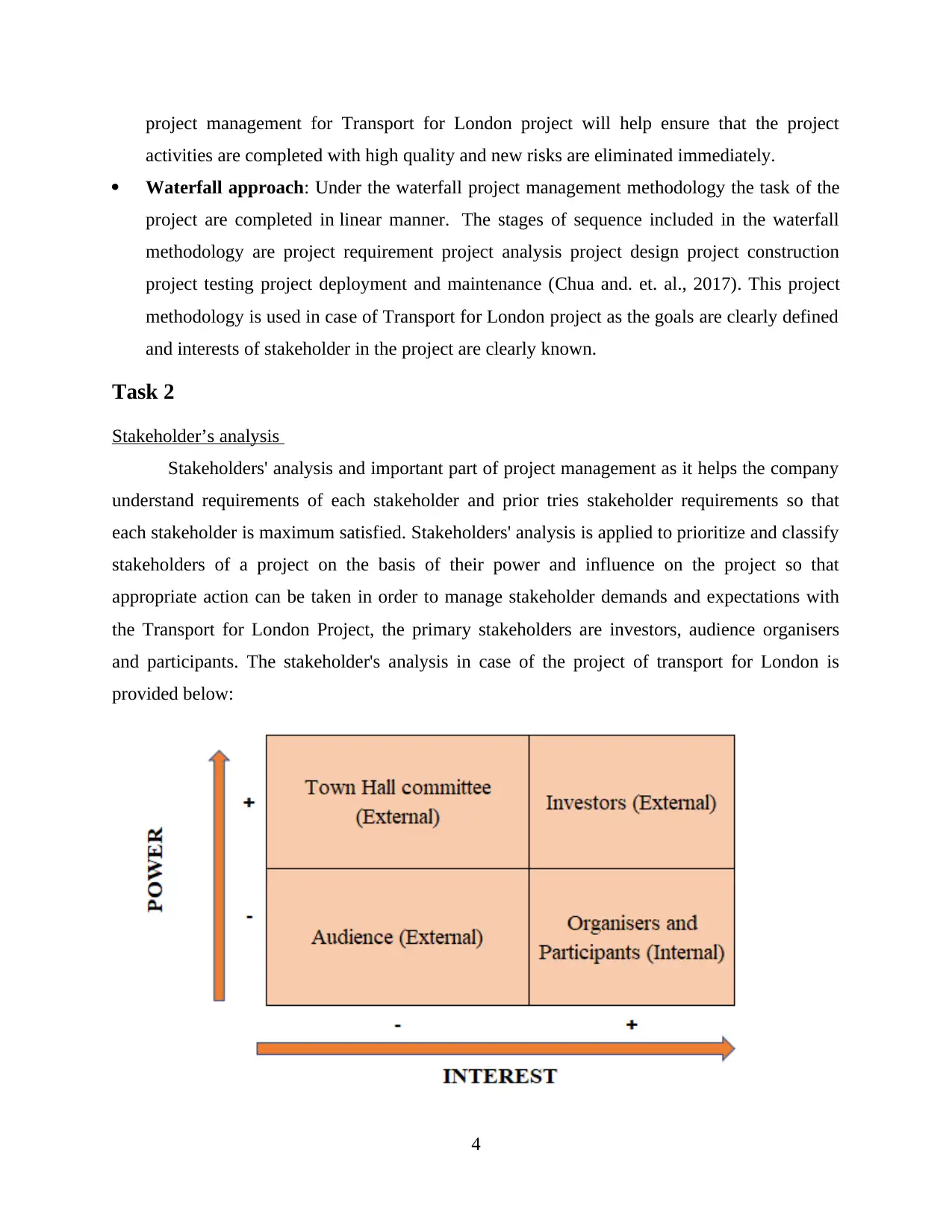
Stakeholders' analysis and important part of project management as it helps the company
understand requirements of each stakeholder and prior tries stakeholder requirements so that
each stakeholder is maximum satisfied. Stakeholders' analysis is applied to prioritize and classify
stakeholders of a project on the basis of their power and influence on the project so that
appropriate action can be taken in order to manage stakeholder demands and expectations with
the Transport for London Project, the primary stakeholders are investors, audience organisers
and participants. The stakeholder's analysis in case of the project of transport for London is
provided below:
4
activities are completed with high quality and new risks are eliminated immediately.
Waterfall approach: Under the waterfall project management methodology the task of the
project are completed in linear manner. The stages of sequence included in the waterfall
methodology are project requirement project analysis project design project construction
project testing project deployment and maintenance (Chua and. et. al., 2017). This project
methodology is used in case of Transport for London project as the goals are clearly defined
and interests of stakeholder in the project are clearly known.
Task 2
Stakeholder’s analysis
Stakeholders' analysis and important part of project management as it helps the company
understand requirements of each stakeholder and prior tries stakeholder requirements so that
each stakeholder is maximum satisfied. Stakeholders' analysis is applied to prioritize and classify
stakeholders of a project on the basis of their power and influence on the project so that
appropriate action can be taken in order to manage stakeholder demands and expectations with
the Transport for London Project, the primary stakeholders are investors, audience organisers
and participants. The stakeholder's analysis in case of the project of transport for London is
provided below:
4
Paraphrase This Document
Need a fresh take? Get an instant paraphrase of this document with our AI Paraphraser
High Power and High interest: Investors are the external stakeholders who have high power
as well as high interest in the project of Transport for London. It is important to maintain
regular communication with the investors for the project so that their approval and feedback
on the major elements of the project can be gained (de Oliveira and. et. al., 2017). This is
suitable step as the project will be delivered according to the requirements of the investors
and they will remain highly satisfied throughout the project.
High Power Low Interest: The town hall committee who will be attending the anniversary
are not highly interested in the event but do have substantial power to impact the decisions
related to project management of transport for London G&S anniversary event. The town
hall committee in relation to the event will be monitored and communicated with using
digital channels such as social media. This type of monitoring is suitable for managing
interests of the audience because it will help determine response of audience to various parts
f the event so that actions can be taken to reach audience expectations.
Low Power, high interest: The main organizer of the event which is the transport for
London along with internal participants in the event who will support completion of the
event do not have high power but have high interest in the event. This is because they play
an important role in the completion of the event but do not hold significant authority to
affect decisions of the company. Digital communication channels such as email will be used
to communicate with internal participants. This will keep the participants about any changes
to project management plan so that the entire internal team works in coordination to attain
best results of the event. Organizers will be managed closely through regular reports which
will keep the ensured that the event will be completed in a timely manner.
Low Power, Low interest: In the final part of the stakeholders analysis, the audience of the
event is included because the audience does not have influence over the decision making of
the event and is also keen in participating in the event. Promotional techniques such as
social media marketing will be used to inform the target audience about latest developments
in project management in context of the transport for London Project.
5
as well as high interest in the project of Transport for London. It is important to maintain
regular communication with the investors for the project so that their approval and feedback
on the major elements of the project can be gained (de Oliveira and. et. al., 2017). This is
suitable step as the project will be delivered according to the requirements of the investors
and they will remain highly satisfied throughout the project.
High Power Low Interest: The town hall committee who will be attending the anniversary
are not highly interested in the event but do have substantial power to impact the decisions
related to project management of transport for London G&S anniversary event. The town
hall committee in relation to the event will be monitored and communicated with using
digital channels such as social media. This type of monitoring is suitable for managing
interests of the audience because it will help determine response of audience to various parts
f the event so that actions can be taken to reach audience expectations.
Low Power, high interest: The main organizer of the event which is the transport for
London along with internal participants in the event who will support completion of the
event do not have high power but have high interest in the event. This is because they play
an important role in the completion of the event but do not hold significant authority to
affect decisions of the company. Digital communication channels such as email will be used
to communicate with internal participants. This will keep the participants about any changes
to project management plan so that the entire internal team works in coordination to attain
best results of the event. Organizers will be managed closely through regular reports which
will keep the ensured that the event will be completed in a timely manner.
Low Power, Low interest: In the final part of the stakeholders analysis, the audience of the
event is included because the audience does not have influence over the decision making of
the event and is also keen in participating in the event. Promotional techniques such as
social media marketing will be used to inform the target audience about latest developments
in project management in context of the transport for London Project.
5
Task 3
Network Diagram
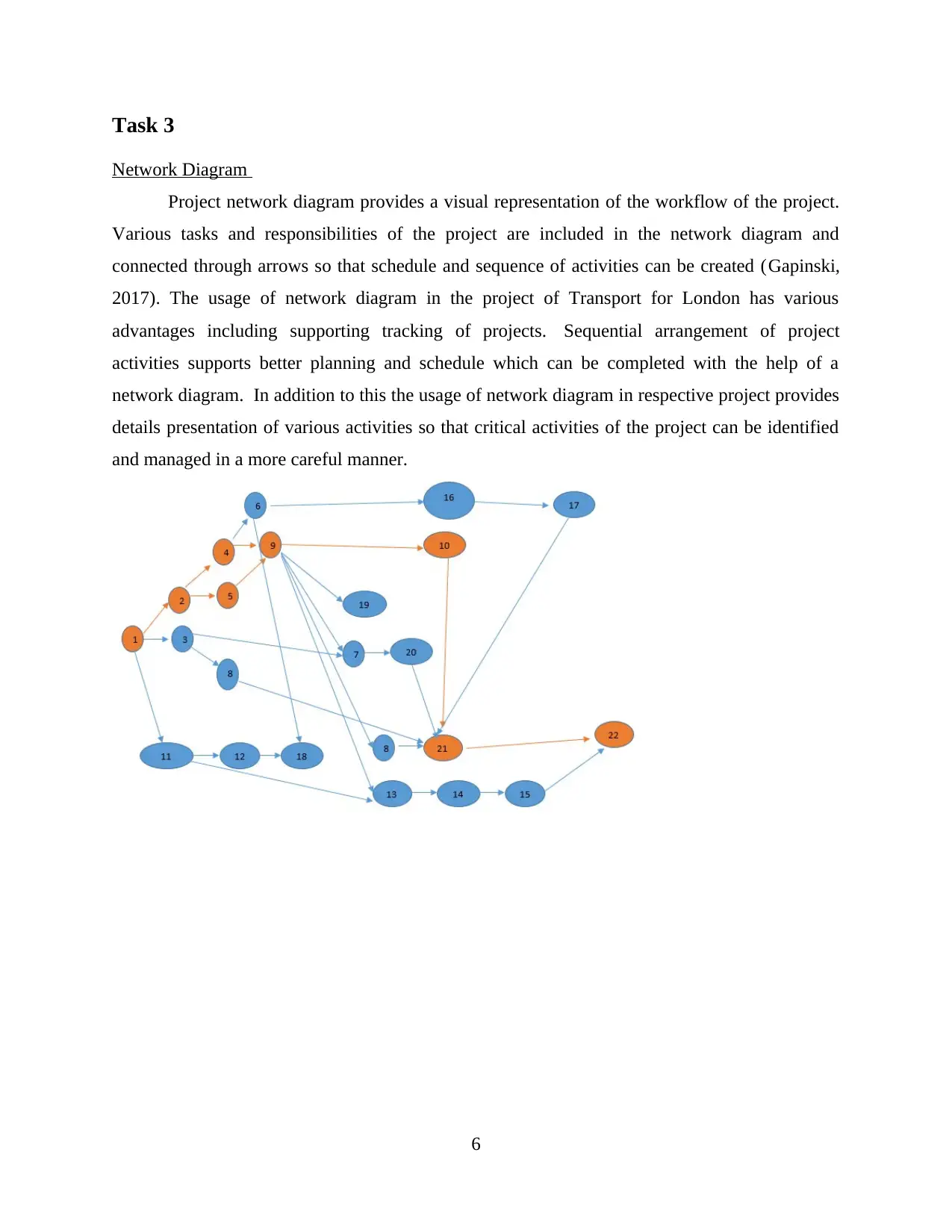
Project network diagram provides a visual representation of the workflow of the project.
Various tasks and responsibilities of the project are included in the network diagram and
connected through arrows so that schedule and sequence of activities can be created (Gapinski,
2017). The usage of network diagram in the project of Transport for London has various
advantages including supporting tracking of projects. Sequential arrangement of project
activities supports better planning and schedule which can be completed with the help of a
network diagram. In addition to this the usage of network diagram in respective project provides
details presentation of various activities so that critical activities of the project can be identified
and managed in a more careful manner.
6
Network Diagram
Project network diagram provides a visual representation of the workflow of the project.
Various tasks and responsibilities of the project are included in the network diagram and
connected through arrows so that schedule and sequence of activities can be created (Gapinski,
2017). The usage of network diagram in the project of Transport for London has various
advantages including supporting tracking of projects. Sequential arrangement of project
activities supports better planning and schedule which can be completed with the help of a
network diagram. In addition to this the usage of network diagram in respective project provides
details presentation of various activities so that critical activities of the project can be identified
and managed in a more careful manner.
6
⊘ This is a preview!⊘
Do you want full access?
Subscribe today to unlock all pages.
Trusted by 1+ million students worldwide
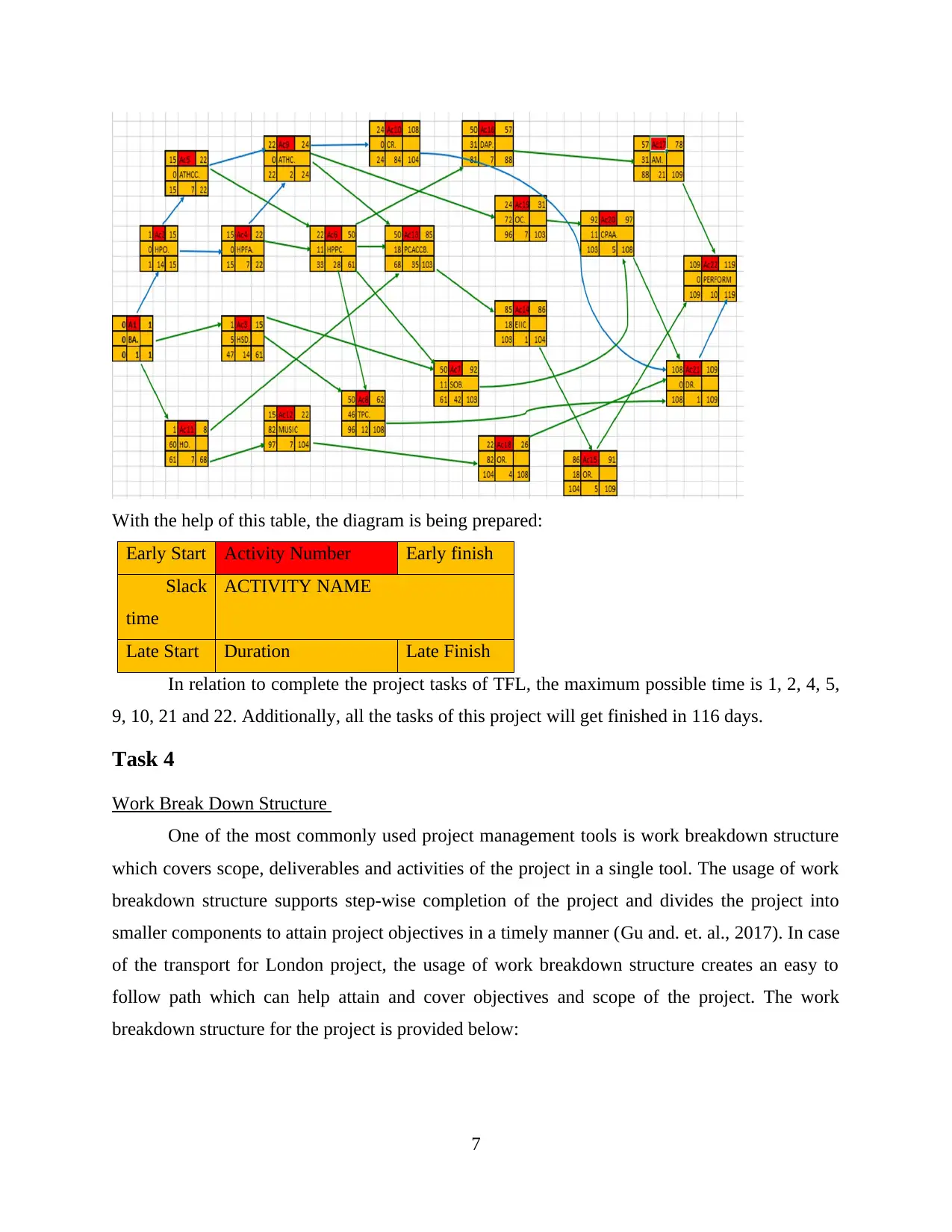
With the help of this table, the diagram is being prepared:
Early Start Activity Number Early finish
Slack
time
ACTIVITY NAME
Late Start Duration Late Finish
In relation to complete the project tasks of TFL, the maximum possible time is 1, 2, 4, 5,
9, 10, 21 and 22. Additionally, all the tasks of this project will get finished in 116 days.
Task 4
Work Break Down Structure
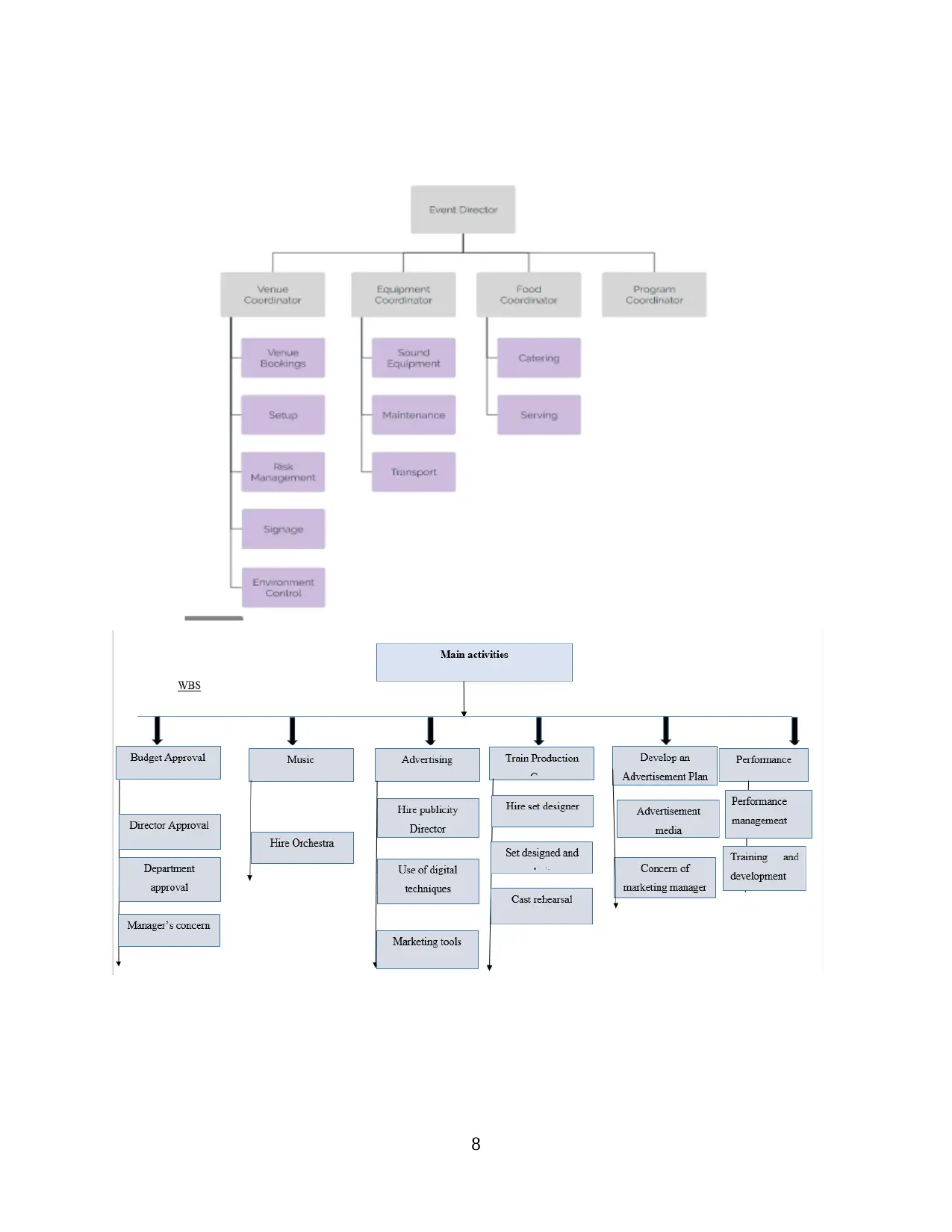
One of the most commonly used project management tools is work breakdown structure
which covers scope, deliverables and activities of the project in a single tool. The usage of work
breakdown structure supports step-wise completion of the project and divides the project into
smaller components to attain project objectives in a timely manner (Gu and. et. al., 2017). In case
of the transport for London project, the usage of work breakdown structure creates an easy to
follow path which can help attain and cover objectives and scope of the project. The work
breakdown structure for the project is provided below:
7
Early Start Activity Number Early finish
Slack
time
ACTIVITY NAME
Late Start Duration Late Finish
In relation to complete the project tasks of TFL, the maximum possible time is 1, 2, 4, 5,
9, 10, 21 and 22. Additionally, all the tasks of this project will get finished in 116 days.
Task 4
Work Break Down Structure
One of the most commonly used project management tools is work breakdown structure
which covers scope, deliverables and activities of the project in a single tool. The usage of work
breakdown structure supports step-wise completion of the project and divides the project into
smaller components to attain project objectives in a timely manner (Gu and. et. al., 2017). In case
of the transport for London project, the usage of work breakdown structure creates an easy to
follow path which can help attain and cover objectives and scope of the project. The work
breakdown structure for the project is provided below:
7
Paraphrase This Document
Need a fresh take? Get an instant paraphrase of this document with our AI Paraphraser
8
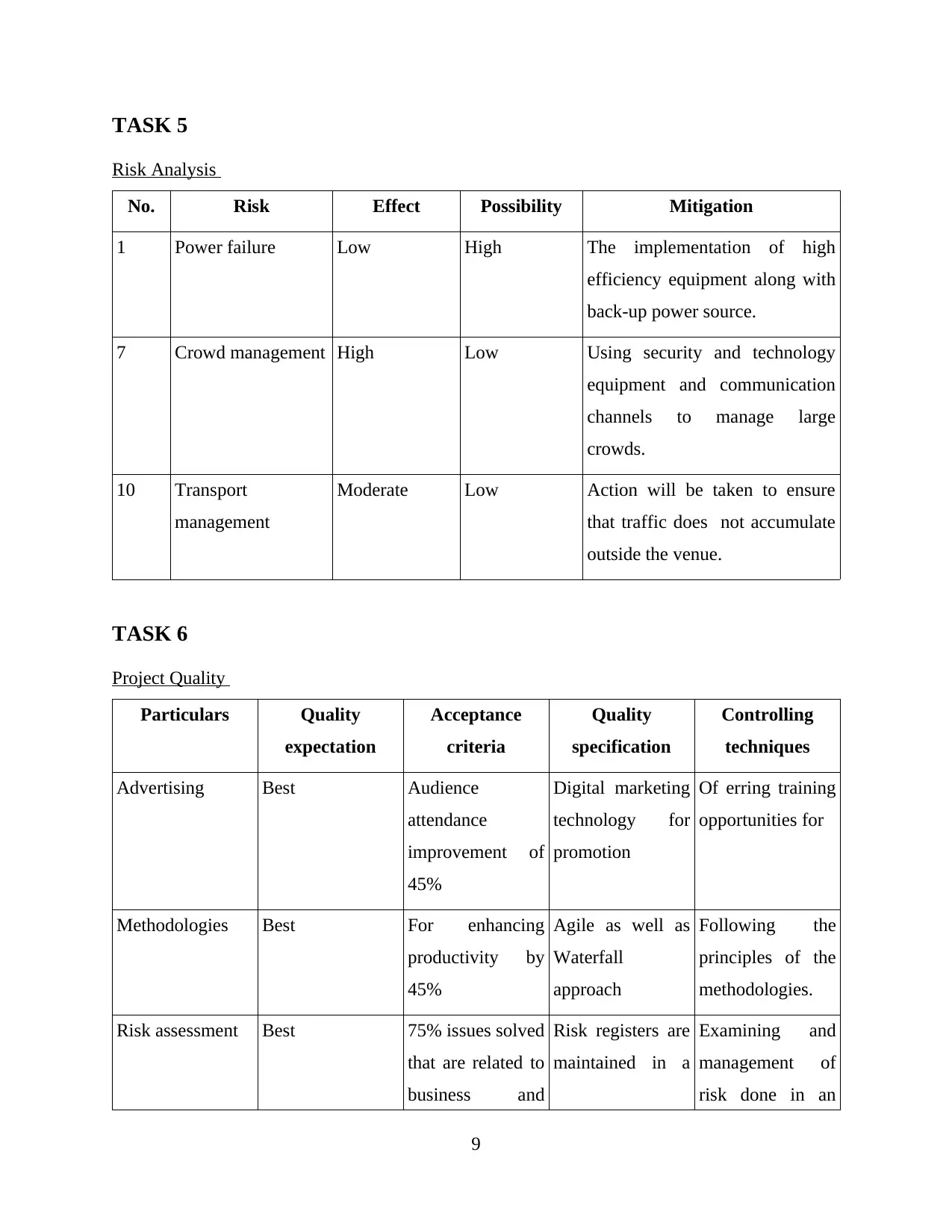
TASK 5
Risk Analysis
No. Risk Effect Possibility Mitigation
1 Power failure Low High The implementation of high
efficiency equipment along with
back-up power source.
7 Crowd management High Low Using security and technology
equipment and communication
channels to manage large
crowds.
10 Transport
management
Moderate Low Action will be taken to ensure
that traffic does not accumulate
outside the venue.
TASK 6
Project Quality
Particulars Quality
expectation
Acceptance
criteria
Quality
specification
Controlling
techniques
Advertising Best Audience
attendance
improvement of
45%
Digital marketing
technology for
promotion
Of erring training
opportunities for
Methodologies Best For enhancing
productivity by
45%
Agile as well as
Waterfall
approach
Following the
principles of the
methodologies.
Risk assessment Best 75% issues solved
that are related to
business and
Risk registers are
maintained in a
Examining and
management of
risk done in an
9
Risk Analysis
No. Risk Effect Possibility Mitigation
1 Power failure Low High The implementation of high
efficiency equipment along with
back-up power source.
7 Crowd management High Low Using security and technology
equipment and communication
channels to manage large
crowds.
10 Transport
management
Moderate Low Action will be taken to ensure
that traffic does not accumulate
outside the venue.
TASK 6
Project Quality
Particulars Quality
expectation
Acceptance
criteria
Quality
specification
Controlling
techniques
Advertising Best Audience
attendance
improvement of
45%
Digital marketing
technology for
promotion
Of erring training
opportunities for
Methodologies Best For enhancing
productivity by
45%
Agile as well as
Waterfall
approach
Following the
principles of the
methodologies.
Risk assessment Best 75% issues solved
that are related to
business and
Risk registers are
maintained in a
Examining and
management of
risk done in an
9
⊘ This is a preview!⊘
Do you want full access?
Subscribe today to unlock all pages.
Trusted by 1+ million students worldwide
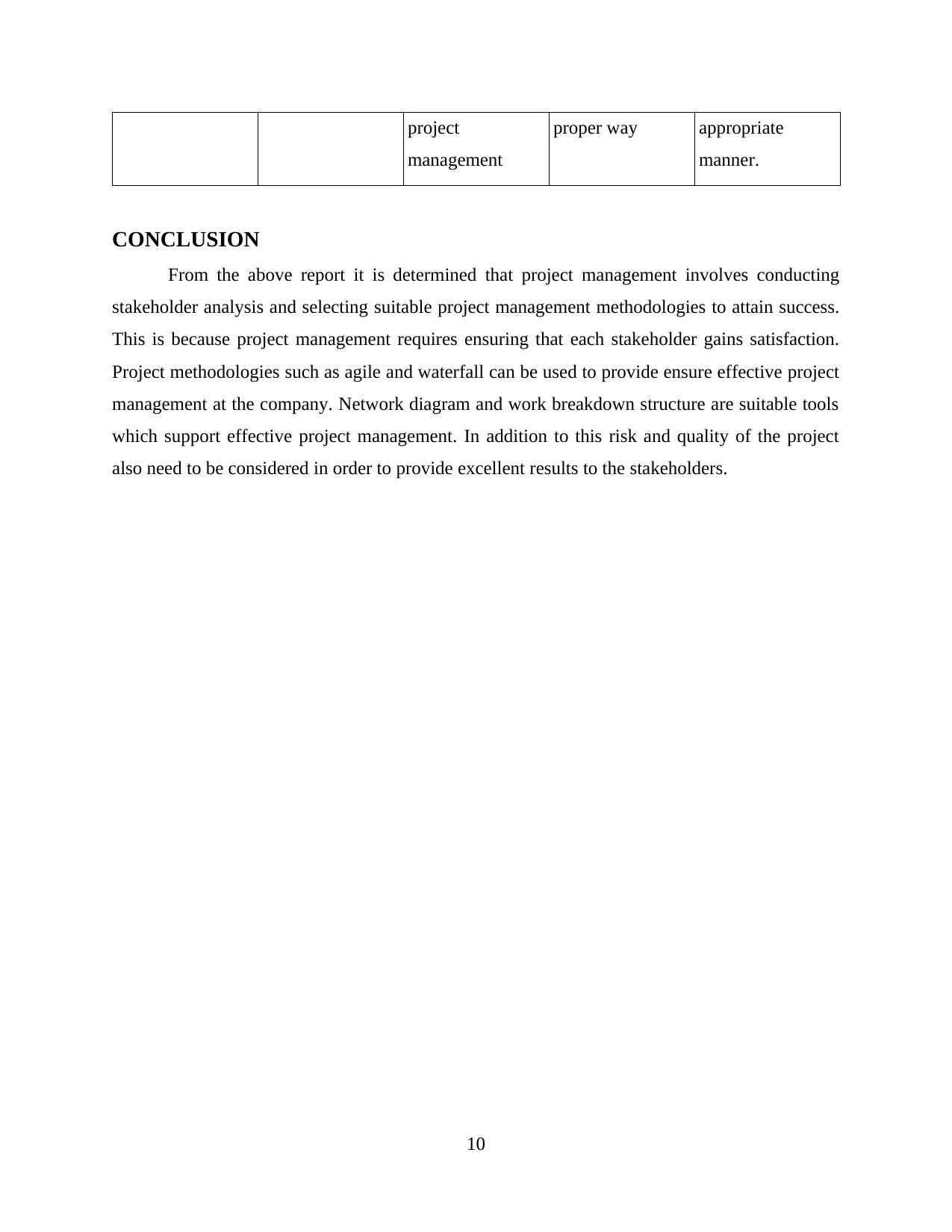
project
management
proper way appropriate
manner.
CONCLUSION
From the above report it is determined that project management involves conducting
stakeholder analysis and selecting suitable project management methodologies to attain success.
This is because project management requires ensuring that each stakeholder gains satisfaction.
Project methodologies such as agile and waterfall can be used to provide ensure effective project
management at the company. Network diagram and work breakdown structure are suitable tools
which support effective project management. In addition to this risk and quality of the project
also need to be considered in order to provide excellent results to the stakeholders.
10
management
proper way appropriate
manner.
CONCLUSION
From the above report it is determined that project management involves conducting
stakeholder analysis and selecting suitable project management methodologies to attain success.
This is because project management requires ensuring that each stakeholder gains satisfaction.
Project methodologies such as agile and waterfall can be used to provide ensure effective project
management at the company. Network diagram and work breakdown structure are suitable tools
which support effective project management. In addition to this risk and quality of the project
also need to be considered in order to provide excellent results to the stakeholders.
10
Paraphrase This Document
Need a fresh take? Get an instant paraphrase of this document with our AI Paraphraser
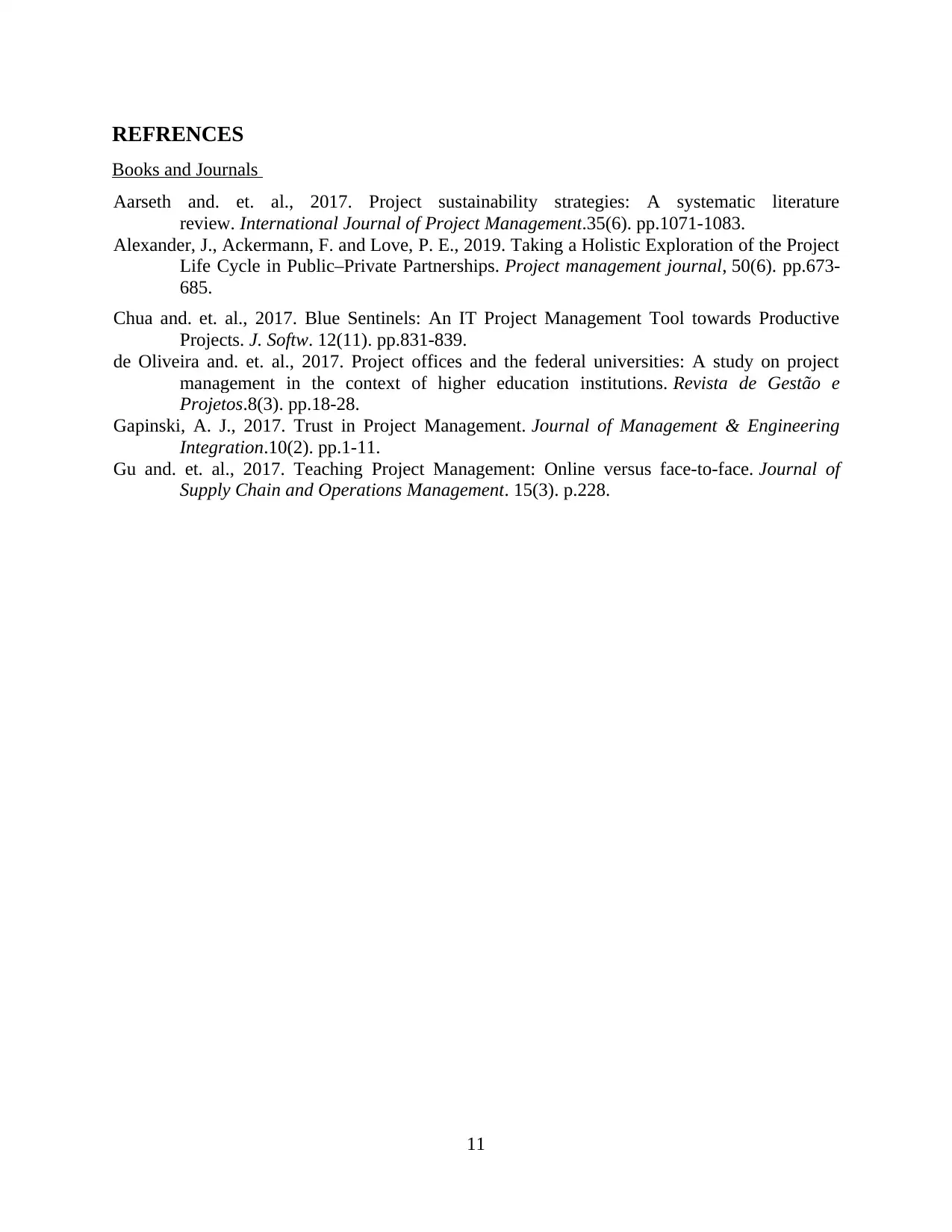
REFRENCES
Books and Journals
Aarseth and. et. al., 2017. Project sustainability strategies: A systematic literature
review. International Journal of Project Management.35(6). pp.1071-1083.
Alexander, J., Ackermann, F. and Love, P. E., 2019. Taking a Holistic Exploration of the Project
Life Cycle in Public–Private Partnerships. Project management journal, 50(6). pp.673-
685.
Chua and. et. al., 2017. Blue Sentinels: An IT Project Management Tool towards Productive
Projects. J. Softw. 12(11). pp.831-839.
de Oliveira and. et. al., 2017. Project offices and the federal universities: A study on project
management in the context of higher education institutions. Revista de Gestão e
Projetos.8(3). pp.18-28.
Gapinski, A. J., 2017. Trust in Project Management. Journal of Management & Engineering
Integration.10(2). pp.1-11.
Gu and. et. al., 2017. Teaching Project Management: Online versus face-to-face. Journal of
Supply Chain and Operations Management. 15(3). p.228.
11
Books and Journals
Aarseth and. et. al., 2017. Project sustainability strategies: A systematic literature
review. International Journal of Project Management.35(6). pp.1071-1083.
Alexander, J., Ackermann, F. and Love, P. E., 2019. Taking a Holistic Exploration of the Project
Life Cycle in Public–Private Partnerships. Project management journal, 50(6). pp.673-
685.
Chua and. et. al., 2017. Blue Sentinels: An IT Project Management Tool towards Productive
Projects. J. Softw. 12(11). pp.831-839.
de Oliveira and. et. al., 2017. Project offices and the federal universities: A study on project
management in the context of higher education institutions. Revista de Gestão e
Projetos.8(3). pp.18-28.
Gapinski, A. J., 2017. Trust in Project Management. Journal of Management & Engineering
Integration.10(2). pp.1-11.
Gu and. et. al., 2017. Teaching Project Management: Online versus face-to-face. Journal of
Supply Chain and Operations Management. 15(3). p.228.
11

1 out of 11


Related Documents


Your All-in-One AI-Powered Toolkit for Academic Success.
+13062052269
info@desklib.com
Available 24*7 on WhatsApp / Email
![[object Object]](/_next/static/media/star-bottom.7253800d.svg)
Unlock your academic potential
Copyright © 2020–2026 A2Z Services. All Rights Reserved. Developed and managed by ZUCOL.