Sociological and Theological Perspectives on Crime and Criminals
VerifiedAdded on 2020/05/16
|213
|62677
|79
Essay
AI Summary
This essay presents a detailed sociological and theological analysis of crime, focusing on the historical and contemporary interplay between religion, society, and criminal behavior. It explores the evolution of crime and punishment, the influence of religious institutions on the treatment of criminals, and the role of the church in rehabilitation efforts, specifically referencing the Old and New Testaments. The study examines sociological aspects of crime, including legal frameworks, social distribution, and explanations of criminal behavior, while also investigating theological perspectives on forgiveness, justice, and the application of religious principles in prison ministry. The methodology includes qualitative and empirical research, such as interviews with detainees, prison officers, and church representatives involved in prison ministry, providing a comprehensive view of the subject matter.
Running head: SOCIOLOGICAL AND THEOLOGICAL STUDY OF CRIMINALS
Sociological and theological study of criminals
Name of the student
Name of the university
Author note
Sociological and theological study of criminals
Name of the student
Name of the university
Author note

Paraphrase This Document
Need a fresh take? Get an instant paraphrase of this document with our AI Paraphraser
1SOCIOLOGICAL AND THEOLOGICAL STUDY OF CRIMINALS
Acknowledgement
I would also like to take this opportunity to thank my professor without whose, constant
support and guidance, the research would not have been possible.
Firstly, I would like to thank God the Almighty in giving me the strength and courage
without which I could not have completed the entire study. Secondly, I would like to thank
my family and relatives who gave me constant support mentally and physically so that I can
complete the study on time. Lastly, I would like to give thanks to my peers and the friends
who have helped me in providing the appropriate information throughout the project and
helped me in doing the in-depth analysis of the research. Without their proper guidance, it is
impossible for me to complete the project.
Thanks and Regards,
Acknowledgement
I would also like to take this opportunity to thank my professor without whose, constant
support and guidance, the research would not have been possible.
Firstly, I would like to thank God the Almighty in giving me the strength and courage
without which I could not have completed the entire study. Secondly, I would like to thank
my family and relatives who gave me constant support mentally and physically so that I can
complete the study on time. Lastly, I would like to give thanks to my peers and the friends
who have helped me in providing the appropriate information throughout the project and
helped me in doing the in-depth analysis of the research. Without their proper guidance, it is
impossible for me to complete the project.
Thanks and Regards,
2SOCIOLOGICAL AND THEOLOGICAL STUDY OF CRIMINALS
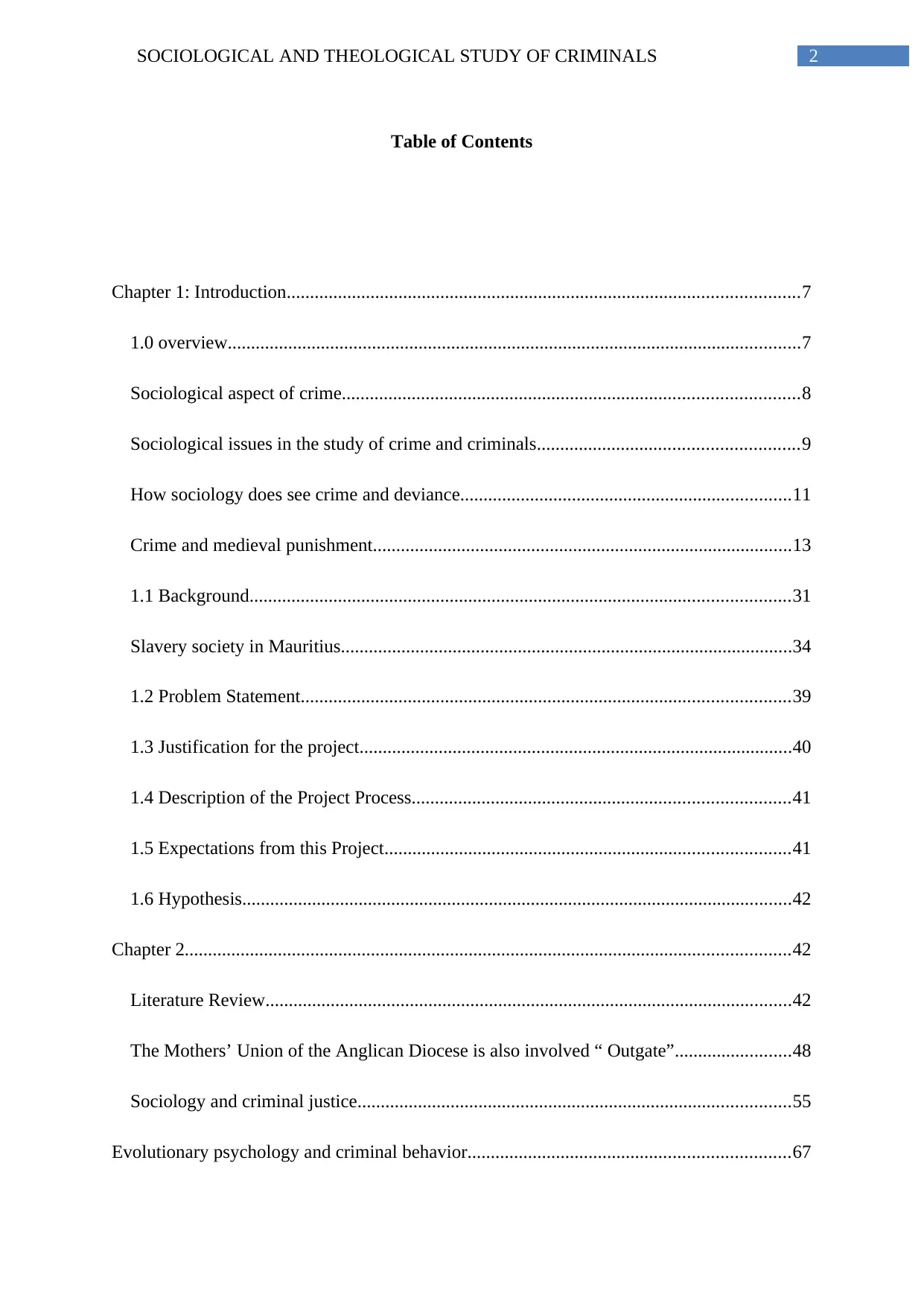
Table of Contents
Chapter 1: Introduction..............................................................................................................7
1.0 overview...........................................................................................................................7
Sociological aspect of crime..................................................................................................8
Sociological issues in the study of crime and criminals........................................................9
How sociology does see crime and deviance.......................................................................11
Crime and medieval punishment..........................................................................................13
1.1 Background....................................................................................................................31
Slavery society in Mauritius.................................................................................................34
1.2 Problem Statement.........................................................................................................39
1.3 Justification for the project.............................................................................................40
1.4 Description of the Project Process.................................................................................41
1.5 Expectations from this Project.......................................................................................41
1.6 Hypothesis......................................................................................................................42
Chapter 2..................................................................................................................................42
Literature Review.................................................................................................................42
The Mothers’ Union of the Anglican Diocese is also involved “ Outgate”.........................48
Sociology and criminal justice.............................................................................................55
Evolutionary psychology and criminal behavior.....................................................................67
Table of Contents
Chapter 1: Introduction..............................................................................................................7
1.0 overview...........................................................................................................................7
Sociological aspect of crime..................................................................................................8
Sociological issues in the study of crime and criminals........................................................9
How sociology does see crime and deviance.......................................................................11
Crime and medieval punishment..........................................................................................13
1.1 Background....................................................................................................................31
Slavery society in Mauritius.................................................................................................34
1.2 Problem Statement.........................................................................................................39
1.3 Justification for the project.............................................................................................40
1.4 Description of the Project Process.................................................................................41
1.5 Expectations from this Project.......................................................................................41
1.6 Hypothesis......................................................................................................................42
Chapter 2..................................................................................................................................42
Literature Review.................................................................................................................42
The Mothers’ Union of the Anglican Diocese is also involved “ Outgate”.........................48
Sociology and criminal justice.............................................................................................55
Evolutionary psychology and criminal behavior.....................................................................67
⊘ This is a preview!⊘
Do you want full access?
Subscribe today to unlock all pages.

Trusted by 1+ million students worldwide
3SOCIOLOGICAL AND THEOLOGICAL STUDY OF CRIMINALS
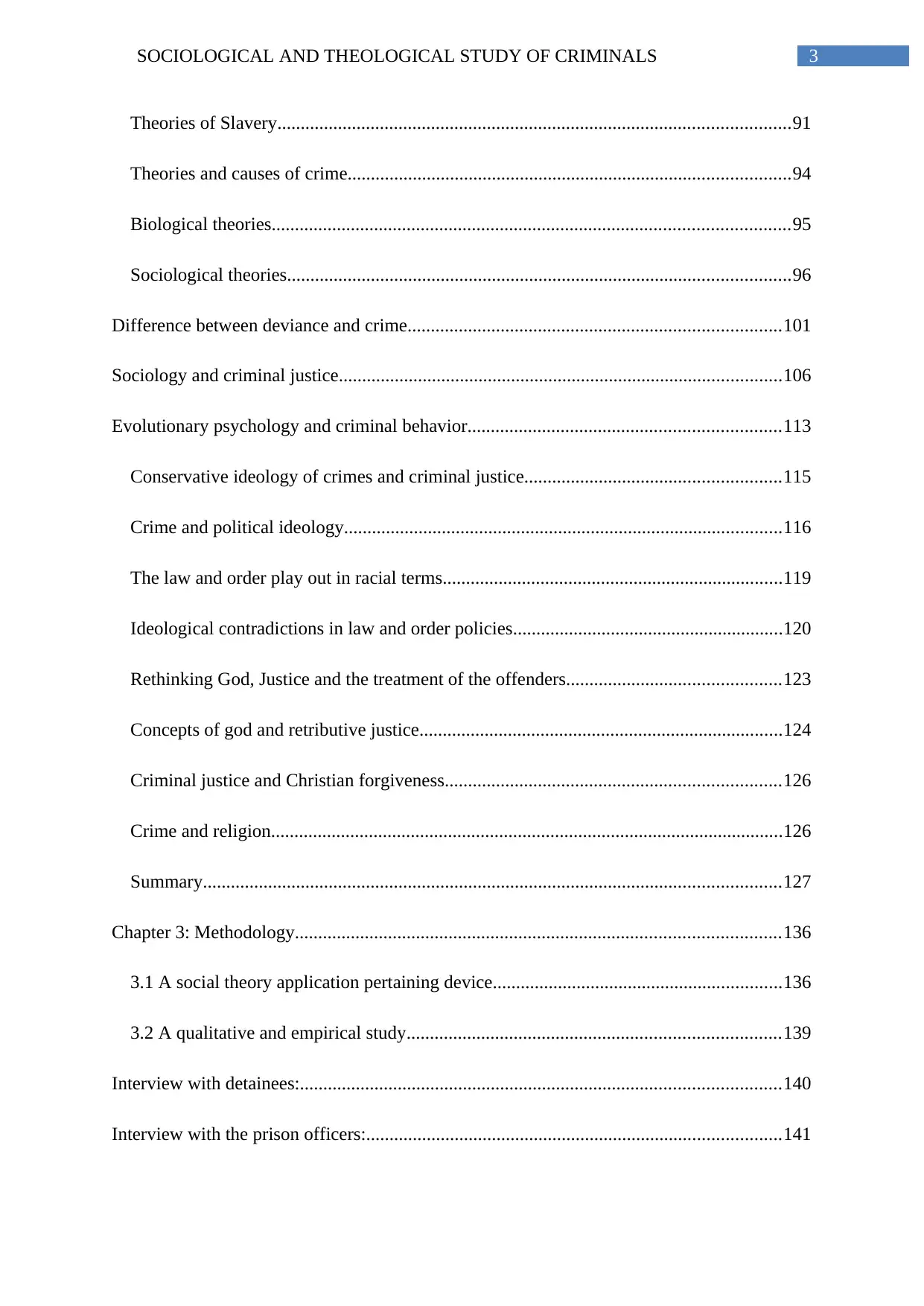
Theories of Slavery..............................................................................................................91
Theories and causes of crime...............................................................................................94
Biological theories...............................................................................................................95
Sociological theories............................................................................................................96
Difference between deviance and crime................................................................................101
Sociology and criminal justice...............................................................................................106
Evolutionary psychology and criminal behavior...................................................................113
Conservative ideology of crimes and criminal justice.......................................................115
Crime and political ideology..............................................................................................116
The law and order play out in racial terms.........................................................................119
Ideological contradictions in law and order policies..........................................................120
Rethinking God, Justice and the treatment of the offenders..............................................123
Concepts of god and retributive justice..............................................................................124
Criminal justice and Christian forgiveness........................................................................126
Crime and religion..............................................................................................................126
Summary............................................................................................................................127
Chapter 3: Methodology........................................................................................................136
3.1 A social theory application pertaining device..............................................................136
3.2 A qualitative and empirical study................................................................................139
Interview with detainees:.......................................................................................................140
Interview with the prison officers:.........................................................................................141
Theories of Slavery..............................................................................................................91
Theories and causes of crime...............................................................................................94
Biological theories...............................................................................................................95
Sociological theories............................................................................................................96
Difference between deviance and crime................................................................................101
Sociology and criminal justice...............................................................................................106
Evolutionary psychology and criminal behavior...................................................................113
Conservative ideology of crimes and criminal justice.......................................................115
Crime and political ideology..............................................................................................116
The law and order play out in racial terms.........................................................................119
Ideological contradictions in law and order policies..........................................................120
Rethinking God, Justice and the treatment of the offenders..............................................123
Concepts of god and retributive justice..............................................................................124
Criminal justice and Christian forgiveness........................................................................126
Crime and religion..............................................................................................................126
Summary............................................................................................................................127
Chapter 3: Methodology........................................................................................................136
3.1 A social theory application pertaining device..............................................................136
3.2 A qualitative and empirical study................................................................................139
Interview with detainees:.......................................................................................................140
Interview with the prison officers:.........................................................................................141
Paraphrase This Document
Need a fresh take? Get an instant paraphrase of this document with our AI Paraphraser
4SOCIOLOGICAL AND THEOLOGICAL STUDY OF CRIMINALS
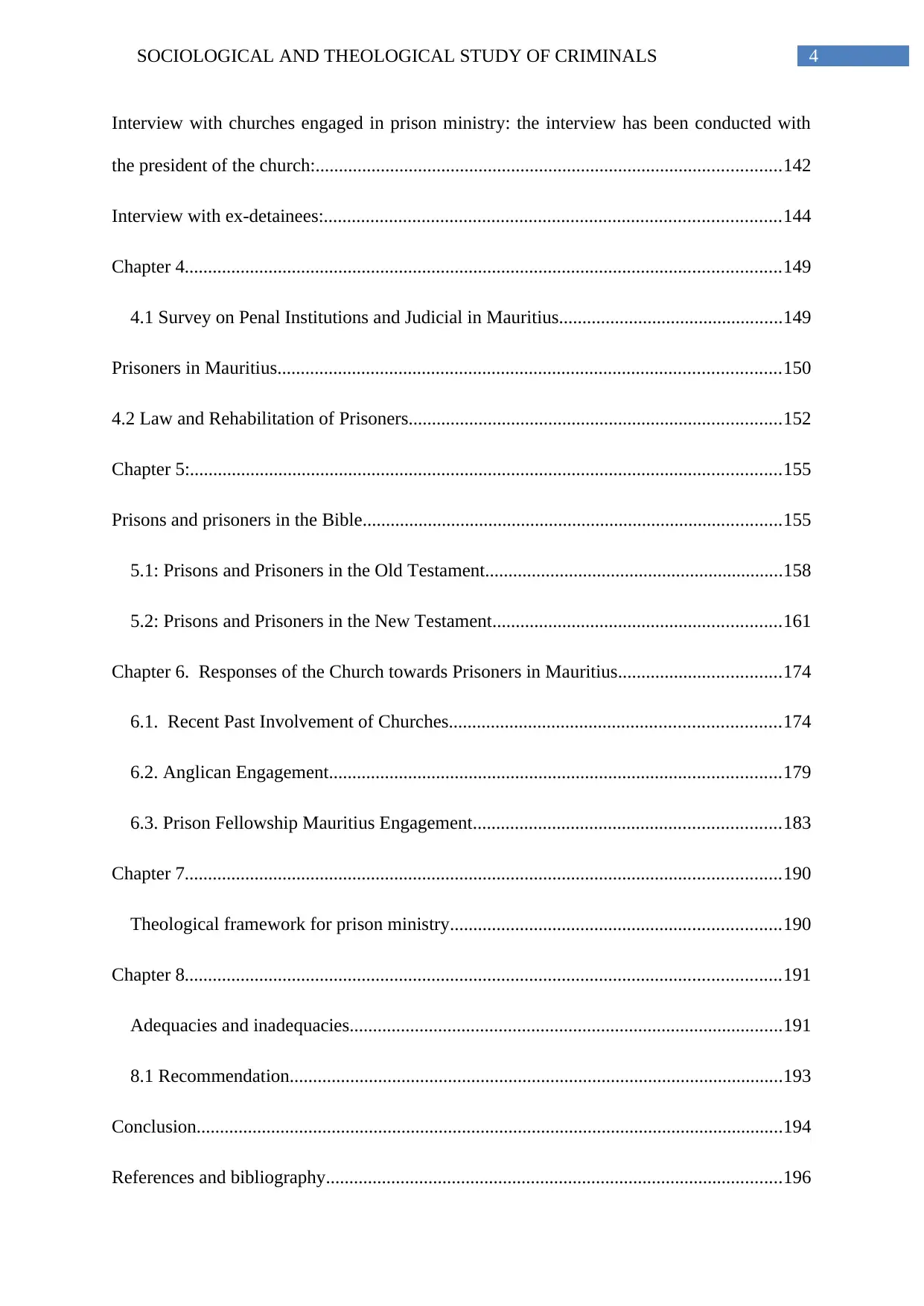
Interview with churches engaged in prison ministry: the interview has been conducted with
the president of the church:....................................................................................................142
Interview with ex-detainees:..................................................................................................144
Chapter 4................................................................................................................................149
4.1 Survey on Penal Institutions and Judicial in Mauritius................................................149
Prisoners in Mauritius............................................................................................................150
4.2 Law and Rehabilitation of Prisoners................................................................................152
Chapter 5:...............................................................................................................................155
Prisons and prisoners in the Bible..........................................................................................155
5.1: Prisons and Prisoners in the Old Testament................................................................158
5.2: Prisons and Prisoners in the New Testament..............................................................161
Chapter 6. Responses of the Church towards Prisoners in Mauritius...................................174
6.1. Recent Past Involvement of Churches.......................................................................174
6.2. Anglican Engagement.................................................................................................179
6.3. Prison Fellowship Mauritius Engagement..................................................................183
Chapter 7................................................................................................................................190
Theological framework for prison ministry.......................................................................190
Chapter 8................................................................................................................................191
Adequacies and inadequacies.............................................................................................191
8.1 Recommendation..........................................................................................................193
Conclusion..............................................................................................................................194
References and bibliography..................................................................................................196
Interview with churches engaged in prison ministry: the interview has been conducted with
the president of the church:....................................................................................................142
Interview with ex-detainees:..................................................................................................144
Chapter 4................................................................................................................................149
4.1 Survey on Penal Institutions and Judicial in Mauritius................................................149
Prisoners in Mauritius............................................................................................................150
4.2 Law and Rehabilitation of Prisoners................................................................................152
Chapter 5:...............................................................................................................................155
Prisons and prisoners in the Bible..........................................................................................155
5.1: Prisons and Prisoners in the Old Testament................................................................158
5.2: Prisons and Prisoners in the New Testament..............................................................161
Chapter 6. Responses of the Church towards Prisoners in Mauritius...................................174
6.1. Recent Past Involvement of Churches.......................................................................174
6.2. Anglican Engagement.................................................................................................179
6.3. Prison Fellowship Mauritius Engagement..................................................................183
Chapter 7................................................................................................................................190
Theological framework for prison ministry.......................................................................190
Chapter 8................................................................................................................................191
Adequacies and inadequacies.............................................................................................191
8.1 Recommendation..........................................................................................................193
Conclusion..............................................................................................................................194
References and bibliography..................................................................................................196
5SOCIOLOGICAL AND THEOLOGICAL STUDY OF CRIMINALS
⊘ This is a preview!⊘
Do you want full access?
Subscribe today to unlock all pages.
Trusted by 1+ million students worldwide
6SOCIOLOGICAL AND THEOLOGICAL STUDY OF CRIMINALS
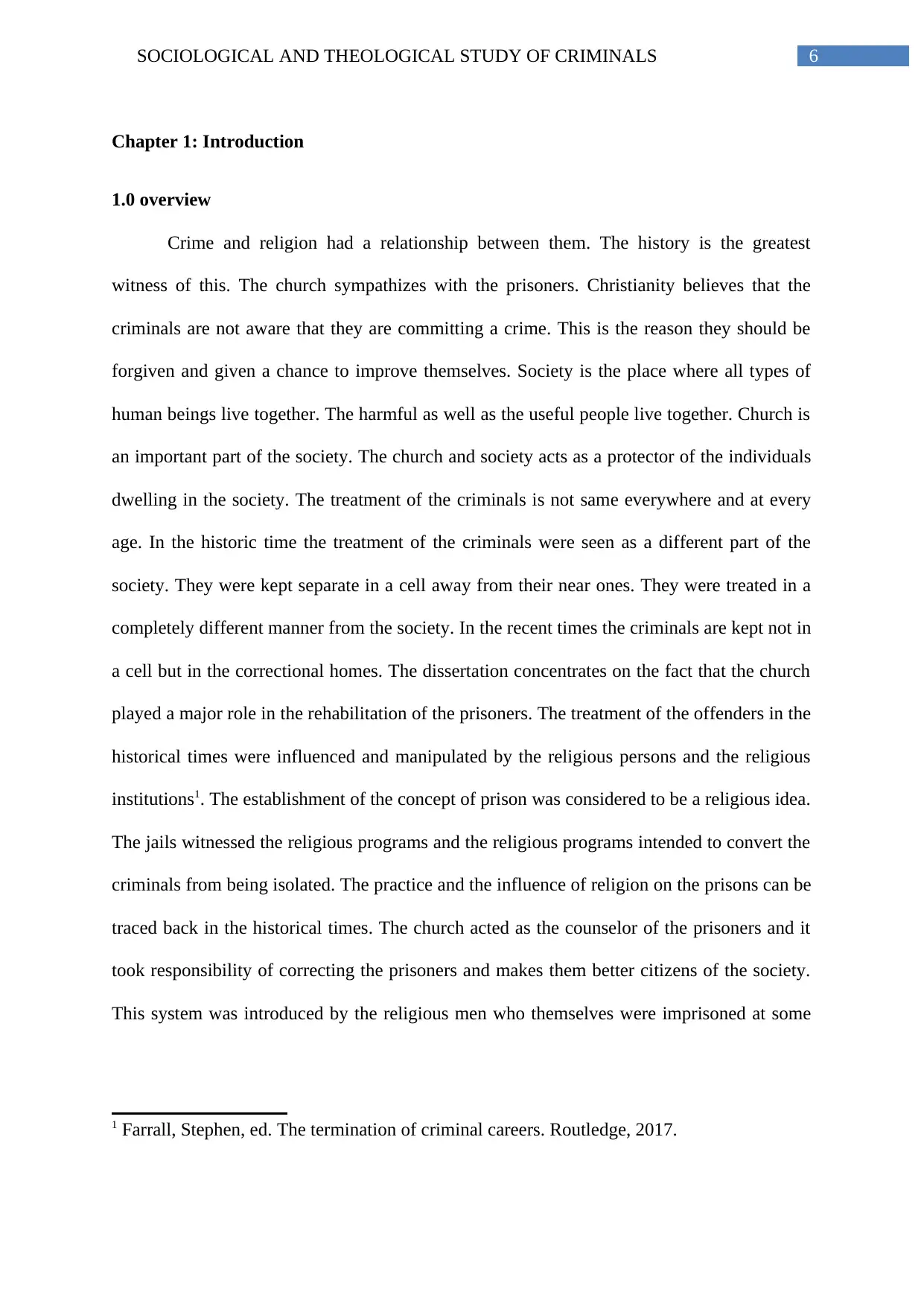
Chapter 1: Introduction
1.0 overview
Crime and religion had a relationship between them. The history is the greatest
witness of this. The church sympathizes with the prisoners. Christianity believes that the
criminals are not aware that they are committing a crime. This is the reason they should be
forgiven and given a chance to improve themselves. Society is the place where all types of
human beings live together. The harmful as well as the useful people live together. Church is
an important part of the society. The church and society acts as a protector of the individuals
dwelling in the society. The treatment of the criminals is not same everywhere and at every
age. In the historic time the treatment of the criminals were seen as a different part of the
society. They were kept separate in a cell away from their near ones. They were treated in a
completely different manner from the society. In the recent times the criminals are kept not in
a cell but in the correctional homes. The dissertation concentrates on the fact that the church
played a major role in the rehabilitation of the prisoners. The treatment of the offenders in the
historical times were influenced and manipulated by the religious persons and the religious
institutions1. The establishment of the concept of prison was considered to be a religious idea.
The jails witnessed the religious programs and the religious programs intended to convert the
criminals from being isolated. The practice and the influence of religion on the prisons can be
traced back in the historical times. The church acted as the counselor of the prisoners and it
took responsibility of correcting the prisoners and makes them better citizens of the society.
This system was introduced by the religious men who themselves were imprisoned at some
1 Farrall, Stephen, ed. The termination of criminal careers. Routledge, 2017.
Chapter 1: Introduction
1.0 overview
Crime and religion had a relationship between them. The history is the greatest
witness of this. The church sympathizes with the prisoners. Christianity believes that the
criminals are not aware that they are committing a crime. This is the reason they should be
forgiven and given a chance to improve themselves. Society is the place where all types of
human beings live together. The harmful as well as the useful people live together. Church is
an important part of the society. The church and society acts as a protector of the individuals
dwelling in the society. The treatment of the criminals is not same everywhere and at every
age. In the historic time the treatment of the criminals were seen as a different part of the
society. They were kept separate in a cell away from their near ones. They were treated in a
completely different manner from the society. In the recent times the criminals are kept not in
a cell but in the correctional homes. The dissertation concentrates on the fact that the church
played a major role in the rehabilitation of the prisoners. The treatment of the offenders in the
historical times were influenced and manipulated by the religious persons and the religious
institutions1. The establishment of the concept of prison was considered to be a religious idea.
The jails witnessed the religious programs and the religious programs intended to convert the
criminals from being isolated. The practice and the influence of religion on the prisons can be
traced back in the historical times. The church acted as the counselor of the prisoners and it
took responsibility of correcting the prisoners and makes them better citizens of the society.
This system was introduced by the religious men who themselves were imprisoned at some
1 Farrall, Stephen, ed. The termination of criminal careers. Routledge, 2017.
Paraphrase This Document
Need a fresh take? Get an instant paraphrase of this document with our AI Paraphraser
7SOCIOLOGICAL AND THEOLOGICAL STUDY OF CRIMINALS
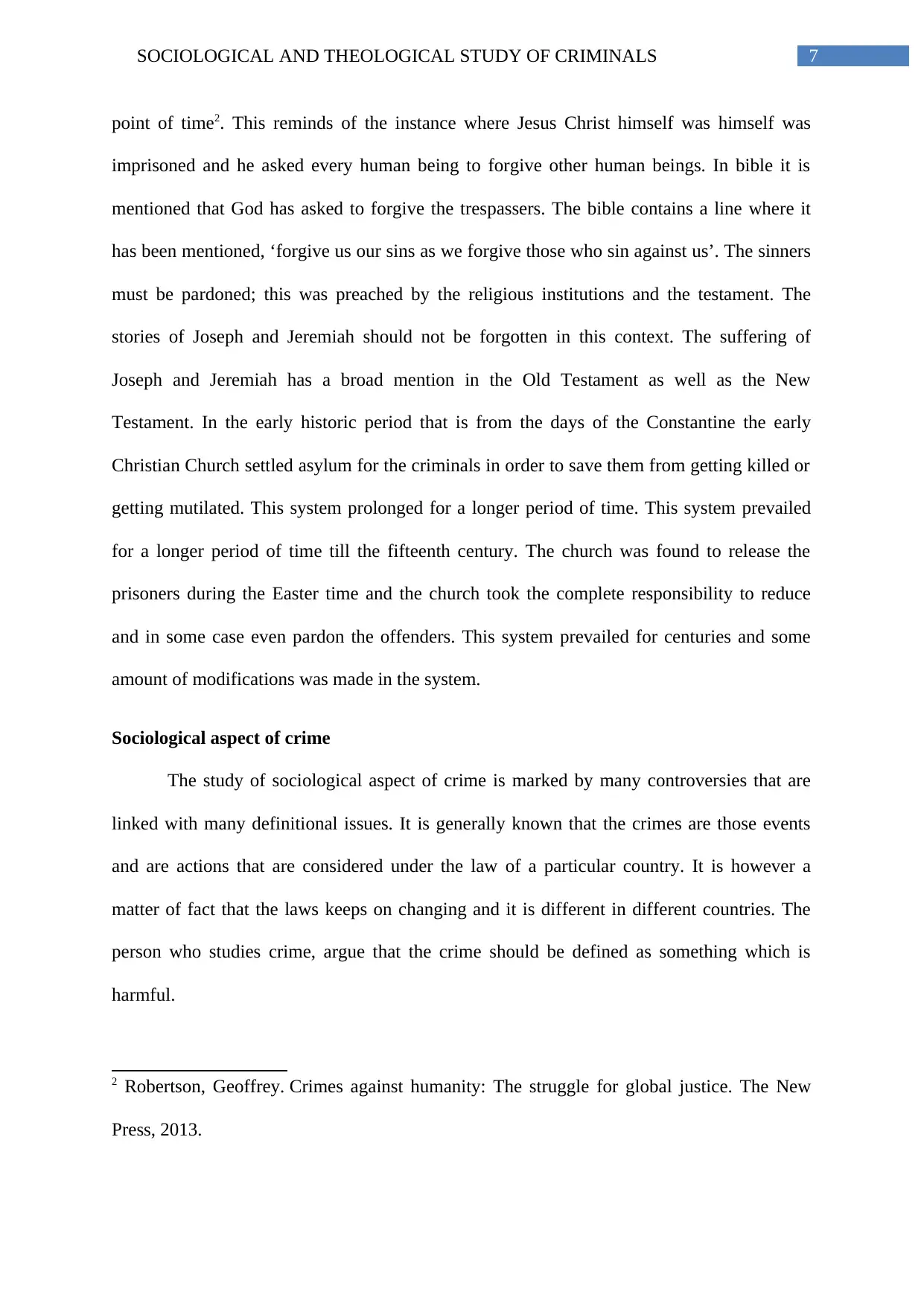
point of time2. This reminds of the instance where Jesus Christ himself was himself was
imprisoned and he asked every human being to forgive other human beings. In bible it is
mentioned that God has asked to forgive the trespassers. The bible contains a line where it
has been mentioned, ‘forgive us our sins as we forgive those who sin against us’. The sinners
must be pardoned; this was preached by the religious institutions and the testament. The
stories of Joseph and Jeremiah should not be forgotten in this context. The suffering of
Joseph and Jeremiah has a broad mention in the Old Testament as well as the New
Testament. In the early historic period that is from the days of the Constantine the early
Christian Church settled asylum for the criminals in order to save them from getting killed or
getting mutilated. This system prolonged for a longer period of time. This system prevailed
for a longer period of time till the fifteenth century. The church was found to release the
prisoners during the Easter time and the church took the complete responsibility to reduce
and in some case even pardon the offenders. This system prevailed for centuries and some
amount of modifications was made in the system.
Sociological aspect of crime
The study of sociological aspect of crime is marked by many controversies that are
linked with many definitional issues. It is generally known that the crimes are those events
and are actions that are considered under the law of a particular country. It is however a
matter of fact that the laws keeps on changing and it is different in different countries. The
person who studies crime, argue that the crime should be defined as something which is
harmful.
2 Robertson, Geoffrey. Crimes against humanity: The struggle for global justice. The New
Press, 2013.
point of time2. This reminds of the instance where Jesus Christ himself was himself was
imprisoned and he asked every human being to forgive other human beings. In bible it is
mentioned that God has asked to forgive the trespassers. The bible contains a line where it
has been mentioned, ‘forgive us our sins as we forgive those who sin against us’. The sinners
must be pardoned; this was preached by the religious institutions and the testament. The
stories of Joseph and Jeremiah should not be forgotten in this context. The suffering of
Joseph and Jeremiah has a broad mention in the Old Testament as well as the New
Testament. In the early historic period that is from the days of the Constantine the early
Christian Church settled asylum for the criminals in order to save them from getting killed or
getting mutilated. This system prolonged for a longer period of time. This system prevailed
for a longer period of time till the fifteenth century. The church was found to release the
prisoners during the Easter time and the church took the complete responsibility to reduce
and in some case even pardon the offenders. This system prevailed for centuries and some
amount of modifications was made in the system.
Sociological aspect of crime
The study of sociological aspect of crime is marked by many controversies that are
linked with many definitional issues. It is generally known that the crimes are those events
and are actions that are considered under the law of a particular country. It is however a
matter of fact that the laws keeps on changing and it is different in different countries. The
person who studies crime, argue that the crime should be defined as something which is
harmful.
2 Robertson, Geoffrey. Crimes against humanity: The struggle for global justice. The New
Press, 2013.
8SOCIOLOGICAL AND THEOLOGICAL STUDY OF CRIMINALS
Sociological issues in the study of crime and criminals
This can be divided into few broad categories like the sociology of law, the
conceptual issues, the measurement issues, and the social distribution of crime and the
explanations of crime and finally the issues related to the control of the crime.
The sociology of law focuses on the foundation of the legal orders or the patterns of
the legal change. It further focuses on the role of law in the social life. The behavior of the
criminals varies from time to time and from place to place. The societal context plays a vital
role in influencing a change in the law. The sociology of law brings forth the term called
legal ferment. It is the changes in the matters of the status of the females, the status of the
young, the changing status of the racial and the ethnic minorities and the homosexuals. It
focuses on the understanding of how and why such changes occur are major challenges to
sociologists of law. Conflict and the Marxist theories of crime draw much of their support
from evidence that status inequalities bias law making and enforcement against the less
powerful. The effects of legal sanctions on offenders and on those who might offend is also
of interest to theorists of crime and policymakers alike.
The crime consists of a large number of varied criminal acts. There is no single index
that can capture the nature of the same. The crime control agencies and the scholars are
therefore finding it compulsory to reduce the crime into more homogeneous categories. The
way the categories are related is another important factor for the understanding of controlling
the crime. The official crime counting systems are designed to accomplish the institutional
purposes which includes the documenting the police or activities of the court. This justifies
the request of the budget and the evaluation of the institutional performance. They reflect the
laws and the practices of the jurisdictions with which they are associated. The data on the
crimes and the criminals are correspondingly affected. A large amount of effort has gone into
Sociological issues in the study of crime and criminals
This can be divided into few broad categories like the sociology of law, the
conceptual issues, the measurement issues, and the social distribution of crime and the
explanations of crime and finally the issues related to the control of the crime.
The sociology of law focuses on the foundation of the legal orders or the patterns of
the legal change. It further focuses on the role of law in the social life. The behavior of the
criminals varies from time to time and from place to place. The societal context plays a vital
role in influencing a change in the law. The sociology of law brings forth the term called
legal ferment. It is the changes in the matters of the status of the females, the status of the
young, the changing status of the racial and the ethnic minorities and the homosexuals. It
focuses on the understanding of how and why such changes occur are major challenges to
sociologists of law. Conflict and the Marxist theories of crime draw much of their support
from evidence that status inequalities bias law making and enforcement against the less
powerful. The effects of legal sanctions on offenders and on those who might offend is also
of interest to theorists of crime and policymakers alike.
The crime consists of a large number of varied criminal acts. There is no single index
that can capture the nature of the same. The crime control agencies and the scholars are
therefore finding it compulsory to reduce the crime into more homogeneous categories. The
way the categories are related is another important factor for the understanding of controlling
the crime. The official crime counting systems are designed to accomplish the institutional
purposes which includes the documenting the police or activities of the court. This justifies
the request of the budget and the evaluation of the institutional performance. They reflect the
laws and the practices of the jurisdictions with which they are associated. The data on the
crimes and the criminals are correspondingly affected. A large amount of effort has gone into
⊘ This is a preview!⊘
Do you want full access?
Subscribe today to unlock all pages.
Trusted by 1+ million students worldwide
9SOCIOLOGICAL AND THEOLOGICAL STUDY OF CRIMINALS
the standardizing the definitions and reporting the systems in order to enhance their
comparability and the research usefulness.
The basic data for the sociological explanations of crime rest heavily on the way the
crime is committed and how they are distributed among the social categories like the age, the
gender, the social class and the ethnic status. It depends on time and on the differing social
and cultural circumstances. It has been seen in the social distribution and in the explanation
of the crime that the most ordinary crimes are committed by the young males in the modern
world. It is more concentrated on those who belong to economically lower class or the
deprived ones. The exception in this case is the, ‘white collar crimes’. This is found to be
committed by the persons belonging to comparatively higher status. Later they focused on the
violations of fiduciary responsibility or the public trust. The sociologists have made large
efforts to find the efforts of controlling the crimes and to study the intensity of the crime. The
primary data that the scholars have employed are the rates of the crimes and the distribution
of the same among different groups and different organizations, communities and other
political units. The sociologists who study the individual level of explanation focus on the
influence of the social and the cultural factors. It consists of the social interactions and the
individual learning experiences. It was in the late twentieth century that the lines between the
disciplines were clearly drawn and those were controversial. There was a third level of
explanation offered which stated that the criminal activities of the criminals were the function
and the characteristic of the situations.
There are certain issues that are related to crime. The effects of the law, the law
enforcements and the imposition of the legal sanctions on the offenders and on others are the
major sociological concerns. The public concerns have increased with the increasing rate of
crimes during the latter half of the twentieth century.
the standardizing the definitions and reporting the systems in order to enhance their
comparability and the research usefulness.
The basic data for the sociological explanations of crime rest heavily on the way the
crime is committed and how they are distributed among the social categories like the age, the
gender, the social class and the ethnic status. It depends on time and on the differing social
and cultural circumstances. It has been seen in the social distribution and in the explanation
of the crime that the most ordinary crimes are committed by the young males in the modern
world. It is more concentrated on those who belong to economically lower class or the
deprived ones. The exception in this case is the, ‘white collar crimes’. This is found to be
committed by the persons belonging to comparatively higher status. Later they focused on the
violations of fiduciary responsibility or the public trust. The sociologists have made large
efforts to find the efforts of controlling the crimes and to study the intensity of the crime. The
primary data that the scholars have employed are the rates of the crimes and the distribution
of the same among different groups and different organizations, communities and other
political units. The sociologists who study the individual level of explanation focus on the
influence of the social and the cultural factors. It consists of the social interactions and the
individual learning experiences. It was in the late twentieth century that the lines between the
disciplines were clearly drawn and those were controversial. There was a third level of
explanation offered which stated that the criminal activities of the criminals were the function
and the characteristic of the situations.
There are certain issues that are related to crime. The effects of the law, the law
enforcements and the imposition of the legal sanctions on the offenders and on others are the
major sociological concerns. The public concerns have increased with the increasing rate of
crimes during the latter half of the twentieth century.
Paraphrase This Document
Need a fresh take? Get an instant paraphrase of this document with our AI Paraphraser
10SOCIOLOGICAL AND THEOLOGICAL STUDY OF CRIMINALS
How sociology does see crime and deviance
The sociologists who study crime and deviance examine the cultural norms and the
way they change over time and the way they are enforced. The study is carried forward by
analyzing the consequences that occurred when the norms are broken. The act of deviance
varies among different societies and the social norms are different in different societies. The
sociologists continue their extended research in the reason of the differences that exist and
how they leave an impact on the individuals and the groups in those areas. The sociologists
define deviance as behavior that is recognized as violation of the expected norms and rules. It
is more than nonconformity. It is termed as a behavior that is away from any kind of social
expectations. The social context is stressed upon more than the individual behavior. In such
case deviance is looked in the form of group processes. The sociologists also recognize that
all the behavior is judged similarly by all other groups. It can be termed that what appear
deviant to one group might not sound deviant to another group. Further the sociologists
consider that the established norms and rules are socially created. It is not just created
morally but it is decided and sometimes even imposed on the individuals. It is a matter of fact
that the deviance lies in the social responses of the groups to behaviors by others and not just
in the individual behavior. The sociologists often use their understanding of the deviance to
examine the ordinary events like tattooing or the piercing done on the body. The eating
disorder is also considered to be a deviance by the sociologists and along with that the intake
of the drugs or alcohol is also considered to be deviance. There are many kinds of questions
that are asked by the sociologists who study the deal of deviance with the social context in
which the behaviors are committed. The best example of this is the conditions under which
suicide is committed. Suicide is not considered to be an acceptable behavior. There are four
theoretical approaches of the same:
How sociology does see crime and deviance
The sociologists who study crime and deviance examine the cultural norms and the
way they change over time and the way they are enforced. The study is carried forward by
analyzing the consequences that occurred when the norms are broken. The act of deviance
varies among different societies and the social norms are different in different societies. The
sociologists continue their extended research in the reason of the differences that exist and
how they leave an impact on the individuals and the groups in those areas. The sociologists
define deviance as behavior that is recognized as violation of the expected norms and rules. It
is more than nonconformity. It is termed as a behavior that is away from any kind of social
expectations. The social context is stressed upon more than the individual behavior. In such
case deviance is looked in the form of group processes. The sociologists also recognize that
all the behavior is judged similarly by all other groups. It can be termed that what appear
deviant to one group might not sound deviant to another group. Further the sociologists
consider that the established norms and rules are socially created. It is not just created
morally but it is decided and sometimes even imposed on the individuals. It is a matter of fact
that the deviance lies in the social responses of the groups to behaviors by others and not just
in the individual behavior. The sociologists often use their understanding of the deviance to
examine the ordinary events like tattooing or the piercing done on the body. The eating
disorder is also considered to be a deviance by the sociologists and along with that the intake
of the drugs or alcohol is also considered to be deviance. There are many kinds of questions
that are asked by the sociologists who study the deal of deviance with the social context in
which the behaviors are committed. The best example of this is the conditions under which
suicide is committed. Suicide is not considered to be an acceptable behavior. There are four
theoretical approaches of the same:
11SOCIOLOGICAL AND THEOLOGICAL STUDY OF CRIMINALS
Within the sociology of deviance and crime there are four key theoretical perspectives
from which the researchers study the reason people violating the laws and the norms and how
the society reacts to such acts?
Structural strain theory
This theory was developed by the American sociologists named Robert K. Merton
where he suggested that the deviant behaviors was the result of the pressure or the strain that
the individuals go through and what they experience. They experience the strain when they
are not provided with the facilities that they require from the society. It is when they are
unable to get the necessary means to achieve the culturally valued goals. The sociologist
articulated that when the society fails the individuals in this way engage themselves in
deviant or in criminal acts. They do so in order to achieve their individual goals. The
examples of this are the economic success and the attainment of the social status. Some
sociologists approach the study of deviance and crime from a structural functionalist
standpoint. They put forward an argument where they mention that the deviance is a
necessary part of the process by which the social order is achieved and it is maintained. From
this particular standpoint it serves to remind that the deviant behavior opposes the socially
agreed upon rules and regulations, the social norms and taboos. This reinforces their value
and thus social order.
Conflict theory
The theory is used as a theoretical foundation for the sociological study of crime and
deviance. This approach frames the deviant behavior and states crime as the result of social,
political and economic as well as material conflicts in the society. This can be also be
explained the reason why the people resort to the criminal trades. The probable reason for this
is they want to survive in an economically unequal society.
Within the sociology of deviance and crime there are four key theoretical perspectives
from which the researchers study the reason people violating the laws and the norms and how
the society reacts to such acts?
Structural strain theory
This theory was developed by the American sociologists named Robert K. Merton
where he suggested that the deviant behaviors was the result of the pressure or the strain that
the individuals go through and what they experience. They experience the strain when they
are not provided with the facilities that they require from the society. It is when they are
unable to get the necessary means to achieve the culturally valued goals. The sociologist
articulated that when the society fails the individuals in this way engage themselves in
deviant or in criminal acts. They do so in order to achieve their individual goals. The
examples of this are the economic success and the attainment of the social status. Some
sociologists approach the study of deviance and crime from a structural functionalist
standpoint. They put forward an argument where they mention that the deviance is a
necessary part of the process by which the social order is achieved and it is maintained. From
this particular standpoint it serves to remind that the deviant behavior opposes the socially
agreed upon rules and regulations, the social norms and taboos. This reinforces their value
and thus social order.
Conflict theory
The theory is used as a theoretical foundation for the sociological study of crime and
deviance. This approach frames the deviant behavior and states crime as the result of social,
political and economic as well as material conflicts in the society. This can be also be
explained the reason why the people resort to the criminal trades. The probable reason for this
is they want to survive in an economically unequal society.
⊘ This is a preview!⊘
Do you want full access?
Subscribe today to unlock all pages.
Trusted by 1+ million students worldwide

1 out of 213


Your All-in-One AI-Powered Toolkit for Academic Success.
+13062052269
info@desklib.com
Available 24*7 on WhatsApp / Email
![[object Object]](/_next/static/media/star-bottom.7253800d.svg)
Unlock your academic potential
Copyright © 2020–2026 A2Z Services. All Rights Reserved. Developed and managed by ZUCOL.