Analyzing Group Dynamics and Theories in Health and Social Care
VerifiedAdded on 2023/03/30
|17
|2853
|286
Report
AI Summary
This report delves into the multifaceted aspects of group work within the health and social care sector, examining the impact of various theories and models on group practices. It explores Tuckman's stages of group development (Forming, Storming, Norming, Performing, and Mourning) and analyzes how each stage influences workplace dynamics. The report emphasizes the importance of building cohesive and effective teams through establishing a clear mission, embracing diversity, practicing teamwork, utilizing individual strengths, fostering effective communication, soliciting and providing feedback, and celebrating successes. Furthermore, it discusses different facilitation styles and their influence on group dynamics, lifecycle, and outcomes, highlighting the development of roles within the group under autocratic, democratic, and laissez-faire leadership styles. The report also addresses the purpose and desired outcomes of group work, emphasizing the significance of participant engagement in achieving organizational objectives and customer satisfaction. This document is available on Desklib, a platform offering a wide array of study resources, including past papers and solved assignments, for students.
Ravi Kumawat
HEALTH AND SOCIAL CARE
Health and Social care 0
HEALTH AND SOCIAL CARE
Health and Social care 0

Paraphrase This Document
Need a fresh take? Get an instant paraphrase of this document with our AI Paraphraser
Health and Social Care 1
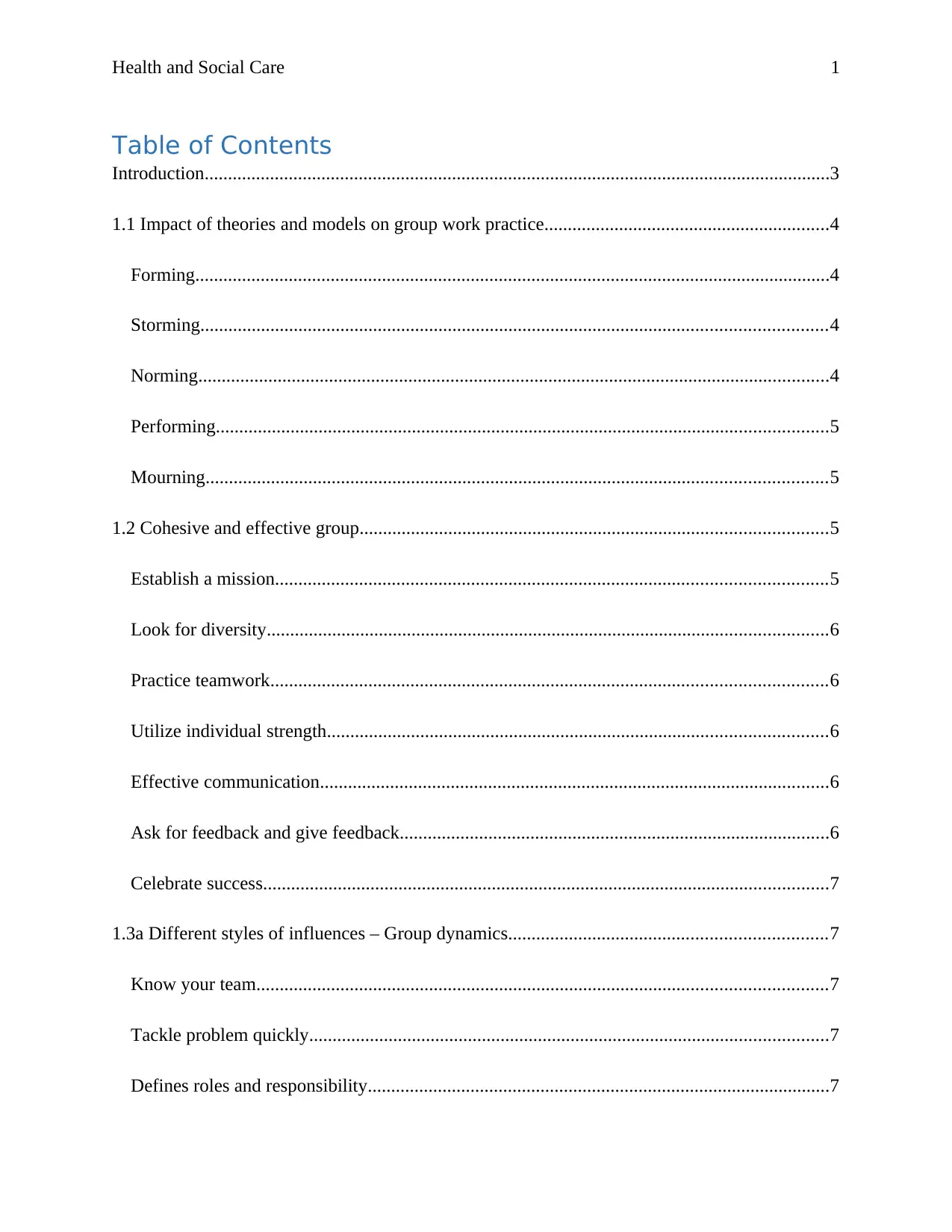
Table of Contents
Introduction......................................................................................................................................3
1.1 Impact of theories and models on group work practice.............................................................4
Forming........................................................................................................................................4
Storming......................................................................................................................................4
Norming.......................................................................................................................................4
Performing...................................................................................................................................5
Mourning.....................................................................................................................................5
1.2 Cohesive and effective group....................................................................................................5
Establish a mission......................................................................................................................5
Look for diversity........................................................................................................................6
Practice teamwork.......................................................................................................................6
Utilize individual strength...........................................................................................................6
Effective communication.............................................................................................................6
Ask for feedback and give feedback............................................................................................6
Celebrate success.........................................................................................................................7
1.3a Different styles of influences – Group dynamics....................................................................7
Know your team..........................................................................................................................7
Tackle problem quickly...............................................................................................................7
Defines roles and responsibility...................................................................................................7
Table of Contents
Introduction......................................................................................................................................3
1.1 Impact of theories and models on group work practice.............................................................4
Forming........................................................................................................................................4
Storming......................................................................................................................................4
Norming.......................................................................................................................................4
Performing...................................................................................................................................5
Mourning.....................................................................................................................................5
1.2 Cohesive and effective group....................................................................................................5
Establish a mission......................................................................................................................5
Look for diversity........................................................................................................................6
Practice teamwork.......................................................................................................................6
Utilize individual strength...........................................................................................................6
Effective communication.............................................................................................................6
Ask for feedback and give feedback............................................................................................6
Celebrate success.........................................................................................................................7
1.3a Different styles of influences – Group dynamics....................................................................7
Know your team..........................................................................................................................7
Tackle problem quickly...............................................................................................................7
Defines roles and responsibility...................................................................................................7
Health and Social Care 2
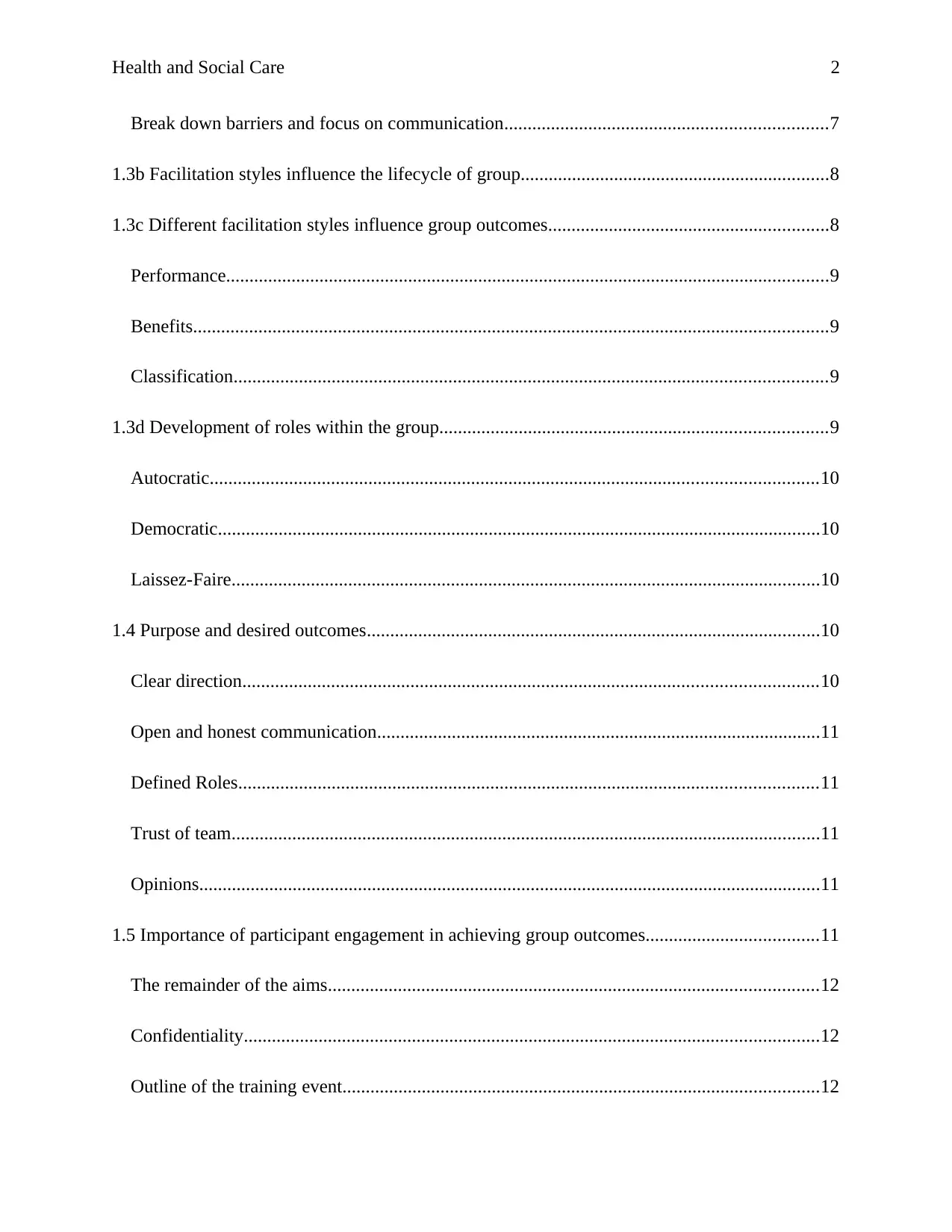
Break down barriers and focus on communication.....................................................................7
1.3b Facilitation styles influence the lifecycle of group..................................................................8
1.3c Different facilitation styles influence group outcomes............................................................8
Performance.................................................................................................................................9
Benefits........................................................................................................................................9
Classification...............................................................................................................................9
1.3d Development of roles within the group...................................................................................9
Autocratic..................................................................................................................................10
Democratic.................................................................................................................................10
Laissez-Faire..............................................................................................................................10
1.4 Purpose and desired outcomes.................................................................................................10
Clear direction...........................................................................................................................10
Open and honest communication...............................................................................................11
Defined Roles............................................................................................................................11
Trust of team..............................................................................................................................11
Opinions.....................................................................................................................................11
1.5 Importance of participant engagement in achieving group outcomes.....................................11
The remainder of the aims.........................................................................................................12
Confidentiality...........................................................................................................................12
Outline of the training event......................................................................................................12
Break down barriers and focus on communication.....................................................................7
1.3b Facilitation styles influence the lifecycle of group..................................................................8
1.3c Different facilitation styles influence group outcomes............................................................8
Performance.................................................................................................................................9
Benefits........................................................................................................................................9
Classification...............................................................................................................................9
1.3d Development of roles within the group...................................................................................9
Autocratic..................................................................................................................................10
Democratic.................................................................................................................................10
Laissez-Faire..............................................................................................................................10
1.4 Purpose and desired outcomes.................................................................................................10
Clear direction...........................................................................................................................10
Open and honest communication...............................................................................................11
Defined Roles............................................................................................................................11
Trust of team..............................................................................................................................11
Opinions.....................................................................................................................................11
1.5 Importance of participant engagement in achieving group outcomes.....................................11
The remainder of the aims.........................................................................................................12
Confidentiality...........................................................................................................................12
Outline of the training event......................................................................................................12
⊘ This is a preview!⊘
Do you want full access?
Subscribe today to unlock all pages.

Trusted by 1+ million students worldwide
Health and Social Care 3
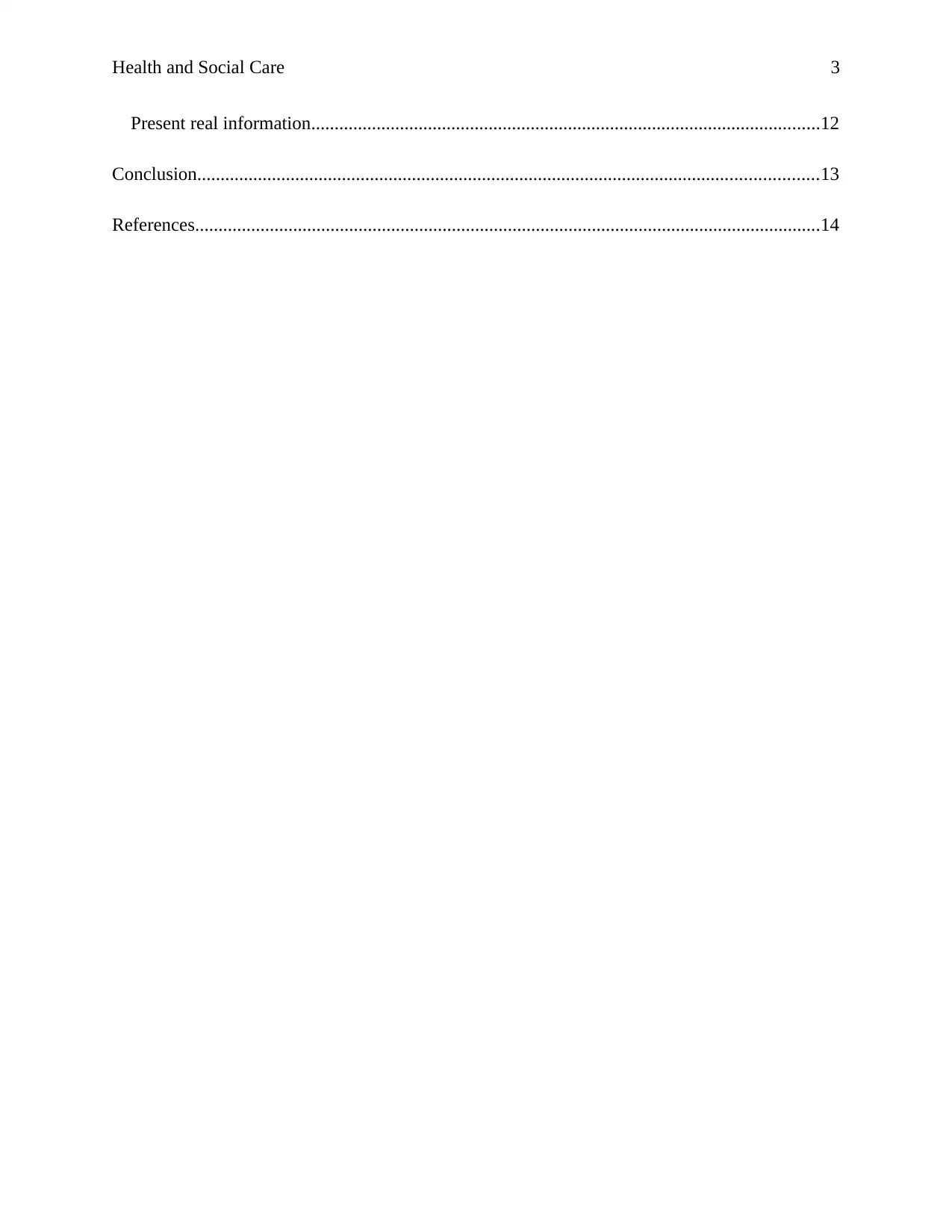
Present real information.............................................................................................................12
Conclusion.....................................................................................................................................13
References......................................................................................................................................14
Present real information.............................................................................................................12
Conclusion.....................................................................................................................................13
References......................................................................................................................................14
Paraphrase This Document
Need a fresh take? Get an instant paraphrase of this document with our AI Paraphraser
Health and Social Care 4
Introduction
A significant amount of lives spent in groups. The workplace offers opportunities in a range of
groups. Group offers an opportunity to learn and reflect from the flora of group interaction.
Theories of group work are group dynamics, group process, and group therapy are varied in
health and social care. Many approaches are involved in in-group work (Billett, 2014). This is
easy to spot with a positive dynamic. Members in team trust each other. This builds a collective
decision. Positive dynamic in a team creates an average group. Patterns of group cycle refer to
the stages or process for the development of the group in the health and social care (King, 2016).
Development of group and roles of the team includes professional skills in health and social care.
Purpose and desired outcome are that customers achieve their desired outcome with the
interactions of the organization. The outcome of the organization is very simple (Tindall, 2012).
Achieve the need of customers in the way in which need it. Models and theories on a work
practice of group applied within a set of work (Port, 2016). Impact of models and theories on
group work practice, influences of group dynamics facilitation, development of roles, Lifecycle
of the group, within the group, purpose and desired outcome, the significance of participant
engagement in accomplishing group outcomes in health and social care has been covered in the
following discussion.
1.1 Impact of theories and models on group work practice
Individuals with unique expectations and experience are known as a group. Tuckman and Rogers
mention the most important theory of group development (Rosenthal, 2013). Model of
Tuckman’s has an impact on the individual and group on group work practice. A brief synopsis
of stages is mentioned below with the impact on a work practice of group.
Introduction
A significant amount of lives spent in groups. The workplace offers opportunities in a range of
groups. Group offers an opportunity to learn and reflect from the flora of group interaction.
Theories of group work are group dynamics, group process, and group therapy are varied in
health and social care. Many approaches are involved in in-group work (Billett, 2014). This is
easy to spot with a positive dynamic. Members in team trust each other. This builds a collective
decision. Positive dynamic in a team creates an average group. Patterns of group cycle refer to
the stages or process for the development of the group in the health and social care (King, 2016).
Development of group and roles of the team includes professional skills in health and social care.
Purpose and desired outcome are that customers achieve their desired outcome with the
interactions of the organization. The outcome of the organization is very simple (Tindall, 2012).
Achieve the need of customers in the way in which need it. Models and theories on a work
practice of group applied within a set of work (Port, 2016). Impact of models and theories on
group work practice, influences of group dynamics facilitation, development of roles, Lifecycle
of the group, within the group, purpose and desired outcome, the significance of participant
engagement in accomplishing group outcomes in health and social care has been covered in the
following discussion.
1.1 Impact of theories and models on group work practice
Individuals with unique expectations and experience are known as a group. Tuckman and Rogers
mention the most important theory of group development (Rosenthal, 2013). Model of
Tuckman’s has an impact on the individual and group on group work practice. A brief synopsis
of stages is mentioned below with the impact on a work practice of group.
Health and Social Care 5
Forming
Joining is the first stage of the group. This stage has impacts on errors, trials, and testing of
health and social care work. Concerns of support and openness inside the group are manifested
by a lack of cohesion and struggle in sharing experience, feelings, and thoughts with each other.
This stage affects the values of the workgroup within the organization (Symonds A., 2015). This
stage influences the group of the workplace by the key structures of this stage like frustration,
inadequacy, isolation, and anxiety emotions of group members of the health and social care
department. This makes the people of the group stronger or better.
Storming
This stage creates comfort within the group and makes the view within the workplace to feel
valued (Smith, Storming, 2015). This helps to assert the personalities of individuals in the
workplace to come under siege. This stage will help to solve the conflicts of groups with
personal experience in health and social care.
Norming
This stage affects the workplace members to do work more constructively with informal tasks or
formally identified. This stage helps to allocate and develop the role of the members within the
organization of health and social care department (Smith, Norming, 2015). This affects the
operations of the workplace with the opinions and attitude of challenge within the group
members.
Forming
Joining is the first stage of the group. This stage has impacts on errors, trials, and testing of
health and social care work. Concerns of support and openness inside the group are manifested
by a lack of cohesion and struggle in sharing experience, feelings, and thoughts with each other.
This stage affects the values of the workgroup within the organization (Symonds A., 2015). This
stage influences the group of the workplace by the key structures of this stage like frustration,
inadequacy, isolation, and anxiety emotions of group members of the health and social care
department. This makes the people of the group stronger or better.
Storming
This stage creates comfort within the group and makes the view within the workplace to feel
valued (Smith, Storming, 2015). This helps to assert the personalities of individuals in the
workplace to come under siege. This stage will help to solve the conflicts of groups with
personal experience in health and social care.
Norming
This stage affects the workplace members to do work more constructively with informal tasks or
formally identified. This stage helps to allocate and develop the role of the members within the
organization of health and social care department (Smith, Norming, 2015). This affects the
operations of the workplace with the opinions and attitude of challenge within the group
members.
⊘ This is a preview!⊘
Do you want full access?
Subscribe today to unlock all pages.
Trusted by 1+ million students worldwide
Health and Social Care 6
Performing
This stage has to put the impact on the defined roles. This transforms the team as a group. This
helps to make the decision more effective of a team (Smith, Performing, 2015). This has a
positive impact on the group to complete the task of the organization.
Mourning
This creates the development to make the workplace outcomes positive. This ends the
environment of distress and unhappy within the workplace (Smith, Mourning, 2015). This stage
ends the blamed in the organization and maximize the stages and points celebrations of group
achievements of health and social care.
1.2 Cohesive and effective group
An effective group is necessary for making an effective team. It is like a challenge. Following
are the ways to build a cohesive team in health and social care.
Establish a mission
This is the significant stage for building a team. This helps to elaborate on the stages of the
health and social care team. The mission of the organization helps to make the contribution of
the team.
Look for diversity
Diversity is the most important for building a team. This generates the access of many people in
the team with experiences and skills. Diversity is the most important to achieve the mission of
health and social care department.
Performing
This stage has to put the impact on the defined roles. This transforms the team as a group. This
helps to make the decision more effective of a team (Smith, Performing, 2015). This has a
positive impact on the group to complete the task of the organization.
Mourning
This creates the development to make the workplace outcomes positive. This ends the
environment of distress and unhappy within the workplace (Smith, Mourning, 2015). This stage
ends the blamed in the organization and maximize the stages and points celebrations of group
achievements of health and social care.
1.2 Cohesive and effective group
An effective group is necessary for making an effective team. It is like a challenge. Following
are the ways to build a cohesive team in health and social care.
Establish a mission
This is the significant stage for building a team. This helps to elaborate on the stages of the
health and social care team. The mission of the organization helps to make the contribution of
the team.
Look for diversity
Diversity is the most important for building a team. This generates the access of many people in
the team with experiences and skills. Diversity is the most important to achieve the mission of
health and social care department.
Paraphrase This Document
Need a fresh take? Get an instant paraphrase of this document with our AI Paraphraser
Health and Social Care 7
Practice teamwork
The necessary thing to build the teamwork together to accomplish a goal. Observation is the
most important and applied in the same manner important for a bond with the process of a health
and social care team.
Utilize individual strength
This is important to design a team for each team member based on their strength. This is the best
way to accomplish goals. Every team member is accountable and responsible for build a team in
health and social care department.
Effective communication
There should be effective message for building a team. The team is made with consistent
methods of communication (Gilli, 2018). This influences goals and instructions. Construction of
messages is important to give benefit to the team of health and social care.
Ask for feedback and give feedback
Feedback is necessary to build a team. This helps to make the real shine on light flaws in the
process. This creates the more cohesive team during the next process.
Celebrate success
By building a team, this is important to accomplish the mission. This helps to make the surety
about the work of the team and thank them. Building a cohesive team is a never-ending process.
Practice teamwork
The necessary thing to build the teamwork together to accomplish a goal. Observation is the
most important and applied in the same manner important for a bond with the process of a health
and social care team.
Utilize individual strength
This is important to design a team for each team member based on their strength. This is the best
way to accomplish goals. Every team member is accountable and responsible for build a team in
health and social care department.
Effective communication
There should be effective message for building a team. The team is made with consistent
methods of communication (Gilli, 2018). This influences goals and instructions. Construction of
messages is important to give benefit to the team of health and social care.
Ask for feedback and give feedback
Feedback is necessary to build a team. This helps to make the real shine on light flaws in the
process. This creates the more cohesive team during the next process.
Celebrate success
By building a team, this is important to accomplish the mission. This helps to make the surety
about the work of the team and thank them. Building a cohesive team is a never-ending process.
Health and Social Care 8
1.3a Different styles of influences – Group dynamics
This is important for the people of the team to work together to complete the work together,
creating creativity, to be more complete the work. Following are the facilitation styles influence
group dynamics in health and social care team.
Know your team
Learning about the phases develop a team. This helps to solve the problems of the team that arise
including the problems with poor group subtleties.
Tackle problem quickly
A member of the team has accepted that affect the group unhelpfully act quickly to challenge it.
Provide proper feedback to show the impact on encouraging and action with the changed
behavior.
Defines roles and responsibility
Lack of focus or direction develops poor subtleties as persons struggle to comprehend the part in
the group. Team charter helps to improve it by defining the mission an objective of group and the
responsibility of everyone within the team of health and social care.
Break down barriers and focus on communication
Open communication is the center of the best dynamic of the team. Clear communication
includes group communication by shared documents, meetings, and emails to avoid any
ambiguity.
1.3a Different styles of influences – Group dynamics
This is important for the people of the team to work together to complete the work together,
creating creativity, to be more complete the work. Following are the facilitation styles influence
group dynamics in health and social care team.
Know your team
Learning about the phases develop a team. This helps to solve the problems of the team that arise
including the problems with poor group subtleties.
Tackle problem quickly
A member of the team has accepted that affect the group unhelpfully act quickly to challenge it.
Provide proper feedback to show the impact on encouraging and action with the changed
behavior.
Defines roles and responsibility
Lack of focus or direction develops poor subtleties as persons struggle to comprehend the part in
the group. Team charter helps to improve it by defining the mission an objective of group and the
responsibility of everyone within the team of health and social care.
Break down barriers and focus on communication
Open communication is the center of the best dynamic of the team. Clear communication
includes group communication by shared documents, meetings, and emails to avoid any
ambiguity.
⊘ This is a preview!⊘
Do you want full access?
Subscribe today to unlock all pages.
Trusted by 1+ million students worldwide
Health and Social Care 9
1.3b Facilitation styles influence the lifecycle of the group
Some operations influence the lifecycle of the group. The best way to develop the processes of
the step. This builds a sense of power in the participants (Holer, 2017). Following are the ground
rules that facilitate the influence of the lifecycle of the group in the health and social care.
Proper ways of suggestions influence lifecycle of the group.
Suggestions to improve the ground rules is the most important way for improving the ground
rules in health and social care.
Original agenda with detailed discussion makes decision healthier.
The steps towards responding establish approach of defensive work.
Climate and environment of the organization become comfortable and safe with the participation
of each other.
1.3c Different facilitation styles influence group outcomes
Day to day functions of the workplace shifted to teams. Teams are able to deal with special
problems. These help to prove the suggestions within the workplace. Different parts of the
organization help to coordinate with the suggested improvement within the process of work.
Committee of planning and budget composed the members from several departments of the
organization. Organization planning can be used for managing the transitions. Configuration of a
team is very mixed. Staff within the organization defines the characteristics of products while
representing the department comments on issues related to marketing and production. Group
facilitation helps the group to become more effective. A multitude of factors interplay between
health and social care by group effectiveness. The outcome of the group brings information on
1.3b Facilitation styles influence the lifecycle of the group
Some operations influence the lifecycle of the group. The best way to develop the processes of
the step. This builds a sense of power in the participants (Holer, 2017). Following are the ground
rules that facilitate the influence of the lifecycle of the group in the health and social care.
Proper ways of suggestions influence lifecycle of the group.
Suggestions to improve the ground rules is the most important way for improving the ground
rules in health and social care.
Original agenda with detailed discussion makes decision healthier.
The steps towards responding establish approach of defensive work.
Climate and environment of the organization become comfortable and safe with the participation
of each other.
1.3c Different facilitation styles influence group outcomes
Day to day functions of the workplace shifted to teams. Teams are able to deal with special
problems. These help to prove the suggestions within the workplace. Different parts of the
organization help to coordinate with the suggested improvement within the process of work.
Committee of planning and budget composed the members from several departments of the
organization. Organization planning can be used for managing the transitions. Configuration of a
team is very mixed. Staff within the organization defines the characteristics of products while
representing the department comments on issues related to marketing and production. Group
facilitation helps the group to become more effective. A multitude of factors interplay between
health and social care by group effectiveness. The outcome of the group brings information on
Paraphrase This Document
Need a fresh take? Get an instant paraphrase of this document with our AI Paraphraser
Health and Social Care 10
team dynamics. These help to present the information on responsibilities and roles with health
and social care. Presents the task and structure related information in health and social care
sector.
Performance
Group facilitation enhances individual performance. It helps to perform the individual better in-
group. This occurs when people in the group expend effort to meet the goals of the group with
efficient coordinate the efforts of the group members in health and social care.
Benefits
This benefits the group by comparing the potential productivity of the group. This helps to get
better and actual productivity of the group. Characteristic of the group members have a strong
effect on outcomes of the health and social care groups. This presents and considers the group
performance to consider the particulars of the group situation.
Classification
This helps to present the task classification in the successful achievements of the group
objectives in health and social care. This helps to get motivation and coordination in the groups.
1.3d Development of roles within the group
There are many theories of leadership to describe leaders. Many different types of leadership.
Many different stages are for group development (Symonds S., 2019). Some of the facilitation
styles for the expansion of parts within the group of health and social care are as follows.
team dynamics. These help to present the information on responsibilities and roles with health
and social care. Presents the task and structure related information in health and social care
sector.
Performance
Group facilitation enhances individual performance. It helps to perform the individual better in-
group. This occurs when people in the group expend effort to meet the goals of the group with
efficient coordinate the efforts of the group members in health and social care.
Benefits
This benefits the group by comparing the potential productivity of the group. This helps to get
better and actual productivity of the group. Characteristic of the group members have a strong
effect on outcomes of the health and social care groups. This presents and considers the group
performance to consider the particulars of the group situation.
Classification
This helps to present the task classification in the successful achievements of the group
objectives in health and social care. This helps to get motivation and coordination in the groups.
1.3d Development of roles within the group
There are many theories of leadership to describe leaders. Many different types of leadership.
Many different stages are for group development (Symonds S., 2019). Some of the facilitation
styles for the expansion of parts within the group of health and social care are as follows.
Health and Social Care 11
Autocratic
This helps to generate the full control of the group of health and social care. This is necessary to
complete the objectives and aims. This kind of leader criticizes and praise individuals within the
group, rather than the group as a whole in health and social care. The control within the direction
of the group will be done for the actual work of the group.
Democratic
This kind of leaders leads the group as a democracy. These provide choices inappropriate
manner. This kind of leader allows the members of a group to decide their wishes to complete
objective and aims. These present the group, compromise advice and alternative ways to
complete a task in health and social care.
Laissez-Faire
These kind of leaders are very laid back in their approach. They provide complete freedom to
group and individuals to make attempts and ideas to the group in a particular way. It is argued
with the traditional sense of the world with the knowledge of experts of health and social care.
1.4 Purpose and desired outcomes
Purpose and desired outcomes of the group in the workplace are to build and lead a high-
performance team. These are helpful to achieve the success of the health and social care
organization.
Clear direction
Clear direction is the most important to build a team in health and social care. This develops the
flexibility to assemble the right group of people. This creates a clear sense in the organization.
Autocratic
This helps to generate the full control of the group of health and social care. This is necessary to
complete the objectives and aims. This kind of leader criticizes and praise individuals within the
group, rather than the group as a whole in health and social care. The control within the direction
of the group will be done for the actual work of the group.
Democratic
This kind of leaders leads the group as a democracy. These provide choices inappropriate
manner. This kind of leader allows the members of a group to decide their wishes to complete
objective and aims. These present the group, compromise advice and alternative ways to
complete a task in health and social care.
Laissez-Faire
These kind of leaders are very laid back in their approach. They provide complete freedom to
group and individuals to make attempts and ideas to the group in a particular way. It is argued
with the traditional sense of the world with the knowledge of experts of health and social care.
1.4 Purpose and desired outcomes
Purpose and desired outcomes of the group in the workplace are to build and lead a high-
performance team. These are helpful to achieve the success of the health and social care
organization.
Clear direction
Clear direction is the most important to build a team in health and social care. This develops the
flexibility to assemble the right group of people. This creates a clear sense in the organization.
⊘ This is a preview!⊘
Do you want full access?
Subscribe today to unlock all pages.
Trusted by 1+ million students worldwide

1 out of 17


Related Documents


Your All-in-One AI-Powered Toolkit for Academic Success.
+13062052269
info@desklib.com
Available 24*7 on WhatsApp / Email
![[object Object]](/_next/static/media/star-bottom.7253800d.svg)
Unlock your academic potential
Copyright © 2020–2026 A2Z Services. All Rights Reserved. Developed and managed by ZUCOL.