Mental Health Nursing: Therapeutic Relationships, Recovery, & Louise

Verified

Added on  2021/06/17

|8
|1842
|215
Essay
AI Summary
This essay delves into the significance of therapeutic relationships in mental health nursing, specifically within the context of a patient named Louise, who is diagnosed with EUPD and a personality disorder. The paper emphasizes the importance of establishing and maintaining these relationships to facilitate effective diagnosis, treatment, and patient recovery. It explores various principles, such as honesty and goal setting, that contribute to the success of therapeutic alliances. Furthermore, the essay discusses evidence-based treatment approaches for EUPD, including Dialectical Behavior Therapy (DBT), schema-focused therapy, and family intervention, while also considering pharmacological interventions and physical assessments. The paper highlights the potential benefits of alcohol programs and transference-focused psychotherapy in promoting Louise's recovery and overall well-being. Ultimately, the essay underscores the crucial role of healthcare providers in fostering strong therapeutic relationships to enhance patient satisfaction, adherence to treatment plans, and improved mental health outcomes.
Document Page
0
Mental Health Nursing
Name
Institutional Affiliations
tabler-icon-diamond-filled.svg

Paraphrase This Document

Need a fresh take? Get an instant paraphrase of this document with our AI Paraphraser
Document Page
Mental Health Nursing 1
Mental Health Nursing
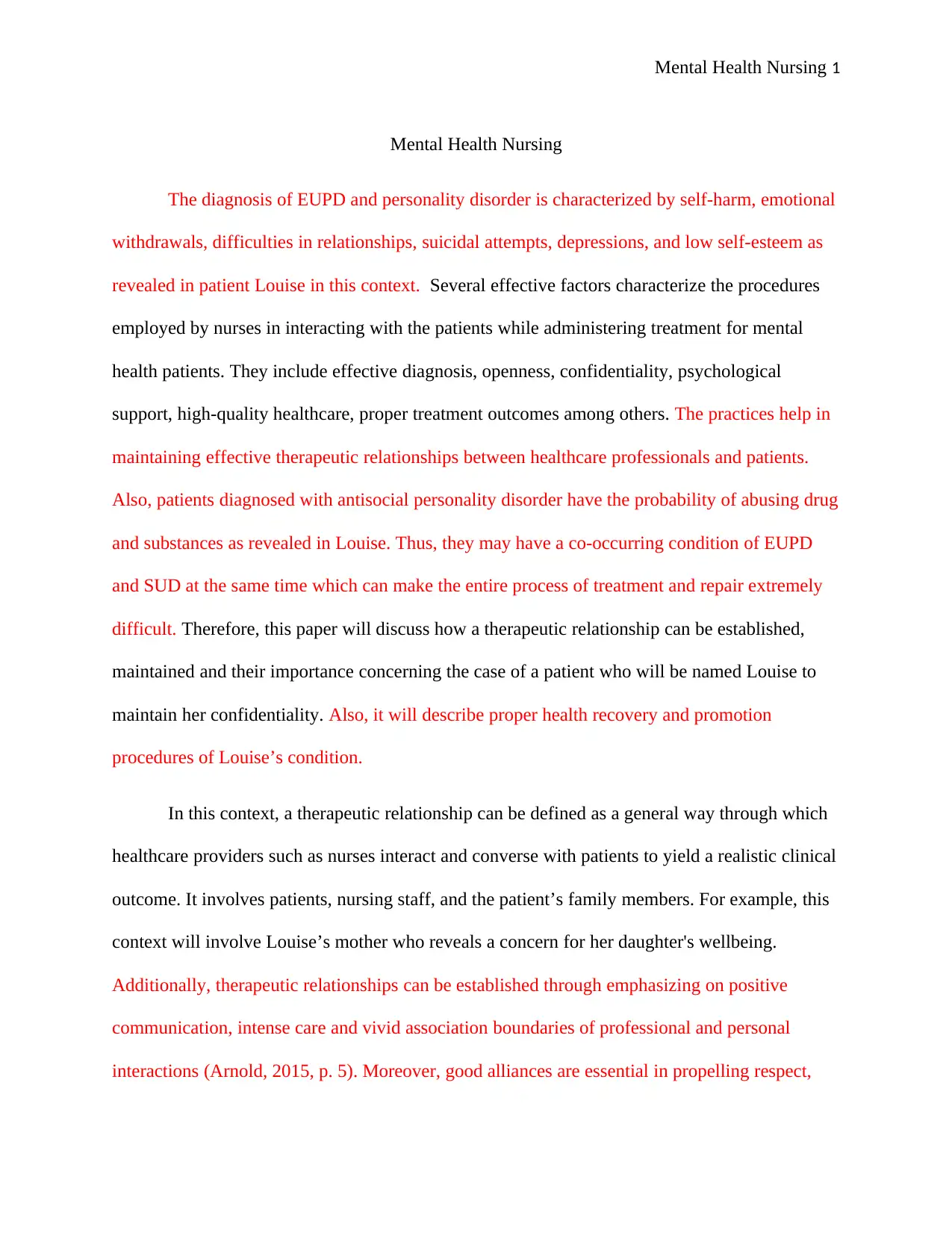
The diagnosis of EUPD and personality disorder is characterized by self-harm, emotional
withdrawals, difficulties in relationships, suicidal attempts, depressions, and low self-esteem as
revealed in patient Louise in this context. Several effective factors characterize the procedures
employed by nurses in interacting with the patients while administering treatment for mental
health patients. They include effective diagnosis, openness, confidentiality, psychological
support, high-quality healthcare, proper treatment outcomes among others. The practices help in
maintaining effective therapeutic relationships between healthcare professionals and patients.
Also, patients diagnosed with antisocial personality disorder have the probability of abusing drug
and substances as revealed in Louise. Thus, they may have a co-occurring condition of EUPD
and SUD at the same time which can make the entire process of treatment and repair extremely
difficult. Therefore, this paper will discuss how a therapeutic relationship can be established,
maintained and their importance concerning the case of a patient who will be named Louise to
maintain her confidentiality. Also, it will describe proper health recovery and promotion
procedures of Louise’s condition.
In this context, a therapeutic relationship can be defined as a general way through which
healthcare providers such as nurses interact and converse with patients to yield a realistic clinical
outcome. It involves patients, nursing staff, and the patient’s family members. For example, this
context will involve Louise’s mother who reveals a concern for her daughter's wellbeing.
Additionally, therapeutic relationships can be established through emphasizing on positive
communication, intense care and vivid association boundaries of professional and personal
interactions (Arnold, 2015, p. 5). Moreover, good alliances are essential in propelling respect,
Document Page
Mental Health Nursing 2
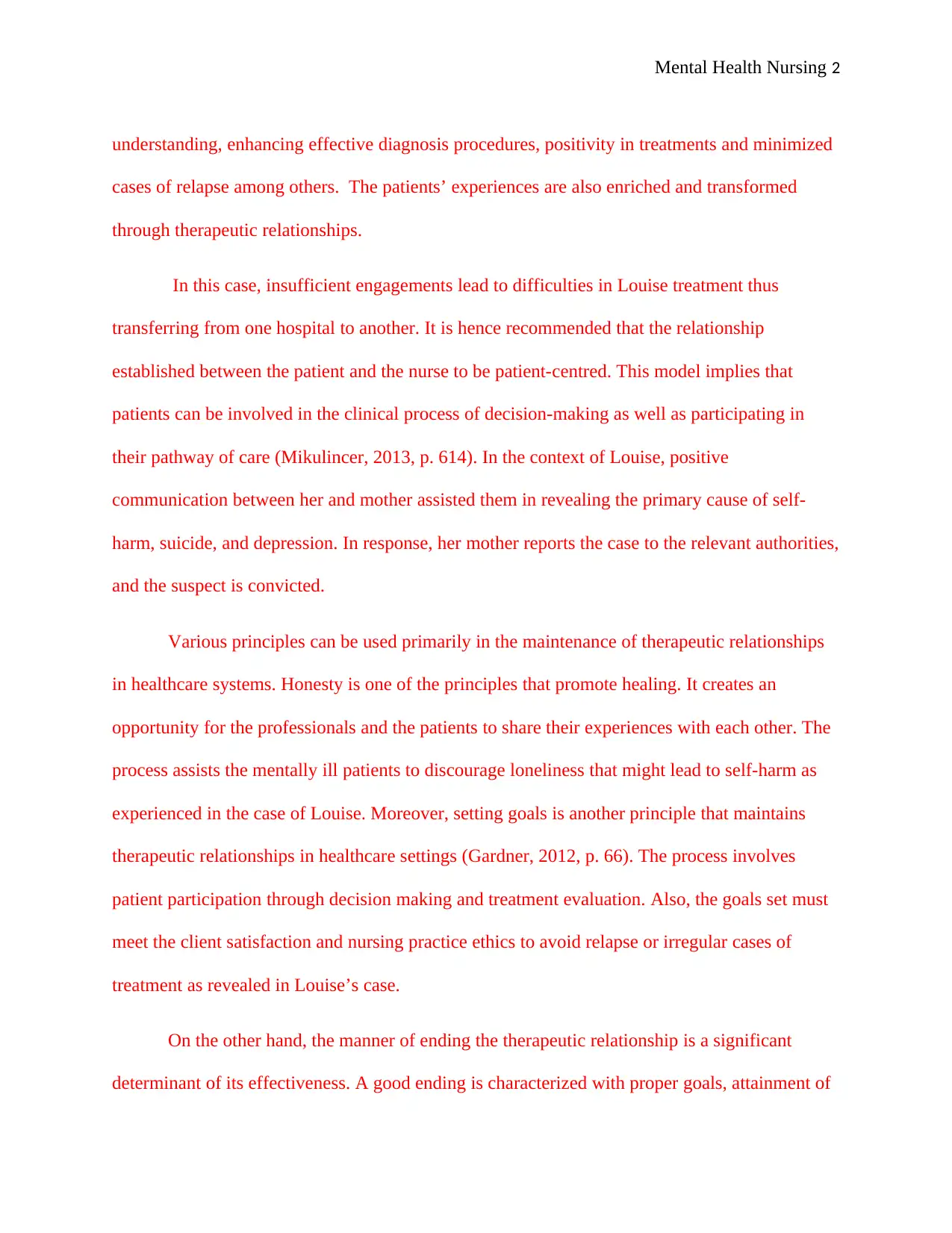
understanding, enhancing effective diagnosis procedures, positivity in treatments and minimized
cases of relapse among others. The patients’ experiences are also enriched and transformed
through therapeutic relationships.
In this case, insufficient engagements lead to difficulties in Louise treatment thus
transferring from one hospital to another. It is hence recommended that the relationship
established between the patient and the nurse to be patient-centred. This model implies that
patients can be involved in the clinical process of decision-making as well as participating in
their pathway of care (Mikulincer, 2013, p. 614). In the context of Louise, positive
communication between her and mother assisted them in revealing the primary cause of self-
harm, suicide, and depression. In response, her mother reports the case to the relevant authorities,
and the suspect is convicted.
Various principles can be used primarily in the maintenance of therapeutic relationships
in healthcare systems. Honesty is one of the principles that promote healing. It creates an
opportunity for the professionals and the patients to share their experiences with each other. The
process assists the mentally ill patients to discourage loneliness that might lead to self-harm as
experienced in the case of Louise. Moreover, setting goals is another principle that maintains
therapeutic relationships in healthcare settings (Gardner, 2012, p. 66). The process involves
patient participation through decision making and treatment evaluation. Also, the goals set must
meet the client satisfaction and nursing practice ethics to avoid relapse or irregular cases of
treatment as revealed in Louise’s case.
On the other hand, the manner of ending the therapeutic relationship is a significant
determinant of its effectiveness. A good ending is characterized with proper goals, attainment of
Document Page
Mental Health Nursing 3
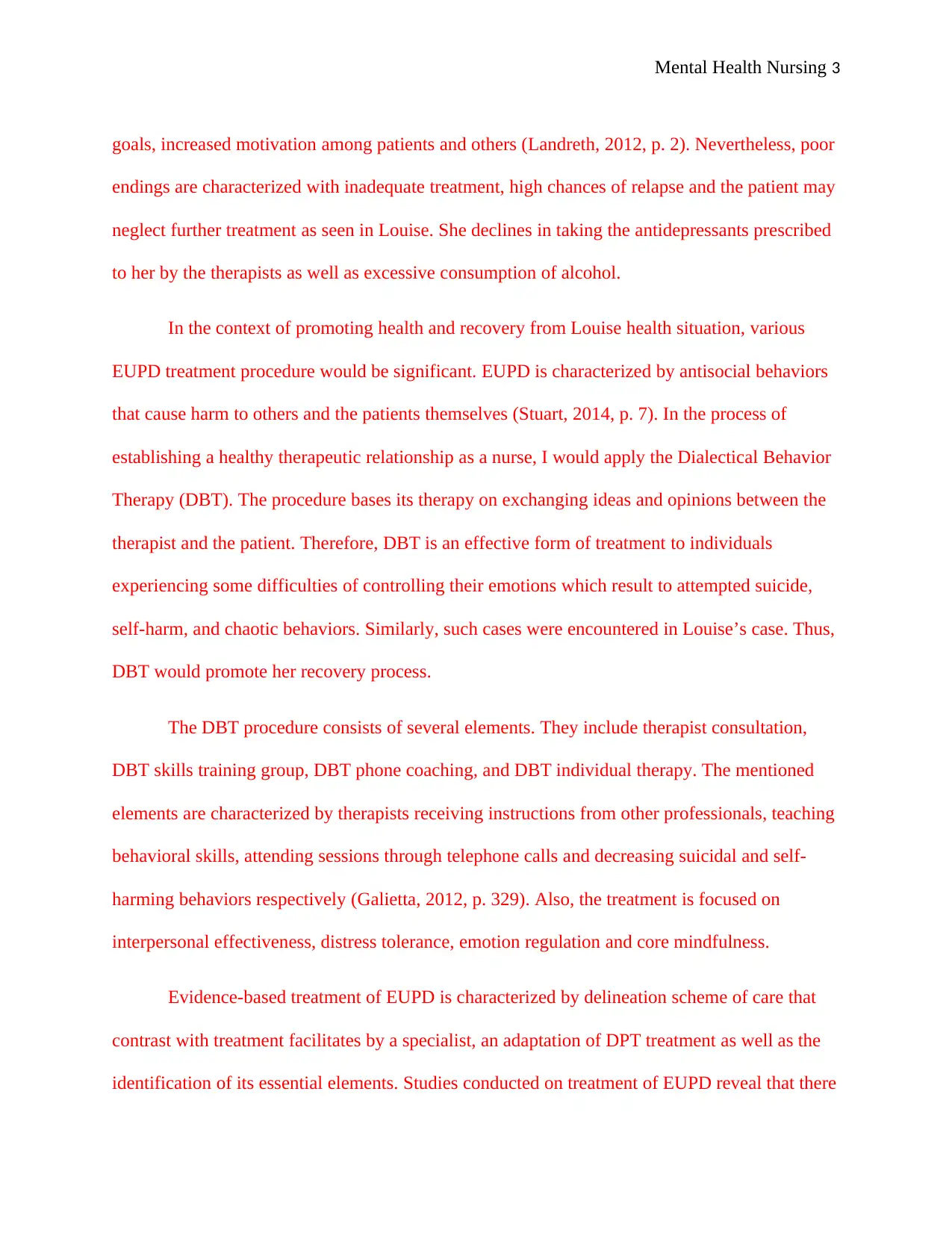
goals, increased motivation among patients and others (Landreth, 2012, p. 2). Nevertheless, poor
endings are characterized with inadequate treatment, high chances of relapse and the patient may
neglect further treatment as seen in Louise. She declines in taking the antidepressants prescribed
to her by the therapists as well as excessive consumption of alcohol.
In the context of promoting health and recovery from Louise health situation, various
EUPD treatment procedure would be significant. EUPD is characterized by antisocial behaviors
that cause harm to others and the patients themselves (Stuart, 2014, p. 7). In the process of
establishing a healthy therapeutic relationship as a nurse, I would apply the Dialectical Behavior
Therapy (DBT). The procedure bases its therapy on exchanging ideas and opinions between the
therapist and the patient. Therefore, DBT is an effective form of treatment to individuals
experiencing some difficulties of controlling their emotions which result to attempted suicide,
self-harm, and chaotic behaviors. Similarly, such cases were encountered in Louise’s case. Thus,
DBT would promote her recovery process.
The DBT procedure consists of several elements. They include therapist consultation,
DBT skills training group, DBT phone coaching, and DBT individual therapy. The mentioned
elements are characterized by therapists receiving instructions from other professionals, teaching
behavioral skills, attending sessions through telephone calls and decreasing suicidal and self-
harming behaviors respectively (Galietta, 2012, p. 329). Also, the treatment is focused on
interpersonal effectiveness, distress tolerance, emotion regulation and core mindfulness.
Evidence-based treatment of EUPD is characterized by delineation scheme of care that
contrast with treatment facilitates by a specialist, an adaptation of DPT treatment as well as the
identification of its essential elements. Studies conducted on treatment of EUPD reveal that there
tabler-icon-diamond-filled.svg

Paraphrase This Document

Need a fresh take? Get an instant paraphrase of this document with our AI Paraphraser
Document Page
Mental Health Nursing 4
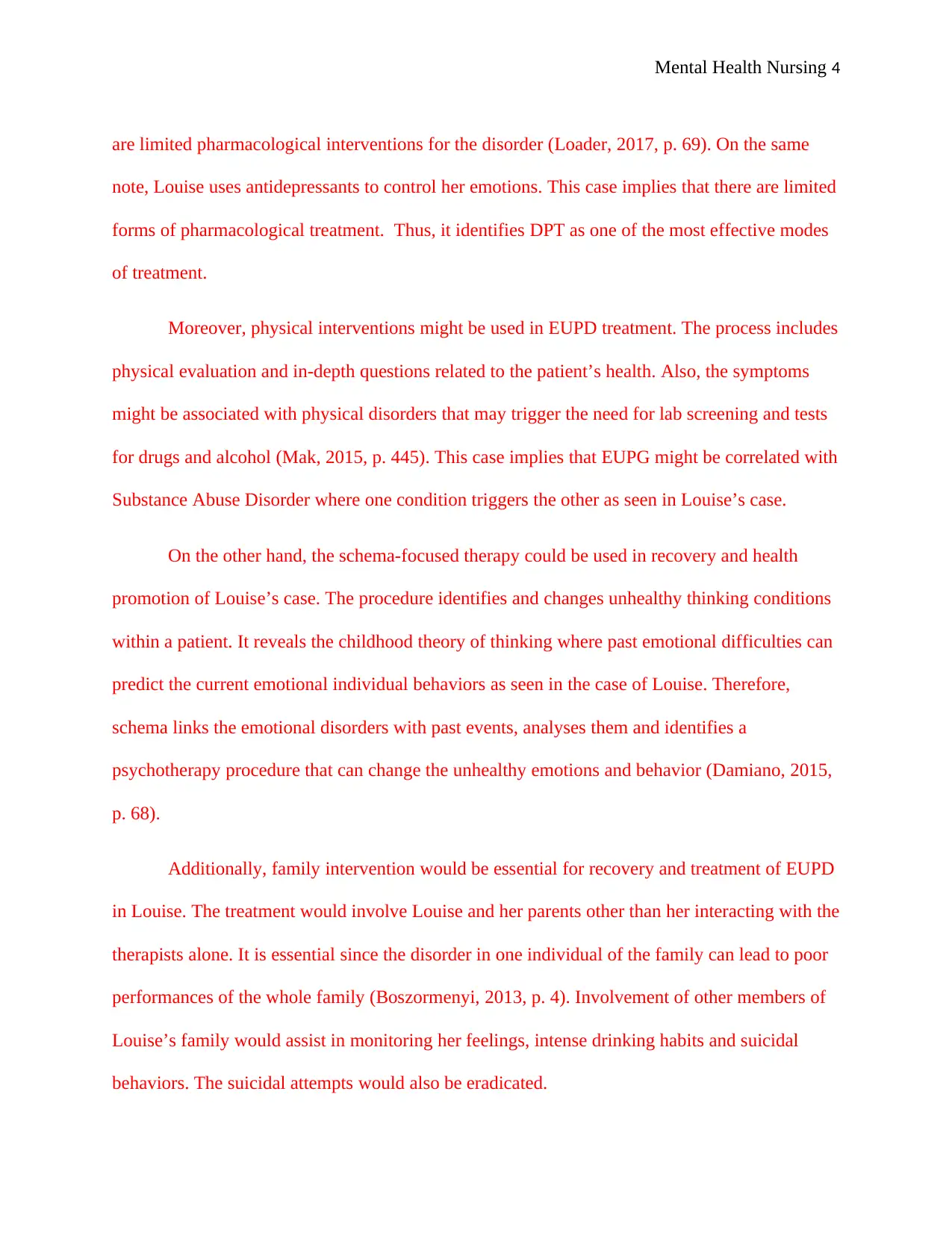
are limited pharmacological interventions for the disorder (Loader, 2017, p. 69). On the same
note, Louise uses antidepressants to control her emotions. This case implies that there are limited
forms of pharmacological treatment. Thus, it identifies DPT as one of the most effective modes
of treatment.
Moreover, physical interventions might be used in EUPD treatment. The process includes
physical evaluation and in-depth questions related to the patient’s health. Also, the symptoms
might be associated with physical disorders that may trigger the need for lab screening and tests
for drugs and alcohol (Mak, 2015, p. 445). This case implies that EUPG might be correlated with
Substance Abuse Disorder where one condition triggers the other as seen in Louise’s case.
On the other hand, the schema-focused therapy could be used in recovery and health
promotion of Louise’s case. The procedure identifies and changes unhealthy thinking conditions
within a patient. It reveals the childhood theory of thinking where past emotional difficulties can
predict the current emotional individual behaviors as seen in the case of Louise. Therefore,
schema links the emotional disorders with past events, analyses them and identifies a
psychotherapy procedure that can change the unhealthy emotions and behavior (Damiano, 2015,
p. 68).
Additionally, family intervention would be essential for recovery and treatment of EUPD
in Louise. The treatment would involve Louise and her parents other than her interacting with the
therapists alone. It is essential since the disorder in one individual of the family can lead to poor
performances of the whole family (Boszormenyi, 2013, p. 4). Involvement of other members of
Louise’s family would assist in monitoring her feelings, intense drinking habits and suicidal
behaviors. The suicidal attempts would also be eradicated.
Document Page
Mental Health Nursing 5
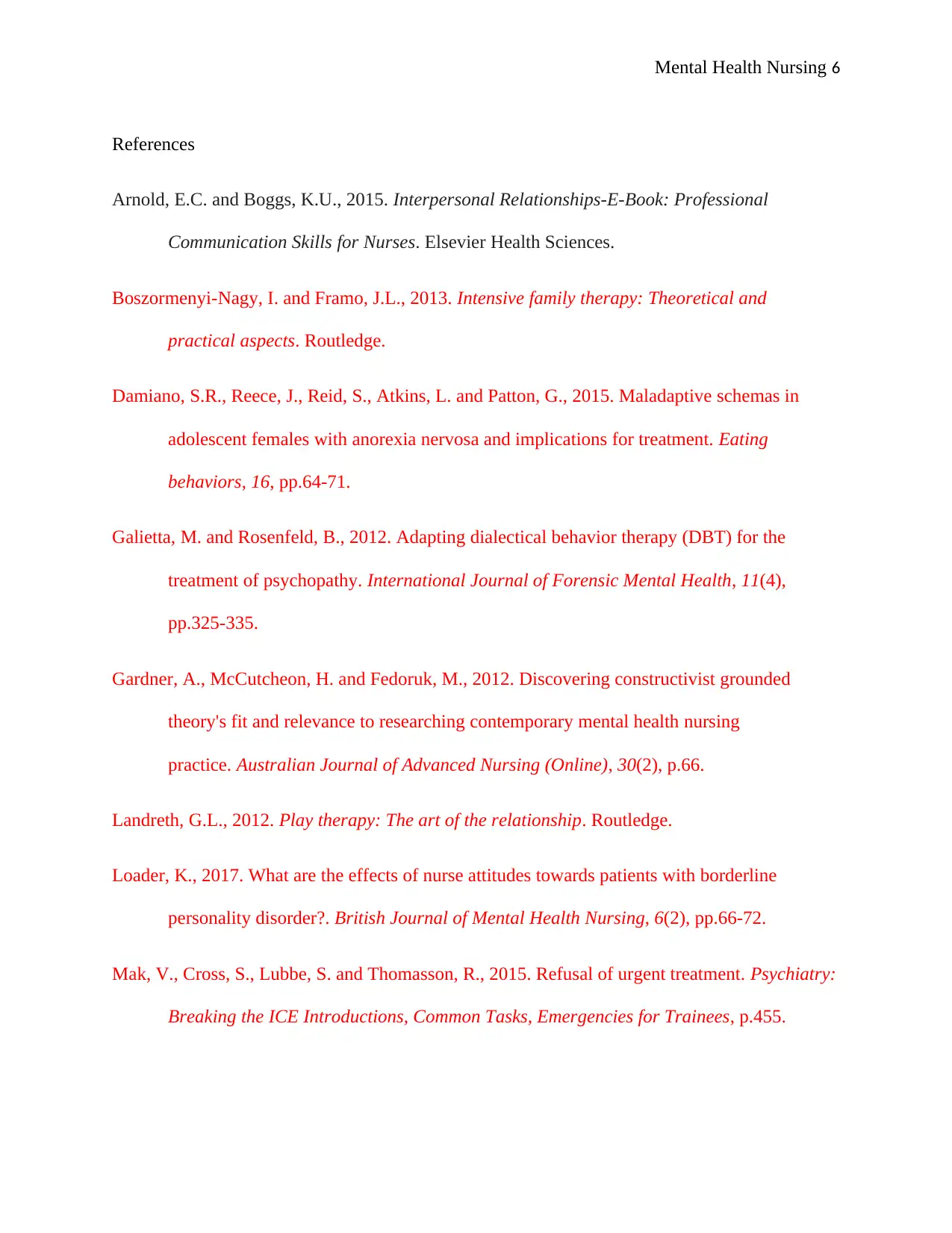
Furthermore, transference-focused psychotherapy would be essential in the recovery
process of Louise. It operates under the psychoanalytic theory which implies that thinking can
modify emotional disorders in an individual. The course of treatment is facilitated by diagnosing
the symptoms and controlling the thinking of the individual as a means of recovery (Yeomans,
2013, p. 449). Also, enrolling Louise in an alcohol program would assist in controlling the intake
of alcohol as a means of self-medication. Furthermore, abuse of alcohol would become more
severe thus leading to addiction (Sobell, 2013, p. 11). Thus, alcohol programs would help her
focus on other psychotherapy recovery and treatment procedures.
In conclusion, healthy therapeutic relationships can be of significant benefits to the
patient regarding treatment satisfaction, adherence to recovery plans, and improved mood and
functioning of the patient. Therefore, different health departments should work on various
objectives of enhancing effective therapeutic relationships between healthcare providers and
patients to ensure maximum care is provided.
Document Page
Mental Health Nursing 6
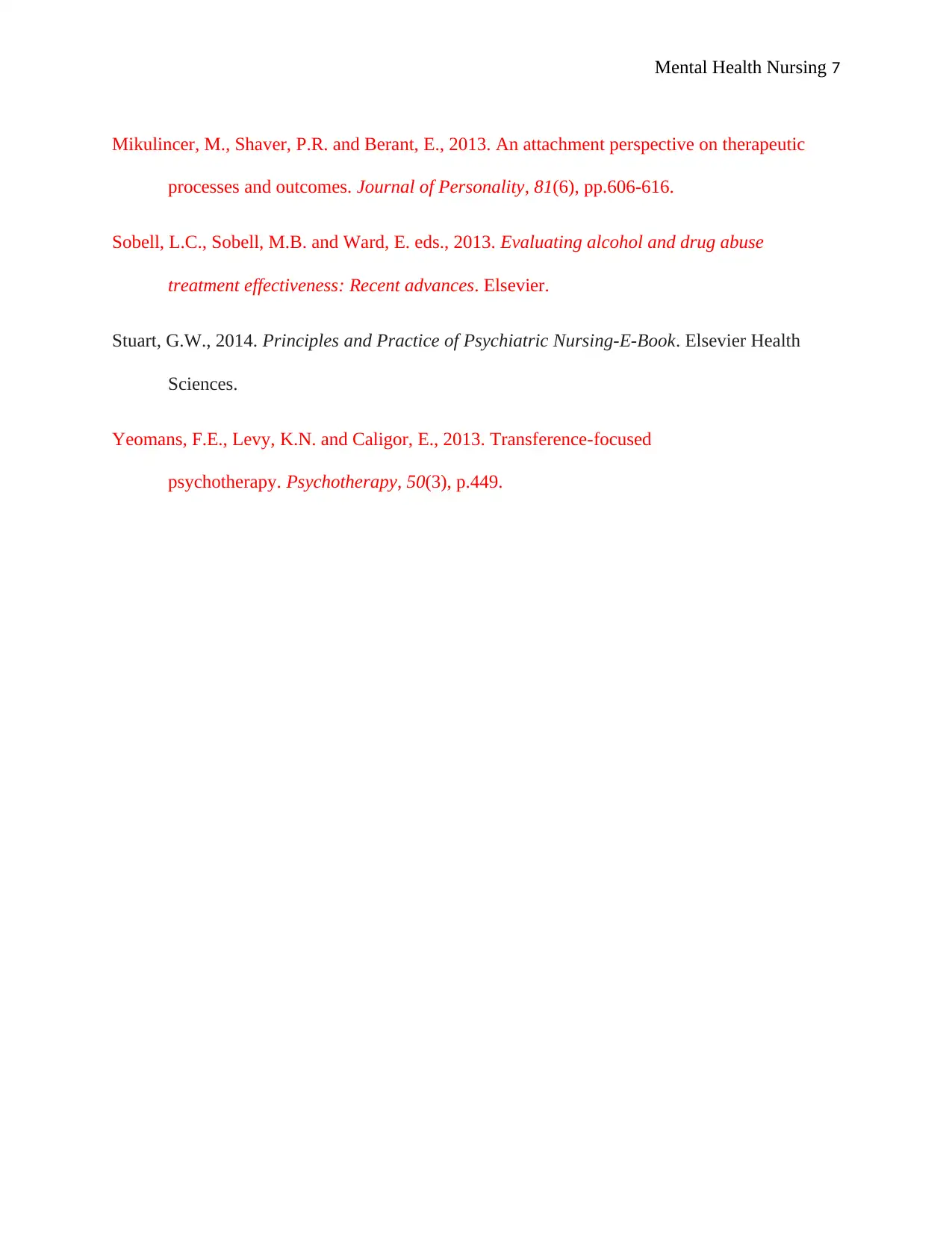
References
Arnold, E.C. and Boggs, K.U., 2015. Interpersonal Relationships-E-Book: Professional
Communication Skills for Nurses. Elsevier Health Sciences.
Boszormenyi-Nagy, I. and Framo, J.L., 2013. Intensive family therapy: Theoretical and
practical aspects. Routledge.
Damiano, S.R., Reece, J., Reid, S., Atkins, L. and Patton, G., 2015. Maladaptive schemas in
adolescent females with anorexia nervosa and implications for treatment. Eating
behaviors, 16, pp.64-71.
Galietta, M. and Rosenfeld, B., 2012. Adapting dialectical behavior therapy (DBT) for the
treatment of psychopathy. International Journal of Forensic Mental Health, 11(4),
pp.325-335.
Gardner, A., McCutcheon, H. and Fedoruk, M., 2012. Discovering constructivist grounded
theory's fit and relevance to researching contemporary mental health nursing
practice. Australian Journal of Advanced Nursing (Online), 30(2), p.66.
Landreth, G.L., 2012. Play therapy: The art of the relationship. Routledge.
Loader, K., 2017. What are the effects of nurse attitudes towards patients with borderline
personality disorder?. British Journal of Mental Health Nursing, 6(2), pp.66-72.
Mak, V., Cross, S., Lubbe, S. and Thomasson, R., 2015. Refusal of urgent treatment. Psychiatry:
Breaking the ICE Introductions, Common Tasks, Emergencies for Trainees, p.455.
tabler-icon-diamond-filled.svg

Paraphrase This Document

Need a fresh take? Get an instant paraphrase of this document with our AI Paraphraser
Document Page
Mental Health Nursing 7
Mikulincer, M., Shaver, P.R. and Berant, E., 2013. An attachment perspective on therapeutic
processes and outcomes. Journal of Personality, 81(6), pp.606-616.
Sobell, L.C., Sobell, M.B. and Ward, E. eds., 2013. Evaluating alcohol and drug abuse
treatment effectiveness: Recent advances. Elsevier.
Stuart, G.W., 2014. Principles and Practice of Psychiatric Nursing-E-Book. Elsevier Health
Sciences.
Yeomans, F.E., Levy, K.N. and Caligor, E., 2013. Transference-focused
psychotherapy. Psychotherapy, 50(3), p.449.
chevron_up_icon
1 out of 8
circle_padding
hide_on_mobile
zoom_out_icon
[object Object]