Lab Report: Measuring Thermal Conductivity of a Composite Wall

Verified

Added on  2023/06/03

|8
|1599
|138
Practical Assignment
AI Summary
This practical assignment focuses on the measurement of thermal conductivity in a composite wall structure. The experiment aims to calculate the total thermal conductivity (K) and thermal resistance (R total) of the composite wall, as well as plot a temperature gradient (∇ T) along its structure. The setup includes a heater between two sheets of different materials, thermocouples for temperature readings, and instruments for input control and measurement. The procedure involves arranging the plates symmetrically, ensuring contact, applying heat, and recording temperature readings at intervals. Calculations are performed using formulas for heat flux, thermal resistance, and thermal conductivity, considering unidirectional heat flow. The results are tabulated and graphed to visualize the temperature gradient. The experiment successfully measures the thermal conductivity of various elements within the composite block, providing a practical understanding of heat transfer principles. Desklib provides access to this and many other solved assignments to aid students in their studies.
Document Page
MEASUREMENT OF THERMAL
CONDUCTIVITY
Submitted
by
Student Name
tabler-icon-diamond-filled.svg

Paraphrase This Document

Need a fresh take? Get an instant paraphrase of this document with our AI Paraphraser
Document Page
AIM:
1. To calculate the total thermal conductivity (K) and thermal resistance (Rtotal) of a composite
wall.
2. To plot a temperature gradient T along with the composite wall structure.
APPARATUS REQUIRED:
Composite wall apparatus.
THEORY:
The experimental set up comprises of a heater centrally arranged between two sheets. Thereare
two types of blockswhich are accommodated on eitherends of the heater, which produces a composite
structure. A small frame which can be hand-pressed is provided to ensure the exact contact between the
twoblocks. For varying the input a dimmer stat is provided, heater input and input measurement is carried
out by a voltmeter and an ammeter. Embedment of thermocouples is done between interfaces of the
blocks in order to read the surface temperature.Due to large diameter of the plates it is assumed that heat
flowing through the middle position is unidirectional i.e. axial flow. Thus for calculation, the diameter
area at the central half where the unidirectional flow is assumed is considered. Accordingly, fixation of
thermocouples is done approximately at the centre of the plates (De Monte, F. 2000).
The experiments can be carried out at various input values and calculations can be done. The term
thermal conductivity is defined as the amount of thermal energy conducted via a body of a definite unit
area, thickness, and time when the difference in temperature between the faces causing heat flow is a unit
temperature difference. It is denoted by k. It depends upon the following factors
Material properties
Moisture level
The material density
Operating pressure and temperature.
Thermal resistance is defined as the ratio between the thickness of the body in the direction of flow (m)
and the product of thermal conductivity and area A of the composite wall.
. (R th)cond. = (dx /kA ¿
Where (R the)cond is the thermal conduction resistance
The thermal conductance is the reciprocal of thermal resistance.
SPECIFICATION
1. Block assembly is arranged on either side of the heater.
Document Page
2. The heater is made up of Nichrome wound on mica former and insulated with a control unit
with a capacity of three hundred (300) watts. The control unit is constructed in such a way
that it should not exceed three hundred watts.
3. The heater control unit comprises of voltage which varies from 0-230 V with an ammeter
which varies from 0-2 Amps with a single phase dimmer stat.
4. The voltmeter varies from 0-100-200 V while the ammeter varies from 0-2 Amps.
5. Temperature indicator (digital type) indicates variations from 0-200 oC.
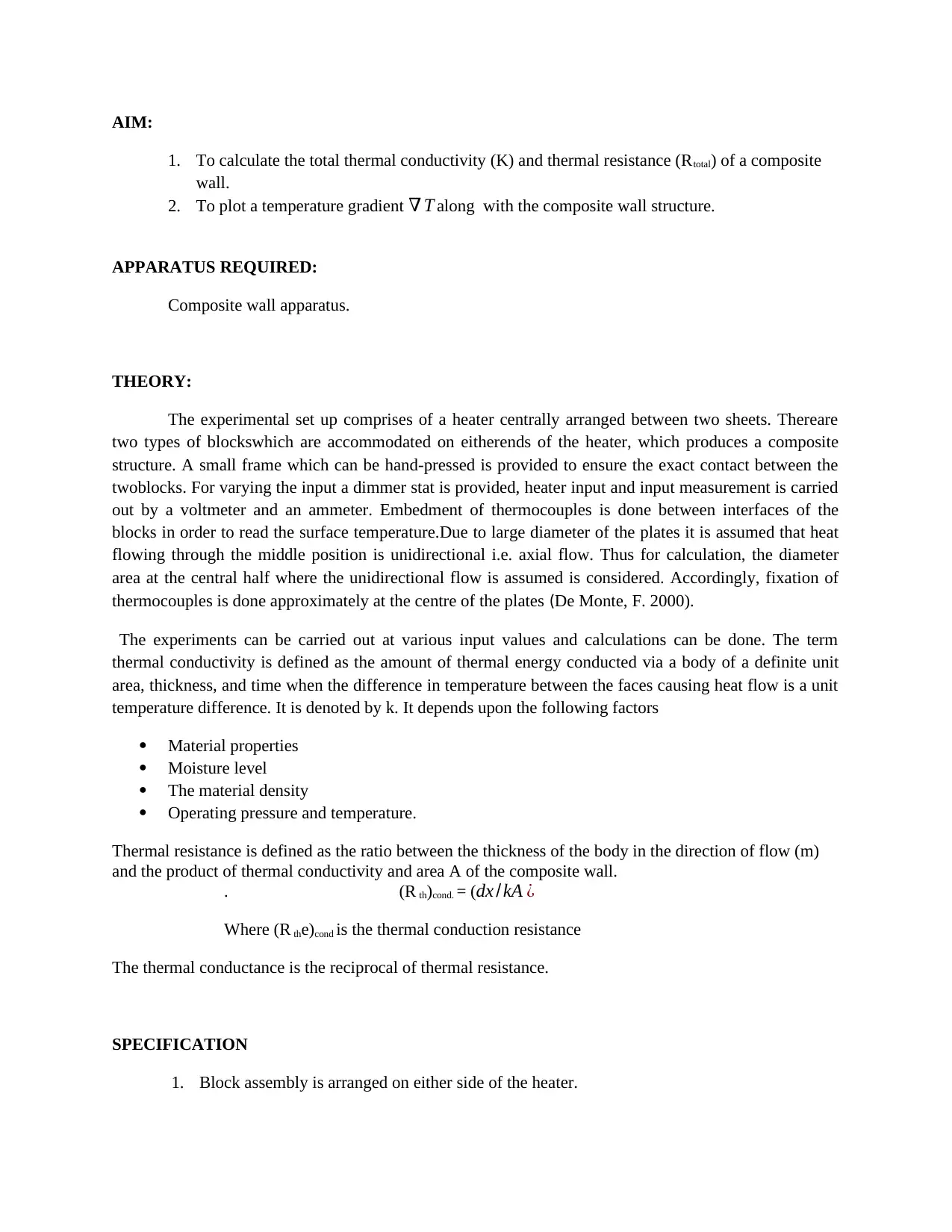
Fig1. Composite Wall Apparatus
PROCEDURE:
The arrangement of the plates should be done in a proper fashion i.e. in a symmetrical manner on
eitherends of the heater plates..Thereare two types of blockswhich are accommodated on both ends of the
heater.Which produces a composite structure. A small frame which can be hand-pressed is provided to
ensure the exact contact between the twoblocks. For varying the input a dimmer stat is provided, heater
input and input measurement is carried with the help of a voltmeter and an ammeter. Embedment of
thermocouples is done between interfaces of the blocks in order to read the surface temperature. Due to
large diameter of the plates it is assumed that heat flowing through the central position is one directional
flow Thus for calculation, the diameter area at the central half where the unidirectional flow is assumed is
considered. Accordingly, fixation of thermocouples is done approximately at the centre of the plates (De
Monte, F. 2000). The amount of energy conducted through a body in a definite unit area and unit
thickness at unit time is the thermal conductivity of a material.The heat flow is caused by difference in
temperature between the faces. The thermal resistance is defined as the ratio between thickness of the
Document Page
body in the flow direction and the product of thermal conductivity and area A of the composite wall.
Thermal conductance is the reciprocal of thermal resistance.The experiments can be carried out at various
values of input and calculations can be made accordingly. (Meng, Y.A, & Thomas, B. G. 2003)
The following steps are to be followed out to determine the thermal conductivity and thermal resistance
of a composite wall See the plates are arranged on a symmetric fashion in both ends of the heater plates.
1. The hand press should be operated to ensure exact contact between the two plates.
2. The box has to be closed with a cover sheet in order to attain constant environment conditions.
3. The supply of the heater is started by varying the dimmer stat. Nichrome heater wound on mica
former and insulated with a control unit capable of three hundred (300) watts. Heater control unit:
0-230 V. Ammeter 0-2 Amps with a single phase dimmer stat. Voltmeter varies from 0-100-200
V while the ammeter varies from 0-2 Amps. Temperature indicator (digital type) indicates
variations from 0-200 o C.
4. The control unit should not exceed three hundred watts. The input is to be adjusted at the desired
value.
5. Readings are taken of all the thermocouples at an interval of ten minutes until fairly constant
temperatures are attained and the rising rate is negligible.
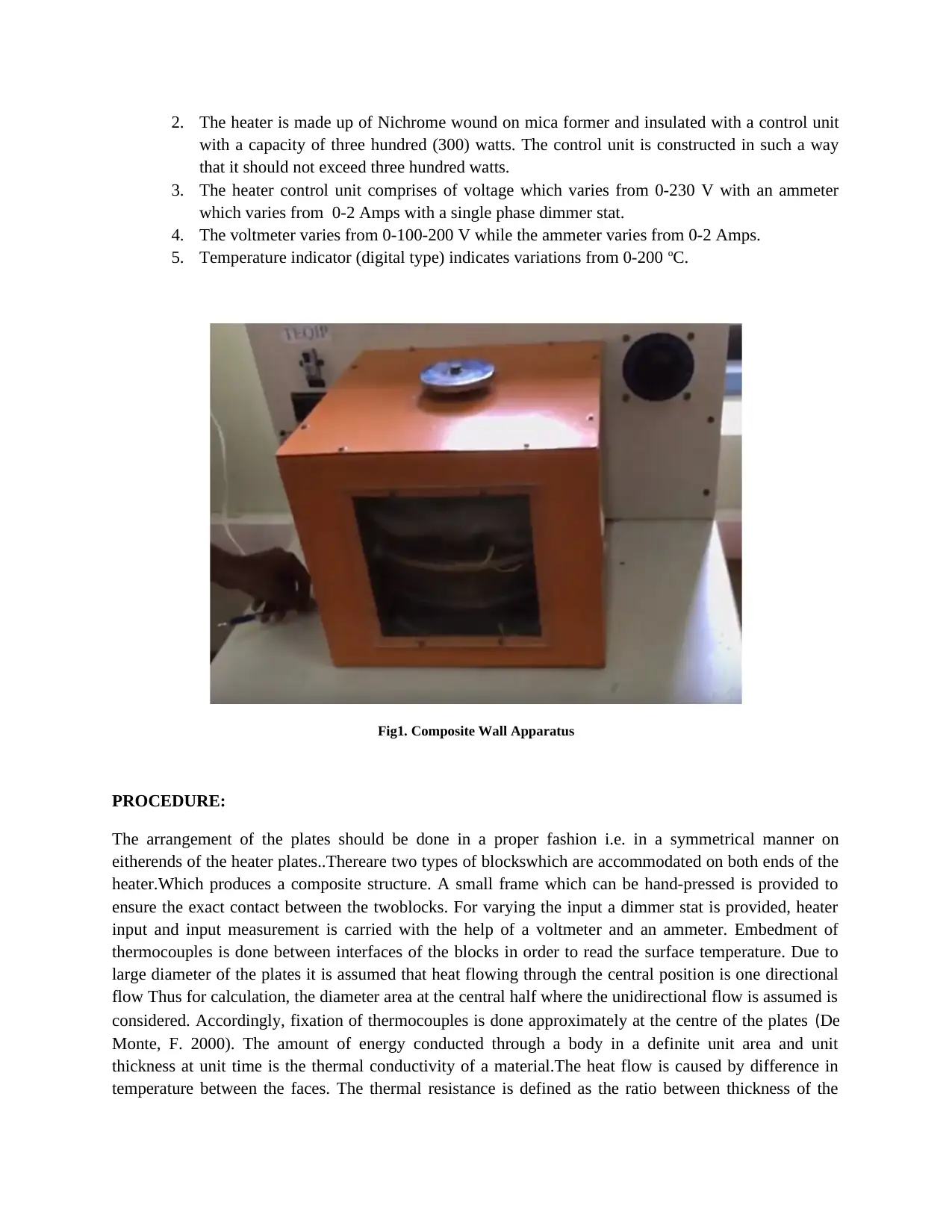
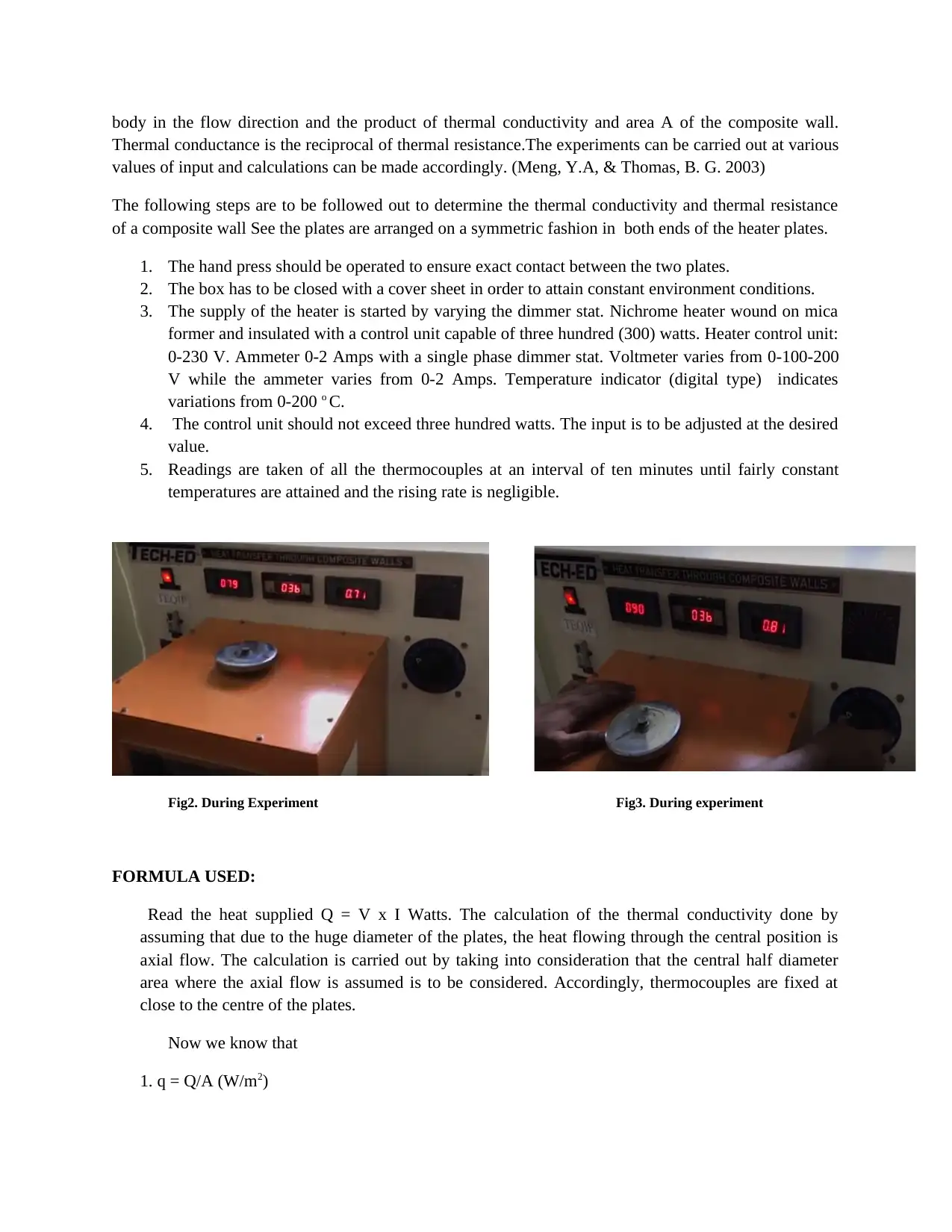
Fig2. During Experiment Fig3. During experiment
FORMULA USED:
Read the heat supplied Q = V x I Watts. The calculation of the thermal conductivity done by
assuming that due to the huge diameter of the plates, the heat flowing through the central position is
axial flow. The calculation is carried out by taking into consideration that the central half diameter
area where the axial flow is assumed is to be considered. Accordingly, thermocouples are fixed at
close to the centre of the plates.
Now we know that
1. q = Q/A (W/m2)
tabler-icon-diamond-filled.svg

Paraphrase This Document

Need a fresh take? Get an instant paraphrase of this document with our AI Paraphraser
Document Page
A = ¿/ 4 ) x d2
where q is the heat flux of the composite wall ( W/m2)
Q is the heat supplied to the composite wall (W)
A is the area of the composite wall (m2)
d is the diameter of the composite block.
2. The total Thermal resistance of the composite block
R total = T A T B
q
where Rtotal is the total thermal resistance of the composite block.
TAis the temperature at the inlet of the composite wall.
TB is the temperature at the outlet of the composite wall.
3. The thermal conductivity of the composite block.
K COMPOSITE = q
T A T B
x b
where K composite is the thermal conductivity of the composite wall.
b is the thickness of the composite wall.
4. The thermal resistance of the composite wall
(R th)cond. = (dx /kA ¿
where (R th)cond is the thermal conduction resistance
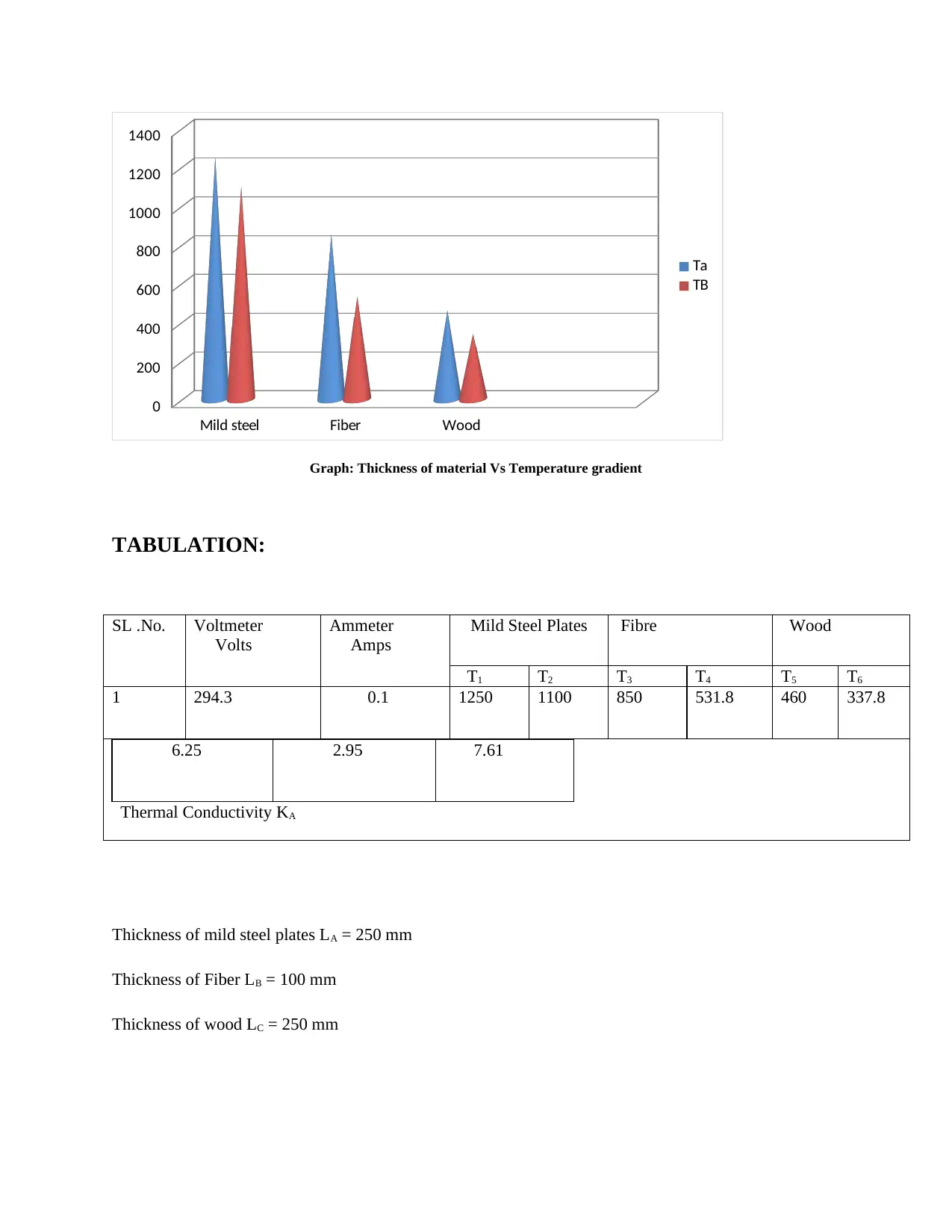
To plot the thickness of the block material against the temperature gradient.
Graph
A graph is plotted with materials of the block material against the temperature gradient. The
temperature is measured using the composite apparatus.
Document Page
Mild steel Fiber Wood
0
200
400
600
800
1000
1200
1400
Ta
TB
Graph: Thickness of material Vs Temperature gradient
TABULATION:
SL .No. Voltmeter
Volts
Ammeter
Amps
Mild Steel Plates Fibre Wood
T1 T2 T3 T4 T5 T6
1 294.3 0.1 1250 1100 850 531.8 460 337.8
6.25 2.95 7.61
Thermal Conductivity KA
Thickness of mild steel plates LA = 250 mm
Thickness of Fiber LB = 100 mm
Thickness of wood LC = 250 mm
Document Page
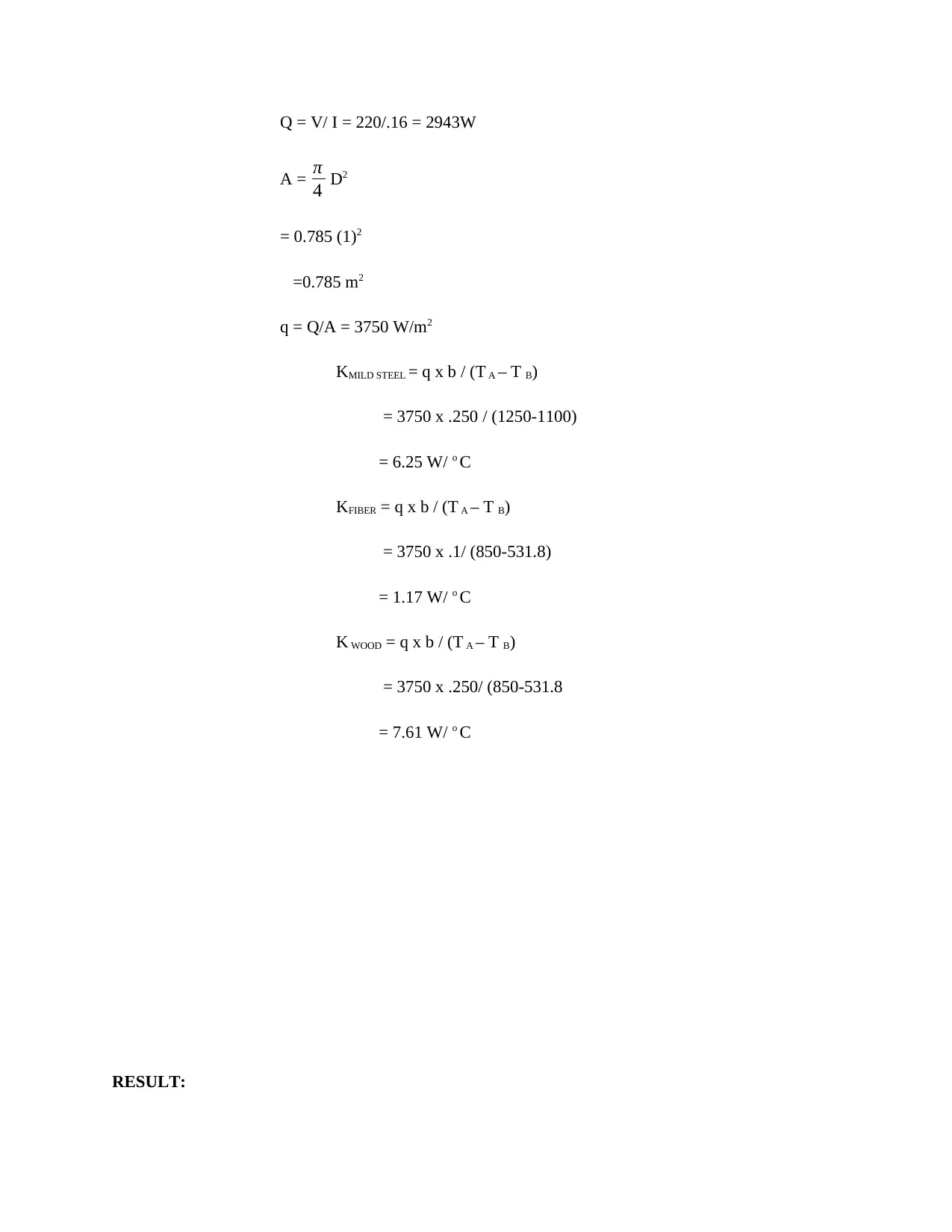
Q = V/ I = 220/.16 = 2943W
A = π
4 D2
= 0.785 (1)2
=0.785 m2
q = Q/A = 3750 W/m2
KMILD STEEL = q x b / (T A – T B)
= 3750 x .250 / (1250-1100)
= 6.25 W/ o C
KFIBER = q x b / (T A – T B)
= 3750 x .1/ (850-531.8)
= 1.17 W/ o C
K WOOD = q x b / (T A – T B)
= 3750 x .250/ (850-531.8
= 7.61 W/ o C
RESULT:
tabler-icon-diamond-filled.svg

Paraphrase This Document

Need a fresh take? Get an instant paraphrase of this document with our AI Paraphraser
Document Page
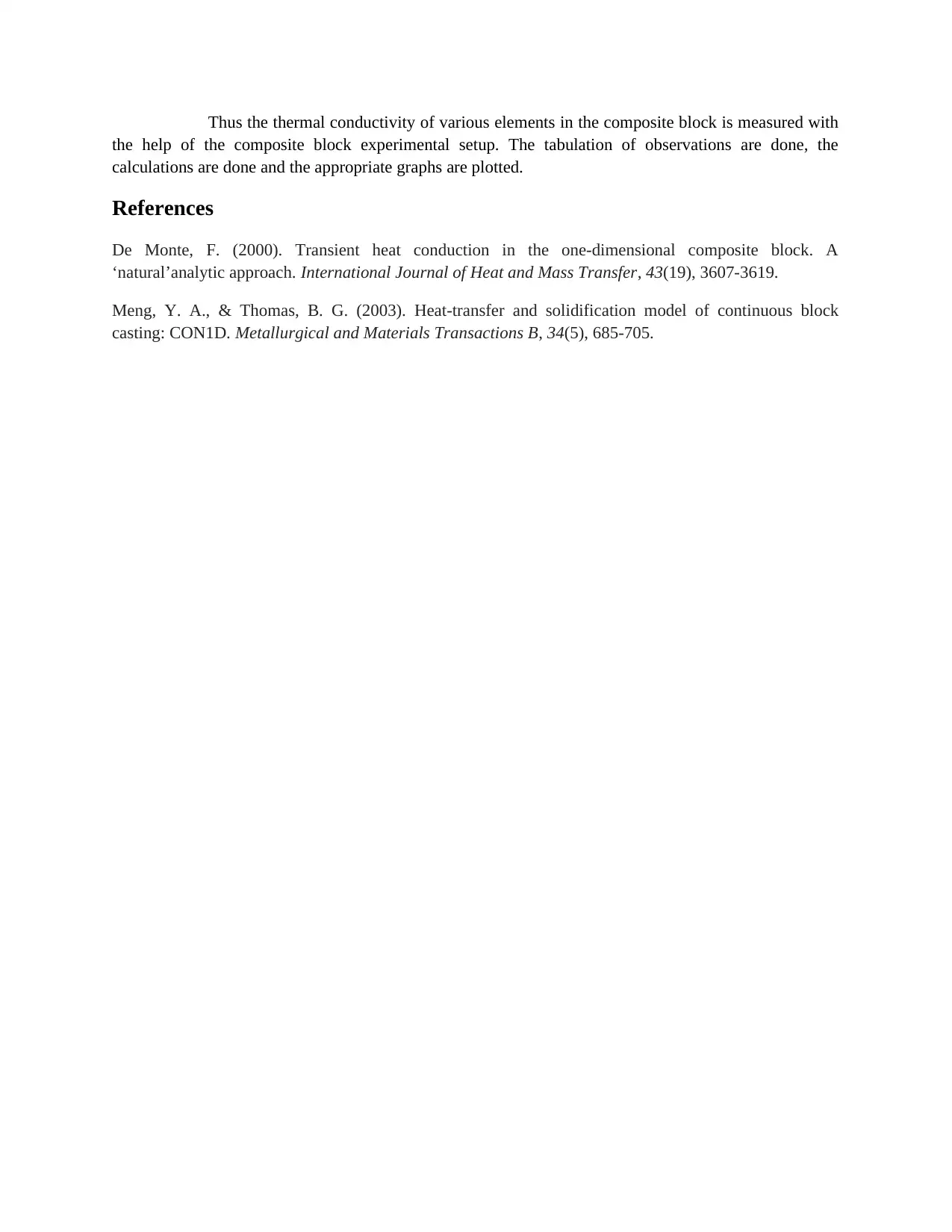
Thus the thermal conductivity of various elements in the composite block is measured with
the help of the composite block experimental setup. The tabulation of observations are done, the
calculations are done and the appropriate graphs are plotted.
References
De Monte, F. (2000). Transient heat conduction in the one-dimensional composite block. A
‘natural’analytic approach. International Journal of Heat and Mass Transfer, 43(19), 3607-3619.
Meng, Y. A., & Thomas, B. G. (2003). Heat-transfer and solidification model of continuous block
casting: CON1D. Metallurgical and Materials Transactions B, 34(5), 685-705.
chevron_up_icon
1 out of 8
circle_padding
hide_on_mobile
zoom_out_icon
[object Object]