Detailed Analysis of Think Big Luxury Car Renting Service Business
VerifiedAdded on 2021/06/17
|10
|2104
|37
Report
AI Summary
This report details a business plan for 'Think Big,' a luxury car renting service. It focuses on a platform connecting luxury car owners with customers needing high-end vehicles for short-term rentals. The executive summary highlights the importance of entrepreneurship and innovation, emphasizing market need identification and differentiation from competitors. The report covers various aspects, including the target market (tourists and high-income individuals), the benefits of the business model (earning potential for owners and convenient access for renters), the business model itself (mobile app-based platform, quality checks, and payment structure), organizational structure (flat hierarchy, sales team), sources of finance (angel investors), and the marketing mix (product, place, price, and promotion strategies including social media, digital marketing, and billboards). The report concludes by emphasizing the role of effective execution and marketing in achieving success in the luxury car rental market. The appendices include a business model canvas.

Think Big
Luxury Car Renting Service
Luxury Car Renting Service

Paraphrase This Document
Need a fresh take? Get an instant paraphrase of this document with our AI Paraphraser
Executive Summary
Entrepreneurship is critical for the success of any economy. It breeds on innovation and
creativity. In order to introduce a new business, there are numerous things that an entrepreneur
must consider. It is essential to identify the new product or service as well as the specific target
market it will serve. It is also important to understand the USP of the offering and understand
how it can be differentiated from competitors. This in-depth analysis of a new business has given
rise to disruptive innovations across the globe. These innovations are introduced with an aim to
change the face of the industry. This particular report highlights upon a new business of a car
renting service. The service differentiates itself as the service only offers renting of luxury cars.
The business model is differentiated because unlike other renting service, this business does not
buy cars and then rent it out to those who need, but this business simply creates a platform
between luxury car owners who are willing to give their car for rent and customers who require
luxury cars.
Entrepreneurship is critical for the success of any economy. It breeds on innovation and
creativity. In order to introduce a new business, there are numerous things that an entrepreneur
must consider. It is essential to identify the new product or service as well as the specific target
market it will serve. It is also important to understand the USP of the offering and understand
how it can be differentiated from competitors. This in-depth analysis of a new business has given
rise to disruptive innovations across the globe. These innovations are introduced with an aim to
change the face of the industry. This particular report highlights upon a new business of a car
renting service. The service differentiates itself as the service only offers renting of luxury cars.
The business model is differentiated because unlike other renting service, this business does not
buy cars and then rent it out to those who need, but this business simply creates a platform
between luxury car owners who are willing to give their car for rent and customers who require
luxury cars.
Contents
Executive Summary.........................................................................................................................1
Introduction......................................................................................................................................3
Need Identification..........................................................................................................................3
Business overview...........................................................................................................................3
Target Market..................................................................................................................................3
Benefits of the model.......................................................................................................................4
Business model................................................................................................................................4
Organizational structure...................................................................................................................4
Sources of finance............................................................................................................................5
Marketing Mix.................................................................................................................................6
Product.........................................................................................................................................6
Place.............................................................................................................................................6
Price.............................................................................................................................................6
Promotion.....................................................................................................................................7
Conclusion.......................................................................................................................................7
References........................................................................................................................................8
Appendices......................................................................................................................................9
Business Model Canvas...............................................................................................................9
Executive Summary.........................................................................................................................1
Introduction......................................................................................................................................3
Need Identification..........................................................................................................................3
Business overview...........................................................................................................................3
Target Market..................................................................................................................................3
Benefits of the model.......................................................................................................................4
Business model................................................................................................................................4
Organizational structure...................................................................................................................4
Sources of finance............................................................................................................................5
Marketing Mix.................................................................................................................................6
Product.........................................................................................................................................6
Place.............................................................................................................................................6
Price.............................................................................................................................................6
Promotion.....................................................................................................................................7
Conclusion.......................................................................................................................................7
References........................................................................................................................................8
Appendices......................................................................................................................................9
Business Model Canvas...............................................................................................................9
⊘ This is a preview!⊘
Do you want full access?
Subscribe today to unlock all pages.

Trusted by 1+ million students worldwide
Introduction
Entrepreneurship is the process of starting a new business and the person who starts the business
is known as an entrepreneur (Drucker, 2014). Entrepreneurship is crucial to the growth of the
economy. This is precisely why governments of various countries provide extensive subsidies
and tax rebates to entrepreneurs in order to encourage them. This report throws light upon the
new business of renting luxury cars to people for short durations.
Need Identification
For the success of any business, it is essential to analyze a need gap in the market and work
towards fulfilling that need (Baker, 2016). Owing to the increasing price as well as increasing
traffic on the roads, governments are encouraging people to use public transport. There are
various tourists who visit the country and find it difficult to rent out good quality cars. Most of
the car renting businesses do not provide good quality cars. Therefore, there is a need in the
market to create a business where luxury cars could be rented out to people for a pre-defined
duration.
Business overview
This business would adopt a low cost of development strategy. Instead of buying cars and then
renting out to customers, the business would create a platform where luxury car owners can
register their cars to be given on rent and customers who need cars for a few days can select the
car that they like, specify the duration and rent the car.
Target Market
Target market of a business includes the set of customers whose needs the business aims to fulfill
(Armstrong et. al., 2015). The predominant target market of the business would include tourists
who are visiting the city for a few days and need a car to travel around the city. Moreover,
people who wish to travel to nearby destinations for weekend getaways or personal events will
also be targeted. Target market of a business is defined post dividing the marketing into various
segments based on geography, psychographic or demography. The target market for the business
would include:
Entrepreneurship is the process of starting a new business and the person who starts the business
is known as an entrepreneur (Drucker, 2014). Entrepreneurship is crucial to the growth of the
economy. This is precisely why governments of various countries provide extensive subsidies
and tax rebates to entrepreneurs in order to encourage them. This report throws light upon the
new business of renting luxury cars to people for short durations.
Need Identification
For the success of any business, it is essential to analyze a need gap in the market and work
towards fulfilling that need (Baker, 2016). Owing to the increasing price as well as increasing
traffic on the roads, governments are encouraging people to use public transport. There are
various tourists who visit the country and find it difficult to rent out good quality cars. Most of
the car renting businesses do not provide good quality cars. Therefore, there is a need in the
market to create a business where luxury cars could be rented out to people for a pre-defined
duration.
Business overview
This business would adopt a low cost of development strategy. Instead of buying cars and then
renting out to customers, the business would create a platform where luxury car owners can
register their cars to be given on rent and customers who need cars for a few days can select the
car that they like, specify the duration and rent the car.
Target Market
Target market of a business includes the set of customers whose needs the business aims to fulfill
(Armstrong et. al., 2015). The predominant target market of the business would include tourists
who are visiting the city for a few days and need a car to travel around the city. Moreover,
people who wish to travel to nearby destinations for weekend getaways or personal events will
also be targeted. Target market of a business is defined post dividing the marketing into various
segments based on geography, psychographic or demography. The target market for the business
would include:
Paraphrase This Document
Need a fresh take? Get an instant paraphrase of this document with our AI Paraphraser
Demographic segmentation: This business would target customers belonging to the high
income group of the society. The business would target adults over the age of 24 and families on
vacations.
Psychographic segmentation: The business would target customers who lead a lavish lifestyle
and technologically savvy.
Benefits of the model
Two important benefits of the model include that people who own luxury cars can earn some
money on their cars while customers who need cars to travel can avail the facility of having a car
for the particular duration as they require. This business model is therefore an important platform
for bridging luxury car owners and luxury car renters.
Business model
The owners of cars can register their cars with the business using the company’s mobile
application. The owners’ cars would be tested for quality and legal ownership. The customers
who wish to rent the car can register on the mobile application and rent out their preferred car for
their preferred time duration. The customer’s identity would be validated and police verification
would be conducted.
Customers renting the car would pay a 70% advance fee. 60% of the total fee would be provided
to the car owners of which 20% would be paid in advance and 40% would be paid after returning
the car post service, repair and cleaning. Customer who rent the car would also pay a fixed
refundable deposit that would be returned to them upon returning the car and ensuring the state
of car or required repairmen’s.
Organizational structure
As a start-up, the business would have two owners, two people in the HR department and a 12
people sales team. 5 members of the sales team would target owners of luxury cars and get them
to register with the business. The remaining 7 members of the sales team would target customers
who are interested in renting cars. Two people of the organization would be dedicated to
ensuring the effectiveness and efficacy of the organization’s IT.
income group of the society. The business would target adults over the age of 24 and families on
vacations.
Psychographic segmentation: The business would target customers who lead a lavish lifestyle
and technologically savvy.
Benefits of the model
Two important benefits of the model include that people who own luxury cars can earn some
money on their cars while customers who need cars to travel can avail the facility of having a car
for the particular duration as they require. This business model is therefore an important platform
for bridging luxury car owners and luxury car renters.
Business model
The owners of cars can register their cars with the business using the company’s mobile
application. The owners’ cars would be tested for quality and legal ownership. The customers
who wish to rent the car can register on the mobile application and rent out their preferred car for
their preferred time duration. The customer’s identity would be validated and police verification
would be conducted.
Customers renting the car would pay a 70% advance fee. 60% of the total fee would be provided
to the car owners of which 20% would be paid in advance and 40% would be paid after returning
the car post service, repair and cleaning. Customer who rent the car would also pay a fixed
refundable deposit that would be returned to them upon returning the car and ensuring the state
of car or required repairmen’s.
Organizational structure
As a start-up, the business would have two owners, two people in the HR department and a 12
people sales team. 5 members of the sales team would target owners of luxury cars and get them
to register with the business. The remaining 7 members of the sales team would target customers
who are interested in renting cars. Two people of the organization would be dedicated to
ensuring the effectiveness and efficacy of the organization’s IT.
The organization would adopt a flat hierarchical structure and enable open communication
within the business. Open communication creates transparency and improved organizational
culture (Alvesson, 2012).
Sources of finance
Business would approach angel investors for initial round of finance. The organization would
require an initial funding in order to fulfill the following objectives:
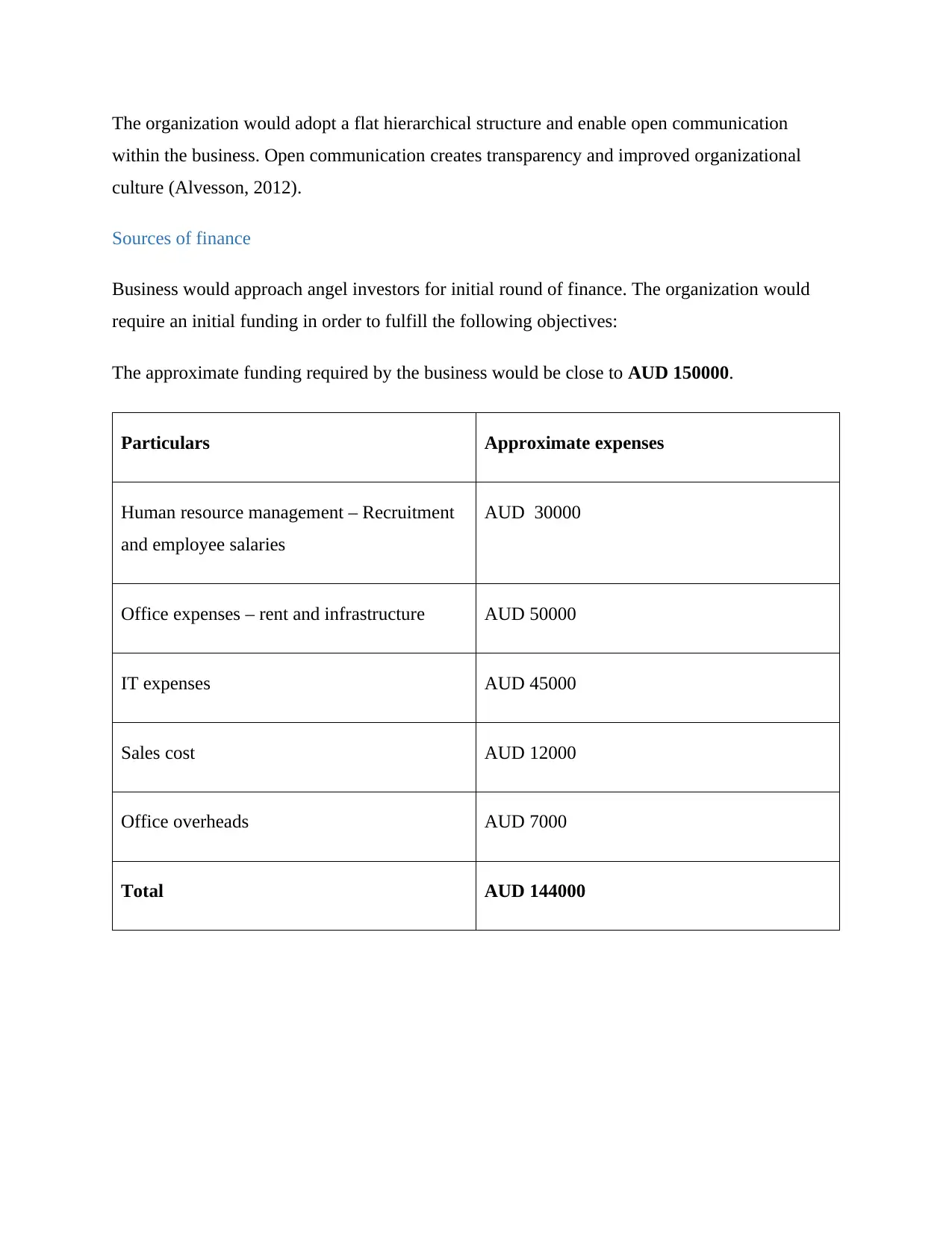
The approximate funding required by the business would be close to AUD 150000.
Particulars Approximate expenses
Human resource management – Recruitment
and employee salaries
AUD 30000
Office expenses – rent and infrastructure AUD 50000
IT expenses AUD 45000
Sales cost AUD 12000
Office overheads AUD 7000
Total AUD 144000
within the business. Open communication creates transparency and improved organizational
culture (Alvesson, 2012).
Sources of finance
Business would approach angel investors for initial round of finance. The organization would
require an initial funding in order to fulfill the following objectives:
The approximate funding required by the business would be close to AUD 150000.
Particulars Approximate expenses
Human resource management – Recruitment
and employee salaries
AUD 30000
Office expenses – rent and infrastructure AUD 50000
IT expenses AUD 45000
Sales cost AUD 12000
Office overheads AUD 7000
Total AUD 144000
⊘ This is a preview!⊘
Do you want full access?
Subscribe today to unlock all pages.
Trusted by 1+ million students worldwide
Marketing Mix
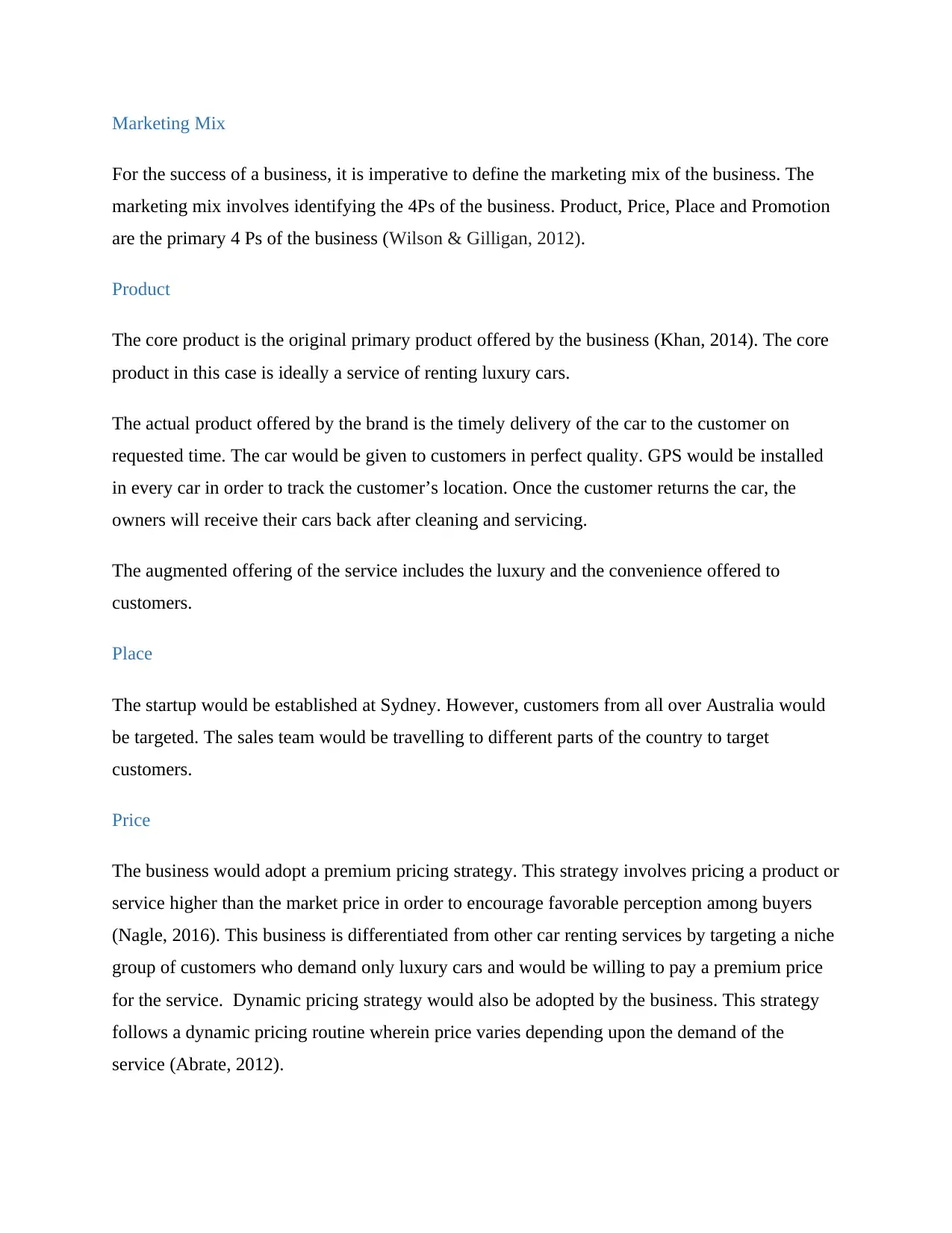
For the success of a business, it is imperative to define the marketing mix of the business. The
marketing mix involves identifying the 4Ps of the business. Product, Price, Place and Promotion
are the primary 4 Ps of the business (Wilson & Gilligan, 2012).
Product
The core product is the original primary product offered by the business (Khan, 2014). The core
product in this case is ideally a service of renting luxury cars.
The actual product offered by the brand is the timely delivery of the car to the customer on
requested time. The car would be given to customers in perfect quality. GPS would be installed
in every car in order to track the customer’s location. Once the customer returns the car, the
owners will receive their cars back after cleaning and servicing.
The augmented offering of the service includes the luxury and the convenience offered to
customers.
Place
The startup would be established at Sydney. However, customers from all over Australia would
be targeted. The sales team would be travelling to different parts of the country to target
customers.
Price
The business would adopt a premium pricing strategy. This strategy involves pricing a product or
service higher than the market price in order to encourage favorable perception among buyers
(Nagle, 2016). This business is differentiated from other car renting services by targeting a niche
group of customers who demand only luxury cars and would be willing to pay a premium price
for the service. Dynamic pricing strategy would also be adopted by the business. This strategy
follows a dynamic pricing routine wherein price varies depending upon the demand of the
service (Abrate, 2012).
For the success of a business, it is imperative to define the marketing mix of the business. The
marketing mix involves identifying the 4Ps of the business. Product, Price, Place and Promotion
are the primary 4 Ps of the business (Wilson & Gilligan, 2012).
Product
The core product is the original primary product offered by the business (Khan, 2014). The core
product in this case is ideally a service of renting luxury cars.
The actual product offered by the brand is the timely delivery of the car to the customer on
requested time. The car would be given to customers in perfect quality. GPS would be installed
in every car in order to track the customer’s location. Once the customer returns the car, the
owners will receive their cars back after cleaning and servicing.
The augmented offering of the service includes the luxury and the convenience offered to
customers.
Place
The startup would be established at Sydney. However, customers from all over Australia would
be targeted. The sales team would be travelling to different parts of the country to target
customers.
Price
The business would adopt a premium pricing strategy. This strategy involves pricing a product or
service higher than the market price in order to encourage favorable perception among buyers
(Nagle, 2016). This business is differentiated from other car renting services by targeting a niche
group of customers who demand only luxury cars and would be willing to pay a premium price
for the service. Dynamic pricing strategy would also be adopted by the business. This strategy
follows a dynamic pricing routine wherein price varies depending upon the demand of the
service (Abrate, 2012).
Paraphrase This Document
Need a fresh take? Get an instant paraphrase of this document with our AI Paraphraser
Promotion
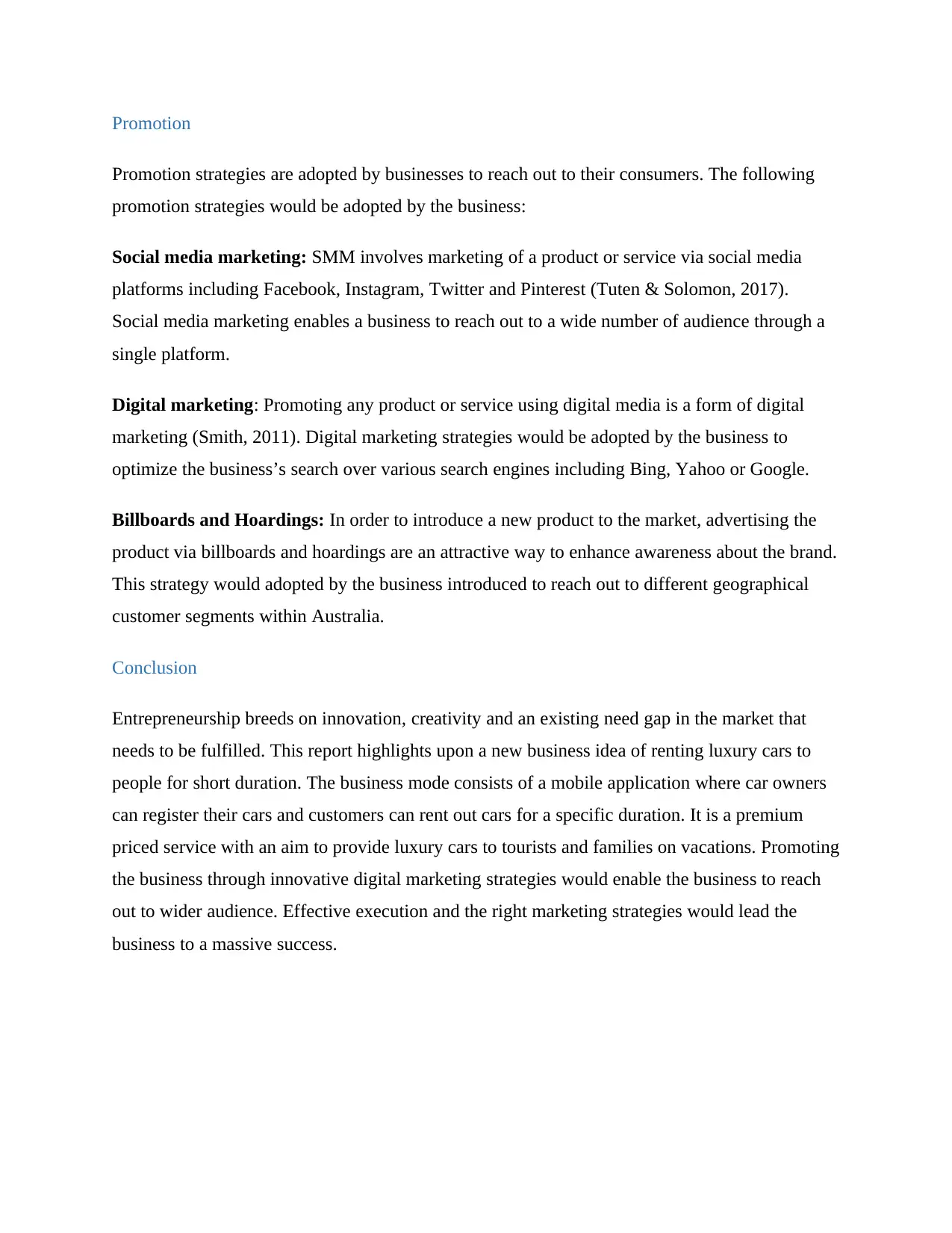
Promotion strategies are adopted by businesses to reach out to their consumers. The following
promotion strategies would be adopted by the business:
Social media marketing: SMM involves marketing of a product or service via social media
platforms including Facebook, Instagram, Twitter and Pinterest (Tuten & Solomon, 2017).
Social media marketing enables a business to reach out to a wide number of audience through a
single platform.
Digital marketing: Promoting any product or service using digital media is a form of digital
marketing (Smith, 2011). Digital marketing strategies would be adopted by the business to
optimize the business’s search over various search engines including Bing, Yahoo or Google.
Billboards and Hoardings: In order to introduce a new product to the market, advertising the
product via billboards and hoardings are an attractive way to enhance awareness about the brand.
This strategy would adopted by the business introduced to reach out to different geographical
customer segments within Australia.
Conclusion
Entrepreneurship breeds on innovation, creativity and an existing need gap in the market that
needs to be fulfilled. This report highlights upon a new business idea of renting luxury cars to
people for short duration. The business mode consists of a mobile application where car owners
can register their cars and customers can rent out cars for a specific duration. It is a premium
priced service with an aim to provide luxury cars to tourists and families on vacations. Promoting
the business through innovative digital marketing strategies would enable the business to reach
out to wider audience. Effective execution and the right marketing strategies would lead the
business to a massive success.
Promotion strategies are adopted by businesses to reach out to their consumers. The following
promotion strategies would be adopted by the business:
Social media marketing: SMM involves marketing of a product or service via social media
platforms including Facebook, Instagram, Twitter and Pinterest (Tuten & Solomon, 2017).
Social media marketing enables a business to reach out to a wide number of audience through a
single platform.
Digital marketing: Promoting any product or service using digital media is a form of digital
marketing (Smith, 2011). Digital marketing strategies would be adopted by the business to
optimize the business’s search over various search engines including Bing, Yahoo or Google.
Billboards and Hoardings: In order to introduce a new product to the market, advertising the
product via billboards and hoardings are an attractive way to enhance awareness about the brand.
This strategy would adopted by the business introduced to reach out to different geographical
customer segments within Australia.
Conclusion
Entrepreneurship breeds on innovation, creativity and an existing need gap in the market that
needs to be fulfilled. This report highlights upon a new business idea of renting luxury cars to
people for short duration. The business mode consists of a mobile application where car owners
can register their cars and customers can rent out cars for a specific duration. It is a premium
priced service with an aim to provide luxury cars to tourists and families on vacations. Promoting
the business through innovative digital marketing strategies would enable the business to reach
out to wider audience. Effective execution and the right marketing strategies would lead the
business to a massive success.
References
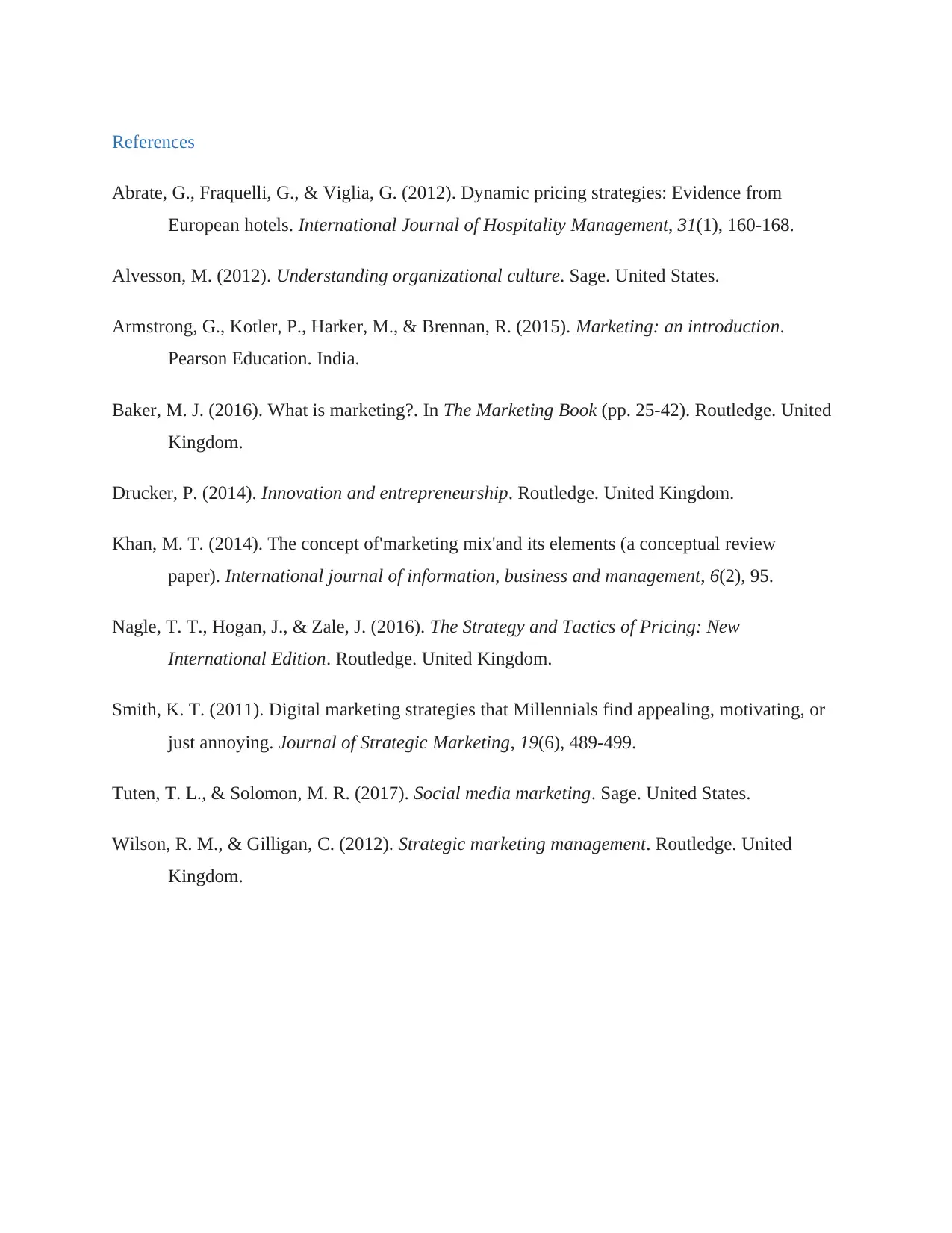
Abrate, G., Fraquelli, G., & Viglia, G. (2012). Dynamic pricing strategies: Evidence from
European hotels. International Journal of Hospitality Management, 31(1), 160-168.
Alvesson, M. (2012). Understanding organizational culture. Sage. United States.
Armstrong, G., Kotler, P., Harker, M., & Brennan, R. (2015). Marketing: an introduction.
Pearson Education. India.
Baker, M. J. (2016). What is marketing?. In The Marketing Book (pp. 25-42). Routledge. United
Kingdom.
Drucker, P. (2014). Innovation and entrepreneurship. Routledge. United Kingdom.
Khan, M. T. (2014). The concept of'marketing mix'and its elements (a conceptual review
paper). International journal of information, business and management, 6(2), 95.
Nagle, T. T., Hogan, J., & Zale, J. (2016). The Strategy and Tactics of Pricing: New
International Edition. Routledge. United Kingdom.
Smith, K. T. (2011). Digital marketing strategies that Millennials find appealing, motivating, or
just annoying. Journal of Strategic Marketing, 19(6), 489-499.
Tuten, T. L., & Solomon, M. R. (2017). Social media marketing. Sage. United States.
Wilson, R. M., & Gilligan, C. (2012). Strategic marketing management. Routledge. United
Kingdom.
Abrate, G., Fraquelli, G., & Viglia, G. (2012). Dynamic pricing strategies: Evidence from
European hotels. International Journal of Hospitality Management, 31(1), 160-168.
Alvesson, M. (2012). Understanding organizational culture. Sage. United States.
Armstrong, G., Kotler, P., Harker, M., & Brennan, R. (2015). Marketing: an introduction.
Pearson Education. India.
Baker, M. J. (2016). What is marketing?. In The Marketing Book (pp. 25-42). Routledge. United
Kingdom.
Drucker, P. (2014). Innovation and entrepreneurship. Routledge. United Kingdom.
Khan, M. T. (2014). The concept of'marketing mix'and its elements (a conceptual review
paper). International journal of information, business and management, 6(2), 95.
Nagle, T. T., Hogan, J., & Zale, J. (2016). The Strategy and Tactics of Pricing: New
International Edition. Routledge. United Kingdom.
Smith, K. T. (2011). Digital marketing strategies that Millennials find appealing, motivating, or
just annoying. Journal of Strategic Marketing, 19(6), 489-499.
Tuten, T. L., & Solomon, M. R. (2017). Social media marketing. Sage. United States.
Wilson, R. M., & Gilligan, C. (2012). Strategic marketing management. Routledge. United
Kingdom.
⊘ This is a preview!⊘
Do you want full access?
Subscribe today to unlock all pages.
Trusted by 1+ million students worldwide
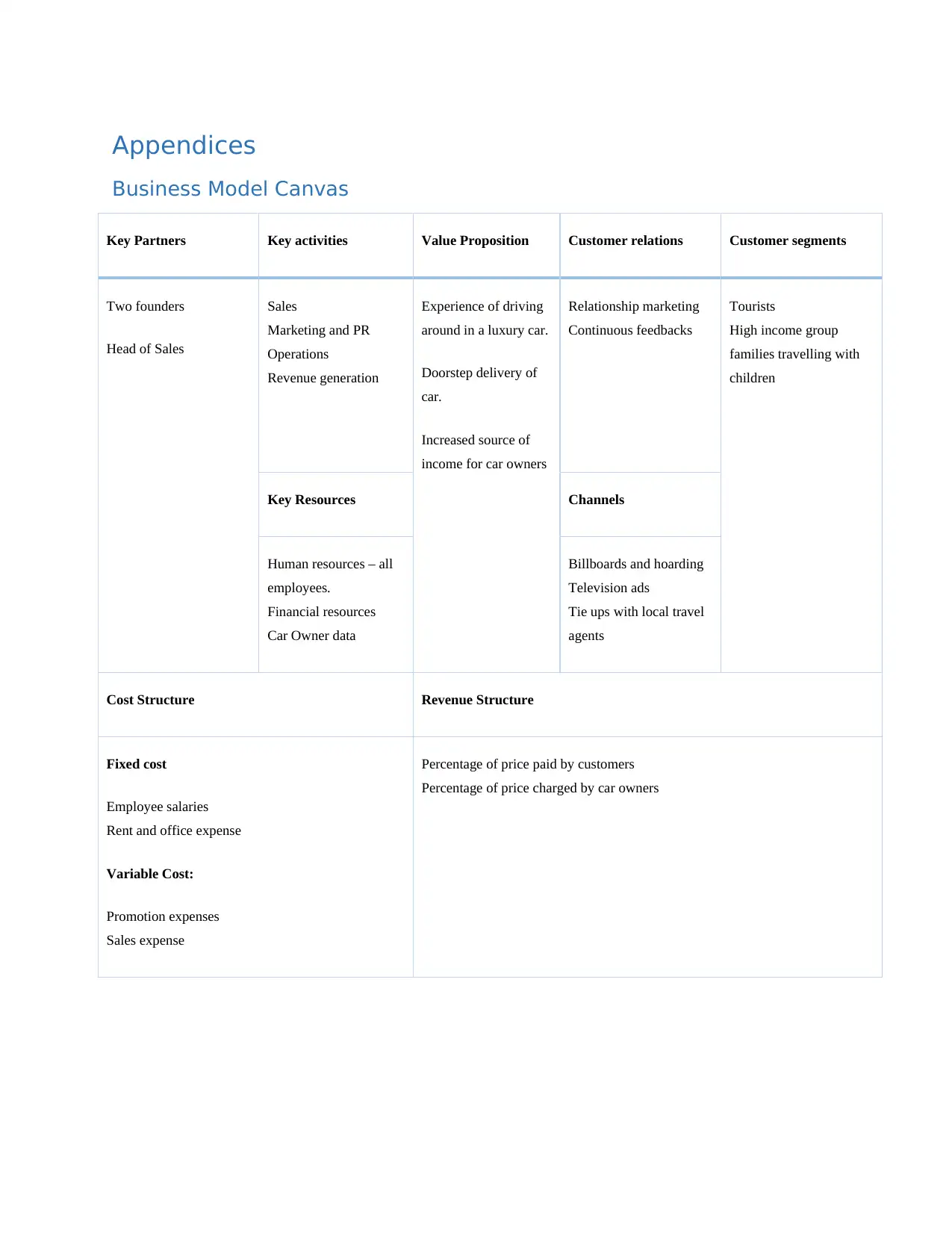
Appendices
Business Model Canvas
Key Partners Key activities Value Proposition Customer relations Customer segments
Two founders
Head of Sales
Sales
Marketing and PR
Operations
Revenue generation
Experience of driving
around in a luxury car.
Doorstep delivery of
car.
Increased source of
income for car owners
Relationship marketing
Continuous feedbacks
Tourists
High income group
families travelling with
children
Key Resources Channels
Human resources – all
employees.
Financial resources
Car Owner data
Billboards and hoarding
Television ads
Tie ups with local travel
agents
Cost Structure Revenue Structure
Fixed cost
Employee salaries
Rent and office expense
Variable Cost:
Promotion expenses
Sales expense
Percentage of price paid by customers
Percentage of price charged by car owners
Business Model Canvas
Key Partners Key activities Value Proposition Customer relations Customer segments
Two founders
Head of Sales
Sales
Marketing and PR
Operations
Revenue generation
Experience of driving
around in a luxury car.
Doorstep delivery of
car.
Increased source of
income for car owners
Relationship marketing
Continuous feedbacks
Tourists
High income group
families travelling with
children
Key Resources Channels
Human resources – all
employees.
Financial resources
Car Owner data
Billboards and hoarding
Television ads
Tie ups with local travel
agents
Cost Structure Revenue Structure
Fixed cost
Employee salaries
Rent and office expense
Variable Cost:
Promotion expenses
Sales expense
Percentage of price paid by customers
Percentage of price charged by car owners

1 out of 10


Related Documents


Your All-in-One AI-Powered Toolkit for Academic Success.
+13062052269
info@desklib.com
Available 24*7 on WhatsApp / Email
![[object Object]](/_next/static/media/star-bottom.7253800d.svg)
Unlock your academic potential
Copyright © 2020–2026 A2Z Services. All Rights Reserved. Developed and managed by ZUCOL.