Think Big: Tiny House Company Report - Feasibility Analysis
VerifiedAdded on 2023/01/04
|10
|2325
|47
Report
AI Summary
This report provides a comprehensive analysis of the Tiny House Company, focusing on its business model and feasibility within the Australian housing market. The report begins by addressing the global issue of overpopulation and the need for affordable housing, introducing the concept of tiny houses as a solution. It explores the company's business idea, emphasizing the benefits of affordable pricing, improved health, and easy mobility. The report then delves into the business model canvas, outlining key partners, activities, value propositions, customer relationships, segments, resources, channels, cost structures, and revenue streams. Critical success factors, such as product cost and transportation, are discussed, followed by an assessment of the service's feasibility. The conclusion highlights the potential of the Tiny House Company to address housing needs and establish a unique presence in the market. The report also includes references to relevant academic sources.
Running Head: THINK BIG
Tiny house company
Think big
Report
Student Name
[Pick the date]
Tiny house company
Think big
Report
Student Name
[Pick the date]

Paraphrase This Document
Need a fresh take? Get an instant paraphrase of this document with our AI Paraphraser
THINK BIG 1
Background
Overpopulation in the world has become one of the serious concerns on the global platform
and is actually generated problem-related to accommodation. It has been found that the
people are spending one-third of their lifetime income in building such houses which are not
in full use and they act as asset more than home (Finkler & Terkel, 2012). As per the study, it
has been found that an average person is able to live comfortably in the home of 500 sq.
Meter but still they are acquiring more land just for showoff. In fact, people are connecting
the size of the house with the symbol status of an individual. This has increased the cost of
the home and has made it out of the pocket of an average individual who is in great need of
his own home instead of living on rent.
Idea generation
Every average person is having a dream of purchasing their own house and are lot saving
third portion of their salary for this dream. To solve this issue for the average income
individual, a revolution in the form of tiny house has emerged. The concept behind this tiny
house emerged from the tree house where individuals use to spend their enjoyable time with
friends. Same concept is applied in the form of Tiny house in which family can spend their
life (Ford & Gomez‐Lanier, 2017). The main key point feature of this tiny house is its cost-
benefit along with its small space occupies capability. Because of these appealing features,
many organizations are work on this concept from almost three years, especially Tiny House
Company which is known for their excellent business service.
Business idea
Currently, need of house has not taken the shape of the dream house, in fact, it has become
an essential component of the average income family. In order to fulfill this need, Tiny
House Company has come up with a very unique idea of developing tiny house within
affordable price. In addition to this, this Tiny house product will help in utilizing less land as
compared to other big houses without compromising the comfort of the individuals (Bozorg
& Miller, 2014). These houses are given such a shape that it looks adorable with the help of
agronomic science. In addition to this, one of the most important factors which increase the
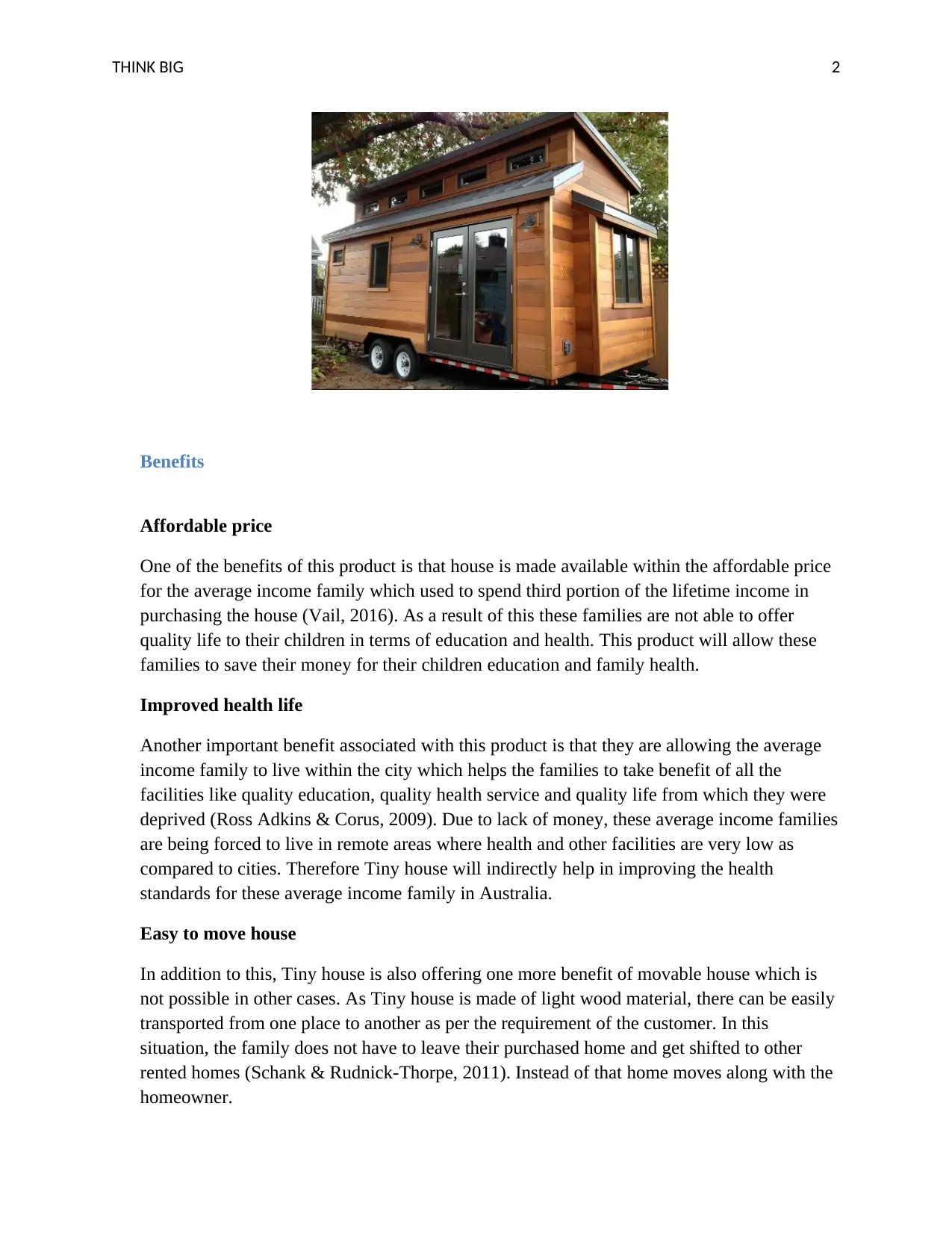
value of this product is their easy to move capability. These houses are made of light wood
material so they can be easily moved from one place to another as compared to other big
houses. In this product, every single corner of the house is designed according to their better
capability which offers cost optimization and makes this product affordable for the average
income family (Shearer & Burton, 2018). This product will help the average income family
to buy house within the city instead of going to remote area which actually deprived them of
a lot of facilities like quality education, health service and good environment.
Background
Overpopulation in the world has become one of the serious concerns on the global platform
and is actually generated problem-related to accommodation. It has been found that the
people are spending one-third of their lifetime income in building such houses which are not
in full use and they act as asset more than home (Finkler & Terkel, 2012). As per the study, it
has been found that an average person is able to live comfortably in the home of 500 sq.
Meter but still they are acquiring more land just for showoff. In fact, people are connecting
the size of the house with the symbol status of an individual. This has increased the cost of
the home and has made it out of the pocket of an average individual who is in great need of
his own home instead of living on rent.
Idea generation
Every average person is having a dream of purchasing their own house and are lot saving
third portion of their salary for this dream. To solve this issue for the average income
individual, a revolution in the form of tiny house has emerged. The concept behind this tiny
house emerged from the tree house where individuals use to spend their enjoyable time with
friends. Same concept is applied in the form of Tiny house in which family can spend their
life (Ford & Gomez‐Lanier, 2017). The main key point feature of this tiny house is its cost-
benefit along with its small space occupies capability. Because of these appealing features,
many organizations are work on this concept from almost three years, especially Tiny House
Company which is known for their excellent business service.
Business idea
Currently, need of house has not taken the shape of the dream house, in fact, it has become
an essential component of the average income family. In order to fulfill this need, Tiny
House Company has come up with a very unique idea of developing tiny house within
affordable price. In addition to this, this Tiny house product will help in utilizing less land as
compared to other big houses without compromising the comfort of the individuals (Bozorg
& Miller, 2014). These houses are given such a shape that it looks adorable with the help of
agronomic science. In addition to this, one of the most important factors which increase the
value of this product is their easy to move capability. These houses are made of light wood
material so they can be easily moved from one place to another as compared to other big
houses. In this product, every single corner of the house is designed according to their better
capability which offers cost optimization and makes this product affordable for the average
income family (Shearer & Burton, 2018). This product will help the average income family
to buy house within the city instead of going to remote area which actually deprived them of
a lot of facilities like quality education, health service and good environment.
THINK BIG 2
Benefits
Affordable price
One of the benefits of this product is that house is made available within the affordable price
for the average income family which used to spend third portion of the lifetime income in
purchasing the house (Vail, 2016). As a result of this these families are not able to offer
quality life to their children in terms of education and health. This product will allow these
families to save their money for their children education and family health.
Improved health life
Another important benefit associated with this product is that they are allowing the average
income family to live within the city which helps the families to take benefit of all the
facilities like quality education, quality health service and quality life from which they were
deprived (Ross Adkins & Corus, 2009). Due to lack of money, these average income families
are being forced to live in remote areas where health and other facilities are very low as
compared to cities. Therefore Tiny house will indirectly help in improving the health
standards for these average income family in Australia.
Easy to move house
In addition to this, Tiny house is also offering one more benefit of movable house which is
not possible in other cases. As Tiny house is made of light wood material, there can be easily
transported from one place to another as per the requirement of the customer. In this
situation, the family does not have to leave their purchased home and get shifted to other
rented homes (Schank & Rudnick-Thorpe, 2011). Instead of that home moves along with the
homeowner.
Benefits
Affordable price
One of the benefits of this product is that house is made available within the affordable price
for the average income family which used to spend third portion of the lifetime income in
purchasing the house (Vail, 2016). As a result of this these families are not able to offer
quality life to their children in terms of education and health. This product will allow these
families to save their money for their children education and family health.
Improved health life
Another important benefit associated with this product is that they are allowing the average
income family to live within the city which helps the families to take benefit of all the
facilities like quality education, quality health service and quality life from which they were
deprived (Ross Adkins & Corus, 2009). Due to lack of money, these average income families
are being forced to live in remote areas where health and other facilities are very low as
compared to cities. Therefore Tiny house will indirectly help in improving the health
standards for these average income family in Australia.
Easy to move house
In addition to this, Tiny house is also offering one more benefit of movable house which is
not possible in other cases. As Tiny house is made of light wood material, there can be easily
transported from one place to another as per the requirement of the customer. In this
situation, the family does not have to leave their purchased home and get shifted to other
rented homes (Schank & Rudnick-Thorpe, 2011). Instead of that home moves along with the
homeowner.
⊘ This is a preview!⊘
Do you want full access?
Subscribe today to unlock all pages.

Trusted by 1+ million students worldwide
THINK BIG 3
Model and components
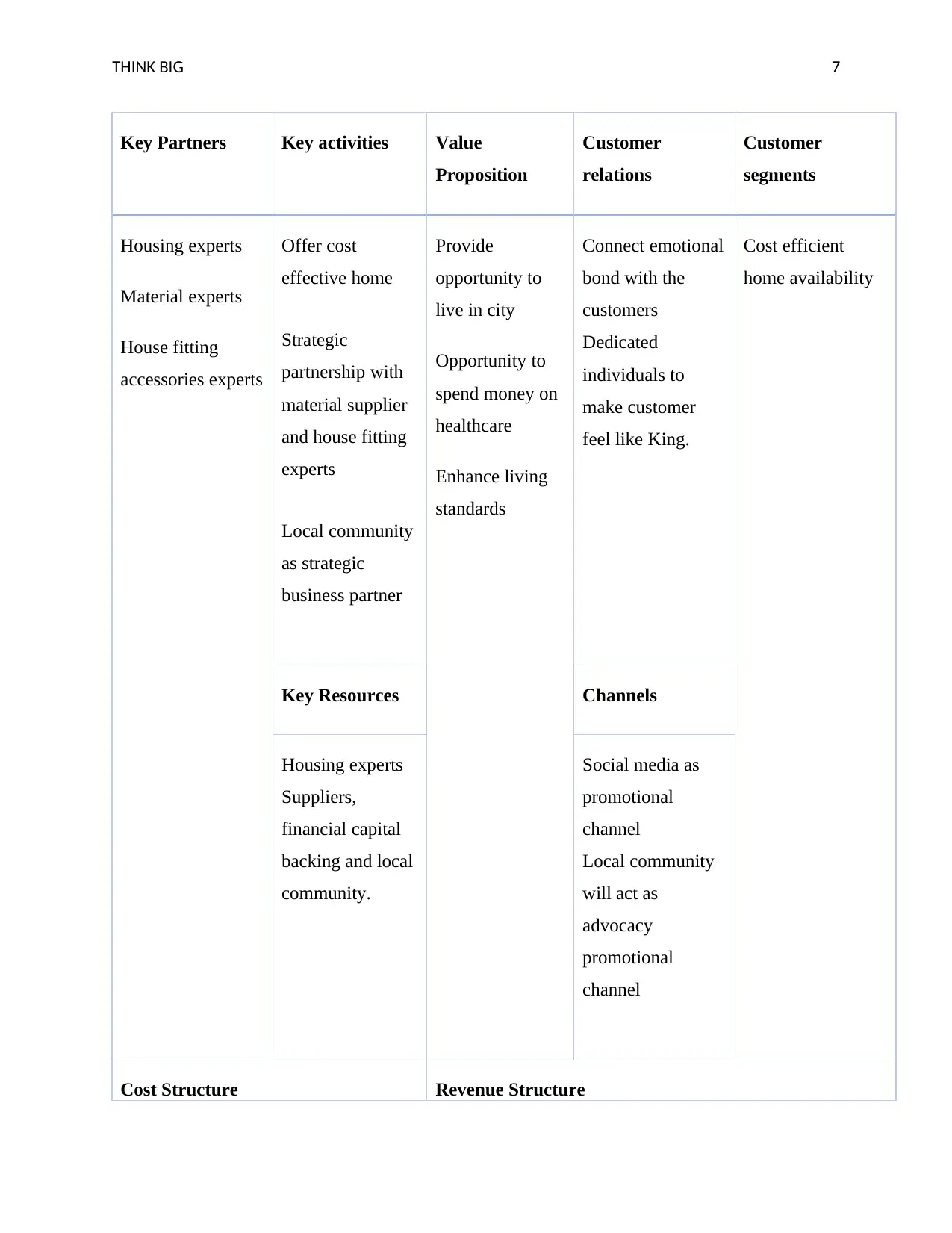
Business model canvas will be very helpful in understanding the role and responsibility of
every single aspect associated with the idea of Tiny house in terms of business operations.
Key partners
There will be three partners who are going to enhance this business. First key partner will the
supplier of the housing expert which will help in selecting the best suitable material for the
house. Second key partner will be material supplier group who are expert in supplying house
related materials (Karra, Phillips & Tracey, 2008). Third key partner will be the group which
is an expert in fitting all the housing accessories.
Key activities
Key activities of this service will be offering house which is cost effective and comes in the
range of average income family. In addition to this, a strategic business partnership with
material supplier and housing fitting experts in order to lower down the operating cost. Local
community will be involved in this service through a strategic partner in order to generate a
positive image in the market.
Value proportions
Life of the average income family can be improved by offering the opportunity to spend their
extra money on health care. This service will offer an opportunity to average income family
to live within the city (Chandra, Chambers & Salvati, 2012). This service will enhance the
living standard of the family in terms of education and health safety.
Customer relation
With the help of this service, the company will be able to connect an emotional bond with the
customer which will help the company in having a strong customer base in the business
market. Also, individuals associated with this service will treat customers as King in their
own world.
Customer segment
Availability of home within affordable price will act like the customer segment for this
service
Key resources
Model and components
Business model canvas will be very helpful in understanding the role and responsibility of
every single aspect associated with the idea of Tiny house in terms of business operations.
Key partners
There will be three partners who are going to enhance this business. First key partner will the
supplier of the housing expert which will help in selecting the best suitable material for the
house. Second key partner will be material supplier group who are expert in supplying house
related materials (Karra, Phillips & Tracey, 2008). Third key partner will be the group which
is an expert in fitting all the housing accessories.
Key activities
Key activities of this service will be offering house which is cost effective and comes in the
range of average income family. In addition to this, a strategic business partnership with
material supplier and housing fitting experts in order to lower down the operating cost. Local
community will be involved in this service through a strategic partner in order to generate a
positive image in the market.
Value proportions
Life of the average income family can be improved by offering the opportunity to spend their
extra money on health care. This service will offer an opportunity to average income family
to live within the city (Chandra, Chambers & Salvati, 2012). This service will enhance the
living standard of the family in terms of education and health safety.
Customer relation
With the help of this service, the company will be able to connect an emotional bond with the
customer which will help the company in having a strong customer base in the business
market. Also, individuals associated with this service will treat customers as King in their
own world.
Customer segment
Availability of home within affordable price will act like the customer segment for this
service
Key resources
Paraphrase This Document
Need a fresh take? Get an instant paraphrase of this document with our AI Paraphraser
THINK BIG 4
For this service, the key resource will be human capital, housing experts, suppliers, finance
capital backing and support from local community which will help in promoting this service
through advocacy marketing approach.
Channels
Social media will act as the promotional channel for this service in which all the social media
tool will be used in their full strength. In addition to this, local community will act as the
advocate for this service in Australian society (Kim & Ko, 2012).
Cost structure
For this service, the cost will be distributed in two patterns. One is fixed and other will be
variable. Fixed cost will include those prices which are directly linked with the service like
employee salary, material cost, and fitting cost and land purchase cost (Kilman, 2016).
Variable cost will include cost related to actives which are linked with the promotion of this
service.
Revenue structure
This service will generate revenue when customer will purchase the product which is Tiny
house. In addition to this, extra income will be generated when this customer will refer to this
service in their society.
Critical successful factors
Successful critical factor which is linked with this service is cost of the product. Another
critical factor linked with this service is easy transportation of the entire house from one
place to another.
Feasibility
This service is feasible because in a few years this Tiny house concept has shown growth in
the housing market. The appealing nature of these ideas has encouraged many companies to
work on this idea (Vail, 2016). In fact, there are many companies which have created their
unique in the housing business market in Australia. One of the best advantages of this service
is that it cannot be easily copied because existing companies cannot take risk related to their
profit margin. In addition to this, it has also emerged as a new styling trend in the Australian
environment. In this Tiny house act as a representation of enjoyment and personal space
features (Vyklyuk, Yevdokymenko & Yaskal, 2016). Also, this service will not occupy more
financial cost as compared to other housing patterns which are helpful in raising capital for
this service.
For this service, the key resource will be human capital, housing experts, suppliers, finance
capital backing and support from local community which will help in promoting this service
through advocacy marketing approach.
Channels
Social media will act as the promotional channel for this service in which all the social media
tool will be used in their full strength. In addition to this, local community will act as the
advocate for this service in Australian society (Kim & Ko, 2012).
Cost structure
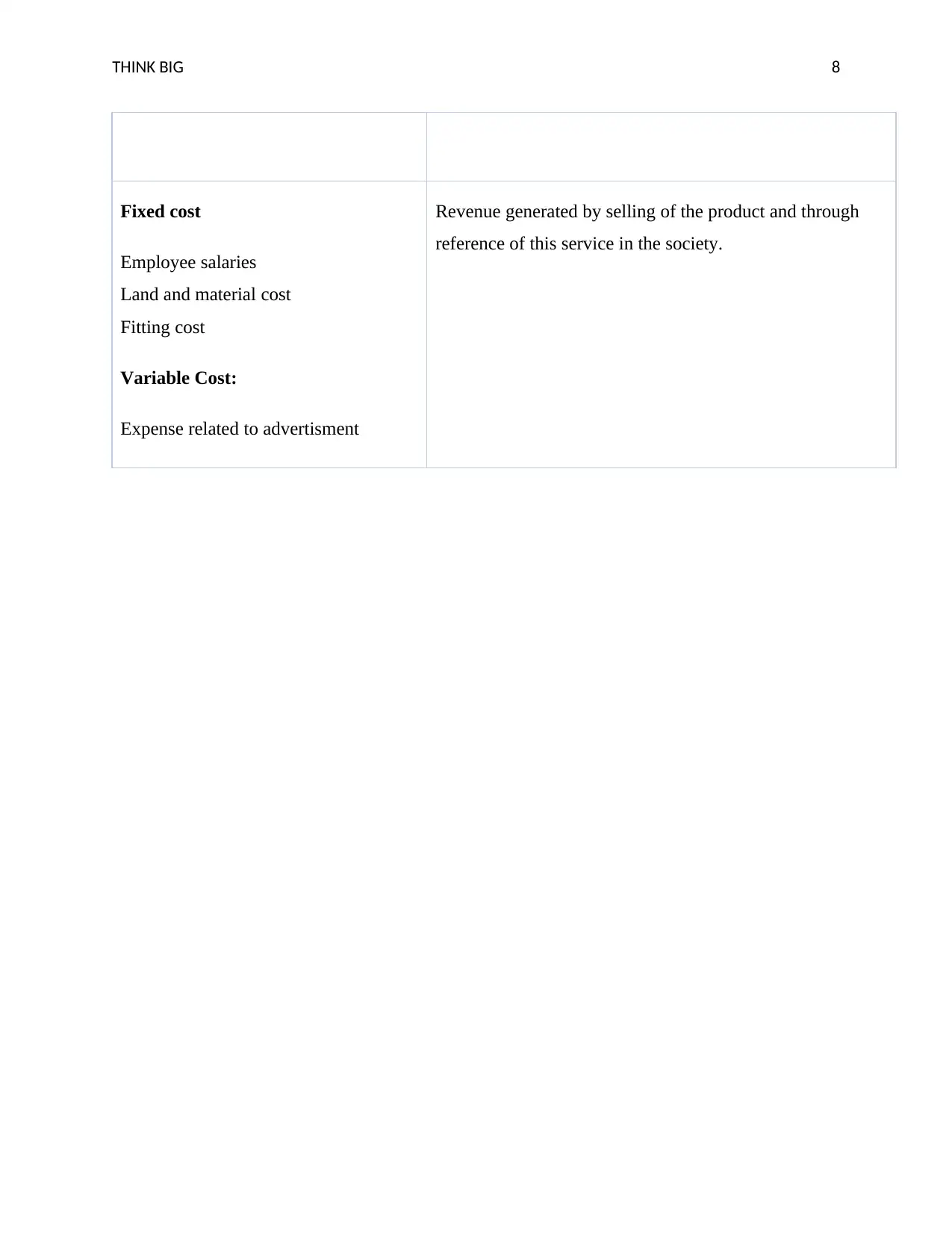
For this service, the cost will be distributed in two patterns. One is fixed and other will be
variable. Fixed cost will include those prices which are directly linked with the service like
employee salary, material cost, and fitting cost and land purchase cost (Kilman, 2016).
Variable cost will include cost related to actives which are linked with the promotion of this
service.
Revenue structure
This service will generate revenue when customer will purchase the product which is Tiny
house. In addition to this, extra income will be generated when this customer will refer to this
service in their society.
Critical successful factors
Successful critical factor which is linked with this service is cost of the product. Another
critical factor linked with this service is easy transportation of the entire house from one
place to another.
Feasibility
This service is feasible because in a few years this Tiny house concept has shown growth in
the housing market. The appealing nature of these ideas has encouraged many companies to
work on this idea (Vail, 2016). In fact, there are many companies which have created their
unique in the housing business market in Australia. One of the best advantages of this service
is that it cannot be easily copied because existing companies cannot take risk related to their
profit margin. In addition to this, it has also emerged as a new styling trend in the Australian
environment. In this Tiny house act as a representation of enjoyment and personal space
features (Vyklyuk, Yevdokymenko & Yaskal, 2016). Also, this service will not occupy more
financial cost as compared to other housing patterns which are helpful in raising capital for
this service.
THINK BIG 5
Conclusion
Due to overpopulation, the world is suffering from proper utilization of resources on the
global platform which has raised the issue related to decrease of resources like land, water
and so on. Presently, requirement of house has not occupied the form of dream house; in fact,
it has developed an essential module of the regular income family. In directive to accomplish
this requirement, Tiny House Company will emerge as one of the best company which is in
the service of Tiny house building. Tiny house company will create their unique image in the
community by offering house within the affordable price for the average income families in
Australia.
Conclusion
Due to overpopulation, the world is suffering from proper utilization of resources on the
global platform which has raised the issue related to decrease of resources like land, water
and so on. Presently, requirement of house has not occupied the form of dream house; in fact,
it has developed an essential module of the regular income family. In directive to accomplish
this requirement, Tiny House Company will emerge as one of the best company which is in
the service of Tiny house building. Tiny house company will create their unique image in the
community by offering house within the affordable price for the average income families in
Australia.
⊘ This is a preview!⊘
Do you want full access?
Subscribe today to unlock all pages.
Trusted by 1+ million students worldwide
THINK BIG 6
References
Bozorg, L., & Miller, A. (2014). Tiny Homes in the American City. Journal of Pedagogy,
Pluralism and Practice, 6(1).
Chandra, H., Chambers, R., & Salvati, N. (2012). Small area estimation of proportions in
business surveys. Journal of Statistical Computation and Simulation, 82(6), 783-795.
Finkler, H., & Terkel, J. (2012). The contribution of cat owners’ attitudes and behaviours to
the free-roaming cat overpopulation in Tel Aviv, Israel. Preventive Veterinary
Medicine, 104(1-2), 125-135.
Ford, J., & Gomez‐Lanier, L. (2017). Are tiny homes here to stay? A review of literature on
the tiny house movement. Family and Consumer Sciences Research Journal, 45(4), 394-
405.
Karra, N., Phillips, N., & Tracey, P. (2008). Building the born global firm: developing
entrepreneurial capabilities for international new venture success. Long Range
Planning, 41(4), 440-458.
Kim, A. J., & Ko, E. (2012). Do social media marketing activities enhance customer equity?
An empirical study of luxury fashion brand. Journal of Business research, 65(10), 1480-
1486.
Kilman, C. (2016). Small house, big impact: The effect of tiny houses on community and
environment. Small, 2, 45.
Ross Adkins., & Corus, C. (2009). Health literacy for improved health outcomes: effective
capital in the marketplace. Journal of Consumer Affairs, 43(2), 199-222.
Schank, J., & Rudnick-Thorpe, N. (2011). End of the highway trust fund? Long-term options
for funding federal surface transportation. Transportation Research Record, 2221(1), 1-9.
Shearer, H., & Burton, P. (2018). Towards a Typology of Tiny Houses. Housing, Theory and
Society, 1-21.
Vail, K. M. (2016). Saving the American Dream: The Legalization of the Tiny House
Movement. U. Louisville L. Rev., 54, 357.
Vyklyuk, Y. I., Yevdokymenko, V. K., & Yaskal, I. V. (2016). The proportions and rates of
economic activities as a factor of gross value added maximization in transition
economy. Scientific Annals of Economics and Business, 63(1), 47-64.
Business canvas model
References
Bozorg, L., & Miller, A. (2014). Tiny Homes in the American City. Journal of Pedagogy,
Pluralism and Practice, 6(1).
Chandra, H., Chambers, R., & Salvati, N. (2012). Small area estimation of proportions in
business surveys. Journal of Statistical Computation and Simulation, 82(6), 783-795.
Finkler, H., & Terkel, J. (2012). The contribution of cat owners’ attitudes and behaviours to
the free-roaming cat overpopulation in Tel Aviv, Israel. Preventive Veterinary
Medicine, 104(1-2), 125-135.
Ford, J., & Gomez‐Lanier, L. (2017). Are tiny homes here to stay? A review of literature on
the tiny house movement. Family and Consumer Sciences Research Journal, 45(4), 394-
405.
Karra, N., Phillips, N., & Tracey, P. (2008). Building the born global firm: developing
entrepreneurial capabilities for international new venture success. Long Range
Planning, 41(4), 440-458.
Kim, A. J., & Ko, E. (2012). Do social media marketing activities enhance customer equity?
An empirical study of luxury fashion brand. Journal of Business research, 65(10), 1480-
1486.
Kilman, C. (2016). Small house, big impact: The effect of tiny houses on community and
environment. Small, 2, 45.
Ross Adkins., & Corus, C. (2009). Health literacy for improved health outcomes: effective
capital in the marketplace. Journal of Consumer Affairs, 43(2), 199-222.
Schank, J., & Rudnick-Thorpe, N. (2011). End of the highway trust fund? Long-term options
for funding federal surface transportation. Transportation Research Record, 2221(1), 1-9.
Shearer, H., & Burton, P. (2018). Towards a Typology of Tiny Houses. Housing, Theory and
Society, 1-21.
Vail, K. M. (2016). Saving the American Dream: The Legalization of the Tiny House
Movement. U. Louisville L. Rev., 54, 357.
Vyklyuk, Y. I., Yevdokymenko, V. K., & Yaskal, I. V. (2016). The proportions and rates of
economic activities as a factor of gross value added maximization in transition
economy. Scientific Annals of Economics and Business, 63(1), 47-64.
Business canvas model
Paraphrase This Document
Need a fresh take? Get an instant paraphrase of this document with our AI Paraphraser
THINK BIG 7
Key Partners Key activities Value
Proposition
Customer
relations
Customer
segments
Housing experts
Material experts
House fitting
accessories experts
Offer cost
effective home
Strategic
partnership with
material supplier
and house fitting
experts
Local community
as strategic
business partner
Provide
opportunity to
live in city
Opportunity to
spend money on
healthcare
Enhance living
standards
Connect emotional
bond with the
customers
Dedicated
individuals to
make customer
feel like King.
Cost efficient
home availability
Key Resources Channels
Housing experts
Suppliers,
financial capital
backing and local
community.
Social media as
promotional
channel
Local community
will act as
advocacy
promotional
channel
Cost Structure Revenue Structure
Key Partners Key activities Value
Proposition
Customer
relations
Customer
segments
Housing experts
Material experts
House fitting
accessories experts
Offer cost
effective home
Strategic
partnership with
material supplier
and house fitting
experts
Local community
as strategic
business partner
Provide
opportunity to
live in city
Opportunity to
spend money on
healthcare
Enhance living
standards
Connect emotional
bond with the
customers
Dedicated
individuals to
make customer
feel like King.
Cost efficient
home availability
Key Resources Channels
Housing experts
Suppliers,
financial capital
backing and local
community.
Social media as
promotional
channel
Local community
will act as
advocacy
promotional
channel
Cost Structure Revenue Structure
THINK BIG 8
Fixed cost
Employee salaries
Land and material cost
Fitting cost
Variable Cost:
Expense related to advertisment
Revenue generated by selling of the product and through
reference of this service in the society.
Fixed cost
Employee salaries
Land and material cost
Fitting cost
Variable Cost:
Expense related to advertisment
Revenue generated by selling of the product and through
reference of this service in the society.
⊘ This is a preview!⊘
Do you want full access?
Subscribe today to unlock all pages.
Trusted by 1+ million students worldwide

THINK BIG 9

1 out of 10


Your All-in-One AI-Powered Toolkit for Academic Success.
+13062052269
info@desklib.com
Available 24*7 on WhatsApp / Email
![[object Object]](/_next/static/media/star-bottom.7253800d.svg)
Unlock your academic potential
Copyright © 2020–2026 A2Z Services. All Rights Reserved. Developed and managed by ZUCOL.