Project Management Methodologies: Latino Engineering Case
VerifiedAdded on 2020/03/16
|12
|3271
|87
Report
AI Summary
This report examines the case of Latino Engineering, a company facing quality issues and declining performance after a change in ownership. It proposes the implementation of Total Quality Management (TQM) as a solution, detailing its principles, dimensions, and benefits. The report emphasizes the importance of customer focus, employee empowerment, and continuous improvement. It also discusses the eight principles of TQM and suggests a recovery plan involving management commitment, fact-based decision-making, and process-driven approaches. The analysis includes techniques such as root cause analysis and the implementation of Standard Operating Procedures (SOPs) to identify and eliminate the sources of the company's problems. The report concludes that TQM, along with Six Sigma, can help Latino Engineering improve product quality, customer satisfaction, and overall business performance within a three-month timeframe.

PROJECT MANAGEMENT METHODOLOGIES
1 | P a g e
1 | P a g e

Paraphrase This Document
Need a fresh take? Get an instant paraphrase of this document with our AI Paraphraser
Introduction
The need for quality and employee safety is inherent necessity for any organisation. Errors are
caused by system failure and hence it is important to implement different types of process-
improvement approaches to understand inefficiencies plaguing the project and impacting on
system performances. Specific techniques aiming at identifying performance and improve
change or managing change is necessity in this case study on Latino Engineering. In this essay a
thorough discussion on different strategies as well as techniques and tools for quality
improvement have been discussed in detail (Richardson, 2010). The essay hence focuses on root
cause analysis to identify the reason behind such crisis and complaint on product quality which
further have been used to improve the quality and safety of the engineering firm. It has been
hence recommended here that considering quality management approach shall help in improving
product quality and overall business management in the next three months.
Body
After studying the respective case study on Latino Engineering it is evident that the company
performed impressively for several years. The company was enriched with about 300 employees
who worked jointly to offer finest quality products and clients were satisfied for past 30 years.
However, when the owner left the company and attracted fresh investment when he retired,
several employees left while the new investors managed to retain most of the workforce.
However, as the seniors left the organisation, the company’s performance deteriorated with time,
and soon within just 12 months’ time clients begun complaining about the product quality and on
defective engineering equipment. Several other issues cropped up, such as poor customer
management, application and use of wrong engineering equipment, wrong products delivered to
clients and so on. In short, the performance quality deteriorated immensely and client
dissatisfaction soared (Nair, 2011).
2 | P a g e
The need for quality and employee safety is inherent necessity for any organisation. Errors are
caused by system failure and hence it is important to implement different types of process-
improvement approaches to understand inefficiencies plaguing the project and impacting on
system performances. Specific techniques aiming at identifying performance and improve
change or managing change is necessity in this case study on Latino Engineering. In this essay a
thorough discussion on different strategies as well as techniques and tools for quality
improvement have been discussed in detail (Richardson, 2010). The essay hence focuses on root
cause analysis to identify the reason behind such crisis and complaint on product quality which
further have been used to improve the quality and safety of the engineering firm. It has been
hence recommended here that considering quality management approach shall help in improving
product quality and overall business management in the next three months.
Body
After studying the respective case study on Latino Engineering it is evident that the company
performed impressively for several years. The company was enriched with about 300 employees
who worked jointly to offer finest quality products and clients were satisfied for past 30 years.
However, when the owner left the company and attracted fresh investment when he retired,
several employees left while the new investors managed to retain most of the workforce.
However, as the seniors left the organisation, the company’s performance deteriorated with time,
and soon within just 12 months’ time clients begun complaining about the product quality and on
defective engineering equipment. Several other issues cropped up, such as poor customer
management, application and use of wrong engineering equipment, wrong products delivered to
clients and so on. In short, the performance quality deteriorated immensely and client
dissatisfaction soared (Nair, 2011).
2 | P a g e
In order to overcome the situation the following quality management approach has been
suggested for reviving the brand and reconnecting with clientele to enhance profitability and
sustainability in the respective market.
Implementation of quality management approaches not only helps in improving adaptability of
the business to the changes taking place within the business, such as the change in management,
here in Latino Engineering the shift in ownership from single proprietorship to investment
company has impacted on overall employee performance. Total Quality Management approach
has been selected for enhancing the company’s performance in the coming three months as TQM
is a process that aims at leading to achieve continuous improvement of performance of the
company while considering the expectations and meeting the need of stakeholders. Therefore in
order to sustain in the growing competition in the respective industry vertical the company
should produce quality products and satisfy the various needs of the clients and revive the brand
image by improving products and services (Oakland, 2014). TQM process helps in improving
the quality by offering a defined guideline for managing the quality of the product. It is a unique
system which comprise of key components like leadership, teamwork, scientific approach
towards solving the problem and also incorporation of effective techniques to meet the
expectations of the internal and external customer. The strategy is to adopt new management
system and enhance productivity, adapt to the changes taking place in the company and ensure
absolute client satisfaction.
TQM in theory and practice:
TQM is also an important tool that provides direction to an organisation towards improvement of
the product quality. The leadership helps in developing the plan and guiding the company
through various challenges it is facing. The Total Quality Management approach therefore helps
in streamlining and planning employee’s contribution in a systematic way to ensure growth,
sustenance and profitability. Hence, since most of the senior employees have left the company
Latino Engineering, the top managers who are functioning at the leading position should be
guided accordingly so that they successfully manage employees and ensure client satisfaction
through implementation of effective leadership skill (Brue, 2009). When top managers offer
adequate guidance the employees follow the instruction and meet the desired quality as expected
by the clients.
3 | P a g e
suggested for reviving the brand and reconnecting with clientele to enhance profitability and
sustainability in the respective market.
Implementation of quality management approaches not only helps in improving adaptability of
the business to the changes taking place within the business, such as the change in management,
here in Latino Engineering the shift in ownership from single proprietorship to investment
company has impacted on overall employee performance. Total Quality Management approach
has been selected for enhancing the company’s performance in the coming three months as TQM
is a process that aims at leading to achieve continuous improvement of performance of the
company while considering the expectations and meeting the need of stakeholders. Therefore in
order to sustain in the growing competition in the respective industry vertical the company
should produce quality products and satisfy the various needs of the clients and revive the brand
image by improving products and services (Oakland, 2014). TQM process helps in improving
the quality by offering a defined guideline for managing the quality of the product. It is a unique
system which comprise of key components like leadership, teamwork, scientific approach
towards solving the problem and also incorporation of effective techniques to meet the
expectations of the internal and external customer. The strategy is to adopt new management
system and enhance productivity, adapt to the changes taking place in the company and ensure
absolute client satisfaction.
TQM in theory and practice:
TQM is also an important tool that provides direction to an organisation towards improvement of
the product quality. The leadership helps in developing the plan and guiding the company
through various challenges it is facing. The Total Quality Management approach therefore helps
in streamlining and planning employee’s contribution in a systematic way to ensure growth,
sustenance and profitability. Hence, since most of the senior employees have left the company
Latino Engineering, the top managers who are functioning at the leading position should be
guided accordingly so that they successfully manage employees and ensure client satisfaction
through implementation of effective leadership skill (Brue, 2009). When top managers offer
adequate guidance the employees follow the instruction and meet the desired quality as expected
by the clients.
3 | P a g e
⊘ This is a preview!⊘
Do you want full access?
Subscribe today to unlock all pages.

Trusted by 1+ million students worldwide
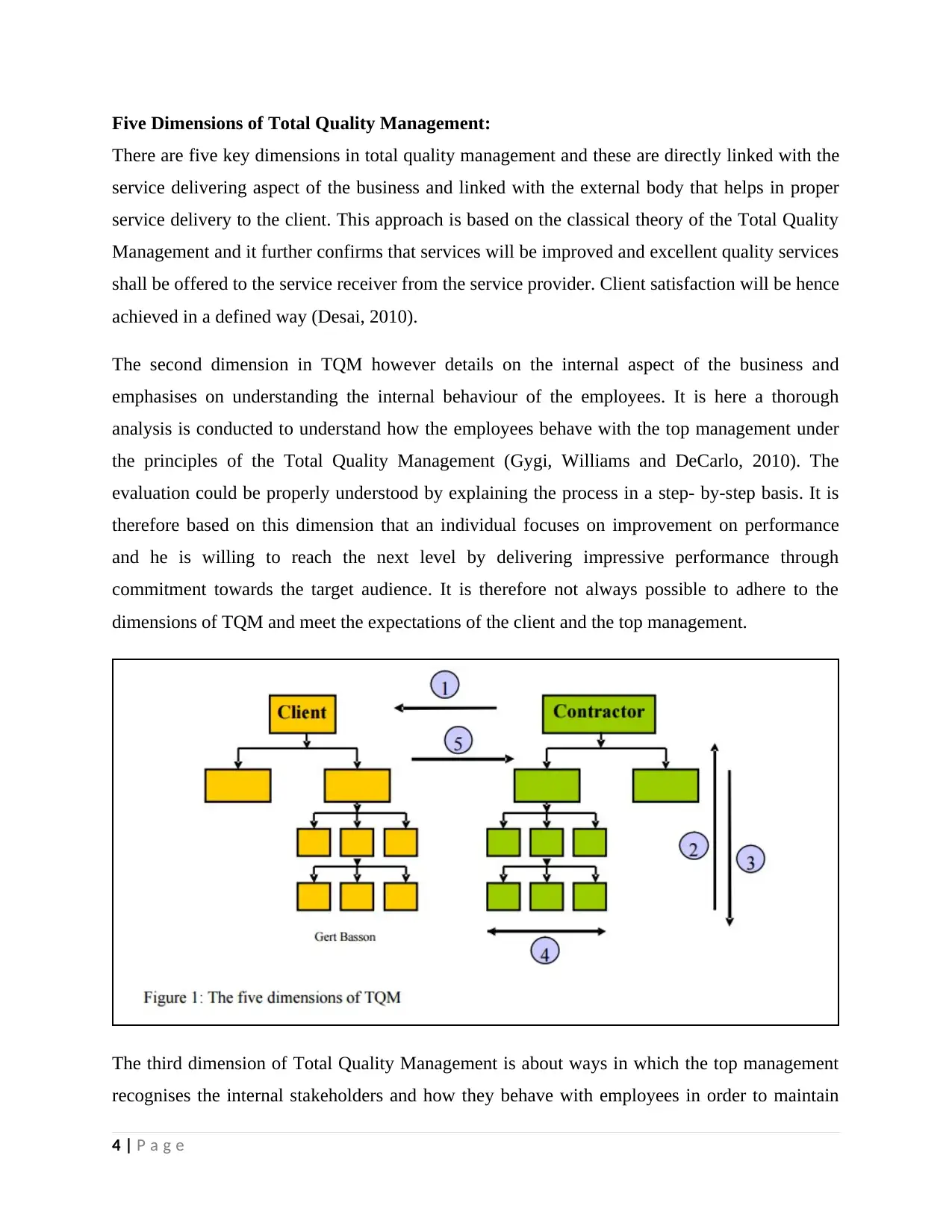
Five Dimensions of Total Quality Management:
There are five key dimensions in total quality management and these are directly linked with the
service delivering aspect of the business and linked with the external body that helps in proper
service delivery to the client. This approach is based on the classical theory of the Total Quality
Management and it further confirms that services will be improved and excellent quality services
shall be offered to the service receiver from the service provider. Client satisfaction will be hence
achieved in a defined way (Desai, 2010).
The second dimension in TQM however details on the internal aspect of the business and
emphasises on understanding the internal behaviour of the employees. It is here a thorough
analysis is conducted to understand how the employees behave with the top management under
the principles of the Total Quality Management (Gygi, Williams and DeCarlo, 2010). The
evaluation could be properly understood by explaining the process in a step- by-step basis. It is
therefore based on this dimension that an individual focuses on improvement on performance
and he is willing to reach the next level by delivering impressive performance through
commitment towards the target audience. It is therefore not always possible to adhere to the
dimensions of TQM and meet the expectations of the client and the top management.
The third dimension of Total Quality Management is about ways in which the top management
recognises the internal stakeholders and how they behave with employees in order to maintain
4 | P a g e
There are five key dimensions in total quality management and these are directly linked with the
service delivering aspect of the business and linked with the external body that helps in proper
service delivery to the client. This approach is based on the classical theory of the Total Quality
Management and it further confirms that services will be improved and excellent quality services
shall be offered to the service receiver from the service provider. Client satisfaction will be hence
achieved in a defined way (Desai, 2010).
The second dimension in TQM however details on the internal aspect of the business and
emphasises on understanding the internal behaviour of the employees. It is here a thorough
analysis is conducted to understand how the employees behave with the top management under
the principles of the Total Quality Management (Gygi, Williams and DeCarlo, 2010). The
evaluation could be properly understood by explaining the process in a step- by-step basis. It is
therefore based on this dimension that an individual focuses on improvement on performance
and he is willing to reach the next level by delivering impressive performance through
commitment towards the target audience. It is therefore not always possible to adhere to the
dimensions of TQM and meet the expectations of the client and the top management.
The third dimension of Total Quality Management is about ways in which the top management
recognises the internal stakeholders and how they behave with employees in order to maintain
4 | P a g e
Paraphrase This Document
Need a fresh take? Get an instant paraphrase of this document with our AI Paraphraser
absolute harmony. This dimension involves special features like employee training and
empowerment of the juniors (Shaffie and Shahbazi, 2012). It is here the various techniques of
employee management are mentioned in a distinct way. Such as ways of encouraging employees
and how to involve them in taking responsibility and improve their knowledge and skill set that
improves overall performance of the company. In this practice the entire team is expected to
participate and various activities like brainstorming and feedback helps in improving
performance through motivation. Effective implementation of the dimension also leads to
creation and development of a harmonious environment among employees and ensures seamless
delivery of services and maximum client satisfaction (Boaden, 2007).
In the fourth dimension of TQM the relationship between the members are discussed, for
instance it discusses the horizontal relationship among the employees and is often known as
parallel connection within staff or between two staff members of the company where the
principle of TQM could be applied for improvement (Kanji, 2014).
The fifth dimension however discusses about the relationship between the supplier and the entire
process of total quality management that has been decided for implementation through apt
collaboration of activities (Bisgaard, 2010).
In this particular situation on Latino Engineering implementation of the fifth dimension of TQM
demands special attention and also a formal system so that specific approaches could be
implemented. Five dimensions are important and should be implemented to ensure sustenance.
As far as the new plan for implementation of Total Quality management is concerned, the
implementation of specific dimension and adherence to nurturing apt horizontal relationship
within the particular organisation will aim at providing sustainable growth and earn high profit
and meet growth option by offering client satisfaction. Deployment of talented employees and
maintain consistency in offering quality services will help in reviving the brand image. Thus
since senior staffs members have left the company, it is essential to hire experienced and
productive task force in the management level so as to achieve adequate guidance in
performance management and improvement in overall performance (Prashar, 2014).
TQM has developed as a response from the successful companies to achieve rapid growth and
sustenance amidst changing environment. Over the years clients needs have changed drastically
5 | P a g e
empowerment of the juniors (Shaffie and Shahbazi, 2012). It is here the various techniques of
employee management are mentioned in a distinct way. Such as ways of encouraging employees
and how to involve them in taking responsibility and improve their knowledge and skill set that
improves overall performance of the company. In this practice the entire team is expected to
participate and various activities like brainstorming and feedback helps in improving
performance through motivation. Effective implementation of the dimension also leads to
creation and development of a harmonious environment among employees and ensures seamless
delivery of services and maximum client satisfaction (Boaden, 2007).
In the fourth dimension of TQM the relationship between the members are discussed, for
instance it discusses the horizontal relationship among the employees and is often known as
parallel connection within staff or between two staff members of the company where the
principle of TQM could be applied for improvement (Kanji, 2014).
The fifth dimension however discusses about the relationship between the supplier and the entire
process of total quality management that has been decided for implementation through apt
collaboration of activities (Bisgaard, 2010).
In this particular situation on Latino Engineering implementation of the fifth dimension of TQM
demands special attention and also a formal system so that specific approaches could be
implemented. Five dimensions are important and should be implemented to ensure sustenance.
As far as the new plan for implementation of Total Quality management is concerned, the
implementation of specific dimension and adherence to nurturing apt horizontal relationship
within the particular organisation will aim at providing sustainable growth and earn high profit
and meet growth option by offering client satisfaction. Deployment of talented employees and
maintain consistency in offering quality services will help in reviving the brand image. Thus
since senior staffs members have left the company, it is essential to hire experienced and
productive task force in the management level so as to achieve adequate guidance in
performance management and improvement in overall performance (Prashar, 2014).
TQM has developed as a response from the successful companies to achieve rapid growth and
sustenance amidst changing environment. Over the years clients needs have changed drastically
5 | P a g e
and it is difficult for companies to understand the exact nature of customer need or the reason
behind dissatisfaction as in the case of Latino Engineering. Thus to overcome the issue
implementation of TQM approaches are likely to bring benefits as it helps in identifying the key
requirements of the client that has impacted on overall performance of the brand. The systematic
development of approaches under the guidance of TQM thus helps in taking right decision and
ensures client satisfaction. According to (Garcia, 2009) Total Quality Management approaches
should be customer –oriented as it begins and ends with consumer and takes initiative to meet
customer expectation. The key aim of TQM lies in creating value for customers through
continuous improvement and quality advancement. Successful implementation of TQM in Latino
Engineering will not only improve product quality, but also emphasises on enhancing the quality
of services. Thus besides considering the five main dimensions of TQM, performance
measurement is also essential (Gitlow, 2008).
According to the TQM principles the company should implement TQM and improve quality of
the product and services in a defined way. It has been implemented in different sectors and has
helped in improving performance of the organisation which in a way helped in achieving long-
term success and customer satisfaction. According to Stevenson Total Quality in a business is a
unique philosophy that will help in involving stakeholders and ensure client satisfaction through
adequate quality (Lock, 2013).
There are eight principles of Total Quality Management, namely;
i. Customer focus
ii. Effective leadership
iii. Involving people
iv. Process driven approach
v. Continuous improvement
vi. Factual decision making
vii. Process driven approaches, and
viii. Encouraging supplier relationship
These principles jointly aim at ensuring quality of product and key responsibility is to ensure
absolute satisfaction. For instance Latino Engineering was known for quality product and
6 | P a g e
behind dissatisfaction as in the case of Latino Engineering. Thus to overcome the issue
implementation of TQM approaches are likely to bring benefits as it helps in identifying the key
requirements of the client that has impacted on overall performance of the brand. The systematic
development of approaches under the guidance of TQM thus helps in taking right decision and
ensures client satisfaction. According to (Garcia, 2009) Total Quality Management approaches
should be customer –oriented as it begins and ends with consumer and takes initiative to meet
customer expectation. The key aim of TQM lies in creating value for customers through
continuous improvement and quality advancement. Successful implementation of TQM in Latino
Engineering will not only improve product quality, but also emphasises on enhancing the quality
of services. Thus besides considering the five main dimensions of TQM, performance
measurement is also essential (Gitlow, 2008).
According to the TQM principles the company should implement TQM and improve quality of
the product and services in a defined way. It has been implemented in different sectors and has
helped in improving performance of the organisation which in a way helped in achieving long-
term success and customer satisfaction. According to Stevenson Total Quality in a business is a
unique philosophy that will help in involving stakeholders and ensure client satisfaction through
adequate quality (Lock, 2013).
There are eight principles of Total Quality Management, namely;
i. Customer focus
ii. Effective leadership
iii. Involving people
iv. Process driven approach
v. Continuous improvement
vi. Factual decision making
vii. Process driven approaches, and
viii. Encouraging supplier relationship
These principles jointly aim at ensuring quality of product and key responsibility is to ensure
absolute satisfaction. For instance Latino Engineering was known for quality product and
6 | P a g e
⊘ This is a preview!⊘
Do you want full access?
Subscribe today to unlock all pages.
Trusted by 1+ million students worldwide
customers were happy till the entrepreneur was running the business. However with change in
management the business experienced several threats and other problems. In the recovery plan it
may be mentioned that, every individual should function accordingly and share responsibility in
a defined way to ensure quality services. Thus after the change in the management structured
approaches should be considered in the managing process and also quality checking approaches
should be implemented at every stage (Kessler, 2011).
In order to implement TQM which is influenced by W.E Deming and later by the Toyota
Production System and Lean operations, in the principle of TQM that is to be implemented here
in the case of Latino Engineering:
Management commitment – plan, deploy, check and review and then implement and act to
achieve defined goals (Keller, 2011).
Employee empowerment- training, measurement and recognition and team excellence
Fact based decision making – SOE, TOPS, 7 statistical tools
Continuous improvement-excellence team, system measurement, improve standard
Customer Focus- partnership with stakeholders, no compromise on quality and customer driven
product
Implementation of recovery plan:
Continuous improvement by implementing TQM
Since TQM is concerned with continuous improvement in work it is essential to focus on overall
improvement to achieve desired result in next three months’ time. Improving overall process
needs improvement in capability of production and performance. Unless quality product has
been produced continuous improvement at various level is impossible (Kinicki and Williams,
2008). The central plan lies in primarily focusing on investing in technologies to improve overall
performance, operation and capability of individual. The root cause of sudden failure in business
could be hence identified by conducting internal audit at every level. System operation procedure
or SOP will be implemented to understand the root cause of such a crisis that has suddenly
7 | P a g e
management the business experienced several threats and other problems. In the recovery plan it
may be mentioned that, every individual should function accordingly and share responsibility in
a defined way to ensure quality services. Thus after the change in the management structured
approaches should be considered in the managing process and also quality checking approaches
should be implemented at every stage (Kessler, 2011).
In order to implement TQM which is influenced by W.E Deming and later by the Toyota
Production System and Lean operations, in the principle of TQM that is to be implemented here
in the case of Latino Engineering:
Management commitment – plan, deploy, check and review and then implement and act to
achieve defined goals (Keller, 2011).
Employee empowerment- training, measurement and recognition and team excellence
Fact based decision making – SOE, TOPS, 7 statistical tools
Continuous improvement-excellence team, system measurement, improve standard
Customer Focus- partnership with stakeholders, no compromise on quality and customer driven
product
Implementation of recovery plan:
Continuous improvement by implementing TQM
Since TQM is concerned with continuous improvement in work it is essential to focus on overall
improvement to achieve desired result in next three months’ time. Improving overall process
needs improvement in capability of production and performance. Unless quality product has
been produced continuous improvement at various level is impossible (Kinicki and Williams,
2008). The central plan lies in primarily focusing on investing in technologies to improve overall
performance, operation and capability of individual. The root cause of sudden failure in business
could be hence identified by conducting internal audit at every level. System operation procedure
or SOP will be implemented to understand the root cause of such a crisis that has suddenly
7 | P a g e
Paraphrase This Document
Need a fresh take? Get an instant paraphrase of this document with our AI Paraphraser
impacted on the business. Once the causes are identified they could be eliminated so that
repetition does nit takes place.
Process implementation:
As far as implementation of the TQM process in concerned people should understand and feel
the need for change within the existing system. In this part the leader enters with a motive and
aims at strategically intervene the situation and implements his new vision and other approaches
to improve quality of the services.
Identifying the need for change: primarily the Latino Engineering management and as a project
management consultant implementation of TQM and Six Sigma model is likely to help the
company overcome the problems in next three months’ time. Six Sigma is a set of selected tools
and chosen techniques that are implemented to improve overall quality of the project (Breyfogle,
2013). Six Sigma was introduced by Bill Smith and Mikel J Harry when they were working in
Motorola. Six Sigma aims at removing key reasons for damaging the product quality or defects
happening in products and also minimising problems in the production process so that quality
output or end products could be achieved and client satisfaction may be received (Peris-Ortiz,Á
lvarez-García and Rueda-Armengot, 2015). The Six Sigma model aims at taking specific steps
to value target audience, reduce overall processing time, decreases overall project cost, enhance
the level of customer satisfaction and also increase profit earning. This model identifies
problems in customer need and Six M’s such as machine, measurement, material, manpower,
method and Mother Nature are considered here to reduce existing problems in the system and
eliminate them to improve customer satisfaction which reduce overall expenditure of the product
development (Lock, 2013).
Following the DMAIC model will help in eliminating the crisis in a short period of time.
DMAIC Six Sigma model is a data driven application that is implemented to improve the
production process. This is an important approach in the Six Sigma initiative and could be
implemented for improvement and enhance the process performances.
8 | P a g e
repetition does nit takes place.
Process implementation:
As far as implementation of the TQM process in concerned people should understand and feel
the need for change within the existing system. In this part the leader enters with a motive and
aims at strategically intervene the situation and implements his new vision and other approaches
to improve quality of the services.
Identifying the need for change: primarily the Latino Engineering management and as a project
management consultant implementation of TQM and Six Sigma model is likely to help the
company overcome the problems in next three months’ time. Six Sigma is a set of selected tools
and chosen techniques that are implemented to improve overall quality of the project (Breyfogle,
2013). Six Sigma was introduced by Bill Smith and Mikel J Harry when they were working in
Motorola. Six Sigma aims at removing key reasons for damaging the product quality or defects
happening in products and also minimising problems in the production process so that quality
output or end products could be achieved and client satisfaction may be received (Peris-Ortiz,Á
lvarez-García and Rueda-Armengot, 2015). The Six Sigma model aims at taking specific steps
to value target audience, reduce overall processing time, decreases overall project cost, enhance
the level of customer satisfaction and also increase profit earning. This model identifies
problems in customer need and Six M’s such as machine, measurement, material, manpower,
method and Mother Nature are considered here to reduce existing problems in the system and
eliminate them to improve customer satisfaction which reduce overall expenditure of the product
development (Lock, 2013).
Following the DMAIC model will help in eliminating the crisis in a short period of time.
DMAIC Six Sigma model is a data driven application that is implemented to improve the
production process. This is an important approach in the Six Sigma initiative and could be
implemented for improvement and enhance the process performances.
8 | P a g e
DMAIC-
Define: defining the issue and identifying improvement opportunity and project goals to ensure
customer satisfaction.
Measure- measuring the performance of the process in a defined way (Garcia, 2009).
Analyse- explore the entire process to identify the root cause of the problem and what is leading
to poor performance
Improve – enhance the process performance by considering the key causes for problems and
finally eliminating those issues.
Control – improve the quality of the process and ensure improvement in future endeavours.
DMAIC model helps in improving project quality within a short while and ensures overall
quality improvement in a defined way (Nicoletti, 2013).
From the discussion of (Barry, Murcko and Brubaker, 2011) it has been studied that developed in
auto industry in Japan TQM today is implemented in different sectors to ensure continuous
quality improvement and reduce overall product development expenditure. Project management
is an art and should be managed in a significant manner. People and stakeholders are an integral
part of project management and demands involvement and adequate management within specific
budget and ensuring fulfilment of customer expectation. Projects however share similar needs
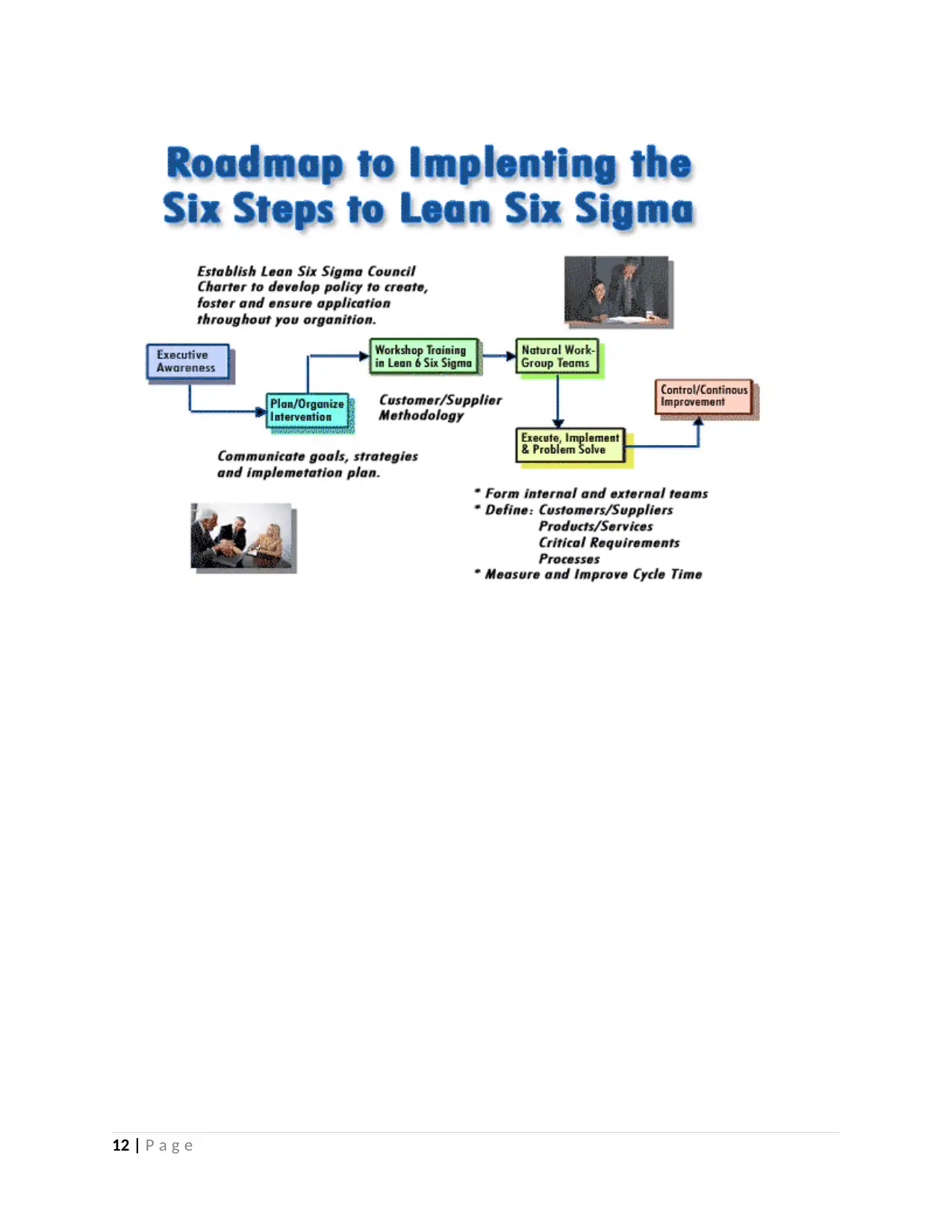
and key characteristics. The plan given in the appendix clearly highlights ways in which the
project will be managed and implemented to overcome the crisis in three months’ time period
(McCarty, 2013).
Conclusion
It could be hence inferred here that project management should be planned in a strategic way so
that the principles and rules are properly followed and goals are achieved. The crisis could be
easily overcome by implementing Total Quality Management Six Sigma and ensuring
continuous improvement in the process of overall performance in production and client
management. Adhering to the steps of Six Sigma will not only help in reconnecting with clients,
but will further ensure that the project cost reduces and the brand successfully reconnects with
9 | P a g e
Define: defining the issue and identifying improvement opportunity and project goals to ensure
customer satisfaction.
Measure- measuring the performance of the process in a defined way (Garcia, 2009).
Analyse- explore the entire process to identify the root cause of the problem and what is leading
to poor performance
Improve – enhance the process performance by considering the key causes for problems and
finally eliminating those issues.
Control – improve the quality of the process and ensure improvement in future endeavours.
DMAIC model helps in improving project quality within a short while and ensures overall
quality improvement in a defined way (Nicoletti, 2013).
From the discussion of (Barry, Murcko and Brubaker, 2011) it has been studied that developed in
auto industry in Japan TQM today is implemented in different sectors to ensure continuous
quality improvement and reduce overall product development expenditure. Project management
is an art and should be managed in a significant manner. People and stakeholders are an integral
part of project management and demands involvement and adequate management within specific
budget and ensuring fulfilment of customer expectation. Projects however share similar needs
and key characteristics. The plan given in the appendix clearly highlights ways in which the
project will be managed and implemented to overcome the crisis in three months’ time period
(McCarty, 2013).
Conclusion
It could be hence inferred here that project management should be planned in a strategic way so
that the principles and rules are properly followed and goals are achieved. The crisis could be
easily overcome by implementing Total Quality Management Six Sigma and ensuring
continuous improvement in the process of overall performance in production and client
management. Adhering to the steps of Six Sigma will not only help in reconnecting with clients,
but will further ensure that the project cost reduces and the brand successfully reconnects with
9 | P a g e
⊘ This is a preview!⊘
Do you want full access?
Subscribe today to unlock all pages.
Trusted by 1+ million students worldwide
the clients and revive the image in a defined way. Reconnecting with existing customers will
soon help in improving overall business and attract new customers for growth and prosperity.
Thus following the guideline will help in improving business in the coming trimester.
References
References
Barry, R., Murcko, A. and Brubaker, C. (2011). The six sigma book for healthcare. Chicago:
Health Administration Press.
Bisgaard, S. (2010). The role of scientific method in quality management. Total Quality
Management, 11(3), pp.295-306.
Boaden, R. (2007). Is total quality management really unique?. Total Quality Management, 7(5),
pp.553-570.
Breyfogle, F. (2013). Implementing six sigma. Hoboken, NJ: Wiley.
Brue, G. (2009). Six Sigma for managers.
Desai, D. (2010). Six sigma. Mumbai [India]: Himalaya Pub. House.
Garcia, D. (2009). Quality management. Chandni Chowk, Delhi [India]: Global Media.
Gitlow, H. (2008). Quality Management. Tata McGraw Hill Education Private Limited.
Gygi, C., Williams, B. and DeCarlo, N. (2010). Six sigma for dummies.
10 | P a g e
soon help in improving overall business and attract new customers for growth and prosperity.
Thus following the guideline will help in improving business in the coming trimester.
References
References
Barry, R., Murcko, A. and Brubaker, C. (2011). The six sigma book for healthcare. Chicago:
Health Administration Press.
Bisgaard, S. (2010). The role of scientific method in quality management. Total Quality
Management, 11(3), pp.295-306.
Boaden, R. (2007). Is total quality management really unique?. Total Quality Management, 7(5),
pp.553-570.
Breyfogle, F. (2013). Implementing six sigma. Hoboken, NJ: Wiley.
Brue, G. (2009). Six Sigma for managers.
Desai, D. (2010). Six sigma. Mumbai [India]: Himalaya Pub. House.
Garcia, D. (2009). Quality management. Chandni Chowk, Delhi [India]: Global Media.
Gitlow, H. (2008). Quality Management. Tata McGraw Hill Education Private Limited.
Gygi, C., Williams, B. and DeCarlo, N. (2010). Six sigma for dummies.
10 | P a g e
Paraphrase This Document
Need a fresh take? Get an instant paraphrase of this document with our AI Paraphraser
Kanji, G. (2014). Total quality management process. Madras, India: Productivity Press.
Keller, P. (2011). Six sigma demystified. New York: McGraw-Hill.
Kessler, E. (2011). Encyclopedia of management theory.
Kinicki, A. and Williams, B. (2008). Management. Boston, Mass. [u.a.]: McGraw-Hill Irwin.
Lock, D. (2013). Project management, 10th edition. Farnham, Surrey, England: Gower Pub.
McCarty, T. (2013). The Six Sigma black belt handbook. New York: McGraw-Hill.
Nair, S. (2011). Total quality management. New Delhi: Sonali Publications.
Nicoletti, B. (2013). Lean Six Sigma and digitize procurement. International Journal of Lean Six
Sigma, 4(2), pp.184-203.
Oakland, J. (2014). Total quality management and operational excellence. London: Routledge,
Taylor & Francis Group.
Peris-Ortiz, M., Á lvarez-García, J. and Rueda-Armengot, C. (2015). Achieving Competitive
Advantage through Quality Management. Cham: Springer International Publishing.
Prashar, A. (2014). Process improvement in farm equipment sector (FES): a case on Six Sigma
adoption. International Journal of Lean Six Sigma, 5(1), pp.62-88.
Richardson, T. (2010). Total quality management. Albany, N.Y.: Delmar Publishers.
Shaffie, S. and Shahbazi, S. (2012). Lean Six Sigma. New York: McGraw-Hill.
Appendix
Plan
11 | P a g e
Keller, P. (2011). Six sigma demystified. New York: McGraw-Hill.
Kessler, E. (2011). Encyclopedia of management theory.
Kinicki, A. and Williams, B. (2008). Management. Boston, Mass. [u.a.]: McGraw-Hill Irwin.
Lock, D. (2013). Project management, 10th edition. Farnham, Surrey, England: Gower Pub.
McCarty, T. (2013). The Six Sigma black belt handbook. New York: McGraw-Hill.
Nair, S. (2011). Total quality management. New Delhi: Sonali Publications.
Nicoletti, B. (2013). Lean Six Sigma and digitize procurement. International Journal of Lean Six
Sigma, 4(2), pp.184-203.
Oakland, J. (2014). Total quality management and operational excellence. London: Routledge,
Taylor & Francis Group.
Peris-Ortiz, M., Á lvarez-García, J. and Rueda-Armengot, C. (2015). Achieving Competitive
Advantage through Quality Management. Cham: Springer International Publishing.
Prashar, A. (2014). Process improvement in farm equipment sector (FES): a case on Six Sigma
adoption. International Journal of Lean Six Sigma, 5(1), pp.62-88.
Richardson, T. (2010). Total quality management. Albany, N.Y.: Delmar Publishers.
Shaffie, S. and Shahbazi, S. (2012). Lean Six Sigma. New York: McGraw-Hill.
Appendix
Plan
11 | P a g e
12 | P a g e
⊘ This is a preview!⊘
Do you want full access?
Subscribe today to unlock all pages.
Trusted by 1+ million students worldwide

1 out of 12


Related Documents


Your All-in-One AI-Powered Toolkit for Academic Success.
+13062052269
info@desklib.com
Available 24*7 on WhatsApp / Email
![[object Object]](/_next/static/media/star-bottom.7253800d.svg)
Unlock your academic potential
Copyright © 2020–2026 A2Z Services. All Rights Reserved. Developed and managed by ZUCOL.