Trade Facilitation Compliance: Stakeholders, IT Upgrade and Benefits
VerifiedAdded on 2020/10/22
|9
|2646
|433
Report
AI Summary
This report delves into the complexities of trade facilitation compliance, focusing on the harmonization, modernization, and simplification of import and export processes. It examines the Trade Facilitation Agreement and its provisions, including the release and clearance of goods, and cooperation among customs authorities. The report highlights the benefits of trade facilitation for businesses, governments, and consumers, emphasizing its role in economic development and attracting foreign investment. A significant portion of the report is dedicated to the design and improvement of IT systems for risk management and cargo clearance, with a focus on stakeholder analysis within IT software upgrade programs. Different types of stakeholders are identified and discussed, including end-users, project work teams, authorities, and IT personnel. The report also covers the importance of communication and engagement with stakeholders throughout the project lifecycle to ensure successful IT upgrades and overall project outcomes. The report concludes with a summary of the key findings, emphasizing the importance of standardization, harmonization, transparency, and simplification in trade facilitation, and the benefits derived from these principles.
Trade facilitation
compliance
compliance

Paraphrase This Document
Need a fresh take? Get an instant paraphrase of this document with our AI Paraphraser
INTRODUCTION...........................................................................................................................3
Main Body.......................................................................................................................................3
CONCLUSION................................................................................................................................8
REFERENCES................................................................................................................................9
Books and Journals.................................................................................................................9
Main Body.......................................................................................................................................3
CONCLUSION................................................................................................................................8
REFERENCES................................................................................................................................9
Books and Journals.................................................................................................................9
INTRODUCTION
Trade facilitation is burden that is mainly imposed on moving goods across the borders. It is
the harmonisation, modernization and simplification of import and export processes (Neufeld, N.
(2014). Trade facilitation agreement was forced on 22nd February 2017 this agreement contains
various provisions such as, release and clearance of goods, expecting the movement within it and
goods in transistor. In addition with this it also set measures for an effective cooperation among
customers and other related authorities. Along with this it contains a provision which is related to
capacity building in this area and technical assistant. Trade facilitation mainly looks at the
manner in which procedures and controls governs the formatting movements of goods across the
borders and further can be improved in order to reduce cost burden associated with it in order to
maximize efficiency. In this present report, international airport is looking forward to design and
improve their IT system in order to improve risk management and clear cargo in a short span of
time. Thus report includes further discussions on key stakeholders. In addition with this report
covers unfair advantages that large organisation take of flexibility in compliance.
Main Body
Trade facilitation, mainly refers to a specific set in which various measure and policies are
included in relation to technical and legal aspects of products entering and leaving any national
border which is further to be traded internationally. These benefits business organisations by
allowing them easy access to production inputs from other countries further it allows
participation in the Global value chain. It can be said that nations in which products can be
imported and exported in an easy and quick manner are most attractive locations that attract
foreign funds to invest in them. Further it benefits customers by providing them high quality
products with lower prices and greater array of goods. Along with this trade facilitation on the
Trade facilitation is burden that is mainly imposed on moving goods across the borders. It is
the harmonisation, modernization and simplification of import and export processes (Neufeld, N.
(2014). Trade facilitation agreement was forced on 22nd February 2017 this agreement contains
various provisions such as, release and clearance of goods, expecting the movement within it and
goods in transistor. In addition with this it also set measures for an effective cooperation among
customers and other related authorities. Along with this it contains a provision which is related to
capacity building in this area and technical assistant. Trade facilitation mainly looks at the
manner in which procedures and controls governs the formatting movements of goods across the
borders and further can be improved in order to reduce cost burden associated with it in order to
maximize efficiency. In this present report, international airport is looking forward to design and
improve their IT system in order to improve risk management and clear cargo in a short span of
time. Thus report includes further discussions on key stakeholders. In addition with this report
covers unfair advantages that large organisation take of flexibility in compliance.
Main Body
Trade facilitation, mainly refers to a specific set in which various measure and policies are
included in relation to technical and legal aspects of products entering and leaving any national
border which is further to be traded internationally. These benefits business organisations by
allowing them easy access to production inputs from other countries further it allows
participation in the Global value chain. It can be said that nations in which products can be
imported and exported in an easy and quick manner are most attractive locations that attract
foreign funds to invest in them. Further it benefits customers by providing them high quality
products with lower prices and greater array of goods. Along with this trade facilitation on the
⊘ This is a preview!⊘
Do you want full access?
Subscribe today to unlock all pages.

Trusted by 1+ million students worldwide
other hand also benefit small unit organisations to participate in trade and take full benefits of
New Market openings. Therefore trade facilitation effectively acts as one of the most important
factor in order to increase international trade efficiency and for the benefits in economic
development of countries (Grainger, A. (2016). It can be said that major goal of trade facilitation
is help in making trade across border more predictable faster and cheaper along with ensuring
safety and security. This Facilitation benefits both business community and government
organisation as public entities get profit through trade tax collection and business entities can
take use of resources.
There are different types of stakeholders that include, the project manager partners, project
team, performing organisation, client and any individual who get affected by the project outputs
mentioned below there are key stakeholders in internal external and in between.
Within internal the stakeholders are project team members in which those individuals are
included who perform the work. Along with this project management team also part of internal
stakeholders in whom those members are included who are directly involved in the project but
can influence course of a project. In the section of in between stakeholders are customers in
which those person and organisations are included who are going to use the result of the project.
Along with this sponsors are also included in which a group or a person those who provide
financial resources are included.
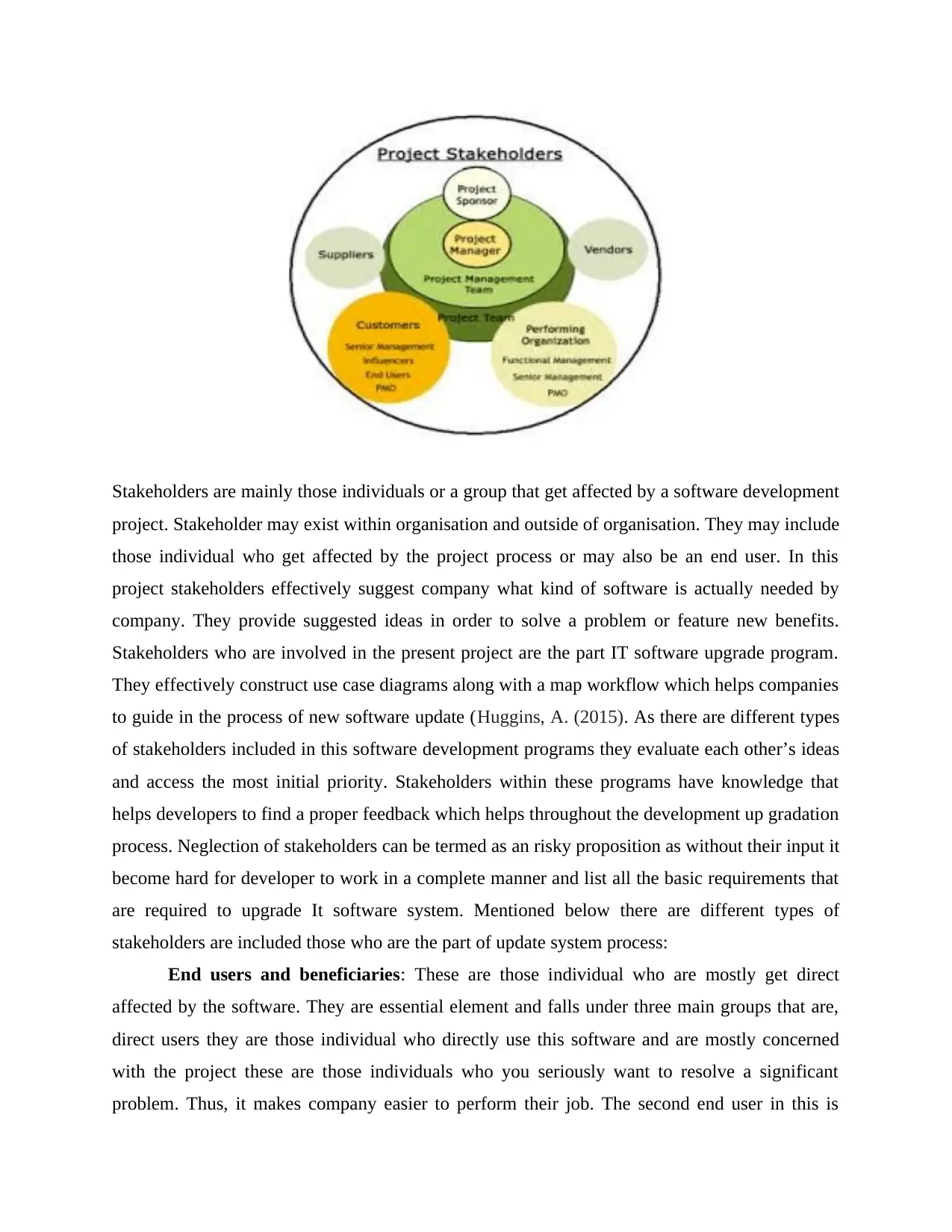
In this case study software development Framework are developed which is mainly in the
form of shared visions of a company and is made to achieve goals. Software development
Framework is a structure which includes specification which is made to reduce the impacts of
certainties while ensuring high quality of the project (Pauwelyn, J. (2014). Up gradation is done
to resolve some measures such as cost quality risk and time. Mentioned below there is a
diagrammatical framework provided that include basic stakeholders:
New Market openings. Therefore trade facilitation effectively acts as one of the most important
factor in order to increase international trade efficiency and for the benefits in economic
development of countries (Grainger, A. (2016). It can be said that major goal of trade facilitation
is help in making trade across border more predictable faster and cheaper along with ensuring
safety and security. This Facilitation benefits both business community and government
organisation as public entities get profit through trade tax collection and business entities can
take use of resources.
There are different types of stakeholders that include, the project manager partners, project
team, performing organisation, client and any individual who get affected by the project outputs
mentioned below there are key stakeholders in internal external and in between.
Within internal the stakeholders are project team members in which those individuals are
included who perform the work. Along with this project management team also part of internal
stakeholders in whom those members are included who are directly involved in the project but
can influence course of a project. In the section of in between stakeholders are customers in
which those person and organisations are included who are going to use the result of the project.
Along with this sponsors are also included in which a group or a person those who provide
financial resources are included.
In this case study software development Framework are developed which is mainly in the
form of shared visions of a company and is made to achieve goals. Software development
Framework is a structure which includes specification which is made to reduce the impacts of
certainties while ensuring high quality of the project (Pauwelyn, J. (2014). Up gradation is done
to resolve some measures such as cost quality risk and time. Mentioned below there is a
diagrammatical framework provided that include basic stakeholders:
Paraphrase This Document
Need a fresh take? Get an instant paraphrase of this document with our AI Paraphraser
Stakeholders are mainly those individuals or a group that get affected by a software development
project. Stakeholder may exist within organisation and outside of organisation. They may include
those individual who get affected by the project process or may also be an end user. In this
project stakeholders effectively suggest company what kind of software is actually needed by
company. They provide suggested ideas in order to solve a problem or feature new benefits.
Stakeholders who are involved in the present project are the part IT software upgrade program.
They effectively construct use case diagrams along with a map workflow which helps companies
to guide in the process of new software update (Huggins, A. (2015). As there are different types
of stakeholders included in this software development programs they evaluate each other’s ideas
and access the most initial priority. Stakeholders within these programs have knowledge that
helps developers to find a proper feedback which helps throughout the development up gradation
process. Neglection of stakeholders can be termed as an risky proposition as without their input it
become hard for developer to work in a complete manner and list all the basic requirements that
are required to upgrade It software system. Mentioned below there are different types of
stakeholders are included those who are the part of update system process:
End users and beneficiaries: These are those individual who are mostly get direct
affected by the software. They are essential element and falls under three main groups that are,
direct users they are those individual who directly use this software and are mostly concerned
with the project these are those individuals who you seriously want to resolve a significant
problem. Thus, it makes company easier to perform their job. The second end user in this is
project. Stakeholder may exist within organisation and outside of organisation. They may include
those individual who get affected by the project process or may also be an end user. In this
project stakeholders effectively suggest company what kind of software is actually needed by
company. They provide suggested ideas in order to solve a problem or feature new benefits.
Stakeholders who are involved in the present project are the part IT software upgrade program.
They effectively construct use case diagrams along with a map workflow which helps companies
to guide in the process of new software update (Huggins, A. (2015). As there are different types
of stakeholders included in this software development programs they evaluate each other’s ideas
and access the most initial priority. Stakeholders within these programs have knowledge that
helps developers to find a proper feedback which helps throughout the development up gradation
process. Neglection of stakeholders can be termed as an risky proposition as without their input it
become hard for developer to work in a complete manner and list all the basic requirements that
are required to upgrade It software system. Mentioned below there are different types of
stakeholders are included those who are the part of update system process:
End users and beneficiaries: These are those individual who are mostly get direct
affected by the software. They are essential element and falls under three main groups that are,
direct users they are those individual who directly use this software and are mostly concerned
with the project these are those individuals who you seriously want to resolve a significant
problem. Thus, it makes company easier to perform their job. The second end user in this is
secondary users they are those individuals who really rely upon the product of the software. On
the other hand the last end user in this section are beneficiaries these are those individuals who
are mainly affected by software product in this huge customer base and vendors are included
who put their main focus on research rather than on a process.
Project Work Team: In this individuals are included those who provide a voice of
reason for keeping project in a manageable scope. Their main task is to analyse a way with the
help of which most of the elements listed can be fulfilled in order to meet business course within
time and a perfect budget target. Each and every member within project team have their separate
focus in this chain project manager are included those have focus to effectively shape the
development process. Their main target is to keep a proper track on all of the elements in order
to maximize efficiency. They are the stakeholders whose primary interest is to create a best
quality and solid product that can leave clients happy. In this the other stakeholders are
developers. They are those individuals who build software that are mainly based on feedbacks
that have been taken from other stakeholders (Moisé, E., & Sorescu, S. (2015). They also act as
stakeholders in their own way. Developers are those individuals who hold technological
expertise and provide executive advices that help to build and improve a project for a program.
In addition with this other stakeholders in project are partners. They are the outside groups and
are involved with actual development process they maybe the owner of third party tool who put
their main focus to ensure the compatibility in the system. Lastly within the project will team,
managers and company liaisons are include who are those stakeholders who you have
responsibility to make final decisions relating to, timeline scope and budget. They are the only
individuals who have authority to add time and cut features.
Authorities: In this those individuals are included who are not directly involved in the
project but holds a major authority in some way. Individual included in this sections are
regulatory and legal bodies company owners and shareholders. They mainly don’t have day to
day interactions. In addition with this in the system of IT upgrade internal stakeholders are also
included who are employees Board members executive and shareholders. Their main focus is to
solve business problems and optimise the process measurable benefits and increase sales. Along
with this external stakeholders include, surrounding communities, customers, legal officials and
regulatory bodies their main focus is to gain most of the benefits from the project without
holding risk.
the other hand the last end user in this section are beneficiaries these are those individuals who
are mainly affected by software product in this huge customer base and vendors are included
who put their main focus on research rather than on a process.
Project Work Team: In this individuals are included those who provide a voice of
reason for keeping project in a manageable scope. Their main task is to analyse a way with the
help of which most of the elements listed can be fulfilled in order to meet business course within
time and a perfect budget target. Each and every member within project team have their separate
focus in this chain project manager are included those have focus to effectively shape the
development process. Their main target is to keep a proper track on all of the elements in order
to maximize efficiency. They are the stakeholders whose primary interest is to create a best
quality and solid product that can leave clients happy. In this the other stakeholders are
developers. They are those individuals who build software that are mainly based on feedbacks
that have been taken from other stakeholders (Moisé, E., & Sorescu, S. (2015). They also act as
stakeholders in their own way. Developers are those individuals who hold technological
expertise and provide executive advices that help to build and improve a project for a program.
In addition with this other stakeholders in project are partners. They are the outside groups and
are involved with actual development process they maybe the owner of third party tool who put
their main focus to ensure the compatibility in the system. Lastly within the project will team,
managers and company liaisons are include who are those stakeholders who you have
responsibility to make final decisions relating to, timeline scope and budget. They are the only
individuals who have authority to add time and cut features.
Authorities: In this those individuals are included who are not directly involved in the
project but holds a major authority in some way. Individual included in this sections are
regulatory and legal bodies company owners and shareholders. They mainly don’t have day to
day interactions. In addition with this in the system of IT upgrade internal stakeholders are also
included who are employees Board members executive and shareholders. Their main focus is to
solve business problems and optimise the process measurable benefits and increase sales. Along
with this external stakeholders include, surrounding communities, customers, legal officials and
regulatory bodies their main focus is to gain most of the benefits from the project without
holding risk.
⊘ This is a preview!⊘
Do you want full access?
Subscribe today to unlock all pages.
Trusted by 1+ million students worldwide
IT or application help desk leadership and personals: They are the key stakeholders
who are engaged in the process of planning and testing with the help of which potential changes
within up gradation programs can easily understand.
Server administrator: These are those personals that are engage in the process of
performing most of the major upgrade task. It is essential to have at least a single server
administration within upgrade team because they perform the function of running setup Wizard
which is require to effectively upgrade an IT software.
Server security team: They are the most essential stakeholders which is required by a
company to co-ordinate they are active directory domain services team which perform the
function to verify permission and account. They also perform a task in which taking advantage of
new policy setting are done.
In order to effectively lead an up gradation program it is important to effectively
communicate with the stakeholders (Hoekman, B. (2015). This can be done by measuring some
elements that include, before the trial upgrade it is essential for company to craft plan early in
which they can take assistant of stakeholders and creates of foundation. Further with the help of
collaboration and engagement they can seek and receive information’s and feedback from
stakeholders. Along with this company can also involve stakeholders throughout the project that
will helps in creating project milestones. In order to effectively communicate with stakeholders it
is the basic responsibility of project management to create and build a project communication. In
addition with this day to day formulation of live messages with the stakeholder’s interest it is
required to construct. Regular meeting with stakeholders are required to be conducted. Along
with this keeping them engage in the overall development process is required to done in order to
get a disciplinary results. Lastly, it is important for a company to make sure that stakeholders are
up-to-date and engage in each of the phases of a project in order to get success within the project
development.
who are engaged in the process of planning and testing with the help of which potential changes
within up gradation programs can easily understand.
Server administrator: These are those personals that are engage in the process of
performing most of the major upgrade task. It is essential to have at least a single server
administration within upgrade team because they perform the function of running setup Wizard
which is require to effectively upgrade an IT software.
Server security team: They are the most essential stakeholders which is required by a
company to co-ordinate they are active directory domain services team which perform the
function to verify permission and account. They also perform a task in which taking advantage of
new policy setting are done.
In order to effectively lead an up gradation program it is important to effectively
communicate with the stakeholders (Hoekman, B. (2015). This can be done by measuring some
elements that include, before the trial upgrade it is essential for company to craft plan early in
which they can take assistant of stakeholders and creates of foundation. Further with the help of
collaboration and engagement they can seek and receive information’s and feedback from
stakeholders. Along with this company can also involve stakeholders throughout the project that
will helps in creating project milestones. In order to effectively communicate with stakeholders it
is the basic responsibility of project management to create and build a project communication. In
addition with this day to day formulation of live messages with the stakeholder’s interest it is
required to construct. Regular meeting with stakeholders are required to be conducted. Along
with this keeping them engage in the overall development process is required to done in order to
get a disciplinary results. Lastly, it is important for a company to make sure that stakeholders are
up-to-date and engage in each of the phases of a project in order to get success within the project
development.
Paraphrase This Document
Need a fresh take? Get an instant paraphrase of this document with our AI Paraphraser
CONCLUSION
As per the above mentioned report it has been concluded, that trade specifications is a
compliance that has been forced on moving of goods across the borders. For the traders there are
four fundamental principles of trade facilitation that are standardization, harmonisation,
transparency and simplification. Within these principles there are formative principles of various
standards and practices that promote Government openness and accountability. Thus it can be
said that trade facilitation is mainly a Legal procedure that covers overall spectrum of broader
procedures within which various factors are included such as, electronic exchange of data
relating to a shipment harmonization and simplification related to trade documents. Along with
this administrative decisions made by border agencies are also included. These trade facilitation
not only benefits government but it also aid business and customers by allowing them to have
greater utilisation of resources across the world and having low prices high quality products
simultaneously. In test report formative judgements are made on unfair advantages due to less
compliance that has been taken by large traders. Along with stakeholders for IT upgrade, there
can be different type of stakeholders for it upgrade and designing IT software.
As per the above mentioned report it has been concluded, that trade specifications is a
compliance that has been forced on moving of goods across the borders. For the traders there are
four fundamental principles of trade facilitation that are standardization, harmonisation,
transparency and simplification. Within these principles there are formative principles of various
standards and practices that promote Government openness and accountability. Thus it can be
said that trade facilitation is mainly a Legal procedure that covers overall spectrum of broader
procedures within which various factors are included such as, electronic exchange of data
relating to a shipment harmonization and simplification related to trade documents. Along with
this administrative decisions made by border agencies are also included. These trade facilitation
not only benefits government but it also aid business and customers by allowing them to have
greater utilisation of resources across the world and having low prices high quality products
simultaneously. In test report formative judgements are made on unfair advantages due to less
compliance that has been taken by large traders. Along with stakeholders for IT upgrade, there
can be different type of stakeholders for it upgrade and designing IT software.
REFERENCES
Books and Journals
Neufeld, N. (2014). Trade facilitation provisions in regional trade agreements: Traits and trends.
Journal of International Commerce, Economics and Policy. 5(02), 1450005.
Grainger, A. (2016). Trade facilitation. In The Ashgate Research Companion to International
Trade Policy (pp. 153-168). Routledge.
Adaba, G. B., & Rusu, L. (2014). E‐trade facilitation in Ghana: A capability approach
perspective. The Electronic Journal of Information Systems in Developing Countries.
63(1), 1-13.
Turnes, P. B., & Ernst, R. (2015). A framework for transparency in international trade.
Investigaciones Europeas de Dirección y Economía de la Empresa. 21(1), 1-8.
Moisé, E., & Sorescu, S. (2015). Contribution of trade facilitation measures to the operation of
supply chains.
Oberthür, S. (2014). Options for a compliance mechanism in a 2015 climate agreement. Climate
Law. 4(1-2), 30-49.
Prorokowski, L. (2015). MiFID II compliance–are we ready?. Journal of Financial Regulation
and Compliance. 23(2), 196-206.
Golub, S. (2015). 10. Informal cross-border trade and smuggling in Africa. Handbook on Trade
and Development. 179.
Cottier, T. (2015). The common law of international trade and the future of the World Trade
Organization.
Pauwelyn, J. (2014). Rule-Based Trade 2.0? The Rise of Informal Rules and International
Standards and How They May Outcompete WTO Treaties. Journal of International
Economic Law. 17(4), 739-751.
Bodansky, D. M., Hoedl, S. A., Metcalf, G. E., & Stavins, R. N. (2016). Facilitating linkage of
climate policies through the Paris outcome. Climate Policy. 16(8), 956-972.
Hoekman, B. (2015). Trade agreements and international regulatory cooperation in a supply
chain world. Robert Schuman Centre for Advanced Studies Research Paper No. RSCAS.
4.
Huggins, A. (2015). The desirability of depoliticization: compliance in the international climate
regime. Transnational Environmental Law. 4(1), 101-124.
Mogilevskii, R., & Kamiljon, A. (2014). Trade in agricultural and food products in Central Asia.
Trebilcock, M. (2015). Between theories of trade and development: the future of the world
trading system. The Journal of World Investment & Trade. 16(1), 122-140.
Schnepf, R. (2014). Agriculture in the WTO Bali ministerial agreement. Washington, DC:
Congressional Research Service.
Burri, M. (2017). The governance of data and data flows in trade agreements: the pitfalls of legal
adaptation. UCDL Rev.. 51, 65.
Online
Options for a compliance mechanism in a 2015 climate agreement. Climate Law. 2015. [Online].
Available through:
<https://www.researchgate.net/publication/268151105_Sebastian_Oberthur_Options_fo
r_a_Compliance_Mechanism_in_a_2015_Climate_Agreement_Climate_Law_4_1-
2_2014_30-49>.
Books and Journals
Neufeld, N. (2014). Trade facilitation provisions in regional trade agreements: Traits and trends.
Journal of International Commerce, Economics and Policy. 5(02), 1450005.
Grainger, A. (2016). Trade facilitation. In The Ashgate Research Companion to International
Trade Policy (pp. 153-168). Routledge.
Adaba, G. B., & Rusu, L. (2014). E‐trade facilitation in Ghana: A capability approach
perspective. The Electronic Journal of Information Systems in Developing Countries.
63(1), 1-13.
Turnes, P. B., & Ernst, R. (2015). A framework for transparency in international trade.
Investigaciones Europeas de Dirección y Economía de la Empresa. 21(1), 1-8.
Moisé, E., & Sorescu, S. (2015). Contribution of trade facilitation measures to the operation of
supply chains.
Oberthür, S. (2014). Options for a compliance mechanism in a 2015 climate agreement. Climate
Law. 4(1-2), 30-49.
Prorokowski, L. (2015). MiFID II compliance–are we ready?. Journal of Financial Regulation
and Compliance. 23(2), 196-206.
Golub, S. (2015). 10. Informal cross-border trade and smuggling in Africa. Handbook on Trade
and Development. 179.
Cottier, T. (2015). The common law of international trade and the future of the World Trade
Organization.
Pauwelyn, J. (2014). Rule-Based Trade 2.0? The Rise of Informal Rules and International
Standards and How They May Outcompete WTO Treaties. Journal of International
Economic Law. 17(4), 739-751.
Bodansky, D. M., Hoedl, S. A., Metcalf, G. E., & Stavins, R. N. (2016). Facilitating linkage of
climate policies through the Paris outcome. Climate Policy. 16(8), 956-972.
Hoekman, B. (2015). Trade agreements and international regulatory cooperation in a supply
chain world. Robert Schuman Centre for Advanced Studies Research Paper No. RSCAS.
4.
Huggins, A. (2015). The desirability of depoliticization: compliance in the international climate
regime. Transnational Environmental Law. 4(1), 101-124.
Mogilevskii, R., & Kamiljon, A. (2014). Trade in agricultural and food products in Central Asia.
Trebilcock, M. (2015). Between theories of trade and development: the future of the world
trading system. The Journal of World Investment & Trade. 16(1), 122-140.
Schnepf, R. (2014). Agriculture in the WTO Bali ministerial agreement. Washington, DC:
Congressional Research Service.
Burri, M. (2017). The governance of data and data flows in trade agreements: the pitfalls of legal
adaptation. UCDL Rev.. 51, 65.
Online
Options for a compliance mechanism in a 2015 climate agreement. Climate Law. 2015. [Online].
Available through:
<https://www.researchgate.net/publication/268151105_Sebastian_Oberthur_Options_fo
r_a_Compliance_Mechanism_in_a_2015_Climate_Agreement_Climate_Law_4_1-
2_2014_30-49>.
⊘ This is a preview!⊘
Do you want full access?
Subscribe today to unlock all pages.
Trusted by 1+ million students worldwide

1 out of 9


Related Documents


Your All-in-One AI-Powered Toolkit for Academic Success.
+13062052269
info@desklib.com
Available 24*7 on WhatsApp / Email
![[object Object]](/_next/static/media/star-bottom.7253800d.svg)
Unlock your academic potential
Copyright © 2020–2026 A2Z Services. All Rights Reserved. Developed and managed by ZUCOL.