International Trade Theory and Practice: New Zealand's Trade

Verified

Added on  2022/08/29

|8
|1358
|28
Report
AI Summary
This report delves into international trade theory, examining its impact on New Zealand's economy. It explores the concepts of absolute and comparative advantage, crucial for understanding a country's long-run profitability. The report analyzes New Zealand's export trends, highlighting key sectors like dairy, and discusses the country's import patterns. It uses data from 2010 to 2019 to illustrate the fluctuations in exports and imports, assessing how these factors influence trade balance and overall economic growth. The analysis concludes that while New Zealand possesses comparative advantages in certain areas, the balance between exports and imports is critical for sustaining long-term economic success and profit generation. The report emphasizes the importance of understanding trade theories to devise effective strategies for economic development.
Document Page
Running head: INTERNATIONAL TRADE THEORY NAD PRACTISE
INTERNATIONAL TRADE THEORY AND PRACTISE
Name of Student:
Name of University:
Author Note:
tabler-icon-diamond-filled.svg

Paraphrase This Document

Need a fresh take? Get an instant paraphrase of this document with our AI Paraphraser
Document Page
1INTERNATIONAL TRADE THEORY AND PRACTISE
Table of Contents
Introduction......................................................................................................................................2
Discussion........................................................................................................................................2
Conclusion.......................................................................................................................................6
Reference List..................................................................................................................................8
Document Page
2INTERNATIONAL TRADE THEORY AND PRACTISE
Introduction
The growth of an economy is dependent on various economic factors relating to
international trade, commerce, market, capitalization and long run profits. The expansion of
services and services in foreign countries leads to a long run growth. Countries perform better
when they retain larger profit levels. Therefore, it is important to analyze the factors that helps a
country to generate huge amounts of profits. This is done with respect to various trade theories
that gives an effective understanding of international markets. In order to undergo international
trade, it is crucial to understand about the range of goods and services that should be traded
(Neary, 2016). It is important to analyze factors relating that helps a country to make long run
profits with respect to a specific country. The country that is chosen for analysis is New Zealand.
The aim of the paper is to analyze factors that enables long run profits for New Zealand by
understanding relevant trade theories.
Discussion
According to international trade theory, the wealth of a country is dependent on the
availability of various resources. Trade theory is related to the exchange of goods and services
across economies which is related to effective trade and development strategies. It is profitable
when the value of export exceeds the value of imports. This is because if inflow is more than
outflow, then it means that demand for the country’s good have gone down. This lowers the
profit margin as goods are being imported (Işik, Kasımatı, & Ongan, 2017). Countries must trade
those products and services in which they have a comparative advantage as per the economic
theories. This enables the country to produce goods and services at low cost by the usage of cost
effective technologies and labor incentive approaches.
Document Page
3INTERNATIONAL TRADE THEORY AND PRACTISE
A country has absolute advantage in the production of goods and services when larger
amount of goods are produced with fewer inputs. Thus, goods are produced at low cost and can
be sold at low process which raise the demand for the good in the international market.
International trade will take place only if one country can produce goods at an extremely low
absolute cost than the other country. Comparative advantage is gained by a country when the
country is able to produce goods at a lower opportunity cost then its trading partner (Leining &
Kerr, 2016). Opportunity cost is the cost of next best alternative and is used as the most effective
measures for trade-off. Comparative advantage allows the countries to produce goods at a cost
lower than the rival firms and gather huge profits.
Countries generate huge profits in the long run by identifying products in which it has an
absolute and comparative advantage in production. This is because consumers will prefer the
good at the lowest goods. Therefore, sale of good at low price increases the demand for the
product in the international market. This leads to a rise in export earnings which retains profits
because exports is more than imports. Trade makes easy exchange of goods, services and
generates revenues that helps to develop a comparative advantage. As a result, countries retain
profits in the long-run.
tabler-icon-diamond-filled.svg

Paraphrase This Document

Need a fresh take? Get an instant paraphrase of this document with our AI Paraphraser
Document Page
4INTERNATIONAL TRADE THEORY AND PRACTISE
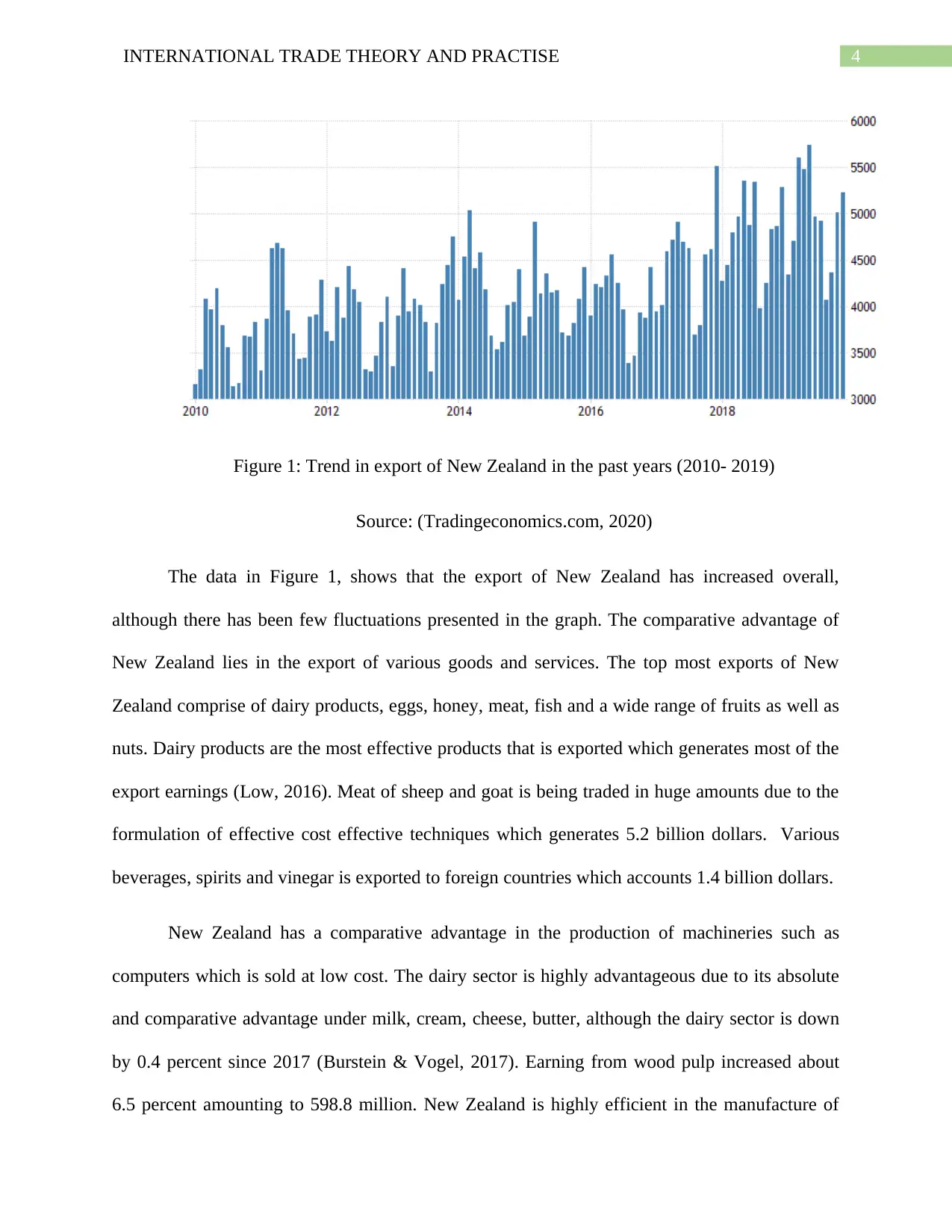
Figure 1: Trend in export of New Zealand in the past years (2010- 2019)
Source: (Tradingeconomics.com, 2020)
The data in Figure 1, shows that the export of New Zealand has increased overall,
although there has been few fluctuations presented in the graph. The comparative advantage of
New Zealand lies in the export of various goods and services. The top most exports of New
Zealand comprise of dairy products, eggs, honey, meat, fish and a wide range of fruits as well as
nuts. Dairy products are the most effective products that is exported which generates most of the
export earnings (Low, 2016). Meat of sheep and goat is being traded in huge amounts due to the
formulation of effective cost effective techniques which generates 5.2 billion dollars. Various
beverages, spirits and vinegar is exported to foreign countries which accounts 1.4 billion dollars.
New Zealand has a comparative advantage in the production of machineries such as
computers which is sold at low cost. The dairy sector is highly advantageous due to its absolute
and comparative advantage under milk, cream, cheese, butter, although the dairy sector is down
by 0.4 percent since 2017 (Burstein & Vogel, 2017). Earning from wood pulp increased about
6.5 percent amounting to 598.8 million. New Zealand is highly efficient in the manufacture of
Document Page
5INTERNATIONAL TRADE THEORY AND PRACTISE
aluminum which provides 2.7 billion dollars. More than half of New Zealand’s good is being
exported to Asian countries who has a high demand. It shipped about 1.5 percent of the goods to
North America.
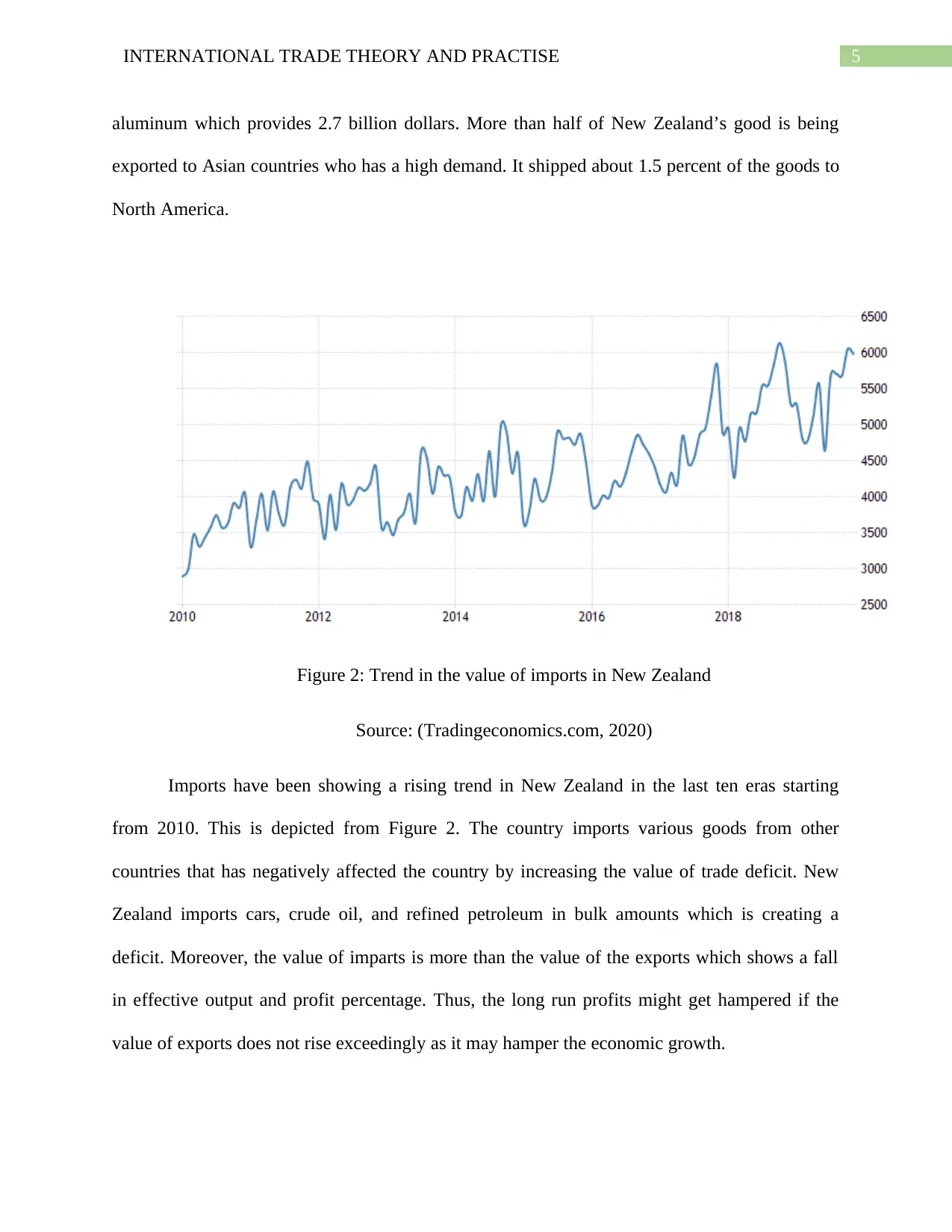
Figure 2: Trend in the value of imports in New Zealand
Source: (Tradingeconomics.com, 2020)
Imports have been showing a rising trend in New Zealand in the last ten eras starting
from 2010. This is depicted from Figure 2. The country imports various goods from other
countries that has negatively affected the country by increasing the value of trade deficit. New
Zealand imports cars, crude oil, and refined petroleum in bulk amounts which is creating a
deficit. Moreover, the value of imparts is more than the value of the exports which shows a fall
in effective output and profit percentage. Thus, the long run profits might get hampered if the
value of exports does not rise exceedingly as it may hamper the economic growth.
Document Page
6INTERNATIONAL TRADE THEORY AND PRACTISE
Conclusion
Therefore, it can be concluded that internal trade is used as an efficient parameter to
understand the long run profits of a country. Any country deals in the export of those goods in
which they have an absolute and comparative advantage. New Zealand has an absolute
advantage in the production of various goods and services, which have increased the value of
exports. The dairy sector serves as the most efficient sector that has high comparative advantage.
However recently, the dairy sector has faced many challenges which has lowered the value of
export earnings. Moreover, goods New Zealand imports goods in huge amounts which can
significantly hamper the long run profit.
tabler-icon-diamond-filled.svg

Paraphrase This Document

Need a fresh take? Get an instant paraphrase of this document with our AI Paraphraser
Document Page
7INTERNATIONAL TRADE THEORY AND PRACTISE
Reference List
Burstein, A., & Vogel, J. (2017). International trade, technology, and the skill premium. Journal
of Political Economy, 125(5), 1356-1412.
Işik, C., Kasımatı, E., & Ongan, S. (2017). Analyzing the causalities between economic growth,
financial development, international trade, tourism expenditure and/on the CO2
emissions in Greece. Energy Sources, Part B: Economics, Planning, and Policy, 12(7),
665-673.
Leining, C., & Kerr, S. (2016). Lessons learned from the New Zealand emissions trading
scheme (No. 16_06).
Low, P. (2016). International trade and the environment. UNISIA, (30), 95-99.
Neary, J. P. (2016). International trade in general oligopolistic equilibrium. Review of
International Economics, 24(4), 669-698.
New Zealand Exports . (2020). Tradingeconomics.com. Retrieved 5 January 2020, from
https://tradingeconomics.com/new-zealand/exports
chevron_up_icon
1 out of 8
circle_padding
hide_on_mobile
zoom_out_icon
[object Object]