Transaction Cost Theory and MNE's: International Business Strategy
VerifiedAdded on 2022/11/26
|13
|3172
|137
Essay
AI Summary
This essay delves into the transaction cost theory and its significance for multinational enterprises (MNEs). It begins by defining transaction costs and their role in shaping firm structure and strategic decisions, such as vertical or horizontal expansion and foreign direct investment (FDI). The essay traces the development of the theory, highlighting the contributions of Ronald Coase and Oliver Williamson. It examines how MNEs use the theory to determine whether to internalize operations or outsource, considering factors like search costs, bargaining costs, and enforcement costs. The essay further explores how the theory helps MNEs make critical decisions regarding international market entry, including joint ventures and acquisitions, and the importance of asset specificity, frequency, and uncertainty. The study also discusses the relationship between transaction cost theory and International Business (IB), emphasizing how the theory serves as a lens for understanding MNEs' operations and expansion in the global market. The work underscores the importance of economizing transaction costs and understanding governance structures for effective decision-making within MNEs. The essay utilizes a diagram to illustrate the transaction cost mechanism and concludes by emphasizing the theory's role in addressing fundamental questions about firm growth and existence in the context of international business.
Running head: TRANSACTION COST THEORY AND MNE’S
TRANSACTION COST THEORY AND MNE’S
Name of Student
Name of the University
Author Note
TRANSACTION COST THEORY AND MNE’S
Name of Student
Name of the University
Author Note

Paraphrase This Document
Need a fresh take? Get an instant paraphrase of this document with our AI Paraphraser
TRANSACTION COST THEORY AND MNE’S
Introduction
In a market scenario, when economic trade takes place there is a cost involved in that
and it is called the transaction cost. The transaction cost is a very important determinant in
designing the structure of the firms and helps in taking major decisions of the firms (Wacker,
Yang and Sheu 2016). It helps the Multinational Enterprises in carrying out major decisions
when they are expanding such as whether they should expand vertically or horizontally or in
other ways. It also helps to take decisions regarding the FDI’s that is it helps in finding how
much money should be invested by the MNE from the home country to the host country for
carrying out various operations (Boddewyn 2015). Transaction cost helps to answer questions
such as why a firm exists at all and other related questions. This concept helps in explaining
whether the organizations should produce their own commodities and carry out their
operations by themselves or they should outsource the same (Williamson 2016). This
decision is the most important decisions for the multinational enterprises. This study will
focus on highlighting the importance of the transaction cost theory and how the transaction
cost theory helps the different multinational organizations in carrying out their major
decisions.
Transaction cost theory
The theory of transaction cost was developed by Ronald Coase in the year 1937 and
was improved by Oliver Williamson in the year 1975 (Shafritz, Ott and Jang 2015). The main
purpose of this theory was to understand the importance of the firm’s existence and growth in
the market scenario. According to the theory, the firms distribute the resources more
effectively than the market scenario. This theory suggests that the transaction cost is the cost
of providing the goods from some external sources rather than within the organization
Introduction
In a market scenario, when economic trade takes place there is a cost involved in that
and it is called the transaction cost. The transaction cost is a very important determinant in
designing the structure of the firms and helps in taking major decisions of the firms (Wacker,
Yang and Sheu 2016). It helps the Multinational Enterprises in carrying out major decisions
when they are expanding such as whether they should expand vertically or horizontally or in
other ways. It also helps to take decisions regarding the FDI’s that is it helps in finding how
much money should be invested by the MNE from the home country to the host country for
carrying out various operations (Boddewyn 2015). Transaction cost helps to answer questions
such as why a firm exists at all and other related questions. This concept helps in explaining
whether the organizations should produce their own commodities and carry out their
operations by themselves or they should outsource the same (Williamson 2016). This
decision is the most important decisions for the multinational enterprises. This study will
focus on highlighting the importance of the transaction cost theory and how the transaction
cost theory helps the different multinational organizations in carrying out their major
decisions.
Transaction cost theory
The theory of transaction cost was developed by Ronald Coase in the year 1937 and
was improved by Oliver Williamson in the year 1975 (Shafritz, Ott and Jang 2015). The main
purpose of this theory was to understand the importance of the firm’s existence and growth in
the market scenario. According to the theory, the firms distribute the resources more
effectively than the market scenario. This theory suggests that the transaction cost is the cost
of providing the goods from some external sources rather than within the organization
TRANSACTION COST THEORY AND MNE’S
(Williamson 2016). There are various factors that need to be considered for the purpose of
understanding the market transaction such as the organization with whom the firm wants to
enter the contract with, to decide upon various negotiation factors, to create the contract and
the policies. The transaction cost includes the information and the search cost, enforcement
and policy cost and the decisions and bargaining costs. The search cost identifies the cost of
the goods in the market and this helps the organization or the firm in taking decisions of
producing or outsourcing. The bargaining cost takes into consideration the cost of entering
into contacts with different parties after discussing on various negotiations. Enforcement cost
relates to the cost for ensuring that the parties carry out the contract in a proper manner and
legal actions are taken against the party who fails to comply to the enforcement cost. The
market price affects the relationships of various forms but for carrying out decision within a
firm various types of entrepreneurial coordination factors are considered. According to the
transaction cost theory, the firms start to carry out internal operations when the cost of
transaction is higher in case of external operations in case of imperfect information about the
market place. Coase has said that the main reason behind operations of a firm is using price
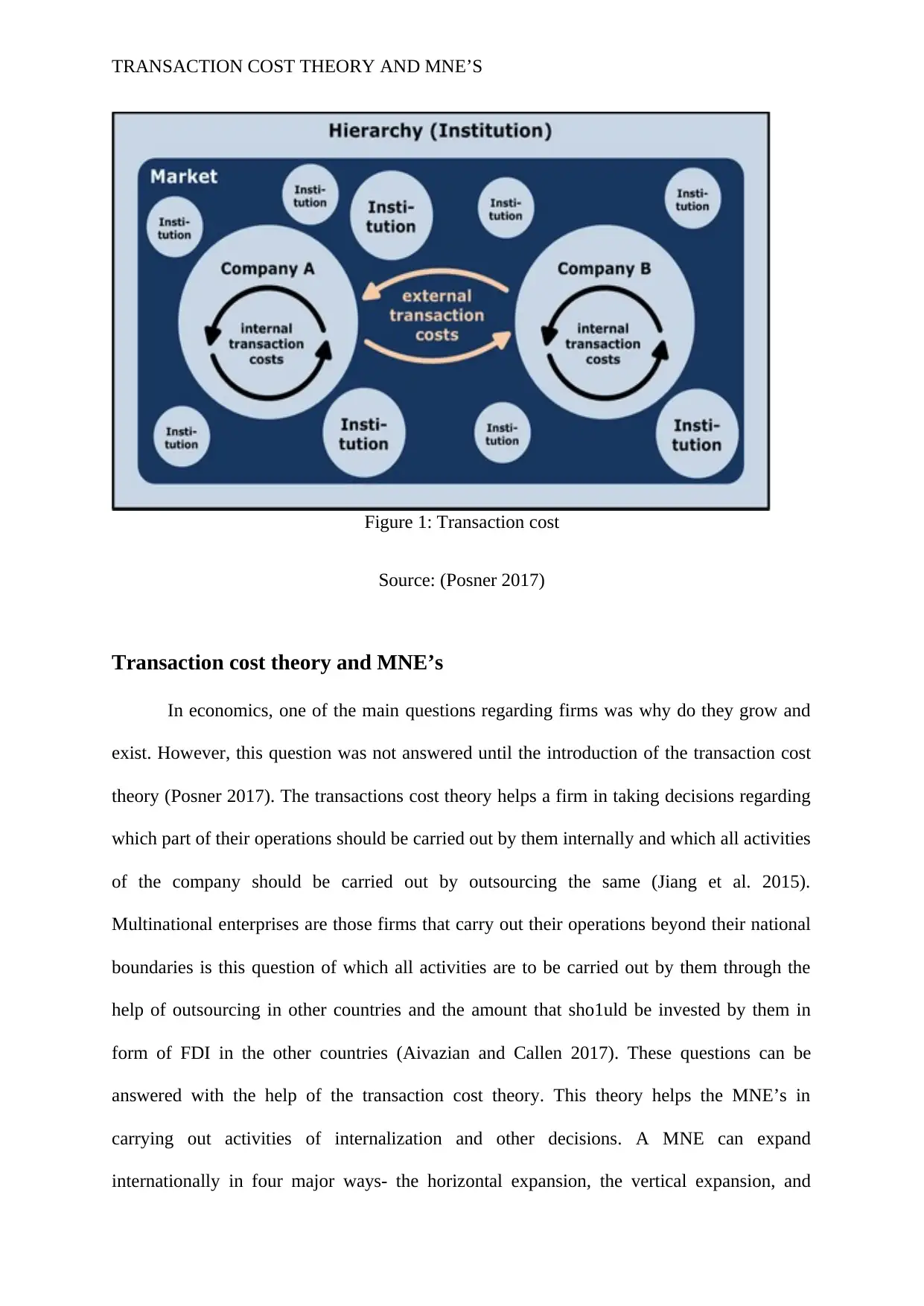
mechanism to avoid this transaction cost. In the diagram given below, the transaction cost
mechanism is shown. If the external transaction cost is higher than the internal transaction
cost then the firm will grow but if the external transaction cost is lower than the external cost
of transaction then the firm will decide to downsize itself. Multinational enterprises therefore
decide to grow internationally when they find the external transactional cost as greater than
the internal transaction cost.
The transaction cost theory is thought to be developed by Ronald Coase who
suggested using his theories when an organization would carry out its operations by itself
internally and when it should be outsourced. His theory was actually focused on price
mechanism and not on transaction cost theory. The concept of transaction cost theory cannot
(Williamson 2016). There are various factors that need to be considered for the purpose of
understanding the market transaction such as the organization with whom the firm wants to
enter the contract with, to decide upon various negotiation factors, to create the contract and
the policies. The transaction cost includes the information and the search cost, enforcement
and policy cost and the decisions and bargaining costs. The search cost identifies the cost of
the goods in the market and this helps the organization or the firm in taking decisions of
producing or outsourcing. The bargaining cost takes into consideration the cost of entering
into contacts with different parties after discussing on various negotiations. Enforcement cost
relates to the cost for ensuring that the parties carry out the contract in a proper manner and
legal actions are taken against the party who fails to comply to the enforcement cost. The
market price affects the relationships of various forms but for carrying out decision within a
firm various types of entrepreneurial coordination factors are considered. According to the
transaction cost theory, the firms start to carry out internal operations when the cost of
transaction is higher in case of external operations in case of imperfect information about the
market place. Coase has said that the main reason behind operations of a firm is using price
mechanism to avoid this transaction cost. In the diagram given below, the transaction cost
mechanism is shown. If the external transaction cost is higher than the internal transaction
cost then the firm will grow but if the external transaction cost is lower than the external cost
of transaction then the firm will decide to downsize itself. Multinational enterprises therefore
decide to grow internationally when they find the external transactional cost as greater than
the internal transaction cost.
The transaction cost theory is thought to be developed by Ronald Coase who
suggested using his theories when an organization would carry out its operations by itself
internally and when it should be outsourced. His theory was actually focused on price
mechanism and not on transaction cost theory. The concept of transaction cost theory cannot
⊘ This is a preview!⊘
Do you want full access?
Subscribe today to unlock all pages.

Trusted by 1+ million students worldwide
TRANSACTION COST THEORY AND MNE’S
be said to be defined by any particular individual because it can be dated back to monetary
economic literature. However, the concept came to existence through Oliver Williamson
work called the transaction cost economics (Jiang et al. 2015). This is how the relation
between the two concepts of transaction cost and economic came Into existence and the same
is used today in fact it is used to define various behaviours of the firm. According to him, the
transactions include not only the selling and the buying behaviour but also various forms of
interactions these costs arise because of the existence of institutions and therefore are referred
to as institutional cost in many places by many authors. The transaction cost is however
affected by the contract entered in t by then parties after proper negotiations and bargaining
activities and the authors has shifted there focus from what is transaction cost to the reduction
of the same using various practises of the firms for distributing and productions of various
services and goods.
Example of the transaction cost is- in a competitive environment, a supplier mat enter
into bidding with his customers in order to create widgets. For this purpose of providing the
widgets, the supplier needs too create machinery which cannot be used again to produce
different types and services. The relationship between the suppliers and the buyer however
changes from a competitive environment to monopoly environment. Therefore it can he said
that whenever there is a price cut, the customers are benefitted.
Williamson who is an economist he improved the transaction cost theory developed
by Ronald Coase and he has been awarded for his work in governance especially regarding
the boundaries of the firm. He has been able to identify the boundaries of the private sectors
and the public sectors through market and non-market decision making. He has distinguished
properly the activities of bargaining with that of contracts based on relationship’s. According
to Williamson , the transaction cost analysis helps lays down the basis for transactional cost
approach. It is important for organizations to carry out economizing of the transaction costs
be said to be defined by any particular individual because it can be dated back to monetary
economic literature. However, the concept came to existence through Oliver Williamson
work called the transaction cost economics (Jiang et al. 2015). This is how the relation
between the two concepts of transaction cost and economic came Into existence and the same
is used today in fact it is used to define various behaviours of the firm. According to him, the
transactions include not only the selling and the buying behaviour but also various forms of
interactions these costs arise because of the existence of institutions and therefore are referred
to as institutional cost in many places by many authors. The transaction cost is however
affected by the contract entered in t by then parties after proper negotiations and bargaining
activities and the authors has shifted there focus from what is transaction cost to the reduction
of the same using various practises of the firms for distributing and productions of various
services and goods.
Example of the transaction cost is- in a competitive environment, a supplier mat enter
into bidding with his customers in order to create widgets. For this purpose of providing the
widgets, the supplier needs too create machinery which cannot be used again to produce
different types and services. The relationship between the suppliers and the buyer however
changes from a competitive environment to monopoly environment. Therefore it can he said
that whenever there is a price cut, the customers are benefitted.
Williamson who is an economist he improved the transaction cost theory developed
by Ronald Coase and he has been awarded for his work in governance especially regarding
the boundaries of the firm. He has been able to identify the boundaries of the private sectors
and the public sectors through market and non-market decision making. He has distinguished
properly the activities of bargaining with that of contracts based on relationship’s. According
to Williamson , the transaction cost analysis helps lays down the basis for transactional cost
approach. It is important for organizations to carry out economizing of the transaction costs
Paraphrase This Document
Need a fresh take? Get an instant paraphrase of this document with our AI Paraphraser
TRANSACTION COST THEORY AND MNE’S
for the purpose of understanding the governance structure. Transaction cost analysis involves
the steps of planning od the comparative costs, adapting to those plans and continuously
monitoring under various structures for governance. According to this theory human agents
after subjected to opportunisms and bounded rationality. For achieving the same, it is
necessary to carry put economic exchanges through formation of a various contracts.
According to Williamson there are three main dimension for understanding the concepts of
transactional cost theory- frequency, uncertainty and durability degree. Future transactions
are tied to asset specificity that makes it important. It can include human asset, site selection
and physical asset. The main reason why asset specificity is so important is because if both
the parties have entered into a bilateral contract the asset specificity acts as a long-term
investment for the parties. The organizational boundary is decided by the organizations
describes regarding transactions. If non-specific assets are there, markets can take advantage
of both types of cost governance cost and production cost and the firms can take benefits of
buying in large scale operations rather than purchasing. According to the theory of
transaction cost, governance structure needs to be embedded with the skills of the people.
There are various factors for measuring the human factors.
for the purpose of understanding the governance structure. Transaction cost analysis involves
the steps of planning od the comparative costs, adapting to those plans and continuously
monitoring under various structures for governance. According to this theory human agents
after subjected to opportunisms and bounded rationality. For achieving the same, it is
necessary to carry put economic exchanges through formation of a various contracts.
According to Williamson there are three main dimension for understanding the concepts of
transactional cost theory- frequency, uncertainty and durability degree. Future transactions
are tied to asset specificity that makes it important. It can include human asset, site selection
and physical asset. The main reason why asset specificity is so important is because if both
the parties have entered into a bilateral contract the asset specificity acts as a long-term
investment for the parties. The organizational boundary is decided by the organizations
describes regarding transactions. If non-specific assets are there, markets can take advantage
of both types of cost governance cost and production cost and the firms can take benefits of
buying in large scale operations rather than purchasing. According to the theory of
transaction cost, governance structure needs to be embedded with the skills of the people.
There are various factors for measuring the human factors.
TRANSACTION COST THEORY AND MNE’S
Figure 1: Transaction cost
Source: (Posner 2017)
Transaction cost theory and MNE’s
In economics, one of the main questions regarding firms was why do they grow and
exist. However, this question was not answered until the introduction of the transaction cost
theory (Posner 2017). The transactions cost theory helps a firm in taking decisions regarding
which part of their operations should be carried out by them internally and which all activities
of the company should be carried out by outsourcing the same (Jiang et al. 2015).
Multinational enterprises are those firms that carry out their operations beyond their national
boundaries is this question of which all activities are to be carried out by them through the
help of outsourcing in other countries and the amount that sho1uld be invested by them in
form of FDI in the other countries (Aivazian and Callen 2017). These questions can be
answered with the help of the transaction cost theory. This theory helps the MNE’s in
carrying out activities of internalization and other decisions. A MNE can expand
internationally in four major ways- the horizontal expansion, the vertical expansion, and
Figure 1: Transaction cost
Source: (Posner 2017)
Transaction cost theory and MNE’s
In economics, one of the main questions regarding firms was why do they grow and
exist. However, this question was not answered until the introduction of the transaction cost
theory (Posner 2017). The transactions cost theory helps a firm in taking decisions regarding
which part of their operations should be carried out by them internally and which all activities
of the company should be carried out by outsourcing the same (Jiang et al. 2015).
Multinational enterprises are those firms that carry out their operations beyond their national
boundaries is this question of which all activities are to be carried out by them through the
help of outsourcing in other countries and the amount that sho1uld be invested by them in
form of FDI in the other countries (Aivazian and Callen 2017). These questions can be
answered with the help of the transaction cost theory. This theory helps the MNE’s in
carrying out activities of internalization and other decisions. A MNE can expand
internationally in four major ways- the horizontal expansion, the vertical expansion, and
⊘ This is a preview!⊘
Do you want full access?
Subscribe today to unlock all pages.
Trusted by 1+ million students worldwide
TRANSACTION COST THEORY AND MNE’S
conglomerate and related diversification. Horizontal investments aboard means carrying out
the FDI activities similar to those in the home country for example Toyota carries out
horizontal investment of FDI in various countries that carry out similar operations of its home
country (Wiesner 2017). Horizontal investments take place as a result of internalization
decision by the company. There can be various reasons for such internalization activities by
the firm. These can be the high transaction cost related to goodwill that makes investments in
various services easier (Ping et al. 2015). Vertical investments take place with the help of
internalization for the purpose of obtaining various inputs. There can be two main types of
vertical integration by a MNE that is forward integration and backward integration. The
theory also helps in explaining whether the MNE should enter into a foreign market through
joint venture or acquisitions (Allen and Barzel 2016). There are various benefits of entering
into a country with the help of joint venture especially equity joint venture when the
transaction cost for both the organizations is highest. According to the transaction cost
theory, it is advantageous to enter an international market by joint venture rather than
acquisition because there may be some sort of restriction whether political or economical or
others on the acquisition in the host country, when there will be an impact on the motivation
level of the acquired team and when the desired assets are tied up with the undesired assets
such that the expected services could not be achieved. There is a close relation between
International business (IB) an transaction cost theory(TCT) as TCT can act as a lens in
determining how Multinational enterprises operate expand in the international market. There
have been various reasons for explaining the internalization of organizations and firms. It has
been done by following the various theories that helps in selecting the entry mode for these
firms- the network internalization model, resource view, the transaction cost economies and
others. These researches on internalization have helped the manufacturing firms to improve
their production process by avoiding the uncertainty (Ping et al. 2015). The transaction cost
conglomerate and related diversification. Horizontal investments aboard means carrying out
the FDI activities similar to those in the home country for example Toyota carries out
horizontal investment of FDI in various countries that carry out similar operations of its home
country (Wiesner 2017). Horizontal investments take place as a result of internalization
decision by the company. There can be various reasons for such internalization activities by
the firm. These can be the high transaction cost related to goodwill that makes investments in
various services easier (Ping et al. 2015). Vertical investments take place with the help of
internalization for the purpose of obtaining various inputs. There can be two main types of
vertical integration by a MNE that is forward integration and backward integration. The
theory also helps in explaining whether the MNE should enter into a foreign market through
joint venture or acquisitions (Allen and Barzel 2016). There are various benefits of entering
into a country with the help of joint venture especially equity joint venture when the
transaction cost for both the organizations is highest. According to the transaction cost
theory, it is advantageous to enter an international market by joint venture rather than
acquisition because there may be some sort of restriction whether political or economical or
others on the acquisition in the host country, when there will be an impact on the motivation
level of the acquired team and when the desired assets are tied up with the undesired assets
such that the expected services could not be achieved. There is a close relation between
International business (IB) an transaction cost theory(TCT) as TCT can act as a lens in
determining how Multinational enterprises operate expand in the international market. There
have been various reasons for explaining the internalization of organizations and firms. It has
been done by following the various theories that helps in selecting the entry mode for these
firms- the network internalization model, resource view, the transaction cost economies and
others. These researches on internalization have helped the manufacturing firms to improve
their production process by avoiding the uncertainty (Ping et al. 2015). The transaction cost
Paraphrase This Document
Need a fresh take? Get an instant paraphrase of this document with our AI Paraphraser
TRANSACTION COST THEORY AND MNE’S
economies act as a lens in determining and choosing the mode of international governance
that helps In reducing the transaction cost of searching for foreign partners, negotiating and
barging on various contracts and then enforcing the contracts. These firms called the
Multinational enterprise expand overseas in order to internalize their operations the lack of
which would otherwise lead to raised cost process or supplying lower than the demand by the
foreign partners. The transaction cost analysis focuses on the opportunistic behaviour of all
number of suppliers and buyers. International franchising brings with it higher transactional
costs due to various reasons. For example a franchisor any have to bear additional costs for
monitoring the activities of the franchisee. The transaction cost in case of franchising
business also increases in case if any cheating activities are to be carried out by either of the
franchising parties and this negatively affect the relationship between the two parties. The
transaction cost theory used with the agency theory analyses the extent to which dimensions
of governance, business environment and relational mechanisms of governance affect the
opportunisms.
Decision of entry mode by MNE
There are three main dimensions of the transaction cost that determines the modes of
enter of an MNE being the boundaries. These dimensions are- asset specificity, frequency
and uncertainty (Tulung 2017). The asset specificity Is important for the organizations as it
helps to determine standardized investments are required to be made by the organization or
solutions that are individually tailored. Imperfect information is a situation in which partners
are forced to take obvious actions. This is called as behavioural uncertainty because the
performance of the actions is subjective. There are also external uncertainties. The entry
mode choice is dependent upon company’s strategies goals. This helps in setting the
uncertainty level for the firms. If the uncertainty level exceeds certain boundaries then the
economies act as a lens in determining and choosing the mode of international governance
that helps In reducing the transaction cost of searching for foreign partners, negotiating and
barging on various contracts and then enforcing the contracts. These firms called the
Multinational enterprise expand overseas in order to internalize their operations the lack of
which would otherwise lead to raised cost process or supplying lower than the demand by the
foreign partners. The transaction cost analysis focuses on the opportunistic behaviour of all
number of suppliers and buyers. International franchising brings with it higher transactional
costs due to various reasons. For example a franchisor any have to bear additional costs for
monitoring the activities of the franchisee. The transaction cost in case of franchising
business also increases in case if any cheating activities are to be carried out by either of the
franchising parties and this negatively affect the relationship between the two parties. The
transaction cost theory used with the agency theory analyses the extent to which dimensions
of governance, business environment and relational mechanisms of governance affect the
opportunisms.
Decision of entry mode by MNE
There are three main dimensions of the transaction cost that determines the modes of
enter of an MNE being the boundaries. These dimensions are- asset specificity, frequency
and uncertainty (Tulung 2017). The asset specificity Is important for the organizations as it
helps to determine standardized investments are required to be made by the organization or
solutions that are individually tailored. Imperfect information is a situation in which partners
are forced to take obvious actions. This is called as behavioural uncertainty because the
performance of the actions is subjective. There are also external uncertainties. The entry
mode choice is dependent upon company’s strategies goals. This helps in setting the
uncertainty level for the firms. If the uncertainty level exceeds certain boundaries then the
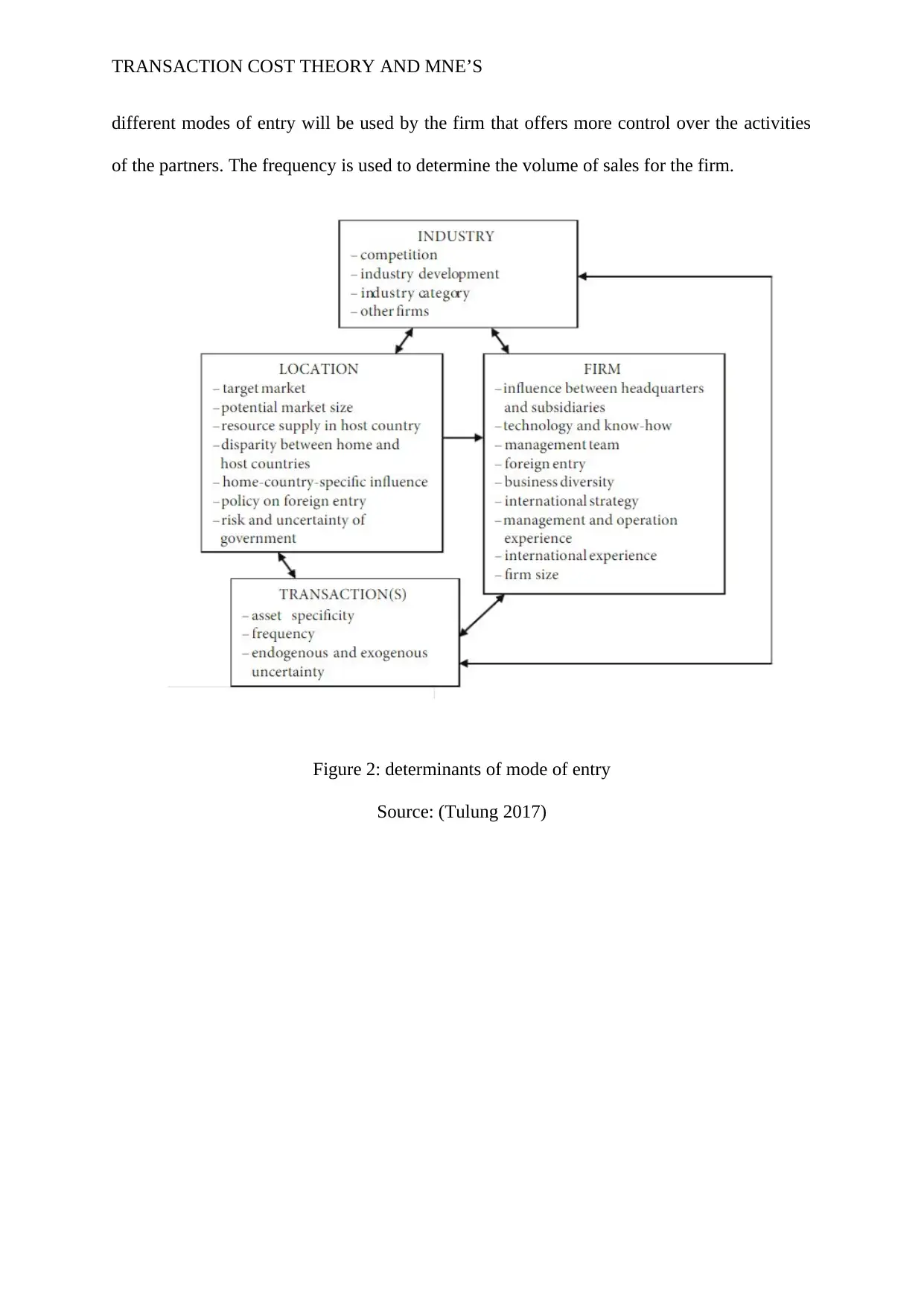
TRANSACTION COST THEORY AND MNE’S
different modes of entry will be used by the firm that offers more control over the activities
of the partners. The frequency is used to determine the volume of sales for the firm.
Figure 2: determinants of mode of entry
Source: (Tulung 2017)
different modes of entry will be used by the firm that offers more control over the activities
of the partners. The frequency is used to determine the volume of sales for the firm.
Figure 2: determinants of mode of entry
Source: (Tulung 2017)
⊘ This is a preview!⊘
Do you want full access?
Subscribe today to unlock all pages.
Trusted by 1+ million students worldwide
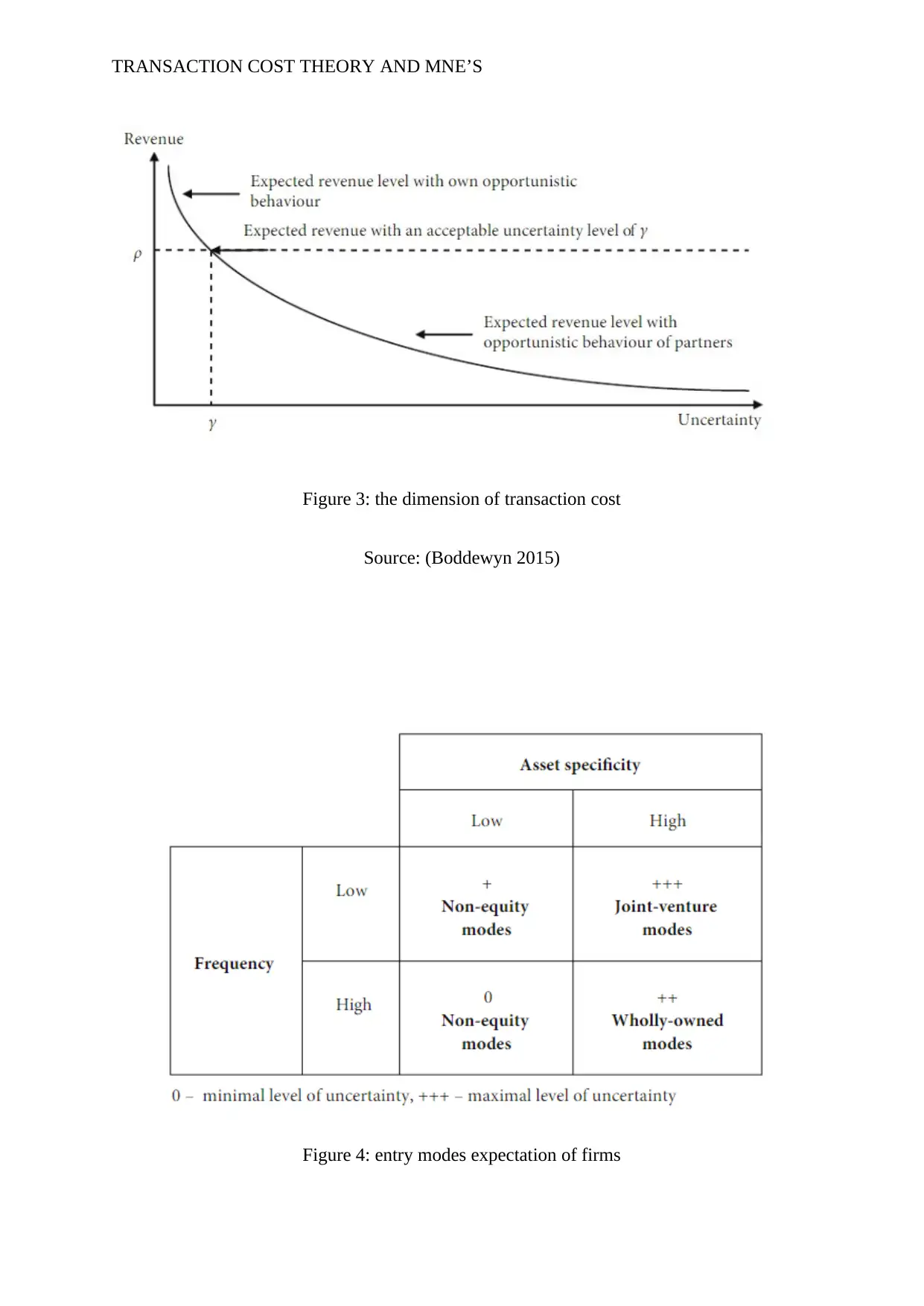
TRANSACTION COST THEORY AND MNE’S
Figure 3: the dimension of transaction cost
Source: (Boddewyn 2015)
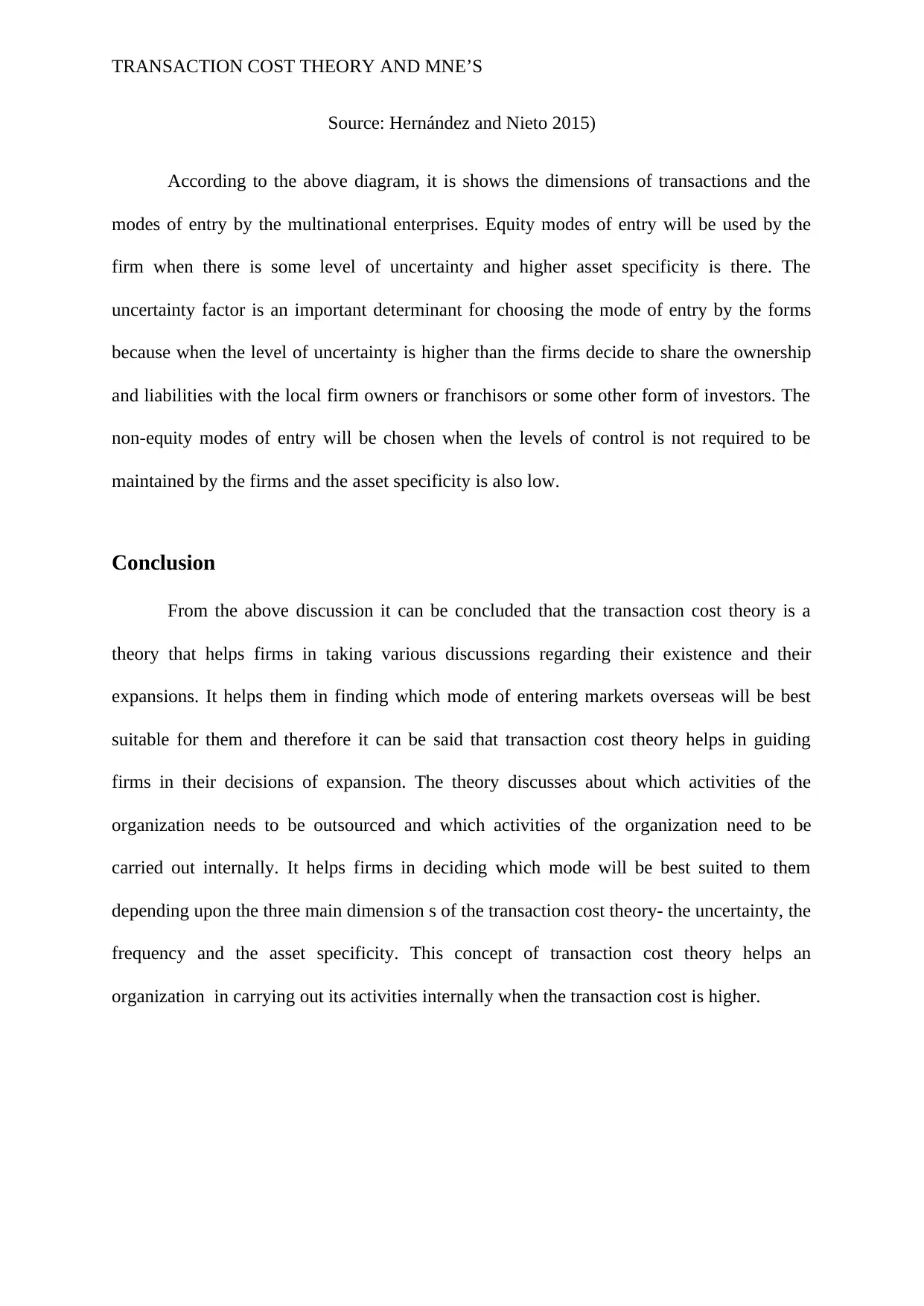
Figure 4: entry modes expectation of firms
Figure 3: the dimension of transaction cost
Source: (Boddewyn 2015)
Figure 4: entry modes expectation of firms
Paraphrase This Document
Need a fresh take? Get an instant paraphrase of this document with our AI Paraphraser
TRANSACTION COST THEORY AND MNE’S
Source: Hernández and Nieto 2015)
According to the above diagram, it is shows the dimensions of transactions and the
modes of entry by the multinational enterprises. Equity modes of entry will be used by the
firm when there is some level of uncertainty and higher asset specificity is there. The
uncertainty factor is an important determinant for choosing the mode of entry by the forms
because when the level of uncertainty is higher than the firms decide to share the ownership
and liabilities with the local firm owners or franchisors or some other form of investors. The
non-equity modes of entry will be chosen when the levels of control is not required to be
maintained by the firms and the asset specificity is also low.
Conclusion
From the above discussion it can be concluded that the transaction cost theory is a
theory that helps firms in taking various discussions regarding their existence and their
expansions. It helps them in finding which mode of entering markets overseas will be best
suitable for them and therefore it can be said that transaction cost theory helps in guiding
firms in their decisions of expansion. The theory discusses about which activities of the
organization needs to be outsourced and which activities of the organization need to be
carried out internally. It helps firms in deciding which mode will be best suited to them
depending upon the three main dimension s of the transaction cost theory- the uncertainty, the
frequency and the asset specificity. This concept of transaction cost theory helps an
organization in carrying out its activities internally when the transaction cost is higher.
Source: Hernández and Nieto 2015)
According to the above diagram, it is shows the dimensions of transactions and the
modes of entry by the multinational enterprises. Equity modes of entry will be used by the
firm when there is some level of uncertainty and higher asset specificity is there. The
uncertainty factor is an important determinant for choosing the mode of entry by the forms
because when the level of uncertainty is higher than the firms decide to share the ownership
and liabilities with the local firm owners or franchisors or some other form of investors. The
non-equity modes of entry will be chosen when the levels of control is not required to be
maintained by the firms and the asset specificity is also low.
Conclusion
From the above discussion it can be concluded that the transaction cost theory is a
theory that helps firms in taking various discussions regarding their existence and their
expansions. It helps them in finding which mode of entering markets overseas will be best
suitable for them and therefore it can be said that transaction cost theory helps in guiding
firms in their decisions of expansion. The theory discusses about which activities of the
organization needs to be outsourced and which activities of the organization need to be
carried out internally. It helps firms in deciding which mode will be best suited to them
depending upon the three main dimension s of the transaction cost theory- the uncertainty, the
frequency and the asset specificity. This concept of transaction cost theory helps an
organization in carrying out its activities internally when the transaction cost is higher.
TRANSACTION COST THEORY AND MNE’S
Reference
Aivazian, V.A. and Callen, J.L., 2017. The Coase Theorem and Core Theory. Man and the
Economy, 4(2).
Allen, D.W. and Barzel, Y., 2016. Coase’s contribution to contract theory. The Elgar
Companion to Ronald H. Coase, p.68.
Boddewyn, J.J., 2015. Political aspects of MNE theory. In The Eclectic Paradigm (pp. 85-
110). Palgrave Macmillan, London.
Boddewyn, J.J., 2015. Political aspects of MNE theory. In The Eclectic Paradigm (pp. 85-
110). Palgrave Macmillan, London.
Hernández, V. and Nieto, M.J., 2015. The effect of the magnitude and direction of
institutional distance on the choice of international entry modes. Journal of World
Business, 50(1), pp.122-132.
Jiang, Y., Peng, M.W., Yang, X. and Mutlu, C.C., 2015. Privatization, governance, and
survival: MNE investments in private participation projects in emerging economies. Journal
of World Business, 50(2), pp.294-301.
Jiang, Y., Peng, M.W., Yang, X. and Mutlu, C.C., 2015. Privatization, governance, and
survival: MNE investments in private participation projects in emerging economies. Journal
of World Business, 50(2), pp.294-301.
Ping Ho, S., Levitt, R., Tsui, C.W. and Hsu, Y., 2015. Opportunism-focused transaction cost
analysis of public-private partnerships. Journal of management in engineering, 31(6),
p.04015007.
Reference
Aivazian, V.A. and Callen, J.L., 2017. The Coase Theorem and Core Theory. Man and the
Economy, 4(2).
Allen, D.W. and Barzel, Y., 2016. Coase’s contribution to contract theory. The Elgar
Companion to Ronald H. Coase, p.68.
Boddewyn, J.J., 2015. Political aspects of MNE theory. In The Eclectic Paradigm (pp. 85-
110). Palgrave Macmillan, London.
Boddewyn, J.J., 2015. Political aspects of MNE theory. In The Eclectic Paradigm (pp. 85-
110). Palgrave Macmillan, London.
Hernández, V. and Nieto, M.J., 2015. The effect of the magnitude and direction of
institutional distance on the choice of international entry modes. Journal of World
Business, 50(1), pp.122-132.
Jiang, Y., Peng, M.W., Yang, X. and Mutlu, C.C., 2015. Privatization, governance, and
survival: MNE investments in private participation projects in emerging economies. Journal
of World Business, 50(2), pp.294-301.
Jiang, Y., Peng, M.W., Yang, X. and Mutlu, C.C., 2015. Privatization, governance, and
survival: MNE investments in private participation projects in emerging economies. Journal
of World Business, 50(2), pp.294-301.
Ping Ho, S., Levitt, R., Tsui, C.W. and Hsu, Y., 2015. Opportunism-focused transaction cost
analysis of public-private partnerships. Journal of management in engineering, 31(6),
p.04015007.
⊘ This is a preview!⊘
Do you want full access?
Subscribe today to unlock all pages.
Trusted by 1+ million students worldwide

1 out of 13


Related Documents


Your All-in-One AI-Powered Toolkit for Academic Success.
+13062052269
info@desklib.com
Available 24*7 on WhatsApp / Email
![[object Object]](/_next/static/media/star-bottom.7253800d.svg)
Unlock your academic potential
Copyright © 2020–2026 A2Z Services. All Rights Reserved. Developed and managed by ZUCOL.