Mental Health Theories: Patient Behavior and Nursing Strategies
VerifiedAdded on 2022/09/18
|5
|914
|79
Essay
AI Summary
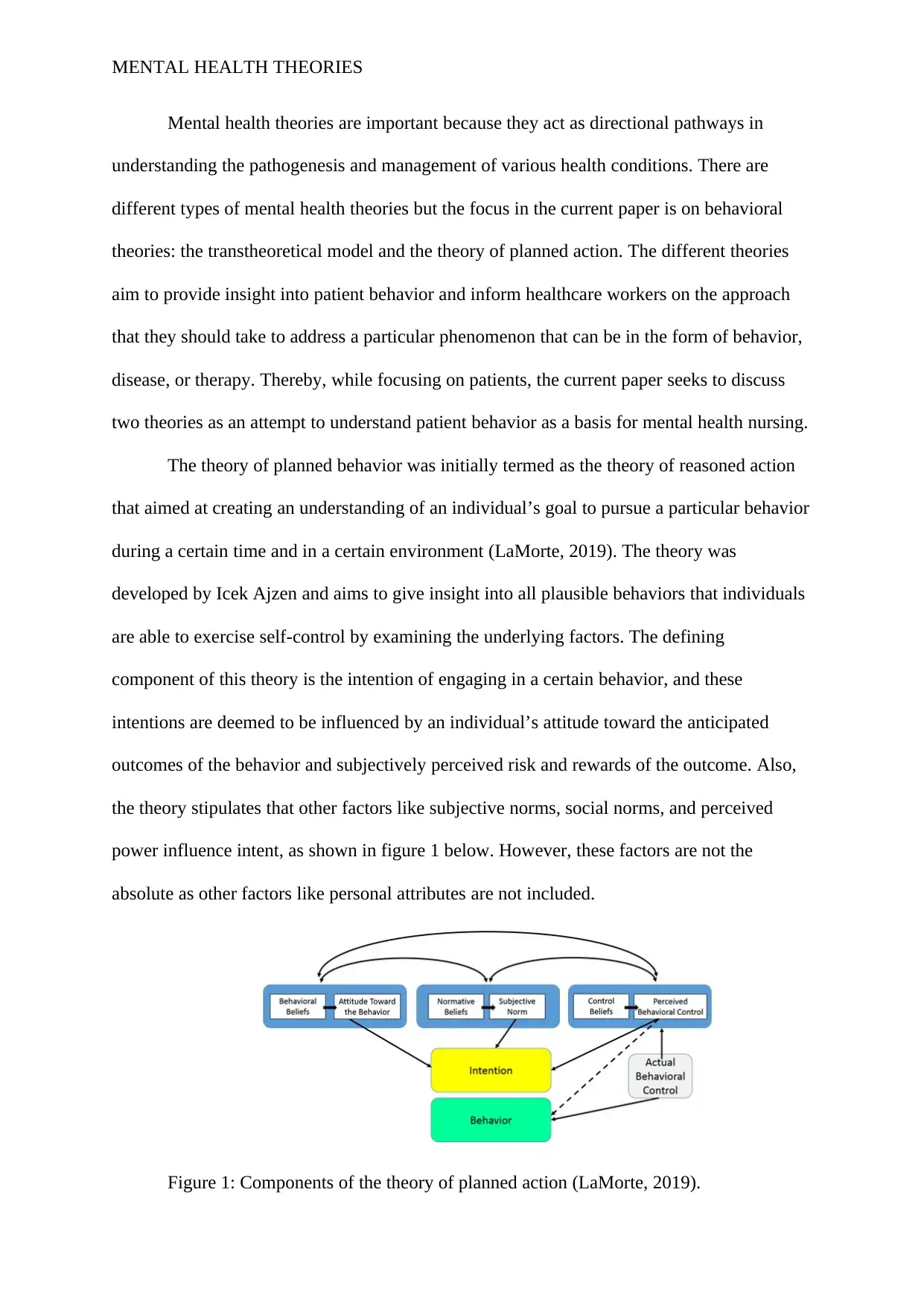
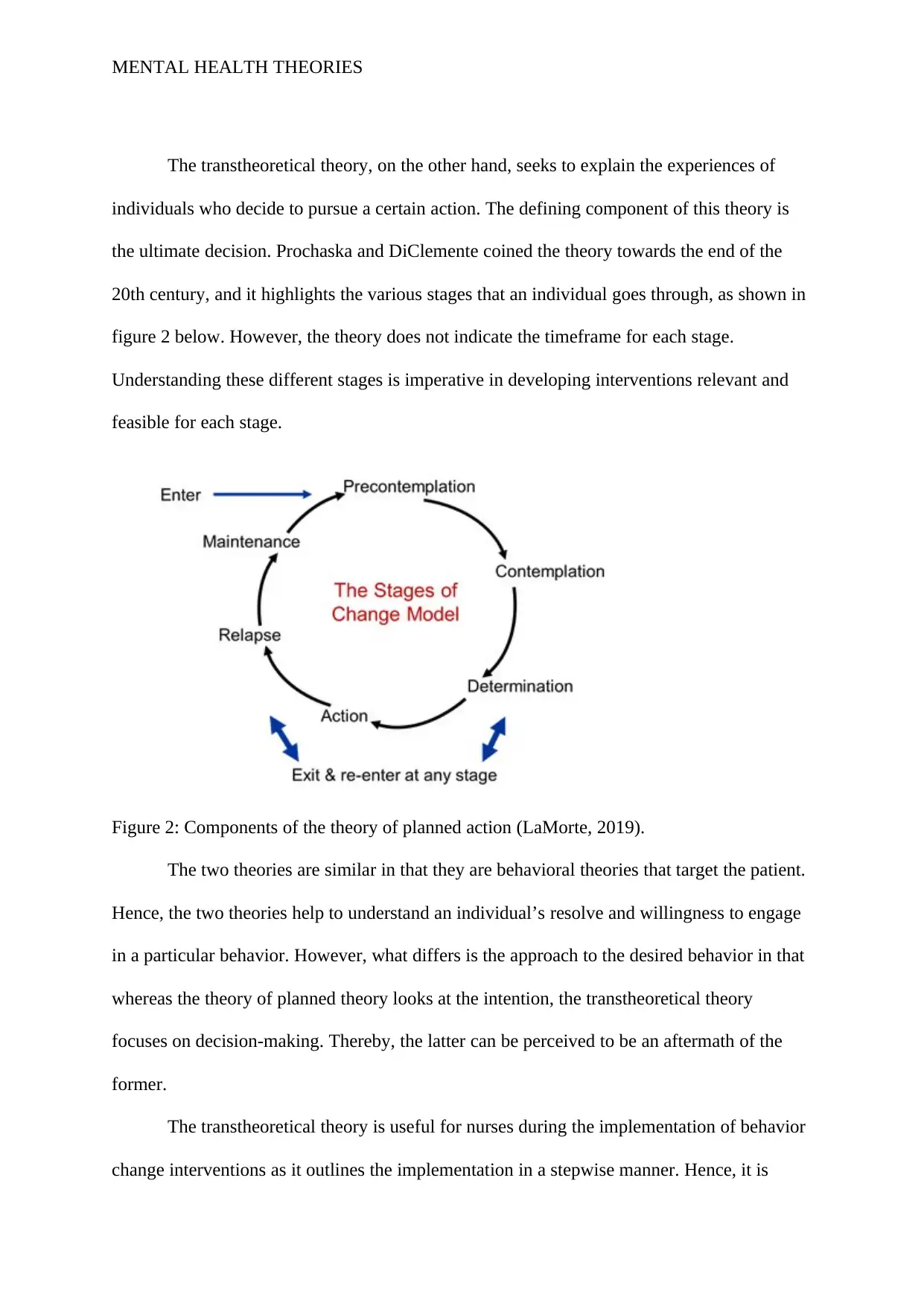
This essay delves into the significance of mental health theories as guiding frameworks for understanding and managing various health conditions, with a specific focus on behavioral theories. The paper primarily examines two key theories: the transtheoretical model and the theory of planned action. The theory of planned action, developed by Icek Ajzen, focuses on an individual's intention to engage in a behavior, influenced by attitudes, subjective norms, and perceived behavioral control. The transtheoretical model, also known as the stages of change model, outlines the stages individuals go through when adopting new behaviors, which is useful for nurses when implementing behavior change interventions. The paper compares these two theories, highlighting their similarities in addressing patient behavior and their differences in approach, with the theory of planned action focusing on intention and the transtheoretical model focusing on decision-making. The essay underscores the importance of understanding these theories for developing effective management strategies, especially in mental health nursing, where they inform interventions tailored to specific stages of behavior change. The paper also discusses how the theory of planned action can be used to address factors affecting an individual's intent to enroll in a drug recovery program while the transtheoretical model is useful in helping the nurse address the hurdles that are likely to emerge during the drug reviver process.



1 out of 5


Related Documents


Your All-in-One AI-Powered Toolkit for Academic Success.
+13062052269
info@desklib.com
Available 24*7 on WhatsApp / Email
![[object Object]](/_next/static/media/star-bottom.7253800d.svg)
Copyright © 2020–2026 A2Z Services. All Rights Reserved. Developed and managed by ZUCOL.