Comprehensive Report: Legislation, Ethics, and CSR at the TUI Group

Verified

Added on  2020/11/12

|9
|2150
|104
Report
AI Summary
This report provides a comprehensive analysis of the legal and ethical landscape within the TUI Group, a major player in the travel and tourism sector. It begins by outlining relevant legislation, including health and safety, data protection, and equality laws, assessing their impact on the company's operations and employee satisfaction. The report then delves into ethical dilemmas faced by the tourism industry, such as conflicts between societal values and legal frameworks, and the ethical considerations surrounding finance, investment, and resource utilization. Furthermore, it examines the TUI Group's Corporate Social Responsibility (CSR) policies, highlighting their commitment to sustainability, cultural respect, and economic benefits for local communities. The report concludes by emphasizing the importance of adhering to legislation, addressing ethical challenges, and implementing robust CSR strategies for long-term success in the travel and tourism industry, referencing the TUI Group's sustainability reports and initiatives.
Document Page
LEGISLATION AND
ETHICS IN TRAVEL
AND TOURISM
SECTOR
tabler-icon-diamond-filled.svg

Paraphrase This Document

Need a fresh take? Get an instant paraphrase of this document with our AI Paraphraser
Document Page
Document Page
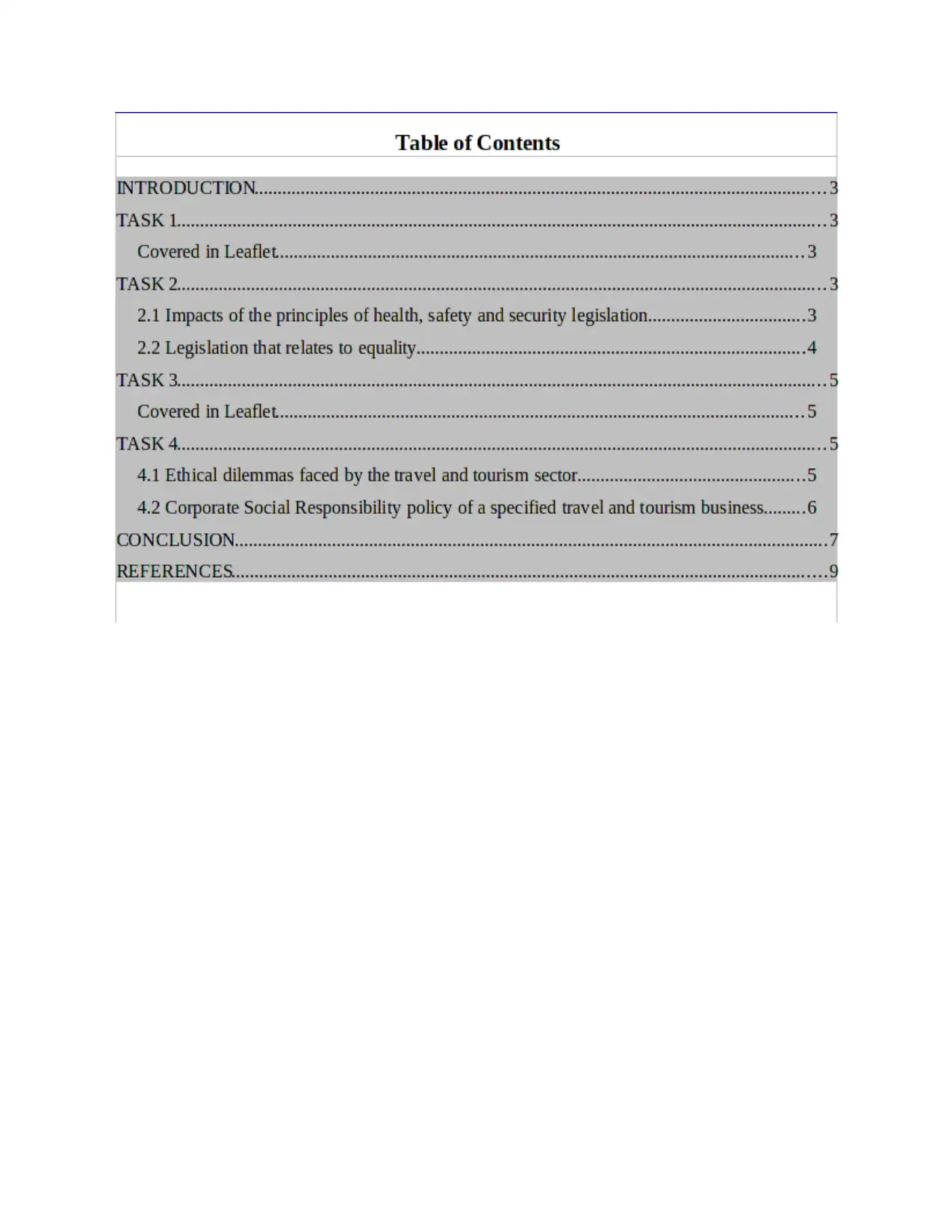
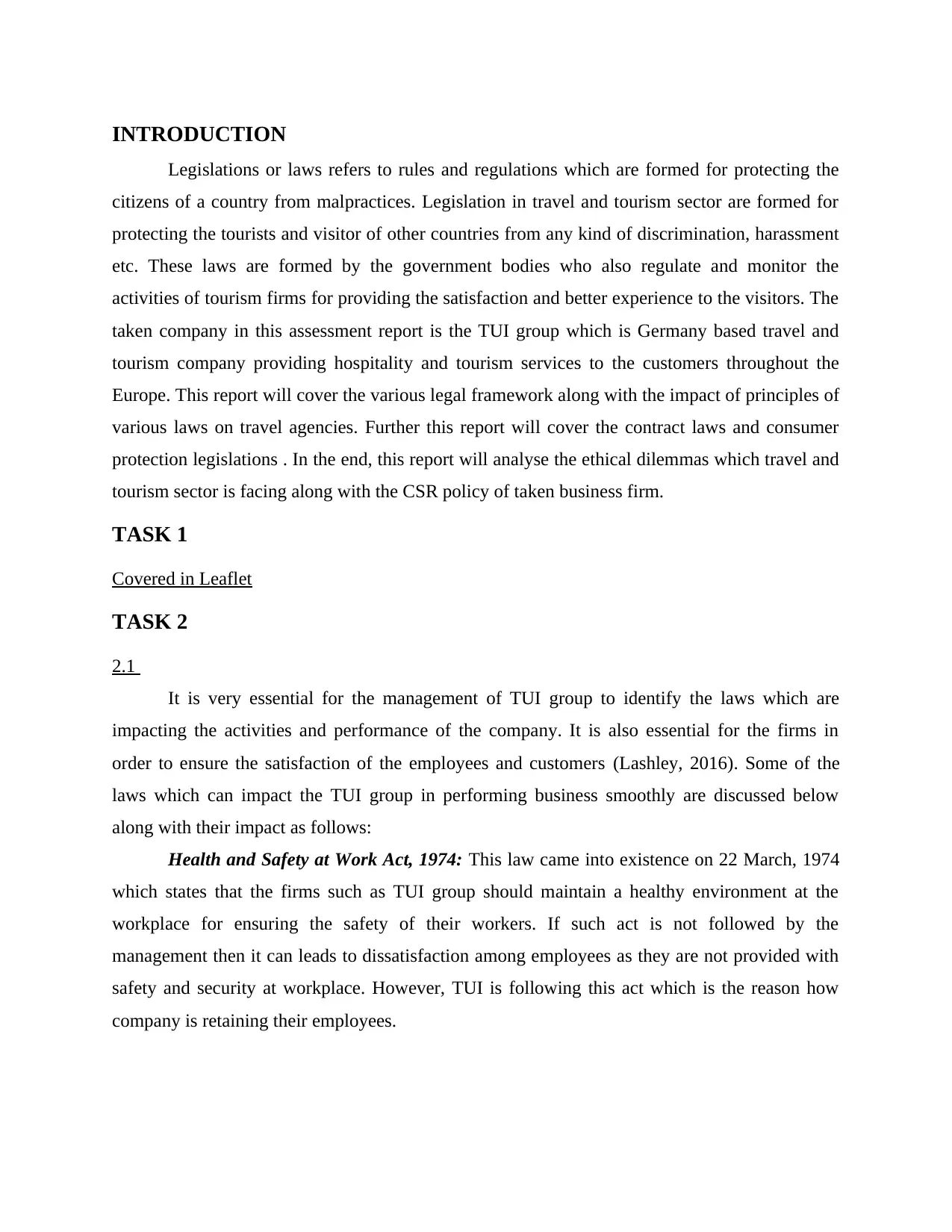
INTRODUCTION
Legislations or laws refers to rules and regulations which are formed for protecting the
citizens of a country from malpractices. Legislation in travel and tourism sector are formed for
protecting the tourists and visitor of other countries from any kind of discrimination, harassment
etc. These laws are formed by the government bodies who also regulate and monitor the
activities of tourism firms for providing the satisfaction and better experience to the visitors. The
taken company in this assessment report is the TUI group which is Germany based travel and
tourism company providing hospitality and tourism services to the customers throughout the
Europe. This report will cover the various legal framework along with the impact of principles of
various laws on travel agencies. Further this report will cover the contract laws and consumer
protection legislations . In the end, this report will analyse the ethical dilemmas which travel and
tourism sector is facing along with the CSR policy of taken business firm.
TASK 1
Covered in Leaflet
TASK 2
2.1
It is very essential for the management of TUI group to identify the laws which are
impacting the activities and performance of the company. It is also essential for the firms in
order to ensure the satisfaction of the employees and customers (Lashley, 2016). Some of the
laws which can impact the TUI group in performing business smoothly are discussed below
along with their impact as follows:
Health and Safety at Work Act, 1974: This law came into existence on 22 March, 1974
which states that the firms such as TUI group should maintain a healthy environment at the
workplace for ensuring the safety of their workers. If such act is not followed by the
management then it can leads to dissatisfaction among employees as they are not provided with
safety and security at workplace. However, TUI is following this act which is the reason how
company is retaining their employees.
Document Page
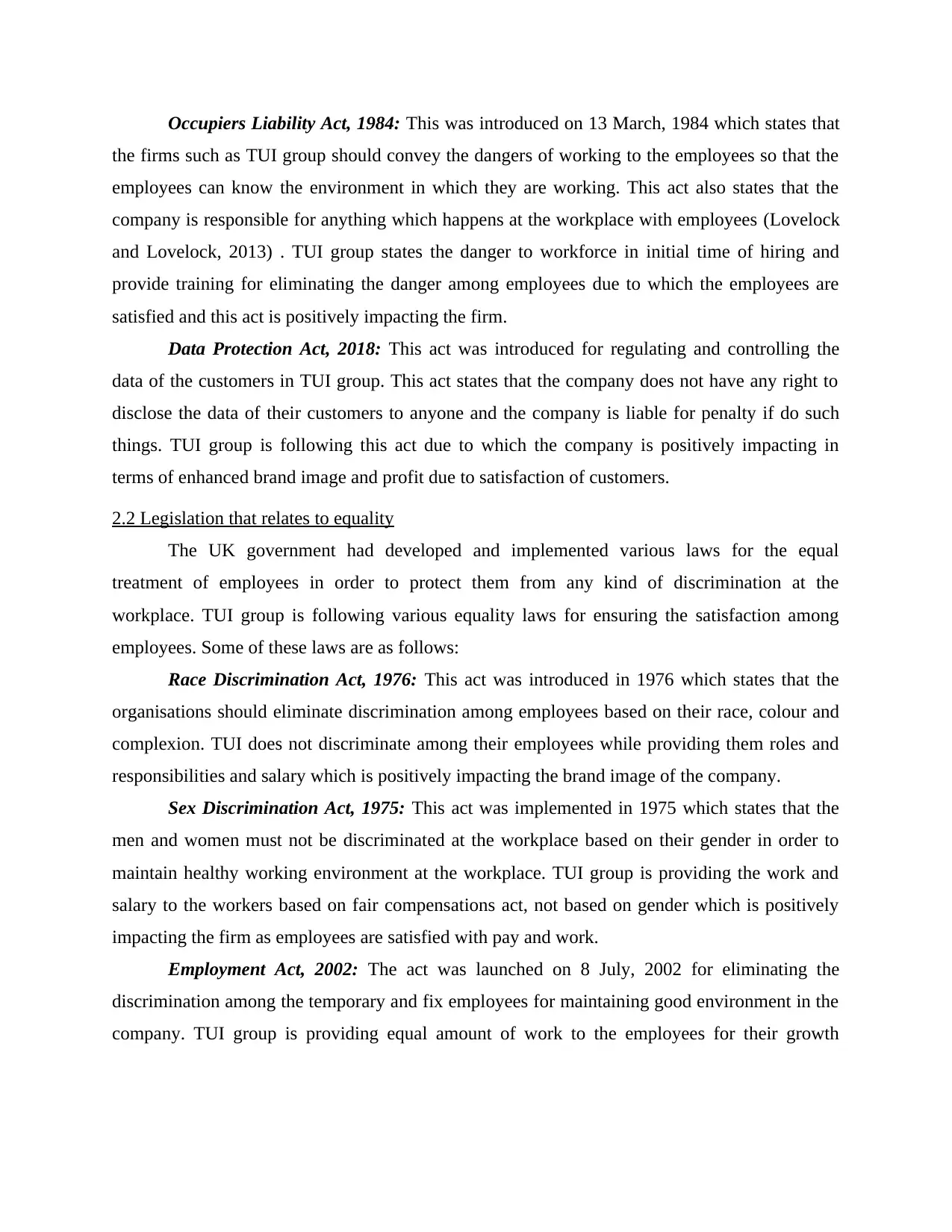
Occupiers Liability Act, 1984: This was introduced on 13 March, 1984 which states that
the firms such as TUI group should convey the dangers of working to the employees so that the
employees can know the environment in which they are working. This act also states that the
company is responsible for anything which happens at the workplace with employees (Lovelock
and Lovelock, 2013) . TUI group states the danger to workforce in initial time of hiring and
provide training for eliminating the danger among employees due to which the employees are
satisfied and this act is positively impacting the firm.
Data Protection Act, 2018: This act was introduced for regulating and controlling the
data of the customers in TUI group. This act states that the company does not have any right to
disclose the data of their customers to anyone and the company is liable for penalty if do such
things. TUI group is following this act due to which the company is positively impacting in
terms of enhanced brand image and profit due to satisfaction of customers.
2.2 Legislation that relates to equality
The UK government had developed and implemented various laws for the equal
treatment of employees in order to protect them from any kind of discrimination at the
workplace. TUI group is following various equality laws for ensuring the satisfaction among
employees. Some of these laws are as follows:
Race Discrimination Act, 1976: This act was introduced in 1976 which states that the
organisations should eliminate discrimination among employees based on their race, colour and
complexion. TUI does not discriminate among their employees while providing them roles and
responsibilities and salary which is positively impacting the brand image of the company.
Sex Discrimination Act, 1975: This act was implemented in 1975 which states that the
men and women must not be discriminated at the workplace based on their gender in order to
maintain healthy working environment at the workplace. TUI group is providing the work and
salary to the workers based on fair compensations act, not based on gender which is positively
impacting the firm as employees are satisfied with pay and work.
Employment Act, 2002: The act was launched on 8 July, 2002 for eliminating the
discrimination among the temporary and fix employees for maintaining good environment in the
company. TUI group is providing equal amount of work to the employees for their growth
tabler-icon-diamond-filled.svg

Paraphrase This Document

Need a fresh take? Get an instant paraphrase of this document with our AI Paraphraser
Document Page
without making any difference among contract and fixed employees which is positively
impacting the company in improving the culture at workplace.
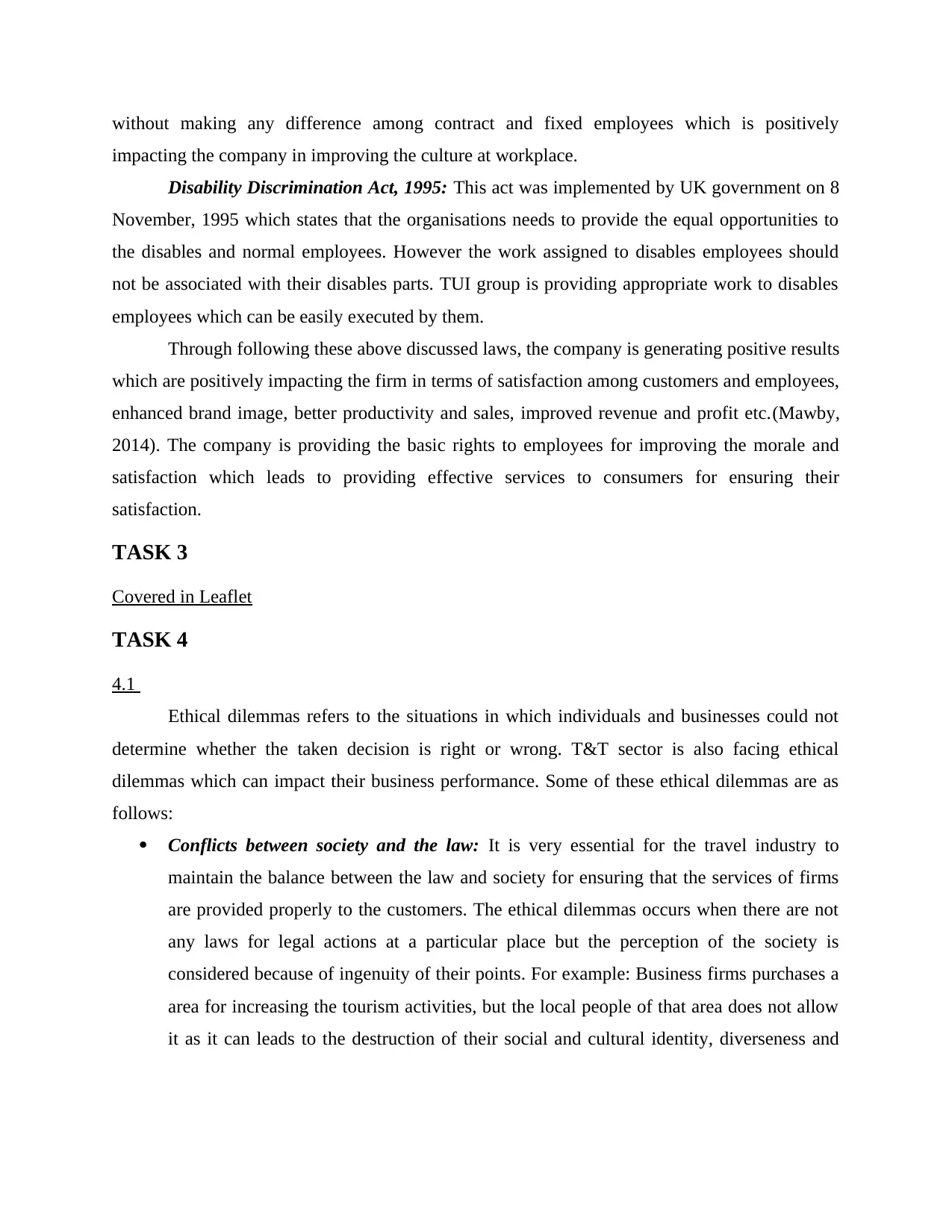
Disability Discrimination Act, 1995: This act was implemented by UK government on 8
November, 1995 which states that the organisations needs to provide the equal opportunities to
the disables and normal employees. However the work assigned to disables employees should
not be associated with their disables parts. TUI group is providing appropriate work to disables
employees which can be easily executed by them.
Through following these above discussed laws, the company is generating positive results
which are positively impacting the firm in terms of satisfaction among customers and employees,
enhanced brand image, better productivity and sales, improved revenue and profit etc.(Mawby,
2014). The company is providing the basic rights to employees for improving the morale and
satisfaction which leads to providing effective services to consumers for ensuring their
satisfaction.
TASK 3
Covered in Leaflet
TASK 4
4.1
Ethical dilemmas refers to the situations in which individuals and businesses could not
determine whether the taken decision is right or wrong. T&T sector is also facing ethical
dilemmas which can impact their business performance. Some of these ethical dilemmas are as
follows:
Conflicts between society and the law: It is very essential for the travel industry to
maintain the balance between the law and society for ensuring that the services of firms
are provided properly to the customers. The ethical dilemmas occurs when there are not
any laws for legal actions at a particular place but the perception of the society is
considered because of ingenuity of their points. For example: Business firms purchases a
area for increasing the tourism activities, but the local people of that area does not allow
it as it can leads to the destruction of their social and cultural identity, diverseness and
Document Page
polluted area (Swanson and Brothers, 2012). Both parties are right as tourism can
increase but simultaneously it will affect the life of local people.
Finance and investment policies of businesses in tourism industry: Places near the
coastal areas are good for travellers as compared to other areas due to having
breathtaking views of ocean and greenery. Also the tourism firms prefers to buy the land
in such areas for increasing their tourist activities. The companies are right but still it will
also impact the local people and the local market which also influence the living standard
of these people. This issue is also considered as an ethical dilemma as the profitability,
productivity and market share of the companies can improve but it will also affect the
local people and their life in negative manner.
Utilization of resources: The travel and tourism sector is also facing such type of ethical
dilemma as the resources are not utilised in proper manner which can results into scarcity
of resources (Swanson and Edgell Sr, 2013). The business firms needs to avoid the
exploitation of natural resources so that these can be used in future time period.
These are some of the ethical dilemmas which are faced by the tourism organisation and
industry. These ethical dilemmas must be resolved by the firms in proper manner so as to obtain
sustainability in the marketplace for a long period of time.
4.2
Corporate Social Responsibility refers to the actions which are taken by the business
firms in order to reduce the impact of business operations on the social and environmental
concerns. TUI group is developing their policies and strategies by taking into consideration of
the ethical environment. CSR policies of TUI includes the sustainability vision of improving the
travel experience of the customer better for ensuring their comfort and reducing the impact on
natural environment by the business. The company gives respect to the culture of people and
providing economic advantages to the local people in terms of providing job employment,
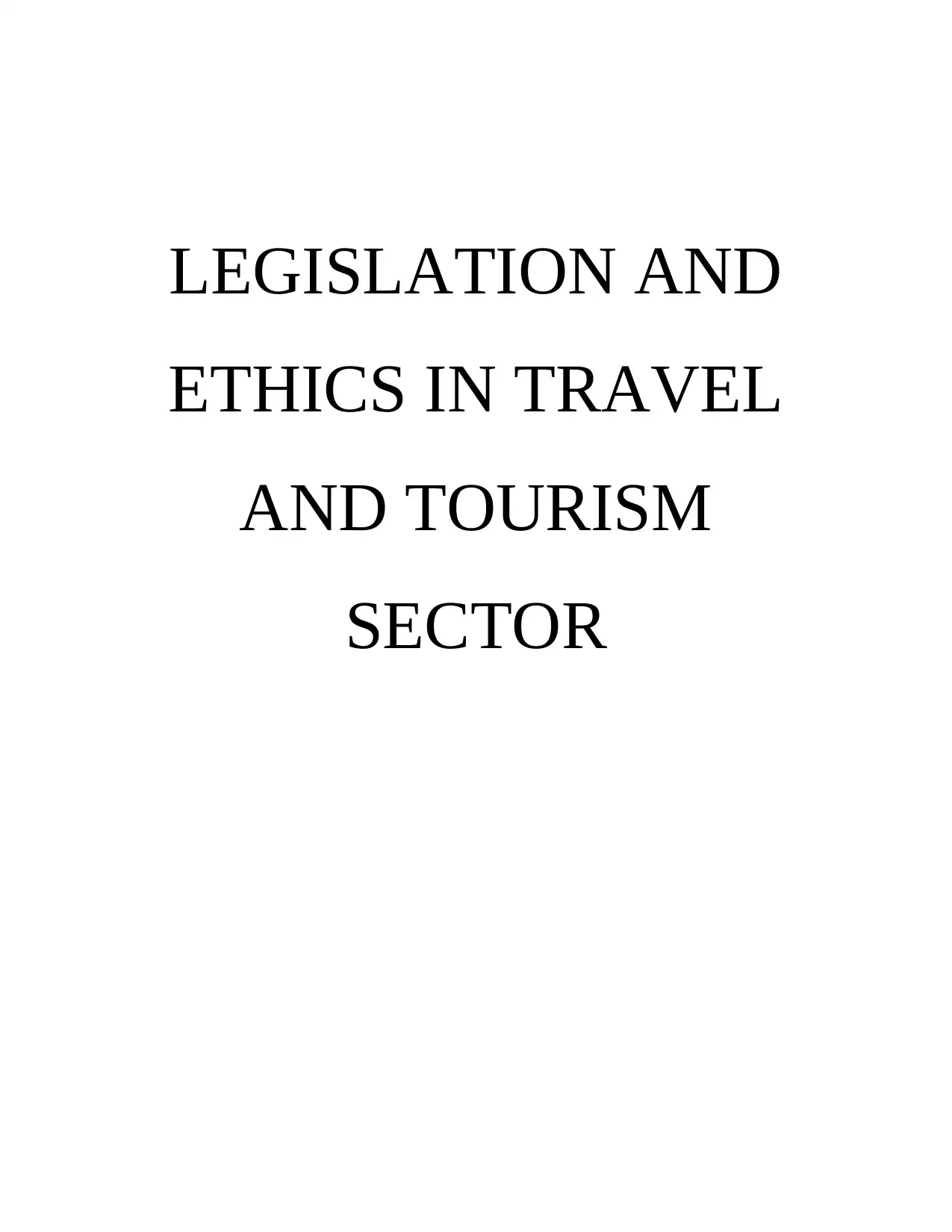
providing training for self development etc. CSR policies of TUI involves the strategies for
achieving the sustainability in terms of reducing the co2 emissions from their fleets of vehicles.
The company is also planning to involve the environmental principles into the business (TUI
sustainability report, 2017). Also the company was shortlisted for CSR strategy, 2014 as
finalist. TUI is also planning to collaborate with the other firms for providing the training to
Document Page
local people as well as to take the steps for conservation and protection of wildlife. The
company is also promoting the awareness regarding the protection environment among the
different stakeholders in order to get their support under the CSR activities of company. TUI
group had also developed a CSR council which is focused on sustainable development which
ensures that the policies of the company are followed by every stakeholder in proper manner.
Also this body monitors the utilisation of resources for eliminating their impact on the
environment.
Illustration 1: TUI care foundation
Source: TUI sustainability report, 2017
CONCLUSION
From the above report, it has been summariseds that the legislations should be followed
by the business firms of tourism sectors whether they are providing their services in land, air or
sea. The companies needs to follow the rules and regulations for ensuring the satisfaction of
customers and employees. The companies needs to treat their employees equal without any
discrimination in order to improve their brand image. Also the company needs to take suitable
measures for resolving the ethical dilemmas in order to ensure the smooth flow of business
tabler-icon-diamond-filled.svg

Paraphrase This Document

Need a fresh take? Get an instant paraphrase of this document with our AI Paraphraser
Document Page
operations. Companies also need to follow their CSR policies for protecting the environment as
well as for improving the lifer of society.
Document Page
REFERENCES
Books and Journals
Burns, P.M., 2011. Controversies in tourism. CABI.
De Grosbois, D., 2016. Corporate social responsibility reporting in the cruise tourism industry: a
performance evaluation using a new institutional theory based model.Journal of
Sustainable Tourism. 24(2). pp.245-269.
Font, X. and McCabe, S., 2017. Sustainability and marketing in tourism: its contexts, paradoxes,
approaches, challenges and potential. Journal of Sustainable Tourism. 25(7). pp.869-
883.
Hudson, S. and Miller, G., 2012. 13 Ethical considerations in sustainable tourism. Global
tourism, p.248.
Lashley, C., 2016. Business ethics and sustainability. Research in Hospitality Management. 6(1).
pp.1-7.
Lovelock, B. and Lovelock, K., 2013. The ethics of tourism: Critical and applied perspectives.
Routledge.
Mawby, R.I., 2014. Crime and disorder, security and the tourism industry. In The Handbook of
Security (pp. 383-403). Palgrave Macmillan, London.
Robinson, P., 2012. Tourism: The key concepts. Routledge.
Sharpley, R., 2018. Tourism, tourists and society. Routledge.
Sigala, M., 2017. Collaborative commerce in tourism: implications for research and industry.
Current Issues in Tourism. 20(4), pp.346-355.
Swanson, J. R. and Brothers, G. L., 2012. Tourism policy agenda setting, interest groups and
legislative capture. International Journal of Tourism Policy. 4(3). pp.206-221.
Swanson, J.R. and Edgell Sr, D.L., 2013. Tourism policy and planning: Yesterday, today, and
tomorrow. Routledge.
Online:
Legislation and regulation. 2013. [Online]. Available through:
<https://www.clickview.com.au/curriculum-libraries/video-details/?
id=3715848&cat=3708548&library=secondary>
TUI sustainability report. 2017. Available
through<https://www.tuigroup.com/damfiles/default/tuigroup-15/de/nachhaltigkeit/
berichterstattung-downloads/2018/Better-Holidays-Better-World-2017/TUI-Group-
Better-Holidays-Better-World-Report-2017.pdf-
ac70ee7344a1fabe1abf733623372b87.pdf>
chevron_up_icon
1 out of 9
circle_padding
hide_on_mobile
zoom_out_icon
[object Object]