Evaluating UH Student Admissions System Using BPMN: A Report
VerifiedAdded on 2021/06/17
|21
|3414
|94
Report
AI Summary
This report evaluates the student admissions system at UH (University) using Business Process Modeling Notation (BPMN), as requested by the Dean of Students. The current system is identified as long, inefficient, and costly, leading to student complaints. The analysis uses BPM to map the processes, identify inefficiencies, and propose solutions for improvement, such as an online application system with electronic document submission and automated GPA calculations. The report includes a governance structure, process architecture, modeling conventions, a value chain model, and a choreography diagram. The key recommendation is to leverage technology to streamline the admissions process, reduce costs, and improve the student experience. The report highlights the need for re-engineering to make the university's admission process more competitive. The report provides a detailed BPMN analysis of the existing process, allowing for improvements and making the admission process more effective.

BUSINESS PROCESS MODELING
Name
Date
Name
Date

Paraphrase This Document
Need a fresh take? Get an instant paraphrase of this document with our AI Paraphraser
Executive Summary
This report is an evaluation of the student admissions system at UH using BPMN notations, with justification, and proposing some
general solutions
The Problem
Based on the Dean of students’ information, the student admission process at UH is long, unwieldy, and inefficient and has led to
students raising complaints: the process is also costly, with various actors and the need to post physical copies of student documents.
Analysis
The team used BPM to evaluate the system, depict the processes, and identify areas of wastage and inefficiencies that can be rectified
to make the process more efficient and reduce the required time to process a students’ application. It was identified that several
processes are inefficient, including having the student download a PDF version of their application and then send them by post, after
signing, together with certified academic papers, a process that can take up to five weeks. An admission officer then evaluates them
and the university again sends the physical copies to an external verification service by post. The English/ Dutch competency is
evaluated online, and GPA’s are manually entered into a table and converted into standard GPA scores. The motivation letter is
checked for plagiarism and a committee makes decisions based on motivation letter quality and GPA scores
Solution
UH can use technology and information systems right from the student application process where an online form requires the student
to submit all correct details, otherwise it will not be accepted. The copies of certified academic papers can then be uploaded
electronically, along with the motivation letter that is checked immediately for plagiarism before being accepted. Once this is done,
This report is an evaluation of the student admissions system at UH using BPMN notations, with justification, and proposing some
general solutions
The Problem
Based on the Dean of students’ information, the student admission process at UH is long, unwieldy, and inefficient and has led to
students raising complaints: the process is also costly, with various actors and the need to post physical copies of student documents.
Analysis
The team used BPM to evaluate the system, depict the processes, and identify areas of wastage and inefficiencies that can be rectified
to make the process more efficient and reduce the required time to process a students’ application. It was identified that several
processes are inefficient, including having the student download a PDF version of their application and then send them by post, after
signing, together with certified academic papers, a process that can take up to five weeks. An admission officer then evaluates them
and the university again sends the physical copies to an external verification service by post. The English/ Dutch competency is
evaluated online, and GPA’s are manually entered into a table and converted into standard GPA scores. The motivation letter is
checked for plagiarism and a committee makes decisions based on motivation letter quality and GPA scores
Solution
UH can use technology and information systems right from the student application process where an online form requires the student
to submit all correct details, otherwise it will not be accepted. The copies of certified academic papers can then be uploaded
electronically, along with the motivation letter that is checked immediately for plagiarism before being accepted. Once this is done,
the electronic copies can be sent to the external evaluators’ o the university can itself request verification from the awarding
University. During application, the applicant should enter their GPA scores into a database that then automatically recalculates
standard GPA scores. The committee members can then give scores on letter quality. The GPA scores are then automatically graded
by the system as it awaits committee members input; where each can give a score and an average calculated. A weighting algorithm
then determines a final score with GPA given a greater weight and creates a final rank for easy decision making
University. During application, the applicant should enter their GPA scores into a database that then automatically recalculates
standard GPA scores. The committee members can then give scores on letter quality. The GPA scores are then automatically graded
by the system as it awaits committee members input; where each can give a score and an average calculated. A weighting algorithm
then determines a final score with GPA given a greater weight and creates a final rank for easy decision making
⊘ This is a preview!⊘
Do you want full access?
Subscribe today to unlock all pages.

Trusted by 1+ million students worldwide
Contents
Executive Summary.....................................................................................................................................2
Introduction.................................................................................................................................................5
Governance structure and the UH Process Architecture..............................................................................7
Modeling Conventions................................................................................................................................8
Assumptions in the process.......................................................................................................................12
UH Value Chain Model.............................................................................................................................13
Choreography diagram for UH..................................................................................................................14
Conclusion.................................................................................................................................................14
Bibliography...............................................................................................................................................16
Executive Summary.....................................................................................................................................2
Introduction.................................................................................................................................................5
Governance structure and the UH Process Architecture..............................................................................7
Modeling Conventions................................................................................................................................8
Assumptions in the process.......................................................................................................................12
UH Value Chain Model.............................................................................................................................13
Choreography diagram for UH..................................................................................................................14
Conclusion.................................................................................................................................................14
Bibliography...............................................................................................................................................16
Paraphrase This Document
Need a fresh take? Get an instant paraphrase of this document with our AI Paraphraser
Introduction
Process models are used in varying contexts; in this case, it will be used in the context of business process modeling. A process model
refers to processes of similar nature classified together to form a model; as such, a process model describes a process at type level and
the process is an instantiation of the process. Process models are used to prescribe how things ought to be done in contrast to the
actual process: the process model anticipates whet the real process would look like1. Process modeling has three main goals;
To describe a process by tracking what happens during processes and take an external observers’ point of view and uses the
information on how a process has been performed to determine the necessary improvements that will make it perform efficiently or in
a manner that is more effective
Prescriptive; the process model defines desired processes and how they ought to be performed and establish rules and guidelines that
when followed, results in the desired process performance.
Explanatory; Offers explanations on processes rationale, evaluates and explores various possible courses of action, and creates a link
between processes and requirements to be fulfilled by the model, as well as defining points where data can be extracted.
Because of these, process modeling has become an integral and important aspect of many sectors and industries, including in
manufacturing, human resource management, transportation, and scheduling as a means of modeling to attain efficiency and preserve
the business. For managers, decision makers, and analysts, modeling is becoming ever more important because it is a useful tool for
understanding and determining areas for improving general processes, including business processes. Business process modeling is
usually undertaken with a view to improving or changing existing processes or to identify issues that need correcting. The
transformation or improvement to current systems can require IT involvement, or no IT involvement, although IT is a common
business process modeling and improvement driver. Change management processes, for instance, are meant to put into practice
Process models are used in varying contexts; in this case, it will be used in the context of business process modeling. A process model
refers to processes of similar nature classified together to form a model; as such, a process model describes a process at type level and
the process is an instantiation of the process. Process models are used to prescribe how things ought to be done in contrast to the
actual process: the process model anticipates whet the real process would look like1. Process modeling has three main goals;
To describe a process by tracking what happens during processes and take an external observers’ point of view and uses the
information on how a process has been performed to determine the necessary improvements that will make it perform efficiently or in
a manner that is more effective
Prescriptive; the process model defines desired processes and how they ought to be performed and establish rules and guidelines that
when followed, results in the desired process performance.
Explanatory; Offers explanations on processes rationale, evaluates and explores various possible courses of action, and creates a link
between processes and requirements to be fulfilled by the model, as well as defining points where data can be extracted.
Because of these, process modeling has become an integral and important aspect of many sectors and industries, including in
manufacturing, human resource management, transportation, and scheduling as a means of modeling to attain efficiency and preserve
the business. For managers, decision makers, and analysts, modeling is becoming ever more important because it is a useful tool for
understanding and determining areas for improving general processes, including business processes. Business process modeling is
usually undertaken with a view to improving or changing existing processes or to identify issues that need correcting. The
transformation or improvement to current systems can require IT involvement, or no IT involvement, although IT is a common
business process modeling and improvement driver. Change management processes, for instance, are meant to put into practice
process modeling in order to attain desired improvements. Process modeling deals with the business architecture process models
leading to the creating of all-encompassing enterprise architecture. Business process modeling (BPM) is important because one needs
to take stock of their processes before they can be improved; the BPM creates a big picture that is used to enhance the visibility of
cause and effects in every step in the business, eventually leading to a better understanding of the business. For an analyst, BMP is an
indispensable tool for understanding processes and determining areas where improvements need to be made2.
The Dean of Students at UH University, Anthony Rupp, has hired the authors, a group of junior consultants, to evaluate the current
processes at the UH in the context of student admission process. Of late, the system has raised several complaints among users,
because the process takes too long and is fraught with hiccups that adversely affect the desired process of smooth students’ admission.
The student admission process is a core process within the university because it is the processes that determine who is admitted and
ensures only qualified students are admitted and awarded scholarships based on merit. The reputation of the university depends greatly
on this process, while it is important that applicants know as soon as possible their status and the decisions reached on their
application. To help get a better understanding of the UH student admission process, the dean has hired the authors to evaluate the
system and develop a BPM for the process, using BPMN standards, given the dean understands the BPMN method very well. Through
a well-developed BPMN, the dean will be able to present the existing process to his seniors and colleagues, some of who do not, or
may not have an understanding of BPMN.
Another concern raised by the dean is that the process is becoming increasingly costly and even the ad-hoc system implemented in the
interim has several challenges. The dean believes there is an urgent need for the re-engineering of the students admission process to
make the university’s admission process more competitive again as at present, the university is losing students to a rival university
with better student admission processes. The authors have been hired to model the UH student admissions process within the
constraints of time, resources, and ability to elicit more information from the admissions staff, who are themselves very busy with
their work. This report generates a governance structure for the UH students admission process by generating the UH process
leading to the creating of all-encompassing enterprise architecture. Business process modeling (BPM) is important because one needs
to take stock of their processes before they can be improved; the BPM creates a big picture that is used to enhance the visibility of
cause and effects in every step in the business, eventually leading to a better understanding of the business. For an analyst, BMP is an
indispensable tool for understanding processes and determining areas where improvements need to be made2.
The Dean of Students at UH University, Anthony Rupp, has hired the authors, a group of junior consultants, to evaluate the current
processes at the UH in the context of student admission process. Of late, the system has raised several complaints among users,
because the process takes too long and is fraught with hiccups that adversely affect the desired process of smooth students’ admission.
The student admission process is a core process within the university because it is the processes that determine who is admitted and
ensures only qualified students are admitted and awarded scholarships based on merit. The reputation of the university depends greatly
on this process, while it is important that applicants know as soon as possible their status and the decisions reached on their
application. To help get a better understanding of the UH student admission process, the dean has hired the authors to evaluate the
system and develop a BPM for the process, using BPMN standards, given the dean understands the BPMN method very well. Through
a well-developed BPMN, the dean will be able to present the existing process to his seniors and colleagues, some of who do not, or
may not have an understanding of BPMN.
Another concern raised by the dean is that the process is becoming increasingly costly and even the ad-hoc system implemented in the
interim has several challenges. The dean believes there is an urgent need for the re-engineering of the students admission process to
make the university’s admission process more competitive again as at present, the university is losing students to a rival university
with better student admission processes. The authors have been hired to model the UH student admissions process within the
constraints of time, resources, and ability to elicit more information from the admissions staff, who are themselves very busy with
their work. This report generates a governance structure for the UH students admission process by generating the UH process
⊘ This is a preview!⊘
Do you want full access?
Subscribe today to unlock all pages.
Trusted by 1+ million students worldwide
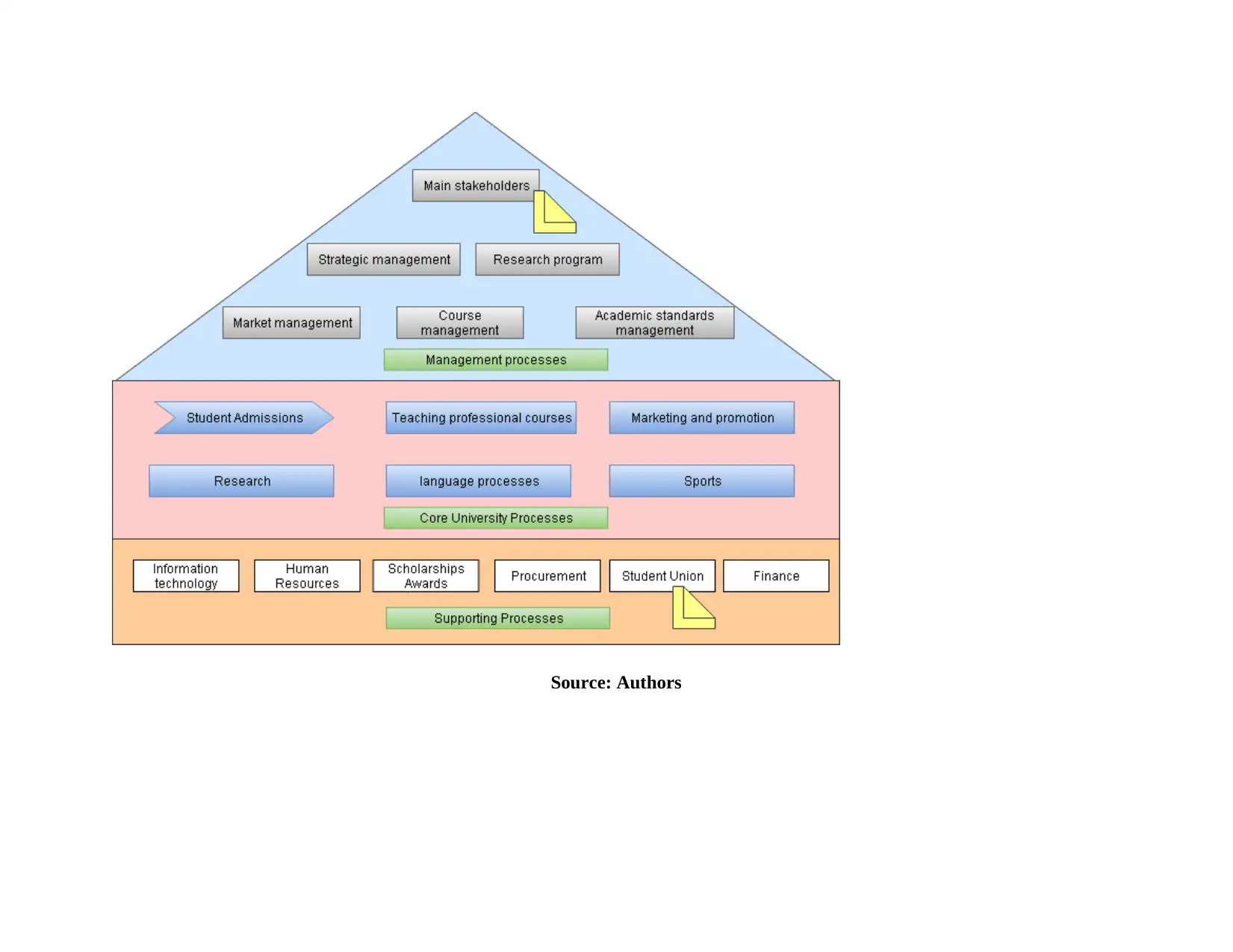
architecture, with the value chain containing the students admission process clearly defined. The UH is developed using a set of
modeling conventions, with justifications on why they have been used. Before the models are generated, the various BPMN 2.0
notations an symbols are drawn and described, t provide a basis for developing the BMPN diagrams for the UH. He process is
described using BPMN 2.0 for the value chain, a choreography diagram, and a layered collaboration diagram. A conclusion is then
drawn after the diagrams are drawn.
Governance structure and the UH Process Architecture
Below is the process architecture for UH, with hierarchies
modeling conventions, with justifications on why they have been used. Before the models are generated, the various BPMN 2.0
notations an symbols are drawn and described, t provide a basis for developing the BMPN diagrams for the UH. He process is
described using BPMN 2.0 for the value chain, a choreography diagram, and a layered collaboration diagram. A conclusion is then
drawn after the diagrams are drawn.
Governance structure and the UH Process Architecture
Below is the process architecture for UH, with hierarchies
Paraphrase This Document
Need a fresh take? Get an instant paraphrase of this document with our AI Paraphraser
Source: Authors
Modeling Conventions
BPMN Notation Meaning/ Role in this Model
Start/ End
This represents either the start of termination of an
event. It signifies processes that have commenced or
completed tokens being consumed. In this model, the
symbol signifies the start or end of all processes for
the entire student admission process starting with a
student applying for admission to either the student
being admitted or rejected, or when the student
cancels their application before it is concluded3
BPMN Notation Meaning/ Role in this Model
Start/ End
This represents either the start of termination of an
event. It signifies processes that have commenced or
completed tokens being consumed. In this model, the
symbol signifies the start or end of all processes for
the entire student admission process starting with a
student applying for admission to either the student
being admitted or rejected, or when the student
cancels their application before it is concluded3
⊘ This is a preview!⊘
Do you want full access?
Subscribe today to unlock all pages.
Trusted by 1+ million students worldwide
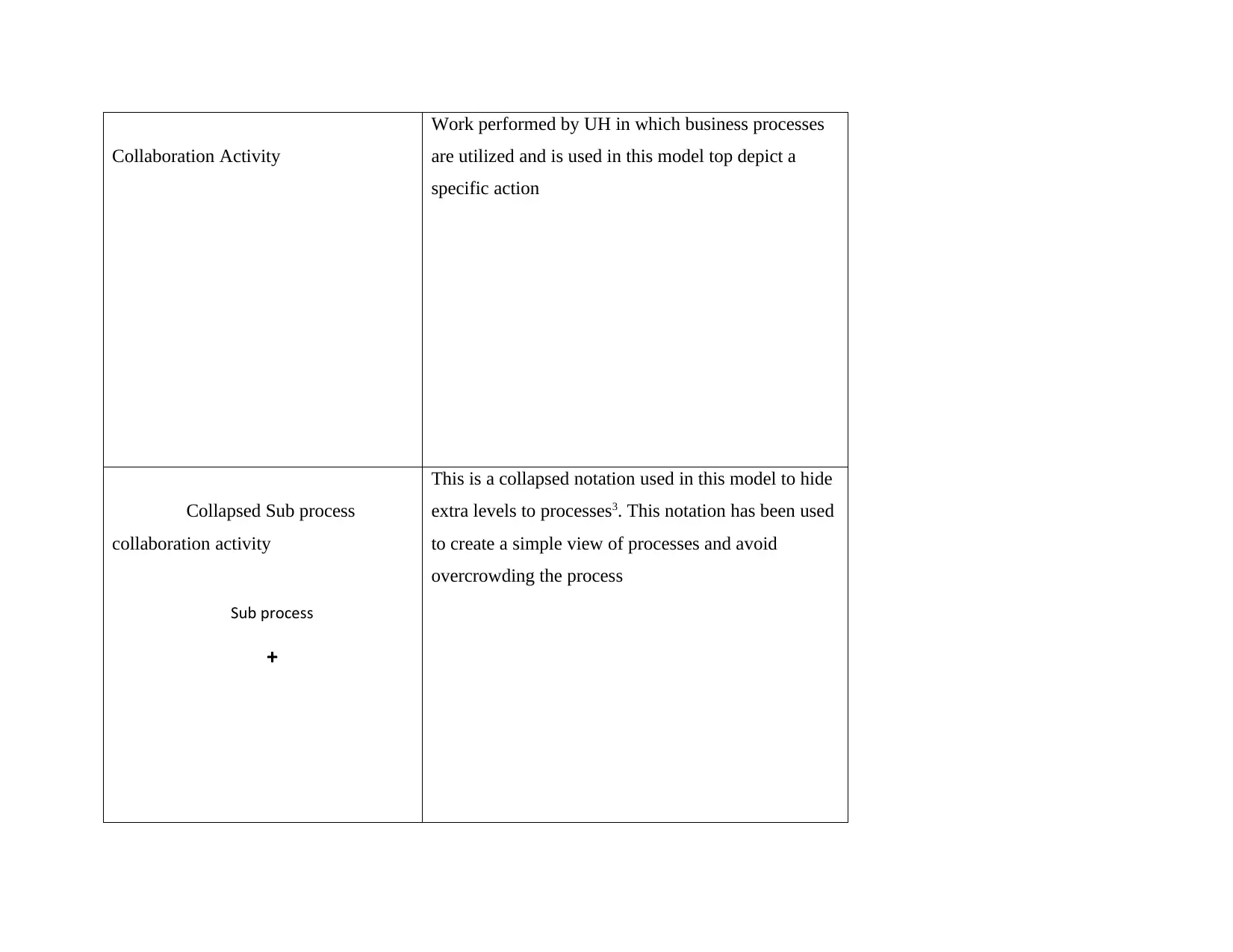
Collaboration Activity
Work performed by UH in which business processes
are utilized and is used in this model top depict a
specific action
Collapsed Sub process
collaboration activity
This is a collapsed notation used in this model to hide
extra levels to processes3. This notation has been used
to create a simple view of processes and avoid
overcrowding the process
Sub process
+
Work performed by UH in which business processes
are utilized and is used in this model top depict a
specific action
Collapsed Sub process
collaboration activity
This is a collapsed notation used in this model to hide
extra levels to processes3. This notation has been used
to create a simple view of processes and avoid
overcrowding the process
Sub process
+
Paraphrase This Document
Need a fresh take? Get an instant paraphrase of this document with our AI Paraphraser
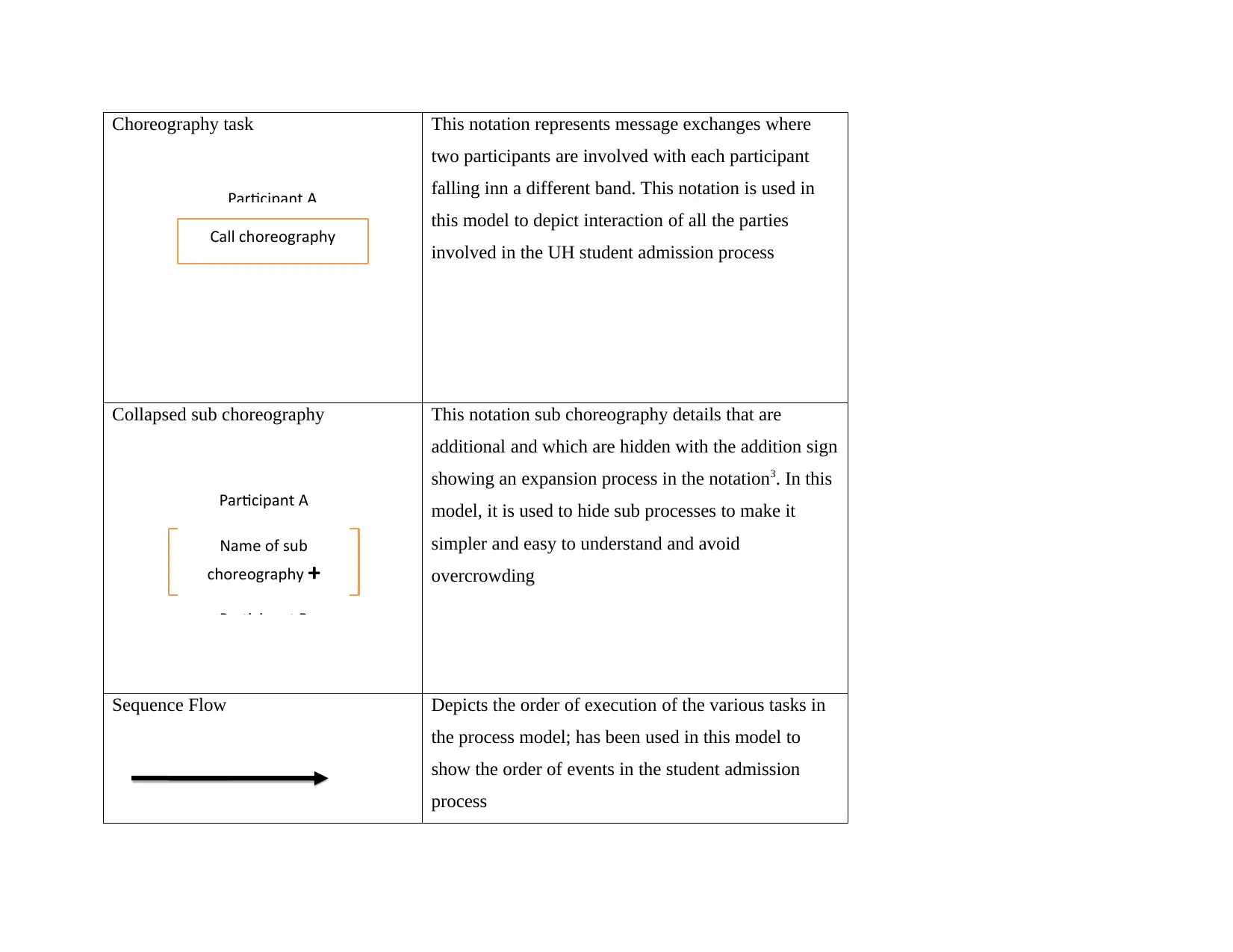
Choreography task This notation represents message exchanges where
two participants are involved with each participant
falling inn a different band. This notation is used in
this model to depict interaction of all the parties
involved in the UH student admission process
Collapsed sub choreography This notation sub choreography details that are
additional and which are hidden with the addition sign
showing an expansion process in the notation3. In this
model, it is used to hide sub processes to make it
simpler and easy to understand and avoid
overcrowding
Sequence Flow Depicts the order of execution of the various tasks in
the process model; has been used in this model to
show the order of events in the student admission
process
Call choreography
Participant A
Participant A
Participant B
Name of sub
choreography +
two participants are involved with each participant
falling inn a different band. This notation is used in
this model to depict interaction of all the parties
involved in the UH student admission process
Collapsed sub choreography This notation sub choreography details that are
additional and which are hidden with the addition sign
showing an expansion process in the notation3. In this
model, it is used to hide sub processes to make it
simpler and easy to understand and avoid
overcrowding
Sequence Flow Depicts the order of execution of the various tasks in
the process model; has been used in this model to
show the order of events in the student admission
process
Call choreography
Participant A
Participant A
Participant B
Name of sub
choreography +
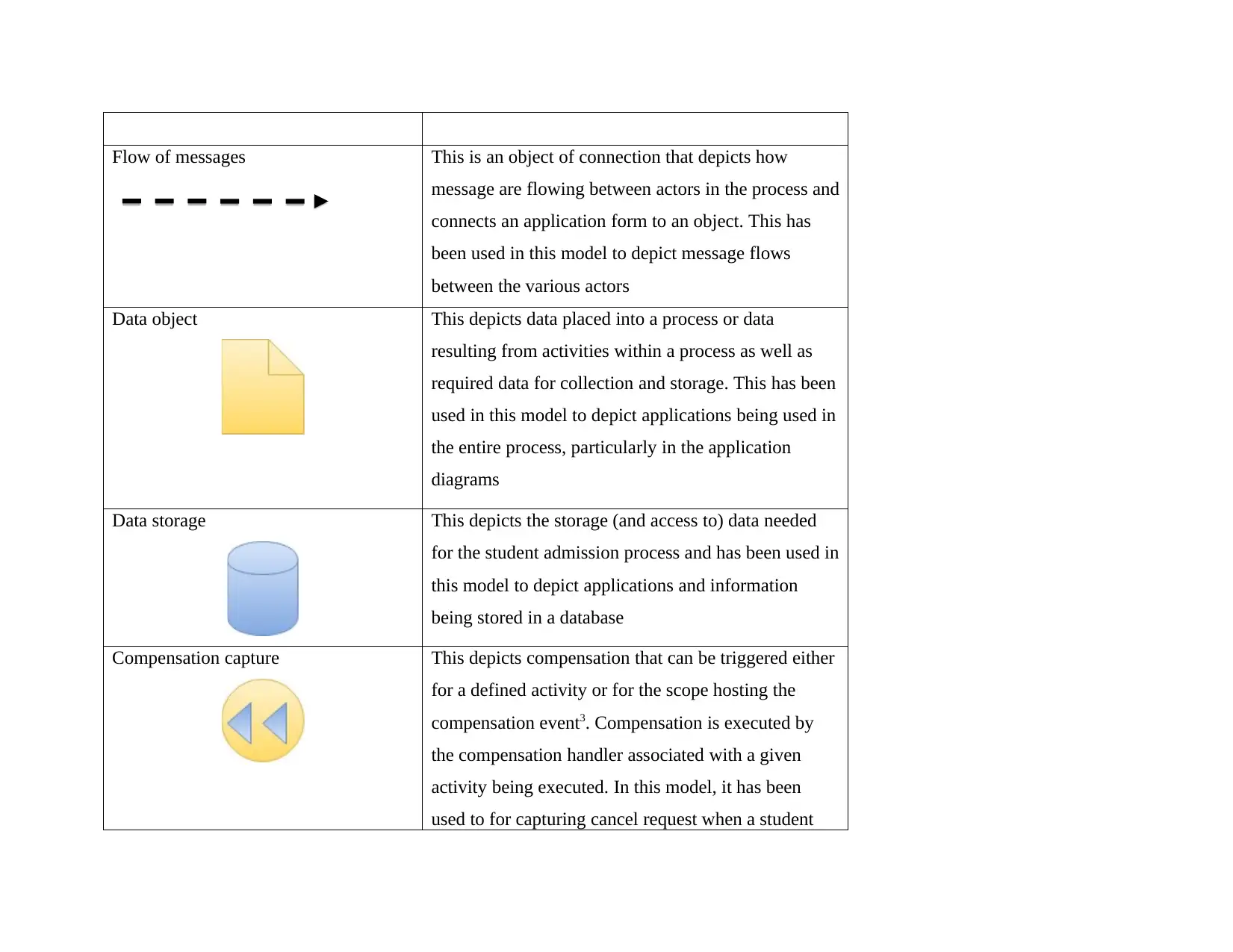
Flow of messages This is an object of connection that depicts how
message are flowing between actors in the process and
connects an application form to an object. This has
been used in this model to depict message flows
between the various actors
Data object This depicts data placed into a process or data
resulting from activities within a process as well as
required data for collection and storage. This has been
used in this model to depict applications being used in
the entire process, particularly in the application
diagrams
Data storage This depicts the storage (and access to) data needed
for the student admission process and has been used in
this model to depict applications and information
being stored in a database
Compensation capture This depicts compensation that can be triggered either
for a defined activity or for the scope hosting the
compensation event3. Compensation is executed by
the compensation handler associated with a given
activity being executed. In this model, it has been
used to for capturing cancel request when a student
message are flowing between actors in the process and
connects an application form to an object. This has
been used in this model to depict message flows
between the various actors
Data object This depicts data placed into a process or data
resulting from activities within a process as well as
required data for collection and storage. This has been
used in this model to depict applications being used in
the entire process, particularly in the application
diagrams
Data storage This depicts the storage (and access to) data needed
for the student admission process and has been used in
this model to depict applications and information
being stored in a database
Compensation capture This depicts compensation that can be triggered either
for a defined activity or for the scope hosting the
compensation event3. Compensation is executed by
the compensation handler associated with a given
activity being executed. In this model, it has been
used to for capturing cancel request when a student
⊘ This is a preview!⊘
Do you want full access?
Subscribe today to unlock all pages.
Trusted by 1+ million students worldwide

1 out of 21


Your All-in-One AI-Powered Toolkit for Academic Success.
+13062052269
info@desklib.com
Available 24*7 on WhatsApp / Email
![[object Object]](/_next/static/media/star-bottom.7253800d.svg)
Unlock your academic potential
Copyright © 2020–2026 A2Z Services. All Rights Reserved. Developed and managed by ZUCOL.