Economics for Business: UK Commercial Real Estate Market Report
VerifiedAdded on 2023/01/10
|14
|2910
|76
Report
AI Summary
This report provides a comprehensive analysis of the UK commercial real estate market. It begins with an introduction discussing the economic climate and the importance of commercial properties as indicators of business growth. The main body of the report includes a case analysis of the UK commercial real estate market, emphasizing the division between housing and commercial properties and the factors influencing investment decisions. It then delves into the determinants of long-term economic growth and price factors within the commercial real estate market, including demand-side policies, productivity, technological advancements, and government interventions. The report also examines unemployment rates, tax policies, and the Keynesian approach to supply-side policy. The report concludes with a discussion on the supply and demand elasticity of commercial property, offering insights into market dynamics. The analysis covers key aspects such as location value, market competition, and the impact of government policies, providing a detailed overview of the UK commercial real estate landscape.

Economics for Business

Paraphrase This Document
Need a fresh take? Get an instant paraphrase of this document with our AI Paraphraser

Table of Contents
INTRODUCTION...........................................................................................................................1
MAIN BODY...................................................................................................................................1
Case analysis of commercial real estate market of UK...............................................................1
Determinants of Long-term economic growth and price factors in commercial real estate
market..........................................................................................................................................2
An analysis of supply and demand elasticity of commercial property........................................8
CONCLUSION..............................................................................................................................10
REFERENCES..............................................................................................................................11
INTRODUCTION...........................................................................................................................1
MAIN BODY...................................................................................................................................1
Case analysis of commercial real estate market of UK...............................................................1
Determinants of Long-term economic growth and price factors in commercial real estate
market..........................................................................................................................................2
An analysis of supply and demand elasticity of commercial property........................................8
CONCLUSION..............................................................................................................................10
REFERENCES..............................................................................................................................11

⊘ This is a preview!⊘
Do you want full access?
Subscribe today to unlock all pages.

Trusted by 1+ million students worldwide
INTRODUCTION
Economic climate within a country can be estimated in terms of demand of commercial
properties, because it refers to good indicator of growing business. By making investment in this
real estate market, investors get benefit to get highest return via annuitized cash flow, over a
longer period of time. In this regard, investing in this part of real estate business, situated within
prime location, consider as wise and beneficial decision. Under this assignment, main concern is
given on factors that help in determining price how price of commercial real estate business
fluctuates in UK, via demand and supply analysis. In addition to this, analysis is also done on
intensity of elasticity of commercial property.
MAIN BODY
Case analysis of commercial real estate market of UK
Real estate market is mainly divided into main segments that are housing and commercial
properties, where first one helps in providing roof to people, while another one is constructed
mainly for offering workspace to organisations. In housing market, main consideration is given
on income level of people to meet basic necessities of them. On contrast, commercial property is
available for industry, to held business operations over there. Therefore, considering difference
in both type of properties, it has been evaluated that investment in housing market provides one
time return advantage, whereas if it is done in commercial one, then it gives opportunity for
builders to get long time returns with growing price rates of area. Commercial property can be
categorised into office workspace, retail stores, hospitality and manufacturing industry, special
purpose like medical centre, scientific research centre, educational institutions and more.
Therefore, such types of buildings are constructed as per demand of these sectors, with
installation of amenities and services they required for operating business.
In general, location of commercial property plays a crucial role within business success,
where in present inflation period where goes highly turned continuously, employers before
purchasing or hiring a building on rent, are required to re-examine entire aspects of commercial
property. In order to make investment within this property, both buyers, sellers or builders,
evaluate value of location first, because this would help businessmen in assess staffing as well as
inventory needs, within cutting down costs. However, preference of business class population
also concerns in terms on taking people either for launching a new venture or expanding the
1
Economic climate within a country can be estimated in terms of demand of commercial
properties, because it refers to good indicator of growing business. By making investment in this
real estate market, investors get benefit to get highest return via annuitized cash flow, over a
longer period of time. In this regard, investing in this part of real estate business, situated within
prime location, consider as wise and beneficial decision. Under this assignment, main concern is
given on factors that help in determining price how price of commercial real estate business
fluctuates in UK, via demand and supply analysis. In addition to this, analysis is also done on
intensity of elasticity of commercial property.
MAIN BODY
Case analysis of commercial real estate market of UK
Real estate market is mainly divided into main segments that are housing and commercial
properties, where first one helps in providing roof to people, while another one is constructed
mainly for offering workspace to organisations. In housing market, main consideration is given
on income level of people to meet basic necessities of them. On contrast, commercial property is
available for industry, to held business operations over there. Therefore, considering difference
in both type of properties, it has been evaluated that investment in housing market provides one
time return advantage, whereas if it is done in commercial one, then it gives opportunity for
builders to get long time returns with growing price rates of area. Commercial property can be
categorised into office workspace, retail stores, hospitality and manufacturing industry, special
purpose like medical centre, scientific research centre, educational institutions and more.
Therefore, such types of buildings are constructed as per demand of these sectors, with
installation of amenities and services they required for operating business.
In general, location of commercial property plays a crucial role within business success,
where in present inflation period where goes highly turned continuously, employers before
purchasing or hiring a building on rent, are required to re-examine entire aspects of commercial
property. In order to make investment within this property, both buyers, sellers or builders,
evaluate value of location first, because this would help businessmen in assess staffing as well as
inventory needs, within cutting down costs. However, preference of business class population
also concerns in terms on taking people either for launching a new venture or expanding the
1
Paraphrase This Document
Need a fresh take? Get an instant paraphrase of this document with our AI Paraphraser
existing ones. For opening a new firm, employers concern on tenancy rates to reduce cost and
accessibility of business to local customers. While established firms, emphasis more on level of
competition over such location, intensity of sales performance and willingness of people to
purchase their goods, while opening another branch over there.
In context with real estate of UK, with growing business of every sector and strong
economy of this nation, demand of commercial property is continuously increasing. Currently,
more than 1.4 million of companies are operating business over its area, which includes both
domestic and foreign industries. However, it has been a roughly idea because a number of small
scale companies that either in process or didn’t register their business. Therefore, considering
this fact, to provide workspace at present and help them in future in business expansion,
commercial real estate industry plays a main role in the same. Along with this, presence of
millions of companies in same sector with homogenous products or services, indicates high level
of competition. So, this would attract both foreign investors and international companies towards
productive location of UK, to make investment. London is one of the most demanded area in
commercial sector, that highly attracts the domestic and foreign investors to make investment
over its prime location of commercial property, in order to get high return. By sustained levels of
the tenancy or leasing activity, it has been calculated that more than 10.7m square feet of
workspace of offices has been transacted, in central London in 2019. Along with this, over 3m
square feet are currently offered to employers with purpose of business operations. Therefore, it
has been analysed from this statistical information that commercial property markets in London
are expected to get take-up levels in a wide manner.
Determinants of Long-term economic growth and price factors in commercial real estate market
In success and economic growth of commercial real estate market, there are number of
factors present like land value of premium location, productivity and financial performance of
the companies, increase of production quantity, expansion of small and large scale firms etc.
(Lecomte, 2019). With increasing number of companies, demand of commercial buildings is also
raised, where to meet the same, builders or constructors, emphasis on supply it in efficient
manner. Similarly, in developing or developed nations, value of land considerably more because
with increasing disposable income, purchasing power of people also increases. This would help
employers to launch new firms or expand existing ones, for enhancing their sales. Along with
this, to gain high return for longer period of time, both foreign and domestic investors are likely
2
accessibility of business to local customers. While established firms, emphasis more on level of
competition over such location, intensity of sales performance and willingness of people to
purchase their goods, while opening another branch over there.
In context with real estate of UK, with growing business of every sector and strong
economy of this nation, demand of commercial property is continuously increasing. Currently,
more than 1.4 million of companies are operating business over its area, which includes both
domestic and foreign industries. However, it has been a roughly idea because a number of small
scale companies that either in process or didn’t register their business. Therefore, considering
this fact, to provide workspace at present and help them in future in business expansion,
commercial real estate industry plays a main role in the same. Along with this, presence of
millions of companies in same sector with homogenous products or services, indicates high level
of competition. So, this would attract both foreign investors and international companies towards
productive location of UK, to make investment. London is one of the most demanded area in
commercial sector, that highly attracts the domestic and foreign investors to make investment
over its prime location of commercial property, in order to get high return. By sustained levels of
the tenancy or leasing activity, it has been calculated that more than 10.7m square feet of
workspace of offices has been transacted, in central London in 2019. Along with this, over 3m
square feet are currently offered to employers with purpose of business operations. Therefore, it
has been analysed from this statistical information that commercial property markets in London
are expected to get take-up levels in a wide manner.
Determinants of Long-term economic growth and price factors in commercial real estate market
In success and economic growth of commercial real estate market, there are number of
factors present like land value of premium location, productivity and financial performance of
the companies, increase of production quantity, expansion of small and large scale firms etc.
(Lecomte, 2019). With increasing number of companies, demand of commercial buildings is also
raised, where to meet the same, builders or constructors, emphasis on supply it in efficient
manner. Similarly, in developing or developed nations, value of land considerably more because
with increasing disposable income, purchasing power of people also increases. This would help
employers to launch new firms or expand existing ones, for enhancing their sales. Along with
this, to gain high return for longer period of time, both foreign and domestic investors are likely
2
to make more investment in commercial real estate market, to supply the buildings as per
demand. In context with UK, it is considered as one the developed nations where millions of
companies at small, medium or large scale are operating their business. For expansion or running
their business successfully, government of this nation also support them by providing loans or
funds on easy rates. In this regard, some factors that considered as price determinants of
commercial buildings and increases its demand at a premium location are described as below –
Demand side policies & micro-economy –
Quantity of production factor and productivity:
This factor plays an important role, where increase in factors of production like land,
labour, capital and entrepreneurship raise demand of commercial building as well. With rise in
demanded quantity of products, employers seek to operate business over such area where
availability of resources can be found easily. Similarly, labours represent entire working class
community who help firms in transformation of resources into finished or semi-finished goods,
for being offered at peak quality and efficiency. While capital includes money or physical assets
which is another main important factor of products, that allows employers to purchase land,
labour and operate business successfully. In this regard, it has been evaluated from Figure 1, that
economic output of England is continuously rising from billion to trillions. So, it indicates higher
production rate which is enough to influence foreign investors to make investment in its
commercial property, to gain high return. Along with this, presence of millions of firms in its
market, where London is one of the centric point of corporation, also indicates high productivity
rate of its working class population. It has also been interpreted that during 1980s, economy
experienced by UK at an economic boom, with 4% growth rate every year. However, it has led
to inflation with a large deficit of current account. Including this, with inflation that creep up to
ten percent, government of this nation has increased interest rates, which leads to turned
economic period into a deep recession. But from 1993 to 2007, this nation has enjoyed a long
period of economic growth uninterruptedly with fifteen years of positive growth. Under this
period, inflation has seemed to remain low where growth rate also closes to long-run rate of
trend. This period also seen to be sustainable, which results to create boom in bank lending as
well as real estate property prices.
3
demand. In context with UK, it is considered as one the developed nations where millions of
companies at small, medium or large scale are operating their business. For expansion or running
their business successfully, government of this nation also support them by providing loans or
funds on easy rates. In this regard, some factors that considered as price determinants of
commercial buildings and increases its demand at a premium location are described as below –
Demand side policies & micro-economy –
Quantity of production factor and productivity:
This factor plays an important role, where increase in factors of production like land,
labour, capital and entrepreneurship raise demand of commercial building as well. With rise in
demanded quantity of products, employers seek to operate business over such area where
availability of resources can be found easily. Similarly, labours represent entire working class
community who help firms in transformation of resources into finished or semi-finished goods,
for being offered at peak quality and efficiency. While capital includes money or physical assets
which is another main important factor of products, that allows employers to purchase land,
labour and operate business successfully. In this regard, it has been evaluated from Figure 1, that
economic output of England is continuously rising from billion to trillions. So, it indicates higher
production rate which is enough to influence foreign investors to make investment in its
commercial property, to gain high return. Along with this, presence of millions of firms in its
market, where London is one of the centric point of corporation, also indicates high productivity
rate of its working class population. It has also been interpreted that during 1980s, economy
experienced by UK at an economic boom, with 4% growth rate every year. However, it has led
to inflation with a large deficit of current account. Including this, with inflation that creep up to
ten percent, government of this nation has increased interest rates, which leads to turned
economic period into a deep recession. But from 1993 to 2007, this nation has enjoyed a long
period of economic growth uninterruptedly with fifteen years of positive growth. Under this
period, inflation has seemed to remain low where growth rate also closes to long-run rate of
trend. This period also seen to be sustainable, which results to create boom in bank lending as
well as real estate property prices.
3
⊘ This is a preview!⊘
Do you want full access?
Subscribe today to unlock all pages.
Trusted by 1+ million students worldwide
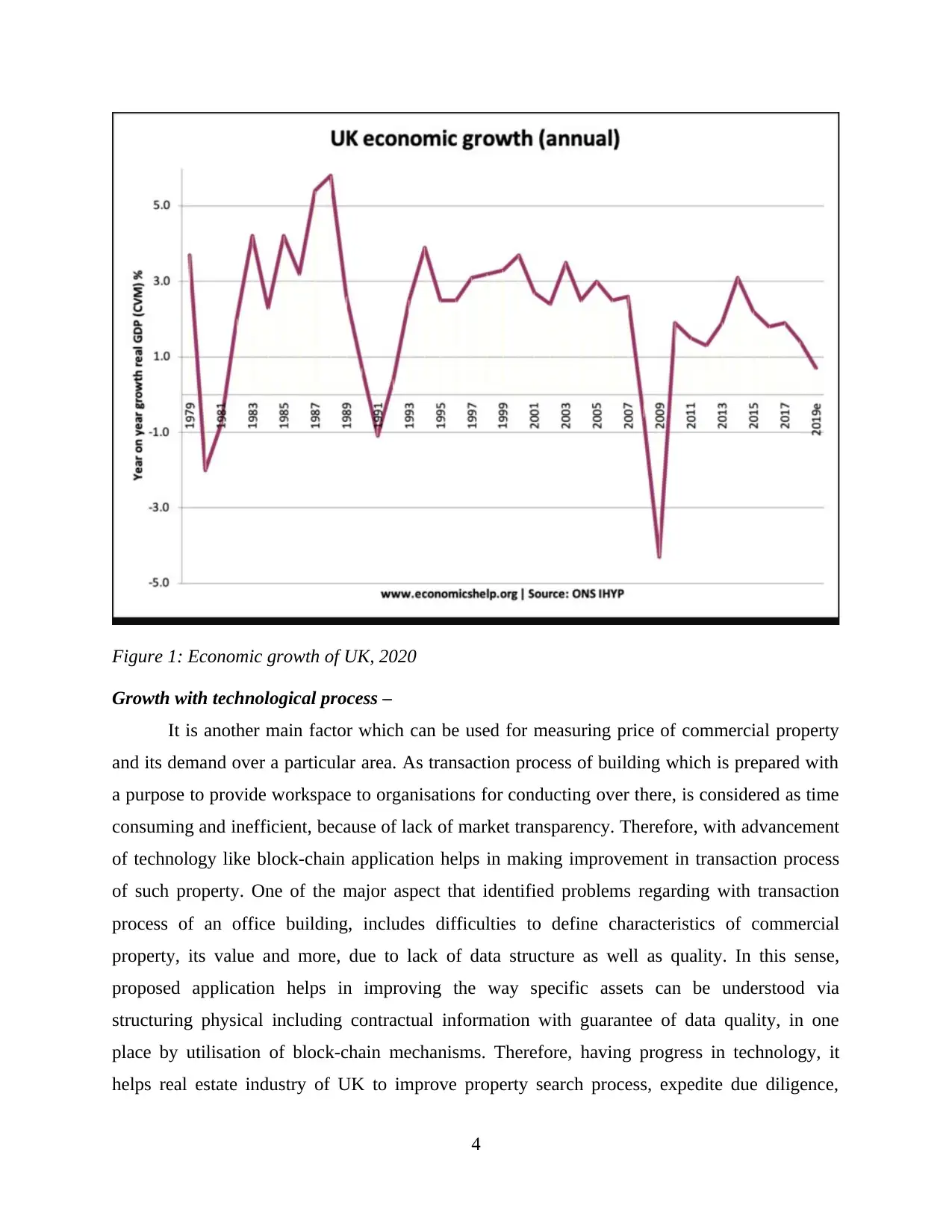
Figure 1: Economic growth of UK, 2020
Growth with technological process –
It is another main factor which can be used for measuring price of commercial property
and its demand over a particular area. As transaction process of building which is prepared with
a purpose to provide workspace to organisations for conducting over there, is considered as time
consuming and inefficient, because of lack of market transparency. Therefore, with advancement
of technology like block-chain application helps in making improvement in transaction process
of such property. One of the major aspect that identified problems regarding with transaction
process of an office building, includes difficulties to define characteristics of commercial
property, its value and more, due to lack of data structure as well as quality. In this sense,
proposed application helps in improving the way specific assets can be understood via
structuring physical including contractual information with guarantee of data quality, in one
place by utilisation of block-chain mechanisms. Therefore, having progress in technology, it
helps real estate industry of UK to improve property search process, expedite due diligence,
4
Growth with technological process –
It is another main factor which can be used for measuring price of commercial property
and its demand over a particular area. As transaction process of building which is prepared with
a purpose to provide workspace to organisations for conducting over there, is considered as time
consuming and inefficient, because of lack of market transparency. Therefore, with advancement
of technology like block-chain application helps in making improvement in transaction process
of such property. One of the major aspect that identified problems regarding with transaction
process of an office building, includes difficulties to define characteristics of commercial
property, its value and more, due to lack of data structure as well as quality. In this sense,
proposed application helps in improving the way specific assets can be understood via
structuring physical including contractual information with guarantee of data quality, in one
place by utilisation of block-chain mechanisms. Therefore, having progress in technology, it
helps real estate industry of UK to improve property search process, expedite due diligence,
4
Paraphrase This Document
Need a fresh take? Get an instant paraphrase of this document with our AI Paraphraser
subsequent and easy leasing etc. In addition to this, it also enables buyers and sellers to easy
make financial transaction for a commercial property.
Supply side policies & macro-economy –
Government interventions:
The fundamental attraction of real estate market of UK includes lower rate of
unemployment, tight supply of investment and occupational stock always remains intact,
currency advantage and more. These aspects will continue to support supply and demand for
commercial and investment property.
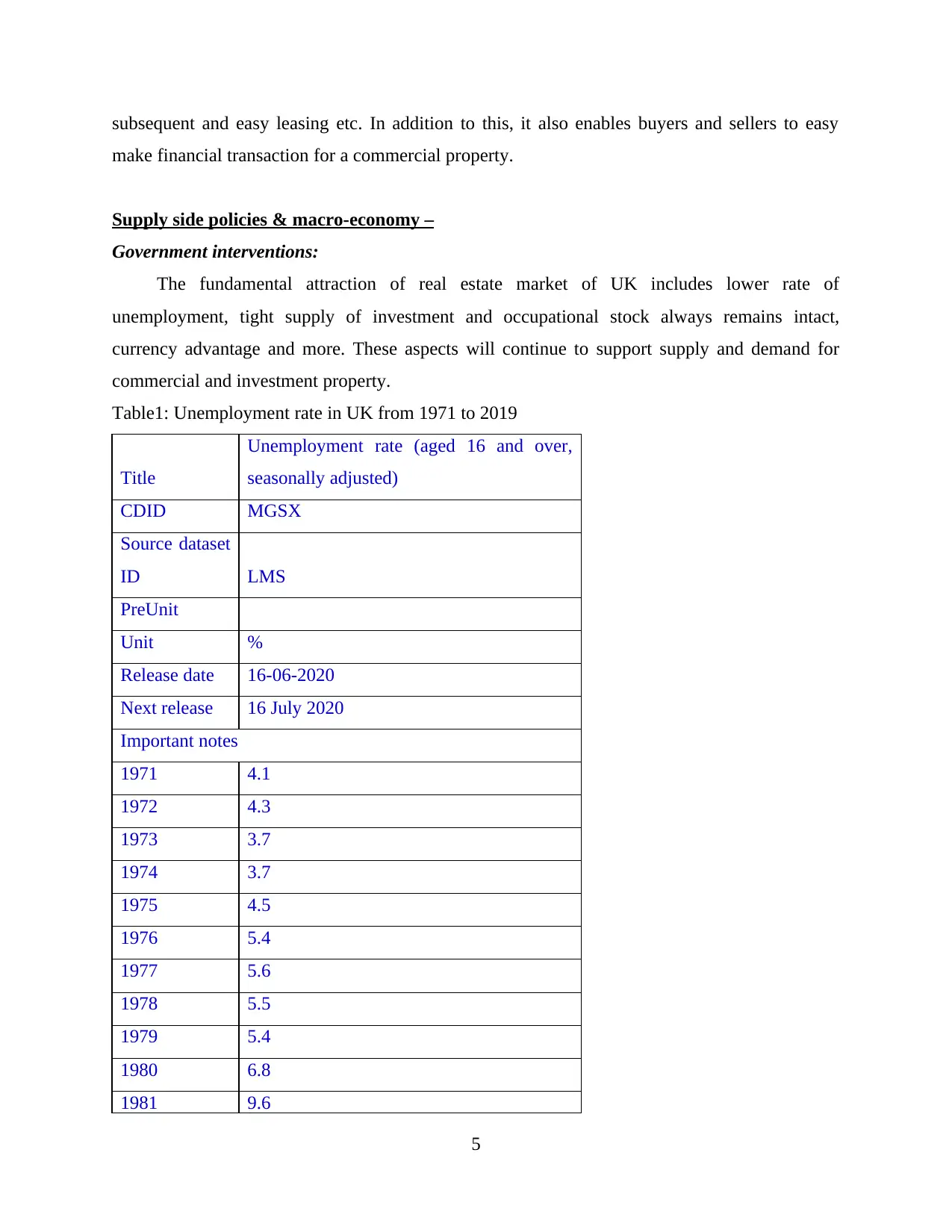
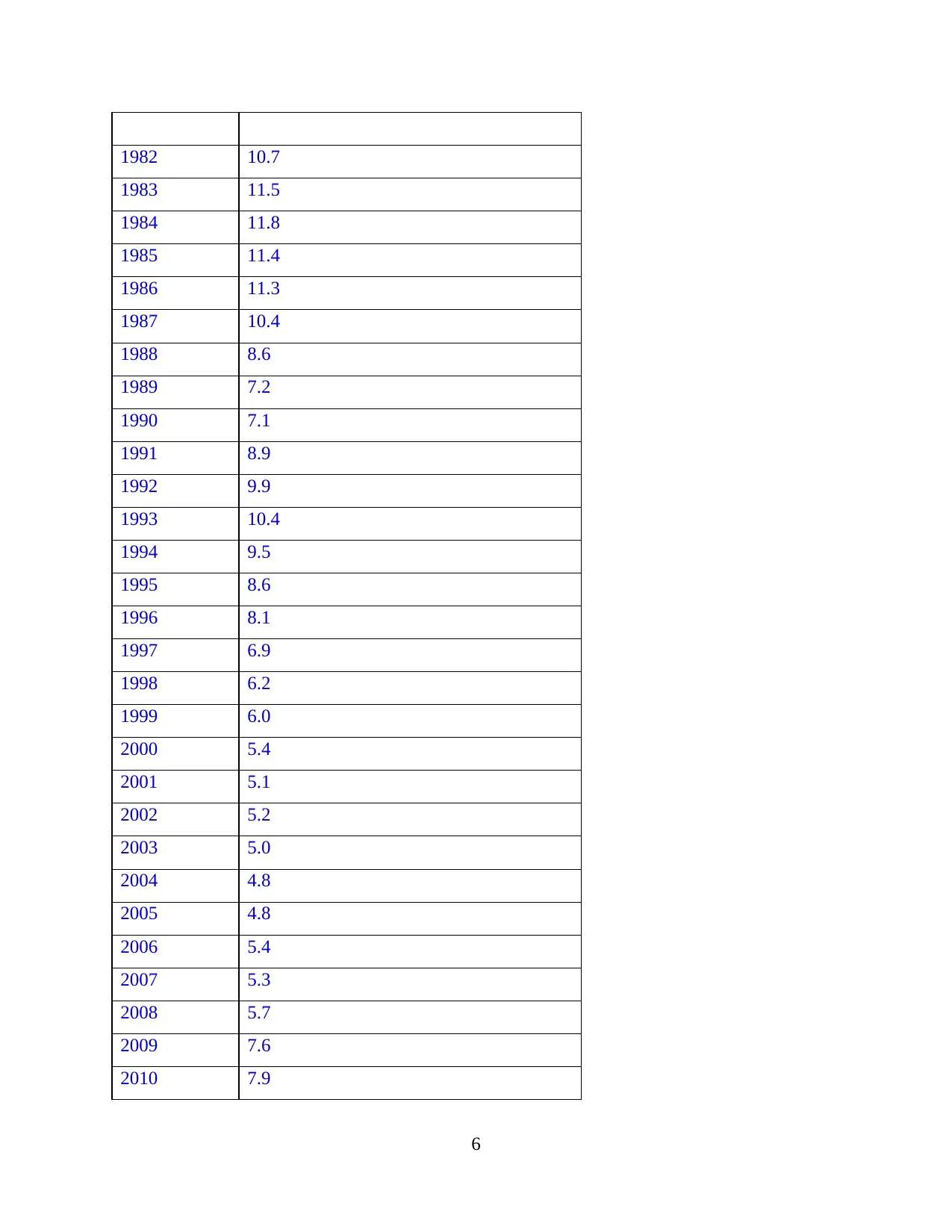
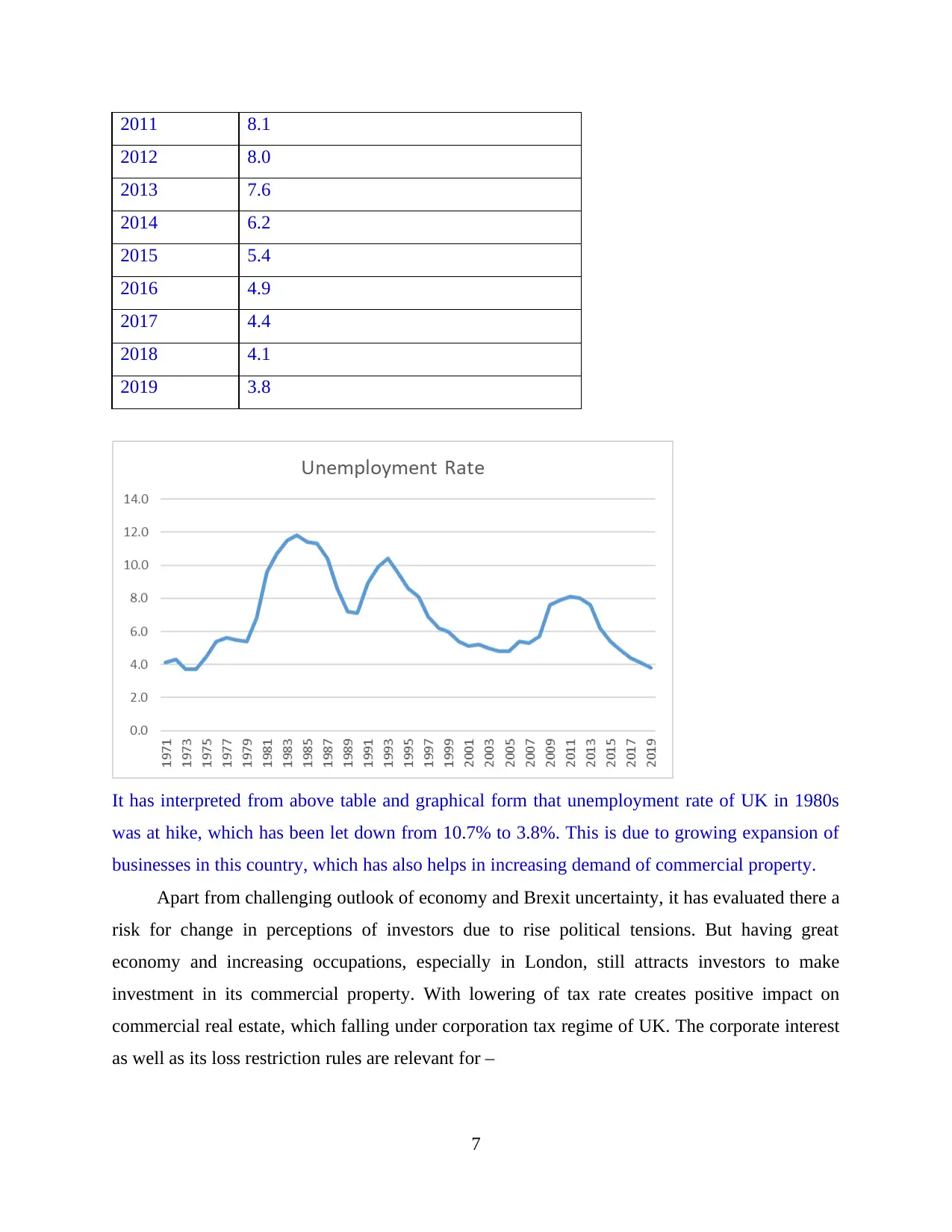
Table1: Unemployment rate in UK from 1971 to 2019
Title
Unemployment rate (aged 16 and over,
seasonally adjusted)
CDID MGSX
Source dataset
ID LMS
PreUnit
Unit %
Release date 16-06-2020
Next release 16 July 2020
Important notes
1971 4.1
1972 4.3
1973 3.7
1974 3.7
1975 4.5
1976 5.4
1977 5.6
1978 5.5
1979 5.4
1980 6.8
1981 9.6
5
make financial transaction for a commercial property.
Supply side policies & macro-economy –
Government interventions:
The fundamental attraction of real estate market of UK includes lower rate of
unemployment, tight supply of investment and occupational stock always remains intact,
currency advantage and more. These aspects will continue to support supply and demand for
commercial and investment property.
Table1: Unemployment rate in UK from 1971 to 2019
Title
Unemployment rate (aged 16 and over,
seasonally adjusted)
CDID MGSX
Source dataset
ID LMS
PreUnit
Unit %
Release date 16-06-2020
Next release 16 July 2020
Important notes
1971 4.1
1972 4.3
1973 3.7
1974 3.7
1975 4.5
1976 5.4
1977 5.6
1978 5.5
1979 5.4
1980 6.8
1981 9.6
5
1982 10.7
1983 11.5
1984 11.8
1985 11.4
1986 11.3
1987 10.4
1988 8.6
1989 7.2
1990 7.1
1991 8.9
1992 9.9
1993 10.4
1994 9.5
1995 8.6
1996 8.1
1997 6.9
1998 6.2
1999 6.0
2000 5.4
2001 5.1
2002 5.2
2003 5.0
2004 4.8
2005 4.8
2006 5.4
2007 5.3
2008 5.7
2009 7.6
2010 7.9
6
1983 11.5
1984 11.8
1985 11.4
1986 11.3
1987 10.4
1988 8.6
1989 7.2
1990 7.1
1991 8.9
1992 9.9
1993 10.4
1994 9.5
1995 8.6
1996 8.1
1997 6.9
1998 6.2
1999 6.0
2000 5.4
2001 5.1
2002 5.2
2003 5.0
2004 4.8
2005 4.8
2006 5.4
2007 5.3
2008 5.7
2009 7.6
2010 7.9
6
⊘ This is a preview!⊘
Do you want full access?
Subscribe today to unlock all pages.
Trusted by 1+ million students worldwide
2011 8.1
2012 8.0
2013 7.6
2014 6.2
2015 5.4
2016 4.9
2017 4.4
2018 4.1
2019 3.8
It has interpreted from above table and graphical form that unemployment rate of UK in 1980s
was at hike, which has been let down from 10.7% to 3.8%. This is due to growing expansion of
businesses in this country, which has also helps in increasing demand of commercial property.
Apart from challenging outlook of economy and Brexit uncertainty, it has evaluated there a
risk for change in perceptions of investors due to rise political tensions. But having great
economy and increasing occupations, especially in London, still attracts investors to make
investment in its commercial property. With lowering of tax rate creates positive impact on
commercial real estate, which falling under corporation tax regime of UK. The corporate interest
as well as its loss restriction rules are relevant for –
7
2012 8.0
2013 7.6
2014 6.2
2015 5.4
2016 4.9
2017 4.4
2018 4.1
2019 3.8
It has interpreted from above table and graphical form that unemployment rate of UK in 1980s
was at hike, which has been let down from 10.7% to 3.8%. This is due to growing expansion of
businesses in this country, which has also helps in increasing demand of commercial property.
Apart from challenging outlook of economy and Brexit uncertainty, it has evaluated there a
risk for change in perceptions of investors due to rise political tensions. But having great
economy and increasing occupations, especially in London, still attracts investors to make
investment in its commercial property. With lowering of tax rate creates positive impact on
commercial real estate, which falling under corporation tax regime of UK. The corporate interest
as well as its loss restriction rules are relevant for –
7
Paraphrase This Document
Need a fresh take? Get an instant paraphrase of this document with our AI Paraphraser
Restricting a group's deductions in terms of interest expense including other financing
costs to particular amount, which is commensurate with taxable activities within UK.
The rules also apply to various groups including net interest expense of about £2million
per annum. This could restrict financial cost deductibility significantly, that leads to a
increase in tax liabilities.
Furthermore, loss restriction rules on corporate also restrict a group's deductions in terms
of carried-forward losses which is near about £5million.
The sale of long leasehold or a freehold title to the commercial property as per fiscal policies
are exempted from VAT in UK. However, owners have an option as 'opt to tax' for their
property, that makes sale of such property subjected to VAT.
Keynesian approach to supply-side policy
The supply-side theory is generally held in stark contrast in commercial real estate
to Keynesian theory, that includes idea through which demand can falter. In this regard, if
covering the consumer demand drags economy condition into recession, then government will
intervene to stimuli by fiscal and monetary policies. Therefore, using this approach UK
Government helps in stimulating the demand and supply of commercial properties, to maintain
economy development. Along with this, to enhance demand of commercial buildings, income tax
cut is another intervention of government. Because it directly effects on supply of labour, where
work desires to work more after income and substitution effects. So, it increases labour supply
and aid firms to expand their business of quantity of production, to gain higher profitability. For
this purpose, they make more investment either in purchasing or taking buildings on rents.
An analysis of supply and demand elasticity of commercial property
Real estate market is a perfect example to analyse how supply and demand works, within an
industry. As per law of demand, when products or services value are decreases then it directly
increases demanded quantity of same, in a certain market, which results in creating shortage of
such goods. Similarly, supply law states that marketers tend to supply those quantities more that
are offered on high rates, which may create surplus of the same.
In context with real estate business, it heavily relies on law of supply and demand, therefore,
it is considered as prominent within industry. Each transaction involves a buyer (builder) and a
seller (tenants), where transaction among them for a property on lease or purchase dictates
equilibrium price of such property. A low supply in commercial building when number of
8
costs to particular amount, which is commensurate with taxable activities within UK.
The rules also apply to various groups including net interest expense of about £2million
per annum. This could restrict financial cost deductibility significantly, that leads to a
increase in tax liabilities.
Furthermore, loss restriction rules on corporate also restrict a group's deductions in terms
of carried-forward losses which is near about £5million.
The sale of long leasehold or a freehold title to the commercial property as per fiscal policies
are exempted from VAT in UK. However, owners have an option as 'opt to tax' for their
property, that makes sale of such property subjected to VAT.
Keynesian approach to supply-side policy
The supply-side theory is generally held in stark contrast in commercial real estate
to Keynesian theory, that includes idea through which demand can falter. In this regard, if
covering the consumer demand drags economy condition into recession, then government will
intervene to stimuli by fiscal and monetary policies. Therefore, using this approach UK
Government helps in stimulating the demand and supply of commercial properties, to maintain
economy development. Along with this, to enhance demand of commercial buildings, income tax
cut is another intervention of government. Because it directly effects on supply of labour, where
work desires to work more after income and substitution effects. So, it increases labour supply
and aid firms to expand their business of quantity of production, to gain higher profitability. For
this purpose, they make more investment either in purchasing or taking buildings on rents.
An analysis of supply and demand elasticity of commercial property
Real estate market is a perfect example to analyse how supply and demand works, within an
industry. As per law of demand, when products or services value are decreases then it directly
increases demanded quantity of same, in a certain market, which results in creating shortage of
such goods. Similarly, supply law states that marketers tend to supply those quantities more that
are offered on high rates, which may create surplus of the same.
In context with real estate business, it heavily relies on law of supply and demand, therefore,
it is considered as prominent within industry. Each transaction involves a buyer (builder) and a
seller (tenants), where transaction among them for a property on lease or purchase dictates
equilibrium price of such property. A low supply in commercial building when number of
8
companies are opening every day may drive prices up, that tends to create bidding wars. In this
regard, a specific property at a premium location and having high value, will be in more demand
by various parties (investors) for building the commercial site. Therefore, investor who offers
high price for purchasing a land to build commercial building, ends the bidding war. Similarly, in
a market where number of companies are already opened their business and have high occupied
commercial buildings, then price of lease rates or tenancy will raise more for seekers who want
to operate business. Therefore, it has been evaluated from supply and demand theories that there
is a price elasticity of commercial properties, which vary as per occupancy rate of buildings,
value of location and extent of competition. In this regard, before making investment in this part
of real estate, investors concern more on analysing these factors, in order to gain high
profitability.
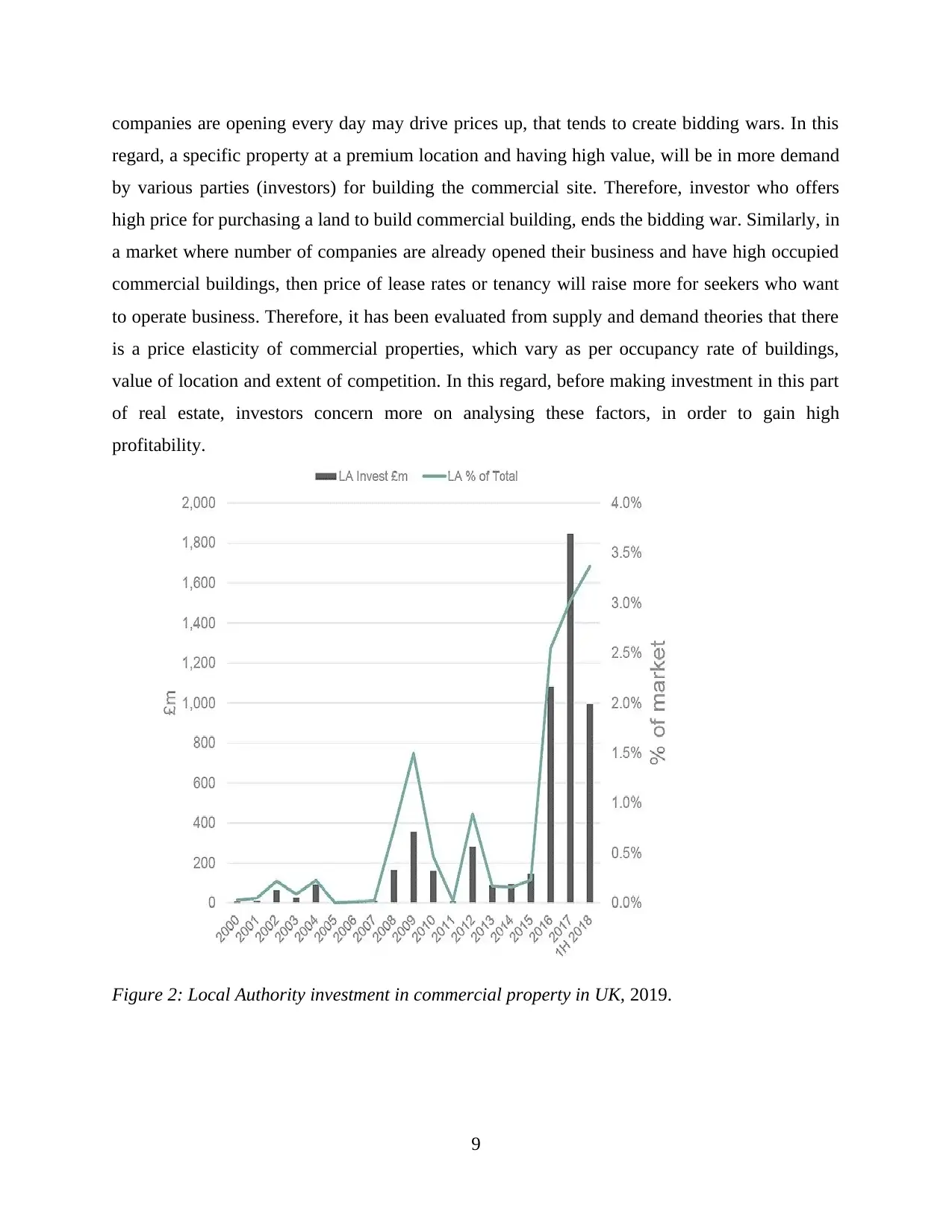
Figure 2: Local Authority investment in commercial property in UK, 2019.
9
regard, a specific property at a premium location and having high value, will be in more demand
by various parties (investors) for building the commercial site. Therefore, investor who offers
high price for purchasing a land to build commercial building, ends the bidding war. Similarly, in
a market where number of companies are already opened their business and have high occupied
commercial buildings, then price of lease rates or tenancy will raise more for seekers who want
to operate business. Therefore, it has been evaluated from supply and demand theories that there
is a price elasticity of commercial properties, which vary as per occupancy rate of buildings,
value of location and extent of competition. In this regard, before making investment in this part
of real estate, investors concern more on analysing these factors, in order to gain high
profitability.
Figure 2: Local Authority investment in commercial property in UK, 2019.
9
⊘ This is a preview!⊘
Do you want full access?
Subscribe today to unlock all pages.
Trusted by 1+ million students worldwide

1 out of 14


Related Documents


Your All-in-One AI-Powered Toolkit for Academic Success.
+13062052269
info@desklib.com
Available 24*7 on WhatsApp / Email
![[object Object]](/_next/static/media/star-bottom.7253800d.svg)
Unlock your academic potential
Copyright © 2020–2026 A2Z Services. All Rights Reserved. Developed and managed by ZUCOL.