Providing Guidance for Noise Control and Prevention in UK Hospitals
VerifiedAdded on 2022/10/18
|70
|18973
|15
Project
AI Summary
This project, titled "PROVIDING GUIDANCE FOR CONTROLLING AND PREVENTION OF NOISE IN UK HOSPITALS," investigates the critical issue of noise pollution within UK hospitals, particularly in Intensive Care Units (ICUs). The research addresses the detrimental effects of noise on patients, staff, and visitors, acknowledging the problem's impact on well-being and recovery. The study employs a multi-faceted approach, including literature reviews, data collection through noise level monitoring, and qualitative research. The project explores the sources of noise, such as mechanical equipment, staff conversations, and building design, and examines various control and prevention methods. These methods include construction techniques for sound absorption, the use of single-bed patient rooms, and strategies for reducing noise sources. The research presents analyzed solutions based on gathered data, aiming to provide practical guidance for improving the hospital environment. The project also includes findings from questionnaires and presents tables and figures illustrating the data and findings, culminating in conclusions and recommendations for noise reduction in UK hospitals.
Noise 1
PROVIDING GUIDANCE FOR CONTROLLING AND PREVENTION OF NOISE IN UK
HOSPITALS
Student’s Name
Tutor’s Name
University
City, State
PROVIDING GUIDANCE FOR CONTROLLING AND PREVENTION OF NOISE IN UK
HOSPITALS
Student’s Name
Tutor’s Name
University
City, State

Paraphrase This Document
Need a fresh take? Get an instant paraphrase of this document with our AI Paraphraser
Noise 2
Abstract
The noise control and prevention in UK hospitals research was an approach that aimed at
minimizing the sound levels of noise in UK hospitals. Especially in ICUs. This research was
coined out due to the presence of other studies identifying and recognizing the effect on the well-
being and quality of occupants (visitors, staff and patients). This act tried to help hospitalized
individuals. In this study, the method and design of the study as well as the collection of data all
worked based on the hypothesis that noise can be prevented and reduced through several
architectural designs and regulations. A literature review of related study results is also
documented to give guiding research that could be used in changing the hospital occupants’
behaviours and working practices. Data obtained from the noise level monitoring devices are
then used in coming up with an analyzed solution to UK hospital noise prevention and reduction
Keywords: Decibels, Speech Privacy, Intensive Care Unit, Absorption, Reverberation
Abstract
The noise control and prevention in UK hospitals research was an approach that aimed at
minimizing the sound levels of noise in UK hospitals. Especially in ICUs. This research was
coined out due to the presence of other studies identifying and recognizing the effect on the well-
being and quality of occupants (visitors, staff and patients). This act tried to help hospitalized
individuals. In this study, the method and design of the study as well as the collection of data all
worked based on the hypothesis that noise can be prevented and reduced through several
architectural designs and regulations. A literature review of related study results is also
documented to give guiding research that could be used in changing the hospital occupants’
behaviours and working practices. Data obtained from the noise level monitoring devices are
then used in coming up with an analyzed solution to UK hospital noise prevention and reduction
Keywords: Decibels, Speech Privacy, Intensive Care Unit, Absorption, Reverberation
Noise 3
Declaration
I the undersigned do hereby make a solemn declaration that this dissertation project,
PROVIDING GUIDANCE FOR CONTROLLING AND PREVENTION OF NOISE IN UK
HOSPITALS, is drawn from the basis of my own work accomplished in my pursuit of the
<COURSE OF STUDY> under Mr/Mrs. ……………………….. supervision. I give an
assertion that the conclusion and statements noted down came from my own research work.
Student’s name …………………………………
Student’s signature …………………………….
Declaration
I the undersigned do hereby make a solemn declaration that this dissertation project,
PROVIDING GUIDANCE FOR CONTROLLING AND PREVENTION OF NOISE IN UK
HOSPITALS, is drawn from the basis of my own work accomplished in my pursuit of the
<COURSE OF STUDY> under Mr/Mrs. ……………………….. supervision. I give an
assertion that the conclusion and statements noted down came from my own research work.
Student’s name …………………………………
Student’s signature …………………………….
⊘ This is a preview!⊘
Do you want full access?
Subscribe today to unlock all pages.

Trusted by 1+ million students worldwide
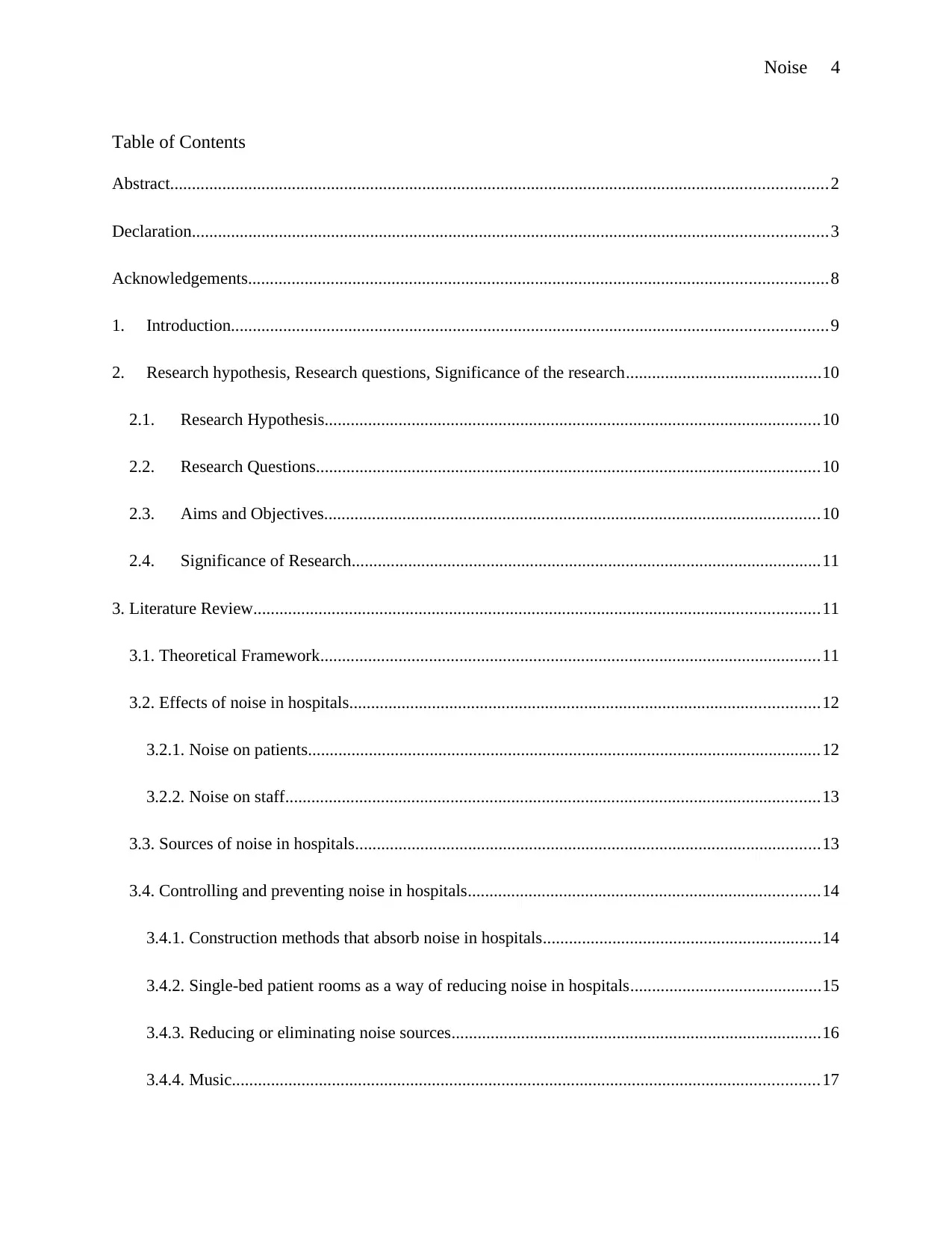
Noise 4
Table of Contents
Abstract.......................................................................................................................................................2
Declaration..................................................................................................................................................3
Acknowledgements.....................................................................................................................................8
1. Introduction.........................................................................................................................................9
2. Research hypothesis, Research questions, Significance of the research.............................................10
2.1. Research Hypothesis..................................................................................................................10
2.2. Research Questions....................................................................................................................10
2.3. Aims and Objectives..................................................................................................................10
2.4. Significance of Research............................................................................................................11
3. Literature Review..................................................................................................................................11
3.1. Theoretical Framework...................................................................................................................11
3.2. Effects of noise in hospitals............................................................................................................12
3.2.1. Noise on patients......................................................................................................................12
3.2.2. Noise on staff...........................................................................................................................13
3.3. Sources of noise in hospitals...........................................................................................................13
3.4. Controlling and preventing noise in hospitals.................................................................................14
3.4.1. Construction methods that absorb noise in hospitals................................................................14
3.4.2. Single-bed patient rooms as a way of reducing noise in hospitals............................................15
3.4.3. Reducing or eliminating noise sources.....................................................................................16
3.4.4. Music.......................................................................................................................................17
Table of Contents
Abstract.......................................................................................................................................................2
Declaration..................................................................................................................................................3
Acknowledgements.....................................................................................................................................8
1. Introduction.........................................................................................................................................9
2. Research hypothesis, Research questions, Significance of the research.............................................10
2.1. Research Hypothesis..................................................................................................................10
2.2. Research Questions....................................................................................................................10
2.3. Aims and Objectives..................................................................................................................10
2.4. Significance of Research............................................................................................................11
3. Literature Review..................................................................................................................................11
3.1. Theoretical Framework...................................................................................................................11
3.2. Effects of noise in hospitals............................................................................................................12
3.2.1. Noise on patients......................................................................................................................12
3.2.2. Noise on staff...........................................................................................................................13
3.3. Sources of noise in hospitals...........................................................................................................13
3.4. Controlling and preventing noise in hospitals.................................................................................14
3.4.1. Construction methods that absorb noise in hospitals................................................................14
3.4.2. Single-bed patient rooms as a way of reducing noise in hospitals............................................15
3.4.3. Reducing or eliminating noise sources.....................................................................................16
3.4.4. Music.......................................................................................................................................17
Paraphrase This Document
Need a fresh take? Get an instant paraphrase of this document with our AI Paraphraser
Noise 5
4. Methods.................................................................................................................................................17
4.1. Qualitative Research.......................................................................................................................17
5. Results...................................................................................................................................................19
6. Discussion.............................................................................................................................................26
7. Analyzed Solutions................................................................................................................................32
8. My perspective in regards to the issue of noise in hospitals...................................................................36
9. Conclusion.............................................................................................................................................43
10. Bibliography........................................................................................................................................46
11. References...........................................................................................................................................56
12. Appendix.............................................................................................................................................65
12.1. Questionnaires..............................................................................................................................65
4. Methods.................................................................................................................................................17
4.1. Qualitative Research.......................................................................................................................17
5. Results...................................................................................................................................................19
6. Discussion.............................................................................................................................................26
7. Analyzed Solutions................................................................................................................................32
8. My perspective in regards to the issue of noise in hospitals...................................................................36
9. Conclusion.............................................................................................................................................43
10. Bibliography........................................................................................................................................46
11. References...........................................................................................................................................56
12. Appendix.............................................................................................................................................65
12.1. Questionnaires..............................................................................................................................65

Noise 6
Table of Tables
Table 1- Showing ICU details.......................................................................................................19
Table 2- Showing levels of sound averaged through 24-hour readings in dB...............................20
Table of Tables
Table 1- Showing ICU details.......................................................................................................19
Table 2- Showing levels of sound averaged through 24-hour readings in dB...............................20
⊘ This is a preview!⊘
Do you want full access?
Subscribe today to unlock all pages.
Trusted by 1+ million students worldwide
Noise 7
Table of Figures
Figure 1 shows the average levels of sound for patients’ sited recording device..........................21
Figure 2 -shows the averaged levels of sound for recording devices sited centrally....................22
Figure 3 displays the peak levels of sound for recording devices sited adjacent to patients........23
Figure 4 shows the average number peak value numbers in every hour for monitoring devices
situated next to patients.................................................................................................................24
Figure 5 displays the 24-hour plot of frequency at John Radcliffe Hospital.................................25
Table of Figures
Figure 1 shows the average levels of sound for patients’ sited recording device..........................21
Figure 2 -shows the averaged levels of sound for recording devices sited centrally....................22
Figure 3 displays the peak levels of sound for recording devices sited adjacent to patients........23
Figure 4 shows the average number peak value numbers in every hour for monitoring devices
situated next to patients.................................................................................................................24
Figure 5 displays the 24-hour plot of frequency at John Radcliffe Hospital.................................25
Paraphrase This Document
Need a fresh take? Get an instant paraphrase of this document with our AI Paraphraser
Noise 8
Acknowledgements
I give thanks to my supervisors who have been the source of guidance throughout the
conductance of the research in that this dissertation has been successful due to
Mr…………………………… guidance.
Guide’s name ……………………………..
Supervisor’s signature …………………………….
Acknowledgements
I give thanks to my supervisors who have been the source of guidance throughout the
conductance of the research in that this dissertation has been successful due to
Mr…………………………… guidance.
Guide’s name ……………………………..
Supervisor’s signature …………………………….
Noise 9
1. Introduction
In the UK, it is observed that 30% of the personnel treated in hospitals come out of the ICUs
developing delirium or become confused1. When such instances occur, the patients will have
higher morbidity and mortality as well as increased hospital stays. Certain risk factors, therefore,
come up from the developed delirium due to ICU environment that includes the use of sedation
other than invasive procedures. These effects also have a relation with the sleep disturbing noise
coming from the environment in hospitals (Kawai, et al., 2019).
There exists a wide variation in different noise aggravation tendency and sensitivity, however, a
healthy adult has a tolerance to an A-weighted level of sound in decibels ranging between 50-55
dBA in the day while at night, 40 – 45 dBA. These noise levels would not be considered
disturbing to sleep or health2. On the other hand, in time-average levels of sound, sleep
disturbances due to quantifiable effects in low noise signals as 30 dBA to high levels of noise
such as 45 dBA.
The guidelines from the World Health Organisation consist of hospital noise levels with a
suggestion that the patients have it difficult in coping with high levels of stress coming from
environmental noise. The organization recommends not an excess of 35 dBA in areas where
patients get observed or treated with a maximum possible noise level of 40 dBA (Basner &
McGuire, 2018).
Hence, this paper comes into perfume research that assesses the levels of sound in the UK
hospital Cs comparing the observations to the WHO set standards3. Additionally, the research
recommends some preventive and control measures for similar kinds of noise.
1. Introduction
In the UK, it is observed that 30% of the personnel treated in hospitals come out of the ICUs
developing delirium or become confused1. When such instances occur, the patients will have
higher morbidity and mortality as well as increased hospital stays. Certain risk factors, therefore,
come up from the developed delirium due to ICU environment that includes the use of sedation
other than invasive procedures. These effects also have a relation with the sleep disturbing noise
coming from the environment in hospitals (Kawai, et al., 2019).
There exists a wide variation in different noise aggravation tendency and sensitivity, however, a
healthy adult has a tolerance to an A-weighted level of sound in decibels ranging between 50-55
dBA in the day while at night, 40 – 45 dBA. These noise levels would not be considered
disturbing to sleep or health2. On the other hand, in time-average levels of sound, sleep
disturbances due to quantifiable effects in low noise signals as 30 dBA to high levels of noise
such as 45 dBA.
The guidelines from the World Health Organisation consist of hospital noise levels with a
suggestion that the patients have it difficult in coping with high levels of stress coming from
environmental noise. The organization recommends not an excess of 35 dBA in areas where
patients get observed or treated with a maximum possible noise level of 40 dBA (Basner &
McGuire, 2018).
Hence, this paper comes into perfume research that assesses the levels of sound in the UK
hospital Cs comparing the observations to the WHO set standards3. Additionally, the research
recommends some preventive and control measures for similar kinds of noise.
⊘ This is a preview!⊘
Do you want full access?
Subscribe today to unlock all pages.
Trusted by 1+ million students worldwide
Noise 10
2. Research hypothesis, Research questions, Significance of the research
2.1. Research Hypothesis
This paper looks to work through the hypothesis based on the significance that the use of better
design factors, standard regulations and noise cancellation techniques can reduce the noise level
in UK hospitals.
2.2. Research Questions
With the use of the following research questions, the research becomes guided and structured
into accomplishing its targets:
1. Are there different noise prevention and control measures in hospitals?
2. Are there different materials possible for absorbing the noise in UK hospitals?
3. Are there different methods of construction that could help in hospital noise reduction?
2.3. Aims and Objectives
The paper aims to research on providing control and guidance measures in preventing UK
hospital noise. Hence, there exist various objectives set for achieving the research's aim. These
objectives include:
1. Identifying the different preventive and control measures relating to UK hospital noise4.
2. Determining the noise effects in hospitals
3. Determination of practices as well as measures able to be set in place for improving the
UK hospital environment.
4. Identifying the various sources of noise in hospitals.
2. Research hypothesis, Research questions, Significance of the research
2.1. Research Hypothesis
This paper looks to work through the hypothesis based on the significance that the use of better
design factors, standard regulations and noise cancellation techniques can reduce the noise level
in UK hospitals.
2.2. Research Questions
With the use of the following research questions, the research becomes guided and structured
into accomplishing its targets:
1. Are there different noise prevention and control measures in hospitals?
2. Are there different materials possible for absorbing the noise in UK hospitals?
3. Are there different methods of construction that could help in hospital noise reduction?
2.3. Aims and Objectives
The paper aims to research on providing control and guidance measures in preventing UK
hospital noise. Hence, there exist various objectives set for achieving the research's aim. These
objectives include:
1. Identifying the different preventive and control measures relating to UK hospital noise4.
2. Determining the noise effects in hospitals
3. Determination of practices as well as measures able to be set in place for improving the
UK hospital environment.
4. Identifying the various sources of noise in hospitals.
Paraphrase This Document
Need a fresh take? Get an instant paraphrase of this document with our AI Paraphraser
Noise 11
2.4. Significance of Research
Increased level of noise, as well as the stress induced by noise, harms the staffs' and patients'
wellbeing and performance5. Therefore, depicting a poor caring ability of hospitals leading to
burnouts. Additionally, the high level of noise has been heavily identified to raise the unrest of
patients, reduce their recovery rate and healing (Zhang, et al., 2019). There is an increased rate of
hospitalization due to induced stress. This research will, therefore, become of great importance in
the improvement of staff, patient and visitor wellbeing within the UK hospitals6.
3. Literature Review
3.1. Theoretical Framework
Through the use of numerous literature bodies, the research gets to spell the big pervasive
problem existing in UK hospitals as well as the whole world, hospital noise. There are guideline
values from the World Health Organizations regarding the noise in the hospital background in
the rooms of patients to range between 35 dBA to 30 dBA in the day and at night respectively.
On the other hand, the wards would only reach a peak of 40 dBA7. The noise levels in hospitals
are reported as per the various literature researches to help determine the trend. Also, the studies
are to help in producing a comparison and determining the compliant hospitals with regards to
the WHO guidelines (Darbyshire & Young, 2013).
Also, the levels of noise in hospitals should be identified whether it is very high or has been
rising8. The noise levels are to be identified whether they are a day or night hours peak noise.
The decibel unit is used in quantifying the intensity of sound pressure or the loudness in
logarithmic scales. The decibels unit will, therefore, classify the intensity of noise and be used in
identifying the sources of noise in hospital equipment comparing them to various machines to
depict the intensity (Montague, et al., 2009). For example, 90 dBA can be compared to a passing
2.4. Significance of Research
Increased level of noise, as well as the stress induced by noise, harms the staffs' and patients'
wellbeing and performance5. Therefore, depicting a poor caring ability of hospitals leading to
burnouts. Additionally, the high level of noise has been heavily identified to raise the unrest of
patients, reduce their recovery rate and healing (Zhang, et al., 2019). There is an increased rate of
hospitalization due to induced stress. This research will, therefore, become of great importance in
the improvement of staff, patient and visitor wellbeing within the UK hospitals6.
3. Literature Review
3.1. Theoretical Framework
Through the use of numerous literature bodies, the research gets to spell the big pervasive
problem existing in UK hospitals as well as the whole world, hospital noise. There are guideline
values from the World Health Organizations regarding the noise in the hospital background in
the rooms of patients to range between 35 dBA to 30 dBA in the day and at night respectively.
On the other hand, the wards would only reach a peak of 40 dBA7. The noise levels in hospitals
are reported as per the various literature researches to help determine the trend. Also, the studies
are to help in producing a comparison and determining the compliant hospitals with regards to
the WHO guidelines (Darbyshire & Young, 2013).
Also, the levels of noise in hospitals should be identified whether it is very high or has been
rising8. The noise levels are to be identified whether they are a day or night hours peak noise.
The decibel unit is used in quantifying the intensity of sound pressure or the loudness in
logarithmic scales. The decibels unit will, therefore, classify the intensity of noise and be used in
identifying the sources of noise in hospital equipment comparing them to various machines to
depict the intensity (Montague, et al., 2009). For example, 90 dBA can be compared to a passing
Noise 12
bus on a highway. This is to develop and expose the surprising very high level of noise in UK
hospitals together with their serous effects to the patients, staff and visitors. With this exposed,
acoustic designs can then be identified to counter the sound effects in hospitals. Thereby,
preventing and controlling the noise9.
3.2. Effects of noise in hospitals
3.2.1. Noise on patients
Numerous research have been done looking at how patients get influenced by the bad effects of
noise on patients as well as staff hospitals10. Other than being the annoyance source, hospitals
with loud noises are being linked to arousals and sleep disturbances in several patients. Looking
at the studies conducted by Grossman, et al. (2017), adult patients as well as infants are noted to
be affected by noise describing that they noise awakens and disrupts sleep in patients. On the
other hand, the care routines being used in hospitals is also being described as noise due to their
sleep-disturbing effects11. These factors are to be considered when tackling noise due to their
negative effects on sleep.
The quiet time has been noted to be very critical in ICU environments in that the oxygen
saturation content is seen to reduce in higher noise levels as seen in (Nunez, et al., 2016). Hence,
there are required oxygen support therapies in such environments. Also, the high level of noise
raises the pressure of blood, respiration rate together with the rate of the heart as well as
worsened sleep. In another study by Ahmed (2016), there exists evidence that very high noise
levels negatively affect wound healing in that patient exposed to high noise levels stayed in
hospitals once through with the surgery. Also, Carayon (2016) discovered that in very high noise
levels exceeding 60 dBA required the use of more medications in surgery patients for recovery.
bus on a highway. This is to develop and expose the surprising very high level of noise in UK
hospitals together with their serous effects to the patients, staff and visitors. With this exposed,
acoustic designs can then be identified to counter the sound effects in hospitals. Thereby,
preventing and controlling the noise9.
3.2. Effects of noise in hospitals
3.2.1. Noise on patients
Numerous research have been done looking at how patients get influenced by the bad effects of
noise on patients as well as staff hospitals10. Other than being the annoyance source, hospitals
with loud noises are being linked to arousals and sleep disturbances in several patients. Looking
at the studies conducted by Grossman, et al. (2017), adult patients as well as infants are noted to
be affected by noise describing that they noise awakens and disrupts sleep in patients. On the
other hand, the care routines being used in hospitals is also being described as noise due to their
sleep-disturbing effects11. These factors are to be considered when tackling noise due to their
negative effects on sleep.
The quiet time has been noted to be very critical in ICU environments in that the oxygen
saturation content is seen to reduce in higher noise levels as seen in (Nunez, et al., 2016). Hence,
there are required oxygen support therapies in such environments. Also, the high level of noise
raises the pressure of blood, respiration rate together with the rate of the heart as well as
worsened sleep. In another study by Ahmed (2016), there exists evidence that very high noise
levels negatively affect wound healing in that patient exposed to high noise levels stayed in
hospitals once through with the surgery. Also, Carayon (2016) discovered that in very high noise
levels exceeding 60 dBA required the use of more medications in surgery patients for recovery.
⊘ This is a preview!⊘
Do you want full access?
Subscribe today to unlock all pages.
Trusted by 1+ million students worldwide

1 out of 70


Your All-in-One AI-Powered Toolkit for Academic Success.
+13062052269
info@desklib.com
Available 24*7 on WhatsApp / Email
![[object Object]](/_next/static/media/star-bottom.7253800d.svg)
Unlock your academic potential
Copyright © 2020–2026 A2Z Services. All Rights Reserved. Developed and managed by ZUCOL.