Comprehensive Analysis of Liver Cirrhosis: From Cause to Treatment
VerifiedAdded on 2023/05/28
|9
|2259
|189
Report
AI Summary
This project report provides a comprehensive analysis of liver cirrhosis, focusing on its causes, particularly the contribution of alcohol, symptoms, diagnostic procedures, and treatment options. It begins by outlining the anatomy and normal functions of the liver, followed by a detailed examination of alcohol's effects on the liver, leading to conditions like alcoholic hepatitis and cirrhosis. Diagnostic methods such as CT scans, MRI, blood tests, liver endoscopy, and biopsy are discussed, along with treatment strategies for managing liver cirrhosis and its complications, including portal hypertension, ascites, and increased risk of liver cancer. The report also presents experimental results comparing patients with fungal and bacterial infections related to liver cirrhosis, analyzing mortality rates and serological findings. It concludes by highlighting the importance of early diagnosis, lifestyle changes, and medical interventions to improve the condition and prevent further liver damage, emphasizing that Desklib offers a platform for students to access similar solved assignments and study resources.

Running head: LIVER CIRRHOSIS
Liver cirrhosis
Name of the student:
Name of the university
Author note:
Liver cirrhosis
Name of the student:
Name of the university
Author note:
Paraphrase This Document
Need a fresh take? Get an instant paraphrase of this document with our AI Paraphraser

1
LIVER CIRRHOSIS
Abstract:
The major purpose of the paper is to provide a clear understanding of the cause of liver
cirrhosis and contribution of alcohol in occurrence of liver cirrhosis. Thepaper provided the
incidents and statistics of occurrence of the liver cirrhosis with the assistance of the current
literature. The first part of the project report describes the clear understanding of the anatomy
of the liver andnormal function of the liver. The second part analyses the effect of alcohol in
causing liver cirrhosis and also includes the symptoms of liver cirrhosis. The third part
describesthe diagnosis proceduresfor liver cirrhosis which include CT scan, MRI, blood test,
liver endoscopy and biopsy. This project report also includes treatment procedures for
managing livercirrhosis along with the severe consequences of the liver cirrhosis. Lastly, the
project report provides a concise conclusion in order to provide the summative overview of
the liver cirrhosis.
LIVER CIRRHOSIS
Abstract:
The major purpose of the paper is to provide a clear understanding of the cause of liver
cirrhosis and contribution of alcohol in occurrence of liver cirrhosis. Thepaper provided the
incidents and statistics of occurrence of the liver cirrhosis with the assistance of the current
literature. The first part of the project report describes the clear understanding of the anatomy
of the liver andnormal function of the liver. The second part analyses the effect of alcohol in
causing liver cirrhosis and also includes the symptoms of liver cirrhosis. The third part
describesthe diagnosis proceduresfor liver cirrhosis which include CT scan, MRI, blood test,
liver endoscopy and biopsy. This project report also includes treatment procedures for
managing livercirrhosis along with the severe consequences of the liver cirrhosis. Lastly, the
project report provides a concise conclusion in order to provide the summative overview of
the liver cirrhosis.

2
LIVER CIRRHOSIS
Introduction:
The major purpose of thisproject report is to provide a clear understanding of the
main cause of liver cirrhosis and the contribution of alcohol in occurrence of liver cirrhosis.
Liver cirrhosis is defined as the histological development of regenerative nodules, which is
surrounded by fibrous bands because of chronic liver disease (Mokdadet al. 2014). The liver
disease, which is the end stage, is the third most commonpremature death in the United
Kingdom. The recent population-based paper suggested 32% of the death is related to the
liver cirrhosis(Fjeldet al. 2016). Hospital-based studies suggested that the death rate
associated with Liver cirrhosis is approximately 65%. A paper Foster et al., (2016),
suggested that the overall standardized mortality rate for the cirrhosis in 1992 was 21.2%,
which increased as it was 40.8%. in 2008. In 2013, 29 million people in the United Kingdom
reported chronic liver cirrhosis, which further gives rise to cancer. Therefore, management
and prevention of the liver cirrhosis are crucial for reducing the global burden of disease (Seo
et al. 2015). This project report will illustrate the anatomy and functions of the liver, the
effect of alcohol and treatment in the following paragraphs.
Anatomyand function of liver:
The liver is a major organ situated in the upper-right hand portion of the abdominal
cavity. The stomach lies beneath the liver and to the right lays thekidneys and the intestines.
The liver regulates chemical levels in the blood and excretes a substance called bile. Liver
filters blood from the stomach and intestines when blood passes through it, removing toxins
and creates the necessary nutrients needed for the body.
The liver converts ammonia, a by-product of metabolism in the body, into urea. Liver plays a
massive role in breaking downthealcohol, drugs and therefore detoxifies the organ by
reducing potential harmful substances.Liverplays a major role in creating a strong immune
LIVER CIRRHOSIS
Introduction:
The major purpose of thisproject report is to provide a clear understanding of the
main cause of liver cirrhosis and the contribution of alcohol in occurrence of liver cirrhosis.
Liver cirrhosis is defined as the histological development of regenerative nodules, which is
surrounded by fibrous bands because of chronic liver disease (Mokdadet al. 2014). The liver
disease, which is the end stage, is the third most commonpremature death in the United
Kingdom. The recent population-based paper suggested 32% of the death is related to the
liver cirrhosis(Fjeldet al. 2016). Hospital-based studies suggested that the death rate
associated with Liver cirrhosis is approximately 65%. A paper Foster et al., (2016),
suggested that the overall standardized mortality rate for the cirrhosis in 1992 was 21.2%,
which increased as it was 40.8%. in 2008. In 2013, 29 million people in the United Kingdom
reported chronic liver cirrhosis, which further gives rise to cancer. Therefore, management
and prevention of the liver cirrhosis are crucial for reducing the global burden of disease (Seo
et al. 2015). This project report will illustrate the anatomy and functions of the liver, the
effect of alcohol and treatment in the following paragraphs.
Anatomyand function of liver:
The liver is a major organ situated in the upper-right hand portion of the abdominal
cavity. The stomach lies beneath the liver and to the right lays thekidneys and the intestines.
The liver regulates chemical levels in the blood and excretes a substance called bile. Liver
filters blood from the stomach and intestines when blood passes through it, removing toxins
and creates the necessary nutrients needed for the body.
The liver converts ammonia, a by-product of metabolism in the body, into urea. Liver plays a
massive role in breaking downthealcohol, drugs and therefore detoxifies the organ by
reducing potential harmful substances.Liverplays a major role in creating a strong immune
⊘ This is a preview!⊘
Do you want full access?
Subscribe today to unlock all pages.

Trusted by 1+ million students worldwide

3
LIVER CIRRHOSIS
system that can fight against infection, creates proteins responsible for blood clotting, breaks
down old and damaged red blood cells.Furthermore, it stores extra blood sugar as glycogen
for providing energy.
The liver is a regenerative organ due to the ability to regrow rapidly. The most dynamic
aspect is that even while it is regenerating the liver continues to perform all of its functions.
However, liver can be infected by hepatitis, which further gives rise to cirhhosis. Even liver
having serious injury may give negative results for liver test with no abnormalities. A healthy
balanced diet will ensure the liver suffers no injury. The liver usually repairs itself by
rebuilding new liver cells when the old ones are damaged. However,repeated damage can
result in permanent scars which is known ascirrhosis.
Heavy alcohol consumption over an extended period can result in Alcoholic hepatitis. The
heavy use of alcohol over a short periodis results in rapid rise in blood alcohol concentration
causing ‘’drunkenness’’. The effect varies from individual to individual and ranges from
exhilaration to relaxation, memory loss, violent behaviour and nausea. In extreme cases,
excessive consumption of alcohol can lead to coma. Most alcohol users unaware of the
destruction of live by chemicals inalcohol.
Effect of alcohol on liver:
Alcohol hepatitis is a disease caused by the inflammation of the liver. The extensive
use of alcohol results in cirrhosis, excessive bleeding or even liver failure.
Cirrhosis is an irreversible liver disease. Patients with cirrhosis develop ascites, jaundice and
their liver cells are replaced by fibrous tissue. Therefore, liver cells are destroyed by toxic
chemicals or a viral hepatitis or commonly by high alcohol consumption.
Excessive alcohol consumption is a potential risk factor of terminal liver cirrhosis. Alcoholic
liver damage is differentiated by three main stages:-
LIVER CIRRHOSIS
system that can fight against infection, creates proteins responsible for blood clotting, breaks
down old and damaged red blood cells.Furthermore, it stores extra blood sugar as glycogen
for providing energy.
The liver is a regenerative organ due to the ability to regrow rapidly. The most dynamic
aspect is that even while it is regenerating the liver continues to perform all of its functions.
However, liver can be infected by hepatitis, which further gives rise to cirhhosis. Even liver
having serious injury may give negative results for liver test with no abnormalities. A healthy
balanced diet will ensure the liver suffers no injury. The liver usually repairs itself by
rebuilding new liver cells when the old ones are damaged. However,repeated damage can
result in permanent scars which is known ascirrhosis.
Heavy alcohol consumption over an extended period can result in Alcoholic hepatitis. The
heavy use of alcohol over a short periodis results in rapid rise in blood alcohol concentration
causing ‘’drunkenness’’. The effect varies from individual to individual and ranges from
exhilaration to relaxation, memory loss, violent behaviour and nausea. In extreme cases,
excessive consumption of alcohol can lead to coma. Most alcohol users unaware of the
destruction of live by chemicals inalcohol.
Effect of alcohol on liver:
Alcohol hepatitis is a disease caused by the inflammation of the liver. The extensive
use of alcohol results in cirrhosis, excessive bleeding or even liver failure.
Cirrhosis is an irreversible liver disease. Patients with cirrhosis develop ascites, jaundice and
their liver cells are replaced by fibrous tissue. Therefore, liver cells are destroyed by toxic
chemicals or a viral hepatitis or commonly by high alcohol consumption.
Excessive alcohol consumption is a potential risk factor of terminal liver cirrhosis. Alcoholic
liver damage is differentiated by three main stages:-
Paraphrase This Document
Need a fresh take? Get an instant paraphrase of this document with our AI Paraphraser

4
LIVER CIRRHOSIS
1) Steatosis – this is caused by excessive fat stored in the liver and mild alcohol
consumption. A healthy liver should contain little or no fat therefore excess fat in the
liver can cause damage.
2) Acute alcoholic hepatitis – this condition is caused by alcohol misuse over a long
period. However,the condition can be improved by stopping the consumption of
alcohol permanently.
3) Cirrhosis – At this stage, the liver has become severely scarred and the damage is
irreversible. However, not consuming alcohol would prevent any further damage. At
this stage the constant consumption of alcohol, reduce the chance of living to 50%.
Experiment,Results And Discussion
We reflectively inspected different serum laboratory discoveries [prothrombin time
(PT%), egg whites levels, add up to bilirubin levels, creatinine (Cr) levels], the Child-Pugh
scores, and aggregate protein levels in the ascitic liquid at the season of paracentesis and
contrasted these discoveries among patient and Liver Cirrhosiss with contagious ailment, i.e.,
unconstrained peritonitis related with parasitic culture-positive ascites (SFP and fungiascites),
and those with bacterial malady, i.e., unconstrained peritonitis related with bacterial culture-
positive ascites (culturepositive SBP and bacterascites).
Examination of Short-Term Prognosis
We reflectively analyzed the momentary mortality (up to multi month after
paracentesis) between patient with Liver Cirrhosiss with contagious ailment and those with
bacterial sickness.
Measurable Analysis
The information were broke down utilizing the Statistical Package for Social
Sciences, rendition 30 (SPSS, Inc., Chicago, IL, USA). A chi-square test was utilized to look
LIVER CIRRHOSIS
1) Steatosis – this is caused by excessive fat stored in the liver and mild alcohol
consumption. A healthy liver should contain little or no fat therefore excess fat in the
liver can cause damage.
2) Acute alcoholic hepatitis – this condition is caused by alcohol misuse over a long
period. However,the condition can be improved by stopping the consumption of
alcohol permanently.
3) Cirrhosis – At this stage, the liver has become severely scarred and the damage is
irreversible. However, not consuming alcohol would prevent any further damage. At
this stage the constant consumption of alcohol, reduce the chance of living to 50%.
Experiment,Results And Discussion
We reflectively inspected different serum laboratory discoveries [prothrombin time
(PT%), egg whites levels, add up to bilirubin levels, creatinine (Cr) levels], the Child-Pugh
scores, and aggregate protein levels in the ascitic liquid at the season of paracentesis and
contrasted these discoveries among patient and Liver Cirrhosiss with contagious ailment, i.e.,
unconstrained peritonitis related with parasitic culture-positive ascites (SFP and fungiascites),
and those with bacterial malady, i.e., unconstrained peritonitis related with bacterial culture-
positive ascites (culturepositive SBP and bacterascites).
Examination of Short-Term Prognosis
We reflectively analyzed the momentary mortality (up to multi month after
paracentesis) between patient with Liver Cirrhosiss with contagious ailment and those with
bacterial sickness.
Measurable Analysis
The information were broke down utilizing the Statistical Package for Social
Sciences, rendition 30 (SPSS, Inc., Chicago, IL, USA). A chi-square test was utilized to look

5
LIVER CIRRHOSIS
at the 2-month death rates between patient with Liver Cirrhosiss with parasitic ailment and
those with bacterial ailment. The unpaired ttest was utilized to analyze the serological and
ascitic laboratory discoveries and Child-Pugh scores between the gatherings. All qualities
were introduced as mean ± standard deviations, and p<0.06 was considered measurably huge.
Results
Examination of serological and ascitic laboratory discoveries
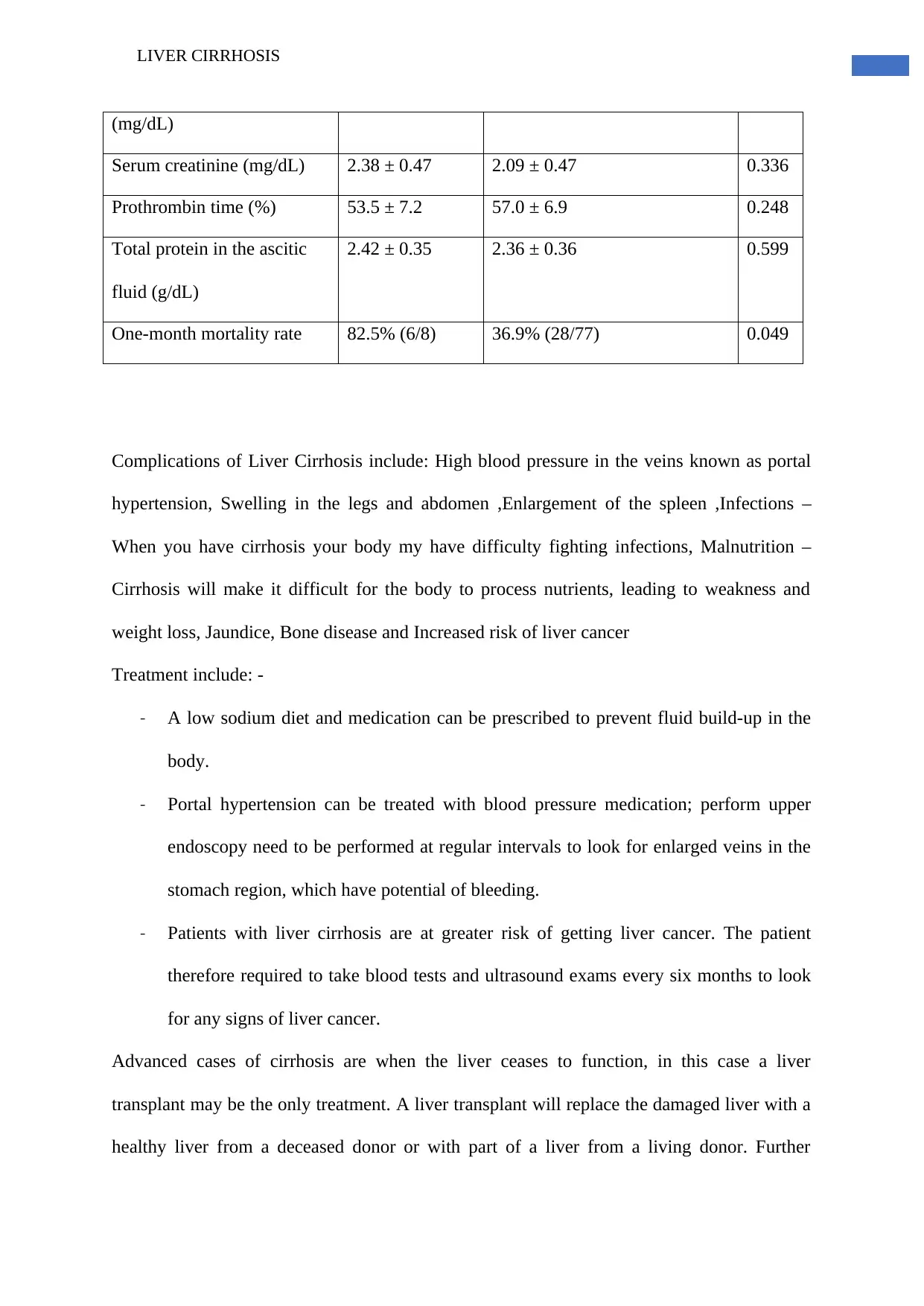
Table 2 demonstrates the examination of the serological laboratory discoveries, Child-
Pugh scores, and aggregate protein levels in the ascitic liquid between subjects with
contagious unconstrained peritonitis and those with ascitic culture-positive bacterial
unconstrained peritonitis. There were no critical contrasts in the PT, serum egg whites levels,
add up to bilirubin levels, Cr levels, Child-Pugh scores, and aggregate protein levels in the
ascitic liquid between the two gatherings.
Among 97 instances of SBP in our example, 50.8% (46/97) had culturepositive SBP
and 69.4% (62/97) had CNNA.
Variables Fungal
spontaneous
peritonitis
(n=8)
Bacterial spontaneous
peritonitis (n=77)
p-
value
Child-Pugh class
A 0/8 (0.0%) 0/77 (0.0%)
B 0/8 (0.0%) 5/77 (7.2%)
A 8/8 (200.0%) 73/77 (94.9%)
Child-Pugh score 23.8 ± 2.40 23.2 ± 2.39 0.296
Serum albumin (g/dL) 3.40 ± 0.43 3.56 ± 0.43 0.356
Serum total bilirubin 4.8 ± 2.4 4.5 ± 2.9 0.799
LIVER CIRRHOSIS
at the 2-month death rates between patient with Liver Cirrhosiss with parasitic ailment and
those with bacterial ailment. The unpaired ttest was utilized to analyze the serological and
ascitic laboratory discoveries and Child-Pugh scores between the gatherings. All qualities
were introduced as mean ± standard deviations, and p<0.06 was considered measurably huge.
Results
Examination of serological and ascitic laboratory discoveries
Table 2 demonstrates the examination of the serological laboratory discoveries, Child-
Pugh scores, and aggregate protein levels in the ascitic liquid between subjects with
contagious unconstrained peritonitis and those with ascitic culture-positive bacterial
unconstrained peritonitis. There were no critical contrasts in the PT, serum egg whites levels,
add up to bilirubin levels, Cr levels, Child-Pugh scores, and aggregate protein levels in the
ascitic liquid between the two gatherings.
Among 97 instances of SBP in our example, 50.8% (46/97) had culturepositive SBP
and 69.4% (62/97) had CNNA.
Variables Fungal
spontaneous
peritonitis
(n=8)
Bacterial spontaneous
peritonitis (n=77)
p-
value
Child-Pugh class
A 0/8 (0.0%) 0/77 (0.0%)
B 0/8 (0.0%) 5/77 (7.2%)
A 8/8 (200.0%) 73/77 (94.9%)
Child-Pugh score 23.8 ± 2.40 23.2 ± 2.39 0.296
Serum albumin (g/dL) 3.40 ± 0.43 3.56 ± 0.43 0.356
Serum total bilirubin 4.8 ± 2.4 4.5 ± 2.9 0.799
⊘ This is a preview!⊘
Do you want full access?
Subscribe today to unlock all pages.

Trusted by 1+ million students worldwide

6
LIVER CIRRHOSIS
(mg/dL)
Serum creatinine (mg/dL) 2.38 ± 0.47 2.09 ± 0.47 0.336
Prothrombin time (%) 53.5 ± 7.2 57.0 ± 6.9 0.248
Total protein in the ascitic
fluid (g/dL)
2.42 ± 0.35 2.36 ± 0.36 0.599
One-month mortality rate 82.5% (6/8) 36.9% (28/77) 0.049
Complications of Liver Cirrhosis include: High blood pressure in the veins known as portal
hypertension, Swelling in the legs and abdomen ,Enlargement of the spleen ,Infections –
When you have cirrhosis your body my have difficulty fighting infections, Malnutrition –
Cirrhosis will make it difficult for the body to process nutrients, leading to weakness and
weight loss, Jaundice, Bone disease and Increased risk of liver cancer
Treatment include: -
- A low sodium diet and medication can be prescribed to prevent fluid build-up in the
body.
- Portal hypertension can be treated with blood pressure medication; perform upper
endoscopy need to be performed at regular intervals to look for enlarged veins in the
stomach region, which have potential of bleeding.
- Patients with liver cirrhosis are at greater risk of getting liver cancer. The patient
therefore required to take blood tests and ultrasound exams every six months to look
for any signs of liver cancer.
Advanced cases of cirrhosis are when the liver ceases to function, in this case a liver
transplant may be the only treatment. A liver transplant will replace the damaged liver with a
healthy liver from a deceased donor or with part of a liver from a living donor. Further
LIVER CIRRHOSIS
(mg/dL)
Serum creatinine (mg/dL) 2.38 ± 0.47 2.09 ± 0.47 0.336
Prothrombin time (%) 53.5 ± 7.2 57.0 ± 6.9 0.248
Total protein in the ascitic
fluid (g/dL)
2.42 ± 0.35 2.36 ± 0.36 0.599
One-month mortality rate 82.5% (6/8) 36.9% (28/77) 0.049
Complications of Liver Cirrhosis include: High blood pressure in the veins known as portal
hypertension, Swelling in the legs and abdomen ,Enlargement of the spleen ,Infections –
When you have cirrhosis your body my have difficulty fighting infections, Malnutrition –
Cirrhosis will make it difficult for the body to process nutrients, leading to weakness and
weight loss, Jaundice, Bone disease and Increased risk of liver cancer
Treatment include: -
- A low sodium diet and medication can be prescribed to prevent fluid build-up in the
body.
- Portal hypertension can be treated with blood pressure medication; perform upper
endoscopy need to be performed at regular intervals to look for enlarged veins in the
stomach region, which have potential of bleeding.
- Patients with liver cirrhosis are at greater risk of getting liver cancer. The patient
therefore required to take blood tests and ultrasound exams every six months to look
for any signs of liver cancer.
Advanced cases of cirrhosis are when the liver ceases to function, in this case a liver
transplant may be the only treatment. A liver transplant will replace the damaged liver with a
healthy liver from a deceased donor or with part of a liver from a living donor. Further
Paraphrase This Document
Need a fresh take? Get an instant paraphrase of this document with our AI Paraphraser

7
LIVER CIRRHOSIS
treatment options for cirrhosis are still the focus of research and success is limited due to the
severity of cirrhosis and the complications that arise from it.. At this point lifestyle changes,
increased screening and medications may improve the condition and help the liver regenerate
if the damage is not extensive. In order to prevent further damage to the liver, the
consumption of the alcohol after diagnosis should be stopped immediately.
Conclusion(Please complete this)
The frequencies of culture-positive SBP and bacterascites were 58.9% (46/84) and
53.6% (42/84), separately, among all instances of ascitic culture-positive unconstrained
peritonitis. As to ailment, the frequencies of SFP and fungiascites were 6.6% (5/84) and 5.2%
(4/84), separately, among all instances of ascitic culture-positive unconstrained peritonitis.
One-month death rates of 42.5% (22/46), 29.5% (7/42), 200% (5/5), and 44.4% (2/4)
were watched for culture-positive SBP, bacterascites, SFP, and fungiascites, individually.
Besides, three of four SFP understanding with Liver Cirrhosiss passed on before getting a
finding of SFP, and all kicked the bucket inside about fourteen days after paracenteses. The
2-month death rate of ascites culture-positive parasitic unconstrained peritonitis was
altogether higher than that of ascites culture-positive bacterial unconstrained peritonitis
(82.5%, 6/8 versus 36.9%, 28/77; p=0.049).
.
LIVER CIRRHOSIS
treatment options for cirrhosis are still the focus of research and success is limited due to the
severity of cirrhosis and the complications that arise from it.. At this point lifestyle changes,
increased screening and medications may improve the condition and help the liver regenerate
if the damage is not extensive. In order to prevent further damage to the liver, the
consumption of the alcohol after diagnosis should be stopped immediately.
Conclusion(Please complete this)
The frequencies of culture-positive SBP and bacterascites were 58.9% (46/84) and
53.6% (42/84), separately, among all instances of ascitic culture-positive unconstrained
peritonitis. As to ailment, the frequencies of SFP and fungiascites were 6.6% (5/84) and 5.2%
(4/84), separately, among all instances of ascitic culture-positive unconstrained peritonitis.
One-month death rates of 42.5% (22/46), 29.5% (7/42), 200% (5/5), and 44.4% (2/4)
were watched for culture-positive SBP, bacterascites, SFP, and fungiascites, individually.
Besides, three of four SFP understanding with Liver Cirrhosiss passed on before getting a
finding of SFP, and all kicked the bucket inside about fourteen days after paracenteses. The
2-month death rate of ascites culture-positive parasitic unconstrained peritonitis was
altogether higher than that of ascites culture-positive bacterial unconstrained peritonitis
(82.5%, 6/8 versus 36.9%, 28/77; p=0.049).
.

8
LIVER CIRRHOSIS
References:
Fjeld, K., Beer, S., Johnstone, M., Zimmer, C., Mössner, J., Ruffert, C., Krehan, M., Zapf, C.,
Njølstad, P.R., Johansson, S. and Bugert, P., 2016. Length of variable numbers of
tandem repeats in the carboxyl ester lipase (CEL) gene may confer susceptibility to
alcoholic liver cirrhosis but not alcoholic chronic pancreatitis. PloS one, 11(11),
p.e0165567.
Foster, G.R., Irving, W.L., Cheung, M.C., Walker, A.J., Hudson, B.E., Verma, S.,
McLauchlan, J., Mutimer, D.J., Brown, A., Gelson, W.T. and MacDonald, D.C.,
2016. Impact of direct acting antiviral therapy in patients with chronic hepatitis C and
decompensated cirrhosis. Journal of hepatology, 64(6), pp.1224-1231.
Mokdad, A.A., Lopez, A.D., Shahraz, S., Lozano, R., Mokdad, A.H., Stanaway, J., Murray,
C.J. and Naghavi, M., 2014. Liver cirrhosis mortality in 187 countries between 1980
and 2010: a systematic analysis. BMC medicine, 12(1), p.145.
Seo, Y.S., Kim, M.Y., Kim, S.U., Hyun, B.S., Jang, J.Y., Lee, J.W., Lee, J.I., Suh, S.J., Park,
S.Y., Park, H. and Jung, E.U., 2015. Accuracy of transient elastography in assessing
liver fibrosis in chronic viral hepatitis: A multicentre, retrospective paper. Liver
International, 35(10), pp.2246-2255.
LIVER CIRRHOSIS
References:
Fjeld, K., Beer, S., Johnstone, M., Zimmer, C., Mössner, J., Ruffert, C., Krehan, M., Zapf, C.,
Njølstad, P.R., Johansson, S. and Bugert, P., 2016. Length of variable numbers of
tandem repeats in the carboxyl ester lipase (CEL) gene may confer susceptibility to
alcoholic liver cirrhosis but not alcoholic chronic pancreatitis. PloS one, 11(11),
p.e0165567.
Foster, G.R., Irving, W.L., Cheung, M.C., Walker, A.J., Hudson, B.E., Verma, S.,
McLauchlan, J., Mutimer, D.J., Brown, A., Gelson, W.T. and MacDonald, D.C.,
2016. Impact of direct acting antiviral therapy in patients with chronic hepatitis C and
decompensated cirrhosis. Journal of hepatology, 64(6), pp.1224-1231.
Mokdad, A.A., Lopez, A.D., Shahraz, S., Lozano, R., Mokdad, A.H., Stanaway, J., Murray,
C.J. and Naghavi, M., 2014. Liver cirrhosis mortality in 187 countries between 1980
and 2010: a systematic analysis. BMC medicine, 12(1), p.145.
Seo, Y.S., Kim, M.Y., Kim, S.U., Hyun, B.S., Jang, J.Y., Lee, J.W., Lee, J.I., Suh, S.J., Park,
S.Y., Park, H. and Jung, E.U., 2015. Accuracy of transient elastography in assessing
liver fibrosis in chronic viral hepatitis: A multicentre, retrospective paper. Liver
International, 35(10), pp.2246-2255.
⊘ This is a preview!⊘
Do you want full access?
Subscribe today to unlock all pages.

Trusted by 1+ million students worldwide
1 out of 9
Related Documents
Your All-in-One AI-Powered Toolkit for Academic Success.
+13062052269
info@desklib.com
Available 24*7 on WhatsApp / Email
Unlock your academic potential
Copyright © 2020–2026 A2Z Services. All Rights Reserved. Developed and managed by ZUCOL.