Universiti Kuala Lumpur Business School Leadership Midterm Exam
VerifiedAdded on 2022/09/02
|9
|1691
|65
Quiz and Exam
AI Summary
This document presents a midterm examination for a Leadership course (ECB30203) at Universiti Kuala Lumpur Business School, conducted in January 2022. The exam, designed for Bachelor of Business Administration students, is divided into two sections: Section A consists of 30 multiple-choice questions covering various leadership concepts such as perceptual distortion, leadership styles, motivation, conflict management, and organizational change. Section B presents a case study about Megan Mitchel, a director of a non-profit agency, and requires students to analyze her leadership skills, management approaches, and strategies to build staff confidence in a challenging work environment. The case study includes questions about combining management and leadership skills and addressing staff concerns related to workload, communication, and resource allocation. The exam assesses students' understanding of leadership theories, practical application of leadership skills, and their ability to analyze and solve real-world leadership challenges.
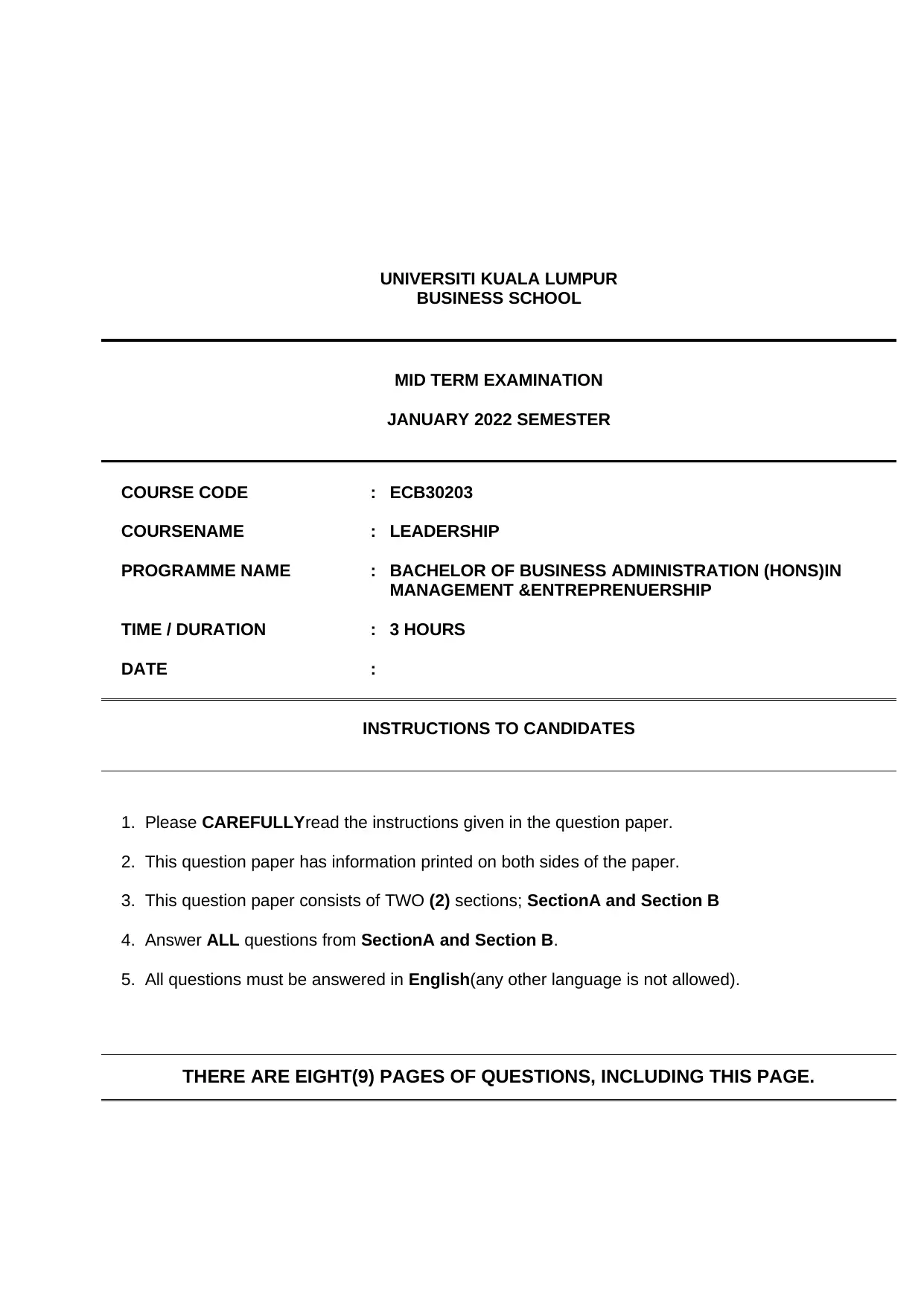
UNIVERSITI KUALA LUMPUR
BUSINESS SCHOOL
MID TERM EXAMINATION
JANUARY 2022 SEMESTER
COURSE CODE : ECB30203
COURSENAME : LEADERSHIP
PROGRAMME NAME : BACHELOR OF BUSINESS ADMINISTRATION (HONS)IN
MANAGEMENT &ENTREPRENUERSHIP
TIME / DURATION : 3 HOURS
DATE :
INSTRUCTIONS TO CANDIDATES
1. Please CAREFULLYread the instructions given in the question paper.
2. This question paper has information printed on both sides of the paper.
3. This question paper consists of TWO (2) sections; SectionA and Section B
4. Answer ALL questions from SectionA and Section B.
5. All questions must be answered in English(any other language is not allowed).
THERE ARE EIGHT(9) PAGES OF QUESTIONS, INCLUDING THIS PAGE.
BUSINESS SCHOOL
MID TERM EXAMINATION
JANUARY 2022 SEMESTER
COURSE CODE : ECB30203
COURSENAME : LEADERSHIP
PROGRAMME NAME : BACHELOR OF BUSINESS ADMINISTRATION (HONS)IN
MANAGEMENT &ENTREPRENUERSHIP
TIME / DURATION : 3 HOURS
DATE :
INSTRUCTIONS TO CANDIDATES
1. Please CAREFULLYread the instructions given in the question paper.
2. This question paper has information printed on both sides of the paper.
3. This question paper consists of TWO (2) sections; SectionA and Section B
4. Answer ALL questions from SectionA and Section B.
5. All questions must be answered in English(any other language is not allowed).
THERE ARE EIGHT(9) PAGES OF QUESTIONS, INCLUDING THIS PAGE.

Paraphrase This Document
Need a fresh take? Get an instant paraphrase of this document with our AI Paraphraser
JANUARY 2022 CONFIDENTIAL
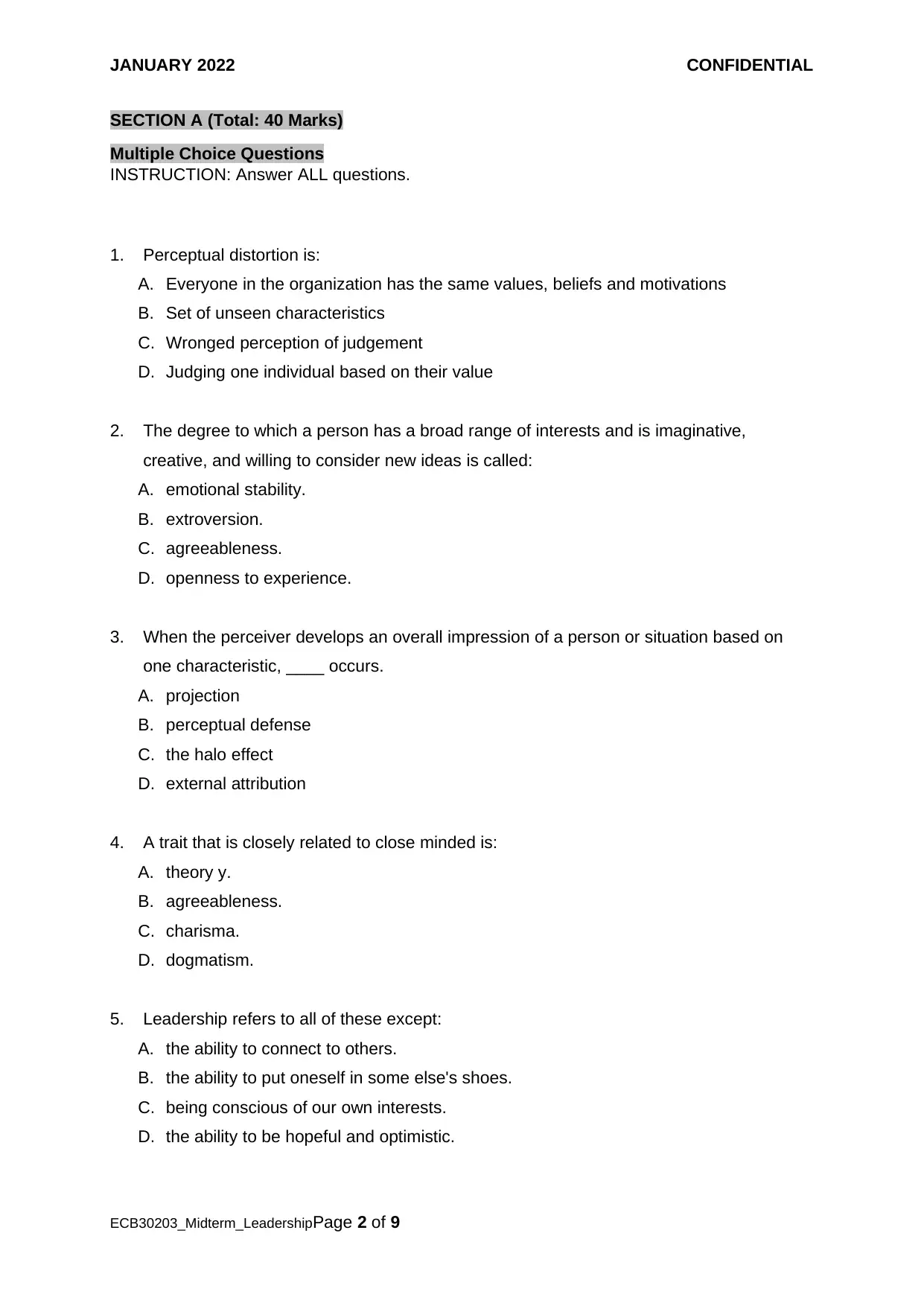
SECTION A (Total: 40 Marks)
Multiple Choice Questions
INSTRUCTION: Answer ALL questions.
1. Perceptual distortion is:
A. Everyone in the organization has the same values, beliefs and motivations
B. Set of unseen characteristics
C. Wronged perception of judgement
D. Judging one individual based on their value
2. The degree to which a person has a broad range of interests and is imaginative,
creative, and willing to consider new ideas is called:
A. emotional stability.
B. extroversion.
C. agreeableness.
D. openness to experience.
3. When the perceiver develops an overall impression of a person or situation based on
one characteristic, ____ occurs.
A. projection
B. perceptual defense
C. the halo effect
D. external attribution
4. A trait that is closely related to close minded is:
A. theory y.
B. agreeableness.
C. charisma.
D. dogmatism.
5. Leadership refers to all of these except:
A. the ability to connect to others.
B. the ability to put oneself in some else's shoes.
C. being conscious of our own interests.
D. the ability to be hopeful and optimistic.
ECB30203_Midterm_LeadershipPage 2 of 9
SECTION A (Total: 40 Marks)
Multiple Choice Questions
INSTRUCTION: Answer ALL questions.
1. Perceptual distortion is:
A. Everyone in the organization has the same values, beliefs and motivations
B. Set of unseen characteristics
C. Wronged perception of judgement
D. Judging one individual based on their value
2. The degree to which a person has a broad range of interests and is imaginative,
creative, and willing to consider new ideas is called:
A. emotional stability.
B. extroversion.
C. agreeableness.
D. openness to experience.
3. When the perceiver develops an overall impression of a person or situation based on
one characteristic, ____ occurs.
A. projection
B. perceptual defense
C. the halo effect
D. external attribution
4. A trait that is closely related to close minded is:
A. theory y.
B. agreeableness.
C. charisma.
D. dogmatism.
5. Leadership refers to all of these except:
A. the ability to connect to others.
B. the ability to put oneself in some else's shoes.
C. being conscious of our own interests.
D. the ability to be hopeful and optimistic.
ECB30203_Midterm_LeadershipPage 2 of 9
JANUARY 2022 CONFIDENTIAL
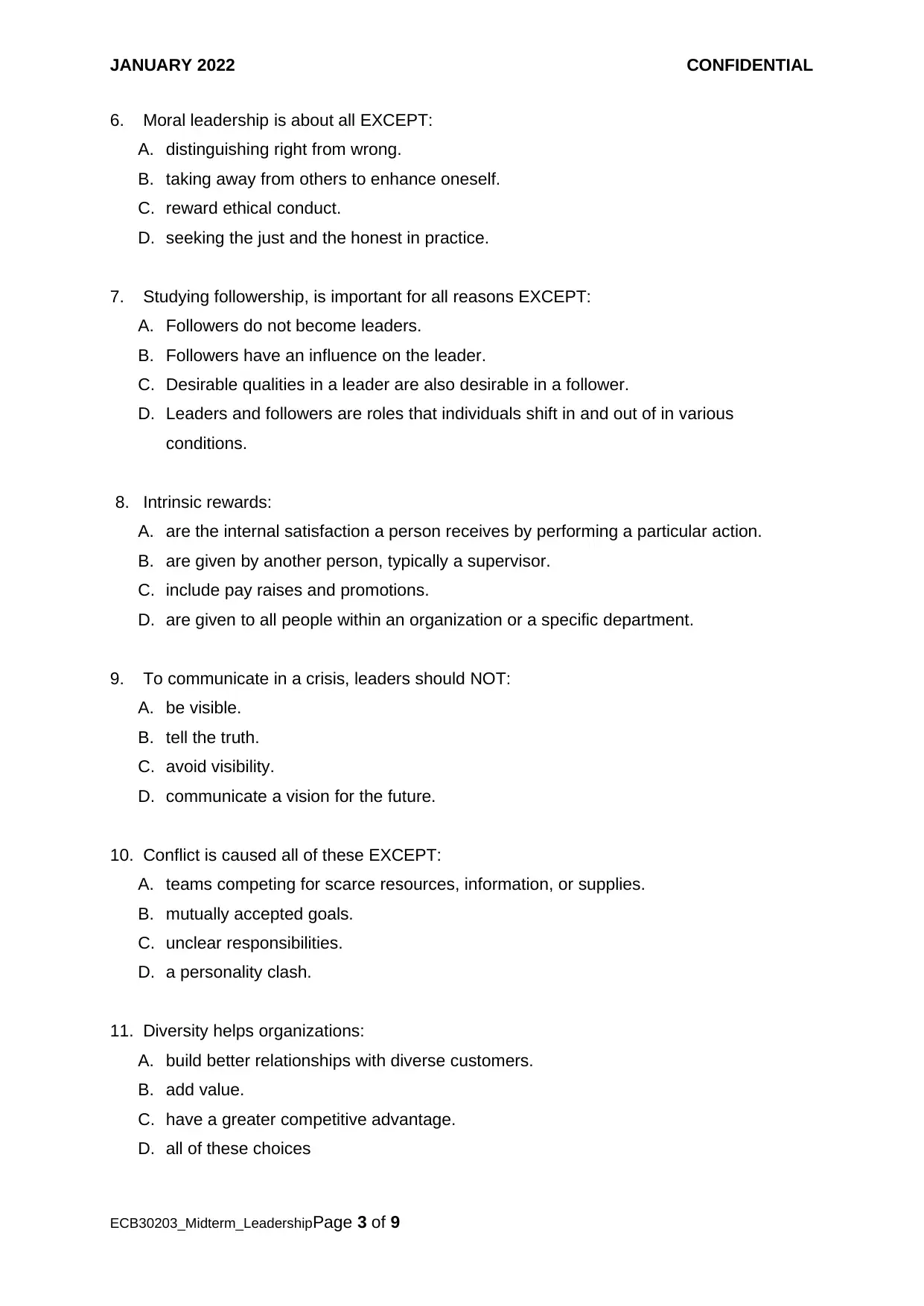
6. Moral leadership is about all EXCEPT:
A. distinguishing right from wrong.
B. taking away from others to enhance oneself.
C. reward ethical conduct.
D. seeking the just and the honest in practice.
7. Studying followership, is important for all reasons EXCEPT:
A. Followers do not become leaders.
B. Followers have an influence on the leader.
C. Desirable qualities in a leader are also desirable in a follower.
D. Leaders and followers are roles that individuals shift in and out of in various
conditions.
8. Intrinsic rewards:
A. are the internal satisfaction a person receives by performing a particular action.
B. are given by another person, typically a supervisor.
C. include pay raises and promotions.
D. are given to all people within an organization or a specific department.
9. To communicate in a crisis, leaders should NOT:
A. be visible.
B. tell the truth.
C. avoid visibility.
D. communicate a vision for the future.
10. Conflict is caused all of these EXCEPT:
A. teams competing for scarce resources, information, or supplies.
B. mutually accepted goals.
C. unclear responsibilities.
D. a personality clash.
11. Diversity helps organizations:
A. build better relationships with diverse customers.
B. add value.
C. have a greater competitive advantage.
D. all of these choices
ECB30203_Midterm_LeadershipPage 3 of 9
6. Moral leadership is about all EXCEPT:
A. distinguishing right from wrong.
B. taking away from others to enhance oneself.
C. reward ethical conduct.
D. seeking the just and the honest in practice.
7. Studying followership, is important for all reasons EXCEPT:
A. Followers do not become leaders.
B. Followers have an influence on the leader.
C. Desirable qualities in a leader are also desirable in a follower.
D. Leaders and followers are roles that individuals shift in and out of in various
conditions.
8. Intrinsic rewards:
A. are the internal satisfaction a person receives by performing a particular action.
B. are given by another person, typically a supervisor.
C. include pay raises and promotions.
D. are given to all people within an organization or a specific department.
9. To communicate in a crisis, leaders should NOT:
A. be visible.
B. tell the truth.
C. avoid visibility.
D. communicate a vision for the future.
10. Conflict is caused all of these EXCEPT:
A. teams competing for scarce resources, information, or supplies.
B. mutually accepted goals.
C. unclear responsibilities.
D. a personality clash.
11. Diversity helps organizations:
A. build better relationships with diverse customers.
B. add value.
C. have a greater competitive advantage.
D. all of these choices
ECB30203_Midterm_LeadershipPage 3 of 9
⊘ This is a preview!⊘
Do you want full access?
Subscribe today to unlock all pages.

Trusted by 1+ million students worldwide
JANUARY 2022 CONFIDENTIAL
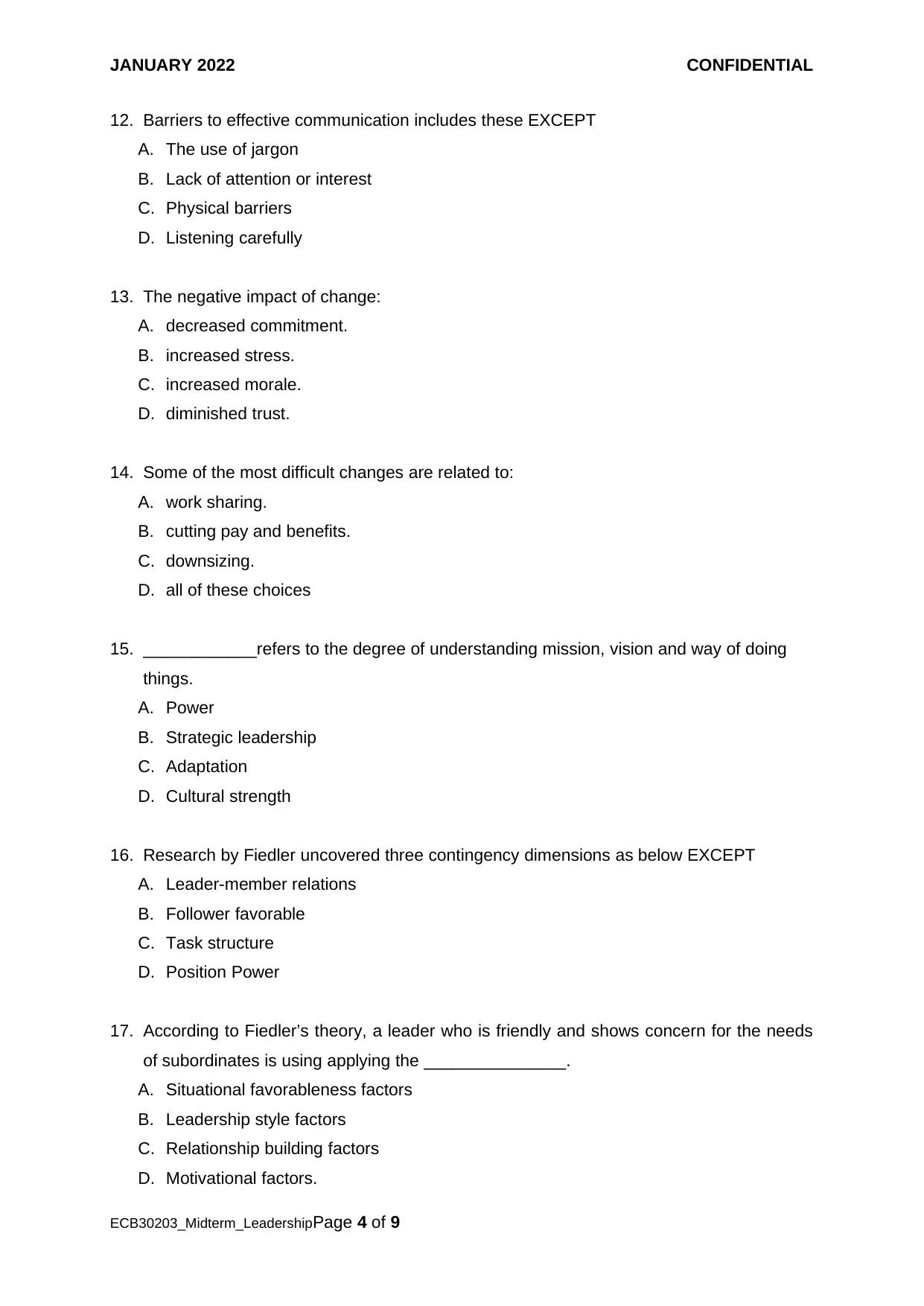
12. Barriers to effective communication includes these EXCEPT
A. The use of jargon
B. Lack of attention or interest
C. Physical barriers
D. Listening carefully
13. The negative impact of change:
A. decreased commitment.
B. increased stress.
C. increased morale.
D. diminished trust.
14. Some of the most difficult changes are related to:
A. work sharing.
B. cutting pay and benefits.
C. downsizing.
D. all of these choices
15. ____________refers to the degree of understanding mission, vision and way of doing
things.
A. Power
B. Strategic leadership
C. Adaptation
D. Cultural strength
16. Research by Fiedler uncovered three contingency dimensions as below EXCEPT
A. Leader-member relations
B. Follower favorable
C. Task structure
D. Position Power
17. According to Fiedler’s theory, a leader who is friendly and shows concern for the needs
of subordinates is using applying the _______________.
A. Situational favorableness factors
B. Leadership style factors
C. Relationship building factors
D. Motivational factors.
ECB30203_Midterm_LeadershipPage 4 of 9
12. Barriers to effective communication includes these EXCEPT
A. The use of jargon
B. Lack of attention or interest
C. Physical barriers
D. Listening carefully
13. The negative impact of change:
A. decreased commitment.
B. increased stress.
C. increased morale.
D. diminished trust.
14. Some of the most difficult changes are related to:
A. work sharing.
B. cutting pay and benefits.
C. downsizing.
D. all of these choices
15. ____________refers to the degree of understanding mission, vision and way of doing
things.
A. Power
B. Strategic leadership
C. Adaptation
D. Cultural strength
16. Research by Fiedler uncovered three contingency dimensions as below EXCEPT
A. Leader-member relations
B. Follower favorable
C. Task structure
D. Position Power
17. According to Fiedler’s theory, a leader who is friendly and shows concern for the needs
of subordinates is using applying the _______________.
A. Situational favorableness factors
B. Leadership style factors
C. Relationship building factors
D. Motivational factors.
ECB30203_Midterm_LeadershipPage 4 of 9
Paraphrase This Document
Need a fresh take? Get an instant paraphrase of this document with our AI Paraphraser
JANUARY 2022 CONFIDENTIAL
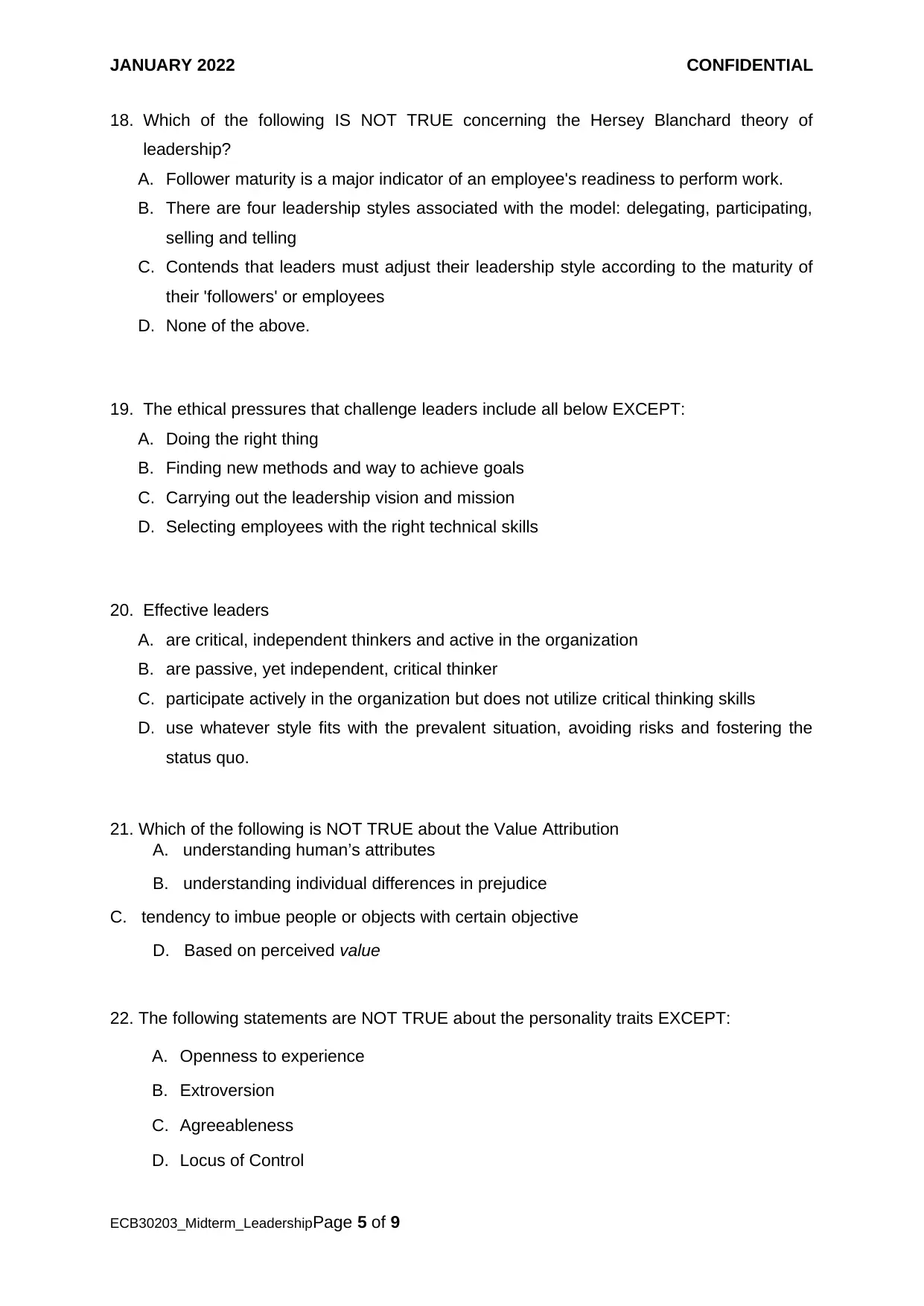
18. Which of the following IS NOT TRUE concerning the Hersey Blanchard theory of
leadership?
A. Follower maturity is a major indicator of an employee's readiness to perform work.
B. There are four leadership styles associated with the model: delegating, participating,
selling and telling
C. Contends that leaders must adjust their leadership style according to the maturity of
their 'followers' or employees
D. None of the above.
19. The ethical pressures that challenge leaders include all below EXCEPT:
A. Doing the right thing
B. Finding new methods and way to achieve goals
C. Carrying out the leadership vision and mission
D. Selecting employees with the right technical skills
20. Effective leaders
A. are critical, independent thinkers and active in the organization
B. are passive, yet independent, critical thinker
C. participate actively in the organization but does not utilize critical thinking skills
D. use whatever style fits with the prevalent situation, avoiding risks and fostering the
status quo.
21. Which of the following is NOT TRUE about the Value Attribution
A. understanding human’s attributes
B. understanding individual differences in prejudice
C. tendency to imbue people or objects with certain objective
D. Based on perceived value
22. The following statements are NOT TRUE about the personality traits EXCEPT:
A. Openness to experience
B. Extroversion
C. Agreeableness
D. Locus of Control
ECB30203_Midterm_LeadershipPage 5 of 9
18. Which of the following IS NOT TRUE concerning the Hersey Blanchard theory of
leadership?
A. Follower maturity is a major indicator of an employee's readiness to perform work.
B. There are four leadership styles associated with the model: delegating, participating,
selling and telling
C. Contends that leaders must adjust their leadership style according to the maturity of
their 'followers' or employees
D. None of the above.
19. The ethical pressures that challenge leaders include all below EXCEPT:
A. Doing the right thing
B. Finding new methods and way to achieve goals
C. Carrying out the leadership vision and mission
D. Selecting employees with the right technical skills
20. Effective leaders
A. are critical, independent thinkers and active in the organization
B. are passive, yet independent, critical thinker
C. participate actively in the organization but does not utilize critical thinking skills
D. use whatever style fits with the prevalent situation, avoiding risks and fostering the
status quo.
21. Which of the following is NOT TRUE about the Value Attribution
A. understanding human’s attributes
B. understanding individual differences in prejudice
C. tendency to imbue people or objects with certain objective
D. Based on perceived value
22. The following statements are NOT TRUE about the personality traits EXCEPT:
A. Openness to experience
B. Extroversion
C. Agreeableness
D. Locus of Control
ECB30203_Midterm_LeadershipPage 5 of 9
JANUARY 2022 CONFIDENTIAL
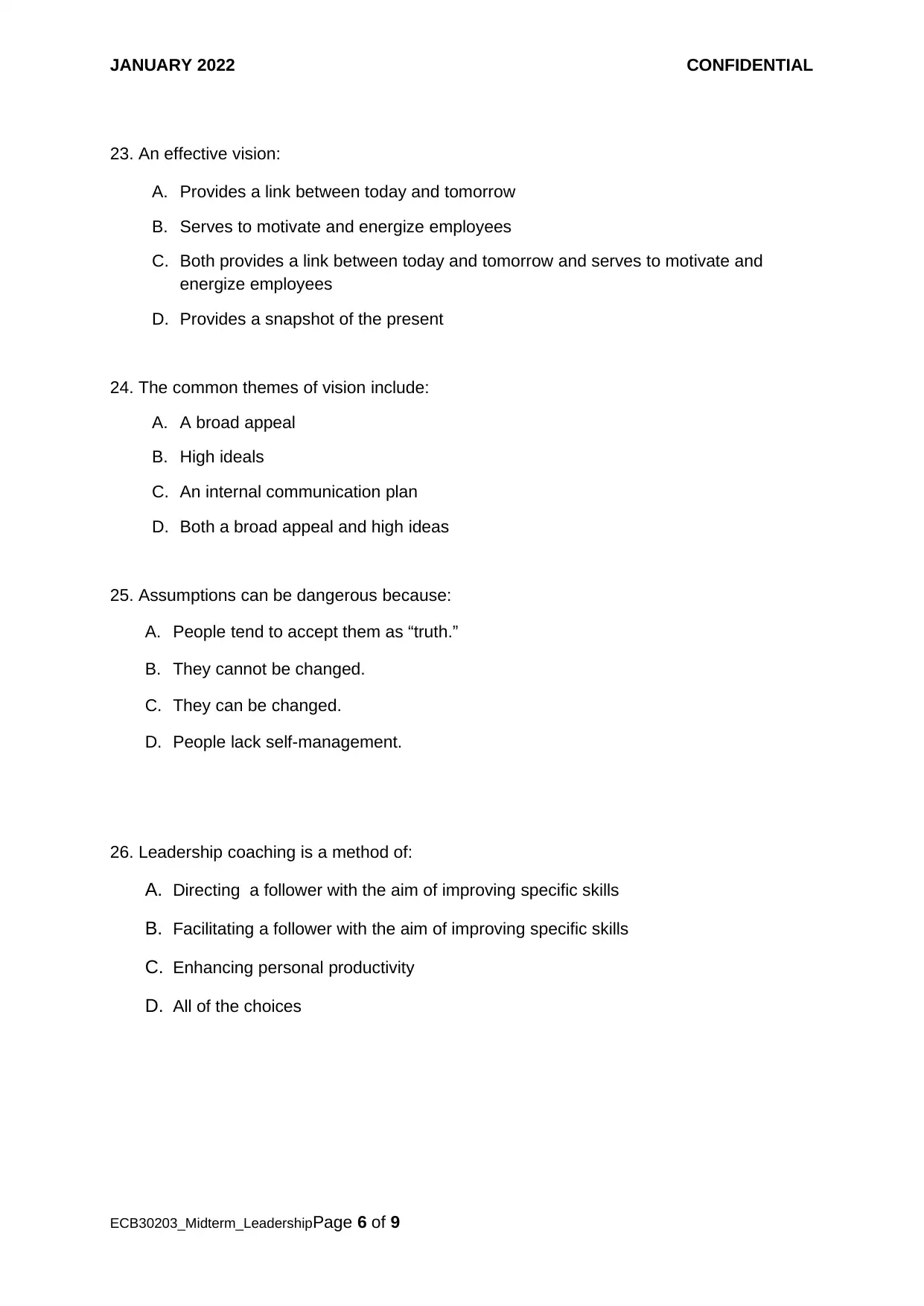
23. An effective vision:
A. Provides a link between today and tomorrow
B. Serves to motivate and energize employees
C. Both provides a link between today and tomorrow and serves to motivate and
energize employees
D. Provides a snapshot of the present
24. The common themes of vision include:
A. A broad appeal
B. High ideals
C. An internal communication plan
D. Both a broad appeal and high ideas
25. Assumptions can be dangerous because:
A. People tend to accept them as “truth.”
B. They cannot be changed.
C. They can be changed.
D. People lack self-management.
26. Leadership coaching is a method of:
A. Directing a follower with the aim of improving specific skills
B. Facilitating a follower with the aim of improving specific skills
C. Enhancing personal productivity
D. All of the choices
ECB30203_Midterm_LeadershipPage 6 of 9
23. An effective vision:
A. Provides a link between today and tomorrow
B. Serves to motivate and energize employees
C. Both provides a link between today and tomorrow and serves to motivate and
energize employees
D. Provides a snapshot of the present
24. The common themes of vision include:
A. A broad appeal
B. High ideals
C. An internal communication plan
D. Both a broad appeal and high ideas
25. Assumptions can be dangerous because:
A. People tend to accept them as “truth.”
B. They cannot be changed.
C. They can be changed.
D. People lack self-management.
26. Leadership coaching is a method of:
A. Directing a follower with the aim of improving specific skills
B. Facilitating a follower with the aim of improving specific skills
C. Enhancing personal productivity
D. All of the choices
ECB30203_Midterm_LeadershipPage 6 of 9
⊘ This is a preview!⊘
Do you want full access?
Subscribe today to unlock all pages.
Trusted by 1+ million students worldwide
JANUARY 2022 CONFIDENTIAL
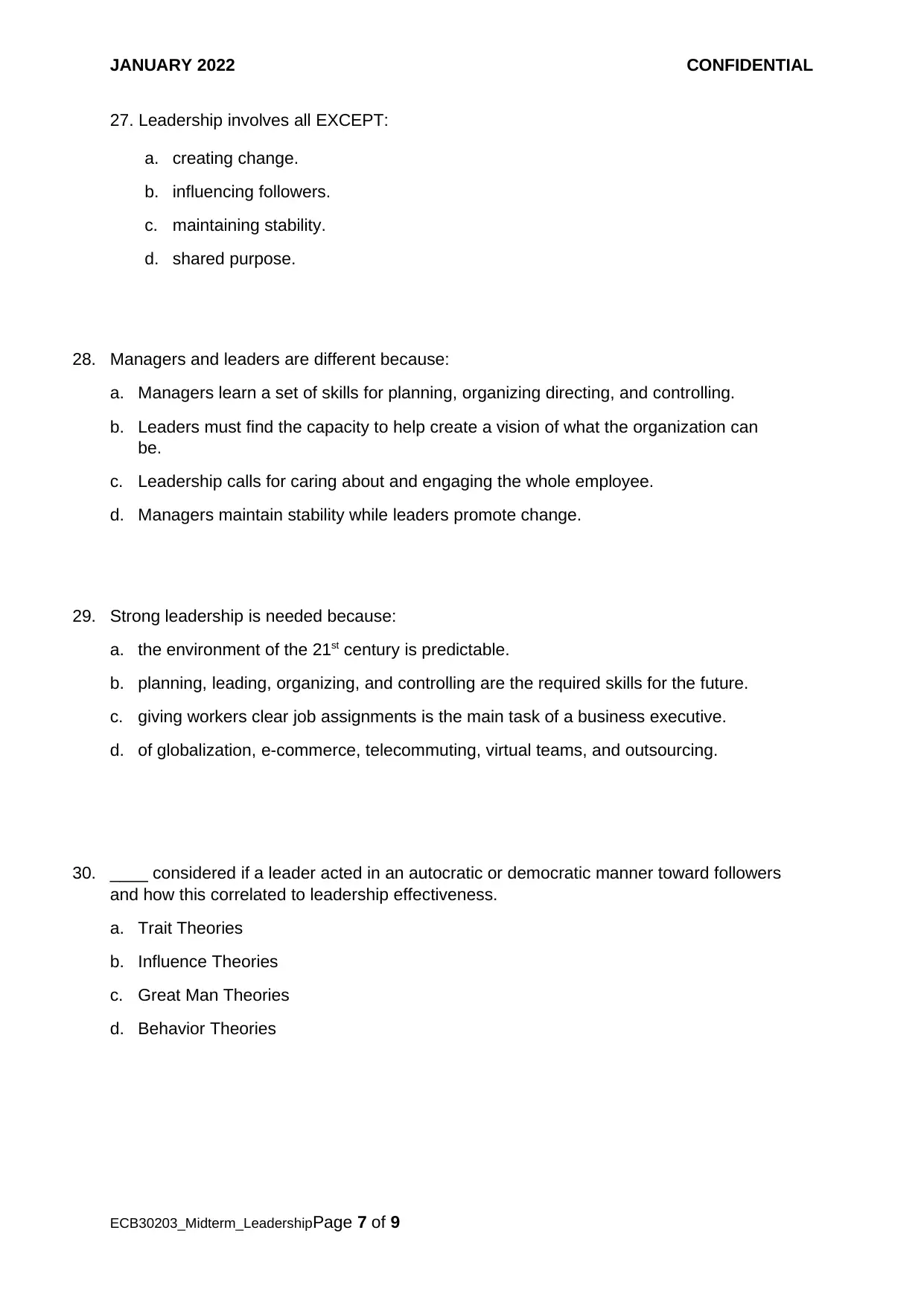
27. Leadership involves all EXCEPT:
a. creating change.
b. influencing followers.
c. maintaining stability.
d. shared purpose.
28. Managers and leaders are different because:
a. Managers learn a set of skills for planning, organizing directing, and controlling.
b. Leaders must find the capacity to help create a vision of what the organization can
be.
c. Leadership calls for caring about and engaging the whole employee.
d. Managers maintain stability while leaders promote change.
29. Strong leadership is needed because:
a. the environment of the 21st century is predictable.
b. planning, leading, organizing, and controlling are the required skills for the future.
c. giving workers clear job assignments is the main task of a business executive.
d. of globalization, e-commerce, telecommuting, virtual teams, and outsourcing.
30. ____ considered if a leader acted in an autocratic or democratic manner toward followers
and how this correlated to leadership effectiveness.
a. Trait Theories
b. Influence Theories
c. Great Man Theories
d. Behavior Theories
ECB30203_Midterm_LeadershipPage 7 of 9
27. Leadership involves all EXCEPT:
a. creating change.
b. influencing followers.
c. maintaining stability.
d. shared purpose.
28. Managers and leaders are different because:
a. Managers learn a set of skills for planning, organizing directing, and controlling.
b. Leaders must find the capacity to help create a vision of what the organization can
be.
c. Leadership calls for caring about and engaging the whole employee.
d. Managers maintain stability while leaders promote change.
29. Strong leadership is needed because:
a. the environment of the 21st century is predictable.
b. planning, leading, organizing, and controlling are the required skills for the future.
c. giving workers clear job assignments is the main task of a business executive.
d. of globalization, e-commerce, telecommuting, virtual teams, and outsourcing.
30. ____ considered if a leader acted in an autocratic or democratic manner toward followers
and how this correlated to leadership effectiveness.
a. Trait Theories
b. Influence Theories
c. Great Man Theories
d. Behavior Theories
ECB30203_Midterm_LeadershipPage 7 of 9
Paraphrase This Document
Need a fresh take? Get an instant paraphrase of this document with our AI Paraphraser
JANUARY 2022 CONFIDENTIAL
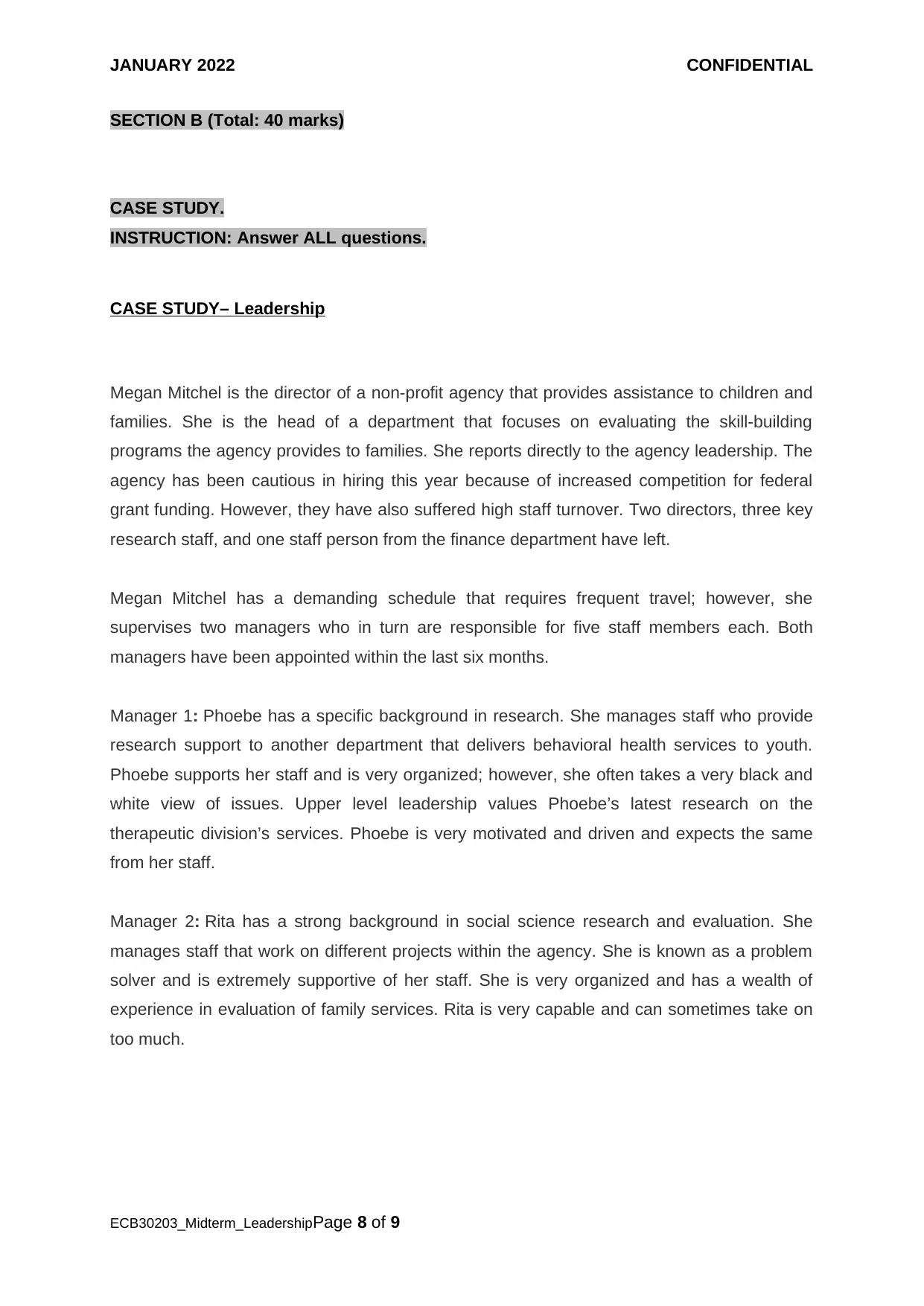
SECTION B (Total: 40 marks)
CASE STUDY.
INSTRUCTION: Answer ALL questions.
CASE STUDY– Leadership
Megan Mitchel is the director of a non-profit agency that provides assistance to children and
families. She is the head of a department that focuses on evaluating the skill-building
programs the agency provides to families. She reports directly to the agency leadership. The
agency has been cautious in hiring this year because of increased competition for federal
grant funding. However, they have also suffered high staff turnover. Two directors, three key
research staff, and one staff person from the finance department have left.
Megan Mitchel has a demanding schedule that requires frequent travel; however, she
supervises two managers who in turn are responsible for five staff members each. Both
managers have been appointed within the last six months.
Manager 1: Phoebe has a specific background in research. She manages staff who provide
research support to another department that delivers behavioral health services to youth.
Phoebe supports her staff and is very organized; however, she often takes a very black and
white view of issues. Upper level leadership values Phoebe’s latest research on the
therapeutic division’s services. Phoebe is very motivated and driven and expects the same
from her staff.
Manager 2: Rita has a strong background in social science research and evaluation. She
manages staff that work on different projects within the agency. She is known as a problem
solver and is extremely supportive of her staff. She is very organized and has a wealth of
experience in evaluation of family services. Rita is very capable and can sometimes take on
too much.
ECB30203_Midterm_LeadershipPage 8 of 9
SECTION B (Total: 40 marks)
CASE STUDY.
INSTRUCTION: Answer ALL questions.
CASE STUDY– Leadership
Megan Mitchel is the director of a non-profit agency that provides assistance to children and
families. She is the head of a department that focuses on evaluating the skill-building
programs the agency provides to families. She reports directly to the agency leadership. The
agency has been cautious in hiring this year because of increased competition for federal
grant funding. However, they have also suffered high staff turnover. Two directors, three key
research staff, and one staff person from the finance department have left.
Megan Mitchel has a demanding schedule that requires frequent travel; however, she
supervises two managers who in turn are responsible for five staff members each. Both
managers have been appointed within the last six months.
Manager 1: Phoebe has a specific background in research. She manages staff who provide
research support to another department that delivers behavioral health services to youth.
Phoebe supports her staff and is very organized; however, she often takes a very black and
white view of issues. Upper level leadership values Phoebe’s latest research on the
therapeutic division’s services. Phoebe is very motivated and driven and expects the same
from her staff.
Manager 2: Rita has a strong background in social science research and evaluation. She
manages staff that work on different projects within the agency. She is known as a problem
solver and is extremely supportive of her staff. She is very organized and has a wealth of
experience in evaluation of family services. Rita is very capable and can sometimes take on
too much.
ECB30203_Midterm_LeadershipPage 8 of 9
JANUARY 2022 CONFIDENTIAL
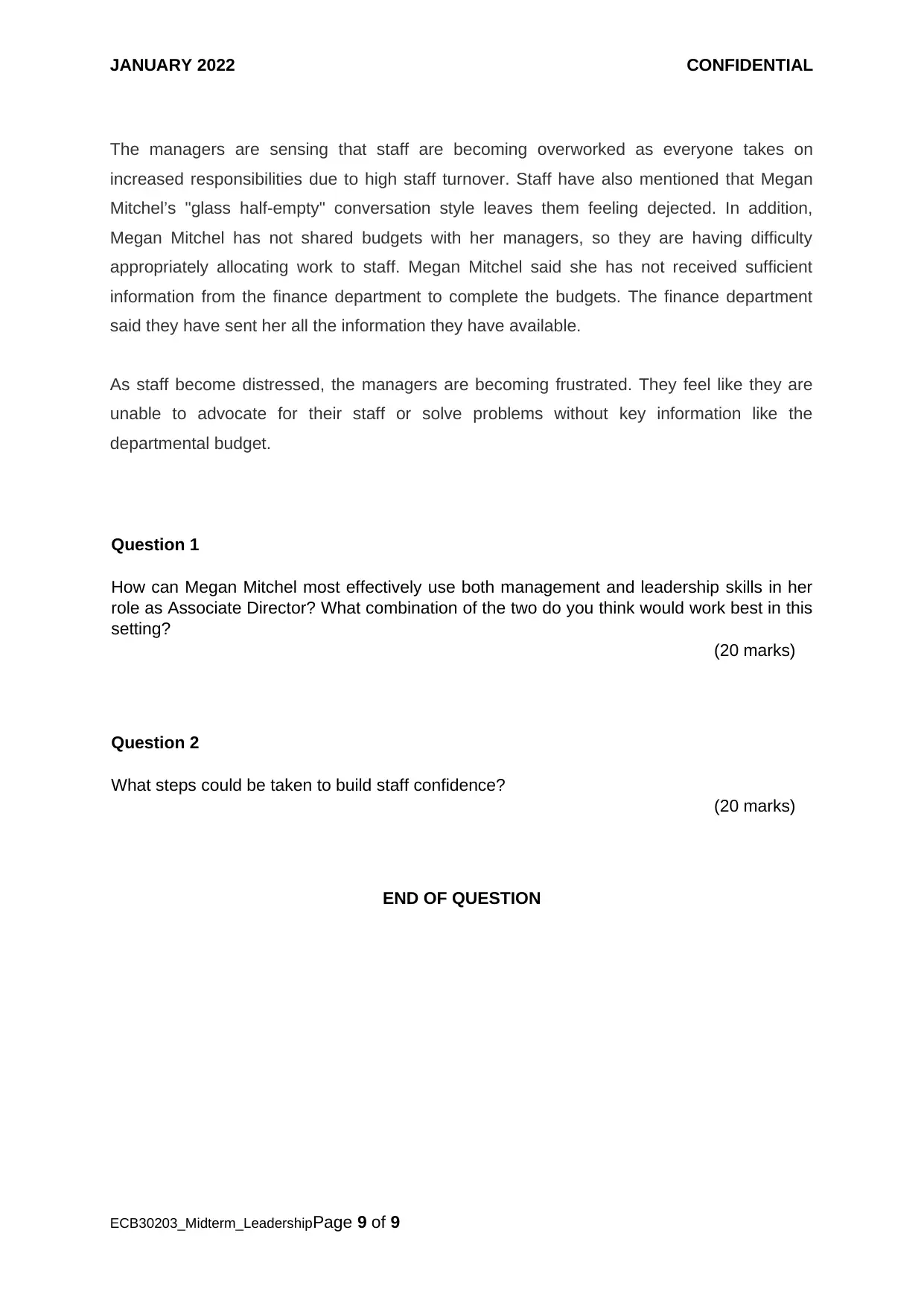
The managers are sensing that staff are becoming overworked as everyone takes on
increased responsibilities due to high staff turnover. Staff have also mentioned that Megan
Mitchel’s "glass half-empty" conversation style leaves them feeling dejected. In addition,
Megan Mitchel has not shared budgets with her managers, so they are having difficulty
appropriately allocating work to staff. Megan Mitchel said she has not received sufficient
information from the finance department to complete the budgets. The finance department
said they have sent her all the information they have available.
As staff become distressed, the managers are becoming frustrated. They feel like they are
unable to advocate for their staff or solve problems without key information like the
departmental budget.
Question 1
How can Megan Mitchel most effectively use both management and leadership skills in her
role as Associate Director? What combination of the two do you think would work best in this
setting?
(20 marks)
Question 2
What steps could be taken to build staff confidence?
(20 marks)
END OF QUESTION
ECB30203_Midterm_LeadershipPage 9 of 9
The managers are sensing that staff are becoming overworked as everyone takes on
increased responsibilities due to high staff turnover. Staff have also mentioned that Megan
Mitchel’s "glass half-empty" conversation style leaves them feeling dejected. In addition,
Megan Mitchel has not shared budgets with her managers, so they are having difficulty
appropriately allocating work to staff. Megan Mitchel said she has not received sufficient
information from the finance department to complete the budgets. The finance department
said they have sent her all the information they have available.
As staff become distressed, the managers are becoming frustrated. They feel like they are
unable to advocate for their staff or solve problems without key information like the
departmental budget.
Question 1
How can Megan Mitchel most effectively use both management and leadership skills in her
role as Associate Director? What combination of the two do you think would work best in this
setting?
(20 marks)
Question 2
What steps could be taken to build staff confidence?
(20 marks)
END OF QUESTION
ECB30203_Midterm_LeadershipPage 9 of 9
⊘ This is a preview!⊘
Do you want full access?
Subscribe today to unlock all pages.
Trusted by 1+ million students worldwide

1 out of 9


Your All-in-One AI-Powered Toolkit for Academic Success.
+13062052269
info@desklib.com
Available 24*7 on WhatsApp / Email
![[object Object]](/_next/static/media/star-bottom.7253800d.svg)
Unlock your academic potential
Copyright © 2020–2026 A2Z Services. All Rights Reserved. Developed and managed by ZUCOL.