Business Research Methods: Unilever's Social Media Sustainability Role
VerifiedAdded on 2023/04/11
|15
|2636
|302
Report
AI Summary
This research proposal aims to understand the influence of social media on the sustainability orientation of business enterprises, focusing on Unilever's CSR policies and the role of social media in addressing related issues. The proposal includes a literature review covering sustainability in business, the influence of social media, and the relationship between the two. The research methodology section outlines the research philosophy (positivism), descriptive research design, data collection methods (primary and secondary, both qualitative and quantitative), sample size and population (management and operations employees with at least five years of service), and ethical considerations. The proposal concludes with a dissertation overview and proposed timeline for the research, highlighting the intent to critically analyze data and provide valuable insights into upgrading Unilever's sustainability orientation through social media usage. Desklib offers a variety of resources, including past papers and solved assignments, to aid students in their studies.
Running head: BUSINESS RESEARCH METHODS
Business Research Methods
Name of the Student-
Name of the University-
Author note-
Business Research Methods
Name of the Student-
Name of the University-
Author note-

Paraphrase This Document
Need a fresh take? Get an instant paraphrase of this document with our AI Paraphraser
1BUSINESS RESEARCH METHODS
Executive Summary
Aiming to understand the influence of social media in the sustainability orientation of business
enterprises, the research proposal is directed to enlist the important ideas. The proposal will take into
consideration the sustainable business organization of Unilever. The proposal will shed light on the
problem of Unilever in implementing CSR policies and the role of social media in addressing these
issues. The proposal will delve deeper into the research methodology to be employed in the upcoming
research.
Executive Summary
Aiming to understand the influence of social media in the sustainability orientation of business
enterprises, the research proposal is directed to enlist the important ideas. The proposal will take into
consideration the sustainable business organization of Unilever. The proposal will shed light on the
problem of Unilever in implementing CSR policies and the role of social media in addressing these
issues. The proposal will delve deeper into the research methodology to be employed in the upcoming
research.
2BUSINESS RESEARCH METHODS
Table of Contents
1. Introduction.........................................................................................................................................3
1.1. Background of the Study.............................................................................................................4
1.2. Research Reasons and Rationale......................................................................................................4
1.3. Research Aims.................................................................................................................................5
1.4. Research Objectives.........................................................................................................................5
2. Literature Review................................................................................................................................5
2.1. The concept of sustainability in business organizations...................................................................5
2.2. The concept of social media influence on sustainable orientation................................................6
2.3. The relation between the two concepts........................................................................................7
3. Research Methodology........................................................................................................................8
3.1. Research Philosophy....................................................................................................................8
3.2. Research Design:.........................................................................................................................8
3.3. Data Collection:...........................................................................................................................9
3.4. Sample size and Population:........................................................................................................9
3.5. Data Analysis:..............................................................................................................................9
3.6. Ethical Considerations:................................................................................................................9
4. Dissertation Overview.......................................................................................................................10
4.1. Proposed Timeline of Research.................................................................................................10
Table of Contents
1. Introduction.........................................................................................................................................3
1.1. Background of the Study.............................................................................................................4
1.2. Research Reasons and Rationale......................................................................................................4
1.3. Research Aims.................................................................................................................................5
1.4. Research Objectives.........................................................................................................................5
2. Literature Review................................................................................................................................5
2.1. The concept of sustainability in business organizations...................................................................5
2.2. The concept of social media influence on sustainable orientation................................................6
2.3. The relation between the two concepts........................................................................................7
3. Research Methodology........................................................................................................................8
3.1. Research Philosophy....................................................................................................................8
3.2. Research Design:.........................................................................................................................8
3.3. Data Collection:...........................................................................................................................9
3.4. Sample size and Population:........................................................................................................9
3.5. Data Analysis:..............................................................................................................................9
3.6. Ethical Considerations:................................................................................................................9
4. Dissertation Overview.......................................................................................................................10
4.1. Proposed Timeline of Research.................................................................................................10
⊘ This is a preview!⊘
Do you want full access?
Subscribe today to unlock all pages.

Trusted by 1+ million students worldwide
3BUSINESS RESEARCH METHODS
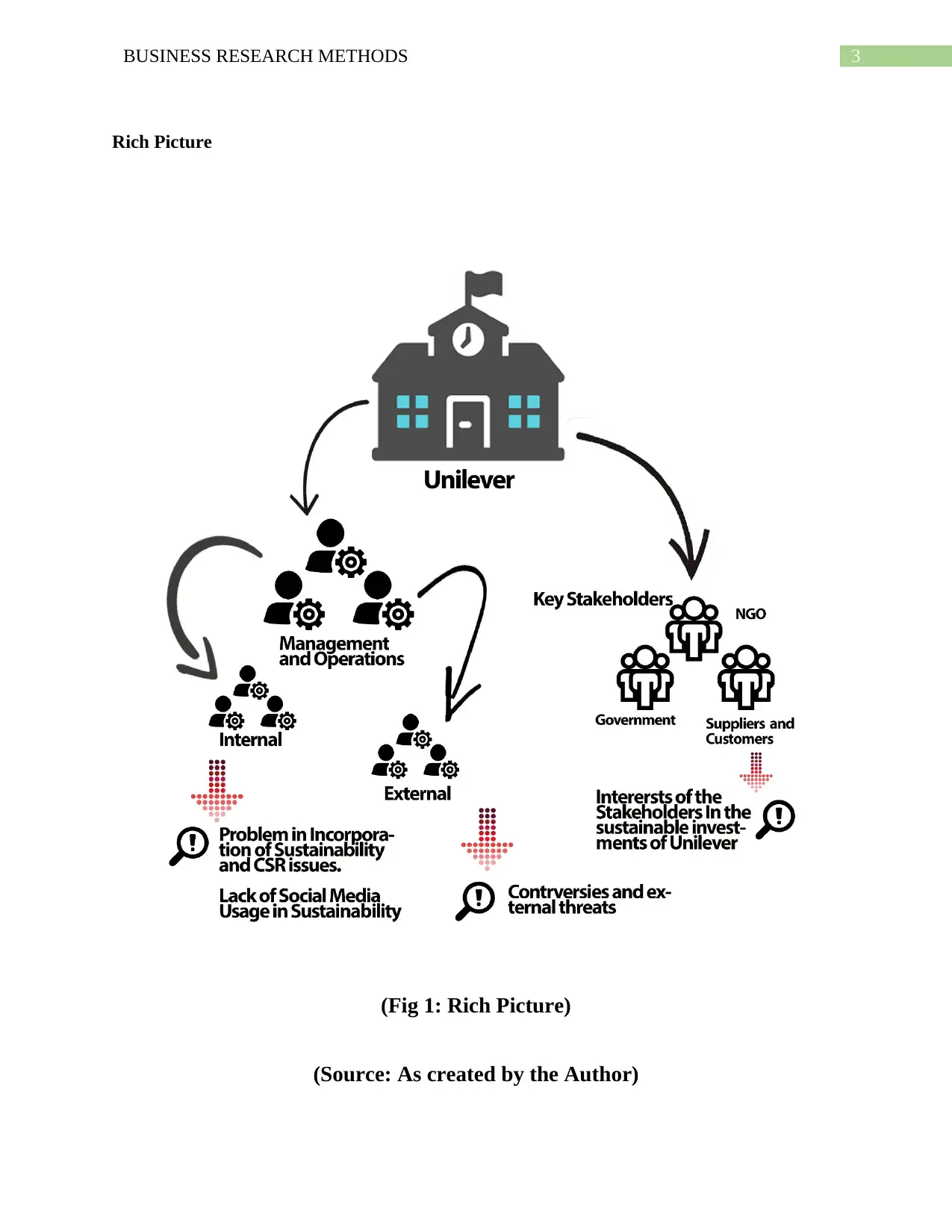
Rich Picture
(Fig 1: Rich Picture)
(Source: As created by the Author)
Rich Picture
(Fig 1: Rich Picture)
(Source: As created by the Author)
Paraphrase This Document
Need a fresh take? Get an instant paraphrase of this document with our AI Paraphraser

4BUSINESS RESEARCH METHODS
5BUSINESS RESEARCH METHODS
1. Introduction
The influence of social media in influencing the sustainability orientation of firms in UK is an
area that needs to be explored. It is often traced that many business oriented problems are resolved by the
inculcation of the measures of sustainability. The presence of ‘social media’ helps the business firms in
UK to adopt viable sustainability options.
1.1. Background of the Study
Recent studies present the notions that ‘sustainability’ is one of the most important areas that
needs to be developed to reduce any external or internal threats (Baumgartner 2014). In the case of
Unilever, it is seen that the organization focuses upon the perpetration of organizational and social
sustainability (Living 2019). What strikes attention is the influence of social media in shaping the
adoption of the various ‘sustainability’ goals. However, it is important to explore the manner in which the
social media positively impacts the sustainable goals of Unilever. A closer analysis of the organization
will reveal that the organization faces certain management problems related the implementation of
environmental sustainability and the related CSR policies.
1.2. Research Reasons and Rationale
As mentioned earlier, Unilever, UK, has to face the operational and management challenges
related to the incorporation of the sustainability and CSR duties. However, it has to be accepted that with
the rampant rise in the usage of social media, the issues and approaches towards sustainability is
influenced by social media. It is important to incorporate sustainability in the area of the relation with the
stakeholders. The reason for this research is to determine the extent to which social media can mould the
various strategies of Unilever. The research is based on the rationale that Unilever needs to incorporate
the benefits of social media to adopt and mould the orientation of the firm in relation to ‘sustainability’.
This research will help in the future benefit of the business organization.
1. Introduction
The influence of social media in influencing the sustainability orientation of firms in UK is an
area that needs to be explored. It is often traced that many business oriented problems are resolved by the
inculcation of the measures of sustainability. The presence of ‘social media’ helps the business firms in
UK to adopt viable sustainability options.
1.1. Background of the Study
Recent studies present the notions that ‘sustainability’ is one of the most important areas that
needs to be developed to reduce any external or internal threats (Baumgartner 2014). In the case of
Unilever, it is seen that the organization focuses upon the perpetration of organizational and social
sustainability (Living 2019). What strikes attention is the influence of social media in shaping the
adoption of the various ‘sustainability’ goals. However, it is important to explore the manner in which the
social media positively impacts the sustainable goals of Unilever. A closer analysis of the organization
will reveal that the organization faces certain management problems related the implementation of
environmental sustainability and the related CSR policies.
1.2. Research Reasons and Rationale
As mentioned earlier, Unilever, UK, has to face the operational and management challenges
related to the incorporation of the sustainability and CSR duties. However, it has to be accepted that with
the rampant rise in the usage of social media, the issues and approaches towards sustainability is
influenced by social media. It is important to incorporate sustainability in the area of the relation with the
stakeholders. The reason for this research is to determine the extent to which social media can mould the
various strategies of Unilever. The research is based on the rationale that Unilever needs to incorporate
the benefits of social media to adopt and mould the orientation of the firm in relation to ‘sustainability’.
This research will help in the future benefit of the business organization.
⊘ This is a preview!⊘
Do you want full access?
Subscribe today to unlock all pages.
Trusted by 1+ million students worldwide
6BUSINESS RESEARCH METHODS
Research Aims
The research aims to understand the role of social media in influencing the sustainability
strategies of Unilever. The research also aims to understand the exact nature of the impact of social media
upon the sustainability orientation in Unilever, United Kingdom. The research is also aimed at
understanding how social media might impact as well as reduce the impact of the external threats of
Unilever.
1.3. Research Objectives
1) To identify the role of social media influences in influencing the sustainable and CSR strategies
of Unilever.
2) To identify the exact impact of social media in shaping the nature of the strategies to be adopted
by Unilever.
3) To identify the manner in which social media and sustainable strategies can help the organization
in managing the external and internal threats.
4) To recommend ways in which the existing strategies and sustainability orientation of Unilever
can be upgraded and modified through social media usage.
2. Literature Review
2.1. The concept of sustainability in business organizations
Recent studies are emblematic of the notion that sustainability in business organizations is relevant
for the future development of the organizations. The concept of ‘sustainability’ also entails the idea of
focusing upon the environmental responsibilities related to the organizations. ‘Sustainability’ in
business organizations also focus on the practice of Corporate Sustainability. As the phrase depicts,
‘sustainability’ refers to the various processes that are involved in the maintenance and sustenance of
the organization. In the case of Unilever, it is seen that the organization also focusses on the aspect of
corporate sustainability (Living 2019). However, it is important to adopt and modify the sustainable
Research Aims
The research aims to understand the role of social media in influencing the sustainability
strategies of Unilever. The research also aims to understand the exact nature of the impact of social media
upon the sustainability orientation in Unilever, United Kingdom. The research is also aimed at
understanding how social media might impact as well as reduce the impact of the external threats of
Unilever.
1.3. Research Objectives
1) To identify the role of social media influences in influencing the sustainable and CSR strategies
of Unilever.
2) To identify the exact impact of social media in shaping the nature of the strategies to be adopted
by Unilever.
3) To identify the manner in which social media and sustainable strategies can help the organization
in managing the external and internal threats.
4) To recommend ways in which the existing strategies and sustainability orientation of Unilever
can be upgraded and modified through social media usage.
2. Literature Review
2.1. The concept of sustainability in business organizations
Recent studies are emblematic of the notion that sustainability in business organizations is relevant
for the future development of the organizations. The concept of ‘sustainability’ also entails the idea of
focusing upon the environmental responsibilities related to the organizations. ‘Sustainability’ in
business organizations also focus on the practice of Corporate Sustainability. As the phrase depicts,
‘sustainability’ refers to the various processes that are involved in the maintenance and sustenance of
the organization. In the case of Unilever, it is seen that the organization also focusses on the aspect of
corporate sustainability (Living 2019). However, it is important to adopt and modify the sustainable
Paraphrase This Document
Need a fresh take? Get an instant paraphrase of this document with our AI Paraphraser
7BUSINESS RESEARCH METHODS
strategies. The aspect of ‘sustainability’ in business organizations is crucial for the development of
the future endeavors. Organizational sustainability also encompasses the idea of ecological
sustainability, economic as well as legal sustainability. In the case of Unilever, it is seen that the
organization strives to amalgamate the various factors of sustainability. However, a closer analysis
will reveal that the organization also faces certain problems related to the incorporation of the CSR
objectives. Recent studies are emblematic of the idea that business sustainability is one of the most
important areas that need to be developed by the business organizations (Bansal and DesJardine
2014). Another study projects the fact that organizational sustainability also focuses on the presence
of certain global challenges to the implementation of the various sustainable strategies (Beckmann,
Hielscher and Pies 2014). A closer examination of the various secondary sources will present that
corporate sustainability encompasses the notion of the presence of the collation of environmental,
social as well as economic areas (Hahn et al. 2014). It is also revealed that organizational sustainable
management is one of the most crucial areas that ensures the future development of the organizations
(Dyllick, T. and Muff 2016).
2.2. The concept of social media influence on sustainable orientation
Recent data from statistical data and news articles reveal that social media is one of the most
important influences that serves to shape the decisions of business organizations (Taneja and Toombs
2014). Another study also presents that the ideas projected in social media platforms serve to shape
the sustainability decisions of various business organizations. As the phrase depicts, ‘social media’
refers to the platforms that enables the citizens and business organizations to voice the opinions.
Thus, it can be said that social media acts as an influencer in the sustainability orientation of the
business organizations. Recent studies also project that social media serves to influence the
sustainability orientation in the firms of UK. It is also observed that in the implementation of
corporate sustainability, the impact of social media forms a crucial part. Recent information from
news article reveals that various business enterprises are raising issues related to sustainability of
strategies. The aspect of ‘sustainability’ in business organizations is crucial for the development of
the future endeavors. Organizational sustainability also encompasses the idea of ecological
sustainability, economic as well as legal sustainability. In the case of Unilever, it is seen that the
organization strives to amalgamate the various factors of sustainability. However, a closer analysis
will reveal that the organization also faces certain problems related to the incorporation of the CSR
objectives. Recent studies are emblematic of the idea that business sustainability is one of the most
important areas that need to be developed by the business organizations (Bansal and DesJardine
2014). Another study projects the fact that organizational sustainability also focuses on the presence
of certain global challenges to the implementation of the various sustainable strategies (Beckmann,
Hielscher and Pies 2014). A closer examination of the various secondary sources will present that
corporate sustainability encompasses the notion of the presence of the collation of environmental,
social as well as economic areas (Hahn et al. 2014). It is also revealed that organizational sustainable
management is one of the most crucial areas that ensures the future development of the organizations
(Dyllick, T. and Muff 2016).
2.2. The concept of social media influence on sustainable orientation
Recent data from statistical data and news articles reveal that social media is one of the most
important influences that serves to shape the decisions of business organizations (Taneja and Toombs
2014). Another study also presents that the ideas projected in social media platforms serve to shape
the sustainability decisions of various business organizations. As the phrase depicts, ‘social media’
refers to the platforms that enables the citizens and business organizations to voice the opinions.
Thus, it can be said that social media acts as an influencer in the sustainability orientation of the
business organizations. Recent studies also project that social media serves to influence the
sustainability orientation in the firms of UK. It is also observed that in the implementation of
corporate sustainability, the impact of social media forms a crucial part. Recent information from
news article reveals that various business enterprises are raising issues related to sustainability of
8BUSINESS RESEARCH METHODS
social and economic environment (Thomas 2016). The concept of social media as an influencer is
seen in various cases. Social media works to influence as well as shape the sustainability issues of
business organization. It is seen that social media provides the relevant information related to the
various climate changes. In accordance to the information, business organizations strive to change
and upgrade their sustainability issues (Ruggeri 2017). For Example, Tengri, UK has to take into
consideration the environmental aspects to sustain their business and to sustain the regular
remuneration (Tengri 2019).
In order to erase the issues related to the incorporation of sustainability objectives, it is crucial for
Unilever to resort to social media. In many cases, it is seen that social media exerts a considerable
influence upon the business sustainable orientation. Recent studies are emblematic of the notion that
the correct usage and application of social media can assist in shaping the sustainability policies and
successful business ideologies. For example, social media participation through sites such as
Facebook can ensure the better adoption of sustainability policies (Business.vic.gov.au 2019). In the
case of Unilever, it is traced that the organations’ management faces the problem of improper
implementation of environmental and social sustainability. In order to address this surging issue, it is
crucial for the organization to resort to employing the positive influence of social media.
2.3. The relation between the two concepts
A closer analysis of the relevant secondary sources will reveal that the influence of social media on
business sustainability orientation is quite considerable. It is observed that the influence of social
media in UK firms such as Dell had resorted to organizational and environmental sustainability (Pay
2018). Social Media influence in the firms of UK such as Unilever can be traced in the manner in
which they use social media to gauge the current and prevalent sustainable preferences of the
customers all over the world (Unilever global company website 2019). It is also found that social
media influences the decisions related to sustainable marketing. Thus, it has to be accepted that the
social and economic environment (Thomas 2016). The concept of social media as an influencer is
seen in various cases. Social media works to influence as well as shape the sustainability issues of
business organization. It is seen that social media provides the relevant information related to the
various climate changes. In accordance to the information, business organizations strive to change
and upgrade their sustainability issues (Ruggeri 2017). For Example, Tengri, UK has to take into
consideration the environmental aspects to sustain their business and to sustain the regular
remuneration (Tengri 2019).
In order to erase the issues related to the incorporation of sustainability objectives, it is crucial for
Unilever to resort to social media. In many cases, it is seen that social media exerts a considerable
influence upon the business sustainable orientation. Recent studies are emblematic of the notion that
the correct usage and application of social media can assist in shaping the sustainability policies and
successful business ideologies. For example, social media participation through sites such as
Facebook can ensure the better adoption of sustainability policies (Business.vic.gov.au 2019). In the
case of Unilever, it is traced that the organations’ management faces the problem of improper
implementation of environmental and social sustainability. In order to address this surging issue, it is
crucial for the organization to resort to employing the positive influence of social media.
2.3. The relation between the two concepts
A closer analysis of the relevant secondary sources will reveal that the influence of social media on
business sustainability orientation is quite considerable. It is observed that the influence of social
media in UK firms such as Dell had resorted to organizational and environmental sustainability (Pay
2018). Social Media influence in the firms of UK such as Unilever can be traced in the manner in
which they use social media to gauge the current and prevalent sustainable preferences of the
customers all over the world (Unilever global company website 2019). It is also found that social
media influences the decisions related to sustainable marketing. Thus, it has to be accepted that the
⊘ This is a preview!⊘
Do you want full access?
Subscribe today to unlock all pages.
Trusted by 1+ million students worldwide
9BUSINESS RESEARCH METHODS
influence of social media upon the sustainability of business firms in UK such as Tengri, Unilever
forms a major part in the orientation of the business organizations.
However, a closer analysis of the available literature will project that the available articles and
resources solely emphasize upon the overall influence of social media. The articles fail to trace the
exact manner in which the sustainable policies of Unilever are influenced by social media. The
previous studies also fail to project the manner in which social media usage can help Unilever in
deleting the internal and external threats to the realization of CSR goals.
3. Research Methodology
In order to answer the research questions, the following research will follow certain steps to arrive at
the conclusion. Starting from the adoption of concrete research philosophy to following ethical norms in
research, the following study will follow the steps of research.
3.1. Research Philosophy
The three types of research philosophy that are available are namely, positivism, interpretivism and
realism. While positivism philosophy aims at analyzing the case and data in a systematic, empirical and
critical manner, interpretivism aims at interpreting the available secondary resources for analysis and
collection. On the other hand, realism, refers to the philosophy that amalgamates the above approaches.
For this research, the research philosophy of positivism shall be employed to critically gauge the data.
Positivism philosophy will permit the incorporation of facts and empirical analysis.
3.2. Research Design:
Research Designs are encompassed by the three broad areas of descriptive, exploratory and
explanatory research design. Descriptive research design entails the notion of evaluating the study in a
descriptive manner. The exploratory research design entails the idea of gauging the concept at the
beginning of research. Explanatory research design focuses on establishing relations between the
variables. For this research, the descriptive research design shall be used. This will assist in understanding
influence of social media upon the sustainability of business firms in UK such as Tengri, Unilever
forms a major part in the orientation of the business organizations.
However, a closer analysis of the available literature will project that the available articles and
resources solely emphasize upon the overall influence of social media. The articles fail to trace the
exact manner in which the sustainable policies of Unilever are influenced by social media. The
previous studies also fail to project the manner in which social media usage can help Unilever in
deleting the internal and external threats to the realization of CSR goals.
3. Research Methodology
In order to answer the research questions, the following research will follow certain steps to arrive at
the conclusion. Starting from the adoption of concrete research philosophy to following ethical norms in
research, the following study will follow the steps of research.
3.1. Research Philosophy
The three types of research philosophy that are available are namely, positivism, interpretivism and
realism. While positivism philosophy aims at analyzing the case and data in a systematic, empirical and
critical manner, interpretivism aims at interpreting the available secondary resources for analysis and
collection. On the other hand, realism, refers to the philosophy that amalgamates the above approaches.
For this research, the research philosophy of positivism shall be employed to critically gauge the data.
Positivism philosophy will permit the incorporation of facts and empirical analysis.
3.2. Research Design:
Research Designs are encompassed by the three broad areas of descriptive, exploratory and
explanatory research design. Descriptive research design entails the notion of evaluating the study in a
descriptive manner. The exploratory research design entails the idea of gauging the concept at the
beginning of research. Explanatory research design focuses on establishing relations between the
variables. For this research, the descriptive research design shall be used. This will assist in understanding
Paraphrase This Document
Need a fresh take? Get an instant paraphrase of this document with our AI Paraphraser
10BUSINESS RESEARCH METHODS
the contribution and influence of social media on the sustainable strategies of Unilever in a descriptive
manner. The other two research designs will be rejected because they will not permit the scope for the
proper analysis of the study.
3.3. Data Collection:
Recent studies reveals that the process of collection of data forms one of the most crucial parts in
research. In this research, the data will be collected through the amalgamation if the primary as well
as secondary resources. Both quantitative as well as qualitative data will be collected. For the
collection of primary data, the collection process of survey and interview. The secondary data will be
collected through the collation of relevant journals and articles.
3.4. Sample size and Population:
For the following survey, the context is to understand the influence of social media on the
sustainability issues of Unilever. The sample population will be the employees who belong to the
management and operations section of the organization. Additionally, only those employees shall be
chosen who have served the organization for at least five years. The sample size will be selected amongst
them. 50 people will be selected for survey and 3 people vested at the managerial position shall be
selected for interview. Recent studies reveal the idea that interviews assist in garnering the subjective
views of the interviewees. The chosen sample will assist in understanding the views of the employees.
3.5. Data Analysis:
For data analysis, the following research will indulge in an in-depth analysis of the data that is
collected. To analyze the quantitative data collected through surveys, the acquired data shall be converted
to mathematical numbers and statistical figures. For analyzing the qualitative data gathered from the
interviews, the method of recording the data shall be used. This will assist in understanding the correct
views of the participants.
the contribution and influence of social media on the sustainable strategies of Unilever in a descriptive
manner. The other two research designs will be rejected because they will not permit the scope for the
proper analysis of the study.
3.3. Data Collection:
Recent studies reveals that the process of collection of data forms one of the most crucial parts in
research. In this research, the data will be collected through the amalgamation if the primary as well
as secondary resources. Both quantitative as well as qualitative data will be collected. For the
collection of primary data, the collection process of survey and interview. The secondary data will be
collected through the collation of relevant journals and articles.
3.4. Sample size and Population:
For the following survey, the context is to understand the influence of social media on the
sustainability issues of Unilever. The sample population will be the employees who belong to the
management and operations section of the organization. Additionally, only those employees shall be
chosen who have served the organization for at least five years. The sample size will be selected amongst
them. 50 people will be selected for survey and 3 people vested at the managerial position shall be
selected for interview. Recent studies reveal the idea that interviews assist in garnering the subjective
views of the interviewees. The chosen sample will assist in understanding the views of the employees.
3.5. Data Analysis:
For data analysis, the following research will indulge in an in-depth analysis of the data that is
collected. To analyze the quantitative data collected through surveys, the acquired data shall be converted
to mathematical numbers and statistical figures. For analyzing the qualitative data gathered from the
interviews, the method of recording the data shall be used. This will assist in understanding the correct
views of the participants.
11BUSINESS RESEARCH METHODS
3.6. Ethical Considerations:
Every research has to face certain ethical bounds. Recent studies reveal that for a research to be
conducted in a proper manner, it is essential to take into consideration the ethical perspectives in the
research. For this research, the survey sheets will be prepared in a manner that does not ask for the
names of the participants. No participant will be compelled to participate in interview or survey.
4. Dissertation Overview
Chapter 1- Introduction: It will introduce the topic
Chapter 2- Literature Review: It will review the secondary sources
Chapter 3- Findings: The findings from the data
Chapter 4- Analysis: This will analyze the data
Chapter 5- Conclusion
4.1. Proposed Timeline of Research
Activities
1st
to 3rd
Week
4th
to 10th
week
11th
to 13th
Week
14th
to 17th
Week
18th
to 21st
Week
22nd
to 23rd
Week
24th
Week
Topic Selection
Data collection from
3.6. Ethical Considerations:
Every research has to face certain ethical bounds. Recent studies reveal that for a research to be
conducted in a proper manner, it is essential to take into consideration the ethical perspectives in the
research. For this research, the survey sheets will be prepared in a manner that does not ask for the
names of the participants. No participant will be compelled to participate in interview or survey.
4. Dissertation Overview
Chapter 1- Introduction: It will introduce the topic
Chapter 2- Literature Review: It will review the secondary sources
Chapter 3- Findings: The findings from the data
Chapter 4- Analysis: This will analyze the data
Chapter 5- Conclusion
4.1. Proposed Timeline of Research
Activities
1st
to 3rd
Week
4th
to 10th
week
11th
to 13th
Week
14th
to 17th
Week
18th
to 21st
Week
22nd
to 23rd
Week
24th
Week
Topic Selection
Data collection from
⊘ This is a preview!⊘
Do you want full access?
Subscribe today to unlock all pages.
Trusted by 1+ million students worldwide

1 out of 15


Related Documents


Your All-in-One AI-Powered Toolkit for Academic Success.
+13062052269
info@desklib.com
Available 24*7 on WhatsApp / Email
![[object Object]](/_next/static/media/star-bottom.7253800d.svg)
Unlock your academic potential
Copyright © 2020–2026 A2Z Services. All Rights Reserved. Developed and managed by ZUCOL.