University Research: Managing Innovation in Artificial Intelligence
VerifiedAdded on 2023/06/10
|10
|2042
|162
Project
AI Summary
This research project examines the crucial aspects of managing innovation in artificial intelligence. It begins with an introduction to AI and its role in simulating human intelligence. The problem statement highlights the limitations of current AI applications and the need for broader innovation. The research aims to explore the scope of AI through effective innovation management and identifies specific objectives such as examining the needs of innovation management in AI, identifying issues, and suggesting improvements. The literature review covers artificial intelligence, innovation in AI, and strategies for improvement. The methodology section outlines the deductive research approach, descriptive research design, and data collection methods using secondary sources. The study addresses ethical considerations to ensure data integrity and privacy. The research plan details the project milestones, from problem formulation to conclusion and recommendations. This project aims to provide valuable insights into the future of AI innovation and management.
Running head: MANAGING INNOVATION IN THE ARTIFICIAL INTELLIGENCE
Managing Innovation in the Artificial Intelligence
Name of the Student:
Name of the University:
Author’s Note:
Managing Innovation in the Artificial Intelligence
Name of the Student:
Name of the University:
Author’s Note:

Paraphrase This Document
Need a fresh take? Get an instant paraphrase of this document with our AI Paraphraser
1MANAGING INNOVATION IN THE ARTIFICIAL INTELLIGENCE
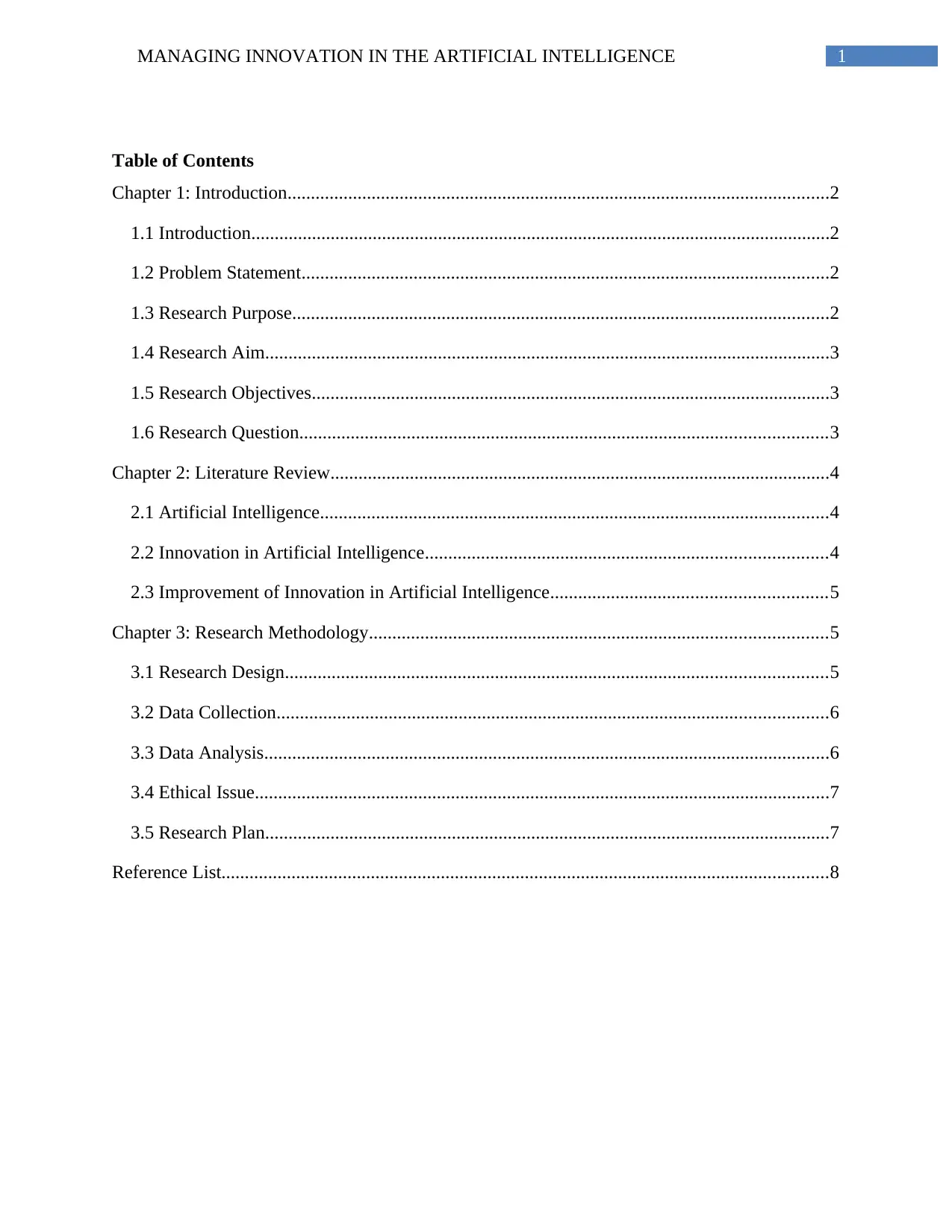
Table of Contents
Chapter 1: Introduction....................................................................................................................2
1.1 Introduction............................................................................................................................2
1.2 Problem Statement.................................................................................................................2
1.3 Research Purpose...................................................................................................................2
1.4 Research Aim.........................................................................................................................3
1.5 Research Objectives...............................................................................................................3
1.6 Research Question.................................................................................................................3
Chapter 2: Literature Review...........................................................................................................4
2.1 Artificial Intelligence.............................................................................................................4
2.2 Innovation in Artificial Intelligence......................................................................................4
2.3 Improvement of Innovation in Artificial Intelligence...........................................................5
Chapter 3: Research Methodology..................................................................................................5
3.1 Research Design....................................................................................................................5
3.2 Data Collection......................................................................................................................6
3.3 Data Analysis.........................................................................................................................6
3.4 Ethical Issue...........................................................................................................................7
3.5 Research Plan.........................................................................................................................7
Reference List..................................................................................................................................8
Table of Contents
Chapter 1: Introduction....................................................................................................................2
1.1 Introduction............................................................................................................................2
1.2 Problem Statement.................................................................................................................2
1.3 Research Purpose...................................................................................................................2
1.4 Research Aim.........................................................................................................................3
1.5 Research Objectives...............................................................................................................3
1.6 Research Question.................................................................................................................3
Chapter 2: Literature Review...........................................................................................................4
2.1 Artificial Intelligence.............................................................................................................4
2.2 Innovation in Artificial Intelligence......................................................................................4
2.3 Improvement of Innovation in Artificial Intelligence...........................................................5
Chapter 3: Research Methodology..................................................................................................5
3.1 Research Design....................................................................................................................5
3.2 Data Collection......................................................................................................................6
3.3 Data Analysis.........................................................................................................................6
3.4 Ethical Issue...........................................................................................................................7
3.5 Research Plan.........................................................................................................................7
Reference List..................................................................................................................................8
2MANAGING INNOVATION IN THE ARTIFICIAL INTELLIGENCE
Chapter 1: Introduction
1.1 Introduction
Artificial intelligence demonstrates the simulation of human intelligence process through
machines and mostly through computers. It is the field of computer science, which emphasizes
on the creation of intelligent machine working and reacting like machines (Norman, 2017). It
promises for the betterment of the goods and services through automatic several tasks.
Innovation is at core of successful implementation of artificial intelligence. Moreover, the
companies concentrated on the artificial intelligence must assess the proper areas and innovative
technologies to ease up the lives of the human beings.
1.2 Problem Statement
Over the years, several companies have concentrated on artificial intelligence for leading
high level of innovation in different areas of human life. Google is the most popular organization
having innovation in their artificial intelligence fields (Hussain 2018). Innovation is rapidly
progressing for leading innovative artificial intelligence. However, most of the organizations are
only limited to apply the artificial intelligence only on computers and mobile devices (Yun et al.,
2016). It is actually limiting the innovation level of artificial intelligence and its ultimate scope in
human lives.
1.3 Research Purpose
Over the years, several researches have been conducted over the area of artificial
intelligence. However, most of those scholars has failed analyze the gaps and needs of
innovation management in the field of artificial intelligence. This research study will be focusing
on discovering the ultimate scope of artificial intelligence through proper management of
Chapter 1: Introduction
1.1 Introduction
Artificial intelligence demonstrates the simulation of human intelligence process through
machines and mostly through computers. It is the field of computer science, which emphasizes
on the creation of intelligent machine working and reacting like machines (Norman, 2017). It
promises for the betterment of the goods and services through automatic several tasks.
Innovation is at core of successful implementation of artificial intelligence. Moreover, the
companies concentrated on the artificial intelligence must assess the proper areas and innovative
technologies to ease up the lives of the human beings.
1.2 Problem Statement
Over the years, several companies have concentrated on artificial intelligence for leading
high level of innovation in different areas of human life. Google is the most popular organization
having innovation in their artificial intelligence fields (Hussain 2018). Innovation is rapidly
progressing for leading innovative artificial intelligence. However, most of the organizations are
only limited to apply the artificial intelligence only on computers and mobile devices (Yun et al.,
2016). It is actually limiting the innovation level of artificial intelligence and its ultimate scope in
human lives.
1.3 Research Purpose
Over the years, several researches have been conducted over the area of artificial
intelligence. However, most of those scholars has failed analyze the gaps and needs of
innovation management in the field of artificial intelligence. This research study will be focusing
on discovering the ultimate scope of artificial intelligence through proper management of
⊘ This is a preview!⊘
Do you want full access?
Subscribe today to unlock all pages.

Trusted by 1+ million students worldwide
3MANAGING INNOVATION IN THE ARTIFICIAL INTELLIGENCE
innovation. Moreover, the research will explore the needs of innovation management towards the
better implementation of artificial intelligence in different aspect of human lives. The research
will collect proper research methodology and approach for collecting most useful information
regarding the topic of the research.
1.4 Research Aim
The aim of the research is to examine the needs of innovation management in the
artificial intelligence.
1.5 Research Objectives
To examine the needs of innovation management in the artificial intelligence
To identify the issues associated with the innovation in artificial intelligence
To suggest better innovation management in the artificial intelligence
1.6 Research Question
What is the importance of innovation management in the artificial intelligence?
What are the issues associated with the innovation in artificial intelligence?
How innovation management can be improved in the artificial intelligence?
innovation. Moreover, the research will explore the needs of innovation management towards the
better implementation of artificial intelligence in different aspect of human lives. The research
will collect proper research methodology and approach for collecting most useful information
regarding the topic of the research.
1.4 Research Aim
The aim of the research is to examine the needs of innovation management in the
artificial intelligence.
1.5 Research Objectives
To examine the needs of innovation management in the artificial intelligence
To identify the issues associated with the innovation in artificial intelligence
To suggest better innovation management in the artificial intelligence
1.6 Research Question
What is the importance of innovation management in the artificial intelligence?
What are the issues associated with the innovation in artificial intelligence?
How innovation management can be improved in the artificial intelligence?
Paraphrase This Document
Need a fresh take? Get an instant paraphrase of this document with our AI Paraphraser
4MANAGING INNOVATION IN THE ARTIFICIAL INTELLIGENCE
Chapter 2: Literature Review
2.1 Artificial Intelligence
According to Jha and Topol (2016), artificial intelligence (AI) creates a significant link
between human intelligence and computer intelligence. The area of artificial intelligence is
associated with the creation of intelligent machines, which behave and work like human. The
science fiction often portrays artificial intelligence as robots having human like characteristics.
However, the area of AI can encompass from Google search to autonomous weapon of IBM. Till
now AI is only limited within weak AI, where the system is generally developed for performing
narrow task. Moreover, such artificial intelligence is focused on outperforming specific task like
solving equation or playing chess. However, Makridakis (2017) opined that it is the time to
broaden the aspects of AI, where the system will be developed for covering the cognitive tasks of
the human beings.
2.2 Innovation in Artificial Intelligence
Some of the big companies like Google, Microsoft and Apple have introduced significant
innovation in AI through their mobile operating system platform. In most of the cases, it is
visible that the applications of AI are limited within portable gadgets like smart phones. For
Example, Google has introduced Google Assistance Application in the android platform. On the
other hand, Apple has introduced AI in its SIRI Application. According to Lu et al. (2018), most
of the AIs at present are considered as entertainment purpose for casual consumers. On the other
hand, considering the international stakeholders of a business AI helps in easing out the
communication purpose. Now it is time for the organizations to innovate ways through which
consumers can experience the utility of AI beyond its entertainment purpose.
Chapter 2: Literature Review
2.1 Artificial Intelligence
According to Jha and Topol (2016), artificial intelligence (AI) creates a significant link
between human intelligence and computer intelligence. The area of artificial intelligence is
associated with the creation of intelligent machines, which behave and work like human. The
science fiction often portrays artificial intelligence as robots having human like characteristics.
However, the area of AI can encompass from Google search to autonomous weapon of IBM. Till
now AI is only limited within weak AI, where the system is generally developed for performing
narrow task. Moreover, such artificial intelligence is focused on outperforming specific task like
solving equation or playing chess. However, Makridakis (2017) opined that it is the time to
broaden the aspects of AI, where the system will be developed for covering the cognitive tasks of
the human beings.
2.2 Innovation in Artificial Intelligence
Some of the big companies like Google, Microsoft and Apple have introduced significant
innovation in AI through their mobile operating system platform. In most of the cases, it is
visible that the applications of AI are limited within portable gadgets like smart phones. For
Example, Google has introduced Google Assistance Application in the android platform. On the
other hand, Apple has introduced AI in its SIRI Application. According to Lu et al. (2018), most
of the AIs at present are considered as entertainment purpose for casual consumers. On the other
hand, considering the international stakeholders of a business AI helps in easing out the
communication purpose. Now it is time for the organizations to innovate ways through which
consumers can experience the utility of AI beyond its entertainment purpose.
5MANAGING INNOVATION IN THE ARTIFICIAL INTELLIGENCE
2.3 Improvement of Innovation in Artificial Intelligence
At present, the artificial intelligence should be improved in such way that the consumers
are able to utilize those in their daily lives. Moreover, the companies should properly identify the
potential scope of AI in smart home. It indicates that consumers will be able to automate their
electrical appliances just by triggering some commands. According to Jamal and Syahputra
(2016), the application of AI is quite limited to the developed countries. However, it is the time
to educate people of developing countries to experience the application of AI in broader aspects.
Moreover, it is the opportunities for the business organizations to innovate utility based simple
methods that can be easily interfered by the ordinary people (Kokina and Davenport 2017).
Therefore, it can be said that organizations have the opportunity to integrate their operating
system based platforms with human intelligence, which can be channelized through electronic
gadgets beyond smart phones.
Chapter 3: Research Methodology
3.1 Research Design
Research design defines the framework for conducting the research in getting authentic
research result. Research approach is the significant method of gathering authentic research
result. Inductive approach requires framing innovative models and theories related to the topic of
research. On the other hand, deductive approach requires application of previous models and
theories for gathering relevant research information (Lewis 2015). This research will be using
deductive approach for saving time and budget through application of previous research theories
and models. Research design helps in having proper understanding of research topic.
Explanatory design links the research variables for gathering information. Exploratory design
2.3 Improvement of Innovation in Artificial Intelligence
At present, the artificial intelligence should be improved in such way that the consumers
are able to utilize those in their daily lives. Moreover, the companies should properly identify the
potential scope of AI in smart home. It indicates that consumers will be able to automate their
electrical appliances just by triggering some commands. According to Jamal and Syahputra
(2016), the application of AI is quite limited to the developed countries. However, it is the time
to educate people of developing countries to experience the application of AI in broader aspects.
Moreover, it is the opportunities for the business organizations to innovate utility based simple
methods that can be easily interfered by the ordinary people (Kokina and Davenport 2017).
Therefore, it can be said that organizations have the opportunity to integrate their operating
system based platforms with human intelligence, which can be channelized through electronic
gadgets beyond smart phones.
Chapter 3: Research Methodology
3.1 Research Design
Research design defines the framework for conducting the research in getting authentic
research result. Research approach is the significant method of gathering authentic research
result. Inductive approach requires framing innovative models and theories related to the topic of
research. On the other hand, deductive approach requires application of previous models and
theories for gathering relevant research information (Lewis 2015). This research will be using
deductive approach for saving time and budget through application of previous research theories
and models. Research design helps in having proper understanding of research topic.
Explanatory design links the research variables for gathering information. Exploratory design
⊘ This is a preview!⊘
Do you want full access?
Subscribe today to unlock all pages.
Trusted by 1+ million students worldwide
6MANAGING INNOVATION IN THE ARTIFICIAL INTELLIGENCE
explores the research background for having current issues associated with the research (Choy
2014). On the other hand, descriptive research gathers the actual purpose of the research topic.
The research will choose descriptive design for having proper understanding towards conducting
the research in proper manner.
3.2 Data Collection
Data collection defines the most significant ways of collecting data about the research
topic. Data collection can be of two type’s namely primary and secondary method. Primary
method is related with collection of objective data linked with research topic. Such method is
conducted through qualitative and quantitative data collection technique. In such quantitative
technique, survey method is used for data collection from distribution of survey questionnaires
among the research participants (Fletcher 2017). On the other hand, interview is arranged with
the organizational heads for having core organizational information liked with research topic.
However, secondary data collection will actually be selected for conducting the research in
successful manner. In such method, the research will collect in-depth and authentic information
from the authentic journals, magazines, books and websites.
3.3 Data Analysis
Data analysis converts the general meaning of the collected data into specific meaning for
leading authentic research result (Choy 2014). In this research, the research study will be using
thematic data analysis for analyzing the collected data from the secondary sources. In this
method, different themes will be formulated from the gathered data from the research
participants.
explores the research background for having current issues associated with the research (Choy
2014). On the other hand, descriptive research gathers the actual purpose of the research topic.
The research will choose descriptive design for having proper understanding towards conducting
the research in proper manner.
3.2 Data Collection
Data collection defines the most significant ways of collecting data about the research
topic. Data collection can be of two type’s namely primary and secondary method. Primary
method is related with collection of objective data linked with research topic. Such method is
conducted through qualitative and quantitative data collection technique. In such quantitative
technique, survey method is used for data collection from distribution of survey questionnaires
among the research participants (Fletcher 2017). On the other hand, interview is arranged with
the organizational heads for having core organizational information liked with research topic.
However, secondary data collection will actually be selected for conducting the research in
successful manner. In such method, the research will collect in-depth and authentic information
from the authentic journals, magazines, books and websites.
3.3 Data Analysis
Data analysis converts the general meaning of the collected data into specific meaning for
leading authentic research result (Choy 2014). In this research, the research study will be using
thematic data analysis for analyzing the collected data from the secondary sources. In this
method, different themes will be formulated from the gathered data from the research
participants.
Paraphrase This Document
Need a fresh take? Get an instant paraphrase of this document with our AI Paraphraser
7MANAGING INNOVATION IN THE ARTIFICIAL INTELLIGENCE
3.4 Ethical Issue
Ethical consideration is extremely important for completing the research in successful
manner. In this research, it will be ensured that data is collected from authentic sources by
marinating the criteria of data access. On the other hand, it will be ensured that the collected data
will be used for only personal purposes and not for any kind of commercial purposes.
Furthermore, all the data protection acts will be maintained in the research for protecting the data
from unauthentic access.
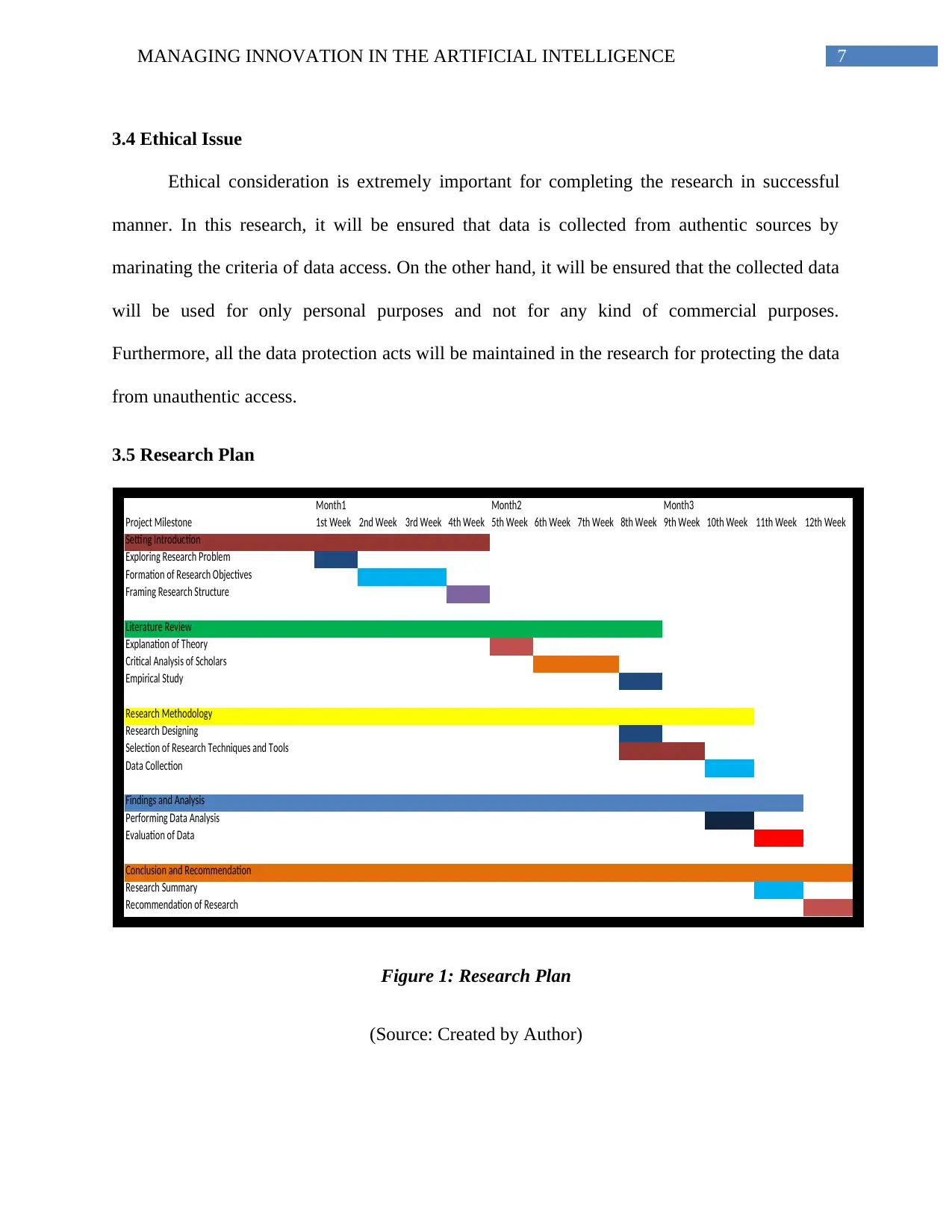
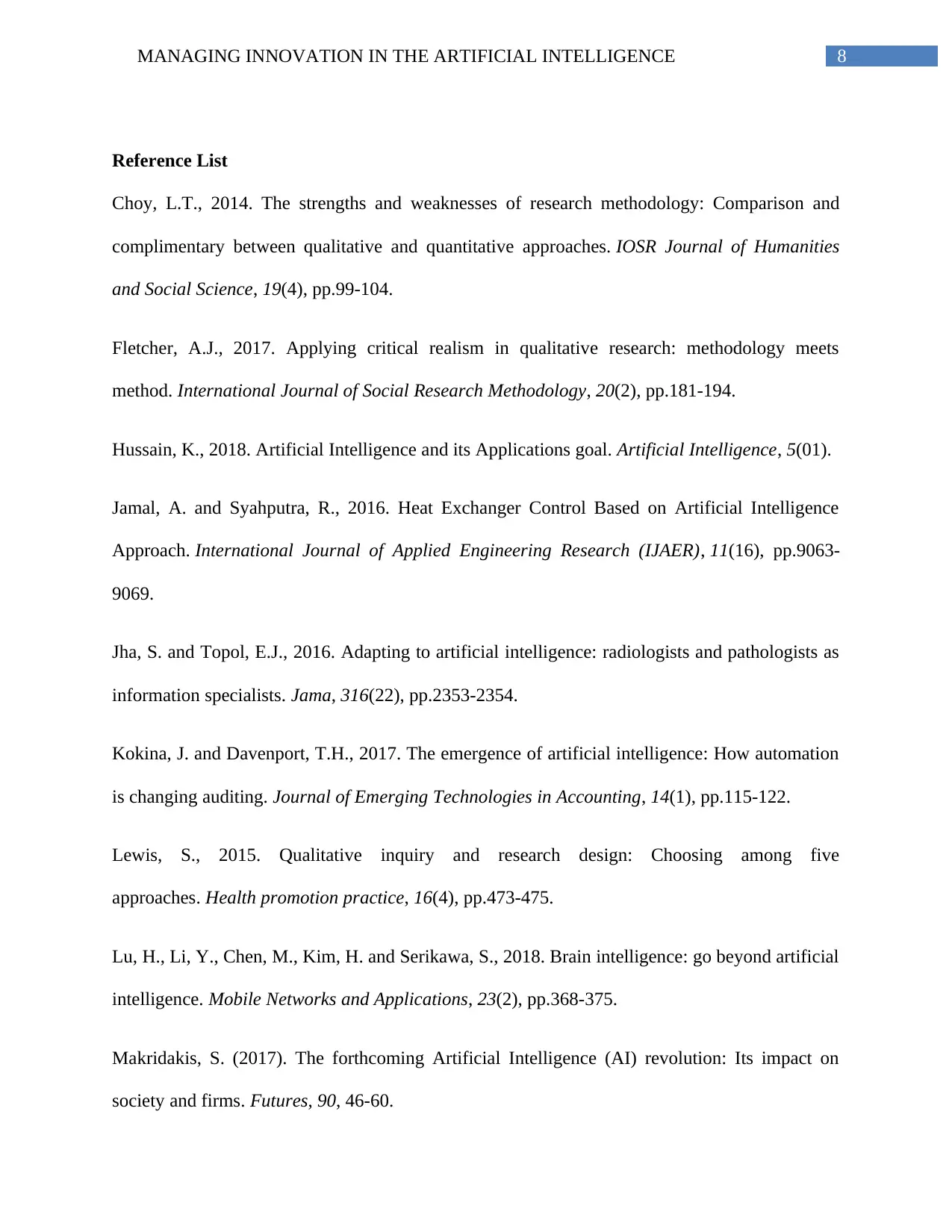
3.5 Research Plan
Figure 1: Research Plan
(Source: Created by Author)
Month1 Month2 Month3
Project Milestone 1st Week 2nd Week 3rd Week 4th Week 5th Week 6th Week 7th Week 8th Week 9th Week 10th Week 11th Week 12th Week
Setting Introduction
Exploring Research Problem
Formation of Research Objectives
Framing Research Structure
Literature Review
Explanation of Theory
Critical Analysis of Scholars
Empirical Study
Research Methodology
Research Designing
Selection of Research Techniques and Tools
Data Collection
Findings and Analysis
Performing Data Analysis
Evaluation of Data
Conclusion and Recommendation
Research Summary
Recommendation of Research
3.4 Ethical Issue
Ethical consideration is extremely important for completing the research in successful
manner. In this research, it will be ensured that data is collected from authentic sources by
marinating the criteria of data access. On the other hand, it will be ensured that the collected data
will be used for only personal purposes and not for any kind of commercial purposes.
Furthermore, all the data protection acts will be maintained in the research for protecting the data
from unauthentic access.
3.5 Research Plan
Figure 1: Research Plan
(Source: Created by Author)
Month1 Month2 Month3
Project Milestone 1st Week 2nd Week 3rd Week 4th Week 5th Week 6th Week 7th Week 8th Week 9th Week 10th Week 11th Week 12th Week
Setting Introduction
Exploring Research Problem
Formation of Research Objectives
Framing Research Structure
Literature Review
Explanation of Theory
Critical Analysis of Scholars
Empirical Study
Research Methodology
Research Designing
Selection of Research Techniques and Tools
Data Collection
Findings and Analysis
Performing Data Analysis
Evaluation of Data
Conclusion and Recommendation
Research Summary
Recommendation of Research
8MANAGING INNOVATION IN THE ARTIFICIAL INTELLIGENCE
Reference List
Choy, L.T., 2014. The strengths and weaknesses of research methodology: Comparison and
complimentary between qualitative and quantitative approaches. IOSR Journal of Humanities
and Social Science, 19(4), pp.99-104.
Fletcher, A.J., 2017. Applying critical realism in qualitative research: methodology meets
method. International Journal of Social Research Methodology, 20(2), pp.181-194.
Hussain, K., 2018. Artificial Intelligence and its Applications goal. Artificial Intelligence, 5(01).
Jamal, A. and Syahputra, R., 2016. Heat Exchanger Control Based on Artificial Intelligence
Approach. International Journal of Applied Engineering Research (IJAER), 11(16), pp.9063-
9069.
Jha, S. and Topol, E.J., 2016. Adapting to artificial intelligence: radiologists and pathologists as
information specialists. Jama, 316(22), pp.2353-2354.
Kokina, J. and Davenport, T.H., 2017. The emergence of artificial intelligence: How automation
is changing auditing. Journal of Emerging Technologies in Accounting, 14(1), pp.115-122.
Lewis, S., 2015. Qualitative inquiry and research design: Choosing among five
approaches. Health promotion practice, 16(4), pp.473-475.
Lu, H., Li, Y., Chen, M., Kim, H. and Serikawa, S., 2018. Brain intelligence: go beyond artificial
intelligence. Mobile Networks and Applications, 23(2), pp.368-375.
Makridakis, S. (2017). The forthcoming Artificial Intelligence (AI) revolution: Its impact on
society and firms. Futures, 90, 46-60.
Reference List
Choy, L.T., 2014. The strengths and weaknesses of research methodology: Comparison and
complimentary between qualitative and quantitative approaches. IOSR Journal of Humanities
and Social Science, 19(4), pp.99-104.
Fletcher, A.J., 2017. Applying critical realism in qualitative research: methodology meets
method. International Journal of Social Research Methodology, 20(2), pp.181-194.
Hussain, K., 2018. Artificial Intelligence and its Applications goal. Artificial Intelligence, 5(01).
Jamal, A. and Syahputra, R., 2016. Heat Exchanger Control Based on Artificial Intelligence
Approach. International Journal of Applied Engineering Research (IJAER), 11(16), pp.9063-
9069.
Jha, S. and Topol, E.J., 2016. Adapting to artificial intelligence: radiologists and pathologists as
information specialists. Jama, 316(22), pp.2353-2354.
Kokina, J. and Davenport, T.H., 2017. The emergence of artificial intelligence: How automation
is changing auditing. Journal of Emerging Technologies in Accounting, 14(1), pp.115-122.
Lewis, S., 2015. Qualitative inquiry and research design: Choosing among five
approaches. Health promotion practice, 16(4), pp.473-475.
Lu, H., Li, Y., Chen, M., Kim, H. and Serikawa, S., 2018. Brain intelligence: go beyond artificial
intelligence. Mobile Networks and Applications, 23(2), pp.368-375.
Makridakis, S. (2017). The forthcoming Artificial Intelligence (AI) revolution: Its impact on
society and firms. Futures, 90, 46-60.
⊘ This is a preview!⊘
Do you want full access?
Subscribe today to unlock all pages.
Trusted by 1+ million students worldwide
9MANAGING INNOVATION IN THE ARTIFICIAL INTELLIGENCE
Norman, D., 2017. Design, business models, and human-technology teamwork: As automation
and artificial intelligence technologies develop, we need to think less about human-machine
interfaces and more about human-machine teamwork. Research-Technology Management, 60(1),
26-30.
Yun, J.J., Lee, D., Ahn, H., Park, K. and Yigitcanlar, T., 2016. Not deep learning but
autonomous learning of open innovation for sustainable artificial
intelligence. Sustainability, 8(8), p.797.
Norman, D., 2017. Design, business models, and human-technology teamwork: As automation
and artificial intelligence technologies develop, we need to think less about human-machine
interfaces and more about human-machine teamwork. Research-Technology Management, 60(1),
26-30.
Yun, J.J., Lee, D., Ahn, H., Park, K. and Yigitcanlar, T., 2016. Not deep learning but
autonomous learning of open innovation for sustainable artificial
intelligence. Sustainability, 8(8), p.797.

1 out of 10


Related Documents


Your All-in-One AI-Powered Toolkit for Academic Success.
+13062052269
info@desklib.com
Available 24*7 on WhatsApp / Email
![[object Object]](/_next/static/media/star-bottom.7253800d.svg)
Unlock your academic potential
Copyright © 2020–2026 A2Z Services. All Rights Reserved. Developed and managed by ZUCOL.