Food Insecurity of Tertiary Students: Prevalence and Determinants
VerifiedAdded on 2019/09/20
|15
|6636
|156
Report
AI Summary
This report presents the findings of a pilot study conducted at Deakin University, Victoria, Australia, investigating food insecurity among tertiary students. The study, employing a cross-sectional design with a self-reported questionnaire administered to 124 students in 2012, aimed to assess the prevalence, severity, and potential determinants of food insecurity. The results revealed that 18% of students experienced food insecurity without hunger, and an additional 30% experienced food insecurity with hunger, indicating a higher prevalence compared to the general Australian population. Factors associated with food insecurity included living arrangements (students not living with family were more likely to be food insecure) and receiving government support (associated with food insecurity with hunger). The study highlights the vulnerability of tertiary students to food insecurity, potentially due to financial pressures, and underscores the need for further research and policy interventions to support student wellbeing and academic performance. The report uses the USDA-AFSSM to assess the severity of food insecurity and examines the impact of factors like income, living arrangements, and support services on students' ability to procure adequate food. The findings suggest that financial constraints are a key predictor of food insecurity among this demographic.
Nutrition & Dietetics 2014; 71:
258–264
DOI: 10.1111/1747-
0080.12097
25
8
© 2013 Dietitians Association of
Australia
ORIGINAL RESEARCH
Food insecurity among university students in
Victoria: A pilot study
Dee A. MICEVSKI,1 Lukar E. THORNTON2 and Sonia BROCKINGTON1
1School of Exercise and Nutrition Sciences, Faculty of Health, and 2Centre for Physical Activity and Nutrition
Research, School of Exercise and Nutrition Sciences, Deakin University, Burwood, Victoria, Australia
Abstract
Aims: Susceptibility to food insecurity can vary over a life course; however, a potential period of particular
vulnerability is while studying at a tertiary institution. This pilot study aimed to assess the prevalence, severity
and potential determinants of food insecurity among tertiary students attending a Victorian-based institution.
Methods: The present study employed a cross-sectional design, involving use of a self-reported
questionnaire. The survey, conducted in 2012, was administered to a sample of 124 Deakin University students
and contains measures of food insecurity status, demographics and other potential explanatory factors.
Descriptive and regression analysis was undertaken to investigate the prevalence of food insecurity and
associations with factors that may support or hinder a student’s ability to procure food, such as living
arrangements, income and knowledge of support services. Results: Food insecurity without hunger was
reported by 18% of Deakin University students, while an additional 30% reported experiencing the more
severe form of food insecurity (with hunger). A lower odds of being food insecure was reported among
students living with their family (without hunger OR 0.35; 95% CI 0.12–0.99; with hunger OR 0.29; 95% CI
0.12–0.70), while a higher odds was found among those receiving government support (with hunger OR 2.52;
95% CI 1.05–6.04).
Conclusions: The reported prevalence of food insecurity among the tertiary student sample was greater than
the general Australian population, suggesting they are a vulnerable group. This may be attributable to
financial pressures faced when students are not living with their parents.
Key words: food insecurity, risk factors, universities.
Introduction
Food insecurity is defined as the inability to
access and procure, through conventional
avenues, nutritionally adequate foods capable
of supporting an active and healthy lifestyle.1
Food security status exists on a continuum
ranging from: food security, when individuals
show no evidence of food insecurity and
dietary preferences are consistently sat- isfied;
food insecurity without hunger, when regular
consump- tion of food occurs, however anxiety
or uncertainty over access to food of a
sufficient quality or quantity may even- tuate;
and to a greater severity, food insecurity with
hunger, when meals are neglected or
inadequate, with hunger and possibly
malnutrition being direct outcomes.2–4
D.A. Micevski, BAppSc (Food Sc & Nutr)(Hons),
Honours Candidate
L.E. Thornton, PhD, Alfred Deakin Postdoctoral
Research Fellow
S. Brockington, MPH, BHSc(Nutr.Diet)(Hons),
GradCertHigherEd APD, Lecturer
Correspondence: S. Brockington, School of
Exercise and Nutrition
Sciences, Faculty of Health, Deakin
University, 221 Burwood Highway,
Burwood, Victoria, 3125, Australia. Email:
sonia.brockington@deakin.edu.au
Accepted August 2013
258–264
DOI: 10.1111/1747-
0080.12097
25
8
© 2013 Dietitians Association of
Australia
ORIGINAL RESEARCH
Food insecurity among university students in
Victoria: A pilot study
Dee A. MICEVSKI,1 Lukar E. THORNTON2 and Sonia BROCKINGTON1
1School of Exercise and Nutrition Sciences, Faculty of Health, and 2Centre for Physical Activity and Nutrition
Research, School of Exercise and Nutrition Sciences, Deakin University, Burwood, Victoria, Australia
Abstract
Aims: Susceptibility to food insecurity can vary over a life course; however, a potential period of particular
vulnerability is while studying at a tertiary institution. This pilot study aimed to assess the prevalence, severity
and potential determinants of food insecurity among tertiary students attending a Victorian-based institution.
Methods: The present study employed a cross-sectional design, involving use of a self-reported
questionnaire. The survey, conducted in 2012, was administered to a sample of 124 Deakin University students
and contains measures of food insecurity status, demographics and other potential explanatory factors.
Descriptive and regression analysis was undertaken to investigate the prevalence of food insecurity and
associations with factors that may support or hinder a student’s ability to procure food, such as living
arrangements, income and knowledge of support services. Results: Food insecurity without hunger was
reported by 18% of Deakin University students, while an additional 30% reported experiencing the more
severe form of food insecurity (with hunger). A lower odds of being food insecure was reported among
students living with their family (without hunger OR 0.35; 95% CI 0.12–0.99; with hunger OR 0.29; 95% CI
0.12–0.70), while a higher odds was found among those receiving government support (with hunger OR 2.52;
95% CI 1.05–6.04).
Conclusions: The reported prevalence of food insecurity among the tertiary student sample was greater than
the general Australian population, suggesting they are a vulnerable group. This may be attributable to
financial pressures faced when students are not living with their parents.
Key words: food insecurity, risk factors, universities.
Introduction
Food insecurity is defined as the inability to
access and procure, through conventional
avenues, nutritionally adequate foods capable
of supporting an active and healthy lifestyle.1
Food security status exists on a continuum
ranging from: food security, when individuals
show no evidence of food insecurity and
dietary preferences are consistently sat- isfied;
food insecurity without hunger, when regular
consump- tion of food occurs, however anxiety
or uncertainty over access to food of a
sufficient quality or quantity may even- tuate;
and to a greater severity, food insecurity with
hunger, when meals are neglected or
inadequate, with hunger and possibly
malnutrition being direct outcomes.2–4
D.A. Micevski, BAppSc (Food Sc & Nutr)(Hons),
Honours Candidate
L.E. Thornton, PhD, Alfred Deakin Postdoctoral
Research Fellow
S. Brockington, MPH, BHSc(Nutr.Diet)(Hons),
GradCertHigherEd APD, Lecturer
Correspondence: S. Brockington, School of
Exercise and Nutrition
Sciences, Faculty of Health, Deakin
University, 221 Burwood Highway,
Burwood, Victoria, 3125, Australia. Email:
sonia.brockington@deakin.edu.au
Accepted August 2013

Paraphrase This Document
Need a fresh take? Get an instant paraphrase of this document with our AI Paraphraser
Food insecurity of tertiary
students
25
9
© 2013 Dietitians Association of
Australia
Food insecurity represents a significant public
health dilemma and remains a contributor to many
nutritional, health and developmental problems.5,6 In
particular, moder- ate forms of food insecurity
(without hunger) are known to be associated with
chronic diseases including overweight and obesity,
which can be the consequence of a reliance on
cheap calorically dense foods. 7,8 Further, food
insecurity (with hunger) is associated with under
nutrition. 1,9 Experi- encing food insecurity may also
affect psychological, social and economic
wellbeing. 6,10
In Australia, conservative estimates indicated
5.2% of the general population experienced food
insecurity, with 40% of those at a severe level. 10,11
The extent of food insecurity is likely to vary across
the lifespan; however, the years attending a tertiary
institution may be one period of life when food
insecurity becomes pronounced. 12–14 This may be due
to university students having more independence if
they are living out of home for the first time or from
man- aging the demands of both employment and
study. 12,15,16 To date, a few studies have assessed the
prevalence of food insecurity among university
students as well as the poten- tial determinants. 12 A
greater level of understanding is war- ranted given
these students represent a group that will
students
25
9
© 2013 Dietitians Association of
Australia
Food insecurity represents a significant public
health dilemma and remains a contributor to many
nutritional, health and developmental problems.5,6 In
particular, moder- ate forms of food insecurity
(without hunger) are known to be associated with
chronic diseases including overweight and obesity,
which can be the consequence of a reliance on
cheap calorically dense foods. 7,8 Further, food
insecurity (with hunger) is associated with under
nutrition. 1,9 Experi- encing food insecurity may also
affect psychological, social and economic
wellbeing. 6,10
In Australia, conservative estimates indicated
5.2% of the general population experienced food
insecurity, with 40% of those at a severe level. 10,11
The extent of food insecurity is likely to vary across
the lifespan; however, the years attending a tertiary
institution may be one period of life when food
insecurity becomes pronounced. 12–14 This may be due
to university students having more independence if
they are living out of home for the first time or from
man- aging the demands of both employment and
study. 12,15,16 To date, a few studies have assessed the
prevalence of food insecurity among university
students as well as the poten- tial determinants. 12 A
greater level of understanding is war- ranted given
these students represent a group that will
Nutrition & Dietetics 2014; 71:
258–264
DOI: 10.1111/1747-
0080.12097
25
8
© 2013 Dietitians Association of
Australia
contribute to the future progression and
prosperity of Australia.17,18
Research at Griffith University in
Queensland, Australia,
recently reported that the prevalence of food
insecurity among tertiary students was 72%
(47% without hunger; 25% with hunger) using
a multi-item assessment measure.12 Inter-
nationally, research conducted at the
University of Hawaii (UHM) in the United
States discovered 21% of the student body
experienced food insecurity (15% without
hunger; 6% with hunger) using the United
States Department of Agricul- ture (USDA)
multi-item assessment measure.19
Food insecurity is the outcome of immediate
issues around food availability, accessibility and
utilisation. 9 Although diverse factors expose certain
groups in society to varying degrees of food
insecurity,11 financial constraints are
recognised as a key predictor.20–24 Relevant
indicators of financial status include total
income and income source (employment,
welfare dependency and parental support).20–24
Further, for students who are living
independently away from home for the first
time (renting, share house, university
residence, with extended family), the cost of
living and utility expenses may amplify
economic stress and lead to the displacement
of money away from purchasing nutritious
food.19,25,26
The present pilot study aimed to quantify
the prevalence and severity of food
insecurity among tertiary students enrolled
in a Victorian-based institution (Deakin
University) and to investigate key factors
potentially associated with this. To our
knowledge, the prevalence of and factors
contribut- ing to food insecurity in
Australian students have only been reported
in one prior study. 12 The present study is the
first to undertake this within a Victorian
institute and the first to use multivariate
regression models to examine explanatory
factors. Results may help advocate for
further research funding to assess this issue
on a wider scale and eventually inform
policies to protect the wellbeing of students
as well as their academic performance by
minimising food insecurity prevalence. 9,11
Methods
Deakin University has campuses located in
three townships (Burwood, Geelong (two
separate campuses: Waterfront and Waurn
Ponds) and Warrnambool) within the state of
Victo- ria, Australia, and has over 40 000
enrolled students. Stu- dents from each of
these campuses were eligible to participate,
with the only exclusion criteria being
students below 18 years of age (for ethics
purposes). Students were invited to complete
a self-reported questionnaire on their eating
behaviours and personal characteristics (no
direct mention of food insecurity occurred
during recruitment to avoid bias). All surveys
completed by students were anony- mous.
Ethics approval for this cross-sectional study
was granted by the Deakin University Faculty
of Health Human Ethics Advisory Group.
The recruitment process spanned four
weeks in duration. A range of techniques
were used to recruit participants, including:
on-campus recruitment; information flyers,
bul- letins and posters situated at prominent
sites throughout all
258–264
DOI: 10.1111/1747-
0080.12097
25
8
© 2013 Dietitians Association of
Australia
contribute to the future progression and
prosperity of Australia.17,18
Research at Griffith University in
Queensland, Australia,
recently reported that the prevalence of food
insecurity among tertiary students was 72%
(47% without hunger; 25% with hunger) using
a multi-item assessment measure.12 Inter-
nationally, research conducted at the
University of Hawaii (UHM) in the United
States discovered 21% of the student body
experienced food insecurity (15% without
hunger; 6% with hunger) using the United
States Department of Agricul- ture (USDA)
multi-item assessment measure.19
Food insecurity is the outcome of immediate
issues around food availability, accessibility and
utilisation. 9 Although diverse factors expose certain
groups in society to varying degrees of food
insecurity,11 financial constraints are
recognised as a key predictor.20–24 Relevant
indicators of financial status include total
income and income source (employment,
welfare dependency and parental support).20–24
Further, for students who are living
independently away from home for the first
time (renting, share house, university
residence, with extended family), the cost of
living and utility expenses may amplify
economic stress and lead to the displacement
of money away from purchasing nutritious
food.19,25,26
The present pilot study aimed to quantify
the prevalence and severity of food
insecurity among tertiary students enrolled
in a Victorian-based institution (Deakin
University) and to investigate key factors
potentially associated with this. To our
knowledge, the prevalence of and factors
contribut- ing to food insecurity in
Australian students have only been reported
in one prior study. 12 The present study is the
first to undertake this within a Victorian
institute and the first to use multivariate
regression models to examine explanatory
factors. Results may help advocate for
further research funding to assess this issue
on a wider scale and eventually inform
policies to protect the wellbeing of students
as well as their academic performance by
minimising food insecurity prevalence. 9,11
Methods
Deakin University has campuses located in
three townships (Burwood, Geelong (two
separate campuses: Waterfront and Waurn
Ponds) and Warrnambool) within the state of
Victo- ria, Australia, and has over 40 000
enrolled students. Stu- dents from each of
these campuses were eligible to participate,
with the only exclusion criteria being
students below 18 years of age (for ethics
purposes). Students were invited to complete
a self-reported questionnaire on their eating
behaviours and personal characteristics (no
direct mention of food insecurity occurred
during recruitment to avoid bias). All surveys
completed by students were anony- mous.
Ethics approval for this cross-sectional study
was granted by the Deakin University Faculty
of Health Human Ethics Advisory Group.
The recruitment process spanned four
weeks in duration. A range of techniques
were used to recruit participants, including:
on-campus recruitment; information flyers,
bul- letins and posters situated at prominent
sites throughout all
⊘ This is a preview!⊘
Do you want full access?
Subscribe today to unlock all pages.

Trusted by 1+ million students worldwide
Food insecurity of tertiary
students
25
9
© 2013 Dietitians Association of
Australia
campuses and all faculties; notices via
Deakin Studies Online unit sites; and
announcements made at 10 lectures from
randomly selected courses across all
faculties. Surveys were distributed within
lectures where announcements were
delivered, and also mailed to those who
expressed interest in participating.
Information was posted on a further 68 unit
sites by unit chairs upon request. At the
end of recruitment, 124 surveys were
completed for this pilot study. In place of a
compensation for each participant, a small
donation was made for each survey
completed ($0.25 per survey) to the
charitable food organisation Second Bite.27
To estimate the prevalence and severity
of food insecurity within the student body,
the survey included several ques- tions
derived from the multi-item United States
Department of Agriculture-Adult Food
Security Survey Module (USDA- AFSSM). 3
This survey is the most contemporary,
validated and commonly employed measure
of food insecurity inter- nationally. 10,28
Our questionnaire to assess food
insecurity and associated factors among
tertiary students contained 45 items, in a
format that included both open- and closed-
ended ques- tions. With permission, the
survey was based on that used by Hughes
and colleagues in Queensland, 12 with slight
modifi- cations to accommodate the Deakin
University cohort.
The relative severity of food insecurity
reflected the ranking outlined in the USDA-
AFSSM. 4 This scale’s algo- rithm
categorises individuals as either food
secure, food insecure without hunger, or
food insecure with hunger. 3,25
Individuals were classified as food insecure
without hunger if their responses were ‘often
true’ or ‘sometimes true’ to any of the
following statements related to their current
university year:3,28
I worried that my food would run out
before I had money to buy more.
I couldn’t afford to eat balanced meals.
The food that you bought just didn’t last
and you didn’t have money to get more.
Individuals were classified as food
insecure (with hunger) if, in addition to
answering affirmatively to any of the above
questions, they also answered ‘yes’ to any
of the following: 3,28
Did you ever decrease the size of your
meals or skip meals because there wasn’t
enough money for food?
Were you ever hungry but didn’t eat
because you couldn’t afford enough food?
Did you lose weight because you didn’t
have enough money for food?
Did you ever not eat for a whole day
because there wasn’t enough money for
food?
Those students who responded ‘no’ to the
above questions were classified as food
secure. Factors associated with food
insecurity were measured using a range of
questions, with those examined in the
present study relating to factors that might
support or hinder a student’s ability to
procure food, including: living arrangements
(not living with family or living with family),
employment status (yes or no), personal
annual income ($0–$16 000 or ≥$16 000),
main food con-
students
25
9
© 2013 Dietitians Association of
Australia
campuses and all faculties; notices via
Deakin Studies Online unit sites; and
announcements made at 10 lectures from
randomly selected courses across all
faculties. Surveys were distributed within
lectures where announcements were
delivered, and also mailed to those who
expressed interest in participating.
Information was posted on a further 68 unit
sites by unit chairs upon request. At the
end of recruitment, 124 surveys were
completed for this pilot study. In place of a
compensation for each participant, a small
donation was made for each survey
completed ($0.25 per survey) to the
charitable food organisation Second Bite.27
To estimate the prevalence and severity
of food insecurity within the student body,
the survey included several ques- tions
derived from the multi-item United States
Department of Agriculture-Adult Food
Security Survey Module (USDA- AFSSM). 3
This survey is the most contemporary,
validated and commonly employed measure
of food insecurity inter- nationally. 10,28
Our questionnaire to assess food
insecurity and associated factors among
tertiary students contained 45 items, in a
format that included both open- and closed-
ended ques- tions. With permission, the
survey was based on that used by Hughes
and colleagues in Queensland, 12 with slight
modifi- cations to accommodate the Deakin
University cohort.
The relative severity of food insecurity
reflected the ranking outlined in the USDA-
AFSSM. 4 This scale’s algo- rithm
categorises individuals as either food
secure, food insecure without hunger, or
food insecure with hunger. 3,25
Individuals were classified as food insecure
without hunger if their responses were ‘often
true’ or ‘sometimes true’ to any of the
following statements related to their current
university year:3,28
I worried that my food would run out
before I had money to buy more.
I couldn’t afford to eat balanced meals.
The food that you bought just didn’t last
and you didn’t have money to get more.
Individuals were classified as food
insecure (with hunger) if, in addition to
answering affirmatively to any of the above
questions, they also answered ‘yes’ to any
of the following: 3,28
Did you ever decrease the size of your
meals or skip meals because there wasn’t
enough money for food?
Were you ever hungry but didn’t eat
because you couldn’t afford enough food?
Did you lose weight because you didn’t
have enough money for food?
Did you ever not eat for a whole day
because there wasn’t enough money for
food?
Those students who responded ‘no’ to the
above questions were classified as food
secure. Factors associated with food
insecurity were measured using a range of
questions, with those examined in the
present study relating to factors that might
support or hinder a student’s ability to
procure food, including: living arrangements
(not living with family or living with family),
employment status (yes or no), personal
annual income ($0–$16 000 or ≥$16 000),
main food con-
Paraphrase This Document
Need a fresh take? Get an instant paraphrase of this document with our AI Paraphraser
D.A. Micevski
et al.
26
0
© 2013 Dietitians Association of
Australia
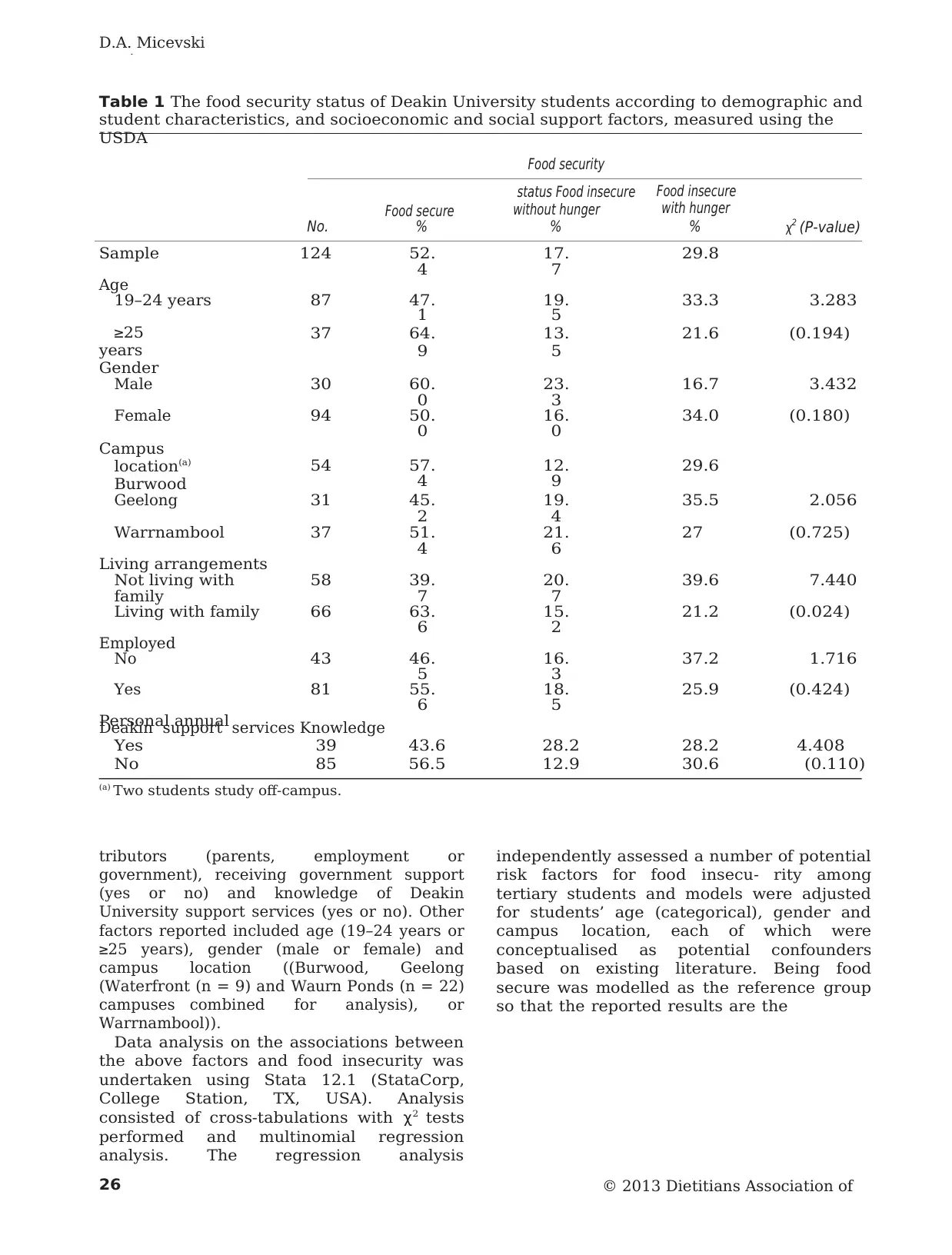
Table 1 The food security status of Deakin University students according to demographic and
student characteristics, and socioeconomic and social support factors, measured using the
USDA
Food secure
Food security
status Food insecure
without hunger
Food insecure
with hunger
Deakin support services Knowledge
Yes 39 43.6 28.2 28.2 4.408
No 85 56.5 12.9 30.6 (0.110)
(a) Two students study off-campus.
tributors (parents, employment or
government), receiving government support
(yes or no) and knowledge of Deakin
University support services (yes or no). Other
factors reported included age (19–24 years or
≥25 years), gender (male or female) and
campus location ((Burwood, Geelong
(Waterfront (n = 9) and Waurn Ponds (n = 22)
campuses combined for analysis), or
Warrnambool)).
Data analysis on the associations between
the above factors and food insecurity was
undertaken using Stata 12.1 (StataCorp,
College Station, TX, USA). Analysis
consisted of cross-tabulations with χ 2 tests
performed and multinomial regression
analysis. The regression analysis
independently assessed a number of potential
risk factors for food insecu- rity among
tertiary students and models were adjusted
for students’ age (categorical), gender and
campus location, each of which were
conceptualised as potential confounders
based on existing literature. Being food
secure was modelled as the reference group
so that the reported results are the
No. % % % χ2 (P-value)
Sample 124 52.
4
17.
7
29.8
Age
19–24 years 87 47.
1 19.
5 33.3 3.283
≥25
years
Gender
37 64.
9
13.
5
21.6 (0.194)
Male 30 60.
0
23.
3
16.7 3.432
Female 94 50.
0
16.
0
34.0 (0.180)
Campus
location (a)
Burwood
54 57.
4
12.
9
29.6
Geelong 31 45.
2
19.
4
35.5 2.056
Warrnambool 37 51.
4
21.
6
27 (0.725)
Living arrangements
Not living with
family
58 39.
7
20.
7
39.6 7.440
Living with family 66 63.
6
15.
2
21.2 (0.024)
Employed
No 43 46.
5
16.
3
37.2 1.716
Yes 81 55.
6
18.
5
25.9 (0.424)
Personal annual
et al.
26
0
© 2013 Dietitians Association of
Australia
Table 1 The food security status of Deakin University students according to demographic and
student characteristics, and socioeconomic and social support factors, measured using the
USDA
Food secure
Food security
status Food insecure
without hunger
Food insecure
with hunger
Deakin support services Knowledge
Yes 39 43.6 28.2 28.2 4.408
No 85 56.5 12.9 30.6 (0.110)
(a) Two students study off-campus.
tributors (parents, employment or
government), receiving government support
(yes or no) and knowledge of Deakin
University support services (yes or no). Other
factors reported included age (19–24 years or
≥25 years), gender (male or female) and
campus location ((Burwood, Geelong
(Waterfront (n = 9) and Waurn Ponds (n = 22)
campuses combined for analysis), or
Warrnambool)).
Data analysis on the associations between
the above factors and food insecurity was
undertaken using Stata 12.1 (StataCorp,
College Station, TX, USA). Analysis
consisted of cross-tabulations with χ 2 tests
performed and multinomial regression
analysis. The regression analysis
independently assessed a number of potential
risk factors for food insecu- rity among
tertiary students and models were adjusted
for students’ age (categorical), gender and
campus location, each of which were
conceptualised as potential confounders
based on existing literature. Being food
secure was modelled as the reference group
so that the reported results are the
No. % % % χ2 (P-value)
Sample 124 52.
4
17.
7
29.8
Age
19–24 years 87 47.
1 19.
5 33.3 3.283
≥25
years
Gender
37 64.
9
13.
5
21.6 (0.194)
Male 30 60.
0
23.
3
16.7 3.432
Female 94 50.
0
16.
0
34.0 (0.180)
Campus
location (a)
Burwood
54 57.
4
12.
9
29.6
Geelong 31 45.
2
19.
4
35.5 2.056
Warrnambool 37 51.
4
21.
6
27 (0.725)
Living arrangements
Not living with
family
58 39.
7
20.
7
39.6 7.440
Living with family 66 63.
6
15.
2
21.2 (0.024)
Employed
No 43 46.
5
16.
3
37.2 1.716
Yes 81 55.
6
18.
5
25.9 (0.424)
Personal annual
Food insecurity of tertiary
students
26
1
© 2013 Dietitians Association of
Australia
likelihood of being either food insecure
without hunger or with hunger compared
with those who are food secure.
Results
Table 1 summarises the characteristics of
students by food security status. Half of the
sample (52%) reported being food secure.
Almost 18% reported experiencing food
insecurity without hunger and a further
30% experienced the more severe food
insecure with hunger. A greater
percentage of students (60%) not living
with their family reported food insecurity
(without (21%) and with hunger (40%)),
com- pared with those living with family
(36%; 15% without hunger and 21% with
hunger). A greater percentage of stu- dents
(60%) who received government benefits
also reported higher levels of food
insecurity compared with those who were
not government income support recipients
(36%). Food security status did not differ
by age, gender, campus
students
26
1
© 2013 Dietitians Association of
Australia
likelihood of being either food insecure
without hunger or with hunger compared
with those who are food secure.
Results
Table 1 summarises the characteristics of
students by food security status. Half of the
sample (52%) reported being food secure.
Almost 18% reported experiencing food
insecurity without hunger and a further
30% experienced the more severe food
insecure with hunger. A greater
percentage of students (60%) not living
with their family reported food insecurity
(without (21%) and with hunger (40%)),
com- pared with those living with family
(36%; 15% without hunger and 21% with
hunger). A greater percentage of stu- dents
(60%) who received government benefits
also reported higher levels of food
insecurity compared with those who were
not government income support recipients
(36%). Food security status did not differ
by age, gender, campus
⊘ This is a preview!⊘
Do you want full access?
Subscribe today to unlock all pages.
Trusted by 1+ million students worldwide
D.A. Micevski
et al.
26
0
© 2013 Dietitians Association of
Australia
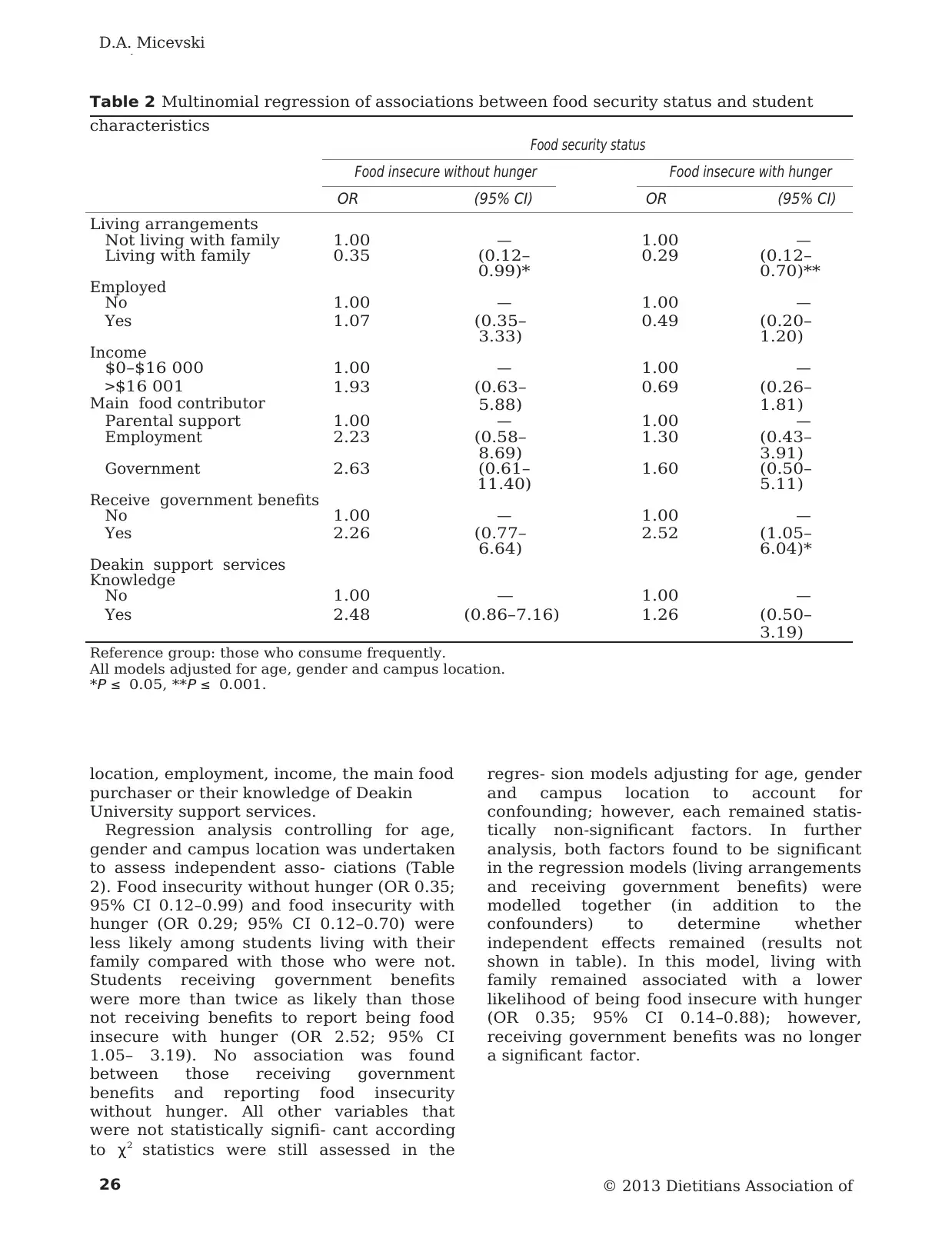
Table 2 Multinomial regression of associations between food security status and student
characteristics
Food security status
Food insecure without hunger Food insecure with hunger
OR (95% CI) OR (95% CI)
Living arrangements
Not living with family 1.00 — 1.00 —
Living with family 0.35 (0.12–
0.99)*
0.29 (0.12–
0.70)**
Employed
No 1.00 — 1.00 —
Yes 1.07 (0.35–
3.33)
0.49 (0.20–
1.20)
Income
$0–$16 000 1.00 — 1.00 —
>$16 001
Main food contributor
1.93 (0.63–
5.88)
0.69 (0.26–
1.81)
Parental support 1.00 — 1.00 —
Employment 2.23 (0.58–
8.69)
1.30 (0.43–
3.91)
Government 2.63 (0.61–
11.40)
1.60 (0.50–
5.11)
Receive government benefits
No 1.00 — 1.00 —
Yes 2.26 (0.77–
6.64)
2.52 (1.05–
6.04)*
Deakin support services
Knowledge
No 1.00 — 1.00 —
Yes 2.48 (0.86–7.16) 1.26 (0.50–
3.19)
Reference group: those who consume frequently.
All models adjusted for age, gender and campus location.
*P ≤ 0.05, **P ≤ 0.001.
location, employment, income, the main food
purchaser or their knowledge of Deakin
University support services.
Regression analysis controlling for age,
gender and campus location was undertaken
to assess independent asso- ciations (Table
2). Food insecurity without hunger (OR 0.35;
95% CI 0.12–0.99) and food insecurity with
hunger (OR 0.29; 95% CI 0.12–0.70) were
less likely among students living with their
family compared with those who were not.
Students receiving government benefits
were more than twice as likely than those
not receiving benefits to report being food
insecure with hunger (OR 2.52; 95% CI
1.05– 3.19). No association was found
between those receiving government
benefits and reporting food insecurity
without hunger. All other variables that
were not statistically signifi- cant according
to χ 2 statistics were still assessed in the
regres- sion models adjusting for age, gender
and campus location to account for
confounding; however, each remained statis-
tically non-significant factors. In further
analysis, both factors found to be significant
in the regression models (living arrangements
and receiving government benefits) were
modelled together (in addition to the
confounders) to determine whether
independent effects remained (results not
shown in table). In this model, living with
family remained associated with a lower
likelihood of being food insecure with hunger
(OR 0.35; 95% CI 0.14–0.88); however,
receiving government benefits was no longer
a significant factor.
et al.
26
0
© 2013 Dietitians Association of
Australia
Table 2 Multinomial regression of associations between food security status and student
characteristics
Food security status
Food insecure without hunger Food insecure with hunger
OR (95% CI) OR (95% CI)
Living arrangements
Not living with family 1.00 — 1.00 —
Living with family 0.35 (0.12–
0.99)*
0.29 (0.12–
0.70)**
Employed
No 1.00 — 1.00 —
Yes 1.07 (0.35–
3.33)
0.49 (0.20–
1.20)
Income
$0–$16 000 1.00 — 1.00 —
>$16 001
Main food contributor
1.93 (0.63–
5.88)
0.69 (0.26–
1.81)
Parental support 1.00 — 1.00 —
Employment 2.23 (0.58–
8.69)
1.30 (0.43–
3.91)
Government 2.63 (0.61–
11.40)
1.60 (0.50–
5.11)
Receive government benefits
No 1.00 — 1.00 —
Yes 2.26 (0.77–
6.64)
2.52 (1.05–
6.04)*
Deakin support services
Knowledge
No 1.00 — 1.00 —
Yes 2.48 (0.86–7.16) 1.26 (0.50–
3.19)
Reference group: those who consume frequently.
All models adjusted for age, gender and campus location.
*P ≤ 0.05, **P ≤ 0.001.
location, employment, income, the main food
purchaser or their knowledge of Deakin
University support services.
Regression analysis controlling for age,
gender and campus location was undertaken
to assess independent asso- ciations (Table
2). Food insecurity without hunger (OR 0.35;
95% CI 0.12–0.99) and food insecurity with
hunger (OR 0.29; 95% CI 0.12–0.70) were
less likely among students living with their
family compared with those who were not.
Students receiving government benefits
were more than twice as likely than those
not receiving benefits to report being food
insecure with hunger (OR 2.52; 95% CI
1.05– 3.19). No association was found
between those receiving government
benefits and reporting food insecurity
without hunger. All other variables that
were not statistically signifi- cant according
to χ 2 statistics were still assessed in the
regres- sion models adjusting for age, gender
and campus location to account for
confounding; however, each remained statis-
tically non-significant factors. In further
analysis, both factors found to be significant
in the regression models (living arrangements
and receiving government benefits) were
modelled together (in addition to the
confounders) to determine whether
independent effects remained (results not
shown in table). In this model, living with
family remained associated with a lower
likelihood of being food insecure with hunger
(OR 0.35; 95% CI 0.14–0.88); however,
receiving government benefits was no longer
a significant factor.
Paraphrase This Document
Need a fresh take? Get an instant paraphrase of this document with our AI Paraphraser
Food insecurity of tertiary
students
26
1
© 2013 Dietitians Association of
Australia
Discussion
The prevalence of food insecurity among
the Deakin Univer- sity student sample was
48% (18% without hunger; 30% with
hunger). While not used in analysis, a
single-item measure comparable to the
Australian National Nutrition Survey was
also asked of the students with 17%
reporting food insecurity when this method
was employed. Although larger studies are
required to confirm these figures, both
measures indicate that the prevalence of
food insecurity is higher among students
than within the broader Australian
population (5.2%). 29
The prevalence of Deakin University
students reporting food insecurity was
lower (48%) than previously reported in
Australia at Griffith University (72%). 12
However, a slightly higher prevalence of
students experiencing the more severe
form of food insecurity (with hunger) was
reported at Deakin University (30%)
compared with students at Griffith
University (25%). 12 Internationally, the
prevalence was also greater than previous
estimates among tertiary cohorts at UHM,
where 15% of students were food insecure
without hunger and 6% with hunger. 19
The findings of the present study
demonstrated that those living away from
their family may be most vulnerable to
experiencing food insecurity. This
association remained evident after being
modelled with government support, indi-
cating extra support for those living out of
home may be
students
26
1
© 2013 Dietitians Association of
Australia
Discussion
The prevalence of food insecurity among
the Deakin Univer- sity student sample was
48% (18% without hunger; 30% with
hunger). While not used in analysis, a
single-item measure comparable to the
Australian National Nutrition Survey was
also asked of the students with 17%
reporting food insecurity when this method
was employed. Although larger studies are
required to confirm these figures, both
measures indicate that the prevalence of
food insecurity is higher among students
than within the broader Australian
population (5.2%). 29
The prevalence of Deakin University
students reporting food insecurity was
lower (48%) than previously reported in
Australia at Griffith University (72%). 12
However, a slightly higher prevalence of
students experiencing the more severe
form of food insecurity (with hunger) was
reported at Deakin University (30%)
compared with students at Griffith
University (25%). 12 Internationally, the
prevalence was also greater than previous
estimates among tertiary cohorts at UHM,
where 15% of students were food insecure
without hunger and 6% with hunger. 19
The findings of the present study
demonstrated that those living away from
their family may be most vulnerable to
experiencing food insecurity. This
association remained evident after being
modelled with government support, indi-
cating extra support for those living out of
home may be
262 © 2013 Dietitians Association of
Australia
Food insecurity of tertiary
students
required. We also found that those receiving
government benefits were more at risk of
food insecurity; however, when modelled
with living arrangements such a relationship
was no longer significant. This may be
indicative that many of those living out of
home would also be the same people
receiving government support and that
living out of home is the more dominant
factor.
It has previously been acknowledged that
many students may experience poverty and
increased financial strain, and this may be
accentuated for students living away from
home or who are reliant on government
support (Youth Allowance, Austudy or
ABSTUDY).12,30,31 Further, the increasing costs
of living coupled with higher education
expenses32–34 may be particularly challenging
for these students to manage,19,35 thereby
increasing their risk of experiencing food
insecu- rity.12,36 The present study reported that
food insecurity was less likely to arise among
students who were residing with their family
compared with those who were not. This is
consistent with findings at Griffith University,
where 40% of the student body sampled were
living with their parents and were significantly
less likely to be food insecure.12 Similarly, at
UHM, 11% of students living with their
parents reported being food insecure versus
31% living with roommates.19
Deakin University students alone were
twice as likely to be food insecure with
hunger when receiving government ben-
efits, irrespective of age, gender and
campus location. The Australian
Government has emphasised that quality
tertiary education is required to develop a
productive and innovative workforce and
meet emerging skill shortages, 33 elements of
which are critical within a competitive
global economy, and essential to improving
Australia’s social and human capital.15
However, tertiary education participation
and the ability of students to excel in their
studies may become compromised if periods
of food insecurity persist. 6,17
In the current environment, it is plausible
that existing government support
arrangements may be insufficient to
accommodate both students’ educational
and personal needs, including their dietary
requirements. 16,21,36 For stu- dents receiving
Youth Allowance alone, the maximum annual
income from the commonwealth is $9023
(including start-up scholarships). 37 This
figure is well below the average Australian
income of $56 175 (pre-tax). 38 Using the
Hender- son poverty line, a standard measure
that assesses the adequacy of income relative
to income units, this figure is 55%–64% below
the June Quarter (2012) poverty line of
$19 994 (for single/unemployed individuals)
and $24 658 (for single/employed
individuals), respectively. 39,40
Reconfigured government policies relating to
student income support were recently
introduced to enhance acces- sibility and equity
primarily to low socioeconomic status,
indigenous, rural and remote students.17,30
These included the student start-up scholarship, the
relocation scholarship and the new supplementary
allowance (announced in the 2012– 2013
budget).15,41,42 Future studies are required to
monitor the effectiveness of these policies on
improving student wellbeing.
It was not within the scope of the present
study to explore and determine the impact of
food insecurity upon health
Australia
Food insecurity of tertiary
students
required. We also found that those receiving
government benefits were more at risk of
food insecurity; however, when modelled
with living arrangements such a relationship
was no longer significant. This may be
indicative that many of those living out of
home would also be the same people
receiving government support and that
living out of home is the more dominant
factor.
It has previously been acknowledged that
many students may experience poverty and
increased financial strain, and this may be
accentuated for students living away from
home or who are reliant on government
support (Youth Allowance, Austudy or
ABSTUDY).12,30,31 Further, the increasing costs
of living coupled with higher education
expenses32–34 may be particularly challenging
for these students to manage,19,35 thereby
increasing their risk of experiencing food
insecu- rity.12,36 The present study reported that
food insecurity was less likely to arise among
students who were residing with their family
compared with those who were not. This is
consistent with findings at Griffith University,
where 40% of the student body sampled were
living with their parents and were significantly
less likely to be food insecure.12 Similarly, at
UHM, 11% of students living with their
parents reported being food insecure versus
31% living with roommates.19
Deakin University students alone were
twice as likely to be food insecure with
hunger when receiving government ben-
efits, irrespective of age, gender and
campus location. The Australian
Government has emphasised that quality
tertiary education is required to develop a
productive and innovative workforce and
meet emerging skill shortages, 33 elements of
which are critical within a competitive
global economy, and essential to improving
Australia’s social and human capital.15
However, tertiary education participation
and the ability of students to excel in their
studies may become compromised if periods
of food insecurity persist. 6,17
In the current environment, it is plausible
that existing government support
arrangements may be insufficient to
accommodate both students’ educational
and personal needs, including their dietary
requirements. 16,21,36 For stu- dents receiving
Youth Allowance alone, the maximum annual
income from the commonwealth is $9023
(including start-up scholarships). 37 This
figure is well below the average Australian
income of $56 175 (pre-tax). 38 Using the
Hender- son poverty line, a standard measure
that assesses the adequacy of income relative
to income units, this figure is 55%–64% below
the June Quarter (2012) poverty line of
$19 994 (for single/unemployed individuals)
and $24 658 (for single/employed
individuals), respectively. 39,40
Reconfigured government policies relating to
student income support were recently
introduced to enhance acces- sibility and equity
primarily to low socioeconomic status,
indigenous, rural and remote students.17,30
These included the student start-up scholarship, the
relocation scholarship and the new supplementary
allowance (announced in the 2012– 2013
budget).15,41,42 Future studies are required to
monitor the effectiveness of these policies on
improving student wellbeing.
It was not within the scope of the present
study to explore and determine the impact of
food insecurity upon health
⊘ This is a preview!⊘
Do you want full access?
Subscribe today to unlock all pages.
Trusted by 1+ million students worldwide
26
3
© 2013 Dietitians Association of
Australia
D.A. Micevski
et al.status; however, prior research has
demonstrated food inse- curity being
attributable to a myriad of short- and long-
term health complications, immediate
effects being hunger, anxiety, fatigue,
lethargy and illness. 6,7,24,43,44 Food insecurity
has shown to affect academic performance
through the reduced attendance, aptitude,
motivation, and concentration of children
and adolescents of various ages. 45,46 At a
tertiary level, no studies have investigated
the relationship between food insecurity
and academic performance. However, infe-
rior income support (a risk factor for food
insecurity) has led to adverse impacts on
university participation, completion rates
and the quality of a higher education
experience. 17 Additionally, a greater
reliance on employment has also been
reported, which may displace time
allocated towards study. 16 To date, the
effect of government support on the health
conditions and academic performance of
food insecure students at a tertiary level
has not been extensively investigated. 19
The key outcomes of the present study
were based on a validated food insecurity
measurement tool (USDA). 3 The application
of this tool to a tertiary student population
pre- viously allowed for a consistent
methodological approach to be maintained.
However, future research may aim to
develop food insecurity measures that are
more sensitive to detecting the extent of
food insecurity among students. This may
involve the inclusion of modified measures
of explanatory factors, such as more
precise indicators of income, and income
sources capable of detecting greater
variance among a student population, as
well as the impact of students’ living
arrangements. Although the present study
includes a rela- tively small sample size, it
does however provide evidence of some
potentially important determinants and can
be used to advocate for a larger scale study
exploring this topic. Stu- dents from all
faculties participated in the study;
however, it is noted that the present
sample was overrepresented by health
faculty students (70%). As food insecurity
was not directly mentioned during
recruitment, it is unlikely that those who
chose to participate did so specifically
because they were suffering from food
insecurity and it is more likely that their
participation was due to a personal and
profes- sional interest in nutrition-related
issues. The survey data were collected
early in the study year, and although the
students may have been at the institute for
several years, this still potentially represents
a period of adjustment. Future research
tracking students over a year or the period
of their degree may help elucidate critical
time points for interven- tions. Importantly,
surveillance of this nature could also help
determine the long-term consequences of
food insecurity. Finally, the cross-sectional
nature of the present study negates any
opportunity to determine temporal
influences and can instead only assist in
detecting cross-sectional asso- ciations
between food insecurity and the tested
independent variables. 47,48
The present study contributes to the
current understand- ing of food insecurity
among tertiary students. Importantly, it
highlights that the extent of food insecurity
among other universities, nationally and
internationally, requires further monitoring,
which could be instigated by the
higher
3
© 2013 Dietitians Association of
Australia
D.A. Micevski
et al.status; however, prior research has
demonstrated food inse- curity being
attributable to a myriad of short- and long-
term health complications, immediate
effects being hunger, anxiety, fatigue,
lethargy and illness. 6,7,24,43,44 Food insecurity
has shown to affect academic performance
through the reduced attendance, aptitude,
motivation, and concentration of children
and adolescents of various ages. 45,46 At a
tertiary level, no studies have investigated
the relationship between food insecurity
and academic performance. However, infe-
rior income support (a risk factor for food
insecurity) has led to adverse impacts on
university participation, completion rates
and the quality of a higher education
experience. 17 Additionally, a greater
reliance on employment has also been
reported, which may displace time
allocated towards study. 16 To date, the
effect of government support on the health
conditions and academic performance of
food insecure students at a tertiary level
has not been extensively investigated. 19
The key outcomes of the present study
were based on a validated food insecurity
measurement tool (USDA). 3 The application
of this tool to a tertiary student population
pre- viously allowed for a consistent
methodological approach to be maintained.
However, future research may aim to
develop food insecurity measures that are
more sensitive to detecting the extent of
food insecurity among students. This may
involve the inclusion of modified measures
of explanatory factors, such as more
precise indicators of income, and income
sources capable of detecting greater
variance among a student population, as
well as the impact of students’ living
arrangements. Although the present study
includes a rela- tively small sample size, it
does however provide evidence of some
potentially important determinants and can
be used to advocate for a larger scale study
exploring this topic. Stu- dents from all
faculties participated in the study;
however, it is noted that the present
sample was overrepresented by health
faculty students (70%). As food insecurity
was not directly mentioned during
recruitment, it is unlikely that those who
chose to participate did so specifically
because they were suffering from food
insecurity and it is more likely that their
participation was due to a personal and
profes- sional interest in nutrition-related
issues. The survey data were collected
early in the study year, and although the
students may have been at the institute for
several years, this still potentially represents
a period of adjustment. Future research
tracking students over a year or the period
of their degree may help elucidate critical
time points for interven- tions. Importantly,
surveillance of this nature could also help
determine the long-term consequences of
food insecurity. Finally, the cross-sectional
nature of the present study negates any
opportunity to determine temporal
influences and can instead only assist in
detecting cross-sectional asso- ciations
between food insecurity and the tested
independent variables. 47,48
The present study contributes to the
current understand- ing of food insecurity
among tertiary students. Importantly, it
highlights that the extent of food insecurity
among other universities, nationally and
internationally, requires further monitoring,
which could be instigated by the
higher
Paraphrase This Document
Need a fresh take? Get an instant paraphrase of this document with our AI Paraphraser
Food insecurity of tertiary
students
264 © 2013 Dietitians Association of
Australia
educational institutes. 29 This knowledge will
be beneficial for public health and welfare
bodies. 1,9 Future researchers should
orientate the focus around identifying the
prevalence, determinants, health and
academic outcomes aligned with students’
food insecurity experiences. 19,49 Researchers
should continue to implement a validated
measure of food insecurity such as the
USDA tool in order to maintain a consistent
and accurate assessment of food insecurity
among students. 49
Food insecurity without hunger is a
significant problem for one in every six
students surveyed at Deakin University, and
food insecurity with hunger a pressing
concern for one in every three students.
Therefore, a need exists to increase food
availability and accessibility at Deakin
University with one possibility being the
establishment of on-campus food banks, a
strategy that is consistent with
recommendations from UHM and Canadian
universities. 13,19,50 However, this should not
be treated as a solution and further work
deter- mining and intervening on causes of
food insecurity in ter- tiary population is
required.
Funding source
This research was conducted at Deakin
University as part of the Bachelor of Food
Science and Nutrition Honours degree
completed by Dee Angelina Micevski, under
the supervision of Sonia Brockington and Dr
Lukar Thornton. The authors would like to
extend their sincerest gratitude to Roger
Hughes of Griffith University (Queensland) for
initial guid- ance and consent towards
utilisation of research tools.
Authorship
S. Brockington and L. Thornton designed the
study and developed the research survey; D. A.
Micevski collected the data; D. A. Micevski
and L. Thornton undertook data analy- sis. D.
A. Micevski wrote the first draft of this paper.
L. Thornton and S. Brockington assisted with
redrafting and editing this paper. All authors
contributed to, read and approved the final
manuscript.
Conflict of interest
There are no conflicts of interest to declare for
all authors on the paper.
References
1 Holben DH. Position of the American Dietetic
Association: food insecurity in the United States. J
Am Diet Assoc 2010; 110: 1368–77.
2 Rosier K. Food Insecurity in Australia: What Is It, Who
Experiences It and How Can Child and Family Services Support
Families Expe- riencing It? Canberra: Australian
Institute of Family Studies, 2011; (Available from:
http://www.aifs.gov.au/cafca/pubs/sheets/ ps/ps9.pdf,
accessed 30 March 2012).
3 Bickel G, Nord M, Price C, Hamilton W, Cook J.
USDA Guide to Measuring Food Security: Revised 2000.
Alexandria, VA: U.S.
students
264 © 2013 Dietitians Association of
Australia
educational institutes. 29 This knowledge will
be beneficial for public health and welfare
bodies. 1,9 Future researchers should
orientate the focus around identifying the
prevalence, determinants, health and
academic outcomes aligned with students’
food insecurity experiences. 19,49 Researchers
should continue to implement a validated
measure of food insecurity such as the
USDA tool in order to maintain a consistent
and accurate assessment of food insecurity
among students. 49
Food insecurity without hunger is a
significant problem for one in every six
students surveyed at Deakin University, and
food insecurity with hunger a pressing
concern for one in every three students.
Therefore, a need exists to increase food
availability and accessibility at Deakin
University with one possibility being the
establishment of on-campus food banks, a
strategy that is consistent with
recommendations from UHM and Canadian
universities. 13,19,50 However, this should not
be treated as a solution and further work
deter- mining and intervening on causes of
food insecurity in ter- tiary population is
required.
Funding source
This research was conducted at Deakin
University as part of the Bachelor of Food
Science and Nutrition Honours degree
completed by Dee Angelina Micevski, under
the supervision of Sonia Brockington and Dr
Lukar Thornton. The authors would like to
extend their sincerest gratitude to Roger
Hughes of Griffith University (Queensland) for
initial guid- ance and consent towards
utilisation of research tools.
Authorship
S. Brockington and L. Thornton designed the
study and developed the research survey; D. A.
Micevski collected the data; D. A. Micevski
and L. Thornton undertook data analy- sis. D.
A. Micevski wrote the first draft of this paper.
L. Thornton and S. Brockington assisted with
redrafting and editing this paper. All authors
contributed to, read and approved the final
manuscript.
Conflict of interest
There are no conflicts of interest to declare for
all authors on the paper.
References
1 Holben DH. Position of the American Dietetic
Association: food insecurity in the United States. J
Am Diet Assoc 2010; 110: 1368–77.
2 Rosier K. Food Insecurity in Australia: What Is It, Who
Experiences It and How Can Child and Family Services Support
Families Expe- riencing It? Canberra: Australian
Institute of Family Studies, 2011; (Available from:
http://www.aifs.gov.au/cafca/pubs/sheets/ ps/ps9.pdf,
accessed 30 March 2012).
3 Bickel G, Nord M, Price C, Hamilton W, Cook J.
USDA Guide to Measuring Food Security: Revised 2000.
Alexandria, VA: U.S.
D.A. Micevski
et al.
26
3
© 2013 Dietitians Association of
Australia
Department of Agriculture, Food & Nutrition
Service, 2000; (Available from:
http://www.fns.usda.gov/fsec/files/fsguide.pdf,
accessed 8 May 2012).
4 Derrickson JP, Brown AC. Food security
stakeholders in Hawaii: perceptions of food
security monitoring. J Nutr Educ Behav 2002;
34: 72–84.
5 Sullivan AF, Clark S, Pallin DJ, Camargo CA, Jr.
Food security, health, and medication
expenditures of emergency department
patients. J Emerg Med 2010; 38: 524–8.
6 Burns C, Kristjansson B, Harris G et al.
Community level inter- ventions to improve food
security in developed countries. Cochrane
Database Syst Rev 2010; (12) Art. No.: CD008913.
DOI:10.1002/14651858.CD008913.
7 Seligman HK, Laraia BA, Kushel MB. Food
insecurity is associ- ated with chronic disease
among Low-Income NHANES partici- pants. J
Nutr 2010; 140: 304–10.
8 Burns C. A Review of the Literature Describing the Link
between Poverty, Food Insecurity and Obesity with Specific
Reference to Aus- tralia. Melbourne: VicHealth,
2004; (Available from: http://
www.vichealth.vic.gov.au/Search.aspx?q=food
%20insecurity, accessed 9 June 2012).
9 Innes-Hughes C, Bowers K, King L, Chapman K,
Eden B. Food Security: The What, Who, Why and
Where to of Food Security in NSW. Sydney: Physical
Activity & Nutrition Obesity Research Group,
Heart Foundation NSW, Cancer Council
NSW, 2010; (Available from:
http://www.heartfoundation.org.au/
SiteCollectionDocuments/Food-Security-
Discussion-Paper
-2010.pdf, accessed 26 February 2012).
10 Temple JB. Severe and moderate forms of food
insecurity in Australia: are they distinguishable?
Aust J Soc Issues 2008; 43: 649–68.
11 Law IR, Ward PR, Coveney J. Food insecurity in
South Austral- ian single parents: an
assessment of the livelihoods framework
approach. Crit Publ Health 2011; 21: 455–69.
12 Hughes R, Serebryanikova I, Donaldson K,
Leveritt M. Student food insecurity: the
skeleton in the university closet. Nutr Diet
2011; 68: 27–32.
13 Willows ND, Au V. Nutritional quality and price
of university food bank hampers. Can J Diet
Pract Res 2006; 67: 104–7.
14 VicHealth. Fact Sheet: Food Security. Melbourne:
Victorian Gov- ernment, 2007; (Available from:
http://www.vichealth.vic.gov. au/Programs-and-
Projects/Healthy-Eating.aspx, accessed 31
March 2012).
15 Australian Government. Transforming Australia’s Tertiary
Educa- tion System. Canberra: Australian
Government, 2009; (Avail- able from:
http://www.innovation.gov.au/HigherEducation/
ResourcesAndPublications/TransformingAustral
iasHigher EducationSystem/Pages/default.aspx,
accessed 14 September 2012).
16 James R, Bexley E, Delvin M, Margison S. Australian
university
student finances 2006: final report of a national survey on
students in public universities. The University of
Melbourne: Centre for the Study of Higher
Education; 2007 (Available from: http://
www.universitiesaustralia.edu.au/page/submissio
ns—reports/ commissioned-studies/student-
finances-survey/, accessed 2
May 2012).
17 Department of Education Employment &
Workplace Relations. Review of Australian Higher
Education: Final Report. Canberra: Australian
Government, 2008; (Available from:
http://www.innovation.gov.au/HigherEducation/Res
ourcesAnd
Publications/ReviewOfAustralianHigherEducatio
n/Pages/
ReviewOfAustralianHigherEducationReport.aspx,
accessed 14
September 2012).
et al.
26
3
© 2013 Dietitians Association of
Australia
Department of Agriculture, Food & Nutrition
Service, 2000; (Available from:
http://www.fns.usda.gov/fsec/files/fsguide.pdf,
accessed 8 May 2012).
4 Derrickson JP, Brown AC. Food security
stakeholders in Hawaii: perceptions of food
security monitoring. J Nutr Educ Behav 2002;
34: 72–84.
5 Sullivan AF, Clark S, Pallin DJ, Camargo CA, Jr.
Food security, health, and medication
expenditures of emergency department
patients. J Emerg Med 2010; 38: 524–8.
6 Burns C, Kristjansson B, Harris G et al.
Community level inter- ventions to improve food
security in developed countries. Cochrane
Database Syst Rev 2010; (12) Art. No.: CD008913.
DOI:10.1002/14651858.CD008913.
7 Seligman HK, Laraia BA, Kushel MB. Food
insecurity is associ- ated with chronic disease
among Low-Income NHANES partici- pants. J
Nutr 2010; 140: 304–10.
8 Burns C. A Review of the Literature Describing the Link
between Poverty, Food Insecurity and Obesity with Specific
Reference to Aus- tralia. Melbourne: VicHealth,
2004; (Available from: http://
www.vichealth.vic.gov.au/Search.aspx?q=food
%20insecurity, accessed 9 June 2012).
9 Innes-Hughes C, Bowers K, King L, Chapman K,
Eden B. Food Security: The What, Who, Why and
Where to of Food Security in NSW. Sydney: Physical
Activity & Nutrition Obesity Research Group,
Heart Foundation NSW, Cancer Council
NSW, 2010; (Available from:
http://www.heartfoundation.org.au/
SiteCollectionDocuments/Food-Security-
Discussion-Paper
-2010.pdf, accessed 26 February 2012).
10 Temple JB. Severe and moderate forms of food
insecurity in Australia: are they distinguishable?
Aust J Soc Issues 2008; 43: 649–68.
11 Law IR, Ward PR, Coveney J. Food insecurity in
South Austral- ian single parents: an
assessment of the livelihoods framework
approach. Crit Publ Health 2011; 21: 455–69.
12 Hughes R, Serebryanikova I, Donaldson K,
Leveritt M. Student food insecurity: the
skeleton in the university closet. Nutr Diet
2011; 68: 27–32.
13 Willows ND, Au V. Nutritional quality and price
of university food bank hampers. Can J Diet
Pract Res 2006; 67: 104–7.
14 VicHealth. Fact Sheet: Food Security. Melbourne:
Victorian Gov- ernment, 2007; (Available from:
http://www.vichealth.vic.gov. au/Programs-and-
Projects/Healthy-Eating.aspx, accessed 31
March 2012).
15 Australian Government. Transforming Australia’s Tertiary
Educa- tion System. Canberra: Australian
Government, 2009; (Avail- able from:
http://www.innovation.gov.au/HigherEducation/
ResourcesAndPublications/TransformingAustral
iasHigher EducationSystem/Pages/default.aspx,
accessed 14 September 2012).
16 James R, Bexley E, Delvin M, Margison S. Australian
university
student finances 2006: final report of a national survey on
students in public universities. The University of
Melbourne: Centre for the Study of Higher
Education; 2007 (Available from: http://
www.universitiesaustralia.edu.au/page/submissio
ns—reports/ commissioned-studies/student-
finances-survey/, accessed 2
May 2012).
17 Department of Education Employment &
Workplace Relations. Review of Australian Higher
Education: Final Report. Canberra: Australian
Government, 2008; (Available from:
http://www.innovation.gov.au/HigherEducation/Res
ourcesAnd
Publications/ReviewOfAustralianHigherEducatio
n/Pages/
ReviewOfAustralianHigherEducationReport.aspx,
accessed 14
September 2012).
⊘ This is a preview!⊘
Do you want full access?
Subscribe today to unlock all pages.
Trusted by 1+ million students worldwide

1 out of 15


Your All-in-One AI-Powered Toolkit for Academic Success.
+13062052269
info@desklib.com
Available 24*7 on WhatsApp / Email
![[object Object]](/_next/static/media/star-bottom.7253800d.svg)
Unlock your academic potential
Copyright © 2020–2026 A2Z Services. All Rights Reserved. Developed and managed by ZUCOL.