LAW 511 Taxation Law Assignment: Income and Residency Analysis

Verified

Added on  2022/09/14

|18
|1947
|10
Homework Assignment
AI Summary
This document presents a comprehensive solution to a taxation law assignment, addressing both income assessment and residency determination. Part A of the assignment meticulously analyzes Harry's various income sources and expenses for the financial year ending June 30, 2019, classifying each item as assessable income or deductible expense and providing detailed reasoning based on relevant legislation, case law, and rulings. The analysis covers diverse income types, including sales of paintings, salary, interest, capital gains from the sale of shares and motor vehicles, and a lottery win, as well as various expenses like rent, purchase of paintings, bookkeeping fees, advertising, and travel expenses. Part B delves into the complex issue of Harry's residency status, considering his potential work outside of Australia for an extended period. It examines the relevant rules and tests outlined in the Income Tax Assessment Act 1936 (ITAA 1936), including the resides test, domicile test, 183-day test, and the Commonwealth superannuation fund test, while also considering the implications of the Harding v Commissioner of Taxation [2019] FCAFC 29 case. The solution provides a detailed application of these rules to Harry's situation, considering factors such as his intentions, family ties, and financial connections to Australia. The document concludes with an analysis of the potential consequences of Harry's decision to work overseas and its effect on his Australian tax residency.
Document Page
Running head: TAXATION LAW
Taxation Law
Name of the Student
Name of the University
Authors Note
Course ID
tabler-icon-diamond-filled.svg

Paraphrase This Document

Need a fresh take? Get an instant paraphrase of this document with our AI Paraphraser
Document Page
1TAXATION LAW
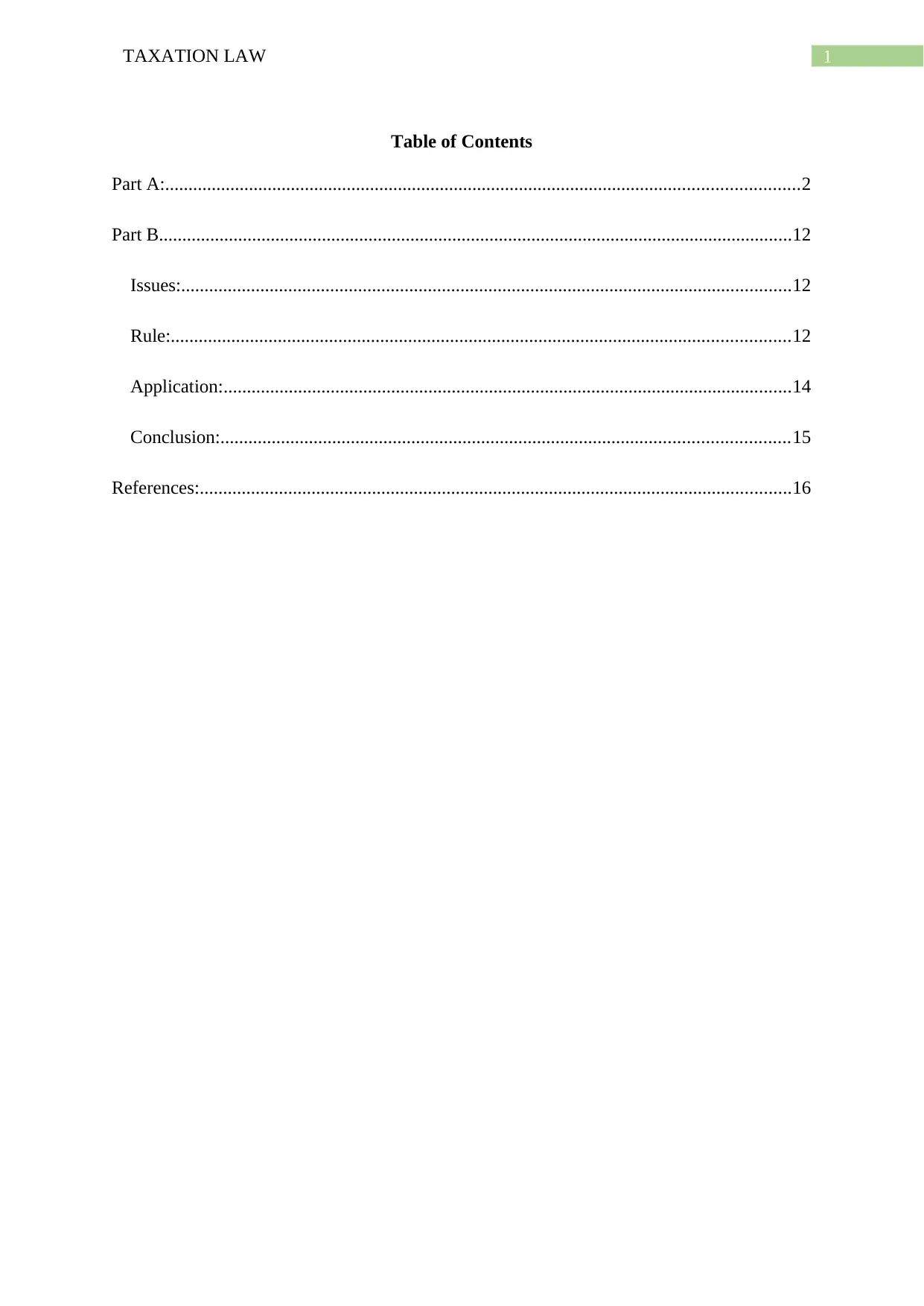
Table of Contents
Part A:........................................................................................................................................2
Part B........................................................................................................................................12
Issues:...................................................................................................................................12
Rule:.....................................................................................................................................12
Application:..........................................................................................................................14
Conclusion:..........................................................................................................................15
References:...............................................................................................................................16
Document Page
2TAXATION LAW
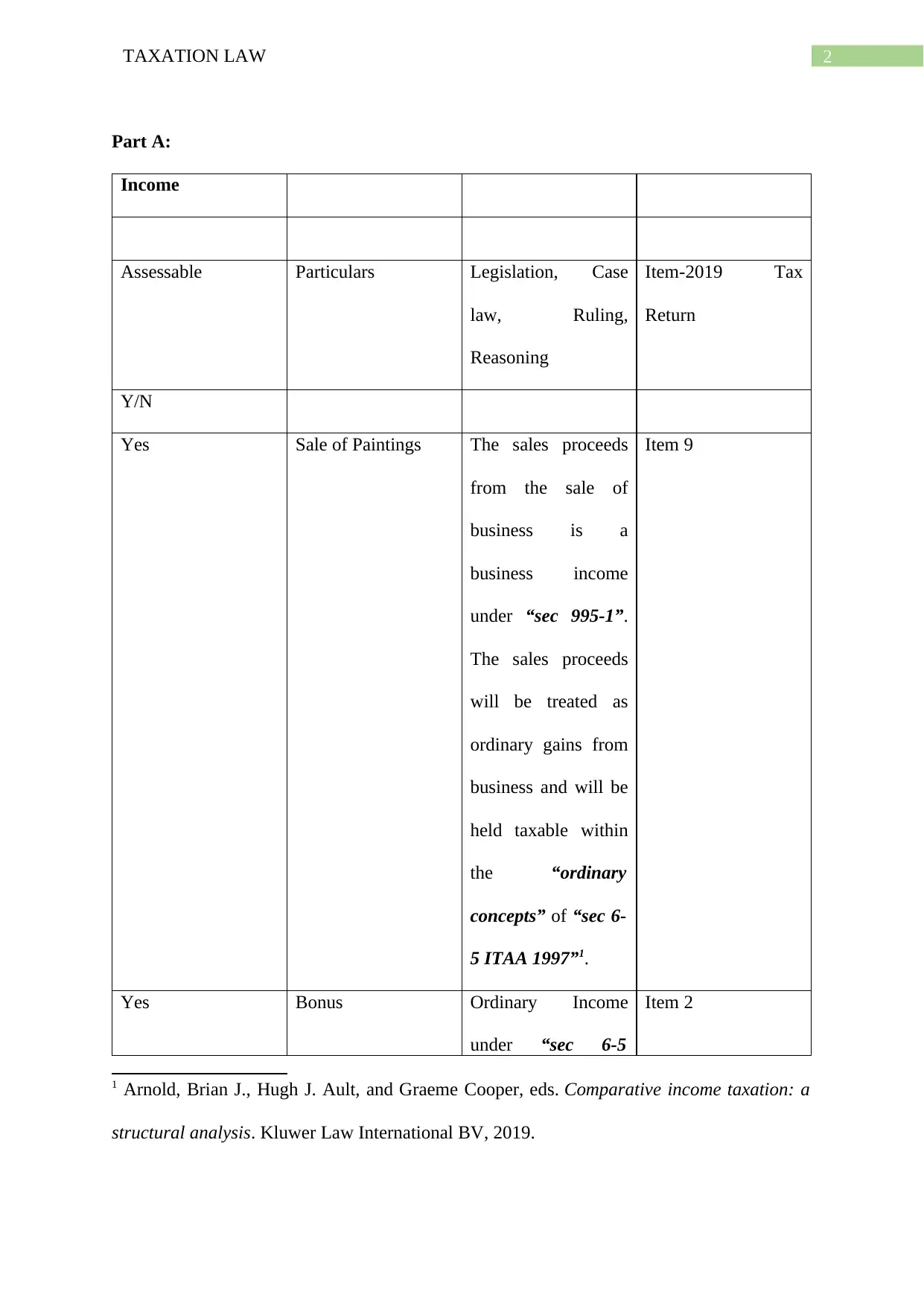
Part A:
Income
Assessable Particulars Legislation, Case
law, Ruling,
Reasoning
Item-2019 Tax
Return
Y/N
Yes Sale of Paintings The sales proceeds
from the sale of
business is a
business income
under “sec 995-1”.
The sales proceeds
will be treated as
ordinary gains from
business and will be
held taxable within
the “ordinary
concepts” of “sec 6-
5 ITAA 1997”1.
Item 9
Yes Bonus Ordinary Income
under “sec 6-5
Item 2
1 Arnold, Brian J., Hugh J. Ault, and Graeme Cooper, eds. Comparative income taxation: a
structural analysis. Kluwer Law International BV, 2019.
Document Page
3TAXATION LAW
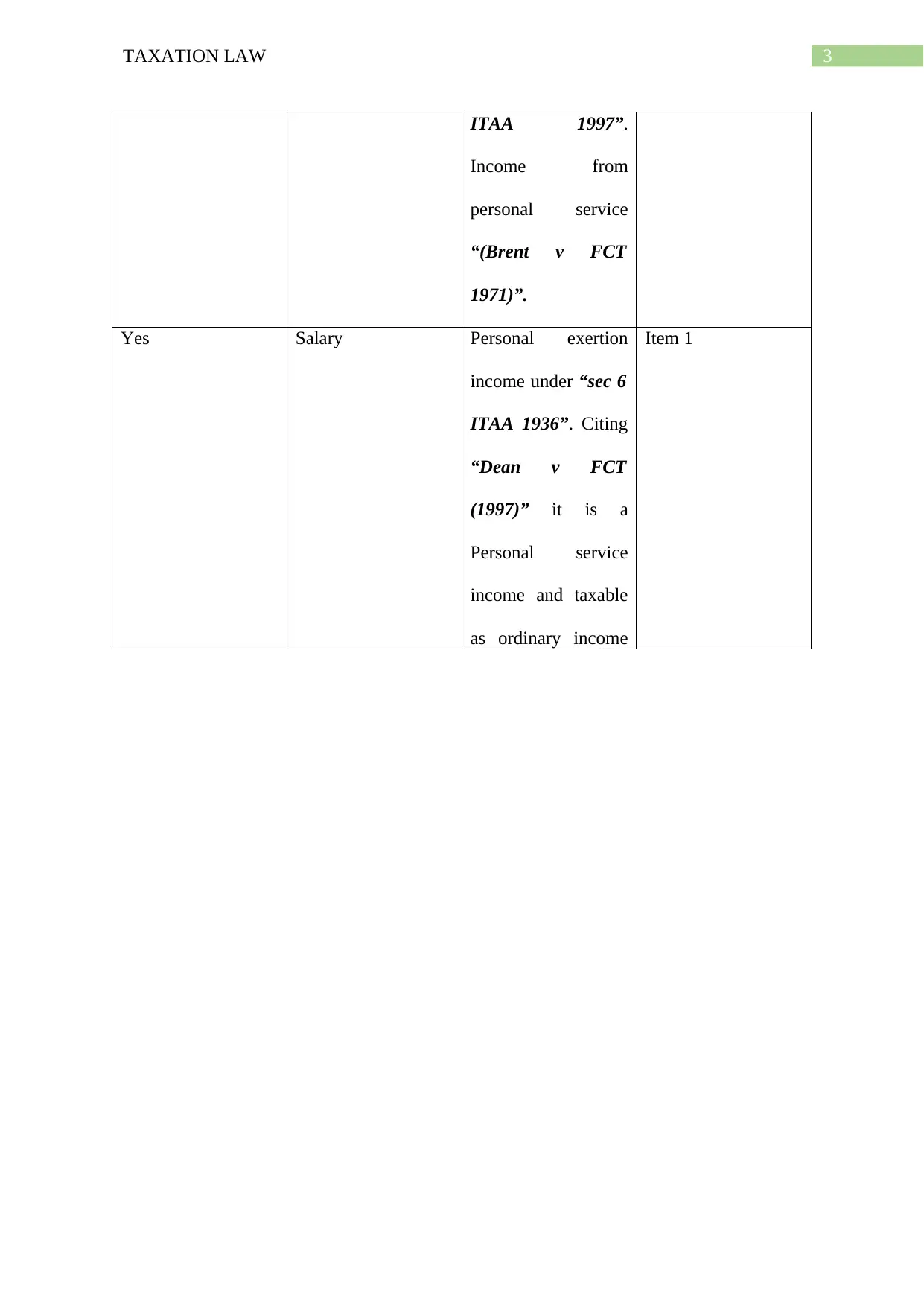
ITAA 1997”.
Income from
personal service
“(Brent v FCT
1971)”.
Yes Salary Personal exertion
income under “sec 6
ITAA 1936”. Citing
“Dean v FCT
(1997)” it is a
Personal service
income and taxable
as ordinary income
Item 1
tabler-icon-diamond-filled.svg

Paraphrase This Document

Need a fresh take? Get an instant paraphrase of this document with our AI Paraphraser
Document Page
4TAXATION LAW
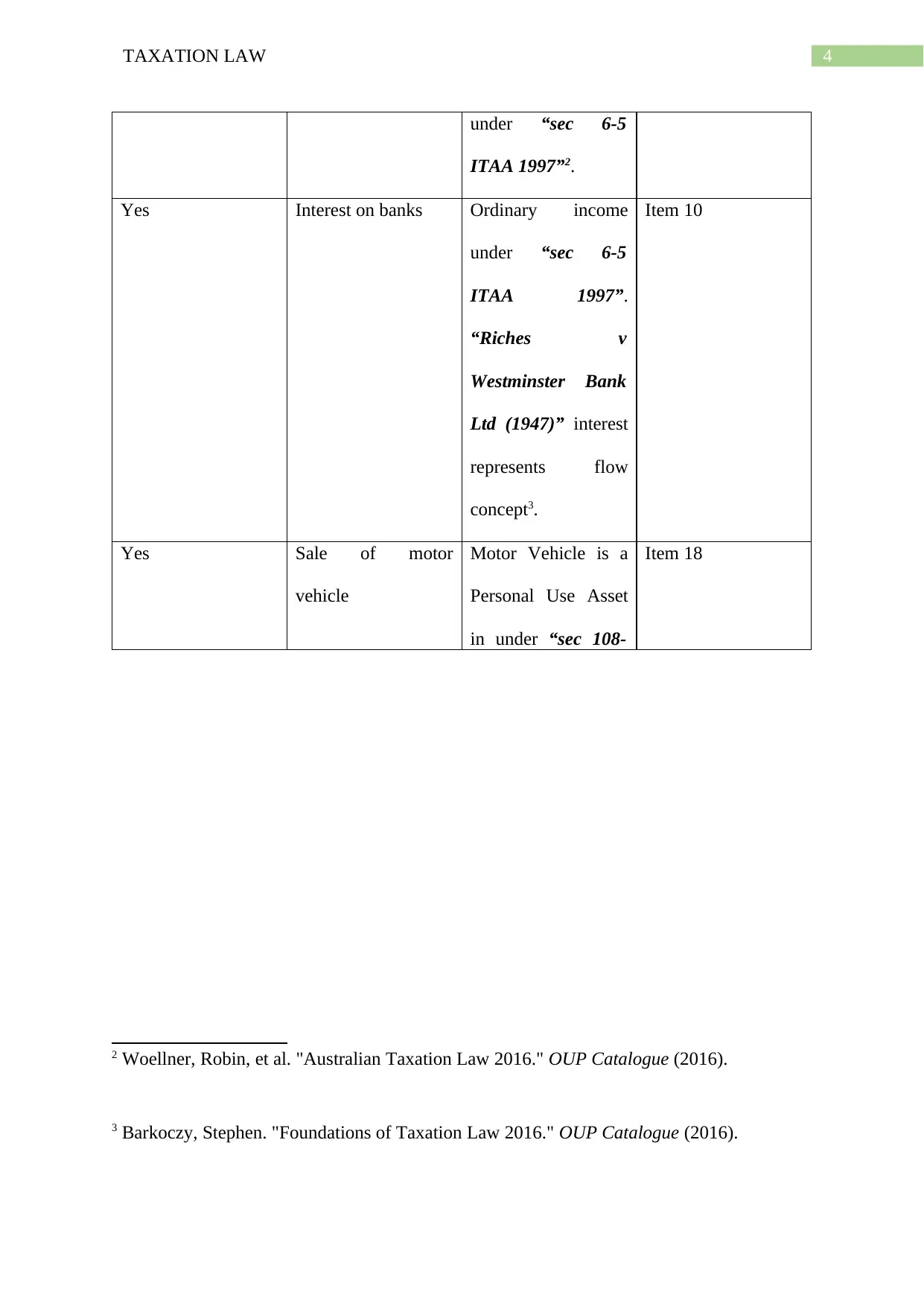
under “sec 6-5
ITAA 1997”2.
Yes Interest on banks Ordinary income
under “sec 6-5
ITAA 1997”.
“Riches v
Westminster Bank
Ltd (1947)” interest
represents flow
concept3.
Item 10
Yes Sale of motor
vehicle
Motor Vehicle is a
Personal Use Asset
in under “sec 108-
Item 18
2 Woellner, Robin, et al. "Australian Taxation Law 2016." OUP Catalogue (2016).
3 Barkoczy, Stephen. "Foundations of Taxation Law 2016." OUP Catalogue (2016).
Document Page
5TAXATION LAW
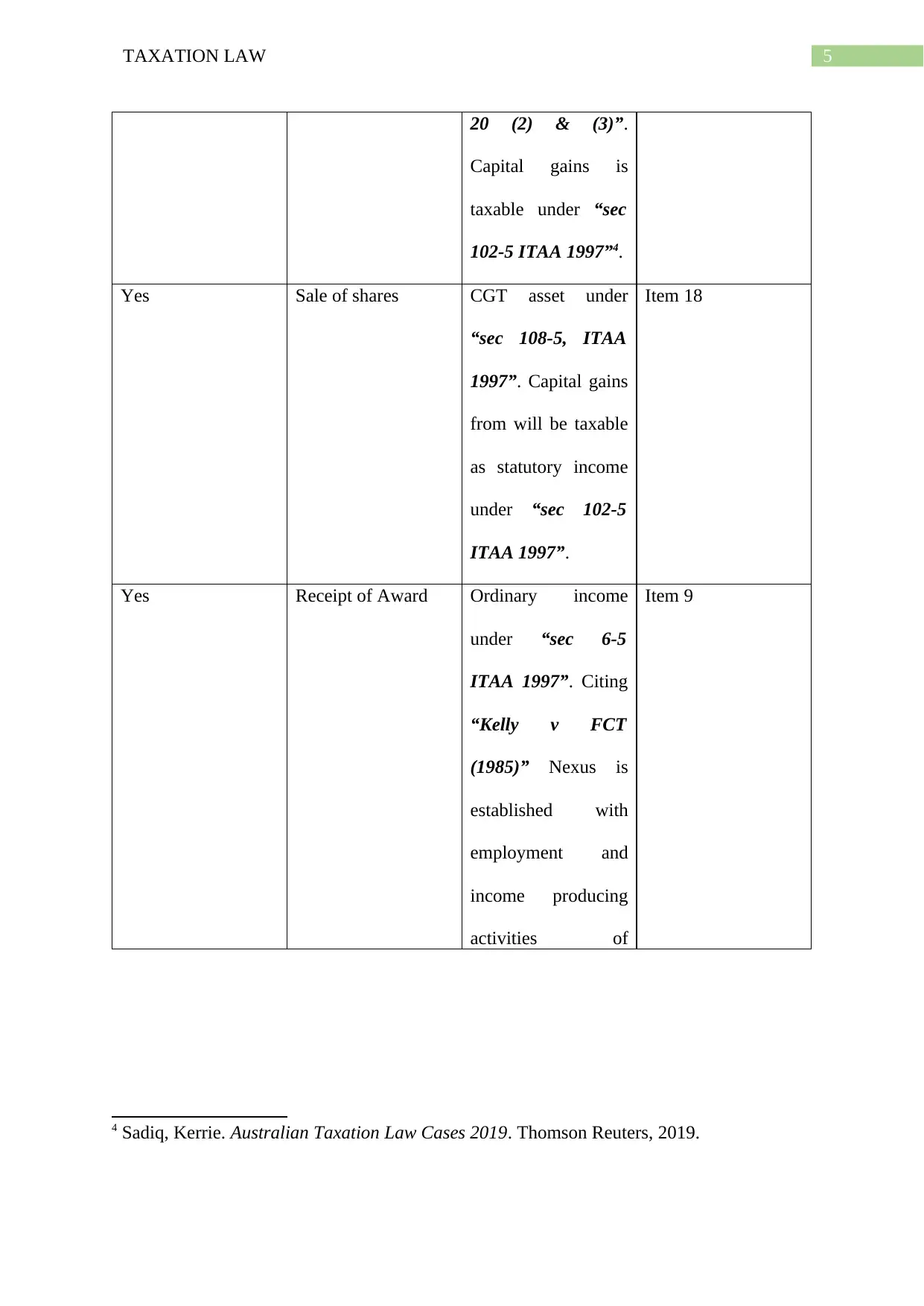
20 (2) & (3)”.
Capital gains is
taxable under “sec
102-5 ITAA 1997”4.
Yes Sale of shares CGT asset under
“sec 108-5, ITAA
1997”. Capital gains
from will be taxable
as statutory income
under “sec 102-5
ITAA 1997”.
Item 18
Yes Receipt of Award Ordinary income
under “sec 6-5
ITAA 1997”. Citing
“Kelly v FCT
(1985)” Nexus is
established with
employment and
income producing
activities of
Item 9
4 Sadiq, Kerrie. Australian Taxation Law Cases 2019. Thomson Reuters, 2019.
Document Page
6TAXATION LAW
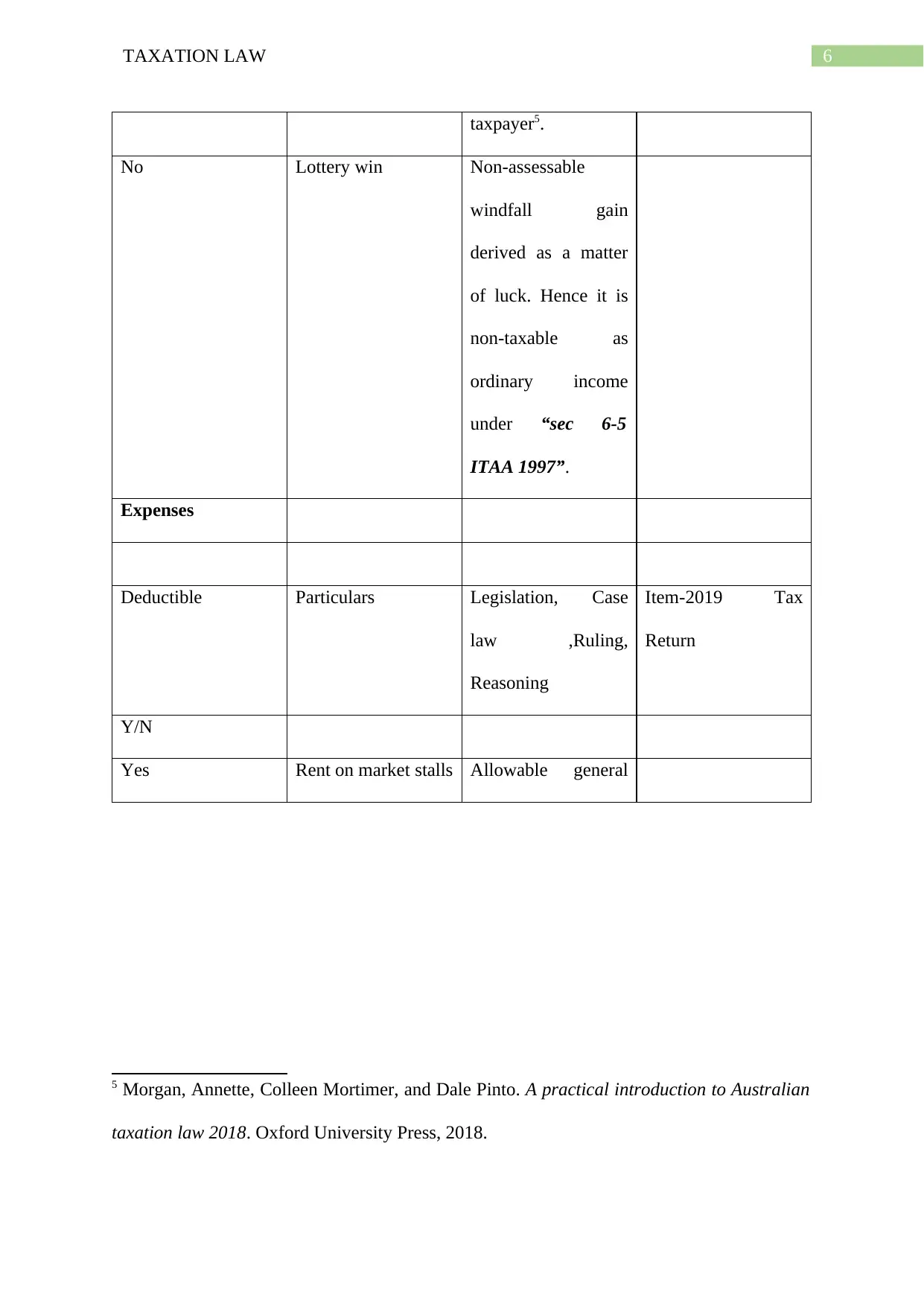
taxpayer5.
No Lottery win Non-assessable
windfall gain
derived as a matter
of luck. Hence it is
non-taxable as
ordinary income
under “sec 6-5
ITAA 1997”.
Expenses
Deductible Particulars Legislation, Case
law ,Ruling,
Reasoning
Item-2019 Tax
Return
Y/N
Yes Rent on market stalls Allowable general
5 Morgan, Annette, Colleen Mortimer, and Dale Pinto. A practical introduction to Australian
taxation law 2018. Oxford University Press, 2018.
tabler-icon-diamond-filled.svg

Paraphrase This Document

Need a fresh take? Get an instant paraphrase of this document with our AI Paraphraser
Document Page
7TAXATION LAW
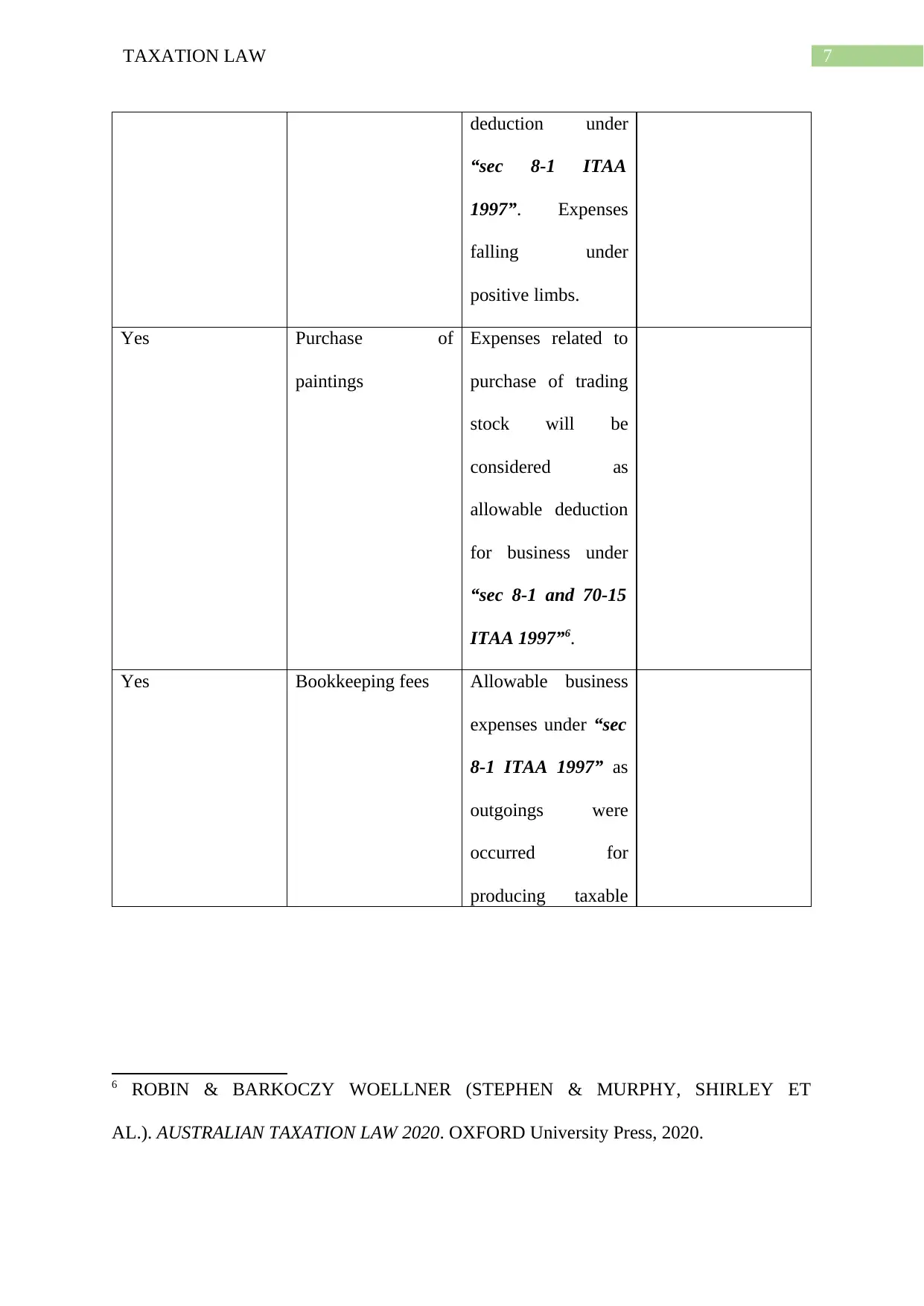
deduction under
“sec 8-1 ITAA
1997”. Expenses
falling under
positive limbs.
Yes Purchase of
paintings
Expenses related to
purchase of trading
stock will be
considered as
allowable deduction
for business under
“sec 8-1 and 70-15
ITAA 1997”6.
Yes Bookkeeping fees Allowable business
expenses under “sec
8-1 ITAA 1997” as
outgoings were
occurred for
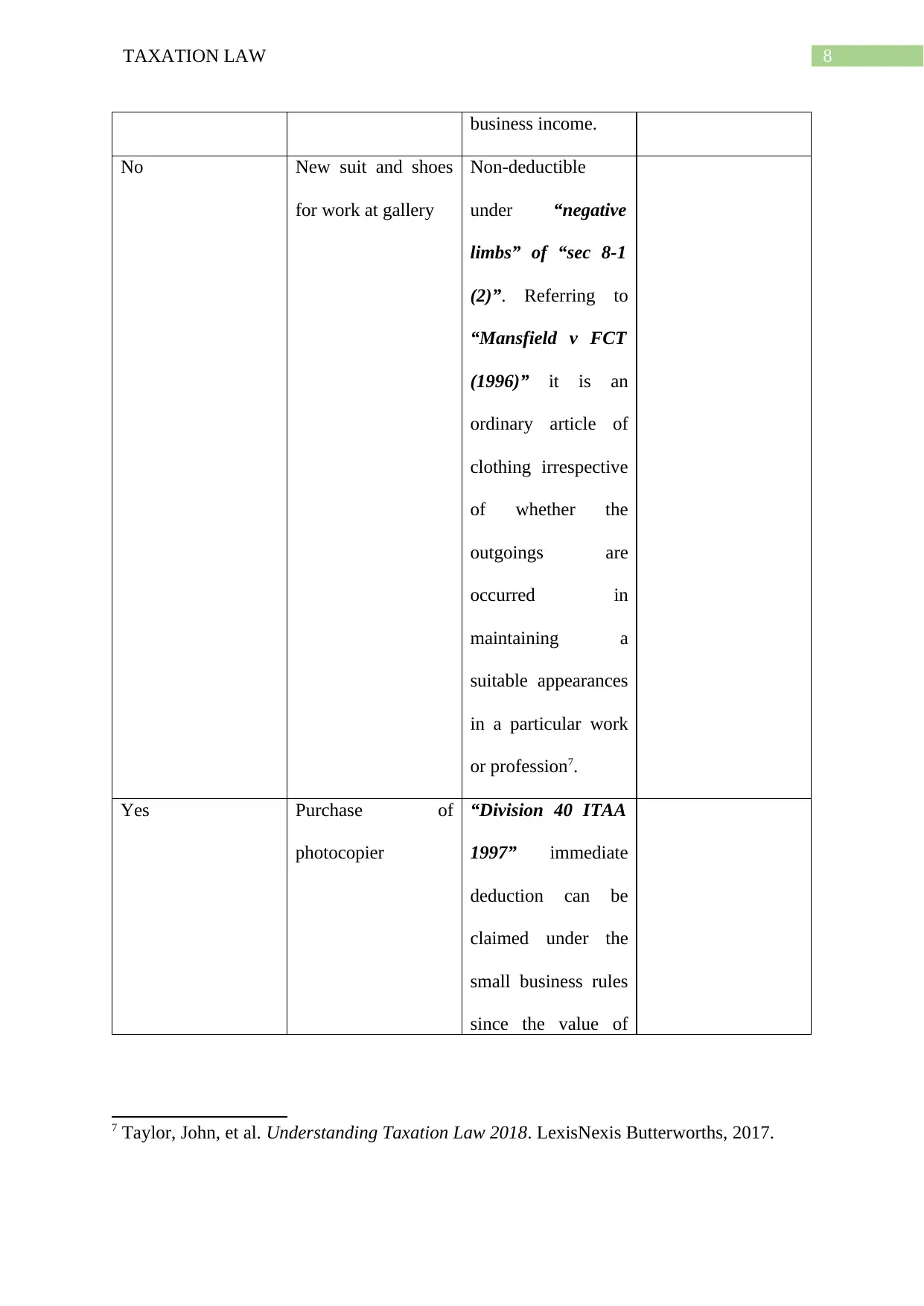
producing taxable
6 ROBIN & BARKOCZY WOELLNER (STEPHEN & MURPHY, SHIRLEY ET
AL.). AUSTRALIAN TAXATION LAW 2020. OXFORD University Press, 2020.
Document Page
8TAXATION LAW
business income.
No New suit and shoes
for work at gallery
Non-deductible
under “negative
limbs” of “sec 8-1
(2)”. Referring to
“Mansfield v FCT
(1996)” it is an
ordinary article of
clothing irrespective
of whether the
outgoings are
occurred in
maintaining a
suitable appearances
in a particular work
or profession7.
Yes Purchase of
photocopier
“Division 40 ITAA
1997” immediate
deduction can be
claimed under the
small business rules
since the value of
7 Taylor, John, et al. Understanding Taxation Law 2018. LexisNexis Butterworths, 2017.
Document Page
9TAXATION LAW
asset is not more
than $30,000.
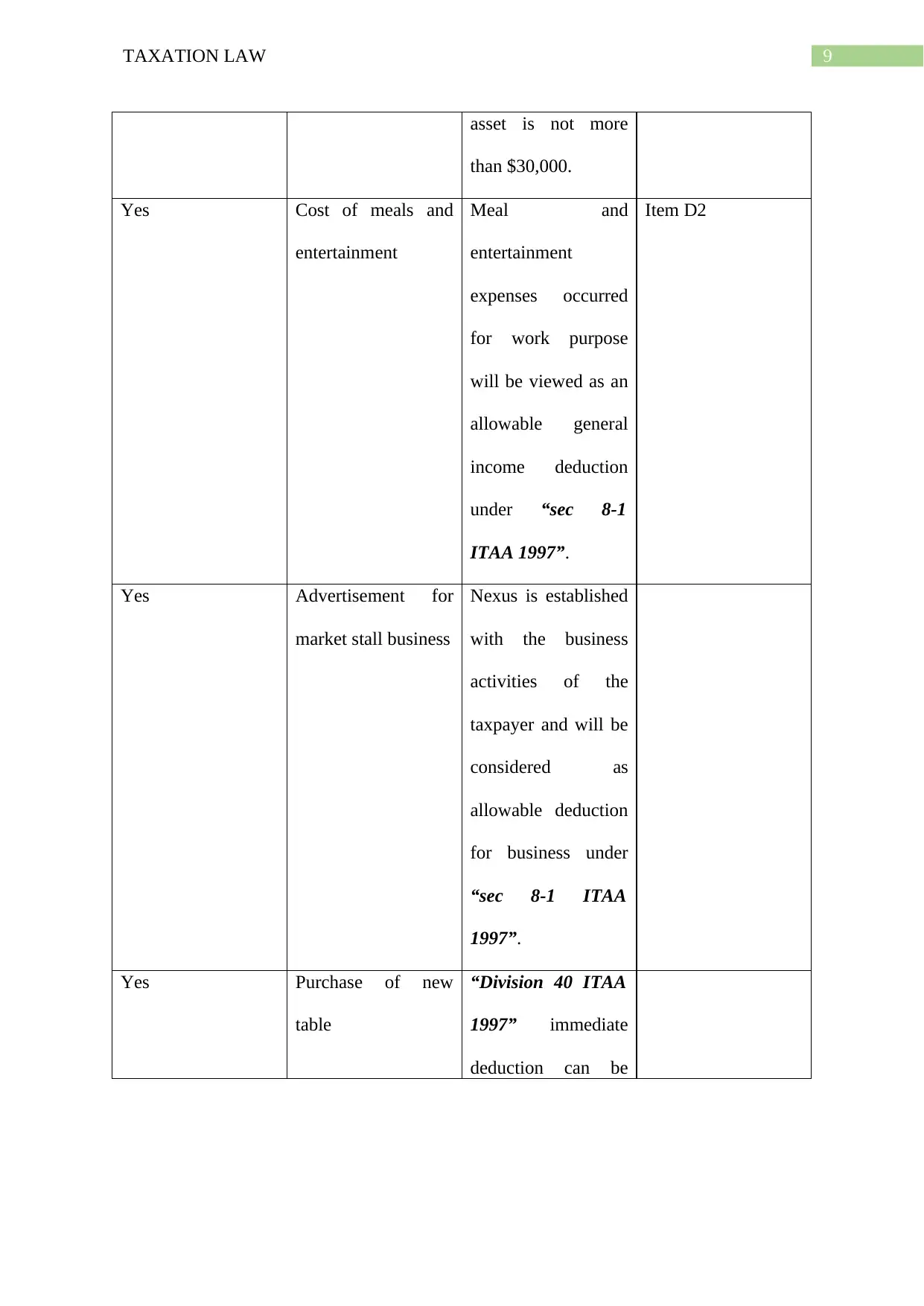
Yes Cost of meals and
entertainment
Meal and
entertainment
expenses occurred
for work purpose
will be viewed as an
allowable general
income deduction
under “sec 8-1
ITAA 1997”.
Item D2
Yes Advertisement for
market stall business
Nexus is established
with the business
activities of the
taxpayer and will be
considered as
allowable deduction
for business under
“sec 8-1 ITAA
1997”.
Yes Purchase of new
table
“Division 40 ITAA
1997” immediate
deduction can be
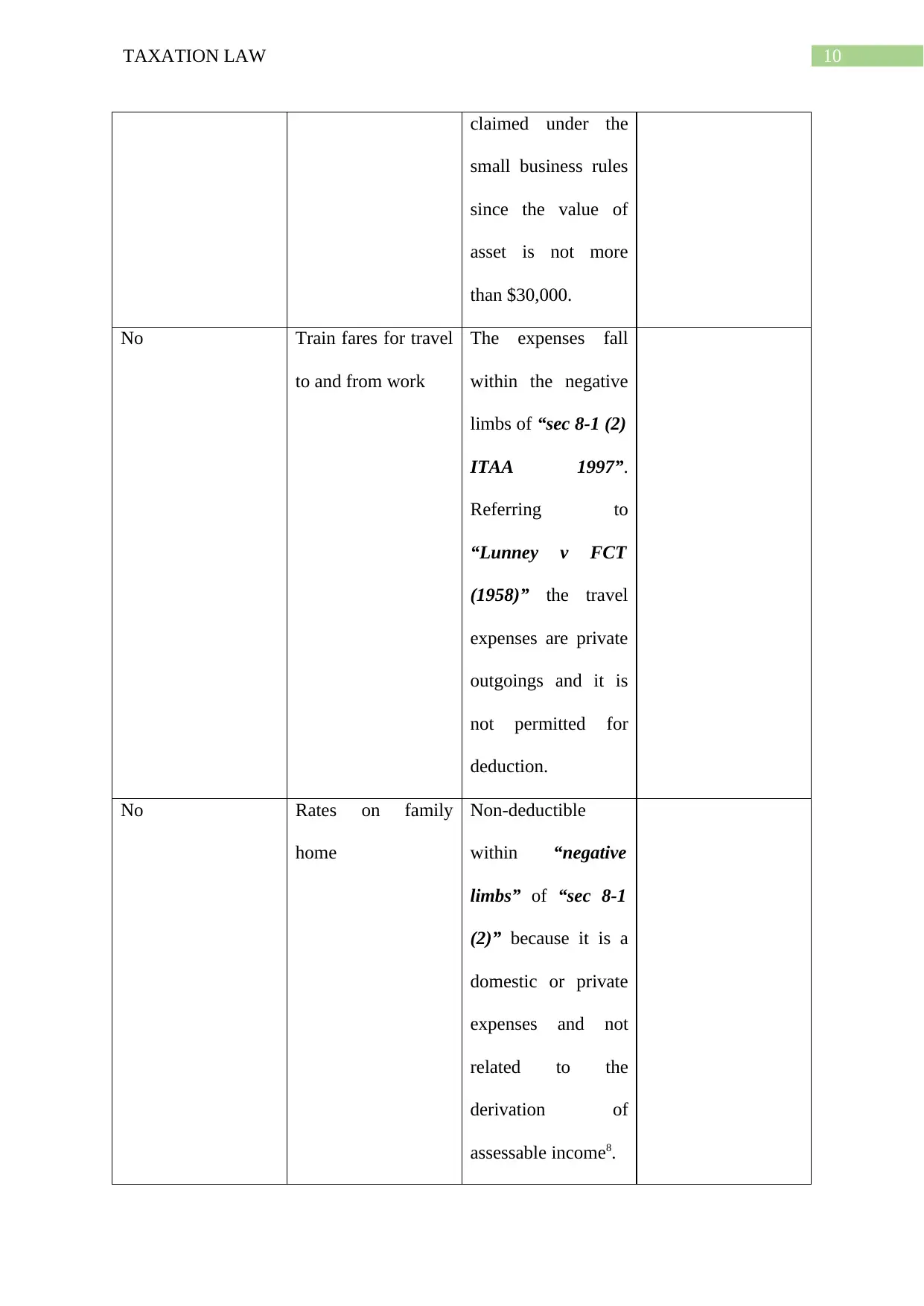
tabler-icon-diamond-filled.svg

Paraphrase This Document

Need a fresh take? Get an instant paraphrase of this document with our AI Paraphraser
Document Page
10TAXATION LAW
claimed under the
small business rules
since the value of
asset is not more
than $30,000.
No Train fares for travel
to and from work
The expenses fall
within the negative
limbs of “sec 8-1 (2)
ITAA 1997”.
Referring to
“Lunney v FCT
(1958)” the travel
expenses are private
outgoings and it is
not permitted for
deduction.
No Rates on family
home
Non-deductible
within “negative
limbs” of “sec 8-1
(2)” because it is a
domestic or private
expenses and not
related to the
derivation of
assessable income8.
Document Page
11TAXATION LAW
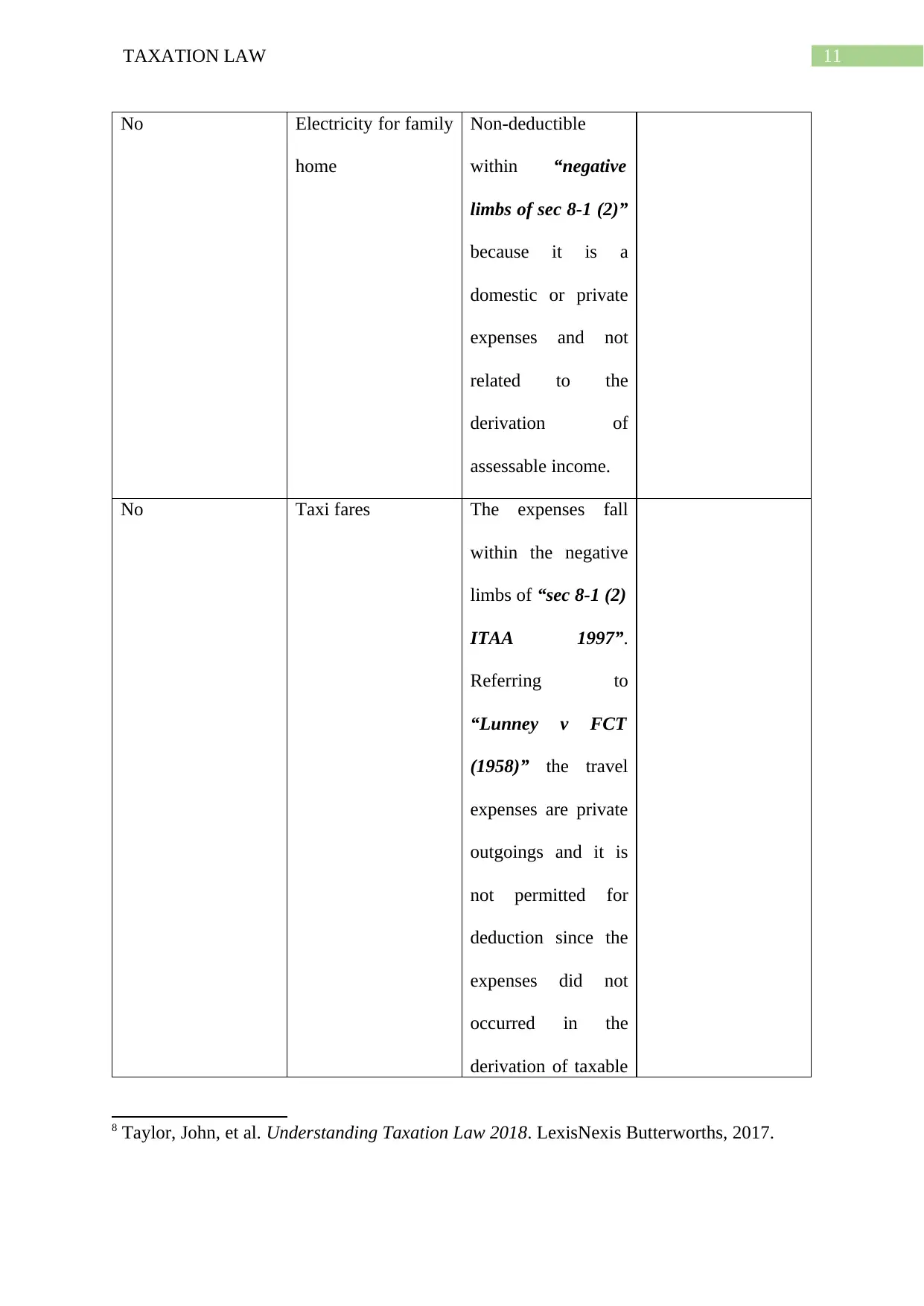
No Electricity for family
home
Non-deductible
within “negative
limbs of sec 8-1 (2)”
because it is a
domestic or private
expenses and not
related to the
derivation of
assessable income.
No Taxi fares The expenses fall
within the negative
limbs of “sec 8-1 (2)
ITAA 1997”.
Referring to
“Lunney v FCT
(1958)” the travel
expenses are private
outgoings and it is
not permitted for
deduction since the
expenses did not
occurred in the
derivation of taxable
8 Taylor, John, et al. Understanding Taxation Law 2018. LexisNexis Butterworths, 2017.
chevron_up_icon
1 out of 18
circle_padding
hide_on_mobile
zoom_out_icon
[object Object]