University: Assignment 3 - Usability Evaluation Survey Report Analysis
VerifiedAdded on 2022/11/15
|12
|1809
|389
Report
AI Summary
This report presents a usability evaluation survey created using SurveyMonkey, conducted by a student. The survey included six questions sent to five respondents, with all participants completing the questionnaire. The report includes the survey report, the email used to invite participants, and the survey questions. The report then analyzes the collected data, presenting the results of each question. It also discusses the positive aspects of online questionnaires, such as cost-effectiveness, speedy results, scalability, user anonymity, and ease of use, as well as the negative aspects, including elements of dishonesty, challenges in data analysis, lack of personality, and skipped questions. The student speculates on the reliability of the data, recommends methods for validation, and describes the major challenges of using an online questionnaire website, such as limited internet access and sampling issues. The report concludes with a list of references used in the creation of the report.
Assignment 3: Usability Evaluation
Student’s name
Professor’s name
Course title
Date
Student’s name
Professor’s name
Course title
Date

Paraphrase This Document
Need a fresh take? Get an instant paraphrase of this document with our AI Paraphraser
Table of Contents
The survey report........................................................................................................................................2
Email 1.....................................................................................................................................................2
Email 2.....................................................................................................................................................2
The survey questions...................................................................................................................................3
Survey Data Analysis....................................................................................................................................4
Question 1...............................................................................................................................................4
Question 2...............................................................................................................................................5
Question 3...............................................................................................................................................5
Question 4...............................................................................................................................................5
Question 5...............................................................................................................................................6
Question 6...............................................................................................................................................6
The positive aspects of creating and conducting an online questionnaire..................................................6
Cost effective...........................................................................................................................................6
Speedy result...........................................................................................................................................6
Scalability.................................................................................................................................................7
User anonymity.......................................................................................................................................7
Not hectic................................................................................................................................................7
The negative aspects of creating and conducting an online questionnaire.................................................7
Elements of dishonesty...........................................................................................................................7
Some questions are difficult to analyze...................................................................................................7
Lack of personality...................................................................................................................................8
Skipped questions....................................................................................................................................8
Speculate on the reliability of the collected data........................................................................................8
Recommend two (2) methods that you can use to validate the collected data..........................................9
Based on your experience, describe the major challenges of using an online questionnaire website........9
The survey report........................................................................................................................................2
Email 1.....................................................................................................................................................2
Email 2.....................................................................................................................................................2
The survey questions...................................................................................................................................3
Survey Data Analysis....................................................................................................................................4
Question 1...............................................................................................................................................4
Question 2...............................................................................................................................................5
Question 3...............................................................................................................................................5
Question 4...............................................................................................................................................5
Question 5...............................................................................................................................................6
Question 6...............................................................................................................................................6
The positive aspects of creating and conducting an online questionnaire..................................................6
Cost effective...........................................................................................................................................6
Speedy result...........................................................................................................................................6
Scalability.................................................................................................................................................7
User anonymity.......................................................................................................................................7
Not hectic................................................................................................................................................7
The negative aspects of creating and conducting an online questionnaire.................................................7
Elements of dishonesty...........................................................................................................................7
Some questions are difficult to analyze...................................................................................................7
Lack of personality...................................................................................................................................8
Skipped questions....................................................................................................................................8
Speculate on the reliability of the collected data........................................................................................8
Recommend two (2) methods that you can use to validate the collected data..........................................9
Based on your experience, describe the major challenges of using an online questionnaire website........9
The survey report
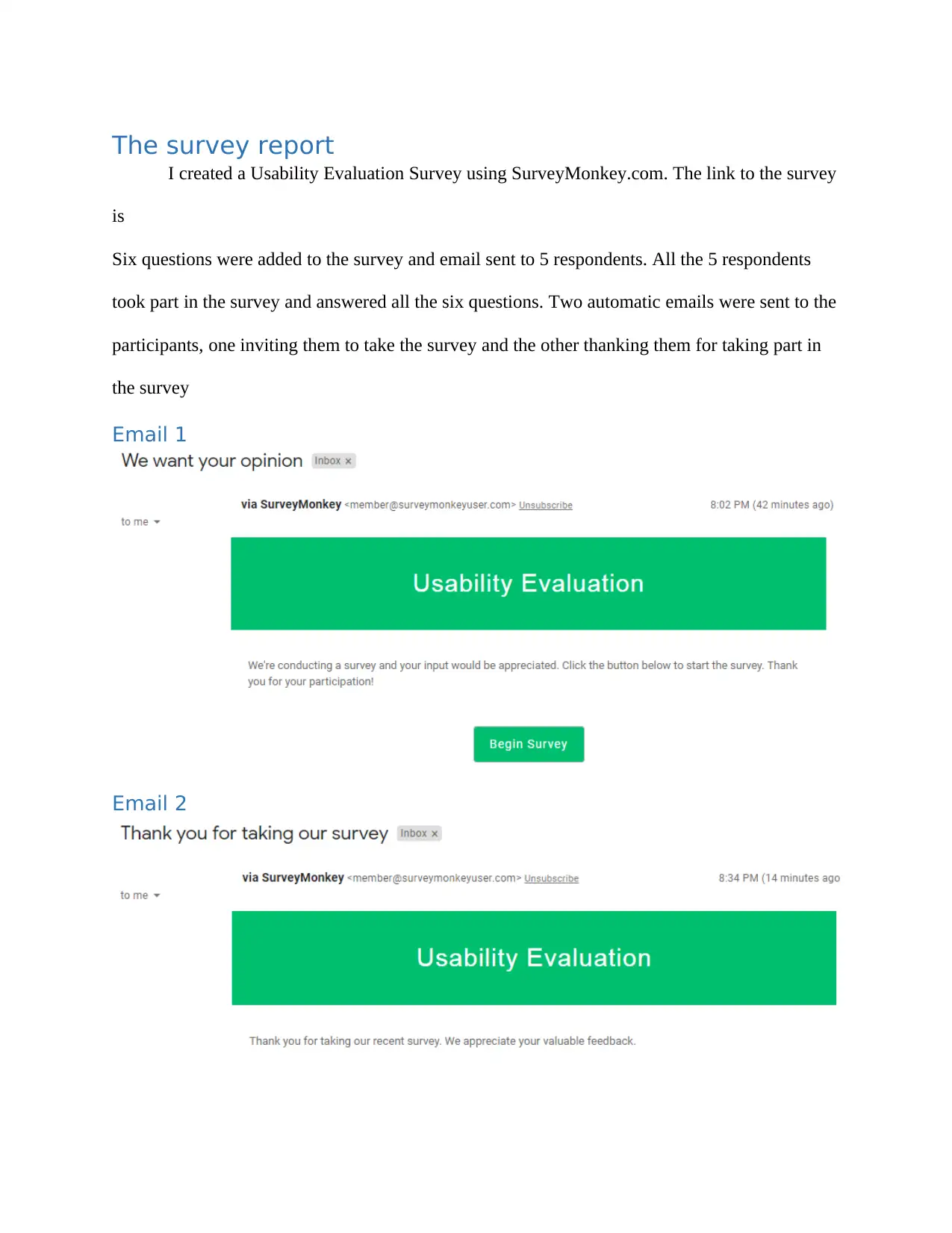
I created a Usability Evaluation Survey using SurveyMonkey.com. The link to the survey
is
Six questions were added to the survey and email sent to 5 respondents. All the 5 respondents
took part in the survey and answered all the six questions. Two automatic emails were sent to the
participants, one inviting them to take the survey and the other thanking them for taking part in
the survey
Email 1
Email 2
I created a Usability Evaluation Survey using SurveyMonkey.com. The link to the survey
is
Six questions were added to the survey and email sent to 5 respondents. All the 5 respondents
took part in the survey and answered all the six questions. Two automatic emails were sent to the
participants, one inviting them to take the survey and the other thanking them for taking part in
the survey
Email 1
Email 2
⊘ This is a preview!⊘
Do you want full access?
Subscribe today to unlock all pages.

Trusted by 1+ million students worldwide
The survey questions
Paraphrase This Document
Need a fresh take? Get an instant paraphrase of this document with our AI Paraphraser
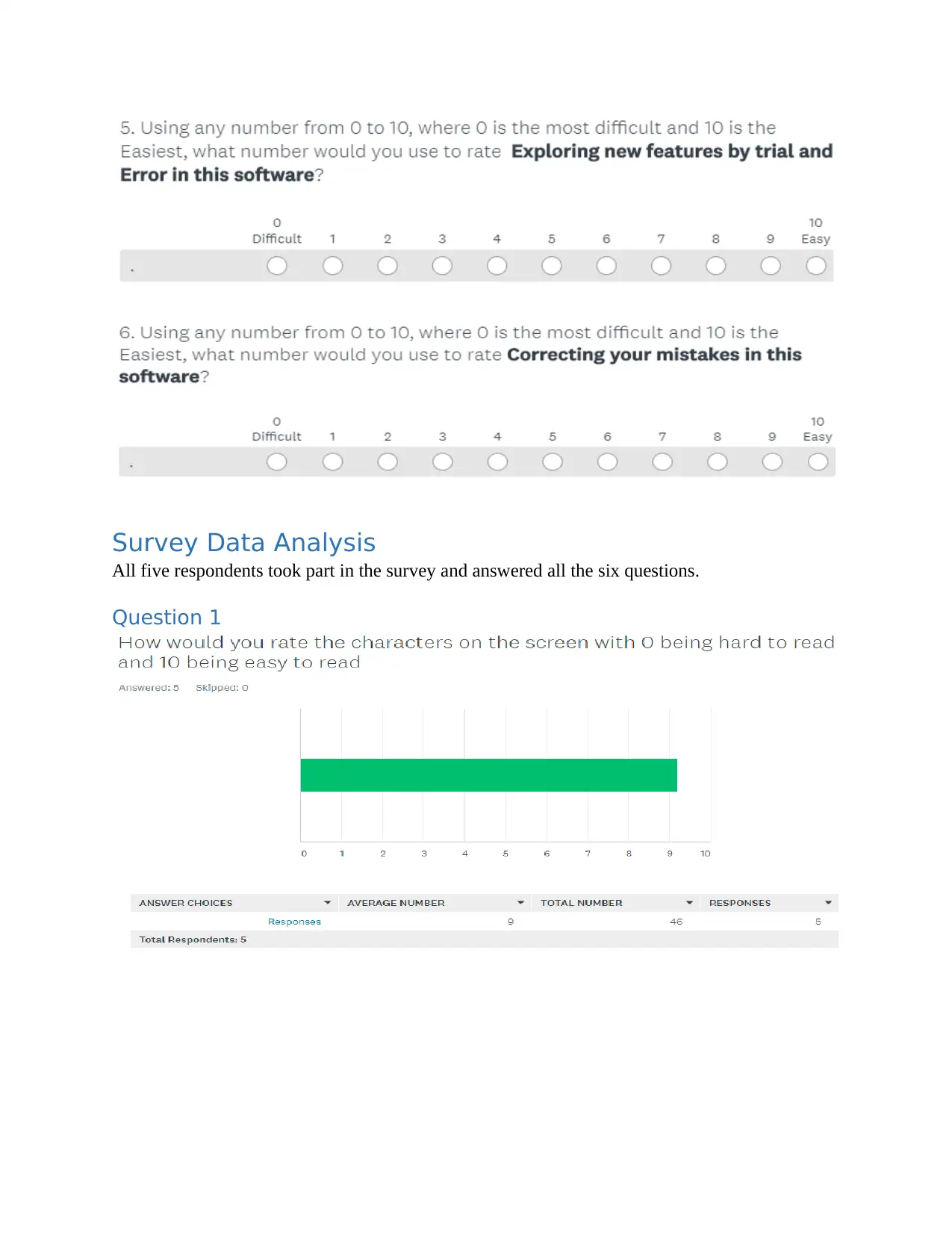
Survey Data Analysis
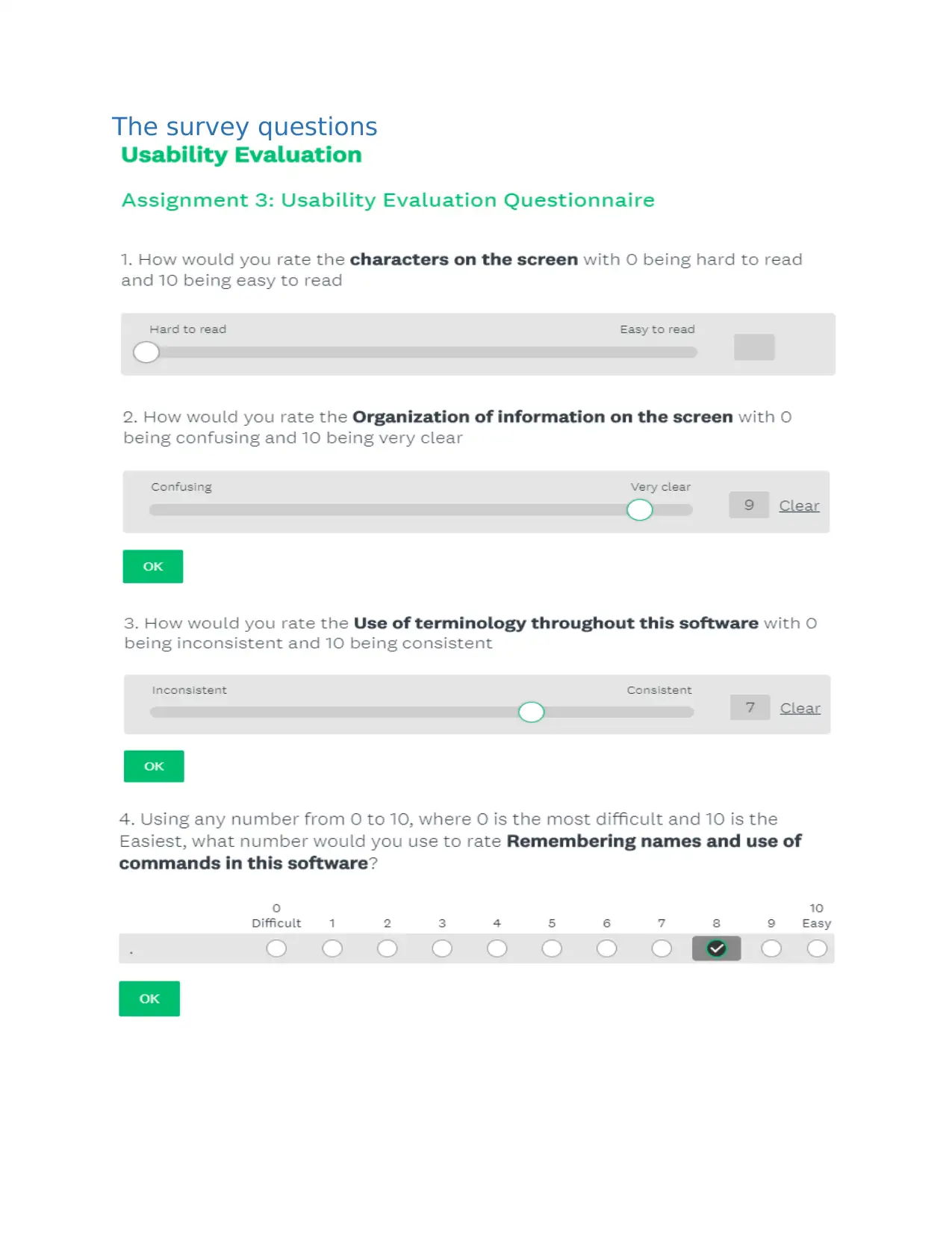
All five respondents took part in the survey and answered all the six questions.
Question 1
All five respondents took part in the survey and answered all the six questions.
Question 1
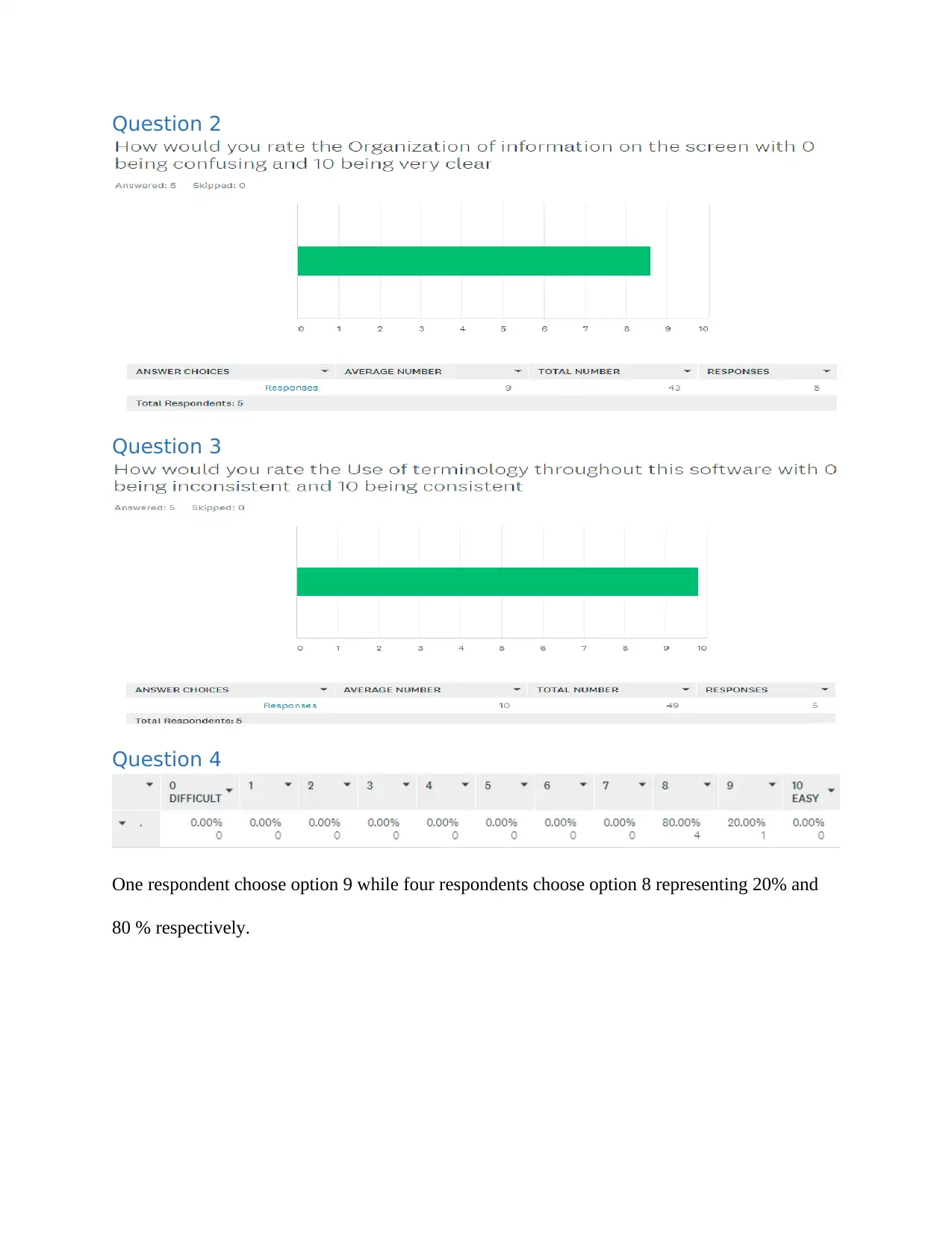
Question 2
Question 3
Question 4
One respondent choose option 9 while four respondents choose option 8 representing 20% and
80 % respectively.
Question 3
Question 4
One respondent choose option 9 while four respondents choose option 8 representing 20% and
80 % respectively.
⊘ This is a preview!⊘
Do you want full access?
Subscribe today to unlock all pages.
Trusted by 1+ million students worldwide
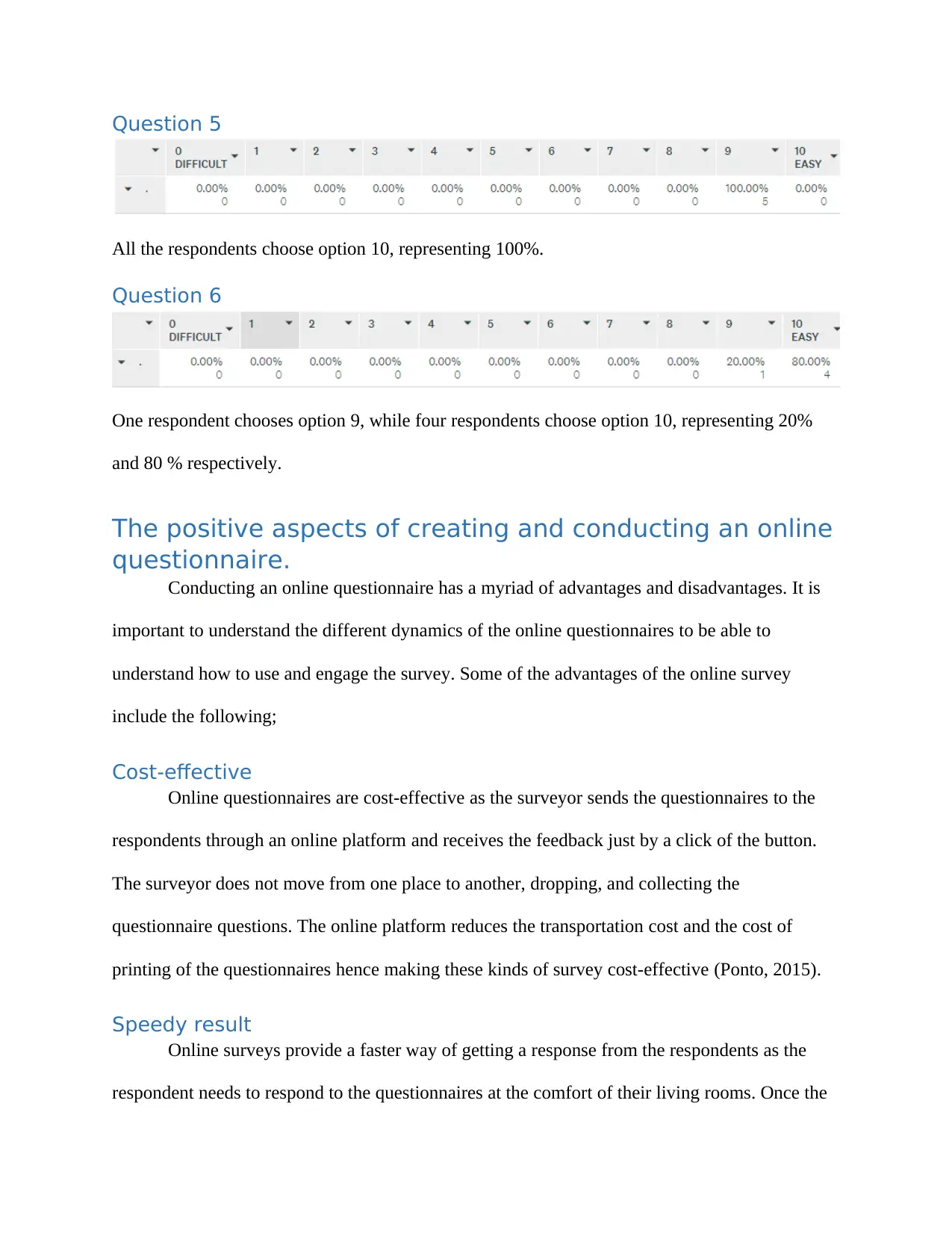
Question 5
All the respondents choose option 10, representing 100%.
Question 6
One respondent chooses option 9, while four respondents choose option 10, representing 20%
and 80 % respectively.
The positive aspects of creating and conducting an online
questionnaire.
Conducting an online questionnaire has a myriad of advantages and disadvantages. It is
important to understand the different dynamics of the online questionnaires to be able to
understand how to use and engage the survey. Some of the advantages of the online survey
include the following;
Cost-effective
Online questionnaires are cost-effective as the surveyor sends the questionnaires to the
respondents through an online platform and receives the feedback just by a click of the button.
The surveyor does not move from one place to another, dropping, and collecting the
questionnaire questions. The online platform reduces the transportation cost and the cost of
printing of the questionnaires hence making these kinds of survey cost-effective (Ponto, 2015).
Speedy result
Online surveys provide a faster way of getting a response from the respondents as the
respondent needs to respond to the questionnaires at the comfort of their living rooms. Once the
All the respondents choose option 10, representing 100%.
Question 6
One respondent chooses option 9, while four respondents choose option 10, representing 20%
and 80 % respectively.
The positive aspects of creating and conducting an online
questionnaire.
Conducting an online questionnaire has a myriad of advantages and disadvantages. It is
important to understand the different dynamics of the online questionnaires to be able to
understand how to use and engage the survey. Some of the advantages of the online survey
include the following;
Cost-effective
Online questionnaires are cost-effective as the surveyor sends the questionnaires to the
respondents through an online platform and receives the feedback just by a click of the button.
The surveyor does not move from one place to another, dropping, and collecting the
questionnaire questions. The online platform reduces the transportation cost and the cost of
printing of the questionnaires hence making these kinds of survey cost-effective (Ponto, 2015).
Speedy result
Online surveys provide a faster way of getting a response from the respondents as the
respondent needs to respond to the questionnaires at the comfort of their living rooms. Once the
Paraphrase This Document
Need a fresh take? Get an instant paraphrase of this document with our AI Paraphraser
surveyor sends the questions to the potential respondent, they relax and wait for the results that
take less than a week which is faster than taking a standard questionnaire.
Scalability
It is easier to attain larger and more varied respondents as the survey reaches out to
different people across the globe. The kind of diversity that the online researcher achieves is
enormous and hence making the study more practical and real (Szolnoki & Hoffmann, 2013).
User anonymity
The respondents in the online platform have the option to display their identity or remain
incognito. When the respondents have the option to go public or not, they tend to give an
accurate response, and hence, the surveyor can get the true picture of the situation at the ground.
Not hectic
last but not least, the online questionnaires are easy to conduct as the surveyor send the
questionnaire to the respondents and wait for their responses before making an analysis and
making a final remark.
The negative aspects of creating and conducting an
online questionnaire
Online survey encounters some challenges which include the following;
Elements of dishonesty
The online survey has some element of dishonesty as the respondents have the chance of
hiding their identity and maliciously give wrong information. It is challenging for the surveyor to
gauge the level of honesty as the respondent has not to limit to the answers they provide (Steber,
2016).
take less than a week which is faster than taking a standard questionnaire.
Scalability
It is easier to attain larger and more varied respondents as the survey reaches out to
different people across the globe. The kind of diversity that the online researcher achieves is
enormous and hence making the study more practical and real (Szolnoki & Hoffmann, 2013).
User anonymity
The respondents in the online platform have the option to display their identity or remain
incognito. When the respondents have the option to go public or not, they tend to give an
accurate response, and hence, the surveyor can get the true picture of the situation at the ground.
Not hectic
last but not least, the online questionnaires are easy to conduct as the surveyor send the
questionnaire to the respondents and wait for their responses before making an analysis and
making a final remark.
The negative aspects of creating and conducting an
online questionnaire
Online survey encounters some challenges which include the following;
Elements of dishonesty
The online survey has some element of dishonesty as the respondents have the chance of
hiding their identity and maliciously give wrong information. It is challenging for the surveyor to
gauge the level of honesty as the respondent has not to limit to the answers they provide (Steber,
2016).
Some questions are difficult to analyze
Posting online questionnaires to the respondents have a lot of challenges when it comes
to the data analysis. There are some questions that are difficult to analyze and therefore, making
the online survey irrelevant as compared to the offline survey. The questions which require
honesty and credibility such as the respondents to the expert in a field could lack as the online e
respondent could impersonate an identity and thereby participate in the survey hence leading to
the provision of poor results (Comley & Beaumont, 2011).
Lack of personality
The online survey includes exercises where the surveyor posts the survey question to the
respondents regarding the field of study. The respondents, on the other hand, make a response to
the questions and post them back to the researcher without making any physical contacts. The
respondent is, therefore, can maliciously provide wrong information to misguide the researcher
or impersonate a professional and answer the questions on their behalf, leading to lack of
reliability and validity of collected data (Regmi et al., 2016). The lack of personality in the
online survey poses a negative aspect to the results posted, and the conclusion arrived at by the
surveyor. Unlike the offline survey, the online survey is at a disadvantage for its credibility and
thereby making the result of the survey questions.
Skipped questions
Online respondents normally like to respond to the questions that they like or feel are of
great importance. In such a case, the skip the questions that, according to them, is irrelevant. In
most cases, the respondent skips the question that the survey is trying to study and thereby
questioning the validity of the study. All the respondents I used in my survey did not skip any
questions (Comley & Beaumont, 2011).
Posting online questionnaires to the respondents have a lot of challenges when it comes
to the data analysis. There are some questions that are difficult to analyze and therefore, making
the online survey irrelevant as compared to the offline survey. The questions which require
honesty and credibility such as the respondents to the expert in a field could lack as the online e
respondent could impersonate an identity and thereby participate in the survey hence leading to
the provision of poor results (Comley & Beaumont, 2011).
Lack of personality
The online survey includes exercises where the surveyor posts the survey question to the
respondents regarding the field of study. The respondents, on the other hand, make a response to
the questions and post them back to the researcher without making any physical contacts. The
respondent is, therefore, can maliciously provide wrong information to misguide the researcher
or impersonate a professional and answer the questions on their behalf, leading to lack of
reliability and validity of collected data (Regmi et al., 2016). The lack of personality in the
online survey poses a negative aspect to the results posted, and the conclusion arrived at by the
surveyor. Unlike the offline survey, the online survey is at a disadvantage for its credibility and
thereby making the result of the survey questions.
Skipped questions
Online respondents normally like to respond to the questions that they like or feel are of
great importance. In such a case, the skip the questions that, according to them, is irrelevant. In
most cases, the respondent skips the question that the survey is trying to study and thereby
questioning the validity of the study. All the respondents I used in my survey did not skip any
questions (Comley & Beaumont, 2011).
⊘ This is a preview!⊘
Do you want full access?
Subscribe today to unlock all pages.
Trusted by 1+ million students worldwide
Speculate on the reliability of the collected data.
Reliability of the data is critical for the surveyor and the consumers of the survey report.
It is essential for the surveyor to improve the reliability of the collected data to make it suitable
for the study. In the case of this study, the data collected is reliable as the surveyor provided a
well-structured questionnaire to the appropriate respondents who found little or no difficulties in
filling in the data (Wieters, 2016).
Secondly, the surveyor normalizes the data collection as the respondents receive the
questionnaire at the same time and therefore making them work on them at a personal level other
than consulting with friends at a later time on the answers they provide. Also, the surveyors sent
the questionnaires to different respondents hence providing answers representing their field of
operations.
Recommend two (2) methods that you can use to validate
the collected data.
The validity of the data collected is very critical to both the surveyor and the consumers
of the survey report. The following methods should be considered for the survey to attain the
most appropriate and valid data (DeFranzo, 2012).
The surveyor needs to incorporate experts in the specific fields of study that is being
conducted. In this case, the surveyor needs to bring on board an expert in the field of technology
who understands the variability in the phone applicability and how people engage with their
phones on the internet (DeFranzo, 2012). Secondly, the data can be validated by running them
against set of standards for online questionnaires. These standards stipulate the format, structure
and the minimum requirements for writing an online survey.
Reliability of the data is critical for the surveyor and the consumers of the survey report.
It is essential for the surveyor to improve the reliability of the collected data to make it suitable
for the study. In the case of this study, the data collected is reliable as the surveyor provided a
well-structured questionnaire to the appropriate respondents who found little or no difficulties in
filling in the data (Wieters, 2016).
Secondly, the surveyor normalizes the data collection as the respondents receive the
questionnaire at the same time and therefore making them work on them at a personal level other
than consulting with friends at a later time on the answers they provide. Also, the surveyors sent
the questionnaires to different respondents hence providing answers representing their field of
operations.
Recommend two (2) methods that you can use to validate
the collected data.
The validity of the data collected is very critical to both the surveyor and the consumers
of the survey report. The following methods should be considered for the survey to attain the
most appropriate and valid data (DeFranzo, 2012).
The surveyor needs to incorporate experts in the specific fields of study that is being
conducted. In this case, the surveyor needs to bring on board an expert in the field of technology
who understands the variability in the phone applicability and how people engage with their
phones on the internet (DeFranzo, 2012). Secondly, the data can be validated by running them
against set of standards for online questionnaires. These standards stipulate the format, structure
and the minimum requirements for writing an online survey.
Paraphrase This Document
Need a fresh take? Get an instant paraphrase of this document with our AI Paraphraser
Based on your experience, describe the major challenges
of using an online questionnaire website.
Online based website provides a quick and reliable source of a questionnaire that can lead
to the drawing of conclusion in real time. However, the web-based questionnaires have some
challenges which could lead to non-reliability or non-validity of its results. Some of the major
problems that these questionnaires face include the fact that not all people in a population are
connected to the internet. In as much as people are well connected to the internet, not all the
population has access to the internet and hence the web-based questionnaire lack representation
of the populations as a whole (Wieters, 2016).
Secondly, the controversial issues of sampling erupt in the application of the online-based
questionnaires. It is difficult for the researchers to identify the sample which represents that
whole population in a single survey and hence posing a challenge.
of using an online questionnaire website.
Online based website provides a quick and reliable source of a questionnaire that can lead
to the drawing of conclusion in real time. However, the web-based questionnaires have some
challenges which could lead to non-reliability or non-validity of its results. Some of the major
problems that these questionnaires face include the fact that not all people in a population are
connected to the internet. In as much as people are well connected to the internet, not all the
population has access to the internet and hence the web-based questionnaire lack representation
of the populations as a whole (Wieters, 2016).
Secondly, the controversial issues of sampling erupt in the application of the online-based
questionnaires. It is difficult for the researchers to identify the sample which represents that
whole population in a single survey and hence posing a challenge.
References
Comley, P., & Beaumont, J. (2011). Online research: Methods, benefits and issues — Part 2.
Journal of Direct, Data and Digital Marketing Practice, 13(1), 25–39.
https://doi.org/10.1057/dddmp.2011.23
DeFranzo, S. E. (2012, November 16). Advantages and Disadvantages of Surveys. Retrieved
May 21, 2019, from Snap Surveys Blog website:
https://www.snapsurveys.com/blog/advantages-disadvantages-surveys/
Ponto, J. (2015). Understanding and Evaluating Survey Research. Journal of the Advanced
Practitioner in Oncology, 6(2), 168–171.
Regmi, P. R., Waithaka, E., Paudyal, A., Simkhada, P., & Teijlingen, E. (2016). Guide to the
design and application of online questionnaire surveys. Nepal Journal of Epidemiology,
6(4), 640–644. https://doi.org/10.3126/nje.v6i4.17258
Steber, C. (2016, November 22). Online Surveys: Data Collection Advantages & Disadvantages.
Retrieved May 21, 2019, from https://www.cfrinc.net/cfrblog/online-surveys-advantages-
disadvantages
Szolnoki, G., & Hoffmann, D. (2013). Online, face-to-face and telephone surveys—Comparing
different sampling methods in wine consumer research. Wine Economics and Policy,
2(2), 57–66. https://doi.org/10.1016/j.wep.2013.10.001
Wieters, K. M. (2016). Advantages of Online Methods in Planning Research: Capturing Walking
Habits in Different Built Environments. SAGE Open, 6(3), 2158244016658082.
https://doi.org/10.1177/2158244016658082
Comley, P., & Beaumont, J. (2011). Online research: Methods, benefits and issues — Part 2.
Journal of Direct, Data and Digital Marketing Practice, 13(1), 25–39.
https://doi.org/10.1057/dddmp.2011.23
DeFranzo, S. E. (2012, November 16). Advantages and Disadvantages of Surveys. Retrieved
May 21, 2019, from Snap Surveys Blog website:
https://www.snapsurveys.com/blog/advantages-disadvantages-surveys/
Ponto, J. (2015). Understanding and Evaluating Survey Research. Journal of the Advanced
Practitioner in Oncology, 6(2), 168–171.
Regmi, P. R., Waithaka, E., Paudyal, A., Simkhada, P., & Teijlingen, E. (2016). Guide to the
design and application of online questionnaire surveys. Nepal Journal of Epidemiology,
6(4), 640–644. https://doi.org/10.3126/nje.v6i4.17258
Steber, C. (2016, November 22). Online Surveys: Data Collection Advantages & Disadvantages.
Retrieved May 21, 2019, from https://www.cfrinc.net/cfrblog/online-surveys-advantages-
disadvantages
Szolnoki, G., & Hoffmann, D. (2013). Online, face-to-face and telephone surveys—Comparing
different sampling methods in wine consumer research. Wine Economics and Policy,
2(2), 57–66. https://doi.org/10.1016/j.wep.2013.10.001
Wieters, K. M. (2016). Advantages of Online Methods in Planning Research: Capturing Walking
Habits in Different Built Environments. SAGE Open, 6(3), 2158244016658082.
https://doi.org/10.1177/2158244016658082
⊘ This is a preview!⊘
Do you want full access?
Subscribe today to unlock all pages.
Trusted by 1+ million students worldwide

1 out of 12


Related Documents


Your All-in-One AI-Powered Toolkit for Academic Success.
+13062052269
info@desklib.com
Available 24*7 on WhatsApp / Email
![[object Object]](/_next/static/media/star-bottom.7253800d.svg)
Unlock your academic potential
Copyright © 2020–2026 A2Z Services. All Rights Reserved. Developed and managed by ZUCOL.