Business Entrepreneurship: Economic Impact & Social Economy Growth
VerifiedAdded on 2024/05/30
|19
|5476
|485
Report
AI Summary
This report provides an overview of different types of entrepreneurial ventures, including small business entrepreneurship, scalable startup entrepreneurship, lifestyle entrepreneurship, social entrepreneurship, and high-growth entrepreneurship. It explores the similarities and differences between these ventures, focusing on their roles, objectives, and characteristics. The report presents data and statistics illustrating the impact of micro and small businesses on the economy at local, regional, national, and international levels, highlighting their contribution to employment, GDP, and overall economic growth in the United Kingdom. Furthermore, it explains the importance of small businesses and startups in the growth of the social economy, emphasizing their role in addressing social needs and problems. The report also examines the characteristics of successful entrepreneurs, the influence of entrepreneurial personality on motivation, and the factors that can foster or hinder entrepreneurship, considering education, culture, economic circumstances, and the risks and rewards of starting a business.
Business Entrepreneurship and Small Business Management
1
1

Paraphrase This Document
Need a fresh take? Get an instant paraphrase of this document with our AI Paraphraser
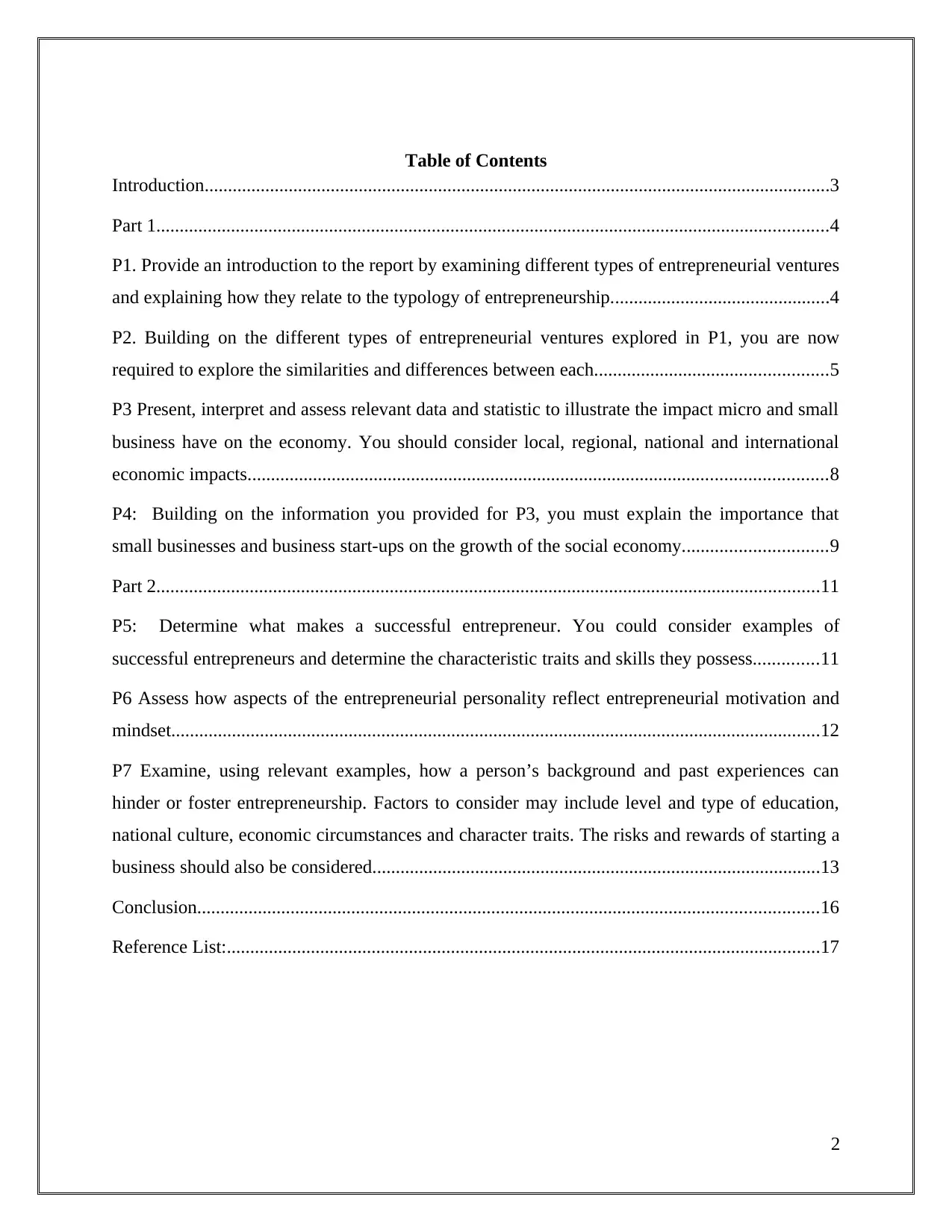
Table of Contents
Introduction......................................................................................................................................3
Part 1................................................................................................................................................4
P1. Provide an introduction to the report by examining different types of entrepreneurial ventures
and explaining how they relate to the typology of entrepreneurship...............................................4
P2. Building on the different types of entrepreneurial ventures explored in P1, you are now
required to explore the similarities and differences between each..................................................5
P3 Present, interpret and assess relevant data and statistic to illustrate the impact micro and small
business have on the economy. You should consider local, regional, national and international
economic impacts............................................................................................................................8
P4: Building on the information you provided for P3, you must explain the importance that
small businesses and business start-ups on the growth of the social economy...............................9
Part 2..............................................................................................................................................11
P5: Determine what makes a successful entrepreneur. You could consider examples of
successful entrepreneurs and determine the characteristic traits and skills they possess..............11
P6 Assess how aspects of the entrepreneurial personality reflect entrepreneurial motivation and
mindset...........................................................................................................................................12
P7 Examine, using relevant examples, how a person’s background and past experiences can
hinder or foster entrepreneurship. Factors to consider may include level and type of education,
national culture, economic circumstances and character traits. The risks and rewards of starting a
business should also be considered................................................................................................13
Conclusion.....................................................................................................................................16
Reference List:...............................................................................................................................17
2
Introduction......................................................................................................................................3
Part 1................................................................................................................................................4
P1. Provide an introduction to the report by examining different types of entrepreneurial ventures
and explaining how they relate to the typology of entrepreneurship...............................................4
P2. Building on the different types of entrepreneurial ventures explored in P1, you are now
required to explore the similarities and differences between each..................................................5
P3 Present, interpret and assess relevant data and statistic to illustrate the impact micro and small
business have on the economy. You should consider local, regional, national and international
economic impacts............................................................................................................................8
P4: Building on the information you provided for P3, you must explain the importance that
small businesses and business start-ups on the growth of the social economy...............................9
Part 2..............................................................................................................................................11
P5: Determine what makes a successful entrepreneur. You could consider examples of
successful entrepreneurs and determine the characteristic traits and skills they possess..............11
P6 Assess how aspects of the entrepreneurial personality reflect entrepreneurial motivation and
mindset...........................................................................................................................................12
P7 Examine, using relevant examples, how a person’s background and past experiences can
hinder or foster entrepreneurship. Factors to consider may include level and type of education,
national culture, economic circumstances and character traits. The risks and rewards of starting a
business should also be considered................................................................................................13
Conclusion.....................................................................................................................................16
Reference List:...............................................................................................................................17
2
Introduction
With the growth of technology, more number of small and medium sized enterprises is
increasing, which is helping in the growth and development of the UK economy. These
entrepreneurial ventures are helping in providing employment opportunities to the local people.
This assignment will outline different types of entrepreneurial ventures. This assignment will
also compare different types of enterprises that are operating in the United Kingdom. This
assignment will focus in providing statistical data regarding the contribution of entrepreneurial
ventures in the United Kingdom. Small business enterprise business also helps in the growth and
development of the social economy. In order to become a successful entrepreneur, the individual
is required to have certain skills and characteristics that can help in operating the business
effectively. This assignment will analyse the factors that can foster and hinder entrepreneurship
and it also provide rewards and risk of starting the business.
3
With the growth of technology, more number of small and medium sized enterprises is
increasing, which is helping in the growth and development of the UK economy. These
entrepreneurial ventures are helping in providing employment opportunities to the local people.
This assignment will outline different types of entrepreneurial ventures. This assignment will
also compare different types of enterprises that are operating in the United Kingdom. This
assignment will focus in providing statistical data regarding the contribution of entrepreneurial
ventures in the United Kingdom. Small business enterprise business also helps in the growth and
development of the social economy. In order to become a successful entrepreneur, the individual
is required to have certain skills and characteristics that can help in operating the business
effectively. This assignment will analyse the factors that can foster and hinder entrepreneurship
and it also provide rewards and risk of starting the business.
3
⊘ This is a preview!⊘
Do you want full access?
Subscribe today to unlock all pages.

Trusted by 1+ million students worldwide
Part 1
P1. Provide an introduction to the report by examining different types of entrepreneurial
ventures and explaining how they relate to the typology of entrepreneurship.
Based on the venture environment they are majorly divided into five categories:
Small Business Entrepreneurship
These entrepreneurial businesses are mainly having small size and low scope of profits. There
function or rather operations involves business activities that help them to incur earnings to
sustain in daily living. Most of the business involves local stores, grocery shops, hairdressers,
travel agents, carpenters, plumbers, electricians and others. There are independent owners for
every small business stores (Amato et al., 2017). Employees working within these firms are
mostly family members and local public. The objective of these firms is not to make huge profits
or to take over an industry rather is to earn adequate profits that can help them to feed their
family.
Scalable Startup Entrepreneurship
These firms have roles and objectives to make success in building respect and huge profits in the
entrepreneur market. Before starting their business, they first target to build the organizational
vision and mission that can differentiate their business from the rest of the firms in the
competitive market. The recruit only the best and brightest talents from every corner of the globe
by conducting exams and competitions. The business operations of these firms are technological
operations and their organisational startups location involves areas such as Silicon Valley,
Shanghai, New York, Bangalore, Israel and others (Picken et al., 2017). These business firms
recruit only the higher officials, directors, managers and executive officers having great
experience and excel in their respective roles. Some of the examples of these businesses are
Apple, Facebook, Delloite, Amazon and others.
Lifestyle Entrepreneurship
4
P1. Provide an introduction to the report by examining different types of entrepreneurial
ventures and explaining how they relate to the typology of entrepreneurship.
Based on the venture environment they are majorly divided into five categories:
Small Business Entrepreneurship
These entrepreneurial businesses are mainly having small size and low scope of profits. There
function or rather operations involves business activities that help them to incur earnings to
sustain in daily living. Most of the business involves local stores, grocery shops, hairdressers,
travel agents, carpenters, plumbers, electricians and others. There are independent owners for
every small business stores (Amato et al., 2017). Employees working within these firms are
mostly family members and local public. The objective of these firms is not to make huge profits
or to take over an industry rather is to earn adequate profits that can help them to feed their
family.
Scalable Startup Entrepreneurship
These firms have roles and objectives to make success in building respect and huge profits in the
entrepreneur market. Before starting their business, they first target to build the organizational
vision and mission that can differentiate their business from the rest of the firms in the
competitive market. The recruit only the best and brightest talents from every corner of the globe
by conducting exams and competitions. The business operations of these firms are technological
operations and their organisational startups location involves areas such as Silicon Valley,
Shanghai, New York, Bangalore, Israel and others (Picken et al., 2017). These business firms
recruit only the higher officials, directors, managers and executive officers having great
experience and excel in their respective roles. Some of the examples of these businesses are
Apple, Facebook, Delloite, Amazon and others.
Lifestyle Entrepreneurship
4
Paraphrase This Document
Need a fresh take? Get an instant paraphrase of this document with our AI Paraphraser
The Lifestyle Entrepreneurs builds their business based on the owner’s lifestyle choices and
enthusiasm. These organizational firms allow the entrepreneurs to use their lifestyle passions in
the business profession (Neergaard et al.,2017). The objective of the business makes the
decision-making by the owners independent. However, these firms do not high scope of
economical and financial growth in the market since the operations of these businesses are based
upon lifestyle activities. Some of the examples of Lifestyle Business are fashion retailers, lavish
hotels, cuisines and restaurants, shopping malls and others.
Social Entrepreneurship
These business firms basically involves entrepreneurs who has innovative ideas that focus on
creating products and services that fulfills the social needs and problems of the people across the
globe (Dees, 2017). Their goal is to make the world a better place for the citizens but not by
taking market shares or by creating profits for the founders. They organization includes
microfinance institutions, educational programs, banking sectors and others. The business takes
the responsibility to carry the risks and efforts to create positive changes in the society. In recent
times, the social entrepreneurs are combining with technology assets within their business
premises.
High growth Entrepreneurship
These businesses have finite life cycles within which they grow through innovation,
manufacturing new products and others. These firms have comparatively large firm size. Their
business operations are shifted towards the behavior of the customers (McKenzie, 2017). The
business firms bring innovation to their services and products according to the customer’s taste,
new technological legislations, new competitors and others. Some of the examples of these high
growth firms are Tesco, Sainsbury, Morrissons and others.
P2. Building on the different types of entrepreneurial ventures explored in P1, you are now
required to explore the similarities and differences between each.
From the mentioned entrepreneurship ventures, most of them have some similar features in
context of market. Some of them are:
5
enthusiasm. These organizational firms allow the entrepreneurs to use their lifestyle passions in
the business profession (Neergaard et al.,2017). The objective of the business makes the
decision-making by the owners independent. However, these firms do not high scope of
economical and financial growth in the market since the operations of these businesses are based
upon lifestyle activities. Some of the examples of Lifestyle Business are fashion retailers, lavish
hotels, cuisines and restaurants, shopping malls and others.
Social Entrepreneurship
These business firms basically involves entrepreneurs who has innovative ideas that focus on
creating products and services that fulfills the social needs and problems of the people across the
globe (Dees, 2017). Their goal is to make the world a better place for the citizens but not by
taking market shares or by creating profits for the founders. They organization includes
microfinance institutions, educational programs, banking sectors and others. The business takes
the responsibility to carry the risks and efforts to create positive changes in the society. In recent
times, the social entrepreneurs are combining with technology assets within their business
premises.
High growth Entrepreneurship
These businesses have finite life cycles within which they grow through innovation,
manufacturing new products and others. These firms have comparatively large firm size. Their
business operations are shifted towards the behavior of the customers (McKenzie, 2017). The
business firms bring innovation to their services and products according to the customer’s taste,
new technological legislations, new competitors and others. Some of the examples of these high
growth firms are Tesco, Sainsbury, Morrissons and others.
P2. Building on the different types of entrepreneurial ventures explored in P1, you are now
required to explore the similarities and differences between each.
From the mentioned entrepreneurship ventures, most of them have some similar features in
context of market. Some of them are:
5
All the major five categories of entrepreneurship have keen focus to produce successful
results in the market. It is important for all the business firms to make earnings from the
resources that have invested in the market (Lian et al., 2017). It is a common logic if a
particular firm invest its financial resources on manufacturing and marketing of its
products and services, it becomes essential for them to gain earnings from the sales of
those products and this is considered as the results of their operations. If they do not get
prominent results from their operations they will incur huge loss which will ultimately
led to decline of their business in the market.
All the business firms treat the needs of the customer as their reason for existence. Their
results are commonly shifted to the customer’s desires of living. With the increase in the
customer demands, there is proportional increase in the different business operations
within the organization. Therefore, fulfilling the customer’s needs through efficient and
effective services is the main goal of every business organization.
The functioning of every organisational firm is dependent upon the decisions that are
taken within their organization. A successful business firm is made only when it
maintains discipline within the organization. Every operational region in a business has
some roles and purposes. The operational incharges has to make certain decisions and
rules to carry out the respective operations in their departments.
However, there are certain distinctions between these categories of entrepreneurship ventures
and are described below:
Differences Public Enterprise Private Enterprise Social Enterprise
Roles To serve the public
equally with products
and services
To serve only a
particular region with
products and services
To fulfill the social
needs of the customers
Objectives To provide help to the
people by providing
public services
To increase the profits
margin and
organisational size
through sales of
products and services
To reduce the social
problems within a
region by providing
services
Characteristics Do not focus on profits
Uses the earnings to
Focus majorly on
organisational earnings
Do not focus on profits
6
results in the market. It is important for all the business firms to make earnings from the
resources that have invested in the market (Lian et al., 2017). It is a common logic if a
particular firm invest its financial resources on manufacturing and marketing of its
products and services, it becomes essential for them to gain earnings from the sales of
those products and this is considered as the results of their operations. If they do not get
prominent results from their operations they will incur huge loss which will ultimately
led to decline of their business in the market.
All the business firms treat the needs of the customer as their reason for existence. Their
results are commonly shifted to the customer’s desires of living. With the increase in the
customer demands, there is proportional increase in the different business operations
within the organization. Therefore, fulfilling the customer’s needs through efficient and
effective services is the main goal of every business organization.
The functioning of every organisational firm is dependent upon the decisions that are
taken within their organization. A successful business firm is made only when it
maintains discipline within the organization. Every operational region in a business has
some roles and purposes. The operational incharges has to make certain decisions and
rules to carry out the respective operations in their departments.
However, there are certain distinctions between these categories of entrepreneurship ventures
and are described below:
Differences Public Enterprise Private Enterprise Social Enterprise
Roles To serve the public
equally with products
and services
To serve only a
particular region with
products and services
To fulfill the social
needs of the customers
Objectives To provide help to the
people by providing
public services
To increase the profits
margin and
organisational size
through sales of
products and services
To reduce the social
problems within a
region by providing
services
Characteristics Do not focus on profits
Uses the earnings to
Focus majorly on
organisational earnings
Do not focus on profits
6
⊘ This is a preview!⊘
Do you want full access?
Subscribe today to unlock all pages.
Trusted by 1+ million students worldwide
upgrade and
manufacture new
services
and fame
Table: Distinctions between public, private and social enterprise
(Source: Created by learner)
Differences Micro Venture Small Venture Medium Venture
Roles To provide employment
and generate income
To increase the
economic growth by
reducing poverty and
unemployment
To release the scarce
capital towards
productive use.
Objectives To employ a few people
within the region
Employ comparatively
more that micro venture
Provides employment to
larger population
Characteristics Has less than 20
employees
Has 20-50 employees Has 50-200 employees
Table: Distinctions between micro, small and medium venture
(Source: Created by learner)
7
manufacture new
services
and fame
Table: Distinctions between public, private and social enterprise
(Source: Created by learner)
Differences Micro Venture Small Venture Medium Venture
Roles To provide employment
and generate income
To increase the
economic growth by
reducing poverty and
unemployment
To release the scarce
capital towards
productive use.
Objectives To employ a few people
within the region
Employ comparatively
more that micro venture
Provides employment to
larger population
Characteristics Has less than 20
employees
Has 20-50 employees Has 50-200 employees
Table: Distinctions between micro, small and medium venture
(Source: Created by learner)
7
Paraphrase This Document
Need a fresh take? Get an instant paraphrase of this document with our AI Paraphraser
P3 Present, interpret and assess relevant data and statistic to illustrate the impact micro
and small business have on the economy. You should consider local, regional, national and
international economic impacts.
Micro and small business enterprise helps in the growth and development of the UK economy as
well as in the development of the global economy. These types of enterprises are generally
private business that either owned by the private individual or by the group of individual. Since,
these types of enterprises do not employee large number of employees but there are many micro
and small business enterprises operating in the United Kingdom. As per the report of 2016, there
are more than 5.5 million private sector businesses operating in the United Kingdom and out of
this 99.9% of the business were small or medium sized businesses. The combined turnover of
small and medium enterprise was over £1.8 trillion, which is 47% of the turnover of the private
sector enterprise in the United Kingdom (gov.uk, 2016). This has increased the revenue of the
government, which can be used in the development of the infrastructure of the country.
In the year 2016, small or medium sized enterprise has generated employment to over 15.7
people, which is 60% of all the private sector employment in the United Kingdom. Additionally,
this has helped in eradicating the problem of unemployment. Increase in the number of
employment has helped in improving the living standard of the people, as it has increased their
per capita income (gov.uk, 2016). Increased in the level of employment has reduced the poverty
level of the country. On the other hand, increased in the number of SMEs in the country has also
maximized the employment opportunity of the people residing in the rural areas. SMEs operate
in urban and rural areas of the country, which helps in the balanced development of the country.
In 2016, in the United Kingdom, there were 1.3 million employing business (gov.uk, 2016).
8
and small business have on the economy. You should consider local, regional, national and
international economic impacts.
Micro and small business enterprise helps in the growth and development of the UK economy as
well as in the development of the global economy. These types of enterprises are generally
private business that either owned by the private individual or by the group of individual. Since,
these types of enterprises do not employee large number of employees but there are many micro
and small business enterprises operating in the United Kingdom. As per the report of 2016, there
are more than 5.5 million private sector businesses operating in the United Kingdom and out of
this 99.9% of the business were small or medium sized businesses. The combined turnover of
small and medium enterprise was over £1.8 trillion, which is 47% of the turnover of the private
sector enterprise in the United Kingdom (gov.uk, 2016). This has increased the revenue of the
government, which can be used in the development of the infrastructure of the country.
In the year 2016, small or medium sized enterprise has generated employment to over 15.7
people, which is 60% of all the private sector employment in the United Kingdom. Additionally,
this has helped in eradicating the problem of unemployment. Increase in the number of
employment has helped in improving the living standard of the people, as it has increased their
per capita income (gov.uk, 2016). Increased in the level of employment has reduced the poverty
level of the country. On the other hand, increased in the number of SMEs in the country has also
maximized the employment opportunity of the people residing in the rural areas. SMEs operate
in urban and rural areas of the country, which helps in the balanced development of the country.
In 2016, in the United Kingdom, there were 1.3 million employing business (gov.uk, 2016).
8
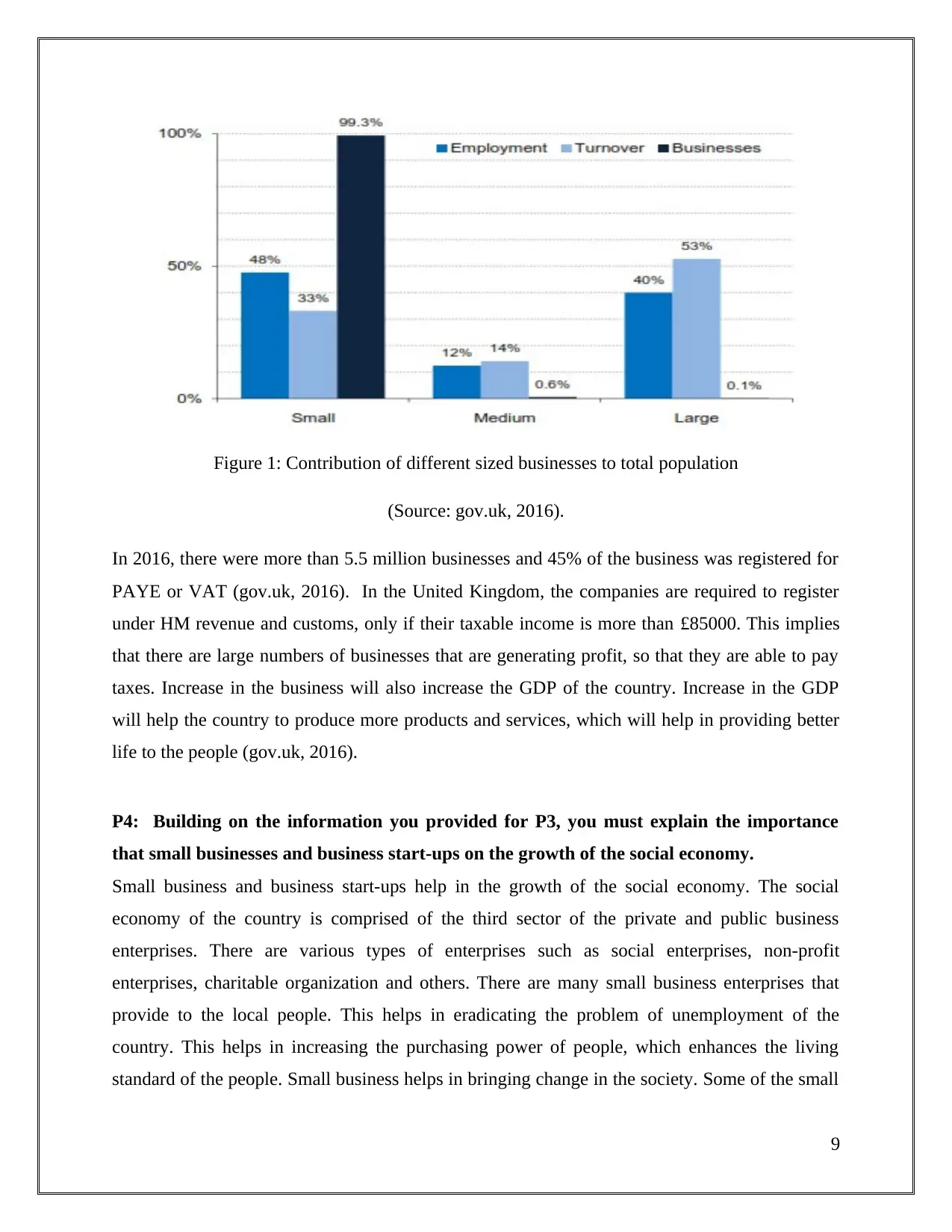
Figure 1: Contribution of different sized businesses to total population
(Source: gov.uk, 2016).
In 2016, there were more than 5.5 million businesses and 45% of the business was registered for
PAYE or VAT (gov.uk, 2016). In the United Kingdom, the companies are required to register
under HM revenue and customs, only if their taxable income is more than £85000. This implies
that there are large numbers of businesses that are generating profit, so that they are able to pay
taxes. Increase in the business will also increase the GDP of the country. Increase in the GDP
will help the country to produce more products and services, which will help in providing better
life to the people (gov.uk, 2016).
P4: Building on the information you provided for P3, you must explain the importance
that small businesses and business start-ups on the growth of the social economy.
Small business and business start-ups help in the growth of the social economy. The social
economy of the country is comprised of the third sector of the private and public business
enterprises. There are various types of enterprises such as social enterprises, non-profit
enterprises, charitable organization and others. There are many small business enterprises that
provide to the local people. This helps in eradicating the problem of unemployment of the
country. This helps in increasing the purchasing power of people, which enhances the living
standard of the people. Small business helps in bringing change in the society. Some of the small
9
(Source: gov.uk, 2016).
In 2016, there were more than 5.5 million businesses and 45% of the business was registered for
PAYE or VAT (gov.uk, 2016). In the United Kingdom, the companies are required to register
under HM revenue and customs, only if their taxable income is more than £85000. This implies
that there are large numbers of businesses that are generating profit, so that they are able to pay
taxes. Increase in the business will also increase the GDP of the country. Increase in the GDP
will help the country to produce more products and services, which will help in providing better
life to the people (gov.uk, 2016).
P4: Building on the information you provided for P3, you must explain the importance
that small businesses and business start-ups on the growth of the social economy.
Small business and business start-ups help in the growth of the social economy. The social
economy of the country is comprised of the third sector of the private and public business
enterprises. There are various types of enterprises such as social enterprises, non-profit
enterprises, charitable organization and others. There are many small business enterprises that
provide to the local people. This helps in eradicating the problem of unemployment of the
country. This helps in increasing the purchasing power of people, which enhances the living
standard of the people. Small business helps in bringing change in the society. Some of the small
9
⊘ This is a preview!⊘
Do you want full access?
Subscribe today to unlock all pages.
Trusted by 1+ million students worldwide
business provides necessary products and services to the UK people at affordable cost. They are
not interested in getting surplus return on investment and they try to bring positive impact on the
society and the environment. These types of business are important in the social economy, as
they act along with the principle of solidarity and mutuality and at the same time, they help in
bringing change in the society. They not only provide employment opportunity but also help in
social security policies and social cohesion (Social Enterprise UK, 2018)
There are some of the business that conducts corporate social responsibility, which will help in
the providing benefits to the society and community as a whole. They provide funds to the
organization that can help the needy people or the areas affected from natural calamity. There
are some business that works to protect environment, development of the country on the urban
and rural areas and protection of the consumers. It has been observed that the number of social
enterprises in the United Kingdom is increasing at an alarming rate. There are more than 70000
social enterprises that help in generating numbers employment. In addition to this, they have
helped in generating £18.5 billion to the UK economy (Rhodes, 2016). As per the report, it has
been identified that more than 52% of the social enterprises has maximized their profit in the past
of one year. It has been observed that more than the 40% of the social enterprises are owned and
operated by women. It can be stated that social enterprise are also providing employment
opportunities to women. In order to sustain in the competitive market, business enterprise and
business start-ups takes risk that are sometimes avoided by the larger companies. This helps in
providing better services to the people of the United Kingdom.
10
not interested in getting surplus return on investment and they try to bring positive impact on the
society and the environment. These types of business are important in the social economy, as
they act along with the principle of solidarity and mutuality and at the same time, they help in
bringing change in the society. They not only provide employment opportunity but also help in
social security policies and social cohesion (Social Enterprise UK, 2018)
There are some of the business that conducts corporate social responsibility, which will help in
the providing benefits to the society and community as a whole. They provide funds to the
organization that can help the needy people or the areas affected from natural calamity. There
are some business that works to protect environment, development of the country on the urban
and rural areas and protection of the consumers. It has been observed that the number of social
enterprises in the United Kingdom is increasing at an alarming rate. There are more than 70000
social enterprises that help in generating numbers employment. In addition to this, they have
helped in generating £18.5 billion to the UK economy (Rhodes, 2016). As per the report, it has
been identified that more than 52% of the social enterprises has maximized their profit in the past
of one year. It has been observed that more than the 40% of the social enterprises are owned and
operated by women. It can be stated that social enterprise are also providing employment
opportunities to women. In order to sustain in the competitive market, business enterprise and
business start-ups takes risk that are sometimes avoided by the larger companies. This helps in
providing better services to the people of the United Kingdom.
10
Paraphrase This Document
Need a fresh take? Get an instant paraphrase of this document with our AI Paraphraser
Part 2
P5: Determine what makes a successful entrepreneur. You could consider examples of
successful entrepreneurs and determine the characteristic traits and skills they possess.
Characteristics of entrepreneur:
Risk taking: One of the main characteristics of entrepreneur is risk taking. The
entrepreneur takes more risks to make the business more successful. The risk taking
ability of the entrepreneur also helps the organization to gain a competitive advantage
over its competitors (Block et al., 2015). For example, Elon Musk made a great risk in
the business. At one point of time, he was not sure that he would be able to make payroll
but at the same time, it was necessary to keep the fledging company afloat. The last $3
million he had was used to make payroll. After being out of cash, Tesla went public on
2010 and earned $600 million.
Crave for learning and stay positive: In order to make the business successful,
entrepreneurs are always craving for learning new things. Additionally, it is important for
the entrepreneur to stay positive while operating the business. If the entrepreneur should
not get de-motivate, if the business does not goes well. Creative: In order to sustain in the competitive market, it is important for the
entrepreneur to have creative ideas. With the help of the creative ideas, the entrepreneur
will be able to gain competitive advantage over its competitors (Shane and Nicolaou,
2015). For example, Jeff Bezos is credited for being the one who pioneered e-commerce
with the company Amazon.com. Jeff Bezos started with online bookstore. Later, with
creative ideas he started providing all the products through e-commerce. Due to this
creative idea, Amazon is considered as one of the largest e-commerce company in the
world.
Skills of entrepreneur:
Motivation and passion: In order to make the business more successful, the entrepreneur
should have the passion to something new in the market. Entrepreneur should be
11
P5: Determine what makes a successful entrepreneur. You could consider examples of
successful entrepreneurs and determine the characteristic traits and skills they possess.
Characteristics of entrepreneur:
Risk taking: One of the main characteristics of entrepreneur is risk taking. The
entrepreneur takes more risks to make the business more successful. The risk taking
ability of the entrepreneur also helps the organization to gain a competitive advantage
over its competitors (Block et al., 2015). For example, Elon Musk made a great risk in
the business. At one point of time, he was not sure that he would be able to make payroll
but at the same time, it was necessary to keep the fledging company afloat. The last $3
million he had was used to make payroll. After being out of cash, Tesla went public on
2010 and earned $600 million.
Crave for learning and stay positive: In order to make the business successful,
entrepreneurs are always craving for learning new things. Additionally, it is important for
the entrepreneur to stay positive while operating the business. If the entrepreneur should
not get de-motivate, if the business does not goes well. Creative: In order to sustain in the competitive market, it is important for the
entrepreneur to have creative ideas. With the help of the creative ideas, the entrepreneur
will be able to gain competitive advantage over its competitors (Shane and Nicolaou,
2015). For example, Jeff Bezos is credited for being the one who pioneered e-commerce
with the company Amazon.com. Jeff Bezos started with online bookstore. Later, with
creative ideas he started providing all the products through e-commerce. Due to this
creative idea, Amazon is considered as one of the largest e-commerce company in the
world.
Skills of entrepreneur:
Motivation and passion: In order to make the business more successful, the entrepreneur
should have the passion to something new in the market. Entrepreneur should be
11
ambitious and they should not be tired of trying new things (Ismail et al., 2016). For
example, Jennifer Hyman and Jennifer Fleiss had their passion for fashion. They turned
their passion for fashion into Rent the Runway, which now has the five brick and mortar
stores, which offer more than 5000 designers apparels for rent. Interpersonal skills and teamwork: In order to operate the business effectively, it is
important for the entrepreneur to maintain good relation with the employees. They should
have the interpersonal skills, as they should understand that the business cannot be
operated alone (Fang et al., 2015). Effective teamwork will motivate the employees to
increase the performance that can help in operating the business effectively and
efficiently.
Communication skills: Entrepreneur should have effective communication skills that can
help in providing important information to the employees. With the help of effective
communication, the entrepreneur will be able to reduce the issues existing in the
business. With the help of effective communication, the entrepreneur will be able to
increase the morale of the employees, which can increase the productivity of the
business.
Decision making skills: It is important for the entrepreneur to make important decision.
The entrepreneur should have the ability to take quick decision that can help the business
to adapt changing business environment (Burns, 2016). With the help of effective
decision, the entrepreneur will be able to gain competitive advantage over its competitors.
P6 Assess how aspects of the entrepreneurial personality reflect entrepreneurial motivation
and mindset.
An entrepreneur should have certain characteristics that can reflect mindset and entrepreneurial
motivation. Given below are some of the factors that reflect the key motivation and mindset of
the entrepreneurial mindset of the entrepreneurs.
Openness to Change: In order to become successful in the competitive market, it is important
for the entrepreneur to acquire or develop the quality to adapt to the changing business
environment. Additionally, this is considered as one of the most important factors that can affect
the mindset of the entrepreneur (Meek and Wood, 2016). This openness to changes and the
12
example, Jennifer Hyman and Jennifer Fleiss had their passion for fashion. They turned
their passion for fashion into Rent the Runway, which now has the five brick and mortar
stores, which offer more than 5000 designers apparels for rent. Interpersonal skills and teamwork: In order to operate the business effectively, it is
important for the entrepreneur to maintain good relation with the employees. They should
have the interpersonal skills, as they should understand that the business cannot be
operated alone (Fang et al., 2015). Effective teamwork will motivate the employees to
increase the performance that can help in operating the business effectively and
efficiently.
Communication skills: Entrepreneur should have effective communication skills that can
help in providing important information to the employees. With the help of effective
communication, the entrepreneur will be able to reduce the issues existing in the
business. With the help of effective communication, the entrepreneur will be able to
increase the morale of the employees, which can increase the productivity of the
business.
Decision making skills: It is important for the entrepreneur to make important decision.
The entrepreneur should have the ability to take quick decision that can help the business
to adapt changing business environment (Burns, 2016). With the help of effective
decision, the entrepreneur will be able to gain competitive advantage over its competitors.
P6 Assess how aspects of the entrepreneurial personality reflect entrepreneurial motivation
and mindset.
An entrepreneur should have certain characteristics that can reflect mindset and entrepreneurial
motivation. Given below are some of the factors that reflect the key motivation and mindset of
the entrepreneurial mindset of the entrepreneurs.
Openness to Change: In order to become successful in the competitive market, it is important
for the entrepreneur to acquire or develop the quality to adapt to the changing business
environment. Additionally, this is considered as one of the most important factors that can affect
the mindset of the entrepreneur (Meek and Wood, 2016). This openness to changes and the
12
⊘ This is a preview!⊘
Do you want full access?
Subscribe today to unlock all pages.
Trusted by 1+ million students worldwide

1 out of 19


Related Documents


Your All-in-One AI-Powered Toolkit for Academic Success.
+13062052269
info@desklib.com
Available 24*7 on WhatsApp / Email
![[object Object]](/_next/static/media/star-bottom.7253800d.svg)
Unlock your academic potential
Copyright © 2020–2026 A2Z Services. All Rights Reserved. Developed and managed by ZUCOL.