VHDL Register File: Structural Design, Implementation & Testing
VerifiedAdded on 2023/04/20
|4
|928
|211
Practical Assignment
AI Summary
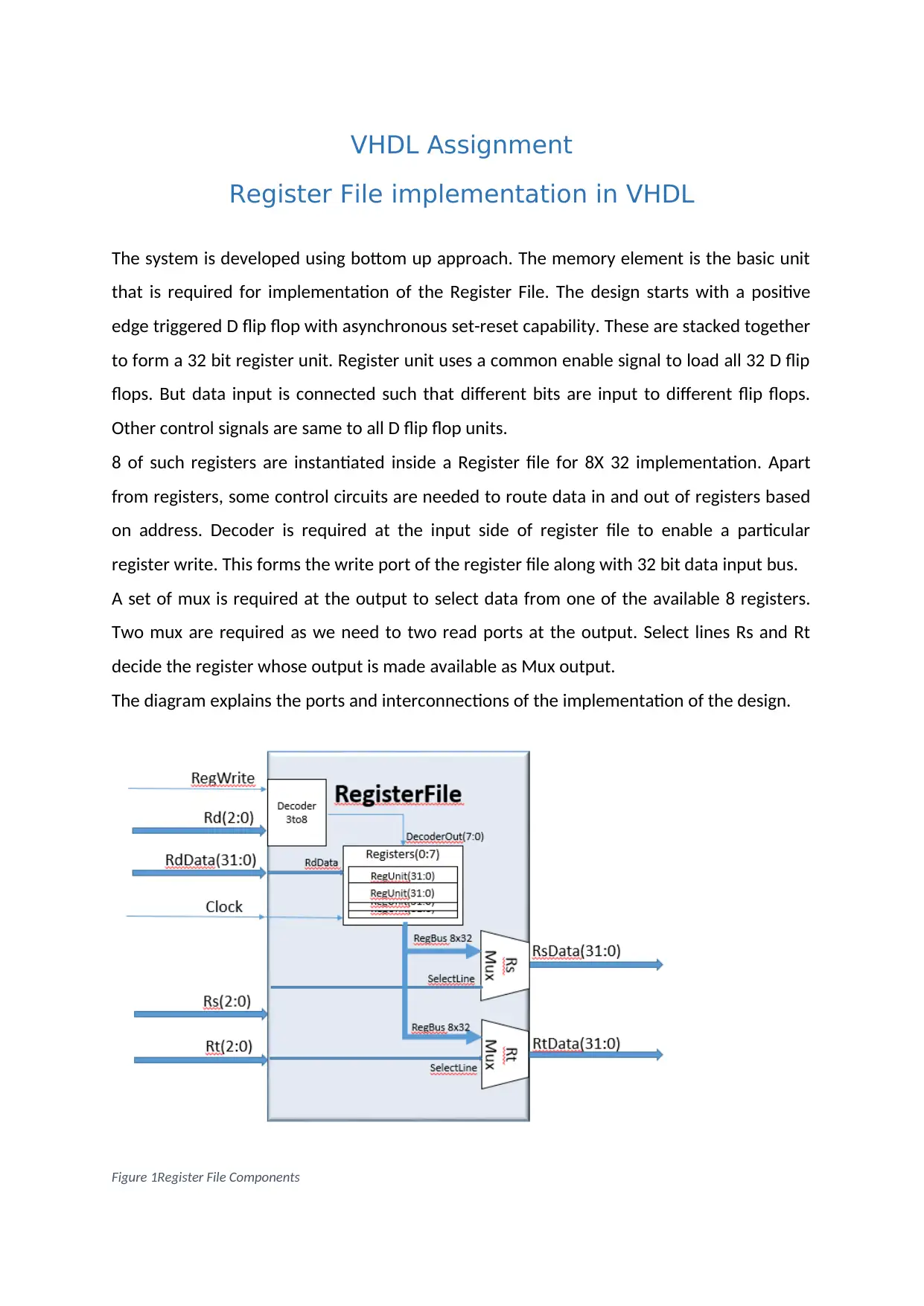
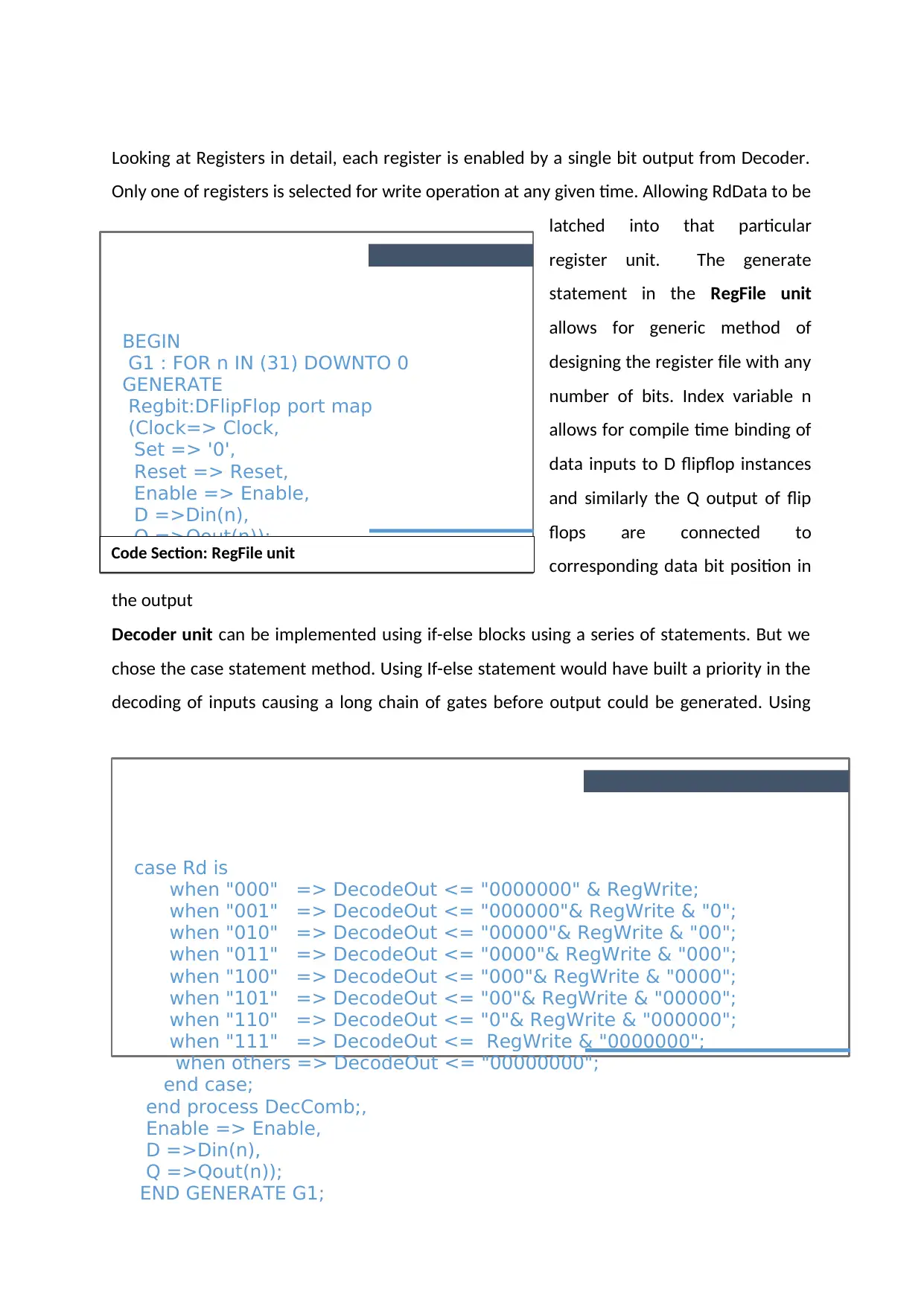
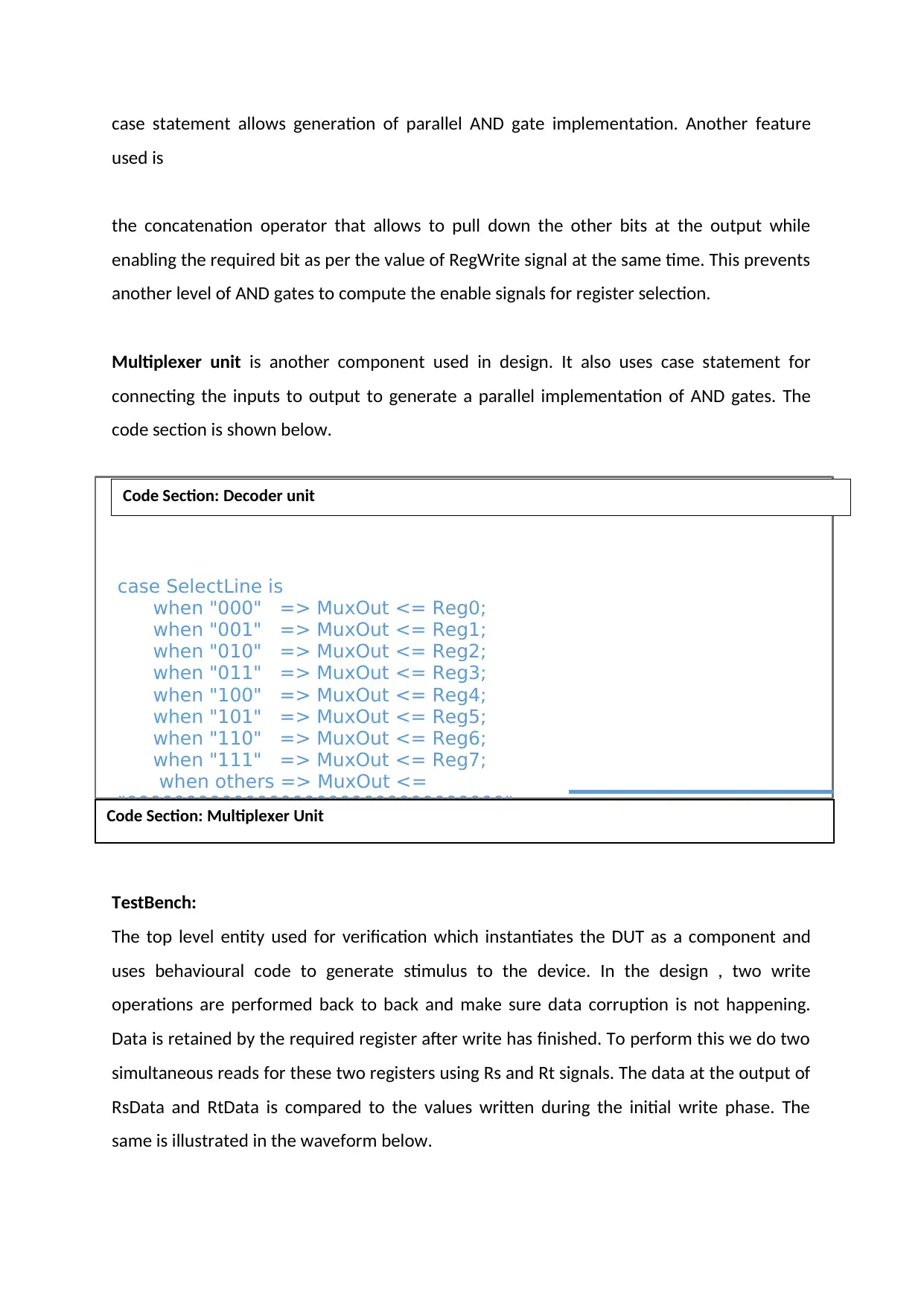
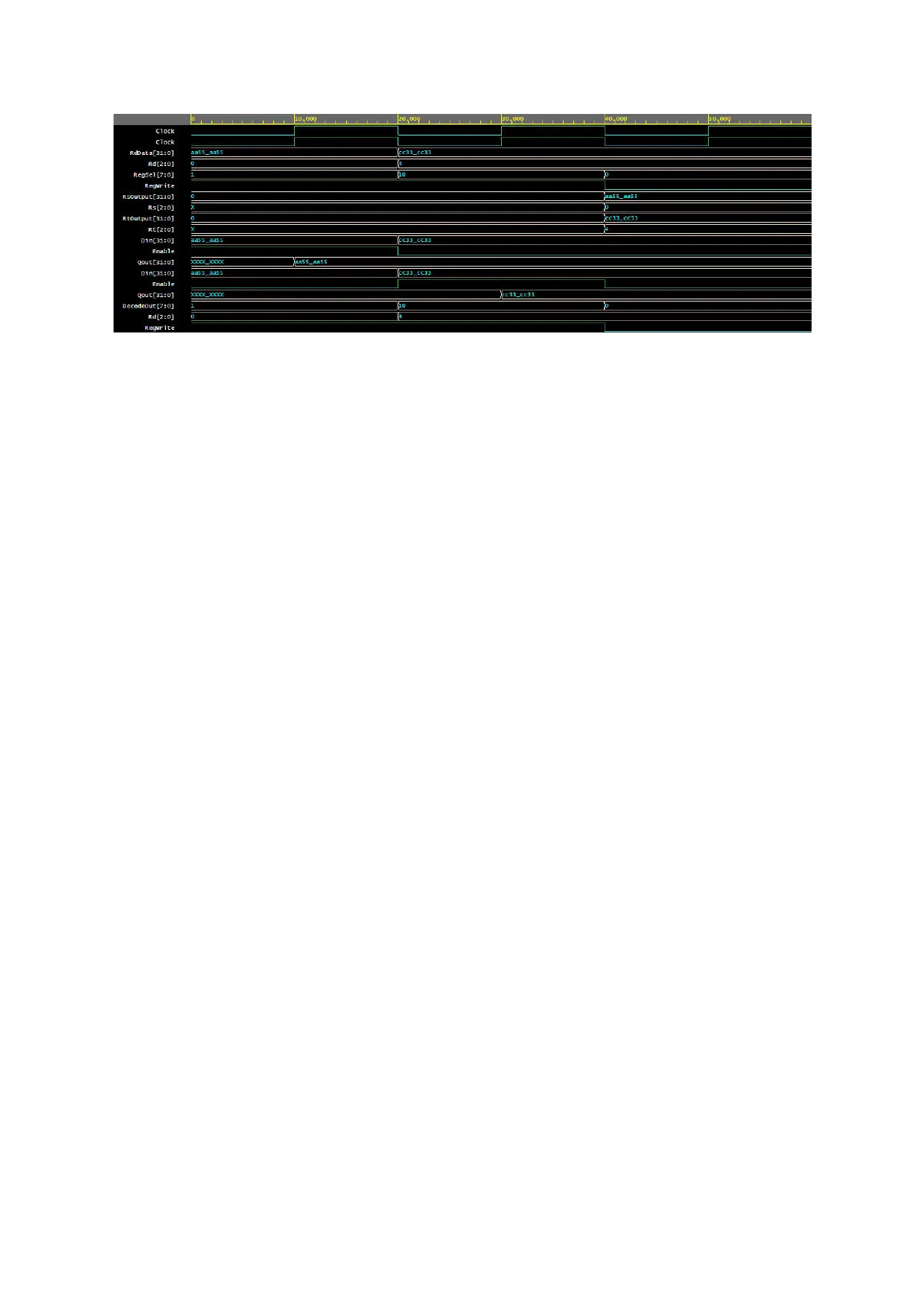
This assignment solution provides a detailed implementation of an 8x32 register file in VHDL using structural modeling. The design utilizes a bottom-up approach, starting with a positive edge-triggered D flip-flop as the basic memory element. These flip-flops are combined to form a 32-bit register unit, which are then instantiated eight times within the register file. The design incorporates a decoder for register write selection and multiplexers for implementing two read ports. The solution includes VHDL code for the D flip-flop, register unit, decoder, multiplexer, and the top-level register file entity. A testbench is also provided to verify the functionality of the register file, ensuring data integrity during simultaneous read and write operations. The testbench performs back-to-back write operations and verifies data retention through simultaneous reads, demonstrating the correct operation of the register file.



1 out of 4


Your All-in-One AI-Powered Toolkit for Academic Success.
+13062052269
info@desklib.com
Available 24*7 on WhatsApp / Email
![[object Object]](/_next/static/media/star-bottom.7253800d.svg)
Copyright © 2020–2026 A2Z Services. All Rights Reserved. Developed and managed by ZUCOL.