BTEC HND Innovation and Commercialisation Report: Vodafone Analysis
VerifiedAdded on 2022/03/03
|25
|8861
|36
Report
AI Summary
This report, prepared for the BTEC HND in Business Innovation and Commercialisation at Icon College of Technology and Management, explores the concepts of innovation and commercialization within the context of Vodafone. The report begins with definitions of innovation and commercialization, emphasizing their importance in business. It then delves into the sources of innovation, the differences between invention and innovation, and the factors that shape innovation, including vision, leadership, culture, and teamwork. The core of the report examines the innovation process, specifically the 4Ps of innovation, the innovation funnel, and frugal innovation, using Vodafone as a practical example. Furthermore, the commercialization process is outlined, detailing each stage from idea generation to market performance review. The report concludes with a discussion of tools for knowledge and intellectual property management. This analysis provides a comprehensive overview of innovation and commercialization strategies within a leading telecommunications company.
Icon College of Technology and Management
Faculty of Business and Management Studies
BTEC HND in Business
INNOVATION and COMMERCIALISATION
Teacher: Dr. Svetlana Shevelova
Student`s name: Anna Diaconu
ID Number: 17692
Session: February 2021
Faculty of Business and Management Studies
BTEC HND in Business
INNOVATION and COMMERCIALISATION
Teacher: Dr. Svetlana Shevelova
Student`s name: Anna Diaconu
ID Number: 17692
Session: February 2021

Paraphrase This Document
Need a fresh take? Get an instant paraphrase of this document with our AI Paraphraser
Table of contents:
Introduction. …………………………………………………………………………………3
I. The concept of Innovation.……………………………………...………….……4
I.1 Definitions. …………………………………………………………….…….……4
I.2 Importance of innovation. ……………………………………………...…………5
I.3 1Source of Innovation. ………………………………………………….………...6
I.4 The differences between Invention and Innovation. ……………………………...7
I.5 How to turn Invention into Innovation.…………………………….…………..…8
I.6 How Vision, Leadership, Culture and Teamwork shape Innovation. …………...11
II. The Innovation Process. ………………………………………………………..12
II.1 Innovation Process- 4Ps. ………………………………………………………..12
II.1.1 Product Innovation. ……………………………………………………..12
II.1.2 Process Innovation. ……………………………………………………..13
II.1.3 Position Innovation. …………………………………………………….13
II.1.4 Paradigm Innovation. …………………………………………………...13
II.2The Innovation Funnel and Application at Vodafone. ………………….……….13
II.3Frugal Innovation and its application at Vodafone. ………………….………….13
III. The Commercialisation Process. ………………………………………………15
III.1 The Commercialisation of Innovation.
…………………………………………..15
Stage 1: Idea Generation……. ……………………...………..………………...16
Stage 2: Idea Screening……… ………………………………..……………….16
Stage 3: Concept testing. …………………..…….…………….……………….17
Stage 4:. Product/Market Development. ……………………………………….17
Stage 5: Business Analysis. ….………………………………………………...17
Stage 6: Test Marketing………………... ……………………………………...18
Stage 7: Commercialisation. …………………………………………………...18
Stage 8: Review of Market Performance. ……………………………………...19
IV. Tools to develop, retain and protect knowledge and Intellectual Property. .19
Conclusion. ………………………………………………………………………….20
2
Introduction. …………………………………………………………………………………3
I. The concept of Innovation.……………………………………...………….……4
I.1 Definitions. …………………………………………………………….…….……4
I.2 Importance of innovation. ……………………………………………...…………5
I.3 1Source of Innovation. ………………………………………………….………...6
I.4 The differences between Invention and Innovation. ……………………………...7
I.5 How to turn Invention into Innovation.…………………………….…………..…8
I.6 How Vision, Leadership, Culture and Teamwork shape Innovation. …………...11
II. The Innovation Process. ………………………………………………………..12
II.1 Innovation Process- 4Ps. ………………………………………………………..12
II.1.1 Product Innovation. ……………………………………………………..12
II.1.2 Process Innovation. ……………………………………………………..13
II.1.3 Position Innovation. …………………………………………………….13
II.1.4 Paradigm Innovation. …………………………………………………...13
II.2The Innovation Funnel and Application at Vodafone. ………………….……….13
II.3Frugal Innovation and its application at Vodafone. ………………….………….13
III. The Commercialisation Process. ………………………………………………15
III.1 The Commercialisation of Innovation.
…………………………………………..15
Stage 1: Idea Generation……. ……………………...………..………………...16
Stage 2: Idea Screening……… ………………………………..……………….16
Stage 3: Concept testing. …………………..…….…………….……………….17
Stage 4:. Product/Market Development. ……………………………………….17
Stage 5: Business Analysis. ….………………………………………………...17
Stage 6: Test Marketing………………... ……………………………………...18
Stage 7: Commercialisation. …………………………………………………...18
Stage 8: Review of Market Performance. ……………………………………...19
IV. Tools to develop, retain and protect knowledge and Intellectual Property. .19
Conclusion. ………………………………………………………………………….20
2
Bibliography. ……………………………………………………………………….21
Introduction.
In the this report, I will present what innovation is and how a company can introduce
new products on market.
Innovation “is the creation, development and implementation of a new product,
process or service, to improve efficiency, effectiveness or competitive advantage” (Dodgson
et al., 2014).
Peter Drucker developed the definition of innovation being a thing changed that looks
to construct something new that perform big things. It involves making ideas, transforming
invention into production that is estimated and that people are paying for. Innovation is
divided into social, open innovation, incremental innovation, radical innovation, disruptive
innovation, or architectural innovation, among others. Renewing and bringing a product,
service or process up to date is also a form of innovation that is crucial in the business world
today (Dodgson, 2014). This report critically analyses innovativeness at Vodafone and how
the company can move forward with developing new products and being innovative to
remain competitive in the market.
According to Pete Foley, innovation speaks about a great idea exceptionally good
executed and about the communication in an intuitive mode from the initial mode (Pete
Foley, 2014).
According to the Australian Innovation Report, commercialisation represents the way of
creating transformed ideas, knowledge in something better for society (Australian Innovation
Report, 2003).
The organisation I am going to analyse in this assignment is Vodafone LTD UK.
Vodafone Limited is a British telecommunications company that is part of the
Vodafone Group. Vodafone is the third-biggest cell phone organization in the UK with more
than 17.3 million endorsers in 2020 behind EE and O2. Vodafone has more than 300 million
customers (Vodafone, 2021). As shown in figure 1 below, Vodafone held a 21% market share
in the UK as of 2018 (O’Dea, 2020). Vodafone is one of the most innovative companies in
the UK. Management Today (2020) ranked Vodafone among the top fifty most innovative
companies in the UK holding the 49th positions. Vodafone keeps on pushing forward with
regards to growing new advancements that encourage individuals and make a superior future
which demonstrates the high level of innovativeness within the company. The company’s
3
Introduction.
In the this report, I will present what innovation is and how a company can introduce
new products on market.
Innovation “is the creation, development and implementation of a new product,
process or service, to improve efficiency, effectiveness or competitive advantage” (Dodgson
et al., 2014).
Peter Drucker developed the definition of innovation being a thing changed that looks
to construct something new that perform big things. It involves making ideas, transforming
invention into production that is estimated and that people are paying for. Innovation is
divided into social, open innovation, incremental innovation, radical innovation, disruptive
innovation, or architectural innovation, among others. Renewing and bringing a product,
service or process up to date is also a form of innovation that is crucial in the business world
today (Dodgson, 2014). This report critically analyses innovativeness at Vodafone and how
the company can move forward with developing new products and being innovative to
remain competitive in the market.
According to Pete Foley, innovation speaks about a great idea exceptionally good
executed and about the communication in an intuitive mode from the initial mode (Pete
Foley, 2014).
According to the Australian Innovation Report, commercialisation represents the way of
creating transformed ideas, knowledge in something better for society (Australian Innovation
Report, 2003).
The organisation I am going to analyse in this assignment is Vodafone LTD UK.
Vodafone Limited is a British telecommunications company that is part of the
Vodafone Group. Vodafone is the third-biggest cell phone organization in the UK with more
than 17.3 million endorsers in 2020 behind EE and O2. Vodafone has more than 300 million
customers (Vodafone, 2021). As shown in figure 1 below, Vodafone held a 21% market share
in the UK as of 2018 (O’Dea, 2020). Vodafone is one of the most innovative companies in
the UK. Management Today (2020) ranked Vodafone among the top fifty most innovative
companies in the UK holding the 49th positions. Vodafone keeps on pushing forward with
regards to growing new advancements that encourage individuals and make a superior future
which demonstrates the high level of innovativeness within the company. The company’s
3
⊘ This is a preview!⊘
Do you want full access?
Subscribe today to unlock all pages.

Trusted by 1+ million students worldwide
Enterprise Innovation Programme helps the most adventurous customers within the company
think of thoughts to improve their organizations starting from the earliest stage. The
organization has an advancement lab that offers a cutting-edge climate to create items for the
mass market and coordinate with our current administrations (Vodafone, 2021).
The way Vodafone believes that innovation happens is the one they think differently,
trying to ask difficult questions and answering with innovations to them. Vodafone thinks
that the heart of their approach to innovation is customers because new ideas and products all
should start with a conversation. The company use and mix all new ideas and methods.
Based on my role as an innovation consultant, I will explore innovation and its influence
upon an organisation comparing with invention, and then determine the benefits of a new
product. Also, I will analyse the various sources of innovation, and speak about
organisational vision, leadership, culture, and teamwork that are shaping innovation and
commercialisation.
Therefore, I will explain the 4Ps of innovation and the use of the innovation funnel in
the context of shaping new ideas. I will explain the frugal innovation and its role in my
chosen company, critically analysing how it is developed, incorporated and reasonable set.
Furthermore, I will develop an understanding of innovation, investigating the significance of
the business channel and the utilization of new product development in my chosen
organisation, constructing an innovation business case.
Finally, I will critically evaluate types of innovation and the environment where it can be
developed, based on provided examples.
I. The Concept of Innovation.
I.1 Definitions.
Peter Drucker argued that innovation is an improvement that can be considered a new
element of execution within an organization. It is an assignment of enriching human and
material assets with new and more prominent abundance creating a limit. It is more of a term
of economics than technology (Drucker, 2002). Innovation is a particular tool for
entrepreneurs because it provides show they explore and take advantage of change as a
chance for an alternate business or distinctive assistance. It is an order that is fit for being
learned and rehearsed (Drucker, 1985). Commercialisation is the way toward carrying new
4
think of thoughts to improve their organizations starting from the earliest stage. The
organization has an advancement lab that offers a cutting-edge climate to create items for the
mass market and coordinate with our current administrations (Vodafone, 2021).
The way Vodafone believes that innovation happens is the one they think differently,
trying to ask difficult questions and answering with innovations to them. Vodafone thinks
that the heart of their approach to innovation is customers because new ideas and products all
should start with a conversation. The company use and mix all new ideas and methods.
Based on my role as an innovation consultant, I will explore innovation and its influence
upon an organisation comparing with invention, and then determine the benefits of a new
product. Also, I will analyse the various sources of innovation, and speak about
organisational vision, leadership, culture, and teamwork that are shaping innovation and
commercialisation.
Therefore, I will explain the 4Ps of innovation and the use of the innovation funnel in
the context of shaping new ideas. I will explain the frugal innovation and its role in my
chosen company, critically analysing how it is developed, incorporated and reasonable set.
Furthermore, I will develop an understanding of innovation, investigating the significance of
the business channel and the utilization of new product development in my chosen
organisation, constructing an innovation business case.
Finally, I will critically evaluate types of innovation and the environment where it can be
developed, based on provided examples.
I. The Concept of Innovation.
I.1 Definitions.
Peter Drucker argued that innovation is an improvement that can be considered a new
element of execution within an organization. It is an assignment of enriching human and
material assets with new and more prominent abundance creating a limit. It is more of a term
of economics than technology (Drucker, 2002). Innovation is a particular tool for
entrepreneurs because it provides show they explore and take advantage of change as a
chance for an alternate business or distinctive assistance. It is an order that is fit for being
learned and rehearsed (Drucker, 1985). Commercialisation is the way toward carrying new
4
Paraphrase This Document
Need a fresh take? Get an instant paraphrase of this document with our AI Paraphraser
items to the market. The idea of commercialisation involves the creation, conveyance,
advertising, deals, client upholds and other fundamental capacities in achieving the business
accomplishment of a new product or service (Daniels, 2021).
I.2 Importance of Innovation.
Innovation is a particular aspect that is crucial in entrepreneurship regardless of the
type of business. It is an important strategy when it comes to the development of new
products or resources that help generate wealth and improve an organizations capacity and
potential (Sull, 2015). According to Jong M. (2015), innovation is significantly important
within an organization. Strategic and organizational factors play a huge role in separating
successful big-company innovators from the rest of the world. Thus, innovation helps an
organization stand out in the market. It helps enhance game-changing creativity within an
organization that helps the organization stand out amongst competitors. Innovation also helps
optimize efficiency within an organization thus improving profitability (Jong, M., 2015).
I.3 Source of Innovation.
To succeed in the business world, entrepreneurs must look tirelessly for new sources of
innovation. They must know how to identify the signs of new business opportunities to take
advantage and innovate. While sometimes innovation can be the result of being a genius, it is
not always the case. In most instances, some of the ideas that are more innovative are
identified in the day-to-day operations and through purposeful identification by
entrepreneurs. As a result, entrepreneurs must methodologically look and identify various
chances for innovation within an organization or in the outside business environment.
Some areas for opportunity lie within the company or the industry, and some are brought by
social changes in the business environment. Managers ought to identify these opportunities
and take advantage of them (Drucker, 1985). Unexpected occurrences in the market which
exist within the company or industry are a significant source used by entrepreneurs for
innovation opportunities. Many innovation companies succeed from grabbing opportunities
presented by the unexpected (Drucker, 2002).
For example, in the telecommunication industry, unexpected opportunities can occur
in the form of digital communication technologies as well as the opportunity to expand the
Internet of Things ecosystem to 5 million connected devices. The need for personalisation is
also another unexpected opportunity that is presenting itself in the industry that Vodafone
Limited should focus on grabbing to enhance innovation within the company (Clarke, 2020).
5
advertising, deals, client upholds and other fundamental capacities in achieving the business
accomplishment of a new product or service (Daniels, 2021).
I.2 Importance of Innovation.
Innovation is a particular aspect that is crucial in entrepreneurship regardless of the
type of business. It is an important strategy when it comes to the development of new
products or resources that help generate wealth and improve an organizations capacity and
potential (Sull, 2015). According to Jong M. (2015), innovation is significantly important
within an organization. Strategic and organizational factors play a huge role in separating
successful big-company innovators from the rest of the world. Thus, innovation helps an
organization stand out in the market. It helps enhance game-changing creativity within an
organization that helps the organization stand out amongst competitors. Innovation also helps
optimize efficiency within an organization thus improving profitability (Jong, M., 2015).
I.3 Source of Innovation.
To succeed in the business world, entrepreneurs must look tirelessly for new sources of
innovation. They must know how to identify the signs of new business opportunities to take
advantage and innovate. While sometimes innovation can be the result of being a genius, it is
not always the case. In most instances, some of the ideas that are more innovative are
identified in the day-to-day operations and through purposeful identification by
entrepreneurs. As a result, entrepreneurs must methodologically look and identify various
chances for innovation within an organization or in the outside business environment.
Some areas for opportunity lie within the company or the industry, and some are brought by
social changes in the business environment. Managers ought to identify these opportunities
and take advantage of them (Drucker, 1985). Unexpected occurrences in the market which
exist within the company or industry are a significant source used by entrepreneurs for
innovation opportunities. Many innovation companies succeed from grabbing opportunities
presented by the unexpected (Drucker, 2002).
For example, in the telecommunication industry, unexpected opportunities can occur
in the form of digital communication technologies as well as the opportunity to expand the
Internet of Things ecosystem to 5 million connected devices. The need for personalisation is
also another unexpected opportunity that is presenting itself in the industry that Vodafone
Limited should focus on grabbing to enhance innovation within the company (Clarke, 2020).
5

Unexpected failure is also another source of innovation that companies can take advantage of
to be innovative.
Another source of innovation is incongruity. For example, the incongruity between
economic reality is a big source of innovation. When an industry faces a steady market
growth, but profit margins are falling, an incongruity exists that companies can take
advantage of (Drucker, 2002). For example, Arora (2016) argues that the biggest push for
transformation in the UK telecommunications industry stems from changing consumer
expectations. Today, the needs and wants of consumers are constantly changing. Consumers
have become trendy. For instance, the insightful buyer today has gotten used to first gathering
adequate information before deciding to make a purchase. Digitization has brought about new
opportunities to search for information using computers or smartphones and compare
products, processes, and services offered. Consumers also connect with other consumers
online which has changed their expectations. In the future, it is expected that the desire to
continue being connected will continue to develop. Thus, fruitful consumer satisfaction will
rely vigorously upon the change development excursion of telecom specialist organizations in
the UK (Arora, 2016). The changing consumer expectations are below what is offered in the
industry which leaves an incongruity. This provides an opportunity for companies in the
industry, like Vodafone to innovate and meet consumer expectations.
Process needs is another source of innovation. Drucker (2002) argues that the need
for new processes rises the opportunity for innovation within an organization or industry. For
example, what is now called the media was a product of innovation in the 1890s that was
driven by process needs. One of the innovations was the production of newspapers on mass
scales while the other was modern advertising (Drucker, 2002). Focusing on Vodafone, the
company is currently transforming how clients use innovation and availability guaranteeing
they are prepared for now and the advanced development for the future. This demonstrates
process needs within the company that is driving innovation (Vodafone, 2020).
Innovation is also driven by industry and market changes. When an industry
grows fast with growth estimated to be more than 40% within a decade or less, the industry
structure changes and new trends emerge. This provides new opportunities for innovation for
organizations, although, in most instances, established companies tend to concentrate on
defending what they already have and fail to take advantage of the opportunities to innovate.
However, changes in an industry or market present huge opportunities for innovation. For
example, the Covid-19 pandemic is one of the big current changes in the UK
telecommunications industry which offers an opportunity for organizations in the sector to
6
to be innovative.
Another source of innovation is incongruity. For example, the incongruity between
economic reality is a big source of innovation. When an industry faces a steady market
growth, but profit margins are falling, an incongruity exists that companies can take
advantage of (Drucker, 2002). For example, Arora (2016) argues that the biggest push for
transformation in the UK telecommunications industry stems from changing consumer
expectations. Today, the needs and wants of consumers are constantly changing. Consumers
have become trendy. For instance, the insightful buyer today has gotten used to first gathering
adequate information before deciding to make a purchase. Digitization has brought about new
opportunities to search for information using computers or smartphones and compare
products, processes, and services offered. Consumers also connect with other consumers
online which has changed their expectations. In the future, it is expected that the desire to
continue being connected will continue to develop. Thus, fruitful consumer satisfaction will
rely vigorously upon the change development excursion of telecom specialist organizations in
the UK (Arora, 2016). The changing consumer expectations are below what is offered in the
industry which leaves an incongruity. This provides an opportunity for companies in the
industry, like Vodafone to innovate and meet consumer expectations.
Process needs is another source of innovation. Drucker (2002) argues that the need
for new processes rises the opportunity for innovation within an organization or industry. For
example, what is now called the media was a product of innovation in the 1890s that was
driven by process needs. One of the innovations was the production of newspapers on mass
scales while the other was modern advertising (Drucker, 2002). Focusing on Vodafone, the
company is currently transforming how clients use innovation and availability guaranteeing
they are prepared for now and the advanced development for the future. This demonstrates
process needs within the company that is driving innovation (Vodafone, 2020).
Innovation is also driven by industry and market changes. When an industry
grows fast with growth estimated to be more than 40% within a decade or less, the industry
structure changes and new trends emerge. This provides new opportunities for innovation for
organizations, although, in most instances, established companies tend to concentrate on
defending what they already have and fail to take advantage of the opportunities to innovate.
However, changes in an industry or market present huge opportunities for innovation. For
example, the Covid-19 pandemic is one of the big current changes in the UK
telecommunications industry which offers an opportunity for organizations in the sector to
6
⊘ This is a preview!⊘
Do you want full access?
Subscribe today to unlock all pages.
Trusted by 1+ million students worldwide
innovate (Pwc, 2021). A report by Similar Web (2021) indicates that the Covid-19 crisis
could be considered an opportunity rather than a threat to the change it has brought to the
market. has changed the telecom industry-transforming competitive positions. For example,
the crisis has driven traffic and modified it for the biggest players in the industry like
Vodafone, increased customer visits to pages that are bill-related and increased the demand
for “pay as you go” sim only offerings. These are among the major changes in the market that
provide an opportunity for product and marketing innovation (Similar Web, 2021).
Demographic changes are also another source of innovation. Drucker (2002) argue
that demographic change is an outside source of innovation opportunity that is more reliable
than most sources. Demographic events are popular for known lead times that organizations
can exploit. For example, Japan has stayed on top when it comes to the use of robots because
the country was keen on demographics. Changes in perceptions are also another source of
innovation. Drucker (2002) argue that the view of things in the market creates many
opportunities for innovations. When perceptions changes, it does not mean facts will as well,
instead, meaning changes. For example, in the telecommunication industry, whether
Vodafone and other telecommunication companies perceive Covid-19 as a threat or an
opportunity will influence innovation a great deal (Pwc, 2021). The last source of innovation
is new knowledge. Gaining new knowledge about the industry or market, customers or any
other crucial aspect for success helps identify new opportunities to innovate. New knowledge
among entrepreneurs leads to innovation, which is different from all other types of
innovation.
I.4 The differences between Invention and Innovation.
According to Roth and Marston (2015), invention and innovation are two similar, but
different concepts. Invention involves creating technology for the first time that does not
necessarily lead to commercialization or monetarization. On the other hand, the main element
of innovation is that it must create value. Innovation involves improving or making a
significant contribution to an existing product, service, or process to add value. Thus,
innovation flows from an invention. An Invention is an original idea, let us say, for a new
product, a process or service, however, innovation is implementing and turning that idea into
a product that creates value. As compared to an invention, for innovation to occur, there must
be a consistent stream of incentives that help turn an idea into an innovation and help add
incremental value. This can be through process innovation, product innovation or even
marketing innovation (Roth and Marston, 2015).
Focusing on Vodafone, a great example of the 5G network that was invented by
7
could be considered an opportunity rather than a threat to the change it has brought to the
market. has changed the telecom industry-transforming competitive positions. For example,
the crisis has driven traffic and modified it for the biggest players in the industry like
Vodafone, increased customer visits to pages that are bill-related and increased the demand
for “pay as you go” sim only offerings. These are among the major changes in the market that
provide an opportunity for product and marketing innovation (Similar Web, 2021).
Demographic changes are also another source of innovation. Drucker (2002) argue
that demographic change is an outside source of innovation opportunity that is more reliable
than most sources. Demographic events are popular for known lead times that organizations
can exploit. For example, Japan has stayed on top when it comes to the use of robots because
the country was keen on demographics. Changes in perceptions are also another source of
innovation. Drucker (2002) argue that the view of things in the market creates many
opportunities for innovations. When perceptions changes, it does not mean facts will as well,
instead, meaning changes. For example, in the telecommunication industry, whether
Vodafone and other telecommunication companies perceive Covid-19 as a threat or an
opportunity will influence innovation a great deal (Pwc, 2021). The last source of innovation
is new knowledge. Gaining new knowledge about the industry or market, customers or any
other crucial aspect for success helps identify new opportunities to innovate. New knowledge
among entrepreneurs leads to innovation, which is different from all other types of
innovation.
I.4 The differences between Invention and Innovation.
According to Roth and Marston (2015), invention and innovation are two similar, but
different concepts. Invention involves creating technology for the first time that does not
necessarily lead to commercialization or monetarization. On the other hand, the main element
of innovation is that it must create value. Innovation involves improving or making a
significant contribution to an existing product, service, or process to add value. Thus,
innovation flows from an invention. An Invention is an original idea, let us say, for a new
product, a process or service, however, innovation is implementing and turning that idea into
a product that creates value. As compared to an invention, for innovation to occur, there must
be a consistent stream of incentives that help turn an idea into an innovation and help add
incremental value. This can be through process innovation, product innovation or even
marketing innovation (Roth and Marston, 2015).
Focusing on Vodafone, a great example of the 5G network that was invented by
7
Paraphrase This Document
Need a fresh take? Get an instant paraphrase of this document with our AI Paraphraser
brands in the industry. Innovation, in this case, is how Vodafone has improved the 5G
network deploying improved standalone 5G mobile tech including features such as network
slicing, edge computing, ultra-reliable and low latency communications (Jackson, 2020).
Another invention is the smartphone. This invention has been improved to bring to the
market different sizes, colours, designs, and features of smartphones. When employees or
customers bring new product ideas to the table, that is an invention, but improving existing
products and services is innovation (Roth and Marston, 2015).
I.5 How to turn Invention into Innovation.
According to Jong M., (2015), “innovation is a complex, company-wide endeavour
and thus it requires a set of crosscutting practices and processes to structure, organize, and
encourage it” (p.15). There is no formula for innovation, however, it is important to set and
focus on the situations that enable innovation to grow. In most instance, the environment
within an organization might not support innovation, thus, it is important to develop a
favourable business environment for innovation. As shown in figure 2 below, innovation
leaders describe some aspects that are crucial for innovation (Jong, 2015).
Figure 2: What Innovation Leaders say they do Right.
Source: (Jong M., 2015).
Aspire
The first thing that leaders should do to turn an invention into innovation is to aspire
which includes regarding innovation-led growth as critical and set targets that reflect this
(Jong M., 2015). This is something that Vodafone is already doing as demonstrated through
its strapline “the future is exciting. Ready?”
8
network deploying improved standalone 5G mobile tech including features such as network
slicing, edge computing, ultra-reliable and low latency communications (Jackson, 2020).
Another invention is the smartphone. This invention has been improved to bring to the
market different sizes, colours, designs, and features of smartphones. When employees or
customers bring new product ideas to the table, that is an invention, but improving existing
products and services is innovation (Roth and Marston, 2015).
I.5 How to turn Invention into Innovation.
According to Jong M., (2015), “innovation is a complex, company-wide endeavour
and thus it requires a set of crosscutting practices and processes to structure, organize, and
encourage it” (p.15). There is no formula for innovation, however, it is important to set and
focus on the situations that enable innovation to grow. In most instance, the environment
within an organization might not support innovation, thus, it is important to develop a
favourable business environment for innovation. As shown in figure 2 below, innovation
leaders describe some aspects that are crucial for innovation (Jong, 2015).
Figure 2: What Innovation Leaders say they do Right.
Source: (Jong M., 2015).
Aspire
The first thing that leaders should do to turn an invention into innovation is to aspire
which includes regarding innovation-led growth as critical and set targets that reflect this
(Jong M., 2015). This is something that Vodafone is already doing as demonstrated through
its strapline “the future is exciting. Ready?”
8
Choose
Jong M., (2015) indicate that while new and creative ideas are significant within an
organization, leaders face many difficulties developing them. Many companies also face
struggles determining the ideas to support and scale. Thus, to innovate, it is important to
decide the inventions to turn into innovation based on their benefits.
Discover
For innovation to happen, differentiation is crucial and thus, leaders or entrepreneurs must
go out and discover new things that form the basis for new ideas within the company.
Leaders must interact with others, go for business innovation programs, attend as many
events as possible to bring new insights and gain new knowledge to enhance innovation
within the company. When faced with a business problem, leaders must look and discover
new ways to solving it which can be achieved through research to come up with an effective
business model to address the problem while bringing in additional income (Jong, 2015).
Evolve
For a n organization to innovate, the leaders within the organization must be willing to
evolve. New changes occur and the business environment is constantly evolving, thus, to be
innovative, an organization needs to evolve in response to the changing needs in the market.
It is important to constantly change the company business model and approaches to meet the
demands in the market (Jong, 2015).
Accelerate
In many instances, companies hinder their attempts to innovate by looking for whatever
reasons to not take the step to innovate. Sometimes the fear of the unknown can be a big
reason for failing to innovate. However, to innovate, leaders within an organization should
implement governance processes that enhance and accelerate innovation. For example,
training can be offered to ensure that managers and staff within an organization are equipped
with the knowledge and skills to support innovation (Jong, 2015).
Scale
9
Jong M., (2015) indicate that while new and creative ideas are significant within an
organization, leaders face many difficulties developing them. Many companies also face
struggles determining the ideas to support and scale. Thus, to innovate, it is important to
decide the inventions to turn into innovation based on their benefits.
Discover
For innovation to happen, differentiation is crucial and thus, leaders or entrepreneurs must
go out and discover new things that form the basis for new ideas within the company.
Leaders must interact with others, go for business innovation programs, attend as many
events as possible to bring new insights and gain new knowledge to enhance innovation
within the company. When faced with a business problem, leaders must look and discover
new ways to solving it which can be achieved through research to come up with an effective
business model to address the problem while bringing in additional income (Jong, 2015).
Evolve
For a n organization to innovate, the leaders within the organization must be willing to
evolve. New changes occur and the business environment is constantly evolving, thus, to be
innovative, an organization needs to evolve in response to the changing needs in the market.
It is important to constantly change the company business model and approaches to meet the
demands in the market (Jong, 2015).
Accelerate
In many instances, companies hinder their attempts to innovate by looking for whatever
reasons to not take the step to innovate. Sometimes the fear of the unknown can be a big
reason for failing to innovate. However, to innovate, leaders within an organization should
implement governance processes that enhance and accelerate innovation. For example,
training can be offered to ensure that managers and staff within an organization are equipped
with the knowledge and skills to support innovation (Jong, 2015).
Scale
9
⊘ This is a preview!⊘
Do you want full access?
Subscribe today to unlock all pages.
Trusted by 1+ million students worldwide
To innovate, the scale to which leaders within an organization can reach new ideas is
crucial. Thus, appropriate resources should be provided to support innovation and be willing
to take the risk, at whatever scale to innovate and take advantage of new opportunities (Jong,
2015).
Extend
For an organization to be innovative, it cannot work alone. As a result, collaboration with
external parties is crucial. Therefore, to innovate, Vodafone should ensure to stay in touch
and collaborate with companies that have been successful in innovation whether in the
telecommunications industry or software companies that can help with the digitization
process. This will help look for new ways to create value and continue innovating (Jong,
2015).
Mobilise
Lastly, for innovation to be supported within the company, Vodafone should make it a
habit and a new norm to continually reward innovative behaviours as a way of mobilizing
innovation within the company. The company needs to motivate its staff and customers to be
innovative. Thus, it should integrate innovation into its organisational culture (Jong, 2015).
According to Sull (2015), innovation requires leaders to think outside the box and
constantly look for innovation opportunities. To be sophisticated innovators, it is important to
recognize that there are so many constraints that impact the innovation process. Thus, there is
a need to set boundaries on what risks to take and the far the company is willing to go to
guide the innovation process. Sometimes, when boundaries are not set, people can be
overwhelmed and make them take unnecessary risks that can be critical for the company
(Sull, 2015). Thus, having clear guidelines and boundaries will help Vodafone coordinate its
innovative activities effectively and in a disciplined manner. Having boundaries and rules for
the innovation process will also help avoid conflicts while at the same time encouraging
creativity (Sull, 2015).
I.6 How Vision, Leadership, Culture and Teamwork Shape Innovation.
Roth and Marston (2015) argue that some companies are big innovators because
10
crucial. Thus, appropriate resources should be provided to support innovation and be willing
to take the risk, at whatever scale to innovate and take advantage of new opportunities (Jong,
2015).
Extend
For an organization to be innovative, it cannot work alone. As a result, collaboration with
external parties is crucial. Therefore, to innovate, Vodafone should ensure to stay in touch
and collaborate with companies that have been successful in innovation whether in the
telecommunications industry or software companies that can help with the digitization
process. This will help look for new ways to create value and continue innovating (Jong,
2015).
Mobilise
Lastly, for innovation to be supported within the company, Vodafone should make it a
habit and a new norm to continually reward innovative behaviours as a way of mobilizing
innovation within the company. The company needs to motivate its staff and customers to be
innovative. Thus, it should integrate innovation into its organisational culture (Jong, 2015).
According to Sull (2015), innovation requires leaders to think outside the box and
constantly look for innovation opportunities. To be sophisticated innovators, it is important to
recognize that there are so many constraints that impact the innovation process. Thus, there is
a need to set boundaries on what risks to take and the far the company is willing to go to
guide the innovation process. Sometimes, when boundaries are not set, people can be
overwhelmed and make them take unnecessary risks that can be critical for the company
(Sull, 2015). Thus, having clear guidelines and boundaries will help Vodafone coordinate its
innovative activities effectively and in a disciplined manner. Having boundaries and rules for
the innovation process will also help avoid conflicts while at the same time encouraging
creativity (Sull, 2015).
I.6 How Vision, Leadership, Culture and Teamwork Shape Innovation.
Roth and Marston (2015) argue that some companies are big innovators because
10
Paraphrase This Document
Need a fresh take? Get an instant paraphrase of this document with our AI Paraphraser
they apply critical innovation factors. Some of the strategic and organizational factors that
distinguish successful innovators include leadership within an organization, resource-
allocation to the best ideas, organization structure and the availability of necessary skills to
support innovation (Roth and Marston, 2015).
According to Roth and Marston (2015), a vision provides a clear path for innovation
within an organization. If an organization’s vision does not support innovation, the possibility
of innovating successfully is lowered. A vision that supports innovation provides a chance for
an organization to change its current status quo to a better state in the future. Vodafone’s
vision and mission can be said to be some of the factors that have highly driven innovation
within the company. Vodafone’s mission is “to bring the future forward, by bringing the
outside in.” This mission has seen the company develop successful collaborations with big
innovations in the UK like Hatch and connecting start-ups that share their visions. The
company’s vision provides direction for innovation (Vodafone, 2021).
Regarding leadership, innovation is a top-down concept and thus, it must start
from leaders within an organization. If leaders support innovation, then it becomes less
challenging for an organization to innovate. One of the failure modes of innovation is little
support from executives within an organization. For example, customers or employees might
come up with innovative product ideas, however, without the support of top executives, the
ideas may just remain as inventions and fail to be turned into innovations to add value to the
company (Roth and Marston, 2015). First, leaders within an organization must consider
innovation as critical in the growth of the company. In most instances, transformation leaders
are considered to support innovation more (Hu and Chen, J, 2013).
This is something that Vodafone excels at. For example, Vizard (2019) argues that at
Vodafone, innovation is considered the way of the future and it is supported by top-level
executives. Executives within the company indicate that innovation is key to the strength and
success of the company (Vizard, 2019).
11
distinguish successful innovators include leadership within an organization, resource-
allocation to the best ideas, organization structure and the availability of necessary skills to
support innovation (Roth and Marston, 2015).
According to Roth and Marston (2015), a vision provides a clear path for innovation
within an organization. If an organization’s vision does not support innovation, the possibility
of innovating successfully is lowered. A vision that supports innovation provides a chance for
an organization to change its current status quo to a better state in the future. Vodafone’s
vision and mission can be said to be some of the factors that have highly driven innovation
within the company. Vodafone’s mission is “to bring the future forward, by bringing the
outside in.” This mission has seen the company develop successful collaborations with big
innovations in the UK like Hatch and connecting start-ups that share their visions. The
company’s vision provides direction for innovation (Vodafone, 2021).
Regarding leadership, innovation is a top-down concept and thus, it must start
from leaders within an organization. If leaders support innovation, then it becomes less
challenging for an organization to innovate. One of the failure modes of innovation is little
support from executives within an organization. For example, customers or employees might
come up with innovative product ideas, however, without the support of top executives, the
ideas may just remain as inventions and fail to be turned into innovations to add value to the
company (Roth and Marston, 2015). First, leaders within an organization must consider
innovation as critical in the growth of the company. In most instances, transformation leaders
are considered to support innovation more (Hu and Chen, J, 2013).
This is something that Vodafone excels at. For example, Vizard (2019) argues that at
Vodafone, innovation is considered the way of the future and it is supported by top-level
executives. Executives within the company indicate that innovation is key to the strength and
success of the company (Vizard, 2019).
11
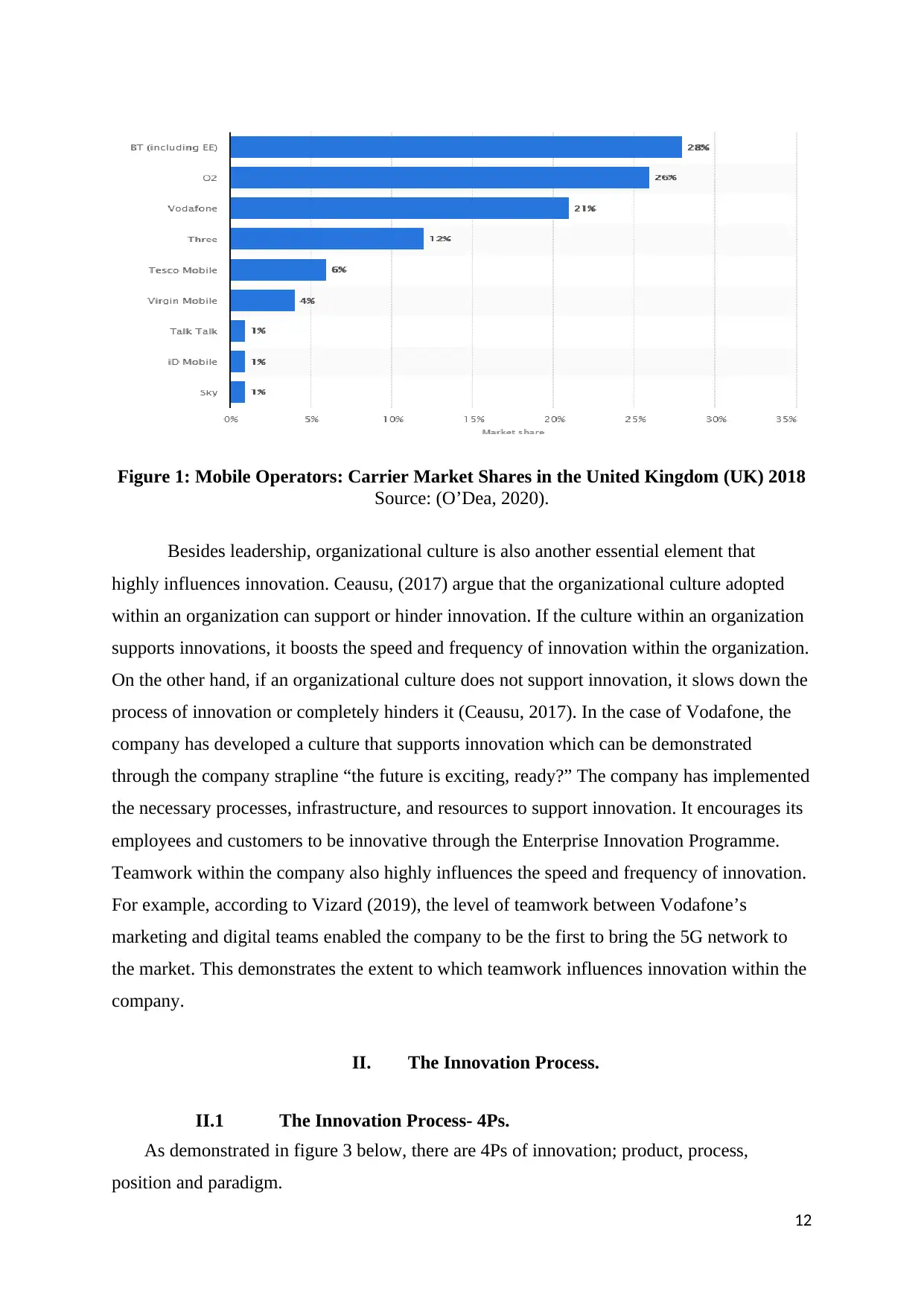
Figure 1: Mobile Operators: Carrier Market Shares in the United Kingdom (UK) 2018
Source: (O’Dea, 2020).
Besides leadership, organizational culture is also another essential element that
highly influences innovation. Ceausu, (2017) argue that the organizational culture adopted
within an organization can support or hinder innovation. If the culture within an organization
supports innovations, it boosts the speed and frequency of innovation within the organization.
On the other hand, if an organizational culture does not support innovation, it slows down the
process of innovation or completely hinders it (Ceausu, 2017). In the case of Vodafone, the
company has developed a culture that supports innovation which can be demonstrated
through the company strapline “the future is exciting, ready?” The company has implemented
the necessary processes, infrastructure, and resources to support innovation. It encourages its
employees and customers to be innovative through the Enterprise Innovation Programme.
Teamwork within the company also highly influences the speed and frequency of innovation.
For example, according to Vizard (2019), the level of teamwork between Vodafone’s
marketing and digital teams enabled the company to be the first to bring the 5G network to
the market. This demonstrates the extent to which teamwork influences innovation within the
company.
II. The Innovation Process.
II.1 The Innovation Process- 4Ps.
As demonstrated in figure 3 below, there are 4Ps of innovation; product, process,
position and paradigm.
12
Source: (O’Dea, 2020).
Besides leadership, organizational culture is also another essential element that
highly influences innovation. Ceausu, (2017) argue that the organizational culture adopted
within an organization can support or hinder innovation. If the culture within an organization
supports innovations, it boosts the speed and frequency of innovation within the organization.
On the other hand, if an organizational culture does not support innovation, it slows down the
process of innovation or completely hinders it (Ceausu, 2017). In the case of Vodafone, the
company has developed a culture that supports innovation which can be demonstrated
through the company strapline “the future is exciting, ready?” The company has implemented
the necessary processes, infrastructure, and resources to support innovation. It encourages its
employees and customers to be innovative through the Enterprise Innovation Programme.
Teamwork within the company also highly influences the speed and frequency of innovation.
For example, according to Vizard (2019), the level of teamwork between Vodafone’s
marketing and digital teams enabled the company to be the first to bring the 5G network to
the market. This demonstrates the extent to which teamwork influences innovation within the
company.
II. The Innovation Process.
II.1 The Innovation Process- 4Ps.
As demonstrated in figure 3 below, there are 4Ps of innovation; product, process,
position and paradigm.
12
⊘ This is a preview!⊘
Do you want full access?
Subscribe today to unlock all pages.
Trusted by 1+ million students worldwide

1 out of 25


Related Documents


Your All-in-One AI-Powered Toolkit for Academic Success.
+13062052269
info@desklib.com
Available 24*7 on WhatsApp / Email
![[object Object]](/_next/static/media/star-bottom.7253800d.svg)
Unlock your academic potential
Copyright © 2020–2026 A2Z Services. All Rights Reserved. Developed and managed by ZUCOL.