Outbound Logistics Research Plan for Warehouse Efficiency

Verified

Added on  2022/11/13

|3
|377
|96
Report
AI Summary
This research plan explores the use of outbound logistics management to enhance efficiency in warehouses, particularly within the context of increasing global competition and the need for improved distribution services. The study aims to develop a plan for implementing outbound logistics to boost warehouse efficiency, specifically in the Australian manufacturing sector. The objectives include assessing current processes in outbound logistics management and identifying challenges. The research methodology involves both primary and secondary data collection, employing qualitative and quantitative analysis to draw conclusions, provide recommendations, and acknowledge limitations. The plan outlines the activities undertaken, including topic selection, literature review, and data analysis, with a modified timeline indicating completed and pending tasks. The executive summary highlights the project's objectives, achievements, and challenges, emphasizing the goal of optimizing warehouse performance through effective outbound logistics strategies.
Document Page
Research Plan Template
Title of the Project
Student details (name, ID):_______________
Supervisor’s name:__________________________
1. Executive Summary
Due the increasing global competitions, different stakeholders and logistics companies have
embarked on improving the warehouses as well as the distribution services. This paper discussed
the use of outbound logistics management to enhance efficiency in warehouse in Australia. It has
been noted that the outbound logistics not only has the immense impacts but also equitable
advantages in the long run. The key objective described in line with this study is to develop the
plan on how use of outbound logistics management helps in enhancing efficiency in warehouse.
Also the specific objectives for this study include assessing the processes involved in the
outbound logistics management of the warehouses in manufacturing as well as to explore the
challenges affecting the outbound logistics warehousing management. The literature studies on
the research topic have help in establishing and giving the in-depth understanding of the topic
with the present state. The data collection and analysis for the study largely involved the use of
both the primary and secondary. The qualitative and quantitative evaluation helps in defining and
establishing the clear distinction as far as the study is concerned. Also, the data gathered helped
in drawing the deceive conclusion, recommendations as well as limitations of the research which
requires future appraisal.
2. Outline of activities undertaken so far
The activities for the project largely outlined as follows
Topic selection
tabler-icon-diamond-filled.svg

Paraphrase This Document

Need a fresh take? Get an instant paraphrase of this document with our AI Paraphraser
Document Page
Outlining of objective, research questions and hypothesis
Literature reviews
Research method concept
Data analysis
Discussions
Conclusion and recommendations
3. Objectives and Scope: Any changes
The aims of this research mainly discussed as follows
Main Objective
The key and main objective of the study is to develop the plan on how use of outbound logistics
management helps in enhancing efficiency in warehouse
Specific Objectives
There two specific objectives outlined for this study and they are discussed as follows
To assess the processes involved in the outbound logistics management of the warehouses in
manufacturing
To explore the challenges affecting the outbound logistics warehousing management
Document Page
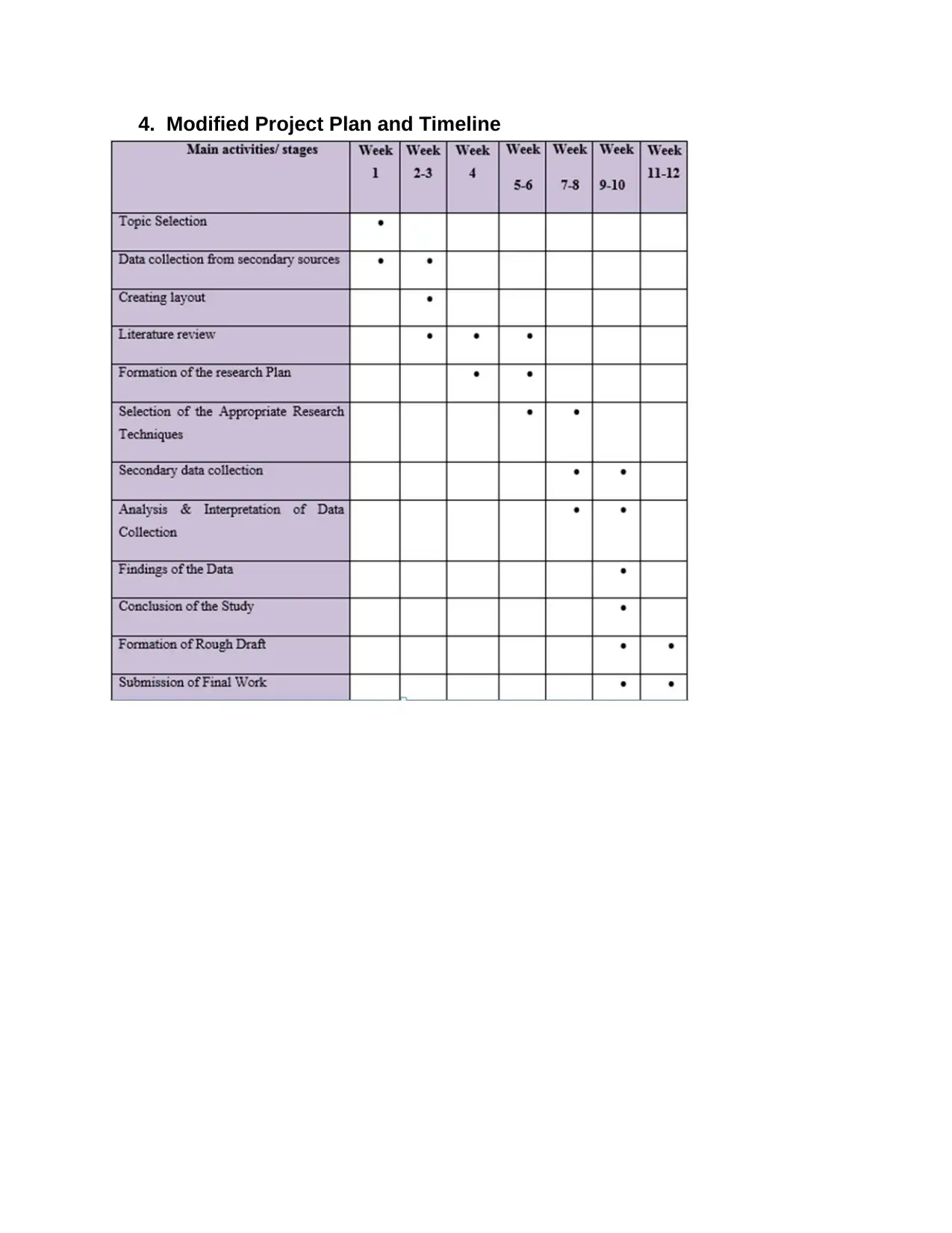
4. Modified Project Plan and Timeline
chevron_up_icon
1 out of 3
circle_padding
hide_on_mobile
zoom_out_icon
[object Object]