Odessa College: Water Cycle and Groundwater Assignment Solution

Verified

Added on  2023/01/19

|7
|854
|99
Homework Assignment
AI Summary
This assignment solution comprehensively addresses the water cycle and groundwater, covering essential aspects of environmental science. It defines key terms like evaporation, transpiration, condensation, precipitation, and runoff, while also differentiating between porosity and permeability. The solution outlines soil and water sampling procedures, including required materials, equipment, and various sampling types such as grab, composite, and grid sampling. It identifies regulatory agencies and health and safety precautions for sample collection and transportation. Furthermore, the assignment explores the impact of pollution on the water cycle, the percentage of water on Earth, and the relationship between aquifers and environmental pollution, oil and gas fracking, and groundwater. The solution also lists waterborne pathogens, their associated problems, and crucial steps in water sample collection and testing. References are provided for further study.
Document Page
GEOGRAPHY
By Name
Course
Instructor
Institution
Location
Date
tabler-icon-diamond-filled.svg

Paraphrase This Document

Need a fresh take? Get an instant paraphrase of this document with our AI Paraphraser
Document Page
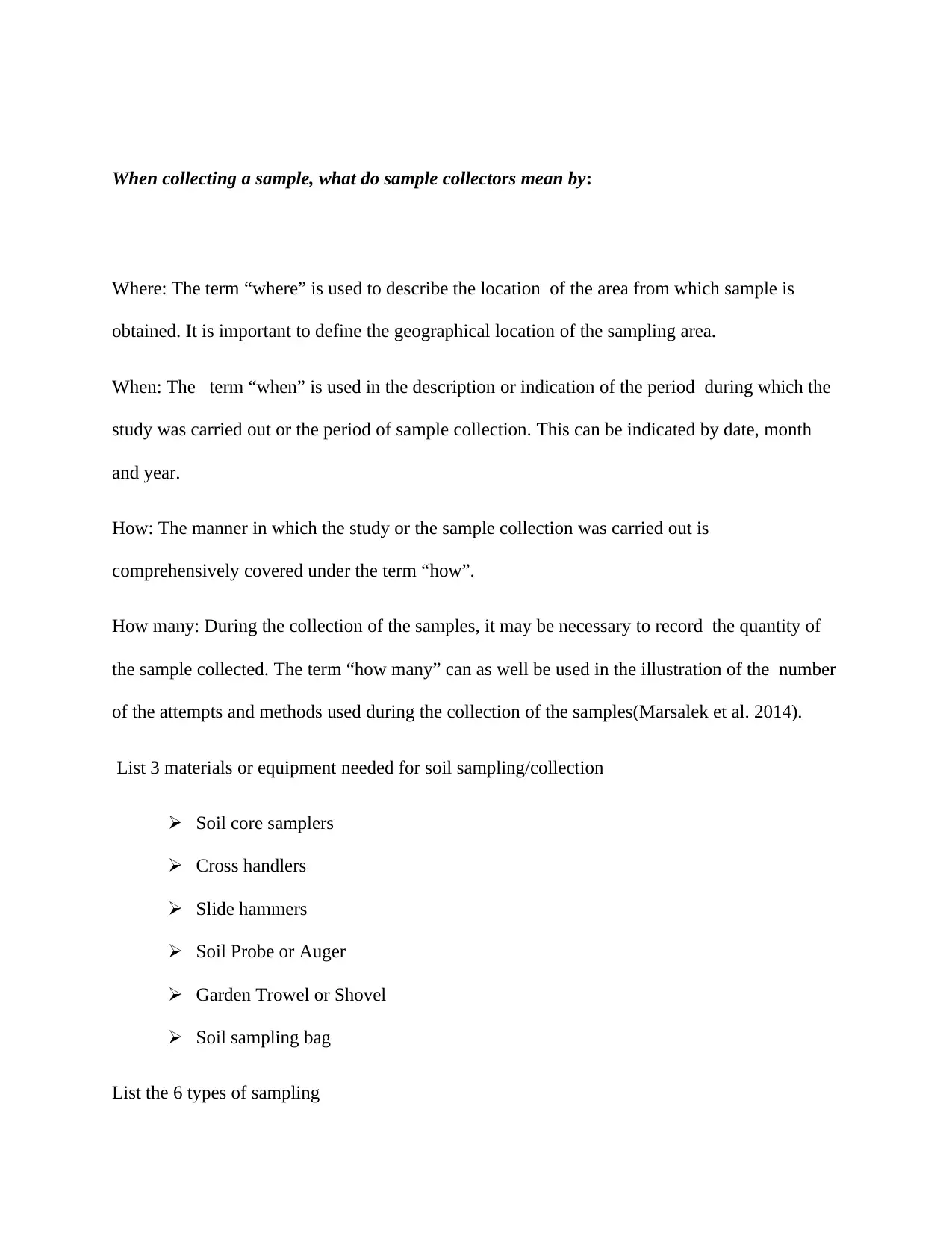
When collecting a sample, what do sample collectors mean by:
Where: The term “where” is used to describe the location of the area from which sample is
obtained. It is important to define the geographical location of the sampling area.
When: The term “when” is used in the description or indication of the period during which the
study was carried out or the period of sample collection. This can be indicated by date, month
and year.
How: The manner in which the study or the sample collection was carried out is
comprehensively covered under the term “how”.
How many: During the collection of the samples, it may be necessary to record the quantity of
the sample collected. The term “how many” can as well be used in the illustration of the number
of the attempts and methods used during the collection of the samples(Marsalek et al. 2014).
List 3 materials or equipment needed for soil sampling/collection
Soil core samplers
Cross handlers
Slide hammers
Soil Probe or Auger
Garden Trowel or Shovel
Soil sampling bag
List the 6 types of sampling
Document Page
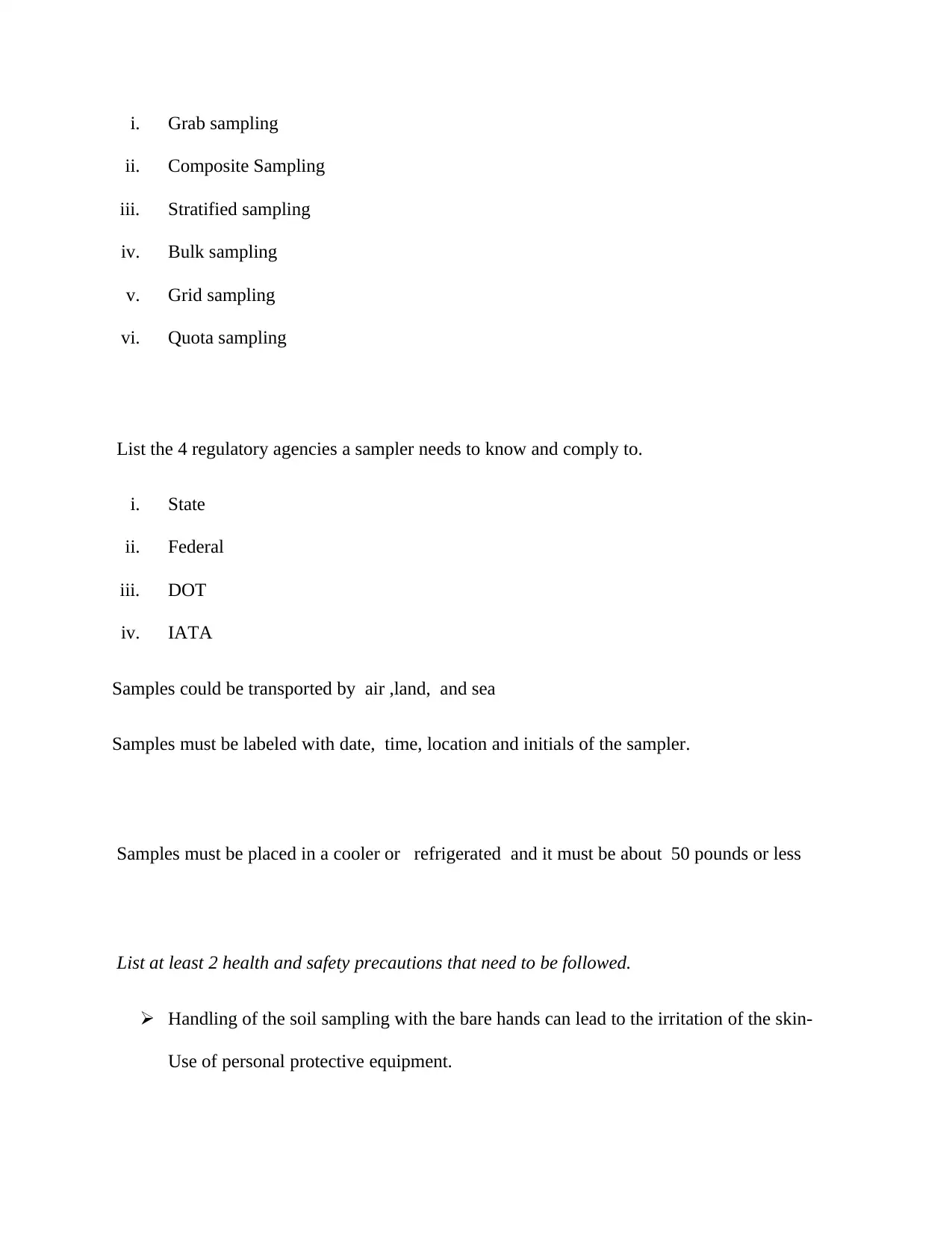
i. Grab sampling
ii. Composite Sampling
iii. Stratified sampling
iv. Bulk sampling
v. Grid sampling
vi. Quota sampling
List the 4 regulatory agencies a sampler needs to know and comply to.
i. State
ii. Federal
iii. DOT
iv. IATA
Samples could be transported by air ,land, and sea
Samples must be labeled with date, time, location and initials of the sampler.
Samples must be placed in a cooler or refrigerated and it must be about 50 pounds or less
List at least 2 health and safety precautions that need to be followed.
Handling of the soil sampling with the bare hands can lead to the irritation of the skin-
Use of personal protective equipment.
Document Page
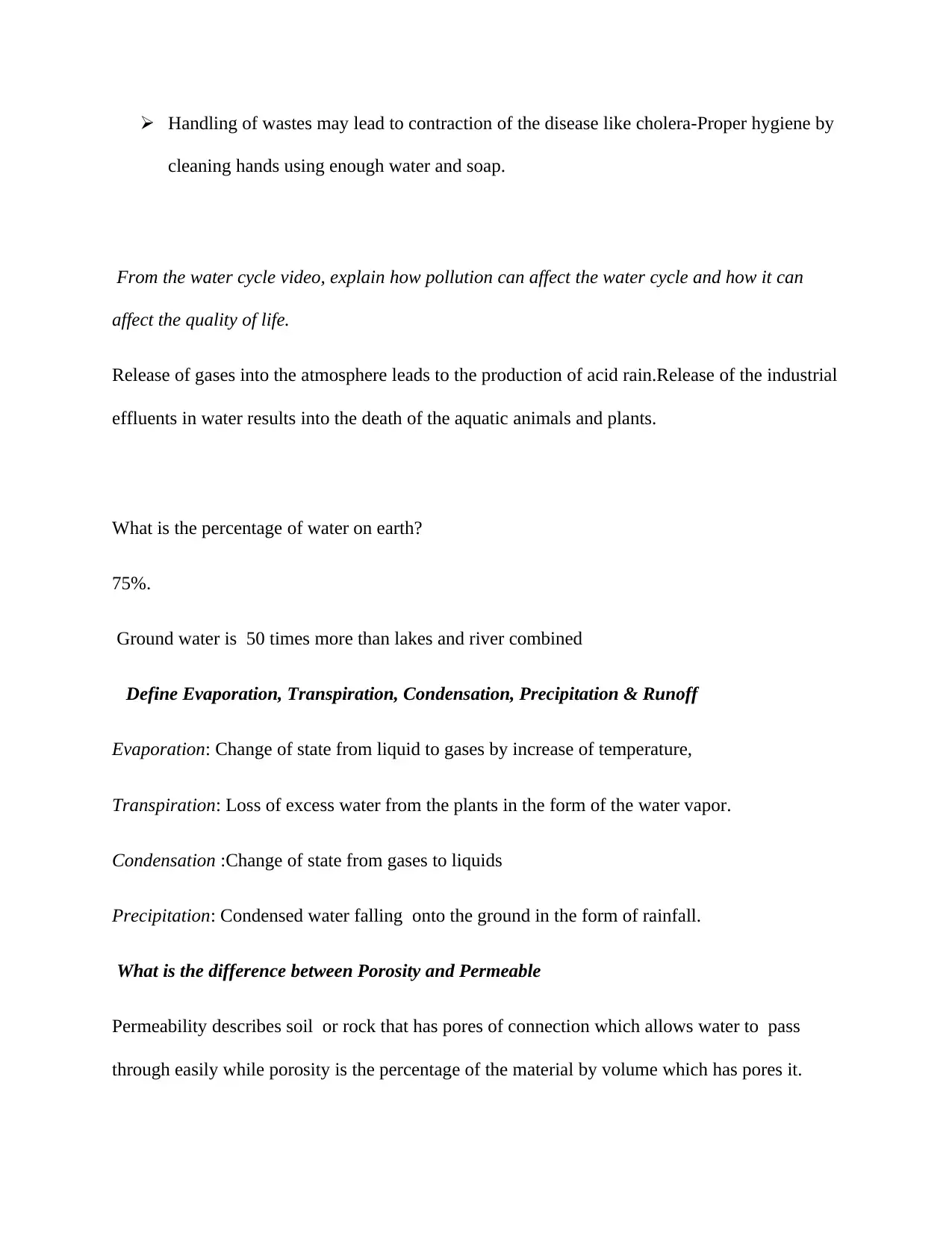
Handling of wastes may lead to contraction of the disease like cholera-Proper hygiene by
cleaning hands using enough water and soap.
From the water cycle video, explain how pollution can affect the water cycle and how it can
affect the quality of life.
Release of gases into the atmosphere leads to the production of acid rain.Release of the industrial
effluents in water results into the death of the aquatic animals and plants.
What is the percentage of water on earth?
75%.
Ground water is 50 times more than lakes and river combined
Define Evaporation, Transpiration, Condensation, Precipitation & Runoff
Evaporation: Change of state from liquid to gases by increase of temperature,
Transpiration: Loss of excess water from the plants in the form of the water vapor.
Condensation :Change of state from gases to liquids
Precipitation: Condensed water falling onto the ground in the form of rainfall.
What is the difference between Porosity and Permeable
Permeability describes soil or rock that has pores of connection which allows water to pass
through easily while porosity is the percentage of the material by volume which has pores it.
tabler-icon-diamond-filled.svg

Paraphrase This Document

Need a fresh take? Get an instant paraphrase of this document with our AI Paraphraser
Document Page
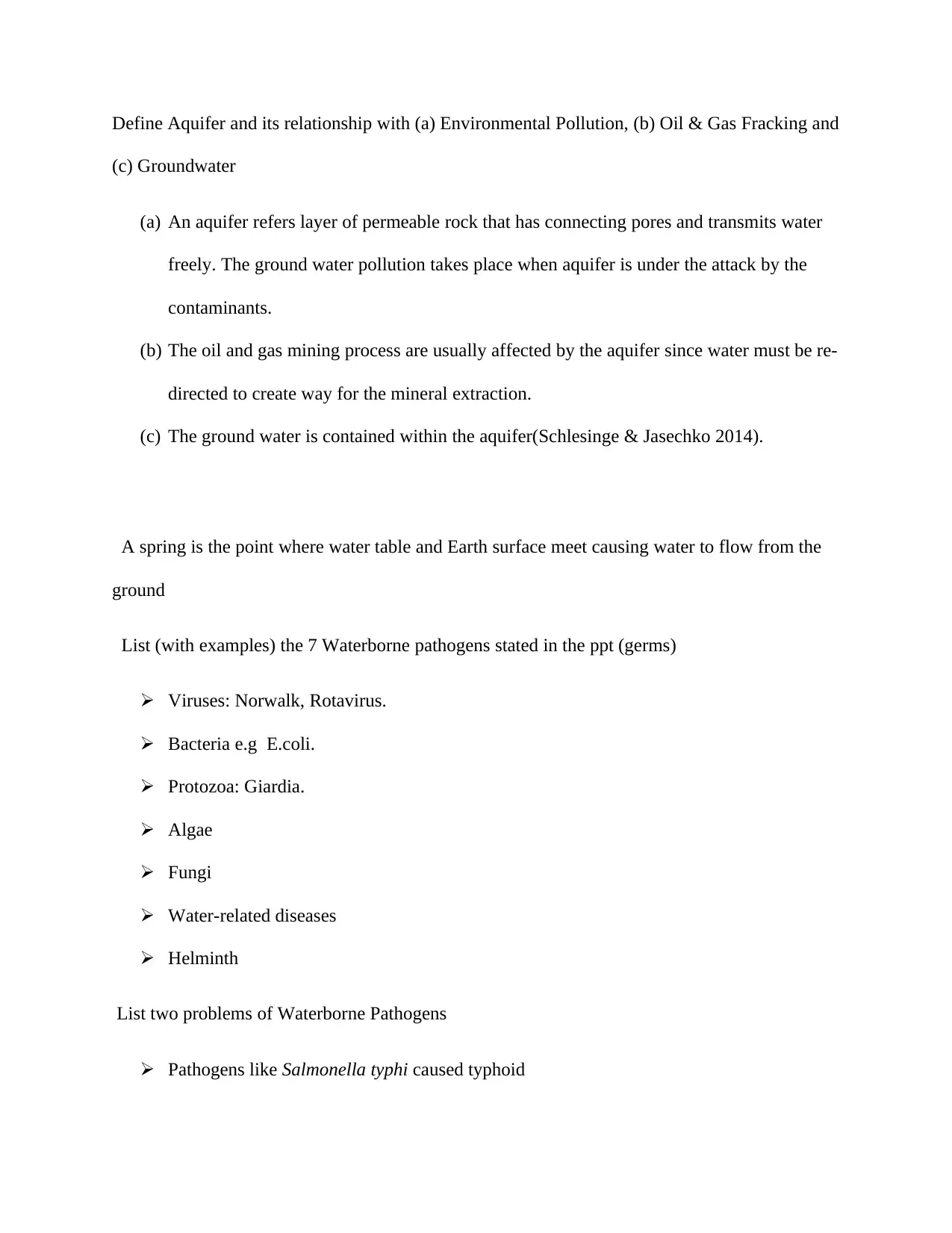
Define Aquifer and its relationship with (a) Environmental Pollution, (b) Oil & Gas Fracking and
(c) Groundwater
(a) An aquifer refers layer of permeable rock that has connecting pores and transmits water
freely. The ground water pollution takes place when aquifer is under the attack by the
contaminants.
(b) The oil and gas mining process are usually affected by the aquifer since water must be re-
directed to create way for the mineral extraction.
(c) The ground water is contained within the aquifer(Schlesinge & Jasechko 2014).
A spring is the point where water table and Earth surface meet causing water to flow from the
ground
List (with examples) the 7 Waterborne pathogens stated in the ppt (germs)
Viruses: Norwalk, Rotavirus.
Bacteria e.g E.coli.
Protozoa: Giardia.
Algae
Fungi
Water-related diseases
Helminth
List two problems of Waterborne Pathogens
Pathogens like Salmonella typhi caused typhoid
Document Page
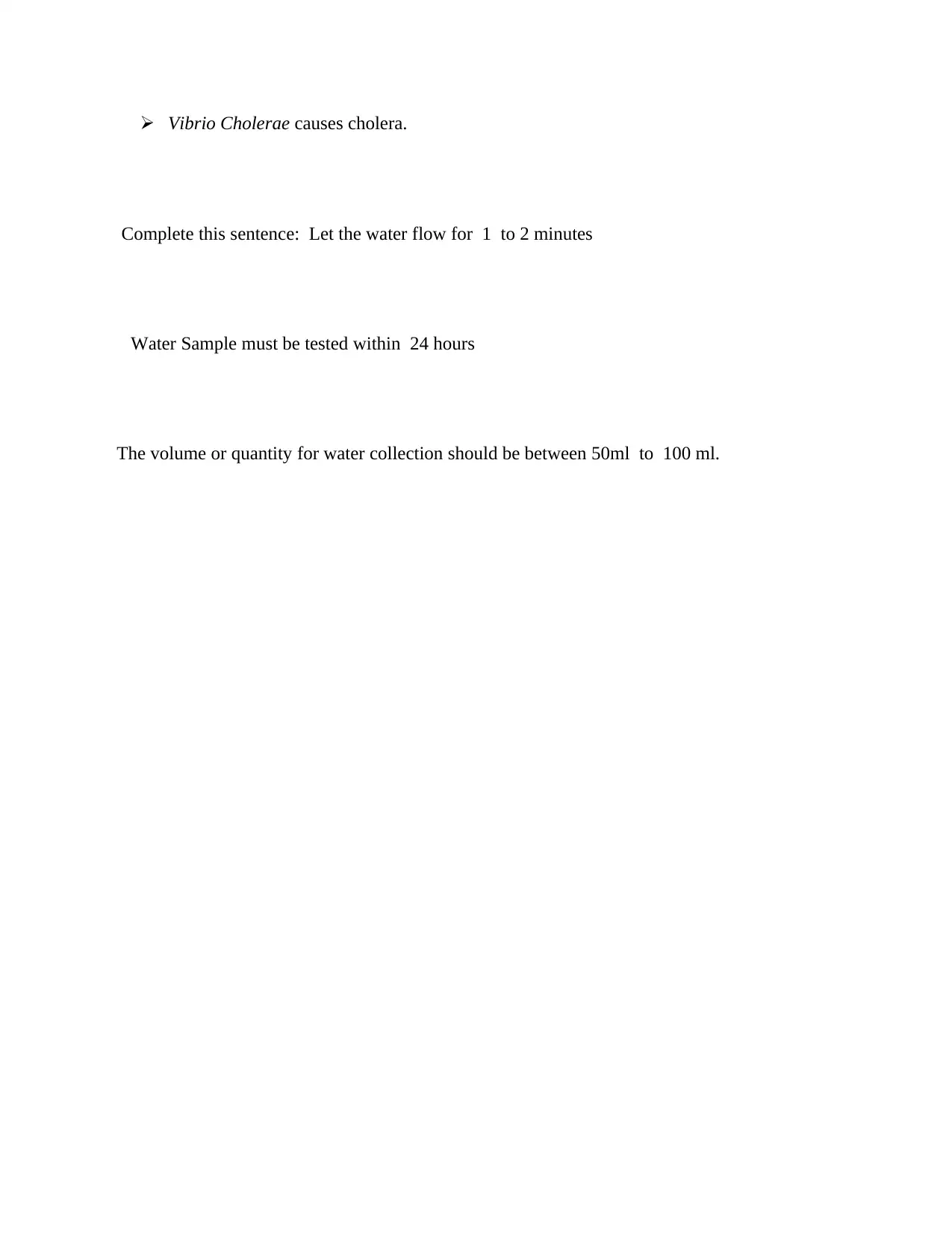
Vibrio Cholerae causes cholera.
Complete this sentence: Let the water flow for 1 to 2 minutes
Water Sample must be tested within 24 hours
The volume or quantity for water collection should be between 50ml to 100 ml.
Document Page
References
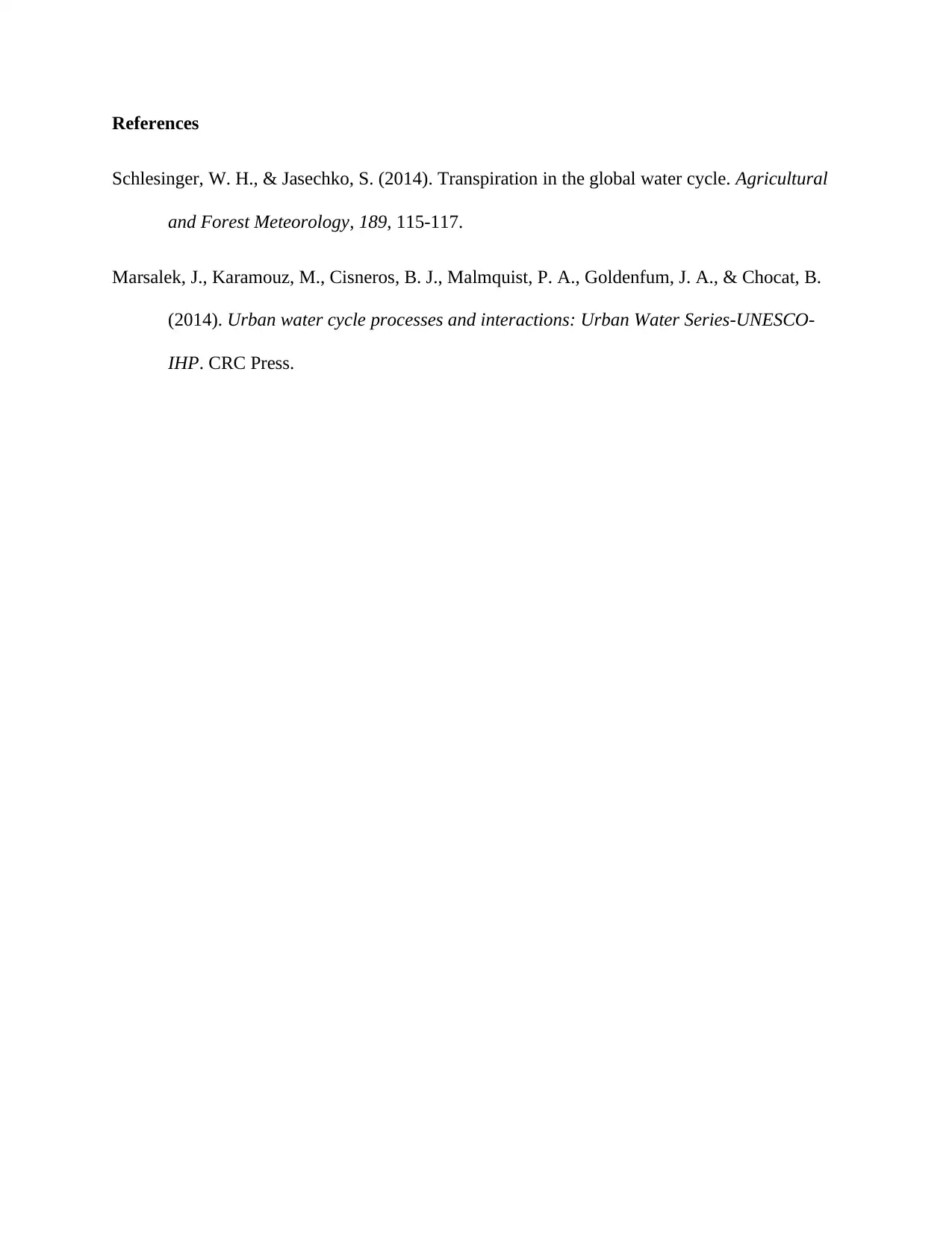
Schlesinger, W. H., & Jasechko, S. (2014). Transpiration in the global water cycle. Agricultural
and Forest Meteorology, 189, 115-117.
Marsalek, J., Karamouz, M., Cisneros, B. J., Malmquist, P. A., Goldenfum, J. A., & Chocat, B.
(2014). Urban water cycle processes and interactions: Urban Water Series-UNESCO-
IHP. CRC Press.
chevron_up_icon
1 out of 7
circle_padding
hide_on_mobile
zoom_out_icon
[object Object]