Wesfarmers PLC - International Business Analysis Report, Singapore
VerifiedAdded on 2023/06/10
|30
|4543
|488
Report
AI Summary
This report analyzes Wesfarmers PLC's potential for international expansion, focusing on the Singapore market for clothing retail. It begins with an executive summary and table of contents, then provides a company description and justification for selecting Singapore. A situational analysis includes market, environmental (PESTEL), and demographic factors, along with demand assessment and industry cost/competitive structures. A SWOT analysis highlights internal strengths/weaknesses and external opportunities/threats, leading to defined objectives, including international and market goals. The report proposes a marketing strategy with target market identification, segmentation, and positioning, along with a market entry strategy and detailed marketing mix tactics. Financial planning includes sales forecasts, profitability analysis, and implementation/control mechanisms like a project plan and contingency plans.
Wesfarmer Plc
Business Management analysis
International Business analysis
University Name-
Student Id-
Business Management analysis
International Business analysis
University Name-
Student Id-

Paraphrase This Document
Need a fresh take? Get an instant paraphrase of this document with our AI Paraphraser
Executive Summary
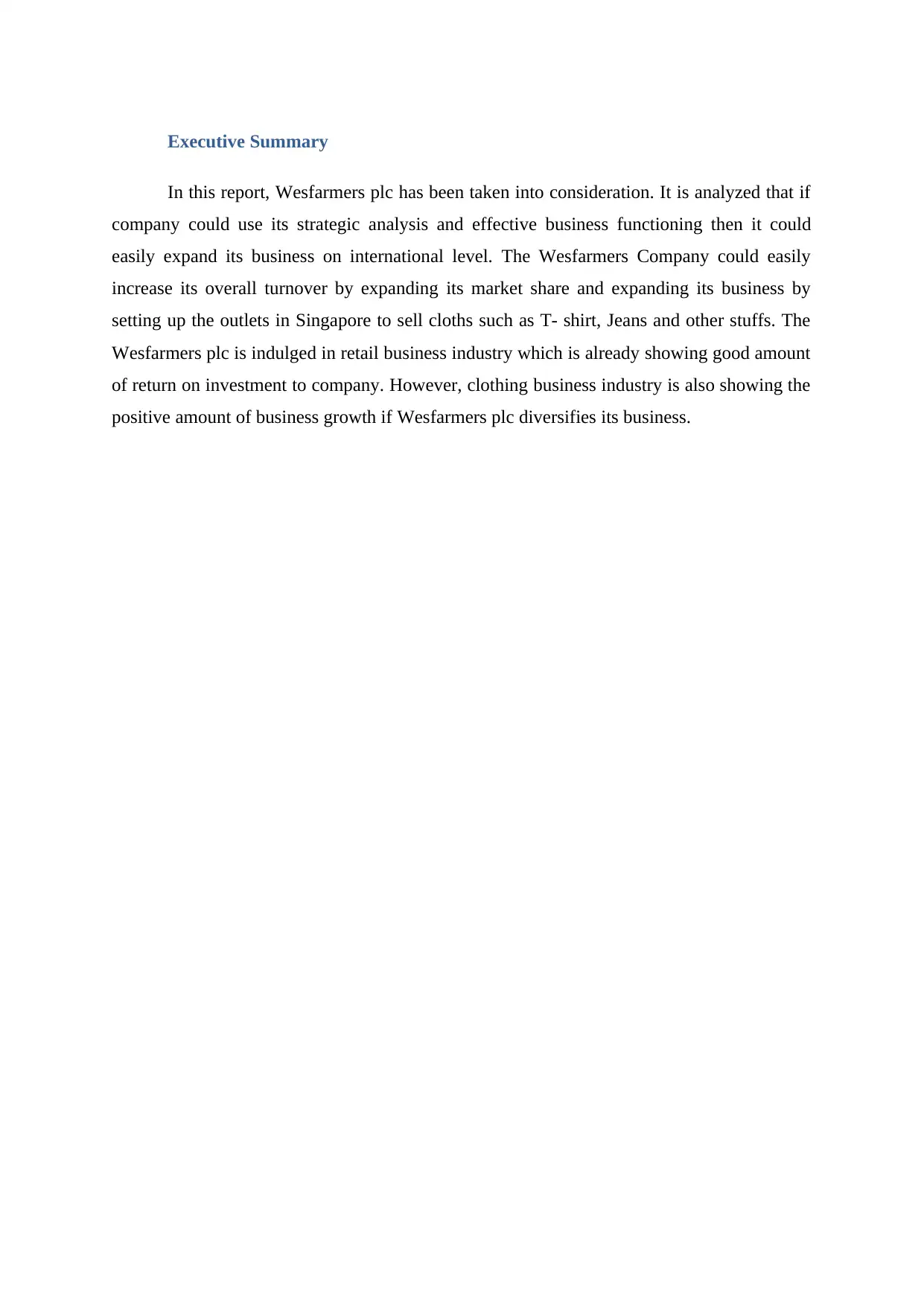
In this report, Wesfarmers plc has been taken into consideration. It is analyzed that if
company could use its strategic analysis and effective business functioning then it could
easily expand its business on international level. The Wesfarmers Company could easily
increase its overall turnover by expanding its market share and expanding its business by
setting up the outlets in Singapore to sell cloths such as T- shirt, Jeans and other stuffs. The
Wesfarmers plc is indulged in retail business industry which is already showing good amount
of return on investment to company. However, clothing business industry is also showing the
positive amount of business growth if Wesfarmers plc diversifies its business.
In this report, Wesfarmers plc has been taken into consideration. It is analyzed that if
company could use its strategic analysis and effective business functioning then it could
easily expand its business on international level. The Wesfarmers Company could easily
increase its overall turnover by expanding its market share and expanding its business by
setting up the outlets in Singapore to sell cloths such as T- shirt, Jeans and other stuffs. The
Wesfarmers plc is indulged in retail business industry which is already showing good amount
of return on investment to company. However, clothing business industry is also showing the
positive amount of business growth if Wesfarmers plc diversifies its business.
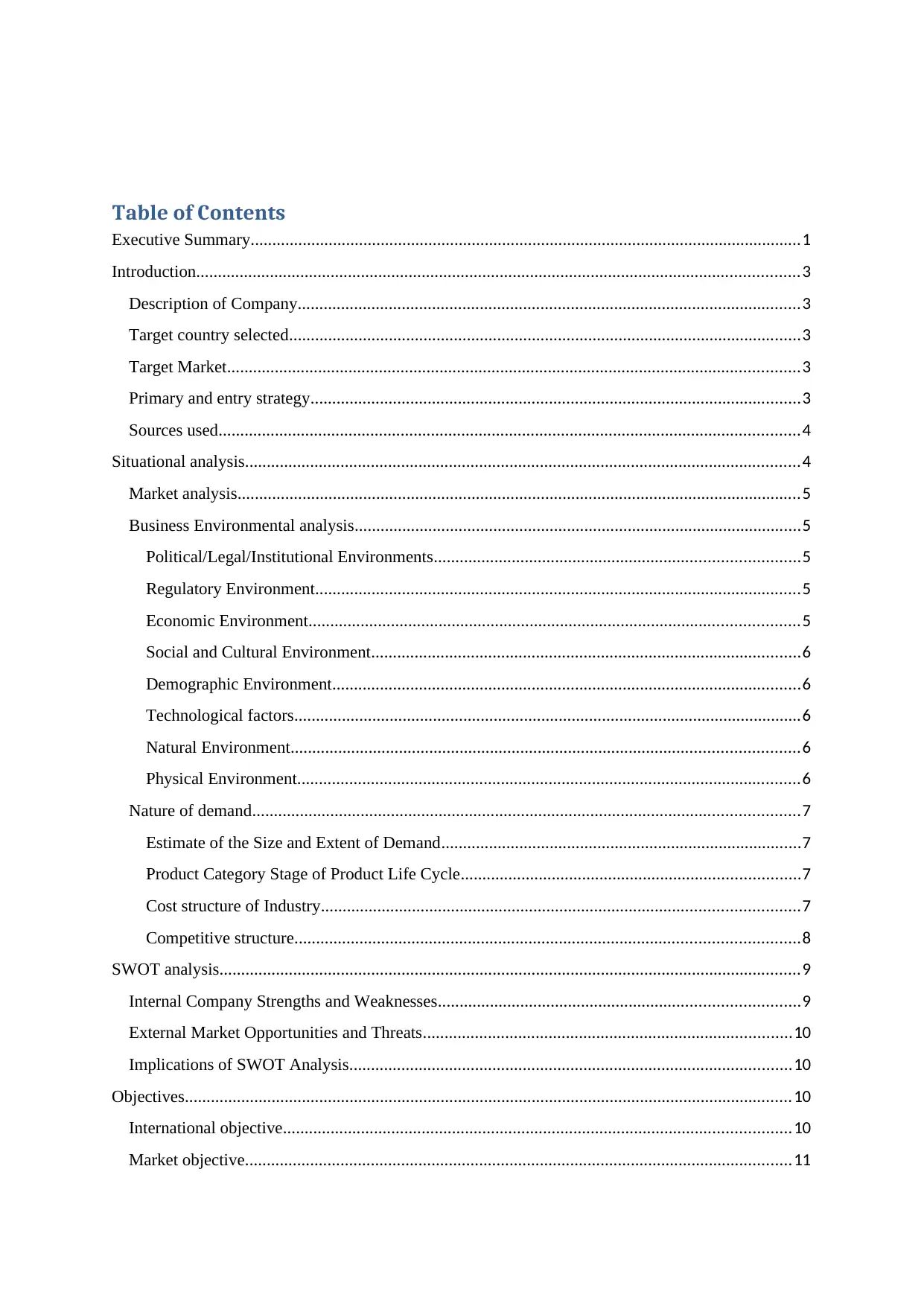
Table of Contents
Executive Summary...............................................................................................................................1
Introduction...........................................................................................................................................3
Description of Company....................................................................................................................3
Target country selected......................................................................................................................3
Target Market....................................................................................................................................3
Primary and entry strategy.................................................................................................................3
Sources used......................................................................................................................................4
Situational analysis................................................................................................................................4
Market analysis..................................................................................................................................5
Business Environmental analysis.......................................................................................................5
Political/Legal/Institutional Environments....................................................................................5
Regulatory Environment................................................................................................................5
Economic Environment.................................................................................................................5
Social and Cultural Environment...................................................................................................6
Demographic Environment............................................................................................................6
Technological factors.....................................................................................................................6
Natural Environment.....................................................................................................................6
Physical Environment....................................................................................................................6
Nature of demand..............................................................................................................................7
Estimate of the Size and Extent of Demand...................................................................................7
Product Category Stage of Product Life Cycle..............................................................................7
Cost structure of Industry..............................................................................................................7
Competitive structure....................................................................................................................8
SWOT analysis......................................................................................................................................9
Internal Company Strengths and Weaknesses...................................................................................9
External Market Opportunities and Threats.....................................................................................10
Implications of SWOT Analysis......................................................................................................10
Objectives............................................................................................................................................10
International objective.....................................................................................................................10
Market objective..............................................................................................................................11
Executive Summary...............................................................................................................................1
Introduction...........................................................................................................................................3
Description of Company....................................................................................................................3
Target country selected......................................................................................................................3
Target Market....................................................................................................................................3
Primary and entry strategy.................................................................................................................3
Sources used......................................................................................................................................4
Situational analysis................................................................................................................................4
Market analysis..................................................................................................................................5
Business Environmental analysis.......................................................................................................5
Political/Legal/Institutional Environments....................................................................................5
Regulatory Environment................................................................................................................5
Economic Environment.................................................................................................................5
Social and Cultural Environment...................................................................................................6
Demographic Environment............................................................................................................6
Technological factors.....................................................................................................................6
Natural Environment.....................................................................................................................6
Physical Environment....................................................................................................................6
Nature of demand..............................................................................................................................7
Estimate of the Size and Extent of Demand...................................................................................7
Product Category Stage of Product Life Cycle..............................................................................7
Cost structure of Industry..............................................................................................................7
Competitive structure....................................................................................................................8
SWOT analysis......................................................................................................................................9
Internal Company Strengths and Weaknesses...................................................................................9
External Market Opportunities and Threats.....................................................................................10
Implications of SWOT Analysis......................................................................................................10
Objectives............................................................................................................................................10
International objective.....................................................................................................................10
Market objective..............................................................................................................................11
⊘ This is a preview!⊘
Do you want full access?
Subscribe today to unlock all pages.

Trusted by 1+ million students worldwide
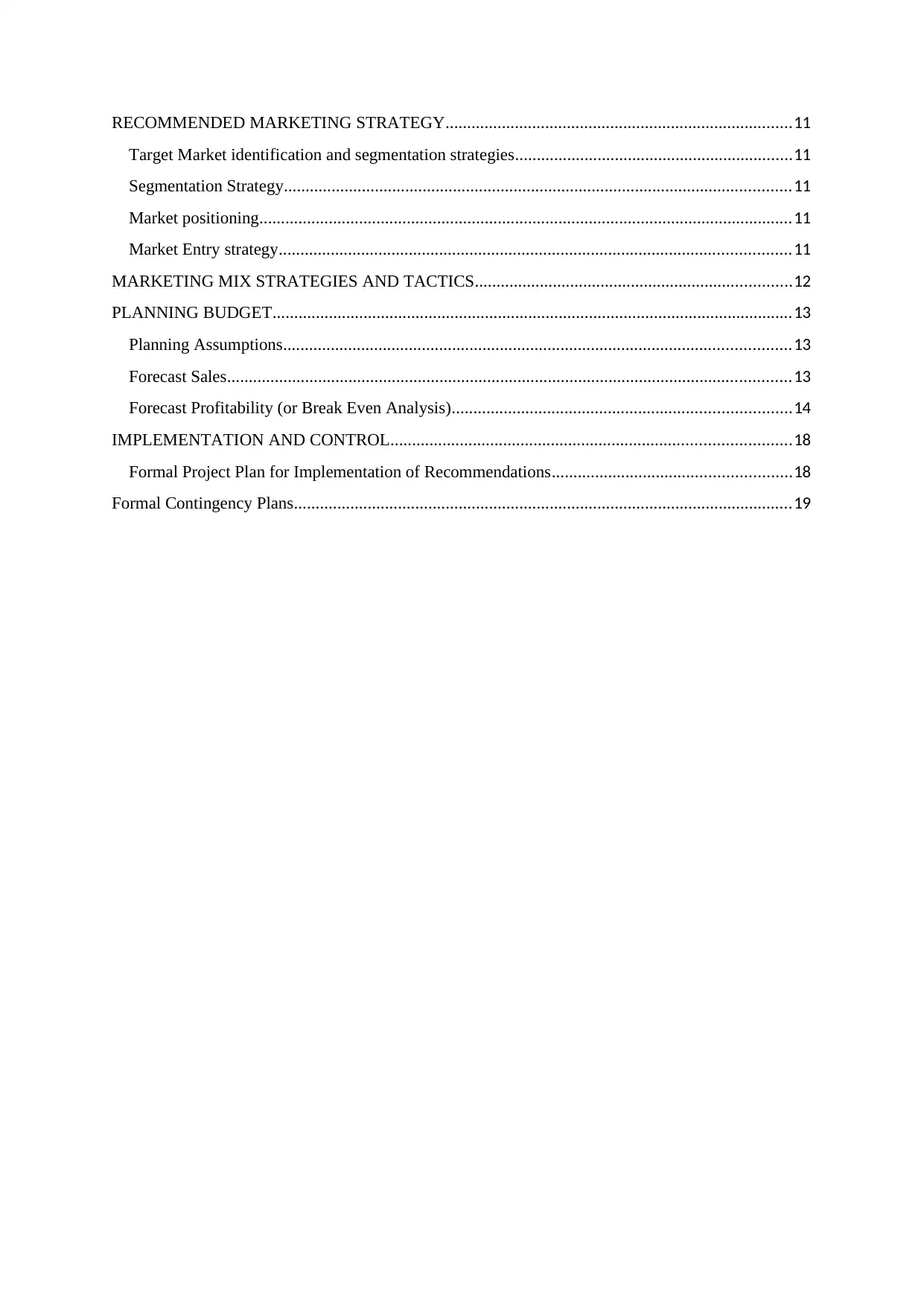
RECOMMENDED MARKETING STRATEGY................................................................................11
Target Market identification and segmentation strategies................................................................11
Segmentation Strategy.....................................................................................................................11
Market positioning...........................................................................................................................11
Market Entry strategy......................................................................................................................11
MARKETING MIX STRATEGIES AND TACTICS.........................................................................12
PLANNING BUDGET........................................................................................................................13
Planning Assumptions.....................................................................................................................13
Forecast Sales..................................................................................................................................13
Forecast Profitability (or Break Even Analysis)..............................................................................14
IMPLEMENTATION AND CONTROL............................................................................................18
Formal Project Plan for Implementation of Recommendations.......................................................18
Formal Contingency Plans...................................................................................................................19
Target Market identification and segmentation strategies................................................................11
Segmentation Strategy.....................................................................................................................11
Market positioning...........................................................................................................................11
Market Entry strategy......................................................................................................................11
MARKETING MIX STRATEGIES AND TACTICS.........................................................................12
PLANNING BUDGET........................................................................................................................13
Planning Assumptions.....................................................................................................................13
Forecast Sales..................................................................................................................................13
Forecast Profitability (or Break Even Analysis)..............................................................................14
IMPLEMENTATION AND CONTROL............................................................................................18
Formal Project Plan for Implementation of Recommendations.......................................................18
Formal Contingency Plans...................................................................................................................19
Paraphrase This Document
Need a fresh take? Get an instant paraphrase of this document with our AI Paraphraser
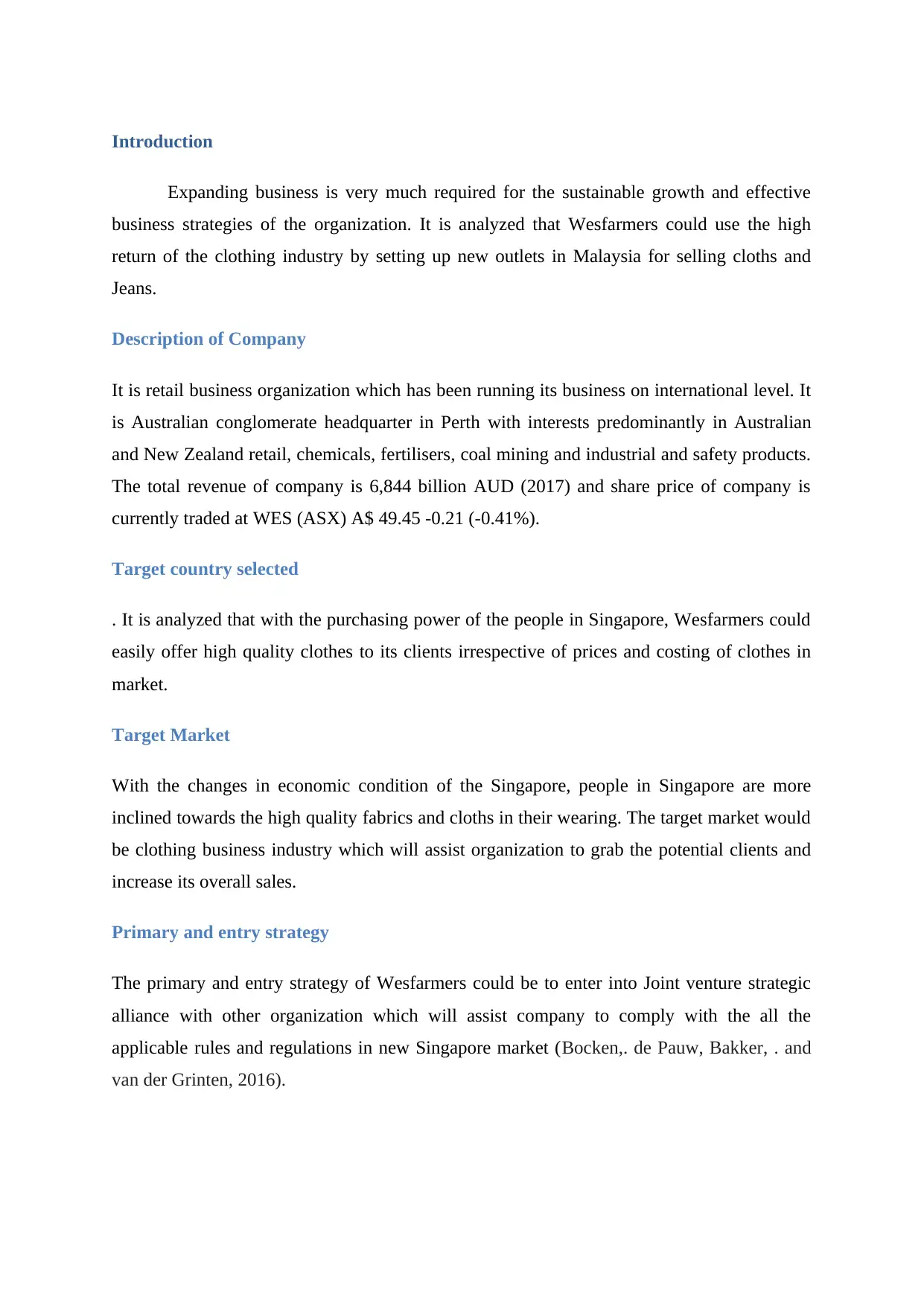
Introduction
Expanding business is very much required for the sustainable growth and effective
business strategies of the organization. It is analyzed that Wesfarmers could use the high
return of the clothing industry by setting up new outlets in Malaysia for selling cloths and
Jeans.
Description of Company
It is retail business organization which has been running its business on international level. It
is Australian conglomerate headquarter in Perth with interests predominantly in Australian
and New Zealand retail, chemicals, fertilisers, coal mining and industrial and safety products.
The total revenue of company is 6,844 billion AUD (2017) and share price of company is
currently traded at WES (ASX) A$ 49.45 -0.21 (-0.41%).
Target country selected
. It is analyzed that with the purchasing power of the people in Singapore, Wesfarmers could
easily offer high quality clothes to its clients irrespective of prices and costing of clothes in
market.
Target Market
With the changes in economic condition of the Singapore, people in Singapore are more
inclined towards the high quality fabrics and cloths in their wearing. The target market would
be clothing business industry which will assist organization to grab the potential clients and
increase its overall sales.
Primary and entry strategy
The primary and entry strategy of Wesfarmers could be to enter into Joint venture strategic
alliance with other organization which will assist company to comply with the all the
applicable rules and regulations in new Singapore market (Bocken,. de Pauw, Bakker, . and
van der Grinten, 2016).
Expanding business is very much required for the sustainable growth and effective
business strategies of the organization. It is analyzed that Wesfarmers could use the high
return of the clothing industry by setting up new outlets in Malaysia for selling cloths and
Jeans.
Description of Company
It is retail business organization which has been running its business on international level. It
is Australian conglomerate headquarter in Perth with interests predominantly in Australian
and New Zealand retail, chemicals, fertilisers, coal mining and industrial and safety products.
The total revenue of company is 6,844 billion AUD (2017) and share price of company is
currently traded at WES (ASX) A$ 49.45 -0.21 (-0.41%).
Target country selected
. It is analyzed that with the purchasing power of the people in Singapore, Wesfarmers could
easily offer high quality clothes to its clients irrespective of prices and costing of clothes in
market.
Target Market
With the changes in economic condition of the Singapore, people in Singapore are more
inclined towards the high quality fabrics and cloths in their wearing. The target market would
be clothing business industry which will assist organization to grab the potential clients and
increase its overall sales.
Primary and entry strategy
The primary and entry strategy of Wesfarmers could be to enter into Joint venture strategic
alliance with other organization which will assist company to comply with the all the
applicable rules and regulations in new Singapore market (Bocken,. de Pauw, Bakker, . and
van der Grinten, 2016).
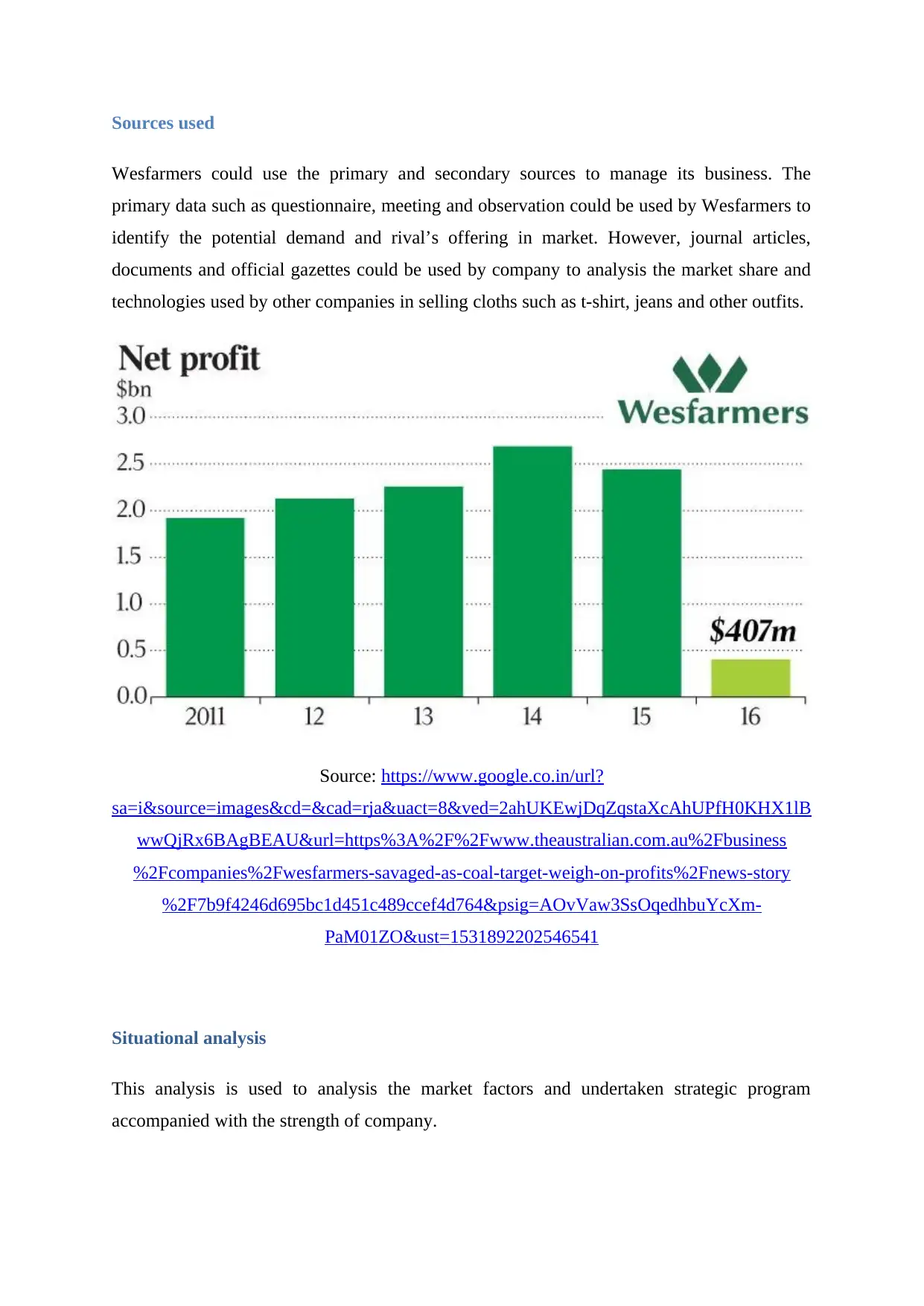
Sources used
Wesfarmers could use the primary and secondary sources to manage its business. The
primary data such as questionnaire, meeting and observation could be used by Wesfarmers to
identify the potential demand and rival’s offering in market. However, journal articles,
documents and official gazettes could be used by company to analysis the market share and
technologies used by other companies in selling cloths such as t-shirt, jeans and other outfits.
Source: https://www.google.co.in/url?
sa=i&source=images&cd=&cad=rja&uact=8&ved=2ahUKEwjDqZqstaXcAhUPfH0KHX1lB
wwQjRx6BAgBEAU&url=https%3A%2F%2Fwww.theaustralian.com.au%2Fbusiness
%2Fcompanies%2Fwesfarmers-savaged-as-coal-target-weigh-on-profits%2Fnews-story
%2F7b9f4246d695bc1d451c489ccef4d764&psig=AOvVaw3SsOqedhbuYcXm-
PaM01ZO&ust=1531892202546541
Situational analysis
This analysis is used to analysis the market factors and undertaken strategic program
accompanied with the strength of company.
Wesfarmers could use the primary and secondary sources to manage its business. The
primary data such as questionnaire, meeting and observation could be used by Wesfarmers to
identify the potential demand and rival’s offering in market. However, journal articles,
documents and official gazettes could be used by company to analysis the market share and
technologies used by other companies in selling cloths such as t-shirt, jeans and other outfits.
Source: https://www.google.co.in/url?
sa=i&source=images&cd=&cad=rja&uact=8&ved=2ahUKEwjDqZqstaXcAhUPfH0KHX1lB
wwQjRx6BAgBEAU&url=https%3A%2F%2Fwww.theaustralian.com.au%2Fbusiness
%2Fcompanies%2Fwesfarmers-savaged-as-coal-target-weigh-on-profits%2Fnews-story
%2F7b9f4246d695bc1d451c489ccef4d764&psig=AOvVaw3SsOqedhbuYcXm-
PaM01ZO&ust=1531892202546541
Situational analysis
This analysis is used to analysis the market factors and undertaken strategic program
accompanied with the strength of company.
⊘ This is a preview!⊘
Do you want full access?
Subscribe today to unlock all pages.
Trusted by 1+ million students worldwide
Market analysis
Host country analysis
The selected market for Wesfarmers is Singapore which is tapped by Wesfarmers to sell its
own brands T-shirt, Jeans and shirts to the people in Singapore through its outlets. In
Singapore, textile and apparel industry comprises 4,818 establishments in which 4212 are the
wholesalers and 606 are the retail sellers who sell the branded cloths such as T-shirt, Jeans
and Shirt.
Brief History- People in Singapore are more inclined towards the high quality fabrics and
cloths in their wearing and less worry for the cost and price charged for the same
Cultural analysis- People in Singapore are interested to buy only classy, trendy and quality
cloths which are made of good quality stuffs. It shows that people in Singapore never
compromise with the quality of the fabrics used in cloths irrespective of the charges.
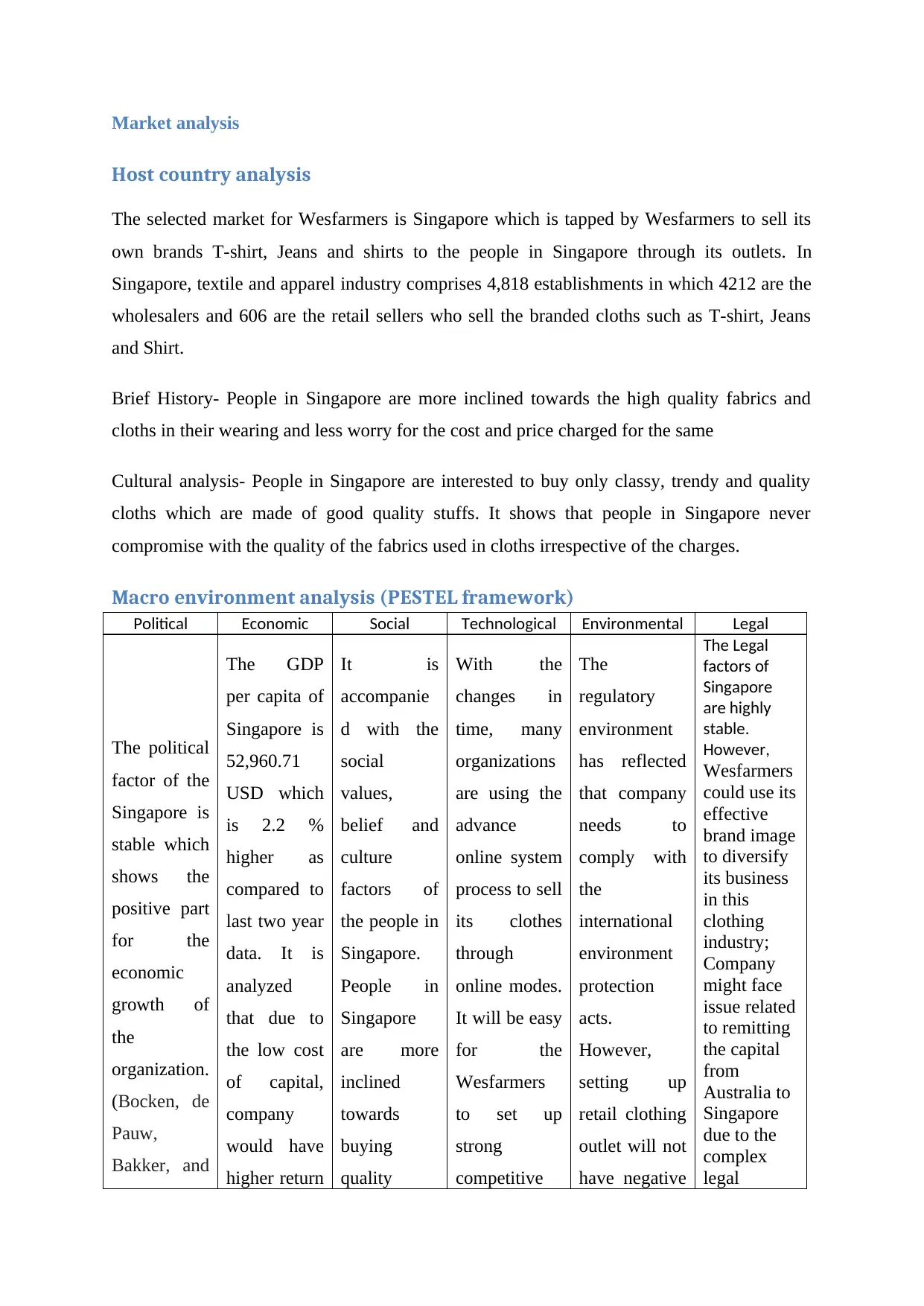
Macro environment analysis (PESTEL framework)
Political Economic Social Technological Environmental Legal
The political
factor of the
Singapore is
stable which
shows the
positive part
for the
economic
growth of
the
organization.
(Bocken, de
Pauw,
Bakker, and
The GDP
per capita of
Singapore is
52,960.71
USD which
is 2.2 %
higher as
compared to
last two year
data. It is
analyzed
that due to
the low cost
of capital,
company
would have
higher return
It is
accompanie
d with the
social
values,
belief and
culture
factors of
the people in
Singapore.
People in
Singapore
are more
inclined
towards
buying
quality
With the
changes in
time, many
organizations
are using the
advance
online system
process to sell
its clothes
through
online modes.
It will be easy
for the
Wesfarmers
to set up
strong
competitive
The
regulatory
environment
has reflected
that company
needs to
comply with
the
international
environment
protection
acts.
However,
setting up
retail clothing
outlet will not
have negative
The Legal
factors of
Singapore
are highly
stable.
However,
Wesfarmers
could use its
effective
brand image
to diversify
its business
in this
clothing
industry;
Company
might face
issue related
to remitting
the capital
from
Australia to
Singapore
due to the
complex
legal
Host country analysis
The selected market for Wesfarmers is Singapore which is tapped by Wesfarmers to sell its
own brands T-shirt, Jeans and shirts to the people in Singapore through its outlets. In
Singapore, textile and apparel industry comprises 4,818 establishments in which 4212 are the
wholesalers and 606 are the retail sellers who sell the branded cloths such as T-shirt, Jeans
and Shirt.
Brief History- People in Singapore are more inclined towards the high quality fabrics and
cloths in their wearing and less worry for the cost and price charged for the same
Cultural analysis- People in Singapore are interested to buy only classy, trendy and quality
cloths which are made of good quality stuffs. It shows that people in Singapore never
compromise with the quality of the fabrics used in cloths irrespective of the charges.
Macro environment analysis (PESTEL framework)
Political Economic Social Technological Environmental Legal
The political
factor of the
Singapore is
stable which
shows the
positive part
for the
economic
growth of
the
organization.
(Bocken, de
Pauw,
Bakker, and
The GDP
per capita of
Singapore is
52,960.71
USD which
is 2.2 %
higher as
compared to
last two year
data. It is
analyzed
that due to
the low cost
of capital,
company
would have
higher return
It is
accompanie
d with the
social
values,
belief and
culture
factors of
the people in
Singapore.
People in
Singapore
are more
inclined
towards
buying
quality
With the
changes in
time, many
organizations
are using the
advance
online system
process to sell
its clothes
through
online modes.
It will be easy
for the
Wesfarmers
to set up
strong
competitive
The
regulatory
environment
has reflected
that company
needs to
comply with
the
international
environment
protection
acts.
However,
setting up
retail clothing
outlet will not
have negative
The Legal
factors of
Singapore
are highly
stable.
However,
Wesfarmers
could use its
effective
brand image
to diversify
its business
in this
clothing
industry;
Company
might face
issue related
to remitting
the capital
from
Australia to
Singapore
due to the
complex
legal
Paraphrase This Document
Need a fresh take? Get an instant paraphrase of this document with our AI Paraphraser
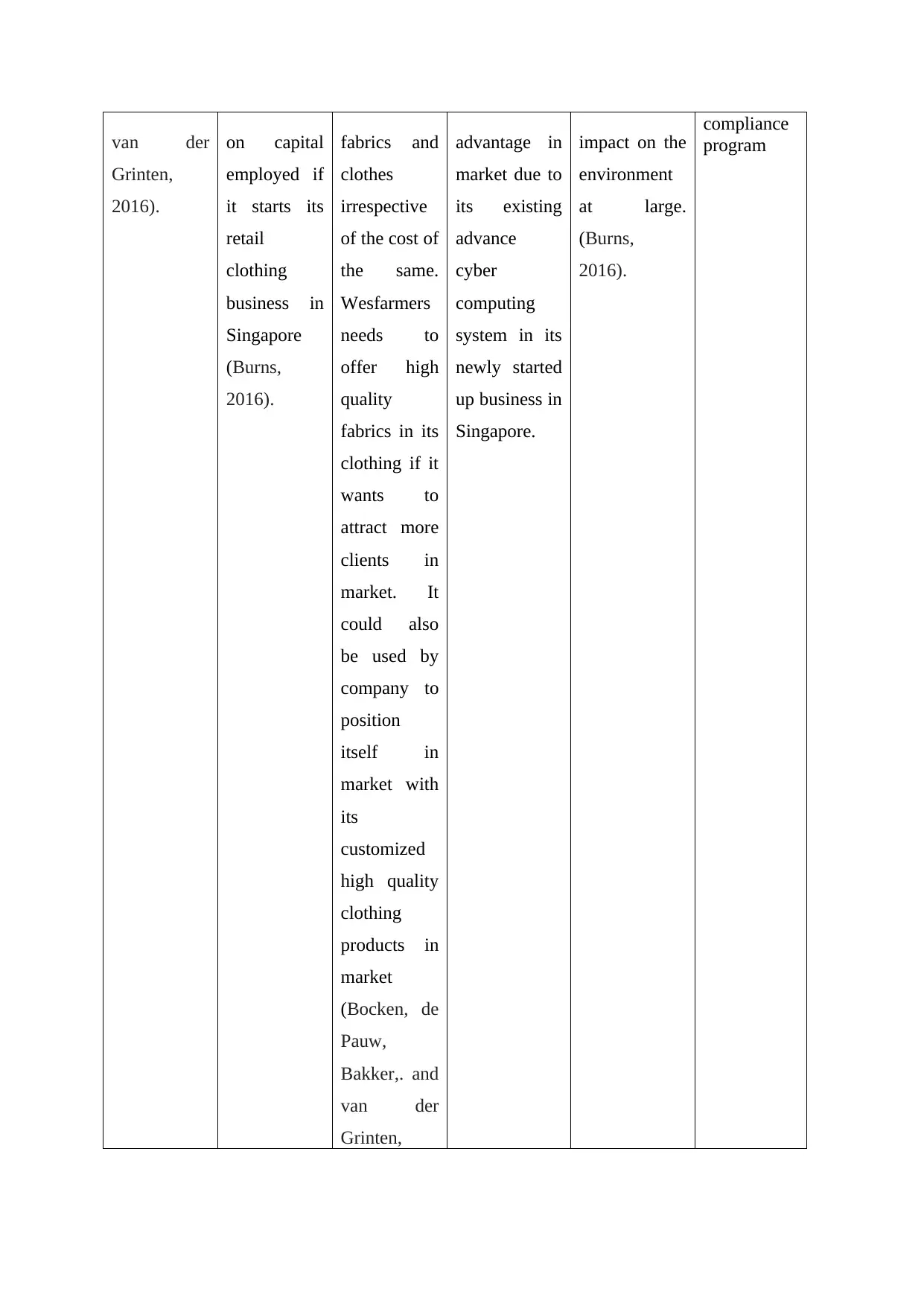
van der
Grinten,
2016).
on capital
employed if
it starts its
retail
clothing
business in
Singapore
(Burns,
2016).
fabrics and
clothes
irrespective
of the cost of
the same.
Wesfarmers
needs to
offer high
quality
fabrics in its
clothing if it
wants to
attract more
clients in
market. It
could also
be used by
company to
position
itself in
market with
its
customized
high quality
clothing
products in
market
(Bocken, de
Pauw,
Bakker,. and
van der
Grinten,
advantage in
market due to
its existing
advance
cyber
computing
system in its
newly started
up business in
Singapore.
impact on the
environment
at large.
(Burns,
2016).
compliance
program
Grinten,
2016).
on capital
employed if
it starts its
retail
clothing
business in
Singapore
(Burns,
2016).
fabrics and
clothes
irrespective
of the cost of
the same.
Wesfarmers
needs to
offer high
quality
fabrics in its
clothing if it
wants to
attract more
clients in
market. It
could also
be used by
company to
position
itself in
market with
its
customized
high quality
clothing
products in
market
(Bocken, de
Pauw,
Bakker,. and
van der
Grinten,
advantage in
market due to
its existing
advance
cyber
computing
system in its
newly started
up business in
Singapore.
impact on the
environment
at large.
(Burns,
2016).
compliance
program
2016).
Demographic Environment
This factor assists in customization of the cloths such as T- shirt, Jeans and other stuffs for its
clients in Singapore. It will assists in grabbing the potential data which could be used to
customized cloths as per the client’s needs and demand. It will also be used by Wesfarmers to
offer cloths as per the trend and fashion sense of the people.
Natural Environment
It is related to the seasonal changes, People in Singapore are more prone to buy cloths in the
winter season due to the arrivals of the fresh articles.
Physical Environment
In Singapore, Wesfarmers has to invest more capital in setting up new retail stores and malls
which will be used as medium to sell its own branded cloths and other wearing articles..
However, Company needs to hire more IT experts to strengthen its developed SEO engine to
attract more clients (Burns, Mullet, and Bryant, 2016).
Nature of demand
It reflects the size, nature, demand and potential clients in market.
Target market analysis
Target market profile- The Singapore’s population size remain stable at 5.61 million in which
more than 30 % of the people falls between the age group of 18 years to 55 years. However,
it is estimation dependents upon the collected hypothesis (Burns, 2016).
Primary target Secondary
Number of consumers Approximately 32 million
(Male and Female
Others
(Children and old people).
Age 18 years to 55 Below 18 and beyond 55
years old people.
Gender Male and Female both Male and Female both
Location Raffles City Shopping
Centre in Singapore
Other retail stores
Demographic Environment
This factor assists in customization of the cloths such as T- shirt, Jeans and other stuffs for its
clients in Singapore. It will assists in grabbing the potential data which could be used to
customized cloths as per the client’s needs and demand. It will also be used by Wesfarmers to
offer cloths as per the trend and fashion sense of the people.
Natural Environment
It is related to the seasonal changes, People in Singapore are more prone to buy cloths in the
winter season due to the arrivals of the fresh articles.
Physical Environment
In Singapore, Wesfarmers has to invest more capital in setting up new retail stores and malls
which will be used as medium to sell its own branded cloths and other wearing articles..
However, Company needs to hire more IT experts to strengthen its developed SEO engine to
attract more clients (Burns, Mullet, and Bryant, 2016).
Nature of demand
It reflects the size, nature, demand and potential clients in market.
Target market analysis
Target market profile- The Singapore’s population size remain stable at 5.61 million in which
more than 30 % of the people falls between the age group of 18 years to 55 years. However,
it is estimation dependents upon the collected hypothesis (Burns, 2016).
Primary target Secondary
Number of consumers Approximately 32 million
(Male and Female
Others
(Children and old people).
Age 18 years to 55 Below 18 and beyond 55
years old people.
Gender Male and Female both Male and Female both
Location Raffles City Shopping
Centre in Singapore
Other retail stores
⊘ This is a preview!⊘
Do you want full access?
Subscribe today to unlock all pages.
Trusted by 1+ million students worldwide
Lifestyle High Life style Trendy cloths
Average usage/year 20 Million 11 Million
Product Category Stage of Product Life Cycle
The newly clothing article such as T- shirt, Jeans and other stuffs will be introduced in the
market. However, Wesfarmers would follow the product life cycle stage such as introduction,
growth, maturity and decline..
Structure of the Industry
The newly set up clothing retail store will be incorporated as subsidiary company in market
which will be having unlimited liabilities. However, structure of clothing industry is very
complex and most of the rivals are selling its products and services (Byrne, and Shepherd,
2015).
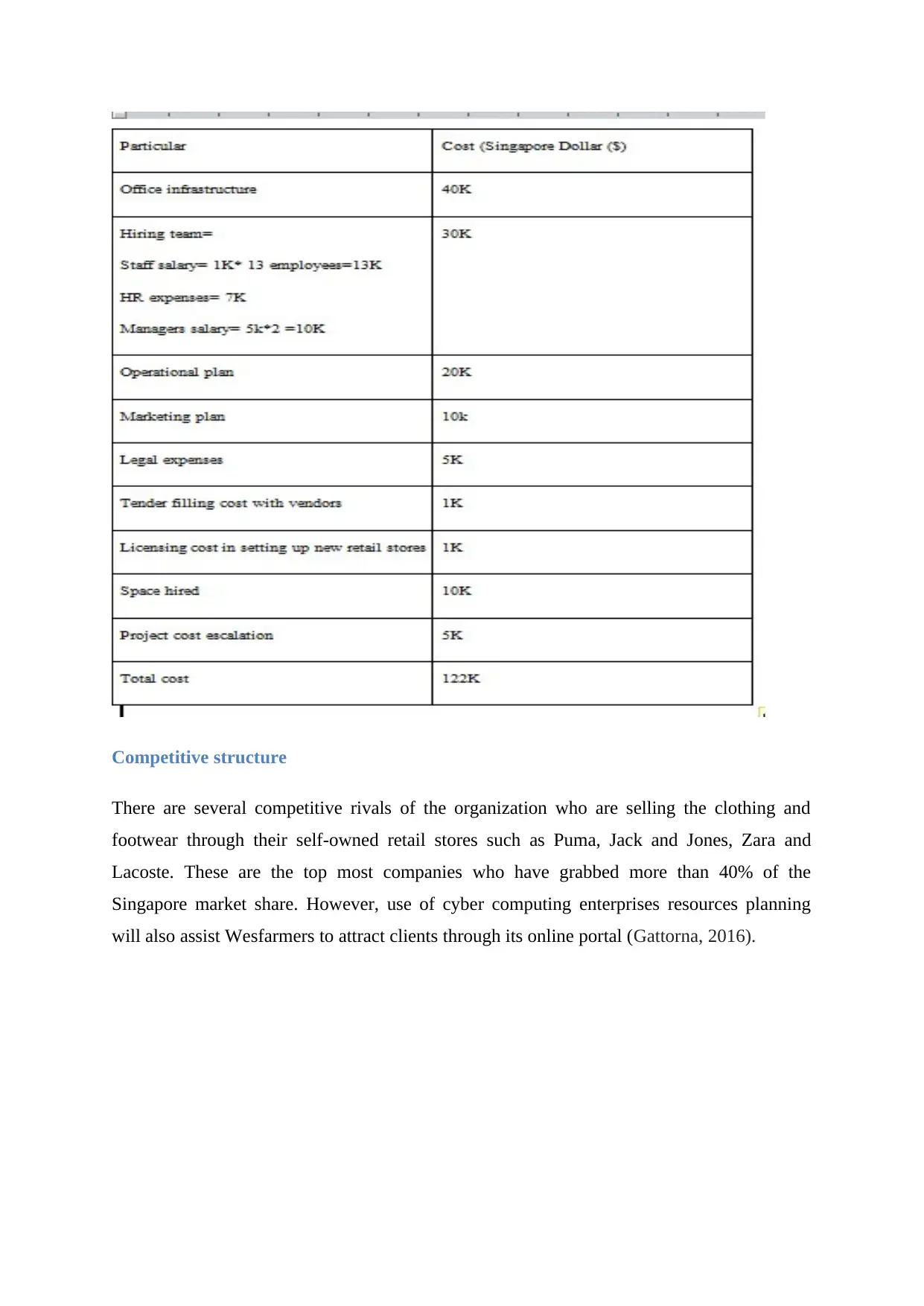
Cost structure of Industry
The cost structure of the Retails cloth outlets would be related to the purchasing cost of the
cloths, articles (Manufacturing cost) business related administration expenses, rental
expenses, machines and tools used in the retail stores to sell the articles to clients in market.
(Crane, and Matten, 2016).
Average usage/year 20 Million 11 Million
Product Category Stage of Product Life Cycle
The newly clothing article such as T- shirt, Jeans and other stuffs will be introduced in the
market. However, Wesfarmers would follow the product life cycle stage such as introduction,
growth, maturity and decline..
Structure of the Industry
The newly set up clothing retail store will be incorporated as subsidiary company in market
which will be having unlimited liabilities. However, structure of clothing industry is very
complex and most of the rivals are selling its products and services (Byrne, and Shepherd,
2015).
Cost structure of Industry
The cost structure of the Retails cloth outlets would be related to the purchasing cost of the
cloths, articles (Manufacturing cost) business related administration expenses, rental
expenses, machines and tools used in the retail stores to sell the articles to clients in market.
(Crane, and Matten, 2016).
Paraphrase This Document
Need a fresh take? Get an instant paraphrase of this document with our AI Paraphraser
Competitive structure
There are several competitive rivals of the organization who are selling the clothing and
footwear through their self-owned retail stores such as Puma, Jack and Jones, Zara and
Lacoste. These are the top most companies who have grabbed more than 40% of the
Singapore market share. However, use of cyber computing enterprises resources planning
will also assist Wesfarmers to attract clients through its online portal (Gattorna, 2016).
There are several competitive rivals of the organization who are selling the clothing and
footwear through their self-owned retail stores such as Puma, Jack and Jones, Zara and
Lacoste. These are the top most companies who have grabbed more than 40% of the
Singapore market share. However, use of cyber computing enterprises resources planning
will also assist Wesfarmers to attract clients through its online portal (Gattorna, 2016).
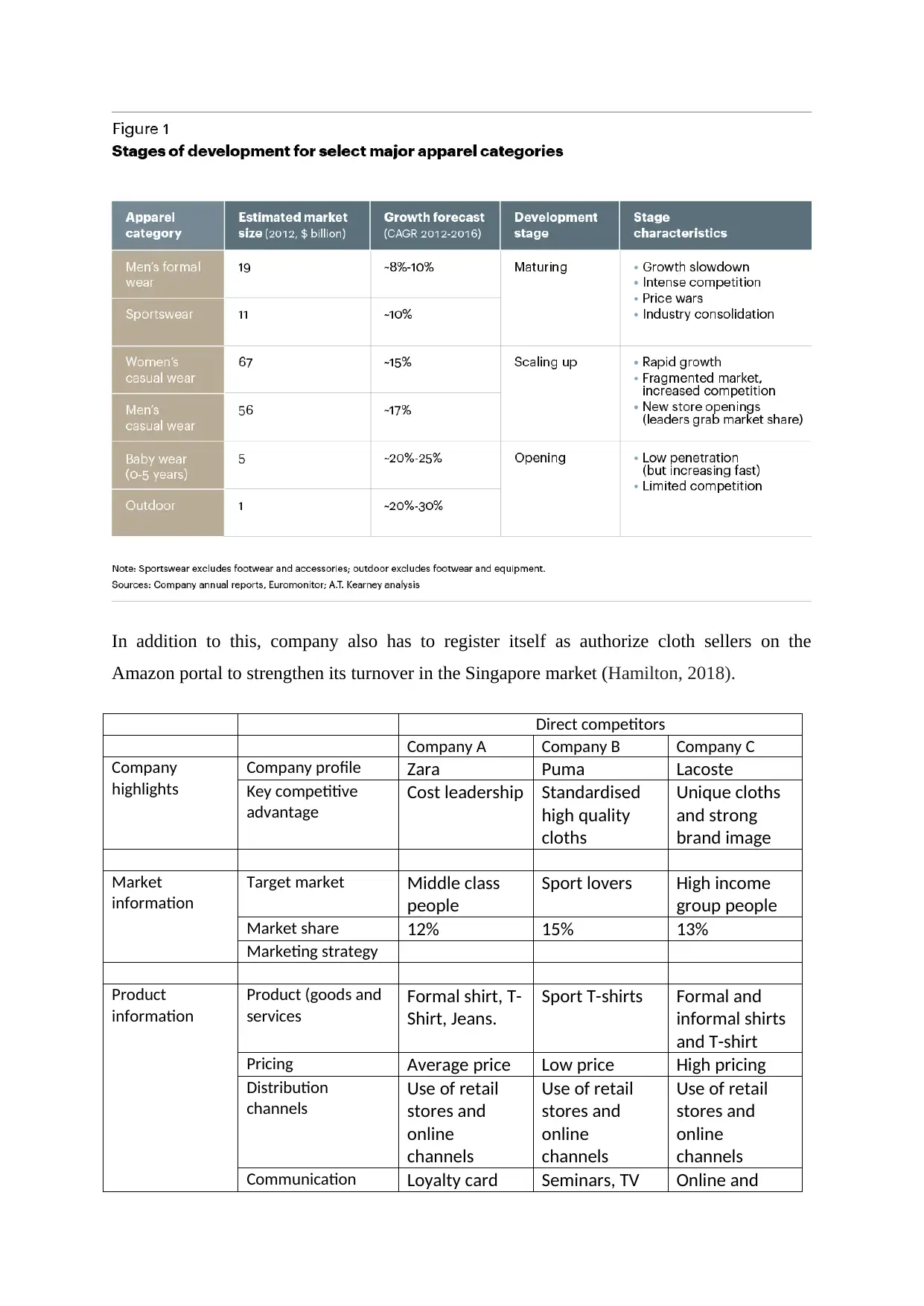
In addition to this, company also has to register itself as authorize cloth sellers on the
Amazon portal to strengthen its turnover in the Singapore market (Hamilton, 2018).
Direct competitors
Company A Company B Company C
Company
highlights
Company profile Zara Puma Lacoste
Key competitive
advantage
Cost leadership Standardised
high quality
cloths
Unique cloths
and strong
brand image
Market
information
Target market Middle class
people
Sport lovers High income
group people
Market share 12% 15% 13%
Marketing strategy
Product
information
Product (goods and
services
Formal shirt, T-
Shirt, Jeans.
Sport T-shirts Formal and
informal shirts
and T-shirt
Pricing Average price Low price High pricing
Distribution
channels
Use of retail
stores and
online
channels
Use of retail
stores and
online
channels
Use of retail
stores and
online
channels
Communication Loyalty card Seminars, TV Online and
Amazon portal to strengthen its turnover in the Singapore market (Hamilton, 2018).
Direct competitors
Company A Company B Company C
Company
highlights
Company profile Zara Puma Lacoste
Key competitive
advantage
Cost leadership Standardised
high quality
cloths
Unique cloths
and strong
brand image
Market
information
Target market Middle class
people
Sport lovers High income
group people
Market share 12% 15% 13%
Marketing strategy
Product
information
Product (goods and
services
Formal shirt, T-
Shirt, Jeans.
Sport T-shirts Formal and
informal shirts
and T-shirt
Pricing Average price Low price High pricing
Distribution
channels
Use of retail
stores and
online
channels
Use of retail
stores and
online
channels
Use of retail
stores and
online
channels
Communication Loyalty card Seminars, TV Online and
⊘ This is a preview!⊘
Do you want full access?
Subscribe today to unlock all pages.
Trusted by 1+ million students worldwide

1 out of 30


Related Documents


Your All-in-One AI-Powered Toolkit for Academic Success.
+13062052269
info@desklib.com
Available 24*7 on WhatsApp / Email
![[object Object]](/_next/static/media/star-bottom.7253800d.svg)
Unlock your academic potential
Copyright © 2020–2026 A2Z Services. All Rights Reserved. Developed and managed by ZUCOL.