What It Means to Be Made in the Image of God: An In-depth Essay
VerifiedAdded on 2020/05/08
|9
|2549
|104
Essay
AI Summary
This essay explores the Christian belief that humans are created in the image of God, examining the implications of this concept. It delves into the Genesis account, highlighting that humankind was created uniquely, given the breath of life, and bestowed with dominion over creation. The essay discusses both the form and function of God's image in humanity, emphasizing the immaterial characteristics that distinguish humans from other creations. It explores the moral, social, and mental dimensions of the image of God, addressing the question of whether both male and female equally represent this image. The essay also touches upon the limitations and significance of this doctrine, emphasizing the relationship between God and humanity. It further examines how human beings perpetuate God's work through creativity and exercising authority, ultimately concluding that the image of God is inherent even after sin, providing a basis for Christians' connection with God and their responsibility to continue God's work.
Running Head: WHAT IT MEANS TO BE MADE IN THE IMAGE OF GOD
1
What it means to be made in the Image of God
Name of the Student
Name of the Institution
1
What it means to be made in the Image of God
Name of the Student
Name of the Institution

Paraphrase This Document
Need a fresh take? Get an instant paraphrase of this document with our AI Paraphraser
WHAT IT MEANS TO BE MADE IN THE IMAGE OF GOD
2
What it means to be made in the Image of God
It is a universal belief by the Christians that the universe and all that is in it was created
by God. God is thus believed to have created the world in six days and took rest in the seven
days. God's created all the things by the power of the word "let there be" except for human
beings. When He had created all things, He saw the need for creating human beings. Hence, the
creation of human beings took place on the sixth day which was the climax of the creation. The
first man, Adam, was created and was given the breath of life. Human beings were created in
God's image and likeness as explained in the book of Genesis (Quine, 2015). Essentially, in
addressing the making of humankind in God's image, it is important to consider both form and
function of God's image in humankind. The notion of creating in God's image in Genesis 1:26-27
cannot understandably explain the notion of creating in God's image without integrating the
chapter two of Genesis where the creation of both male and female took place (Piper, 1999). It
must also be understood that the seemingly opposing accounts of creation do complement each
other. In this regard, therefore, this paper will discuss what it means to be made in the image of
God.
One of the most fundamental Christian views is the belief in God as the creator of heaven
and earth. Humankind marks the climax of the creation having been created last, given the breath
of life by God himself and bestowed authority over all what was created (Quine, 2015). Again,
humankind was created uniquely from the animals and all other creations in the phase of the
earth and heaven. Therefore, since humankind was created by God in His image and likeness is
neither independent nor autonomous being (Lyons, 2014). In other words, man is entirely
dependent on God. However, man possesses some degree of independence in that he has been
granted freedom and ability to make decisions and set goals and move towards achieving the
2
What it means to be made in the Image of God
It is a universal belief by the Christians that the universe and all that is in it was created
by God. God is thus believed to have created the world in six days and took rest in the seven
days. God's created all the things by the power of the word "let there be" except for human
beings. When He had created all things, He saw the need for creating human beings. Hence, the
creation of human beings took place on the sixth day which was the climax of the creation. The
first man, Adam, was created and was given the breath of life. Human beings were created in
God's image and likeness as explained in the book of Genesis (Quine, 2015). Essentially, in
addressing the making of humankind in God's image, it is important to consider both form and
function of God's image in humankind. The notion of creating in God's image in Genesis 1:26-27
cannot understandably explain the notion of creating in God's image without integrating the
chapter two of Genesis where the creation of both male and female took place (Piper, 1999). It
must also be understood that the seemingly opposing accounts of creation do complement each
other. In this regard, therefore, this paper will discuss what it means to be made in the image of
God.
One of the most fundamental Christian views is the belief in God as the creator of heaven
and earth. Humankind marks the climax of the creation having been created last, given the breath
of life by God himself and bestowed authority over all what was created (Quine, 2015). Again,
humankind was created uniquely from the animals and all other creations in the phase of the
earth and heaven. Therefore, since humankind was created by God in His image and likeness is
neither independent nor autonomous being (Lyons, 2014). In other words, man is entirely
dependent on God. However, man possesses some degree of independence in that he has been
granted freedom and ability to make decisions and set goals and move towards achieving the
WHAT IT MEANS TO BE MADE IN THE IMAGE OF GOD
3
goals (Nichols, 2016). That means that man does not only have the power of self-direction but
also self-determination. Nichols (2016) asserts that the aspect of creating or making man in
God's image shows that there is an aspect of God found in man. However, the big question that
arises is about which part or aspect of God can be found in man.
According to Gonzalez (2014), the creation that preceded the making of man included
animals, plants, waters, darkness, and light. The creation of humankind was unique. The animals
were created in their own kind. Therefore, Gonzalez (2014) contends that the creeping things,
sea creatures, domestic and wild animals, and birds of the air were made to resemble and act like
their species. However, the uniqueness that defines the creation of humankind is that he was not
created to just resemble himself but also to carry the image or the likeness of God with him
(Gonzalez, 2014). Again, the uniqueness of humankind is further demonstrated by the making of
both male and female as accounted for in the second account of creation (Gonzalez, 2014).
Moreover, God gave humankind dominion to rule over and take care of His creation. In this
view, therefore, humankind was endowed with capabilities and privileges that other animals did
not posses. It thus shows how human beings were important and closer to God. Additionally,
when God said that they create a man in his image and likeliness, then it is clear that man was
also granted the spiritual capacities.
According to Genesis 2:7 God made man from the dust of the earth and gave him His
breath. The understanding that man was made from lifeless material and given life by God
symbolizes the material and immaterial making of the man (Curties, 1984). The material is the
dust while the immaterial concept refers to the soul or spirit in man. Although the notion of the
image or likeness of God means that humankind resembles God, it is not true that the first
created man, Adam, resembled God in flesh and blood since God is a spirit (Curties, 1984).
3
goals (Nichols, 2016). That means that man does not only have the power of self-direction but
also self-determination. Nichols (2016) asserts that the aspect of creating or making man in
God's image shows that there is an aspect of God found in man. However, the big question that
arises is about which part or aspect of God can be found in man.
According to Gonzalez (2014), the creation that preceded the making of man included
animals, plants, waters, darkness, and light. The creation of humankind was unique. The animals
were created in their own kind. Therefore, Gonzalez (2014) contends that the creeping things,
sea creatures, domestic and wild animals, and birds of the air were made to resemble and act like
their species. However, the uniqueness that defines the creation of humankind is that he was not
created to just resemble himself but also to carry the image or the likeness of God with him
(Gonzalez, 2014). Again, the uniqueness of humankind is further demonstrated by the making of
both male and female as accounted for in the second account of creation (Gonzalez, 2014).
Moreover, God gave humankind dominion to rule over and take care of His creation. In this
view, therefore, humankind was endowed with capabilities and privileges that other animals did
not posses. It thus shows how human beings were important and closer to God. Additionally,
when God said that they create a man in his image and likeliness, then it is clear that man was
also granted the spiritual capacities.
According to Genesis 2:7 God made man from the dust of the earth and gave him His
breath. The understanding that man was made from lifeless material and given life by God
symbolizes the material and immaterial making of the man (Curties, 1984). The material is the
dust while the immaterial concept refers to the soul or spirit in man. Although the notion of the
image or likeness of God means that humankind resembles God, it is not true that the first
created man, Adam, resembled God in flesh and blood since God is a spirit (Curties, 1984).
⊘ This is a preview!⊘
Do you want full access?
Subscribe today to unlock all pages.

Trusted by 1+ million students worldwide
WHAT IT MEANS TO BE MADE IN THE IMAGE OF GOD
4
However, Adam's body was initially created in perfect health and was not to die until he defied
God's ordinances. Therefore, the making of man in God's own image refers to the immaterial
characteristic or nature of man. It is this nature that primarily differentiates man from the
animals. Again, it is this unique factor that gave man dominion over all the creation (Prins,
1972). The immaterial nature of man enables him to communicate and even have a relationship
with God (Lorberbaum, 2015).
The concept of God's image in humankind is morally, socially, and mentally
demonstrated (Lorberbaum, 2015). In respect to morals, man is believed to have been created in
innocence and righteousness. Innocence and righteousness depict the holiness of God. Genesis
1:31 portrays God's perception about His creation when said that it was good. The conscience of
human being acts as the evidence of moral state. Socially, the man was created to have
fellowship with God and others (Lorberbaum, 2015). When the man shows fellowship with God
or fellow human beings is a reflection of the nature and love of God. Initially, the man had a
good relationship with God in the garden of Aden. God also made a woman as a companion and
helper of the man. Mentally, humankind was created as a rational being, able to reason and make
decisions. The capacity of man to make decisions and reason is also a reflection of God's of the
freedom and intelligence that God possesses. Adam was given the free will by God hence the
reason he chose to disobey God. Nonetheless, humankind still represents the image of God
socially, morally and mentally although the scar of sin inherited from Adam is present.
The image of God in man has answers the question whether both male and female
possess this image. Genesis 1: 26-27 God declared that they make man and thus a man was made
in God's image and likeness. However, the making of man in the first account of creation is seen
as referring to the only man created, Adam. On the contrary, the second account of creation
4
However, Adam's body was initially created in perfect health and was not to die until he defied
God's ordinances. Therefore, the making of man in God's own image refers to the immaterial
characteristic or nature of man. It is this nature that primarily differentiates man from the
animals. Again, it is this unique factor that gave man dominion over all the creation (Prins,
1972). The immaterial nature of man enables him to communicate and even have a relationship
with God (Lorberbaum, 2015).
The concept of God's image in humankind is morally, socially, and mentally
demonstrated (Lorberbaum, 2015). In respect to morals, man is believed to have been created in
innocence and righteousness. Innocence and righteousness depict the holiness of God. Genesis
1:31 portrays God's perception about His creation when said that it was good. The conscience of
human being acts as the evidence of moral state. Socially, the man was created to have
fellowship with God and others (Lorberbaum, 2015). When the man shows fellowship with God
or fellow human beings is a reflection of the nature and love of God. Initially, the man had a
good relationship with God in the garden of Aden. God also made a woman as a companion and
helper of the man. Mentally, humankind was created as a rational being, able to reason and make
decisions. The capacity of man to make decisions and reason is also a reflection of God's of the
freedom and intelligence that God possesses. Adam was given the free will by God hence the
reason he chose to disobey God. Nonetheless, humankind still represents the image of God
socially, morally and mentally although the scar of sin inherited from Adam is present.
The image of God in man has answers the question whether both male and female
possess this image. Genesis 1: 26-27 God declared that they make man and thus a man was made
in God's image and likeness. However, the making of man in the first account of creation is seen
as referring to the only man created, Adam. On the contrary, the second account of creation
Paraphrase This Document
Need a fresh take? Get an instant paraphrase of this document with our AI Paraphraser
WHAT IT MEANS TO BE MADE IN THE IMAGE OF GOD
5
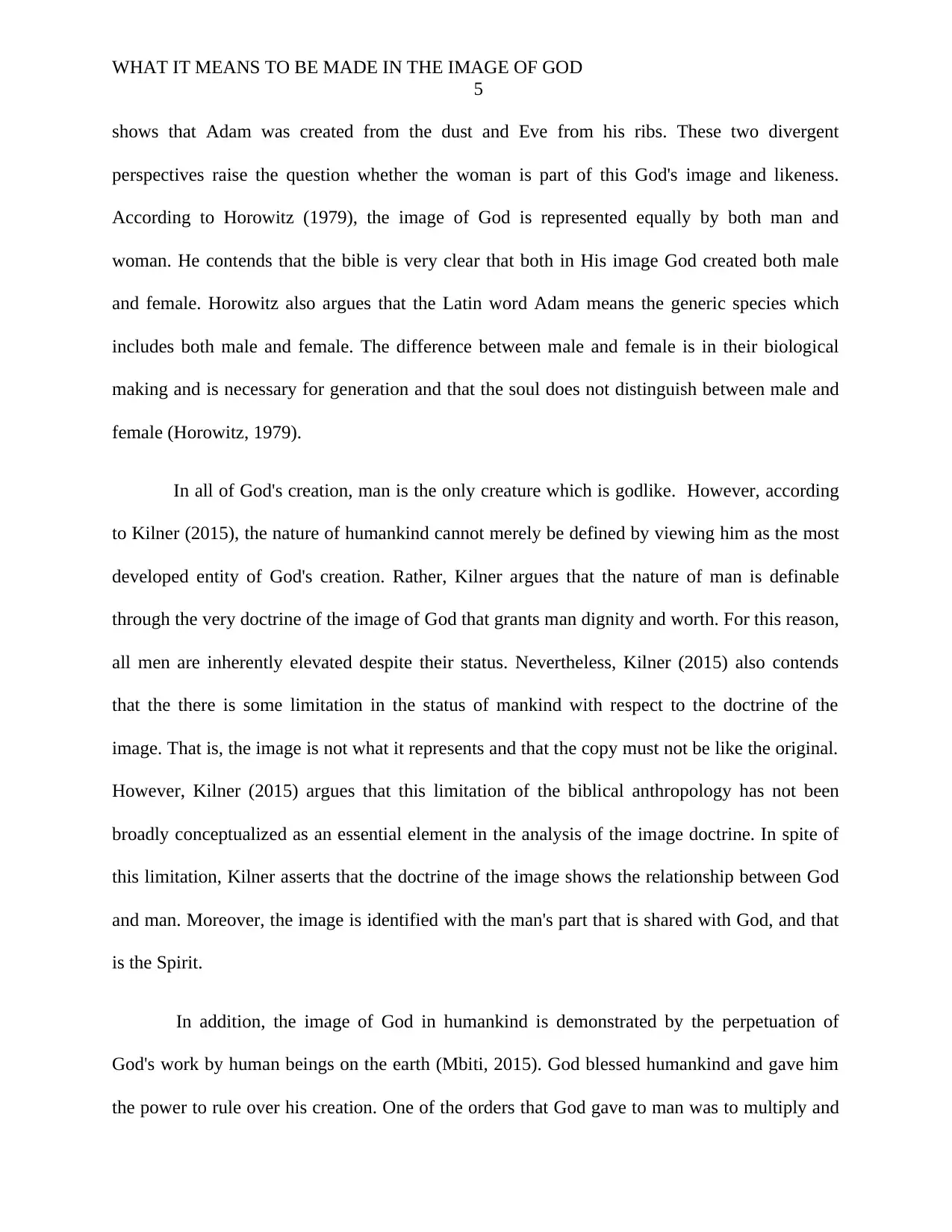
shows that Adam was created from the dust and Eve from his ribs. These two divergent
perspectives raise the question whether the woman is part of this God's image and likeness.
According to Horowitz (1979), the image of God is represented equally by both man and
woman. He contends that the bible is very clear that both in His image God created both male
and female. Horowitz also argues that the Latin word Adam means the generic species which
includes both male and female. The difference between male and female is in their biological
making and is necessary for generation and that the soul does not distinguish between male and
female (Horowitz, 1979).
In all of God's creation, man is the only creature which is godlike. However, according
to Kilner (2015), the nature of humankind cannot merely be defined by viewing him as the most
developed entity of God's creation. Rather, Kilner argues that the nature of man is definable
through the very doctrine of the image of God that grants man dignity and worth. For this reason,
all men are inherently elevated despite their status. Nevertheless, Kilner (2015) also contends
that the there is some limitation in the status of mankind with respect to the doctrine of the
image. That is, the image is not what it represents and that the copy must not be like the original.
However, Kilner (2015) argues that this limitation of the biblical anthropology has not been
broadly conceptualized as an essential element in the analysis of the image doctrine. In spite of
this limitation, Kilner asserts that the doctrine of the image shows the relationship between God
and man. Moreover, the image is identified with the man's part that is shared with God, and that
is the Spirit.
In addition, the image of God in humankind is demonstrated by the perpetuation of
God's work by human beings on the earth (Mbiti, 2015). God blessed humankind and gave him
the power to rule over his creation. One of the orders that God gave to man was to multiply and
5
shows that Adam was created from the dust and Eve from his ribs. These two divergent
perspectives raise the question whether the woman is part of this God's image and likeness.
According to Horowitz (1979), the image of God is represented equally by both man and
woman. He contends that the bible is very clear that both in His image God created both male
and female. Horowitz also argues that the Latin word Adam means the generic species which
includes both male and female. The difference between male and female is in their biological
making and is necessary for generation and that the soul does not distinguish between male and
female (Horowitz, 1979).
In all of God's creation, man is the only creature which is godlike. However, according
to Kilner (2015), the nature of humankind cannot merely be defined by viewing him as the most
developed entity of God's creation. Rather, Kilner argues that the nature of man is definable
through the very doctrine of the image of God that grants man dignity and worth. For this reason,
all men are inherently elevated despite their status. Nevertheless, Kilner (2015) also contends
that the there is some limitation in the status of mankind with respect to the doctrine of the
image. That is, the image is not what it represents and that the copy must not be like the original.
However, Kilner (2015) argues that this limitation of the biblical anthropology has not been
broadly conceptualized as an essential element in the analysis of the image doctrine. In spite of
this limitation, Kilner asserts that the doctrine of the image shows the relationship between God
and man. Moreover, the image is identified with the man's part that is shared with God, and that
is the Spirit.
In addition, the image of God in humankind is demonstrated by the perpetuation of
God's work by human beings on the earth (Mbiti, 2015). God blessed humankind and gave him
the power to rule over his creation. One of the orders that God gave to man was to multiply and
WHAT IT MEANS TO BE MADE IN THE IMAGE OF GOD
6
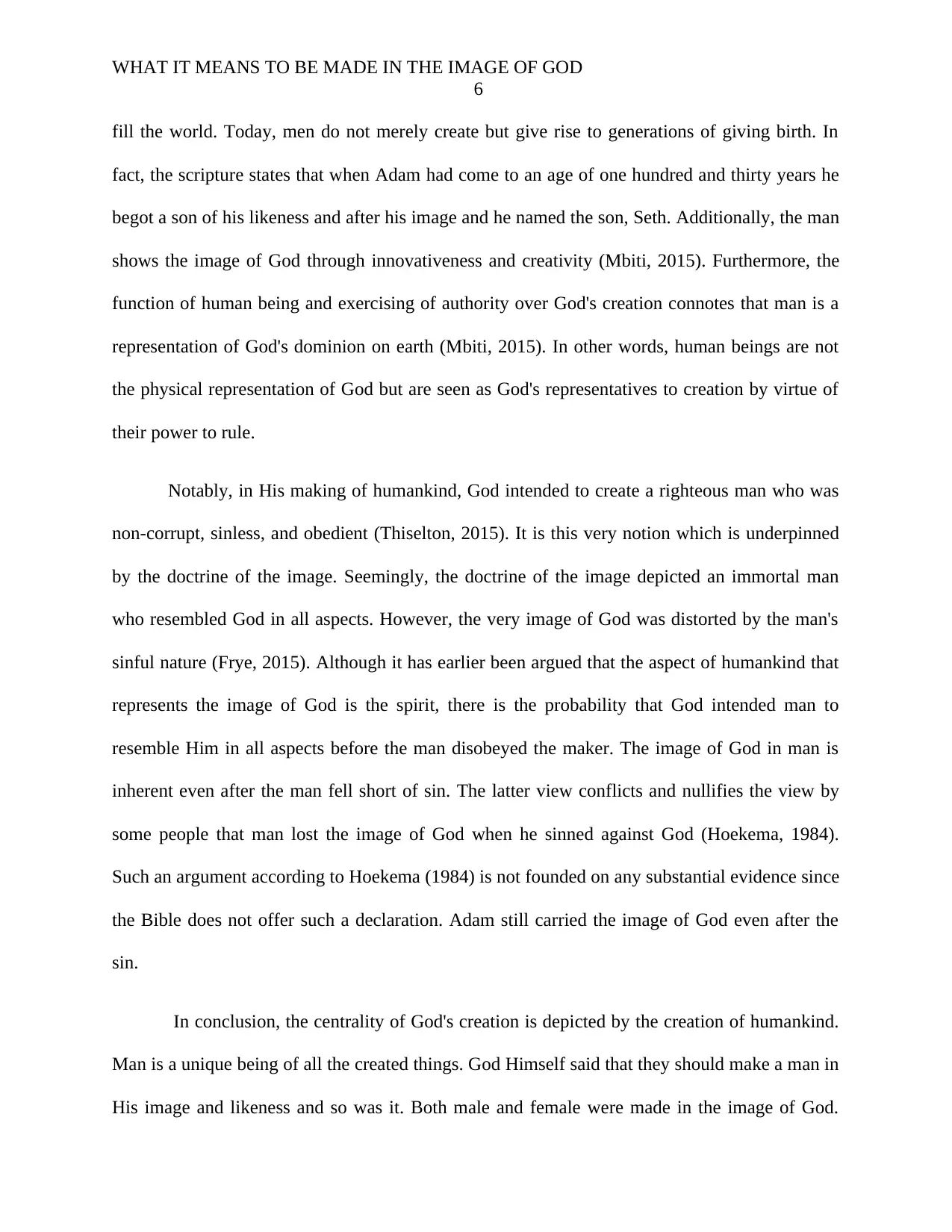
fill the world. Today, men do not merely create but give rise to generations of giving birth. In
fact, the scripture states that when Adam had come to an age of one hundred and thirty years he
begot a son of his likeness and after his image and he named the son, Seth. Additionally, the man
shows the image of God through innovativeness and creativity (Mbiti, 2015). Furthermore, the
function of human being and exercising of authority over God's creation connotes that man is a
representation of God's dominion on earth (Mbiti, 2015). In other words, human beings are not
the physical representation of God but are seen as God's representatives to creation by virtue of
their power to rule.
Notably, in His making of humankind, God intended to create a righteous man who was
non-corrupt, sinless, and obedient (Thiselton, 2015). It is this very notion which is underpinned
by the doctrine of the image. Seemingly, the doctrine of the image depicted an immortal man
who resembled God in all aspects. However, the very image of God was distorted by the man's
sinful nature (Frye, 2015). Although it has earlier been argued that the aspect of humankind that
represents the image of God is the spirit, there is the probability that God intended man to
resemble Him in all aspects before the man disobeyed the maker. The image of God in man is
inherent even after the man fell short of sin. The latter view conflicts and nullifies the view by
some people that man lost the image of God when he sinned against God (Hoekema, 1984).
Such an argument according to Hoekema (1984) is not founded on any substantial evidence since
the Bible does not offer such a declaration. Adam still carried the image of God even after the
sin.
In conclusion, the centrality of God's creation is depicted by the creation of humankind.
Man is a unique being of all the created things. God Himself said that they should make a man in
His image and likeness and so was it. Both male and female were made in the image of God.
6
fill the world. Today, men do not merely create but give rise to generations of giving birth. In
fact, the scripture states that when Adam had come to an age of one hundred and thirty years he
begot a son of his likeness and after his image and he named the son, Seth. Additionally, the man
shows the image of God through innovativeness and creativity (Mbiti, 2015). Furthermore, the
function of human being and exercising of authority over God's creation connotes that man is a
representation of God's dominion on earth (Mbiti, 2015). In other words, human beings are not
the physical representation of God but are seen as God's representatives to creation by virtue of
their power to rule.
Notably, in His making of humankind, God intended to create a righteous man who was
non-corrupt, sinless, and obedient (Thiselton, 2015). It is this very notion which is underpinned
by the doctrine of the image. Seemingly, the doctrine of the image depicted an immortal man
who resembled God in all aspects. However, the very image of God was distorted by the man's
sinful nature (Frye, 2015). Although it has earlier been argued that the aspect of humankind that
represents the image of God is the spirit, there is the probability that God intended man to
resemble Him in all aspects before the man disobeyed the maker. The image of God in man is
inherent even after the man fell short of sin. The latter view conflicts and nullifies the view by
some people that man lost the image of God when he sinned against God (Hoekema, 1984).
Such an argument according to Hoekema (1984) is not founded on any substantial evidence since
the Bible does not offer such a declaration. Adam still carried the image of God even after the
sin.
In conclusion, the centrality of God's creation is depicted by the creation of humankind.
Man is a unique being of all the created things. God Himself said that they should make a man in
His image and likeness and so was it. Both male and female were made in the image of God.
⊘ This is a preview!⊘
Do you want full access?
Subscribe today to unlock all pages.
Trusted by 1+ million students worldwide
WHAT IT MEANS TO BE MADE IN THE IMAGE OF GOD
7
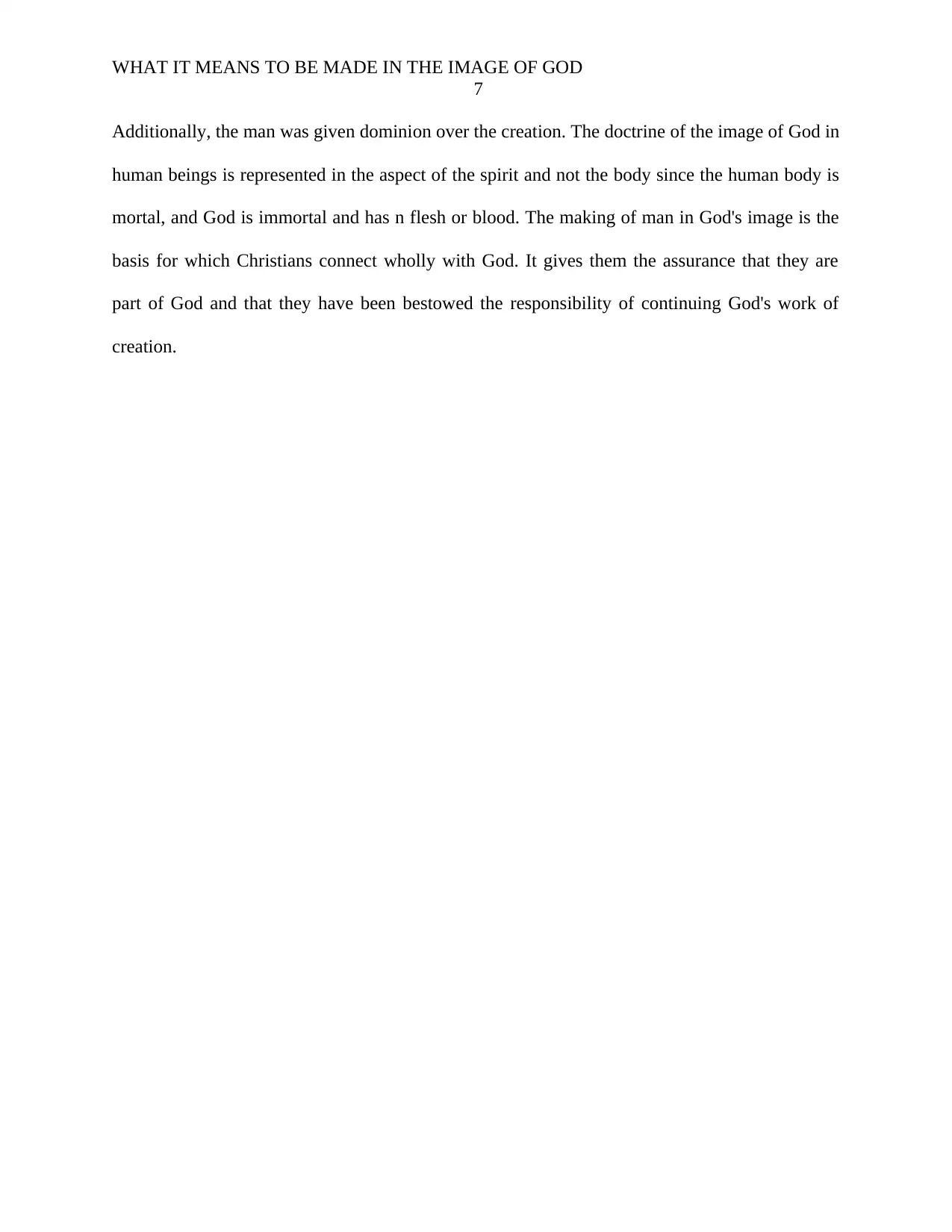
Additionally, the man was given dominion over the creation. The doctrine of the image of God in
human beings is represented in the aspect of the spirit and not the body since the human body is
mortal, and God is immortal and has n flesh or blood. The making of man in God's image is the
basis for which Christians connect wholly with God. It gives them the assurance that they are
part of God and that they have been bestowed the responsibility of continuing God's work of
creation.
7
Additionally, the man was given dominion over the creation. The doctrine of the image of God in
human beings is represented in the aspect of the spirit and not the body since the human body is
mortal, and God is immortal and has n flesh or blood. The making of man in God's image is the
basis for which Christians connect wholly with God. It gives them the assurance that they are
part of God and that they have been bestowed the responsibility of continuing God's work of
creation.
Paraphrase This Document
Need a fresh take? Get an instant paraphrase of this document with our AI Paraphraser
WHAT IT MEANS TO BE MADE IN THE IMAGE OF GOD
8
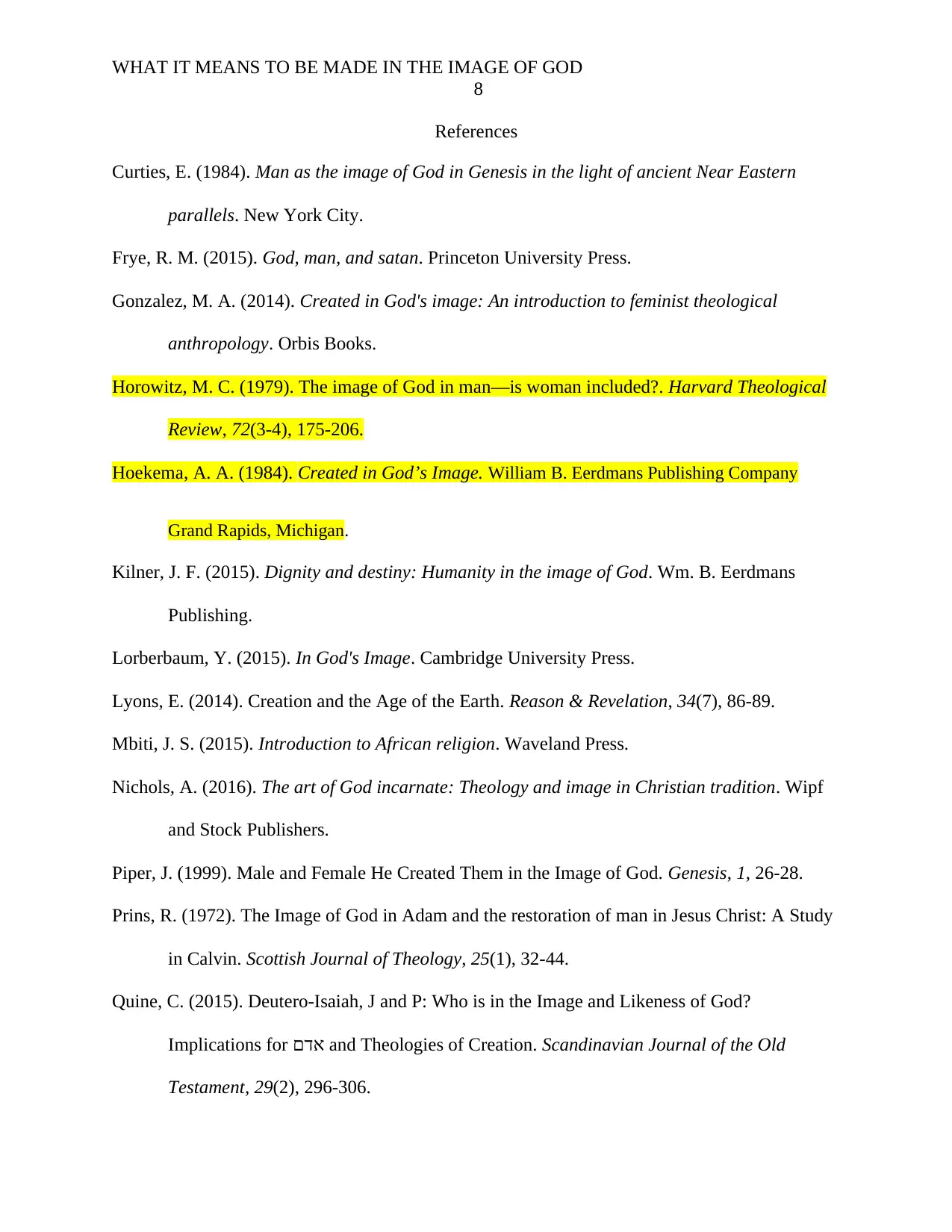
References
Curties, E. (1984). Man as the image of God in Genesis in the light of ancient Near Eastern
parallels. New York City.
Frye, R. M. (2015). God, man, and satan. Princeton University Press.
Gonzalez, M. A. (2014). Created in God's image: An introduction to feminist theological
anthropology. Orbis Books.
Horowitz, M. C. (1979). The image of God in man—is woman included?. Harvard Theological
Review, 72(3-4), 175-206.
Hoekema, A. A. (1984). Created in God’s Image. William B. Eerdmans Publishing Company
Grand Rapids, Michigan.
Kilner, J. F. (2015). Dignity and destiny: Humanity in the image of God. Wm. B. Eerdmans
Publishing.
Lorberbaum, Y. (2015). In God's Image. Cambridge University Press.
Lyons, E. (2014). Creation and the Age of the Earth. Reason & Revelation, 34(7), 86-89.
Mbiti, J. S. (2015). Introduction to African religion. Waveland Press.
Nichols, A. (2016). The art of God incarnate: Theology and image in Christian tradition. Wipf
and Stock Publishers.
Piper, J. (1999). Male and Female He Created Them in the Image of God. Genesis, 1, 26-28.
Prins, R. (1972). The Image of God in Adam and the restoration of man in Jesus Christ: A Study
in Calvin. Scottish Journal of Theology, 25(1), 32-44.
Quine, C. (2015). Deutero-Isaiah, J and P: Who is in the Image and Likeness of God?
Implications for אדם and Theologies of Creation. Scandinavian Journal of the Old
Testament, 29(2), 296-306.
8
References
Curties, E. (1984). Man as the image of God in Genesis in the light of ancient Near Eastern
parallels. New York City.
Frye, R. M. (2015). God, man, and satan. Princeton University Press.
Gonzalez, M. A. (2014). Created in God's image: An introduction to feminist theological
anthropology. Orbis Books.
Horowitz, M. C. (1979). The image of God in man—is woman included?. Harvard Theological
Review, 72(3-4), 175-206.
Hoekema, A. A. (1984). Created in God’s Image. William B. Eerdmans Publishing Company
Grand Rapids, Michigan.
Kilner, J. F. (2015). Dignity and destiny: Humanity in the image of God. Wm. B. Eerdmans
Publishing.
Lorberbaum, Y. (2015). In God's Image. Cambridge University Press.
Lyons, E. (2014). Creation and the Age of the Earth. Reason & Revelation, 34(7), 86-89.
Mbiti, J. S. (2015). Introduction to African religion. Waveland Press.
Nichols, A. (2016). The art of God incarnate: Theology and image in Christian tradition. Wipf
and Stock Publishers.
Piper, J. (1999). Male and Female He Created Them in the Image of God. Genesis, 1, 26-28.
Prins, R. (1972). The Image of God in Adam and the restoration of man in Jesus Christ: A Study
in Calvin. Scottish Journal of Theology, 25(1), 32-44.
Quine, C. (2015). Deutero-Isaiah, J and P: Who is in the Image and Likeness of God?
Implications for אדם and Theologies of Creation. Scandinavian Journal of the Old
Testament, 29(2), 296-306.

WHAT IT MEANS TO BE MADE IN THE IMAGE OF GOD
9
Thiselton, A. C. (2015). The Image and the Likeness of God: A Theological Approach. The
Emergence of Personhood: A Quantum Leap, 184-201.
9
Thiselton, A. C. (2015). The Image and the Likeness of God: A Theological Approach. The
Emergence of Personhood: A Quantum Leap, 184-201.
⊘ This is a preview!⊘
Do you want full access?
Subscribe today to unlock all pages.
Trusted by 1+ million students worldwide

1 out of 9


Related Documents
![Biblical Analysis: Old Testament Theology Essay - [University Name]](/_next/image/?url=https%3A%2F%2Fdesklib.com%2Fmedia%2Fold-testament-theology_page_1.jpg&w=256&q=75)


Your All-in-One AI-Powered Toolkit for Academic Success.
+13062052269
info@desklib.com
Available 24*7 on WhatsApp / Email
![[object Object]](/_next/static/media/star-bottom.7253800d.svg)
Unlock your academic potential
Copyright © 2020–2026 A2Z Services. All Rights Reserved. Developed and managed by ZUCOL.