Woolworths Risk Management Strategies: A Detailed Report on WHS
VerifiedAdded on 2023/05/30
|34
|7605
|485
Report
AI Summary
This report provides a comprehensive analysis of risk management practices at Woolworths, addressing key aspects of work health and safety (WHS) as outlined in BSBRSK501 and BSBWHS401 frameworks. It identifies several hazards within Woolworths' operations, including those arising from defective products, slips and trips, workplace violence, and fire risks, detailing specific incidents and potential impacts. The report outlines safety measures to mitigate these hazards, such as quality assurance processes, CCTV surveillance, employee counseling, and fire safety protocols. Furthermore, it discusses the importance of stakeholder consultation, risk assessment processes, and the application of the hierarchy of control to manage risks effectively. The analysis extends to non-WHS financial risks, evaluating Woolworths' current arrangements and identifying critical success factors for financial risk management. The report concludes by emphasizing the importance of legislative compliance, continuous monitoring, and human responsibilities in maintaining a safe and harmonious working environment, providing a thorough overview of Woolworths' risk management landscape. Desklib provides access to similar solved assignments and resources for students.
Running head: RISK MANAGEMENT
Risk Management
Name of Student
Name of University
Author Note
Risk Management
Name of Student
Name of University
Author Note

Paraphrase This Document
Need a fresh take? Get an instant paraphrase of this document with our AI Paraphraser
1
RISK MANAGEMENT
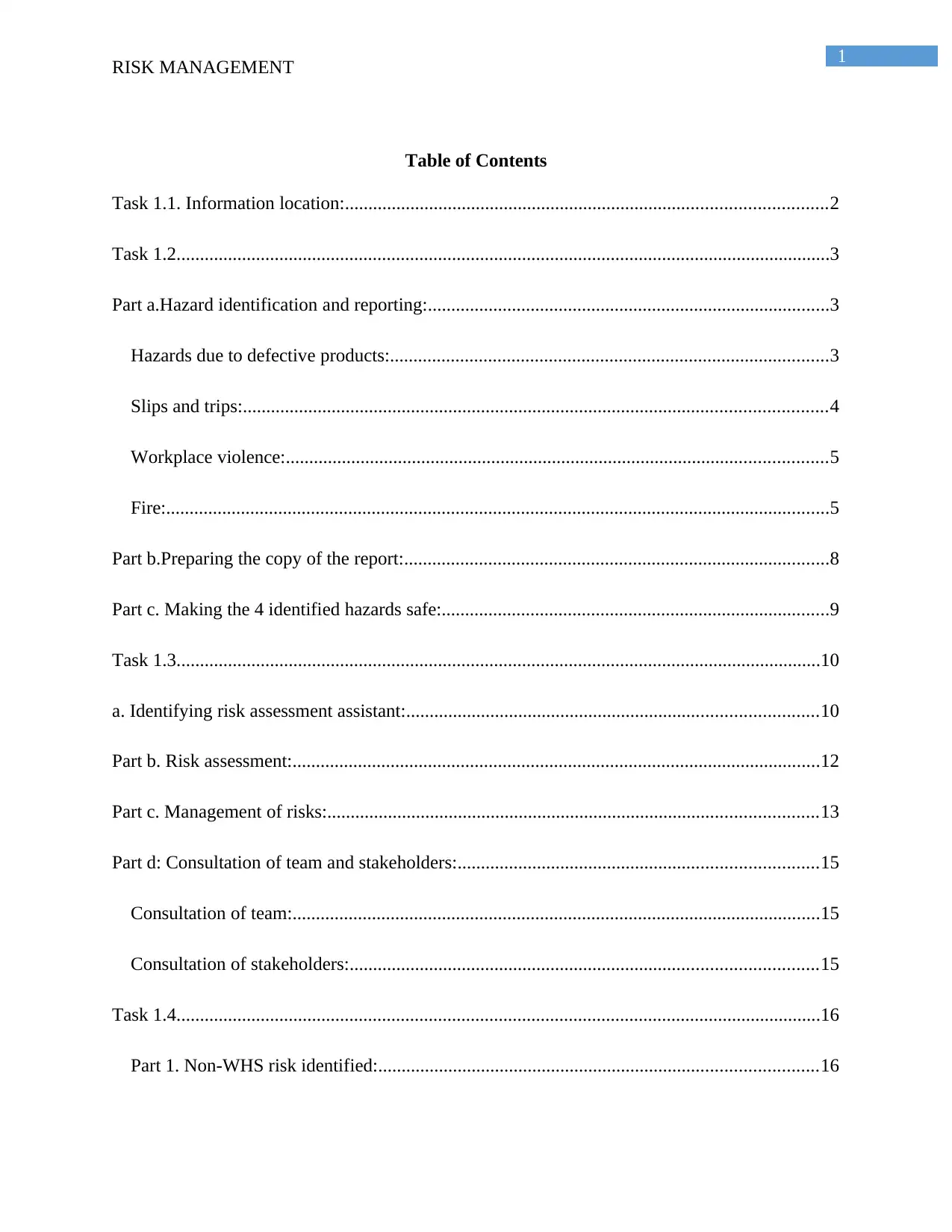
Table of Contents
Task 1.1. Information location:.......................................................................................................2
Task 1.2............................................................................................................................................3
Part a.Hazard identification and reporting:......................................................................................3
Hazards due to defective products:..............................................................................................3
Slips and trips:.............................................................................................................................4
Workplace violence:....................................................................................................................5
Fire:..............................................................................................................................................5
Part b.Preparing the copy of the report:...........................................................................................8
Part c. Making the 4 identified hazards safe:...................................................................................9
Task 1.3..........................................................................................................................................10
a. Identifying risk assessment assistant:........................................................................................10
Part b. Risk assessment:.................................................................................................................12
Part c. Management of risks:.........................................................................................................13
Part d: Consultation of team and stakeholders:.............................................................................15
Consultation of team:.................................................................................................................15
Consultation of stakeholders:....................................................................................................15
Task 1.4..........................................................................................................................................16
Part 1. Non-WHS risk identified:..............................................................................................16
RISK MANAGEMENT
Table of Contents
Task 1.1. Information location:.......................................................................................................2
Task 1.2............................................................................................................................................3
Part a.Hazard identification and reporting:......................................................................................3
Hazards due to defective products:..............................................................................................3
Slips and trips:.............................................................................................................................4
Workplace violence:....................................................................................................................5
Fire:..............................................................................................................................................5
Part b.Preparing the copy of the report:...........................................................................................8
Part c. Making the 4 identified hazards safe:...................................................................................9
Task 1.3..........................................................................................................................................10
a. Identifying risk assessment assistant:........................................................................................10
Part b. Risk assessment:.................................................................................................................12
Part c. Management of risks:.........................................................................................................13
Part d: Consultation of team and stakeholders:.............................................................................15
Consultation of team:.................................................................................................................15
Consultation of stakeholders:....................................................................................................15
Task 1.4..........................................................................................................................................16
Part 1. Non-WHS risk identified:..............................................................................................16
2
RISK MANAGEMENT
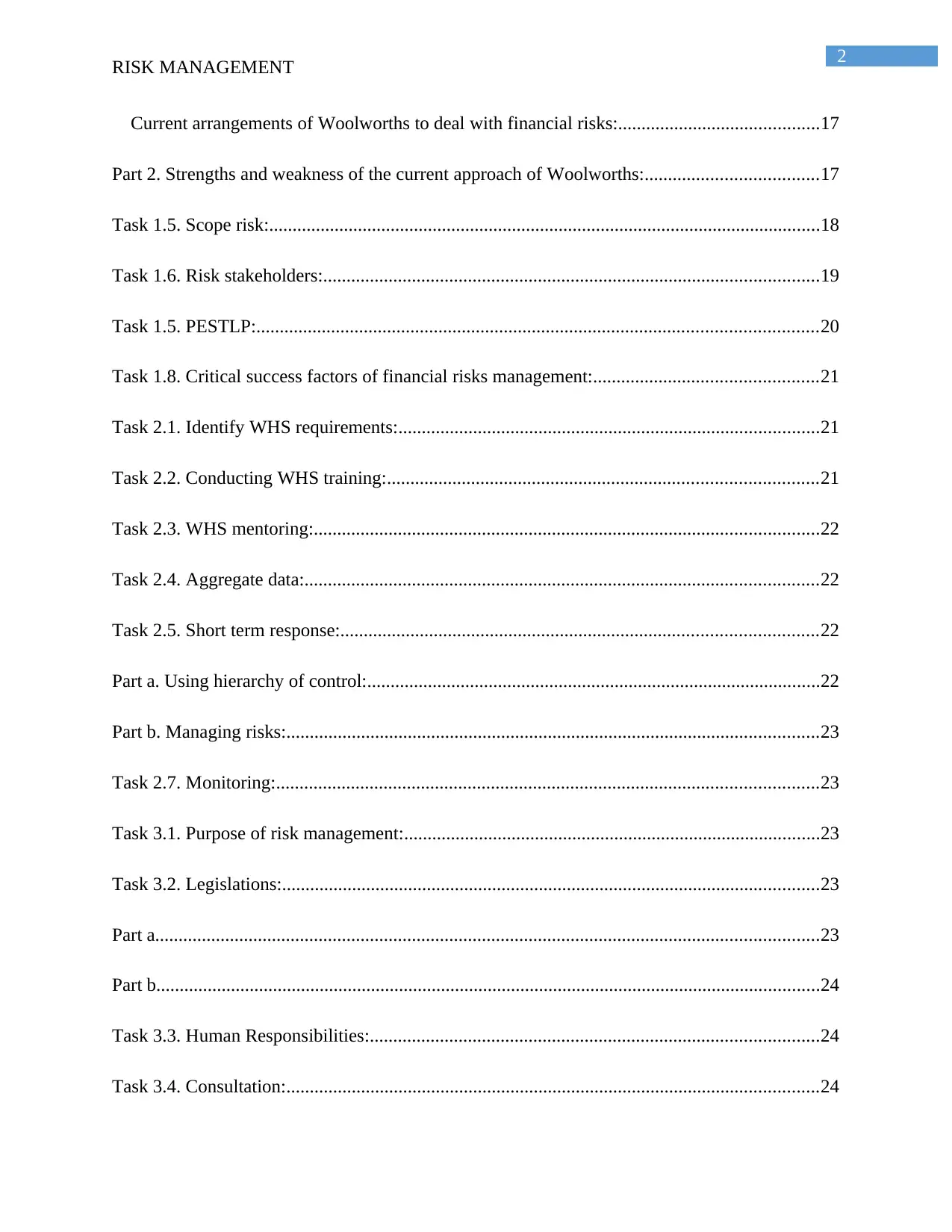
Current arrangements of Woolworths to deal with financial risks:...........................................17
Part 2. Strengths and weakness of the current approach of Woolworths:.....................................17
Task 1.5. Scope risk:......................................................................................................................18
Task 1.6. Risk stakeholders:..........................................................................................................19
Task 1.5. PESTLP:........................................................................................................................20
Task 1.8. Critical success factors of financial risks management:................................................21
Task 2.1. Identify WHS requirements:..........................................................................................21
Task 2.2. Conducting WHS training:............................................................................................21
Task 2.3. WHS mentoring:............................................................................................................22
Task 2.4. Aggregate data:..............................................................................................................22
Task 2.5. Short term response:......................................................................................................22
Part a. Using hierarchy of control:.................................................................................................22
Part b. Managing risks:..................................................................................................................23
Task 2.7. Monitoring:....................................................................................................................23
Task 3.1. Purpose of risk management:.........................................................................................23
Task 3.2. Legislations:...................................................................................................................23
Part a..............................................................................................................................................23
Part b..............................................................................................................................................24
Task 3.3. Human Responsibilities:................................................................................................24
Task 3.4. Consultation:..................................................................................................................24
RISK MANAGEMENT
Current arrangements of Woolworths to deal with financial risks:...........................................17
Part 2. Strengths and weakness of the current approach of Woolworths:.....................................17
Task 1.5. Scope risk:......................................................................................................................18
Task 1.6. Risk stakeholders:..........................................................................................................19
Task 1.5. PESTLP:........................................................................................................................20
Task 1.8. Critical success factors of financial risks management:................................................21
Task 2.1. Identify WHS requirements:..........................................................................................21
Task 2.2. Conducting WHS training:............................................................................................21
Task 2.3. WHS mentoring:............................................................................................................22
Task 2.4. Aggregate data:..............................................................................................................22
Task 2.5. Short term response:......................................................................................................22
Part a. Using hierarchy of control:.................................................................................................22
Part b. Managing risks:..................................................................................................................23
Task 2.7. Monitoring:....................................................................................................................23
Task 3.1. Purpose of risk management:.........................................................................................23
Task 3.2. Legislations:...................................................................................................................23
Part a..............................................................................................................................................23
Part b..............................................................................................................................................24
Task 3.3. Human Responsibilities:................................................................................................24
Task 3.4. Consultation:..................................................................................................................24
⊘ This is a preview!⊘
Do you want full access?
Subscribe today to unlock all pages.

Trusted by 1+ million students worldwide
3
RISK MANAGEMENT
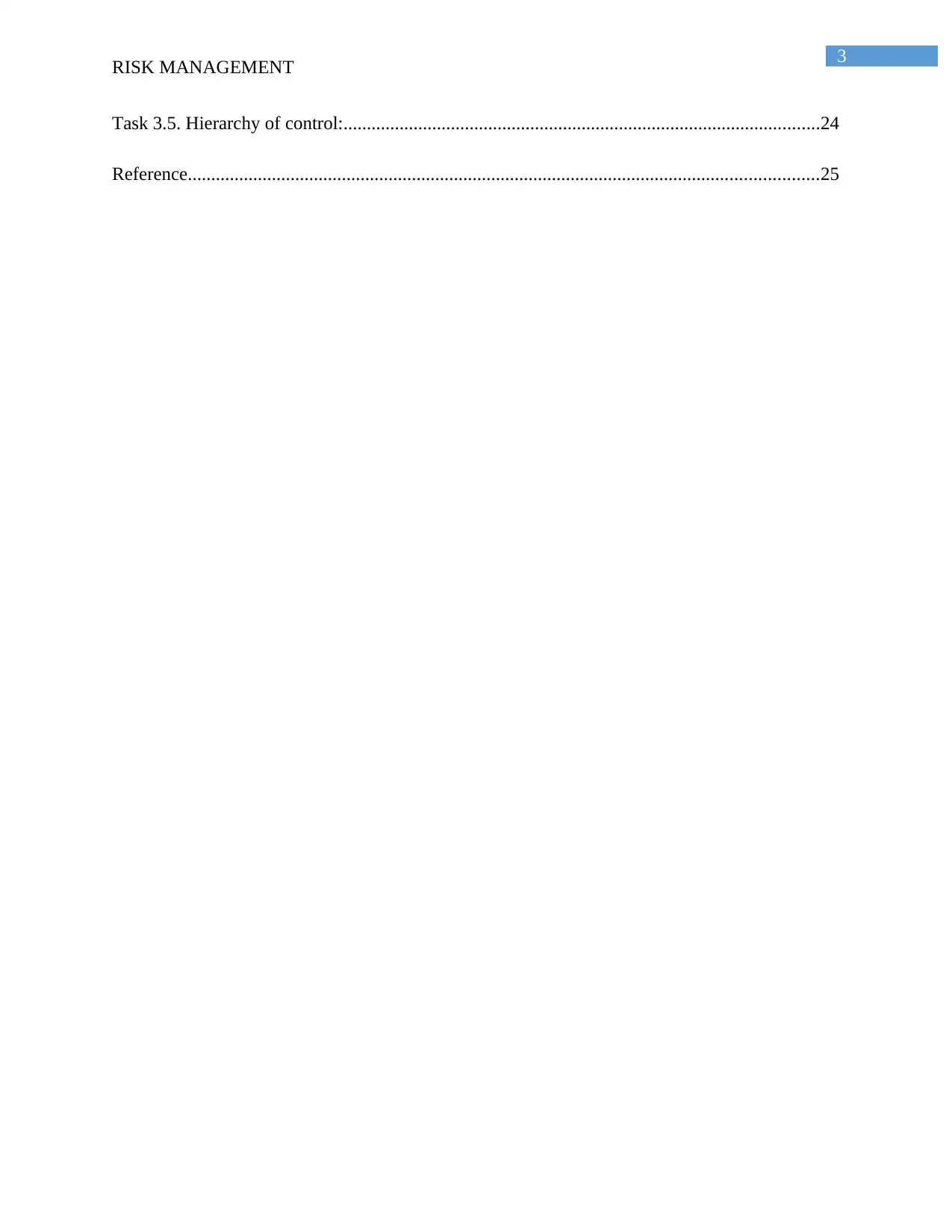
Task 3.5. Hierarchy of control:......................................................................................................24
Reference.......................................................................................................................................25
RISK MANAGEMENT
Task 3.5. Hierarchy of control:......................................................................................................24
Reference.......................................................................................................................................25
Paraphrase This Document
Need a fresh take? Get an instant paraphrase of this document with our AI Paraphraser
4
RISK MANAGEMENT
Task 1.1. Information location:
The information on the work health and safety policies, programmes and procedures in
practice in Woolworths can be found on the official website of the Australian business
conglomerate. The safety guidelines of Woolworths clearly mention that representatives of the
trading partners of the Australian retail giant should follow certain codes of conduct prescribed
under the heading ‘In-Store Guidelines’. The guidelines clearly mention that the staff members
of suppliers and contractors should enter the premises and exit from the same through the front
gate. They should sign at the front gate and obtain visitor permits. The staff members should be
accompanied by appropriate staff members of Woolworths in order to enter the warehouses. The
visitors should sign out before departing from the premises of the business conglomerate. The
page more over provides information regarding specific areas of risk management like glass
breakage (Woolworthsgroup.com.au. 2018). The safety and health policy of Woolworths Group
dated on June 28, 2018 and duly signed by Brad Banducci, CEO, Woolworths Group mentions
that the conglomerate applies risk management to prevent employee injuries and illness as one of
its safety principles. The guideline does not speak explicitly about risk management areas like
identification of hazards, fire emergency and risk reporting. However, the principle of the
business conglomerate to ensure reduction of employee injuries and illness can closely be linked
to these areas of risk management. Moreover, the guidelines prescribed for the staff of third party
business partners clearly mentions that representatives of the contractors and business partners
should enter the store only under the supervision of staff members (Wowlink.com.au. 2018).
These guidelines can be inferred as the measure taken by the management of Woolworths to
ensure smooth evacuation in unfortunate events like fire or any other emergency.
RISK MANAGEMENT
Task 1.1. Information location:
The information on the work health and safety policies, programmes and procedures in
practice in Woolworths can be found on the official website of the Australian business
conglomerate. The safety guidelines of Woolworths clearly mention that representatives of the
trading partners of the Australian retail giant should follow certain codes of conduct prescribed
under the heading ‘In-Store Guidelines’. The guidelines clearly mention that the staff members
of suppliers and contractors should enter the premises and exit from the same through the front
gate. They should sign at the front gate and obtain visitor permits. The staff members should be
accompanied by appropriate staff members of Woolworths in order to enter the warehouses. The
visitors should sign out before departing from the premises of the business conglomerate. The
page more over provides information regarding specific areas of risk management like glass
breakage (Woolworthsgroup.com.au. 2018). The safety and health policy of Woolworths Group
dated on June 28, 2018 and duly signed by Brad Banducci, CEO, Woolworths Group mentions
that the conglomerate applies risk management to prevent employee injuries and illness as one of
its safety principles. The guideline does not speak explicitly about risk management areas like
identification of hazards, fire emergency and risk reporting. However, the principle of the
business conglomerate to ensure reduction of employee injuries and illness can closely be linked
to these areas of risk management. Moreover, the guidelines prescribed for the staff of third party
business partners clearly mentions that representatives of the contractors and business partners
should enter the store only under the supervision of staff members (Wowlink.com.au. 2018).
These guidelines can be inferred as the measure taken by the management of Woolworths to
ensure smooth evacuation in unfortunate events like fire or any other emergency.
5
RISK MANAGEMENT
Task 1.2.
Part a.Hazard identification and reporting:
A hazard identification at the Woolworths Supermarket would identify four hazards
which are capable of injuring employees on duty, customers as well as representatives of
suppliers. They are hazards due to defective products, slips and trips, workplace violence
and bullying and fire.
Hazards due to defective products:
Hazards due to defective products are one of the biggest risks prevailing in
Woolworths Supermarket. Australian Competition & Consumer Commission reports that
Woolworths Supermarket caused hazards risks to consumers due to defective products. The
report further mentions that the supermarket chain misrepresented some of the products like
paddle flop chairs. The report further mentions that some of the products like cleaners and deep
fryers were defective and caused injuries to the consumers (Accc.gov.au. 2018). It can be pointed
out that though the commission did not release any photograph of the defective products, it
mentions that Woolworths had presented inflated features of the products to sell them to
customers. Hazards due to defective products had earned Woolworths a negative image in the
market, thus impairing its goodwill. The Federal Court slapped a penalty of $ 3.057 million on
the retail chain for breaching Australian Consumer Laws. It can be pointed out that though the
hazards were caused to consumers, the hazards could even take place within the retail outlets of
Woolworths. Martino et al.(2015) point out that retail stores are prone to hazards due to spillage
of inflammable items like oil and deodorants. It can be pointed out in the light of the above
discussion that the defective caps and packages of products like oil can lead to fire within the
store (Lee, Song and Cheong 2018).
RISK MANAGEMENT
Task 1.2.
Part a.Hazard identification and reporting:
A hazard identification at the Woolworths Supermarket would identify four hazards
which are capable of injuring employees on duty, customers as well as representatives of
suppliers. They are hazards due to defective products, slips and trips, workplace violence
and bullying and fire.
Hazards due to defective products:
Hazards due to defective products are one of the biggest risks prevailing in
Woolworths Supermarket. Australian Competition & Consumer Commission reports that
Woolworths Supermarket caused hazards risks to consumers due to defective products. The
report further mentions that the supermarket chain misrepresented some of the products like
paddle flop chairs. The report further mentions that some of the products like cleaners and deep
fryers were defective and caused injuries to the consumers (Accc.gov.au. 2018). It can be pointed
out that though the commission did not release any photograph of the defective products, it
mentions that Woolworths had presented inflated features of the products to sell them to
customers. Hazards due to defective products had earned Woolworths a negative image in the
market, thus impairing its goodwill. The Federal Court slapped a penalty of $ 3.057 million on
the retail chain for breaching Australian Consumer Laws. It can be pointed out that though the
hazards were caused to consumers, the hazards could even take place within the retail outlets of
Woolworths. Martino et al.(2015) point out that retail stores are prone to hazards due to spillage
of inflammable items like oil and deodorants. It can be pointed out in the light of the above
discussion that the defective caps and packages of products like oil can lead to fire within the
store (Lee, Song and Cheong 2018).
⊘ This is a preview!⊘
Do you want full access?
Subscribe today to unlock all pages.
Trusted by 1+ million students worldwide
6
RISK MANAGEMENT
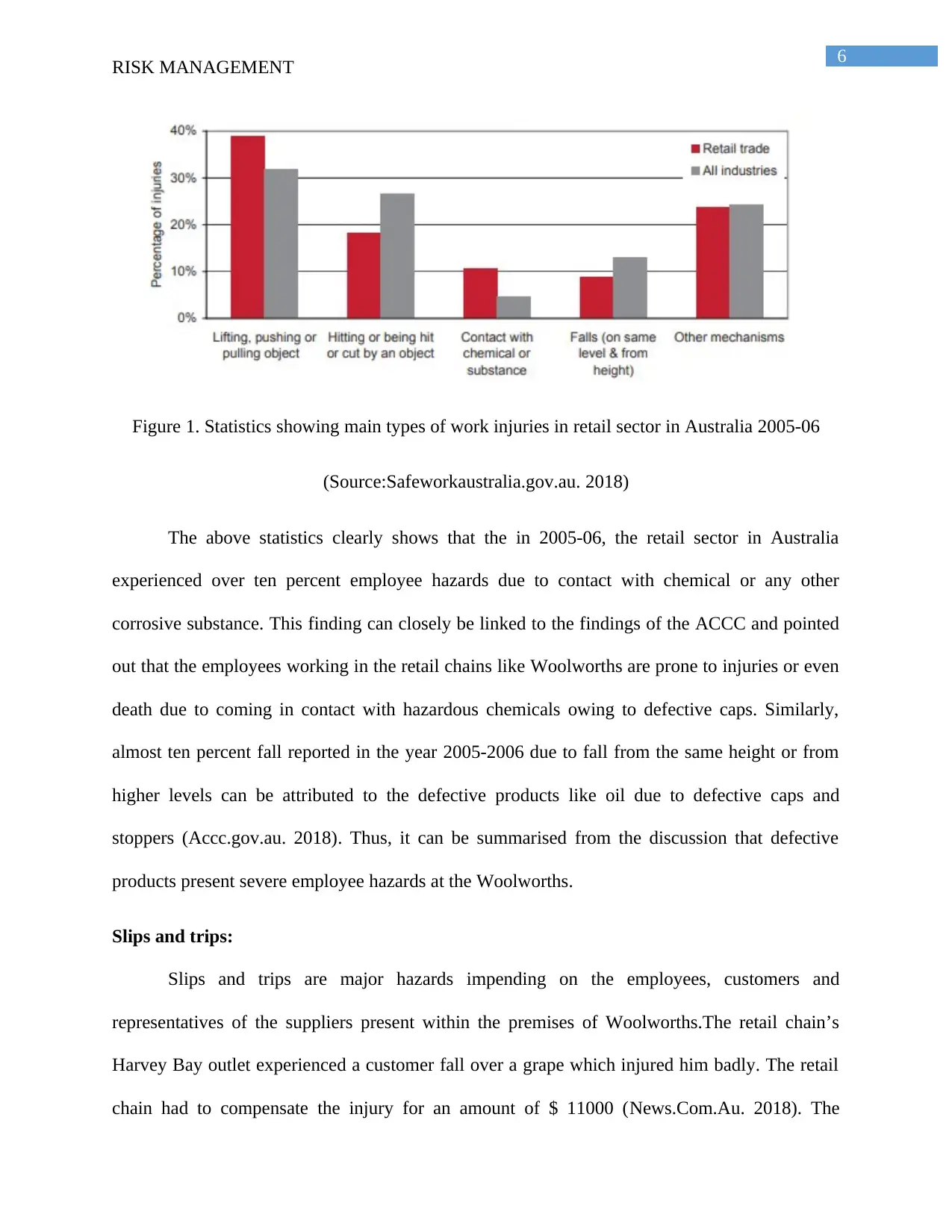
Figure 1. Statistics showing main types of work injuries in retail sector in Australia 2005-06
(Source:Safeworkaustralia.gov.au. 2018)
The above statistics clearly shows that the in 2005-06, the retail sector in Australia
experienced over ten percent employee hazards due to contact with chemical or any other
corrosive substance. This finding can closely be linked to the findings of the ACCC and pointed
out that the employees working in the retail chains like Woolworths are prone to injuries or even
death due to coming in contact with hazardous chemicals owing to defective caps. Similarly,
almost ten percent fall reported in the year 2005-2006 due to fall from the same height or from
higher levels can be attributed to the defective products like oil due to defective caps and
stoppers (Accc.gov.au. 2018). Thus, it can be summarised from the discussion that defective
products present severe employee hazards at the Woolworths.
Slips and trips:
Slips and trips are major hazards impending on the employees, customers and
representatives of the suppliers present within the premises of Woolworths.The retail chain’s
Harvey Bay outlet experienced a customer fall over a grape which injured him badly. The retail
chain had to compensate the injury for an amount of $ 11000 (News.Com.Au. 2018). The
RISK MANAGEMENT
Figure 1. Statistics showing main types of work injuries in retail sector in Australia 2005-06
(Source:Safeworkaustralia.gov.au. 2018)
The above statistics clearly shows that the in 2005-06, the retail sector in Australia
experienced over ten percent employee hazards due to contact with chemical or any other
corrosive substance. This finding can closely be linked to the findings of the ACCC and pointed
out that the employees working in the retail chains like Woolworths are prone to injuries or even
death due to coming in contact with hazardous chemicals owing to defective caps. Similarly,
almost ten percent fall reported in the year 2005-2006 due to fall from the same height or from
higher levels can be attributed to the defective products like oil due to defective caps and
stoppers (Accc.gov.au. 2018). Thus, it can be summarised from the discussion that defective
products present severe employee hazards at the Woolworths.
Slips and trips:
Slips and trips are major hazards impending on the employees, customers and
representatives of the suppliers present within the premises of Woolworths.The retail chain’s
Harvey Bay outlet experienced a customer fall over a grape which injured him badly. The retail
chain had to compensate the injury for an amount of $ 11000 (News.Com.Au. 2018). The
Paraphrase This Document
Need a fresh take? Get an instant paraphrase of this document with our AI Paraphraser
7
RISK MANAGEMENT
hazards due to slip and fall at the Woolworths outlets were not limited to customers and effected
representatives of clients as well as employees alike. The hazards due to slip and fall could be
attributed to the lack of product management within the outlets of Woolworths. This is evident
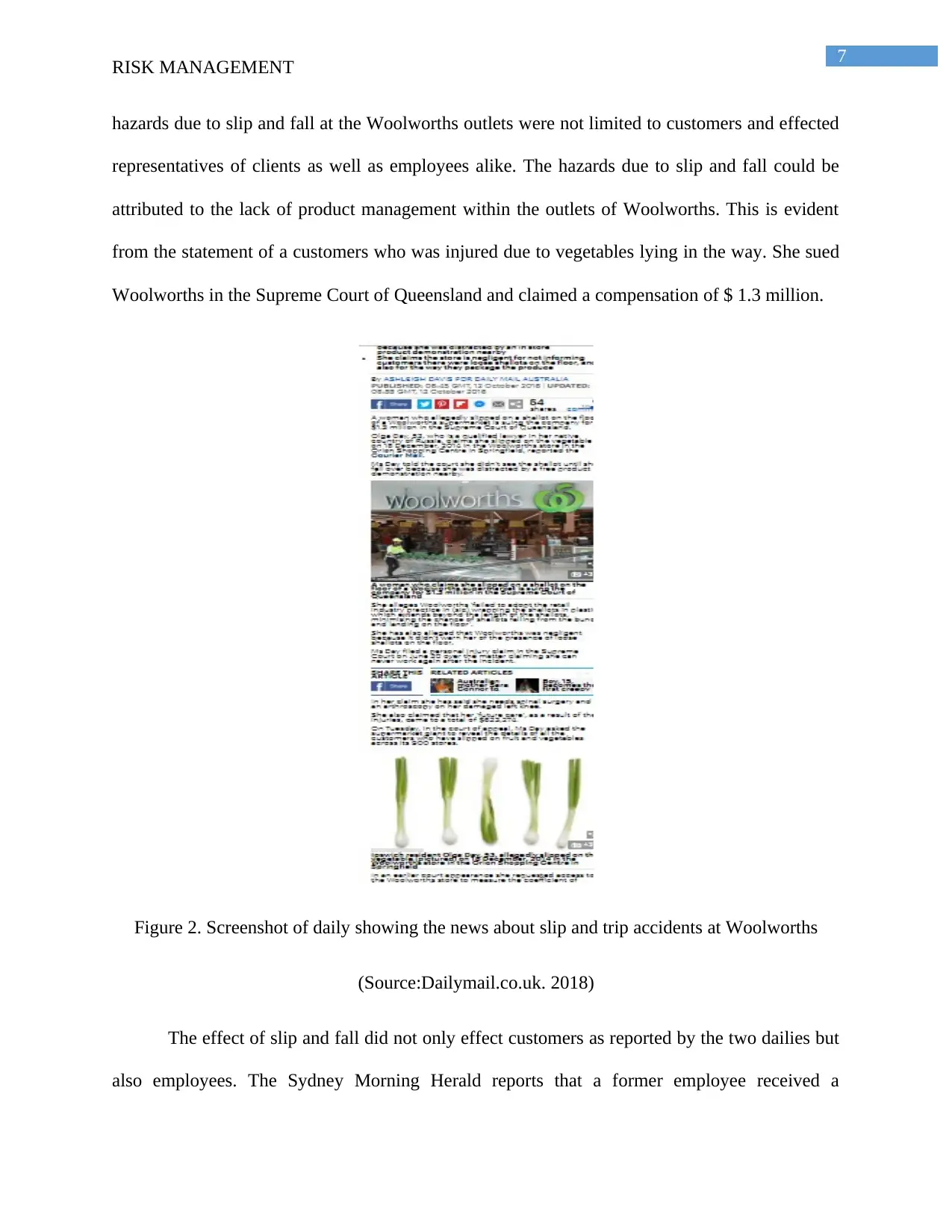
from the statement of a customers who was injured due to vegetables lying in the way. She sued
Woolworths in the Supreme Court of Queensland and claimed a compensation of $ 1.3 million.
Figure 2. Screenshot of daily showing the news about slip and trip accidents at Woolworths
(Source:Dailymail.co.uk. 2018)
The effect of slip and fall did not only effect customers as reported by the two dailies but
also employees. The Sydney Morning Herald reports that a former employee received a
RISK MANAGEMENT
hazards due to slip and fall at the Woolworths outlets were not limited to customers and effected
representatives of clients as well as employees alike. The hazards due to slip and fall could be
attributed to the lack of product management within the outlets of Woolworths. This is evident
from the statement of a customers who was injured due to vegetables lying in the way. She sued
Woolworths in the Supreme Court of Queensland and claimed a compensation of $ 1.3 million.
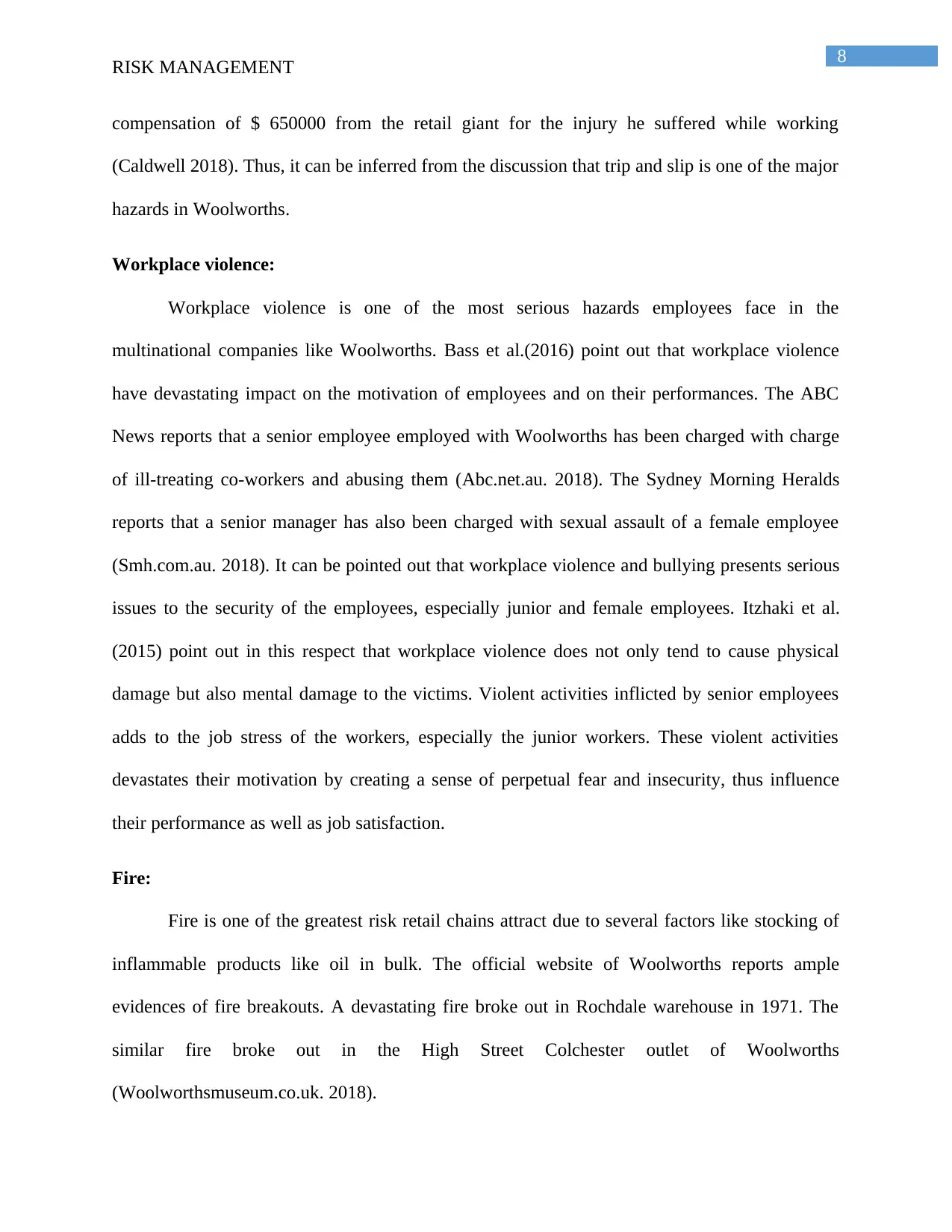
Figure 2. Screenshot of daily showing the news about slip and trip accidents at Woolworths
(Source:Dailymail.co.uk. 2018)
The effect of slip and fall did not only effect customers as reported by the two dailies but
also employees. The Sydney Morning Herald reports that a former employee received a
8
RISK MANAGEMENT
compensation of $ 650000 from the retail giant for the injury he suffered while working
(Caldwell 2018). Thus, it can be inferred from the discussion that trip and slip is one of the major
hazards in Woolworths.
Workplace violence:
Workplace violence is one of the most serious hazards employees face in the
multinational companies like Woolworths. Bass et al.(2016) point out that workplace violence
have devastating impact on the motivation of employees and on their performances. The ABC
News reports that a senior employee employed with Woolworths has been charged with charge
of ill-treating co-workers and abusing them (Abc.net.au. 2018). The Sydney Morning Heralds
reports that a senior manager has also been charged with sexual assault of a female employee
(Smh.com.au. 2018). It can be pointed out that workplace violence and bullying presents serious
issues to the security of the employees, especially junior and female employees. Itzhaki et al.
(2015) point out in this respect that workplace violence does not only tend to cause physical
damage but also mental damage to the victims. Violent activities inflicted by senior employees
adds to the job stress of the workers, especially the junior workers. These violent activities
devastates their motivation by creating a sense of perpetual fear and insecurity, thus influence
their performance as well as job satisfaction.
Fire:
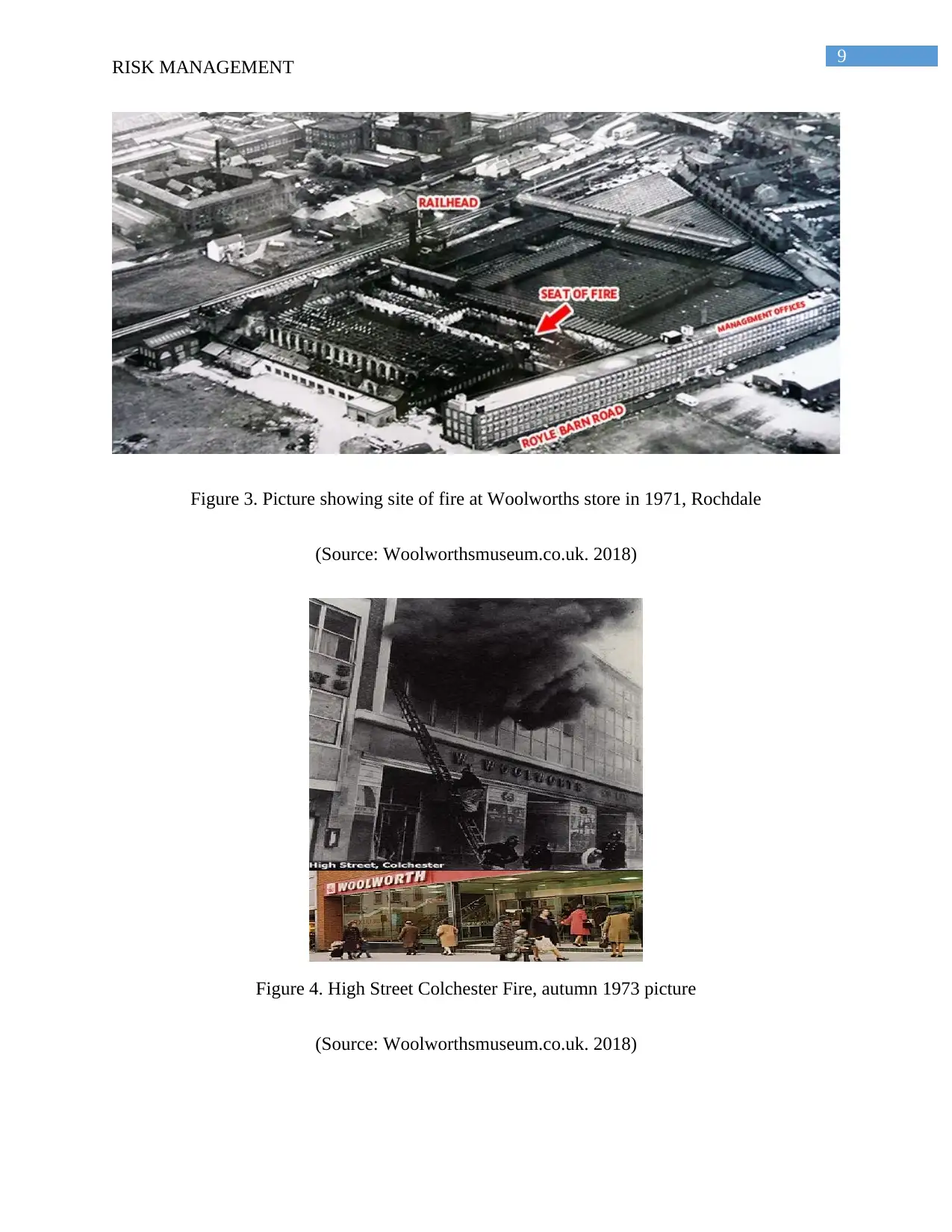
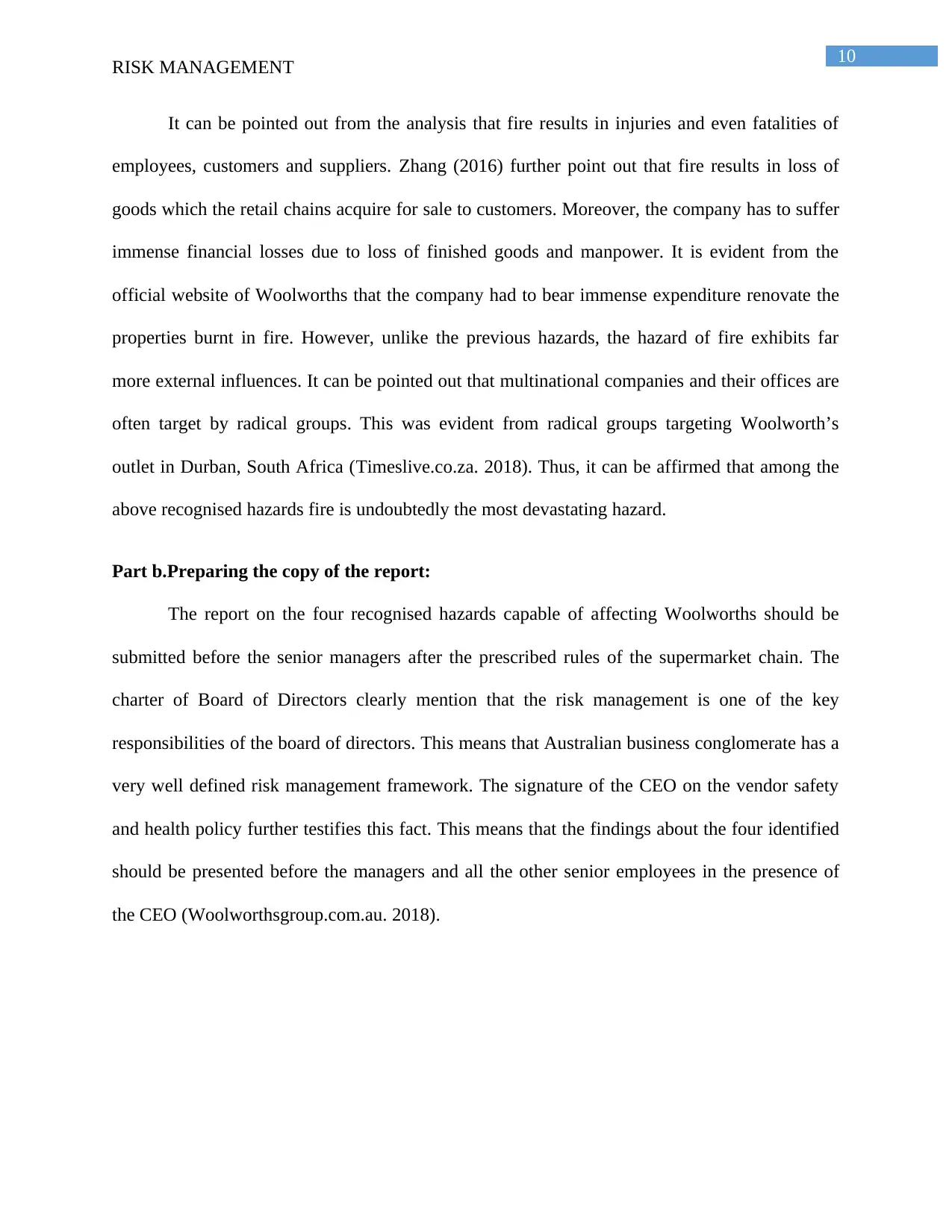
Fire is one of the greatest risk retail chains attract due to several factors like stocking of
inflammable products like oil in bulk. The official website of Woolworths reports ample
evidences of fire breakouts. A devastating fire broke out in Rochdale warehouse in 1971. The
similar fire broke out in the High Street Colchester outlet of Woolworths
(Woolworthsmuseum.co.uk. 2018).
RISK MANAGEMENT
compensation of $ 650000 from the retail giant for the injury he suffered while working
(Caldwell 2018). Thus, it can be inferred from the discussion that trip and slip is one of the major
hazards in Woolworths.
Workplace violence:
Workplace violence is one of the most serious hazards employees face in the
multinational companies like Woolworths. Bass et al.(2016) point out that workplace violence
have devastating impact on the motivation of employees and on their performances. The ABC
News reports that a senior employee employed with Woolworths has been charged with charge
of ill-treating co-workers and abusing them (Abc.net.au. 2018). The Sydney Morning Heralds
reports that a senior manager has also been charged with sexual assault of a female employee
(Smh.com.au. 2018). It can be pointed out that workplace violence and bullying presents serious
issues to the security of the employees, especially junior and female employees. Itzhaki et al.
(2015) point out in this respect that workplace violence does not only tend to cause physical
damage but also mental damage to the victims. Violent activities inflicted by senior employees
adds to the job stress of the workers, especially the junior workers. These violent activities
devastates their motivation by creating a sense of perpetual fear and insecurity, thus influence
their performance as well as job satisfaction.
Fire:
Fire is one of the greatest risk retail chains attract due to several factors like stocking of
inflammable products like oil in bulk. The official website of Woolworths reports ample
evidences of fire breakouts. A devastating fire broke out in Rochdale warehouse in 1971. The
similar fire broke out in the High Street Colchester outlet of Woolworths
(Woolworthsmuseum.co.uk. 2018).
⊘ This is a preview!⊘
Do you want full access?
Subscribe today to unlock all pages.
Trusted by 1+ million students worldwide
9
RISK MANAGEMENT
Figure 3. Picture showing site of fire at Woolworths store in 1971, Rochdale
(Source: Woolworthsmuseum.co.uk. 2018)
Figure 4. High Street Colchester Fire, autumn 1973 picture
(Source: Woolworthsmuseum.co.uk. 2018)
RISK MANAGEMENT
Figure 3. Picture showing site of fire at Woolworths store in 1971, Rochdale
(Source: Woolworthsmuseum.co.uk. 2018)
Figure 4. High Street Colchester Fire, autumn 1973 picture
(Source: Woolworthsmuseum.co.uk. 2018)
Paraphrase This Document
Need a fresh take? Get an instant paraphrase of this document with our AI Paraphraser
10
RISK MANAGEMENT
It can be pointed out from the analysis that fire results in injuries and even fatalities of
employees, customers and suppliers. Zhang (2016) further point out that fire results in loss of
goods which the retail chains acquire for sale to customers. Moreover, the company has to suffer
immense financial losses due to loss of finished goods and manpower. It is evident from the
official website of Woolworths that the company had to bear immense expenditure renovate the
properties burnt in fire. However, unlike the previous hazards, the hazard of fire exhibits far
more external influences. It can be pointed out that multinational companies and their offices are
often target by radical groups. This was evident from radical groups targeting Woolworth’s
outlet in Durban, South Africa (Timeslive.co.za. 2018). Thus, it can be affirmed that among the
above recognised hazards fire is undoubtedly the most devastating hazard.
Part b.Preparing the copy of the report:
The report on the four recognised hazards capable of affecting Woolworths should be
submitted before the senior managers after the prescribed rules of the supermarket chain. The
charter of Board of Directors clearly mention that the risk management is one of the key
responsibilities of the board of directors. This means that Australian business conglomerate has a
very well defined risk management framework. The signature of the CEO on the vendor safety
and health policy further testifies this fact. This means that the findings about the four identified
should be presented before the managers and all the other senior employees in the presence of
the CEO (Woolworthsgroup.com.au. 2018).
RISK MANAGEMENT
It can be pointed out from the analysis that fire results in injuries and even fatalities of
employees, customers and suppliers. Zhang (2016) further point out that fire results in loss of
goods which the retail chains acquire for sale to customers. Moreover, the company has to suffer
immense financial losses due to loss of finished goods and manpower. It is evident from the
official website of Woolworths that the company had to bear immense expenditure renovate the
properties burnt in fire. However, unlike the previous hazards, the hazard of fire exhibits far
more external influences. It can be pointed out that multinational companies and their offices are
often target by radical groups. This was evident from radical groups targeting Woolworth’s
outlet in Durban, South Africa (Timeslive.co.za. 2018). Thus, it can be affirmed that among the
above recognised hazards fire is undoubtedly the most devastating hazard.
Part b.Preparing the copy of the report:
The report on the four recognised hazards capable of affecting Woolworths should be
submitted before the senior managers after the prescribed rules of the supermarket chain. The
charter of Board of Directors clearly mention that the risk management is one of the key
responsibilities of the board of directors. This means that Australian business conglomerate has a
very well defined risk management framework. The signature of the CEO on the vendor safety
and health policy further testifies this fact. This means that the findings about the four identified
should be presented before the managers and all the other senior employees in the presence of
the CEO (Woolworthsgroup.com.au. 2018).
11
RISK MANAGEMENT
Part c. Making the 4 identified hazards safe:
Hazards Safety steps taken Pictures
Hazards due to
defective products, ,
1. Strong quality assurance
2. A body of quality experts who would be
responsible for checking the products
being acquired for sale to customers.
3. Inspections of production facilities and
warehouses of suppliers.
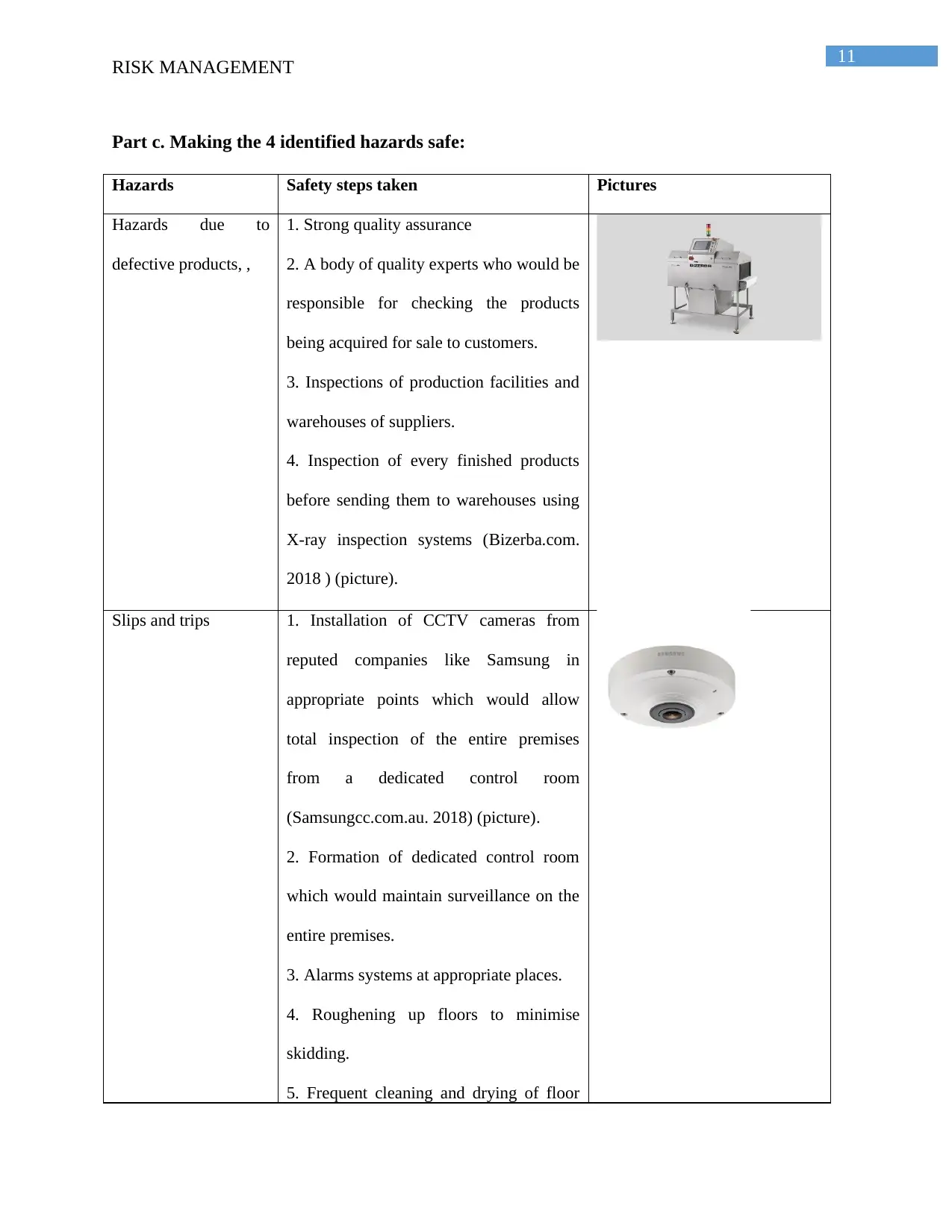
4. Inspection of every finished products
before sending them to warehouses using
X-ray inspection systems (Bizerba.com.
2018 ) (picture).
Slips and trips 1. Installation of CCTV cameras from
reputed companies like Samsung in
appropriate points which would allow
total inspection of the entire premises
from a dedicated control room
(Samsungcc.com.au. 2018) (picture).
2. Formation of dedicated control room
which would maintain surveillance on the
entire premises.
3. Alarms systems at appropriate places.
4. Roughening up floors to minimise
skidding.
5. Frequent cleaning and drying of floor
RISK MANAGEMENT
Part c. Making the 4 identified hazards safe:
Hazards Safety steps taken Pictures
Hazards due to
defective products, ,
1. Strong quality assurance
2. A body of quality experts who would be
responsible for checking the products
being acquired for sale to customers.
3. Inspections of production facilities and
warehouses of suppliers.
4. Inspection of every finished products
before sending them to warehouses using
X-ray inspection systems (Bizerba.com.
2018 ) (picture).
Slips and trips 1. Installation of CCTV cameras from
reputed companies like Samsung in
appropriate points which would allow
total inspection of the entire premises
from a dedicated control room
(Samsungcc.com.au. 2018) (picture).
2. Formation of dedicated control room
which would maintain surveillance on the
entire premises.
3. Alarms systems at appropriate places.
4. Roughening up floors to minimise
skidding.
5. Frequent cleaning and drying of floor
⊘ This is a preview!⊘
Do you want full access?
Subscribe today to unlock all pages.
Trusted by 1+ million students worldwide

1 out of 34


Related Documents


Your All-in-One AI-Powered Toolkit for Academic Success.
+13062052269
info@desklib.com
Available 24*7 on WhatsApp / Email
![[object Object]](/_next/static/media/star-bottom.7253800d.svg)
Unlock your academic potential
Copyright © 2020–2025 A2Z Services. All Rights Reserved. Developed and managed by ZUCOL.