Walden University DBA: Workplace Performance Improvement Strategies
VerifiedAdded on 2023/06/10
|138
|36005
|128
Project
AI Summary
This doctoral study from Walden University investigates strategies to enhance workplace performance. The research, based on a single case study, explores the impact of various factors on employee engagement and productivity. The study uses Maslow’s hierarchy of needs as its conceptual framework and collects data through interviews with managers and employees. Key themes that emerged include workplace environment, feedback mechanisms, management relationships, workplace barriers, and recruitment/promotion strategies. The findings suggest that organizational leaders can boost performance by fostering a positive work environment, providing motivational tools, and encouraging collaborative decision-making. The study emphasizes the importance of employee retention and suggests that an enriched workplace environment can improve retention rates. The study also includes a detailed review of relevant literature, the research methodology, and practical applications for professional practice and implications for social change.
Walden University
ScholarWorks
Walden Dissertations and Doctoral Studies Walden Dissertations and Doctoral Studies
Collection
2014
Enhancing Strategies to Improve Workpla
Performance
Francine Williams Richardson
Walden University
Follow this and additional works at: http://scholarworks.waldenu.edu/dissertations
Part of the Business Commons, and the Ethics and Political Philosophy Commons
This Dissertation is brought to you for free and open access by the Walden Dissertations and Doctoral Studies Collection at ScholarW
accepted for inclusion in Walden Dissertations and Doctoral Studies by an authorized administrator of ScholarWorks. For more inform
contact ScholarWorks@waldenu.edu.
ScholarWorks
Walden Dissertations and Doctoral Studies Walden Dissertations and Doctoral Studies
Collection
2014
Enhancing Strategies to Improve Workpla
Performance
Francine Williams Richardson
Walden University
Follow this and additional works at: http://scholarworks.waldenu.edu/dissertations
Part of the Business Commons, and the Ethics and Political Philosophy Commons
This Dissertation is brought to you for free and open access by the Walden Dissertations and Doctoral Studies Collection at ScholarW
accepted for inclusion in Walden Dissertations and Doctoral Studies by an authorized administrator of ScholarWorks. For more inform
contact ScholarWorks@waldenu.edu.

Paraphrase This Document
Need a fresh take? Get an instant paraphrase of this document with our AI Paraphraser
Walden University
College of Management and Technology
This is to certify that the doctoral study by
Francine Richardson
has been found to be complete and satisfactory in all respects,
and that any and all revisions required by
the review committee have been made.
Review Committee
Dr. Robert Miller, Committee Chairperson, Doctor of Business Administration Faculty
Dr. Ronald McFarland, Committee Member, Doctor of Business Administration Faculty
Dr. Bruce Lazar, University Reviewer, Doctor of Business Administration Faculty
Chief Academic Officer
Eric Riedel, Ph.D.
Walden University
2014
College of Management and Technology
This is to certify that the doctoral study by
Francine Richardson
has been found to be complete and satisfactory in all respects,
and that any and all revisions required by
the review committee have been made.
Review Committee
Dr. Robert Miller, Committee Chairperson, Doctor of Business Administration Faculty
Dr. Ronald McFarland, Committee Member, Doctor of Business Administration Faculty
Dr. Bruce Lazar, University Reviewer, Doctor of Business Administration Faculty
Chief Academic Officer
Eric Riedel, Ph.D.
Walden University
2014
Abstract
Enhancing Strategies to Improve Workplace Performance
by
Francine W. Richardson
MPA, Albany State University, 2009
BS, Albany State University, 2006
Doctoral Study Submitted in Partial Fulfillment
of the Requirements for the Degree of
Doctor of Business Administration
Walden University
December 2014
Enhancing Strategies to Improve Workplace Performance
by
Francine W. Richardson
MPA, Albany State University, 2009
BS, Albany State University, 2006
Doctoral Study Submitted in Partial Fulfillment
of the Requirements for the Degree of
Doctor of Business Administration
Walden University
December 2014
⊘ This is a preview!⊘
Do you want full access?
Subscribe today to unlock all pages.

Trusted by 1+ million students worldwide
Abstract
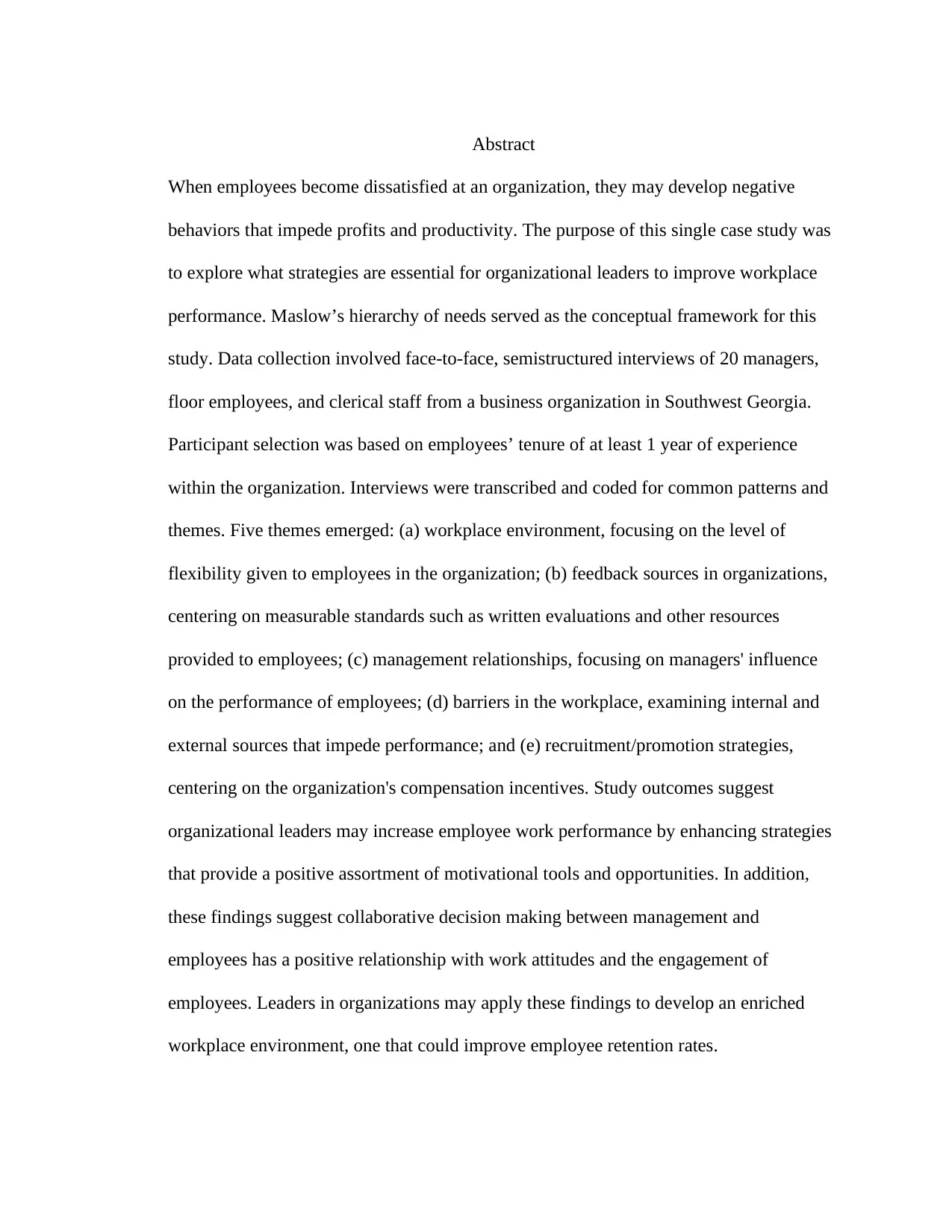
When employees become dissatisfied at an organization, they may develop negative
behaviors that impede profits and productivity. The purpose of this single case study was
to explore what strategies are essential for organizational leaders to improve workplace
performance. Maslow’s hierarchy of needs served as the conceptual framework for this
study. Data collection involved face-to-face, semistructured interviews of 20 managers,
floor employees, and clerical staff from a business organization in Southwest Georgia.
Participant selection was based on employees’ tenure of at least 1 year of experience
within the organization. Interviews were transcribed and coded for common patterns and
themes. Five themes emerged: (a) workplace environment, focusing on the level of
flexibility given to employees in the organization; (b) feedback sources in organizations,
centering on measurable standards such as written evaluations and other resources
provided to employees; (c) management relationships, focusing on managers' influence
on the performance of employees; (d) barriers in the workplace, examining internal and
external sources that impede performance; and (e) recruitment/promotion strategies,
centering on the organization's compensation incentives. Study outcomes suggest
organizational leaders may increase employee work performance by enhancing strategies
that provide a positive assortment of motivational tools and opportunities. In addition,
these findings suggest collaborative decision making between management and
employees has a positive relationship with work attitudes and the engagement of
employees. Leaders in organizations may apply these findings to develop an enriched
workplace environment, one that could improve employee retention rates.
When employees become dissatisfied at an organization, they may develop negative
behaviors that impede profits and productivity. The purpose of this single case study was
to explore what strategies are essential for organizational leaders to improve workplace
performance. Maslow’s hierarchy of needs served as the conceptual framework for this
study. Data collection involved face-to-face, semistructured interviews of 20 managers,
floor employees, and clerical staff from a business organization in Southwest Georgia.
Participant selection was based on employees’ tenure of at least 1 year of experience
within the organization. Interviews were transcribed and coded for common patterns and
themes. Five themes emerged: (a) workplace environment, focusing on the level of
flexibility given to employees in the organization; (b) feedback sources in organizations,
centering on measurable standards such as written evaluations and other resources
provided to employees; (c) management relationships, focusing on managers' influence
on the performance of employees; (d) barriers in the workplace, examining internal and
external sources that impede performance; and (e) recruitment/promotion strategies,
centering on the organization's compensation incentives. Study outcomes suggest
organizational leaders may increase employee work performance by enhancing strategies
that provide a positive assortment of motivational tools and opportunities. In addition,
these findings suggest collaborative decision making between management and
employees has a positive relationship with work attitudes and the engagement of
employees. Leaders in organizations may apply these findings to develop an enriched
workplace environment, one that could improve employee retention rates.
Paraphrase This Document
Need a fresh take? Get an instant paraphrase of this document with our AI Paraphraser
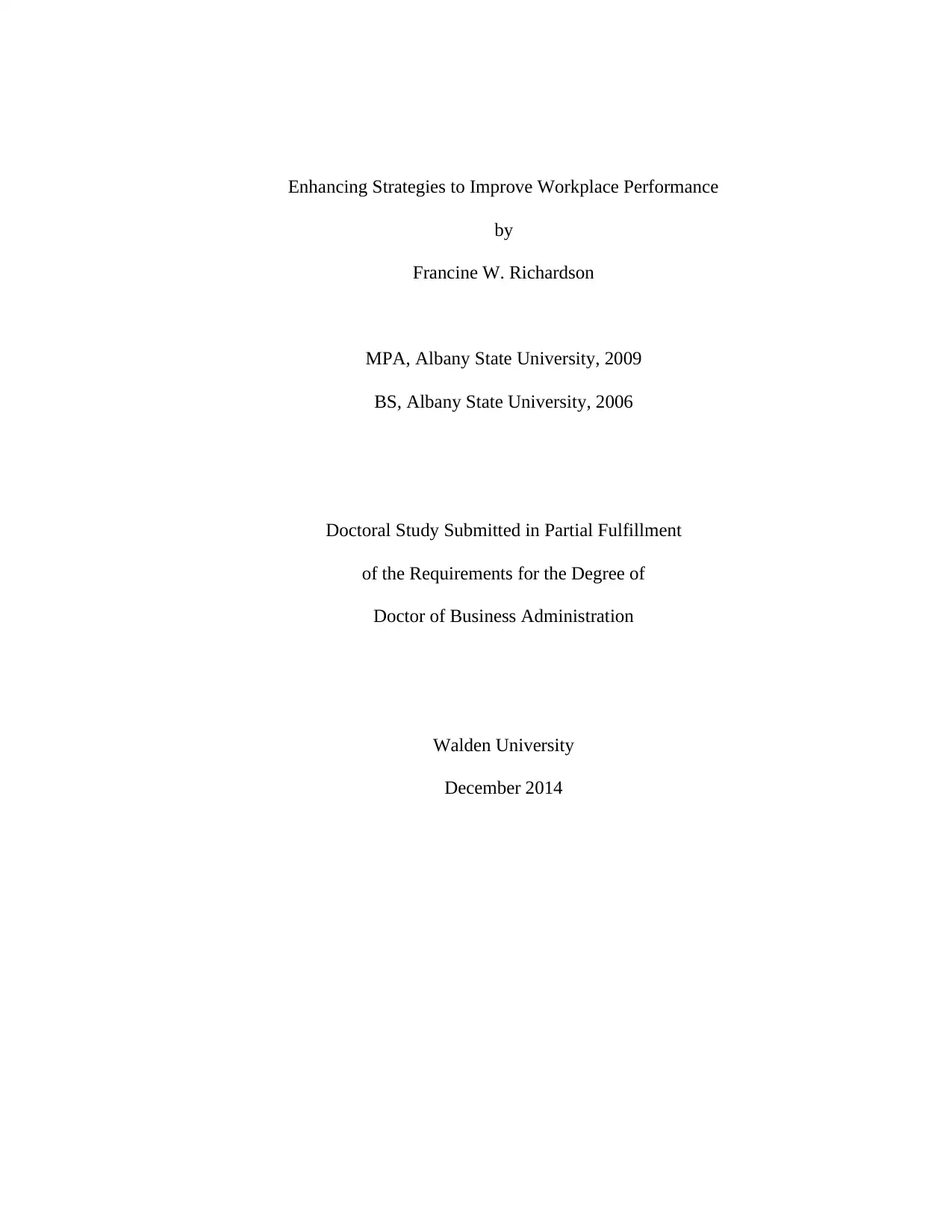
Enhancing Strategies to Improve Workplace Performance
by
Francine W. Richardson
MPA, Albany State University, 2009
BS, Albany State University, 2006
Doctoral Study Submitted in Partial Fulfillment
of the Requirements for the Degree of
Doctor of Business Administration
Walden University
December 2014
by
Francine W. Richardson
MPA, Albany State University, 2009
BS, Albany State University, 2006
Doctoral Study Submitted in Partial Fulfillment
of the Requirements for the Degree of
Doctor of Business Administration
Walden University
December 2014

Dedication
To my loving mother, who has given me encouragement and support. To my
children, Devone and Sharletta, who always ensure me I am never too old to accomplish
any goal.
To my loving mother, who has given me encouragement and support. To my
children, Devone and Sharletta, who always ensure me I am never too old to accomplish
any goal.
⊘ This is a preview!⊘
Do you want full access?
Subscribe today to unlock all pages.
Trusted by 1+ million students worldwide
Acknowledgments
I acknowledge my chair, Dr. Robert Miller, who has been an astonishing
inspiration throughout this challenging process. I also acknowledge Dr. Turner and my
committee members, Dr. McFarland, Dr. Fusch, and Dr. Lazar, for the challenging
deliverance of doctoral work. Thank all of you for your professional guidance and
feedback throughout this process.
I acknowledge my chair, Dr. Robert Miller, who has been an astonishing
inspiration throughout this challenging process. I also acknowledge Dr. Turner and my
committee members, Dr. McFarland, Dr. Fusch, and Dr. Lazar, for the challenging
deliverance of doctoral work. Thank all of you for your professional guidance and
feedback throughout this process.
Paraphrase This Document
Need a fresh take? Get an instant paraphrase of this document with our AI Paraphraser
i
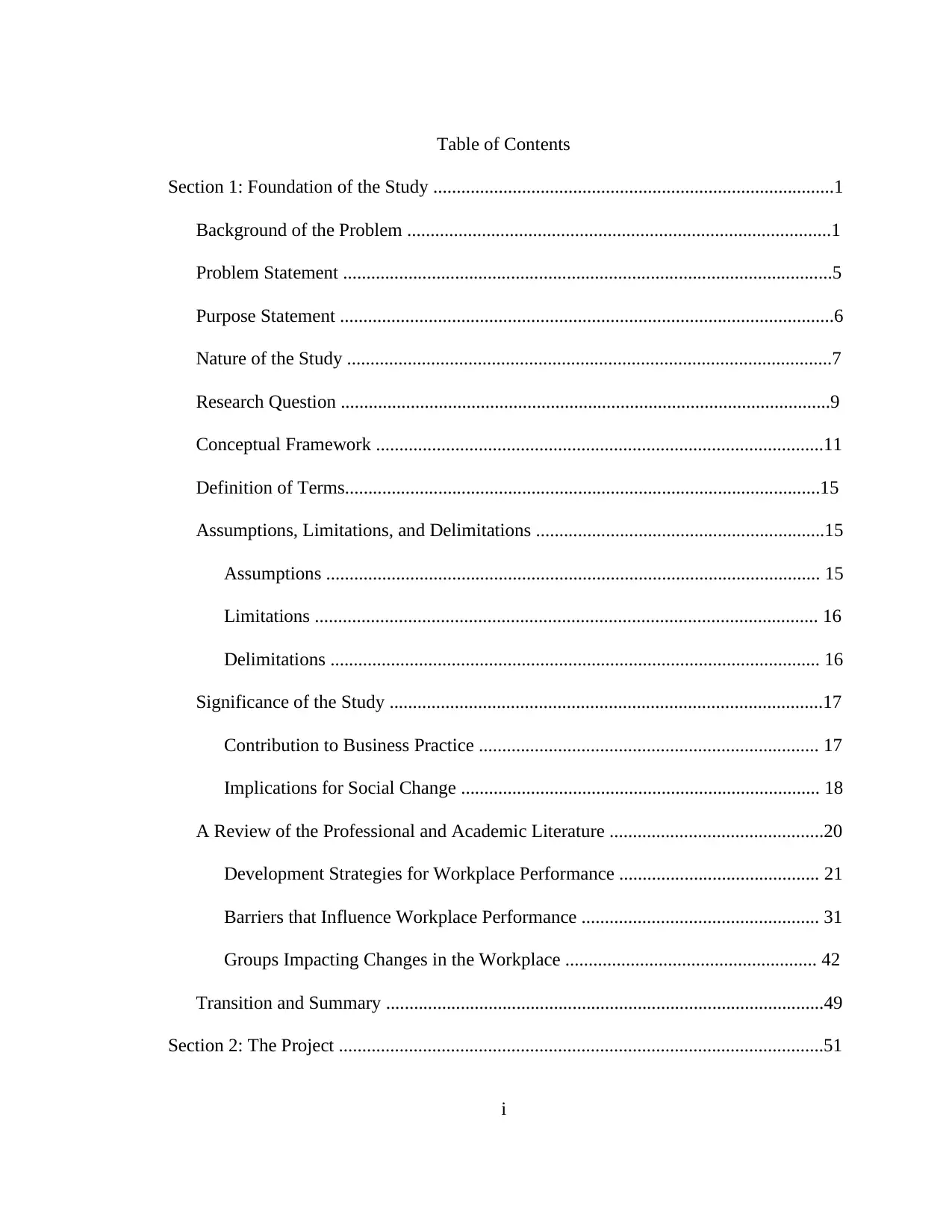
Table of Contents
Section 1: Foundation of the Study ......................................................................................1
Background of the Problem ...........................................................................................1
Problem Statement .........................................................................................................5
Purpose Statement ..........................................................................................................6
Nature of the Study ........................................................................................................7
Research Question .........................................................................................................9
Conceptual Framework ................................................................................................11
Definition of Terms......................................................................................................15
Assumptions, Limitations, and Delimitations ..............................................................15
Assumptions .......................................................................................................... 15
Limitations ............................................................................................................ 16
Delimitations ......................................................................................................... 16
Significance of the Study .............................................................................................17
Contribution to Business Practice ......................................................................... 17
Implications for Social Change ............................................................................. 18
A Review of the Professional and Academic Literature ..............................................20
Development Strategies for Workplace Performance ........................................... 21
Barriers that Influence Workplace Performance ................................................... 31
Groups Impacting Changes in the Workplace ...................................................... 42
Transition and Summary ..............................................................................................49
Section 2: The Project ........................................................................................................51
Table of Contents
Section 1: Foundation of the Study ......................................................................................1
Background of the Problem ...........................................................................................1
Problem Statement .........................................................................................................5
Purpose Statement ..........................................................................................................6
Nature of the Study ........................................................................................................7
Research Question .........................................................................................................9
Conceptual Framework ................................................................................................11
Definition of Terms......................................................................................................15
Assumptions, Limitations, and Delimitations ..............................................................15
Assumptions .......................................................................................................... 15
Limitations ............................................................................................................ 16
Delimitations ......................................................................................................... 16
Significance of the Study .............................................................................................17
Contribution to Business Practice ......................................................................... 17
Implications for Social Change ............................................................................. 18
A Review of the Professional and Academic Literature ..............................................20
Development Strategies for Workplace Performance ........................................... 21
Barriers that Influence Workplace Performance ................................................... 31
Groups Impacting Changes in the Workplace ...................................................... 42
Transition and Summary ..............................................................................................49
Section 2: The Project ........................................................................................................51
ii
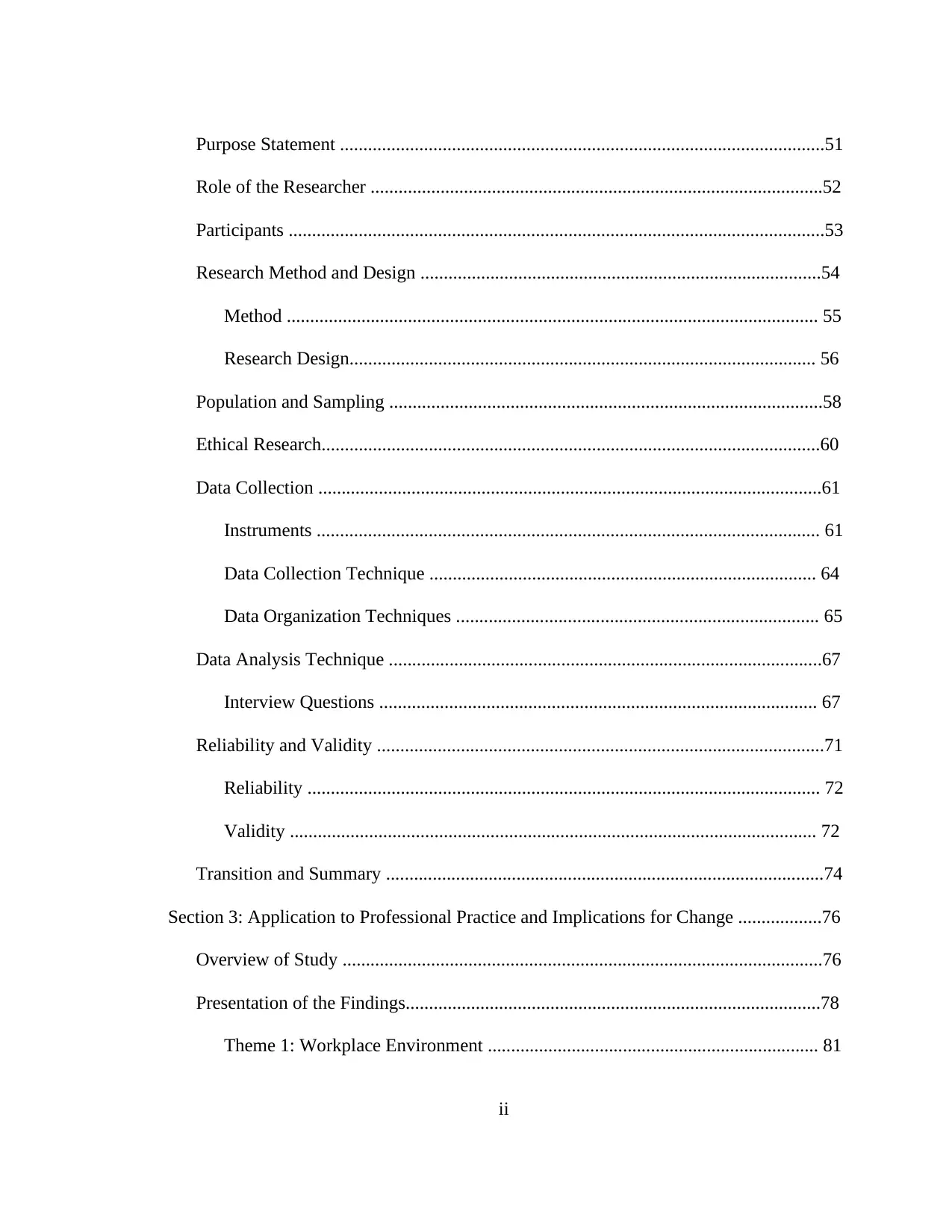
Purpose Statement ........................................................................................................51
Role of the Researcher .................................................................................................52
Participants ...................................................................................................................53
Research Method and Design ......................................................................................54
Method .................................................................................................................. 55
Research Design.................................................................................................... 56
Population and Sampling .............................................................................................58
Ethical Research...........................................................................................................60
Data Collection ............................................................................................................61
Instruments ............................................................................................................ 61
Data Collection Technique ................................................................................... 64
Data Organization Techniques .............................................................................. 65
Data Analysis Technique .............................................................................................67
Interview Questions .............................................................................................. 67
Reliability and Validity ................................................................................................71
Reliability .............................................................................................................. 72
Validity ................................................................................................................. 72
Transition and Summary ..............................................................................................74
Section 3: Application to Professional Practice and Implications for Change ..................76
Overview of Study .......................................................................................................76
Presentation of the Findings.........................................................................................78
Theme 1: Workplace Environment ....................................................................... 81
Purpose Statement ........................................................................................................51
Role of the Researcher .................................................................................................52
Participants ...................................................................................................................53
Research Method and Design ......................................................................................54
Method .................................................................................................................. 55
Research Design.................................................................................................... 56
Population and Sampling .............................................................................................58
Ethical Research...........................................................................................................60
Data Collection ............................................................................................................61
Instruments ............................................................................................................ 61
Data Collection Technique ................................................................................... 64
Data Organization Techniques .............................................................................. 65
Data Analysis Technique .............................................................................................67
Interview Questions .............................................................................................. 67
Reliability and Validity ................................................................................................71
Reliability .............................................................................................................. 72
Validity ................................................................................................................. 72
Transition and Summary ..............................................................................................74
Section 3: Application to Professional Practice and Implications for Change ..................76
Overview of Study .......................................................................................................76
Presentation of the Findings.........................................................................................78
Theme 1: Workplace Environment ....................................................................... 81
⊘ This is a preview!⊘
Do you want full access?
Subscribe today to unlock all pages.
Trusted by 1+ million students worldwide
iii
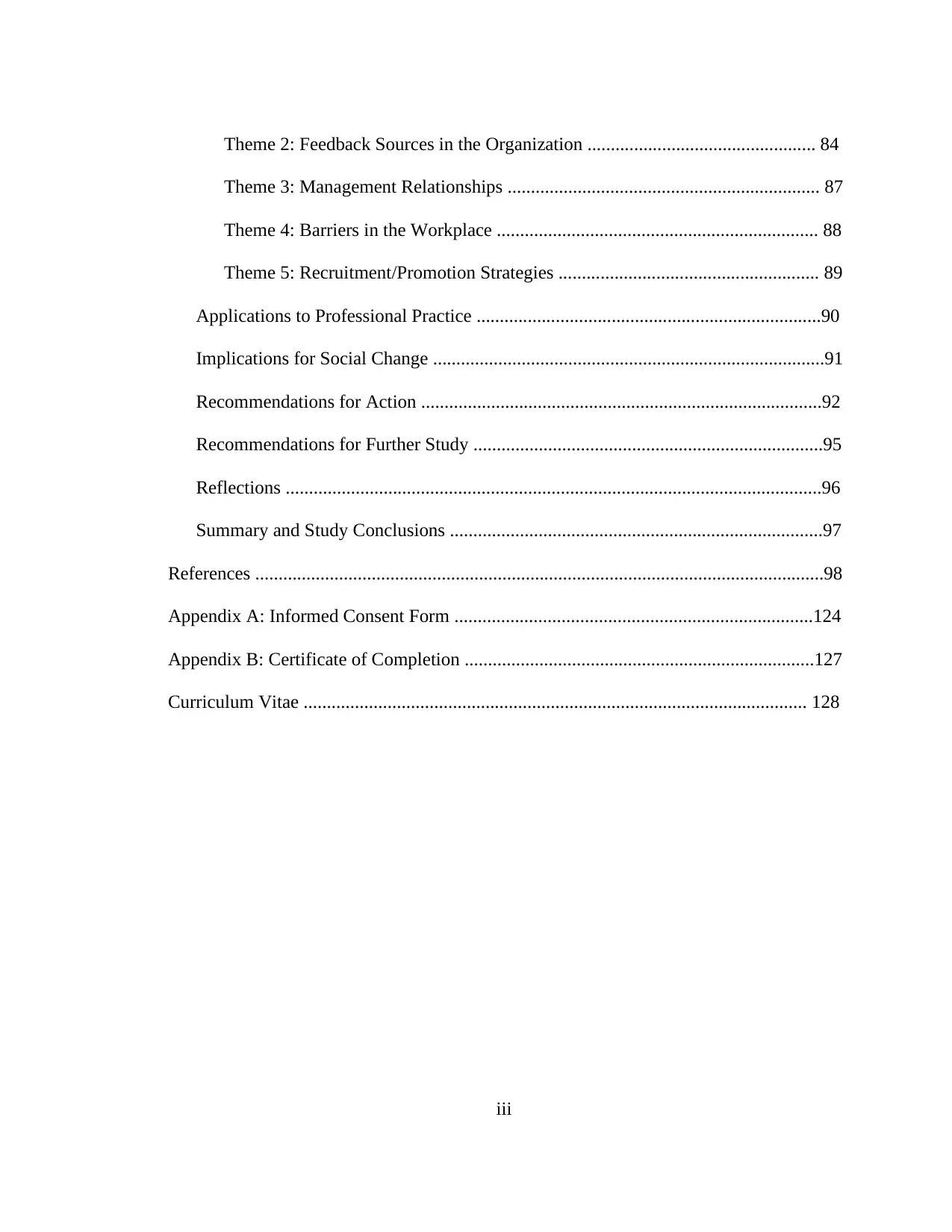
Theme 2: Feedback Sources in the Organization ................................................. 84
Theme 3: Management Relationships ................................................................... 87
Theme 4: Barriers in the Workplace ..................................................................... 88
Theme 5: Recruitment/Promotion Strategies ........................................................ 89
Applications to Professional Practice ..........................................................................90
Implications for Social Change ....................................................................................91
Recommendations for Action ......................................................................................92
Recommendations for Further Study ...........................................................................95
Reflections ...................................................................................................................96
Summary and Study Conclusions ................................................................................97
References ..........................................................................................................................98
Appendix A: Informed Consent Form .............................................................................124
Appendix B: Certificate of Completion ...........................................................................127
Curriculum Vitae ............................................................................................................ 128
Theme 2: Feedback Sources in the Organization ................................................. 84
Theme 3: Management Relationships ................................................................... 87
Theme 4: Barriers in the Workplace ..................................................................... 88
Theme 5: Recruitment/Promotion Strategies ........................................................ 89
Applications to Professional Practice ..........................................................................90
Implications for Social Change ....................................................................................91
Recommendations for Action ......................................................................................92
Recommendations for Further Study ...........................................................................95
Reflections ...................................................................................................................96
Summary and Study Conclusions ................................................................................97
References ..........................................................................................................................98
Appendix A: Informed Consent Form .............................................................................124
Appendix B: Certificate of Completion ...........................................................................127
Curriculum Vitae ............................................................................................................ 128
Paraphrase This Document
Need a fresh take? Get an instant paraphrase of this document with our AI Paraphraser
1
Section 1: Foundation of the Study
Employee engagement is paramount in business circles because it brings positive
outcomes for organizations. Jones and Lewis (2011) indicated the relationship of
employees to their organizations materialized through withdrawal behavior or
commitment to the organization. Engaged workers appeared less stressed and more
satisfied in a personal setting. The workers also used less health care, took fewer sick
days, were more productive, and stayed longer with their organizations than their less
engaged counterparts (James, McKechnie, & Swanberg, 2011). Dissatisfied employees
cost American businesses $300 billion a year in lost productivity (James et al., 2011).
Sreedhar (2011) noted the expected transformation of the economic atmosphere
cutting across borders, advances in technology, and the ensuing intense competitive
markets have created enormous pressure on organizational leaders to rethink how they
manage their workforce. The overlapping of different cultures has developed a new class
of people, comprehensive citizens with comprehensive attitudes, tastes, and networks
(Marga, 2010). Murray, Haynes, and Hudson (2010) found the profound differences in
ideologies were an issue, especially when companies often considered engagements as a
management issue rather than a relationship. Organizational leaders should move from
far-reaching notions of conserving nature and fascinations with splendor to a rational
structure provided by the concept of human sustainability (Gibson, 2012).
Background of the Problem
Innovation is a significant driver of the growth, success, and profitability of
organizations and nations. Innovation is not the only driver of growth. Leaders should
Section 1: Foundation of the Study
Employee engagement is paramount in business circles because it brings positive
outcomes for organizations. Jones and Lewis (2011) indicated the relationship of
employees to their organizations materialized through withdrawal behavior or
commitment to the organization. Engaged workers appeared less stressed and more
satisfied in a personal setting. The workers also used less health care, took fewer sick
days, were more productive, and stayed longer with their organizations than their less
engaged counterparts (James, McKechnie, & Swanberg, 2011). Dissatisfied employees
cost American businesses $300 billion a year in lost productivity (James et al., 2011).
Sreedhar (2011) noted the expected transformation of the economic atmosphere
cutting across borders, advances in technology, and the ensuing intense competitive
markets have created enormous pressure on organizational leaders to rethink how they
manage their workforce. The overlapping of different cultures has developed a new class
of people, comprehensive citizens with comprehensive attitudes, tastes, and networks
(Marga, 2010). Murray, Haynes, and Hudson (2010) found the profound differences in
ideologies were an issue, especially when companies often considered engagements as a
management issue rather than a relationship. Organizational leaders should move from
far-reaching notions of conserving nature and fascinations with splendor to a rational
structure provided by the concept of human sustainability (Gibson, 2012).
Background of the Problem
Innovation is a significant driver of the growth, success, and profitability of
organizations and nations. Innovation is not the only driver of growth. Leaders should
2
commit to the recruitment, retention, and strategic support of employees (Agrawal,
2012). Culture in organizations has become a common perception that sets the tone
within an organization (Marga, 2010). A factor that affects the performance of workers is
management's strategy within an organization. The way organizational leaders treat the
employees and the respect shown to employees may set the atmosphere for an entire
shift. Managers with poor attitudes may reduce the employees' performance, and
retention could become a problem for organizations when employees feel disconnected
and leave (Kwon, Chung, Roh, Chadwick, & Lawler, 2012).
Corporate culture is one of the strongest drivers of innovation globally (Tellis,
Prabbu, & Chandy, 2009). Employees want to belong to an organizational culture where
managers and workers understand assigned goals and they have an incentive to achieve
the goals. Leaders should retain qualified talent to sustain in a competitive market
(Kaplan, Wiley, & Maertz, 2011) by maintaining high productivity or goal achievement.
Normal hiring procedures will not be sufficient to keep employees if organizational
leaders have limited opportunities for advancement (Stewart, Volpone, Avery, & McKay,
2011).
Attitudes, behaviors, and communication issues produce cultural dissimilarities
(Holmes, 2010). Kochanowski (2011) asserted leaders might develop retention
challenges if they do not have good retention strategies. These strategies allow managers
to reduce turnover and retention costs (Chen, Wang, & Chu, 2010), but few
organizational leaders have strategies in place (Armstrong-Stassen & Ursel, 2009).
Without comprehensive strategies in place, misunderstandings continue to occur among
commit to the recruitment, retention, and strategic support of employees (Agrawal,
2012). Culture in organizations has become a common perception that sets the tone
within an organization (Marga, 2010). A factor that affects the performance of workers is
management's strategy within an organization. The way organizational leaders treat the
employees and the respect shown to employees may set the atmosphere for an entire
shift. Managers with poor attitudes may reduce the employees' performance, and
retention could become a problem for organizations when employees feel disconnected
and leave (Kwon, Chung, Roh, Chadwick, & Lawler, 2012).
Corporate culture is one of the strongest drivers of innovation globally (Tellis,
Prabbu, & Chandy, 2009). Employees want to belong to an organizational culture where
managers and workers understand assigned goals and they have an incentive to achieve
the goals. Leaders should retain qualified talent to sustain in a competitive market
(Kaplan, Wiley, & Maertz, 2011) by maintaining high productivity or goal achievement.
Normal hiring procedures will not be sufficient to keep employees if organizational
leaders have limited opportunities for advancement (Stewart, Volpone, Avery, & McKay,
2011).
Attitudes, behaviors, and communication issues produce cultural dissimilarities
(Holmes, 2010). Kochanowski (2011) asserted leaders might develop retention
challenges if they do not have good retention strategies. These strategies allow managers
to reduce turnover and retention costs (Chen, Wang, & Chu, 2010), but few
organizational leaders have strategies in place (Armstrong-Stassen & Ursel, 2009).
Without comprehensive strategies in place, misunderstandings continue to occur among
⊘ This is a preview!⊘
Do you want full access?
Subscribe today to unlock all pages.
Trusted by 1+ million students worldwide

1 out of 138


Related Documents


Your All-in-One AI-Powered Toolkit for Academic Success.
+13062052269
info@desklib.com
Available 24*7 on WhatsApp / Email
![[object Object]](/_next/static/media/star-bottom.7253800d.svg)
Unlock your academic potential
Copyright © 2020–2026 A2Z Services. All Rights Reserved. Developed and managed by ZUCOL.