Effective Communication Plan for Optimal Wound Documentation

Verified

Added on  2021/06/14

|14
|1197
|79
Presentation
AI Summary
This presentation provides a detailed communication plan for effective wound documentation in long-term care facilities. It addresses the importance of comprehensive wound assessment, including identifying wound location, etiology, classification, and measurement. The plan emphasizes the need for holistic assessment, considering patient comorbidities, tissue type, exudates, surrounding skin, pain levels, and infection signs. Key considerations include the use of optimal assessment tools and regular communication among inter-professional staff. The presentation highlights the behavioral and psychological characteristics of nursing staff, addressing the need for up-to-date knowledge and skills in evidence-based practice. Quality improvement initiatives, such as regular wound assessment, patient rounds, and early intervention, are discussed to improve the quality of wound care. The plan also details approaches to enhance inter-professional collaboration, emphasizing team-based wound management, optimal communication formats, regular team briefings, and timely information handover. The presentation aims to improve nursing documentation, patient outcomes, and the overall quality of life for residents in long-term care facilities. References to relevant literature are included to support the recommendations.
Document Page
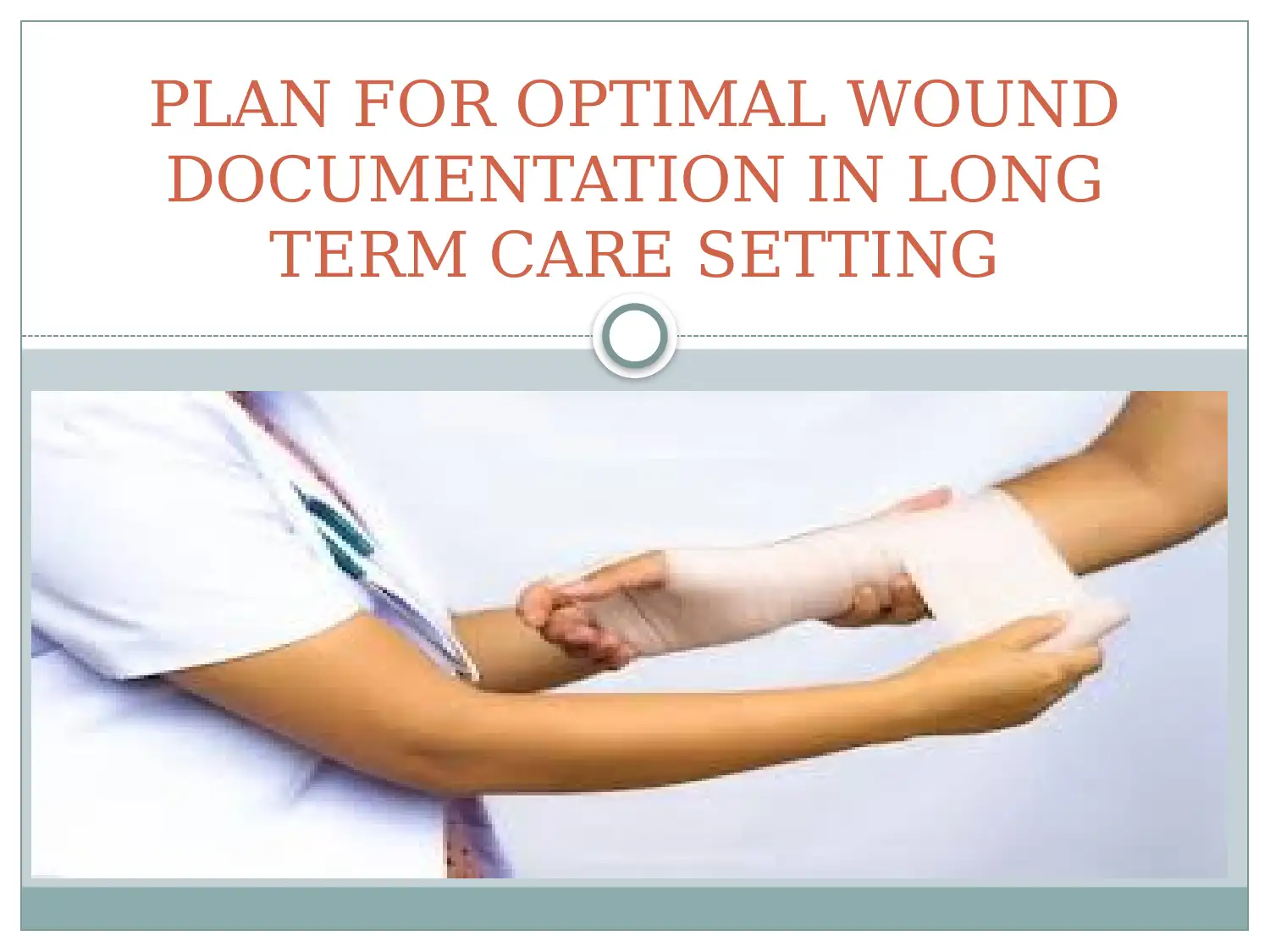
PLAN FOR OPTIMAL WOUND
DOCUMENTATION IN LONG
TERM CARE SETTING
tabler-icon-diamond-filled.svg

Paraphrase This Document

Need a fresh take? Get an instant paraphrase of this document with our AI Paraphraser
Document Page
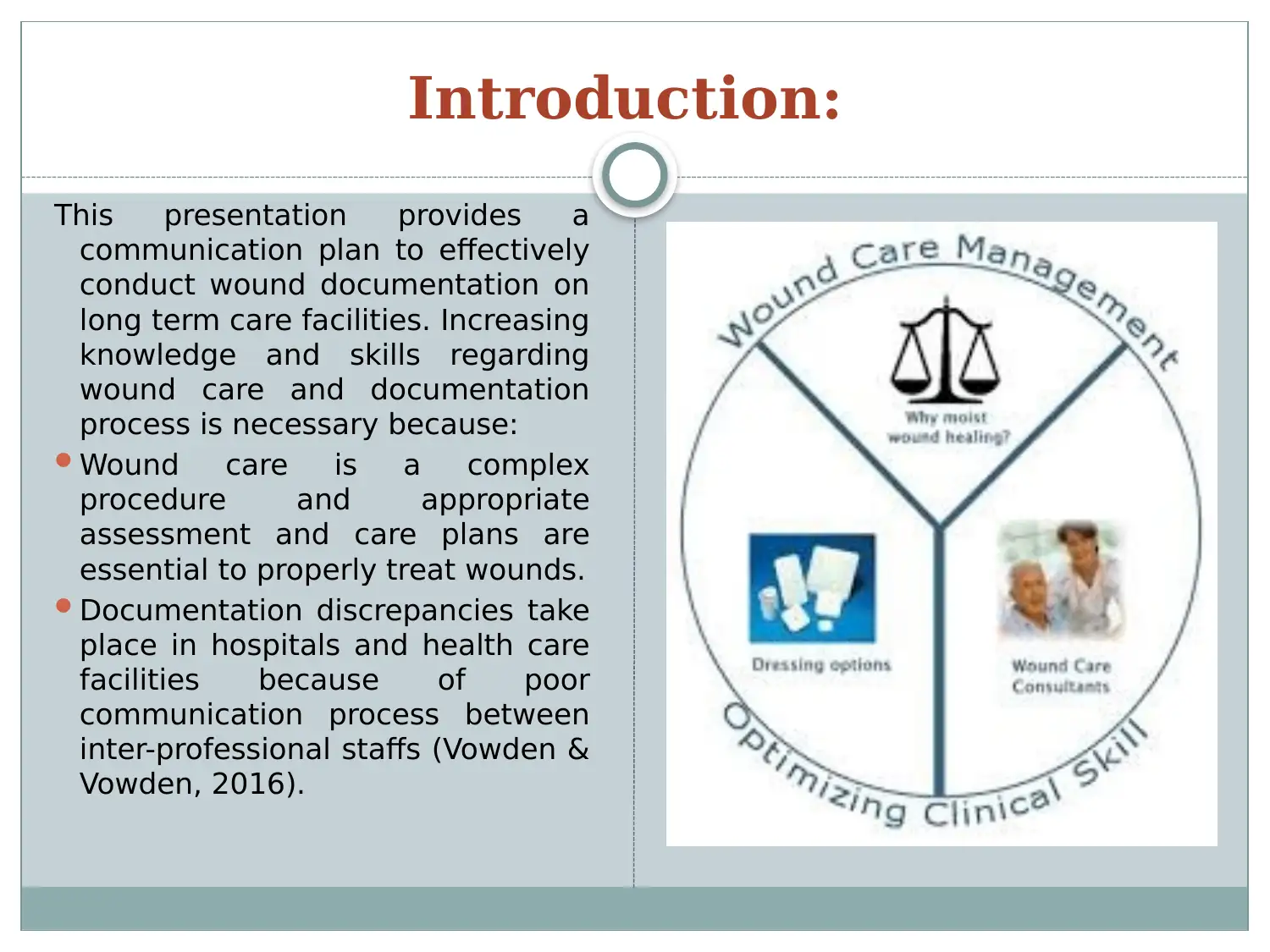
Introduction:
This presentation provides a
communication plan to effectively
conduct wound documentation on
long term care facilities. Increasing
knowledge and skills regarding
wound care and documentation
process is necessary because:
Wound care is a complex
procedure and appropriate
assessment and care plans are
essential to properly treat wounds.
Documentation discrepancies take
place in hospitals and health care
facilities because of poor
communication process between
inter-professional staffs (Vowden &
Vowden, 2016).
Document Page
Background and aim
Aim:
To educate audience about the methods needed to engage in
comprehensive wound documentation process and promote
wound healing
To improve the knowledge and quality of nursing
documentation of wound in long-term care facility
To improve patient outcome and quality of life of patients
residing in long-term care facility
Document Page
Target audience or population:
The communication plan
has been prepared for
nursing staffs working in
long-term care facilities.
Nursing staffs remains at
the forefront of wound
documentation process and
as newly placed nursing
staffs lack the skills to
effectively assess wound,
the plan is targeted for
newly placed nurse
between the age of 20-35
years.
tabler-icon-diamond-filled.svg

Paraphrase This Document

Need a fresh take? Get an instant paraphrase of this document with our AI Paraphraser
Document Page
Behavioral characteristics:
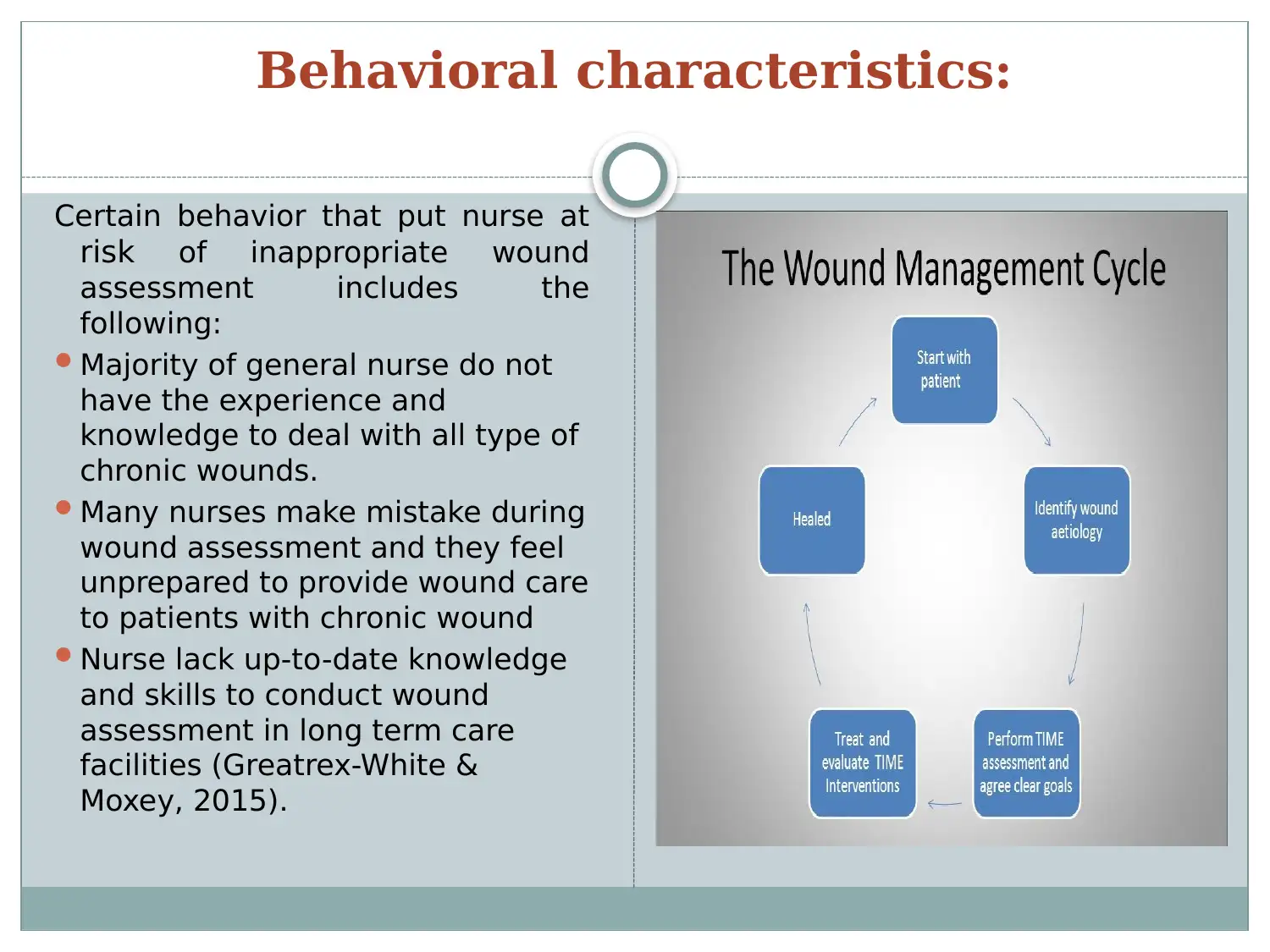
Certain behavior that put nurse at
risk of inappropriate wound
assessment includes the
following:
Majority of general nurse do not
have the experience and
knowledge to deal with all type of
chronic wounds.
Many nurses make mistake during
wound assessment and they feel
unprepared to provide wound care
to patients with chronic wound
Nurse lack up-to-date knowledge
and skills to conduct wound
assessment in long term care
facilities (Greatrex‐White &
Moxey, 2015).
Document Page
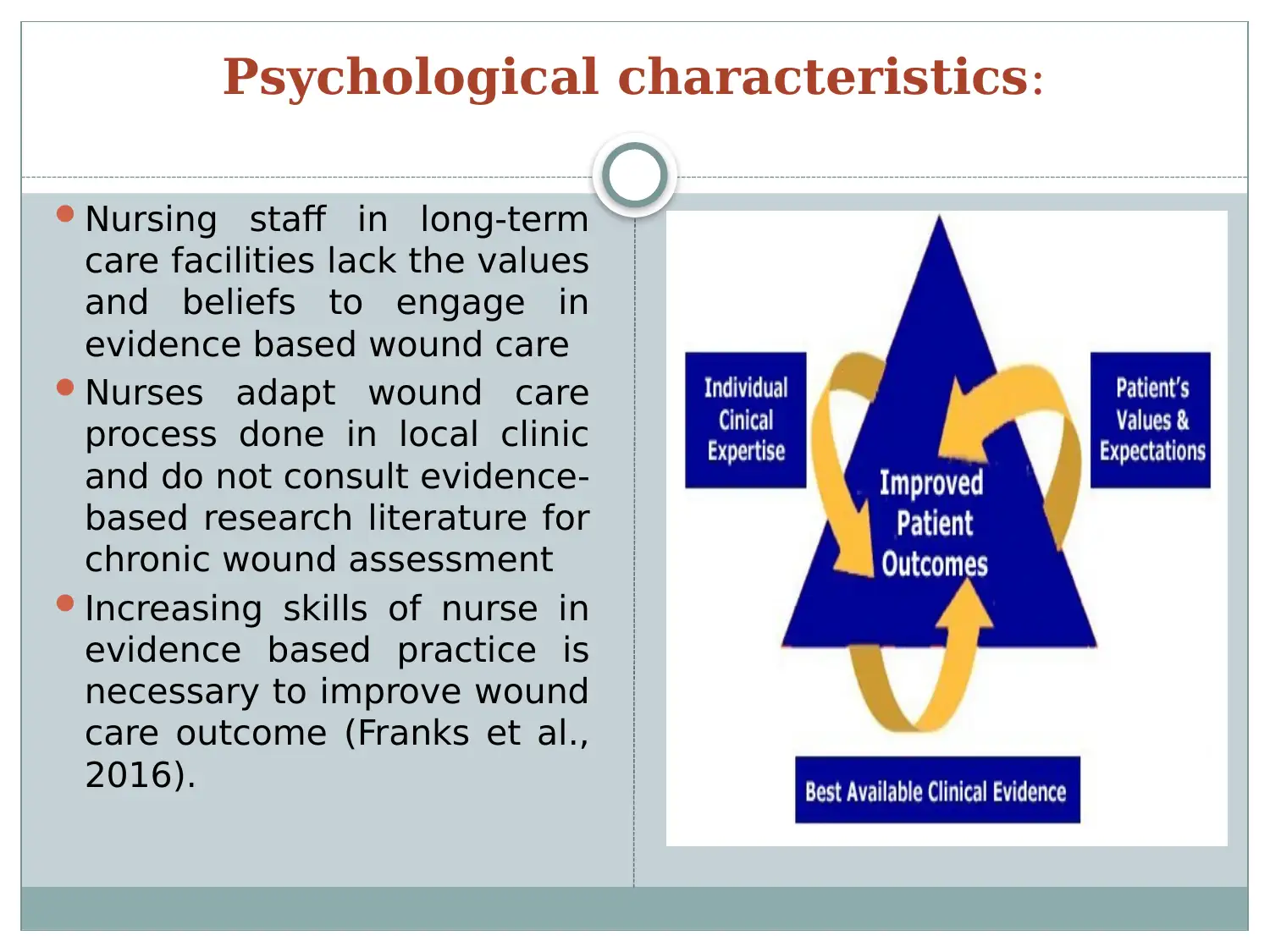
Psychological characteristics:
Nursing staff in long-term
care facilities lack the values
and beliefs to engage in
evidence based wound care
Nurses adapt wound care
process done in local clinic
and do not consult evidence-
based research literature for
chronic wound assessment
Increasing skills of nurse in
evidence based practice is
necessary to improve wound
care outcome (Franks et al.,
2016).
Document Page
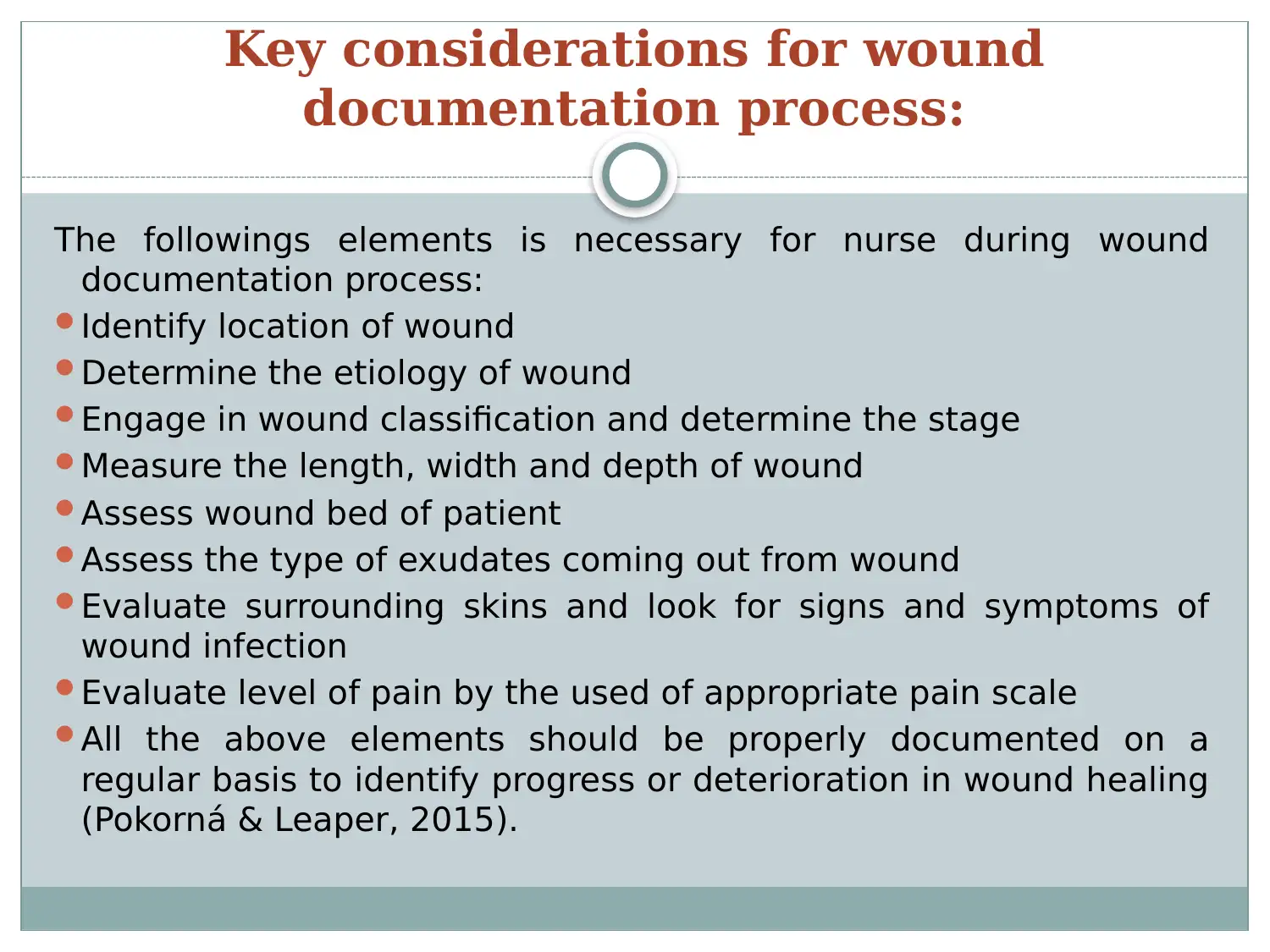
Key considerations for wound
documentation process:
The followings elements is necessary for nurse during wound
documentation process:
Identify location of wound
Determine the etiology of wound
Engage in wound classification and determine the stage
Measure the length, width and depth of wound
Assess wound bed of patient
Assess the type of exudates coming out from wound
Evaluate surrounding skins and look for signs and symptoms of
wound infection
Evaluate level of pain by the used of appropriate pain scale
All the above elements should be properly documented on a
regular basis to identify progress or deterioration in wound healing
(Pokorná & Leaper, 2015).
tabler-icon-diamond-filled.svg

Paraphrase This Document

Need a fresh take? Get an instant paraphrase of this document with our AI Paraphraser
Document Page
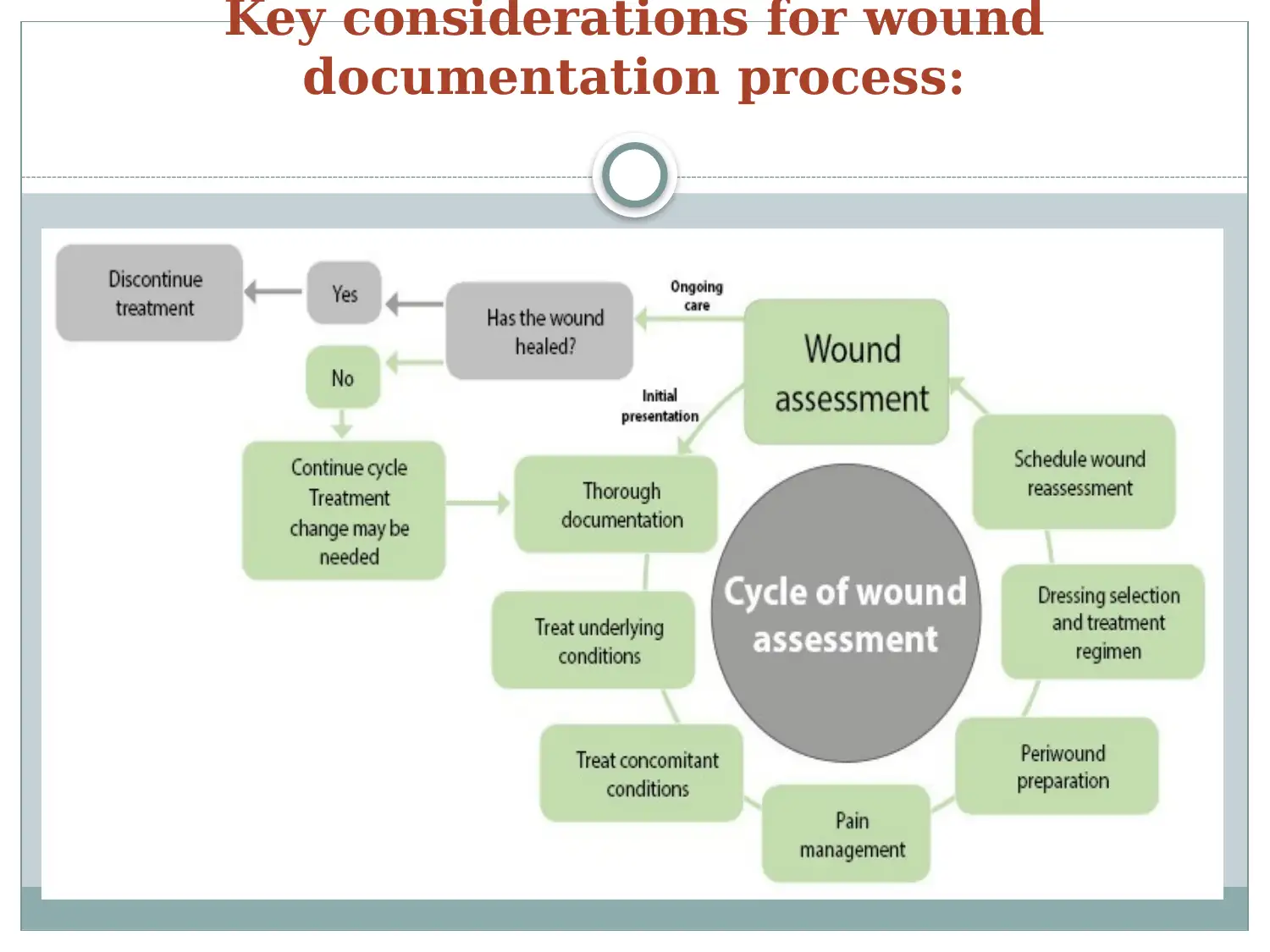
Key considerations for wound
documentation process:
Document Page
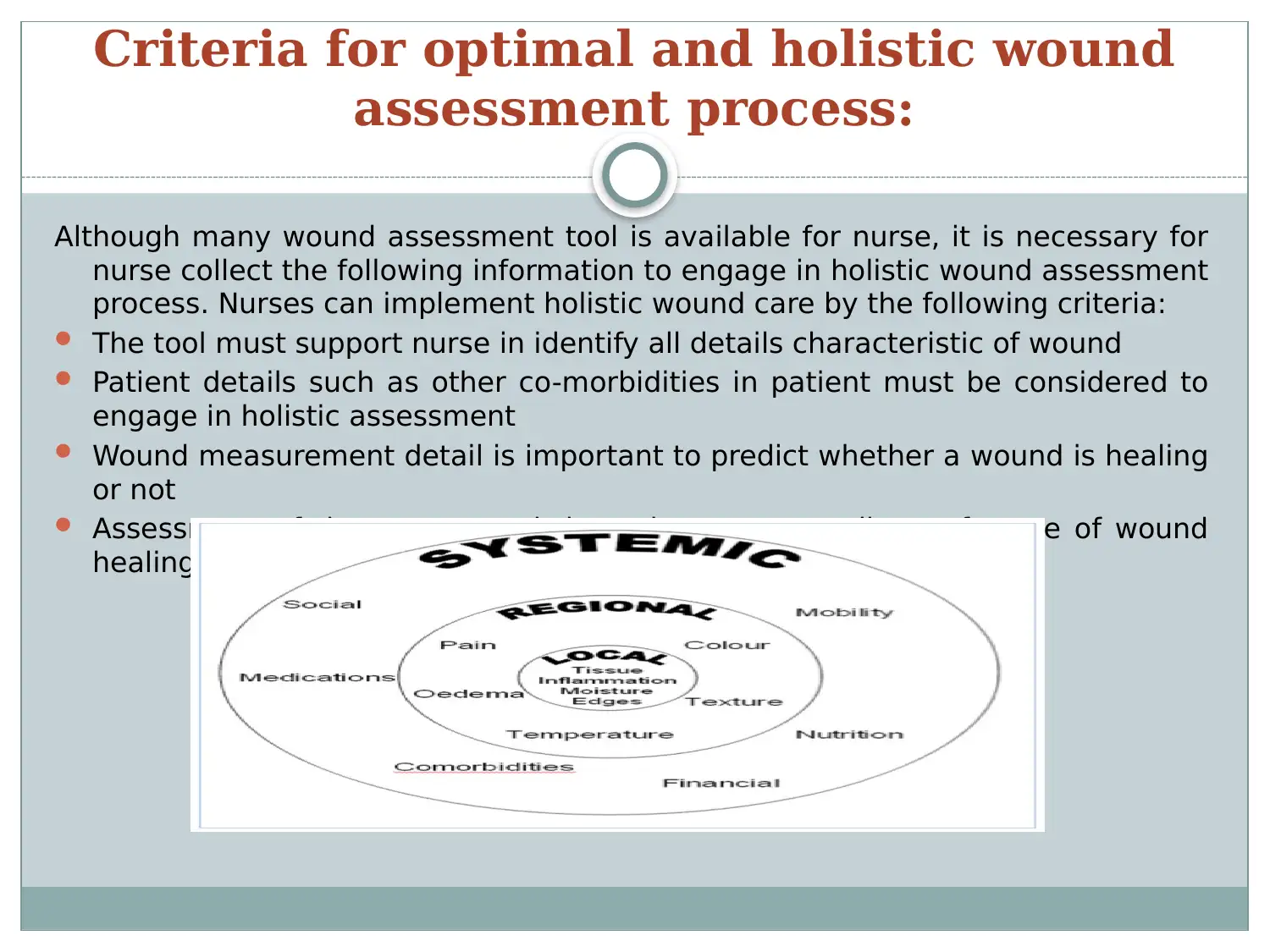
Criteria for optimal and holistic wound
assessment process:
Although many wound assessment tool is available for nurse, it is necessary for
nurse collect the following information to engage in holistic wound assessment
process. Nurses can implement holistic wound care by the following criteria:
The tool must support nurse in identify all details characteristic of wound
Patient details such as other co-morbidities in patient must be considered to
engage in holistic assessment
Wound measurement detail is important to predict whether a wound is healing
or not
Assessment of tissue type as it is an important predictor of stage of wound
healing
Document Page
Criteria for optimal and holistic wound assessment
process (continued)
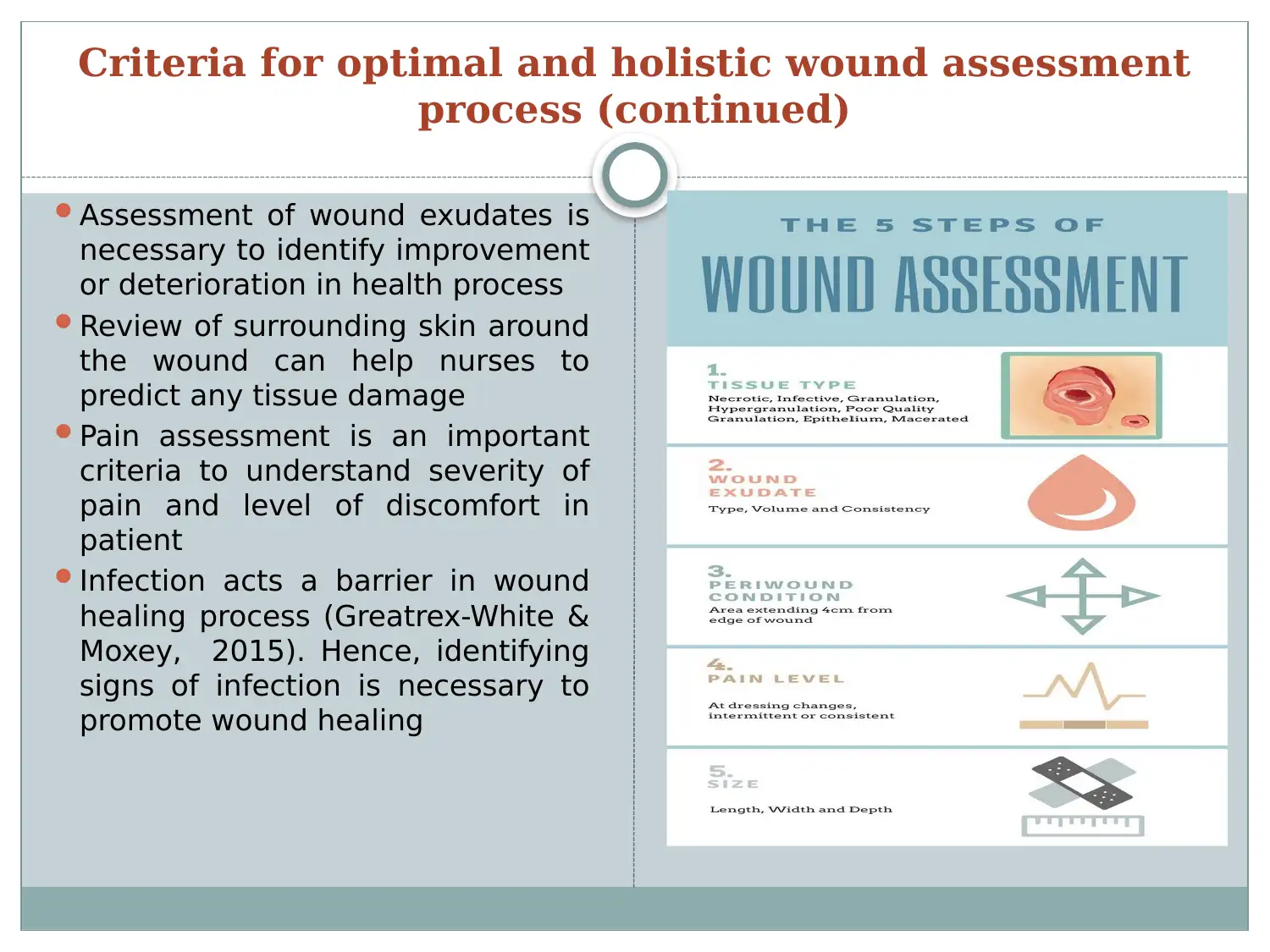
Assessment of wound exudates is
necessary to identify improvement
or deterioration in health process
Review of surrounding skin around
the wound can help nurses to
predict any tissue damage
Pain assessment is an important
criteria to understand severity of
pain and level of discomfort in
patient
Infection acts a barrier in wound
healing process (Greatrex‐White &
Moxey, 2015). Hence, identifying
signs of infection is necessary to
promote wound healing
tabler-icon-diamond-filled.svg

Paraphrase This Document

Need a fresh take? Get an instant paraphrase of this document with our AI Paraphraser
Document Page
Quality improvement initiative to
improve wound documentation and care:
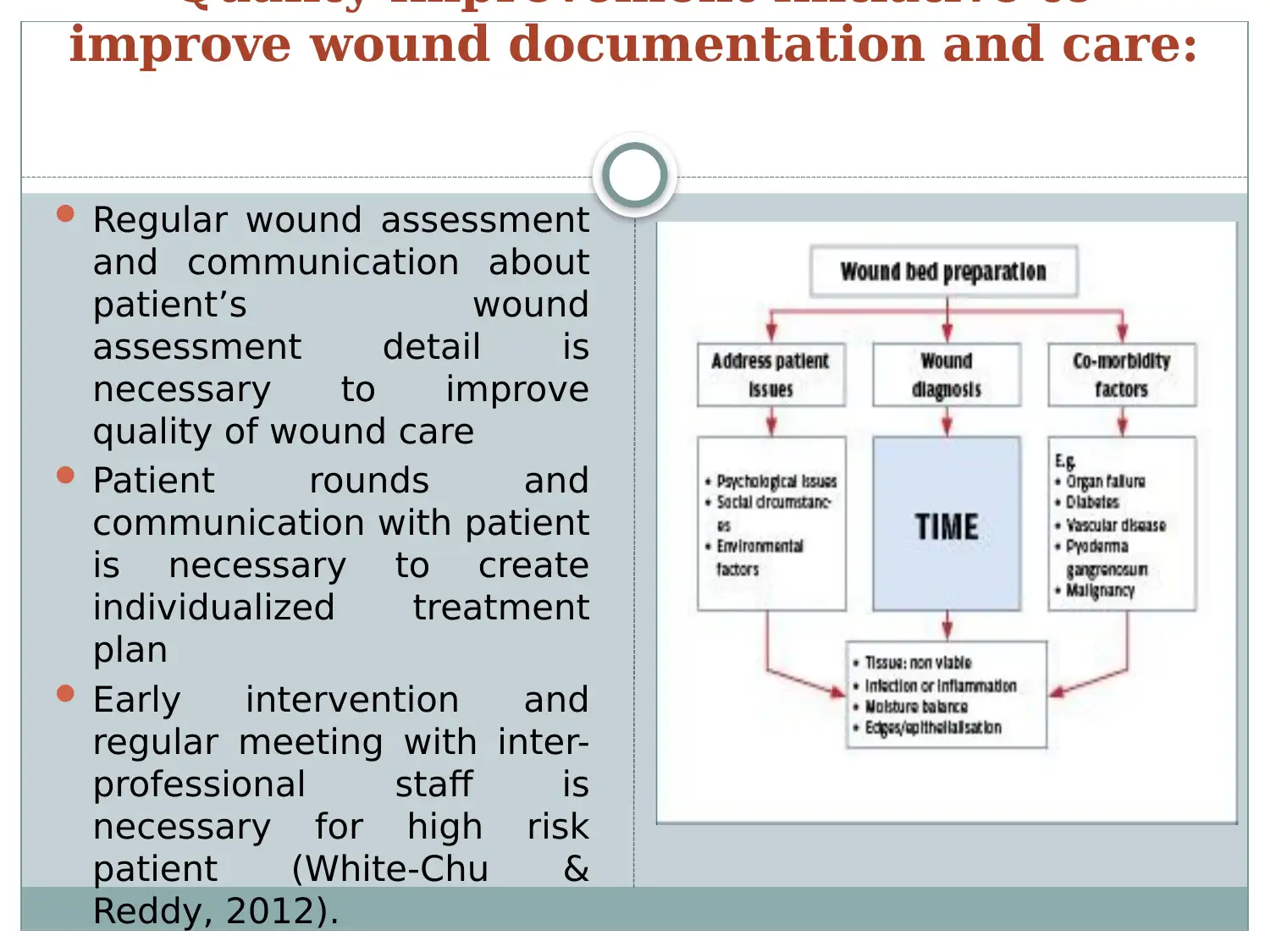
Regular wound assessment
and communication about
patient’s wound
assessment detail is
necessary to improve
quality of wound care
Patient rounds and
communication with patient
is necessary to create
individualized treatment
plan
Early intervention and
regular meeting with inter-
professional staff is
necessary for high risk
patient (White-Chu &
Reddy, 2012).
Document Page
Approach to improve inter-professional collaboration during
wound documentation process
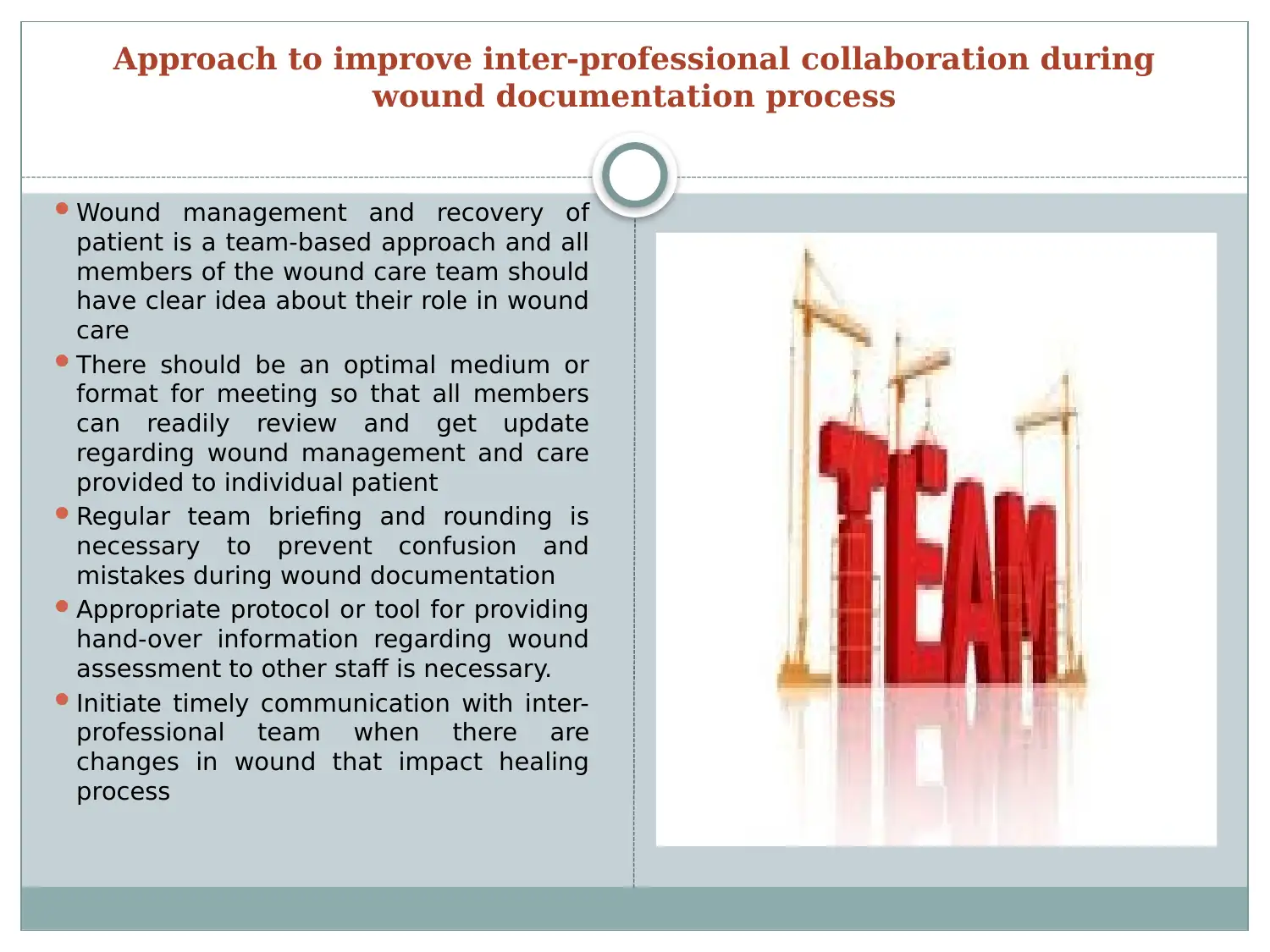
Wound management and recovery of
patient is a team-based approach and all
members of the wound care team should
have clear idea about their role in wound
care
There should be an optimal medium or
format for meeting so that all members
can readily review and get update
regarding wound management and care
provided to individual patient
Regular team briefing and rounding is
necessary to prevent confusion and
mistakes during wound documentation
Appropriate protocol or tool for providing
hand-over information regarding wound
assessment to other staff is necessary.
Initiate timely communication with inter-
professional team when there are
changes in wound that impact healing
process
chevron_up_icon
1 out of 14
circle_padding
hide_on_mobile
zoom_out_icon
[object Object]