Operational Risk Impact on Project Performance: Yemen NGOs Case
VerifiedAdded on 2023/06/09
|11
|4001
|140
Case Study
AI Summary
This case study investigates the impact of operational risk on project performance within Non-Governmental Organizations (NGOs) operating in the emergency operation field in Yemen. It highlights the increasing pressure on these organizations to minimize spending and enhance technology project management, emphasizing the importance of mitigating risks to prevent adverse impacts on project performance. The study identifies several types of project risks faced by NGOs in Yemen, including cost, scheduling, performance, governance, strategic, and operational risks. It addresses research questions about the impact of operational risk and how to mitigate related issues, with objectives to evaluate the impact and recommend mitigation strategies. The significance of the study lies in its examination of how operational risk management can help NGOs calculate risks, categorize them, and prevent sudden losses, ultimately improving project outcomes through effective risk management strategies and integration of both hard and soft skills.
Impact of operational risk on project performance in emergency operation field: A
case study of
NGOs in Yemen
Name of the Student:
Name of the University:
Author note:
case study of
NGOs in Yemen
Name of the Student:
Name of the University:
Author note:

Paraphrase This Document
Need a fresh take? Get an instant paraphrase of this document with our AI Paraphraser
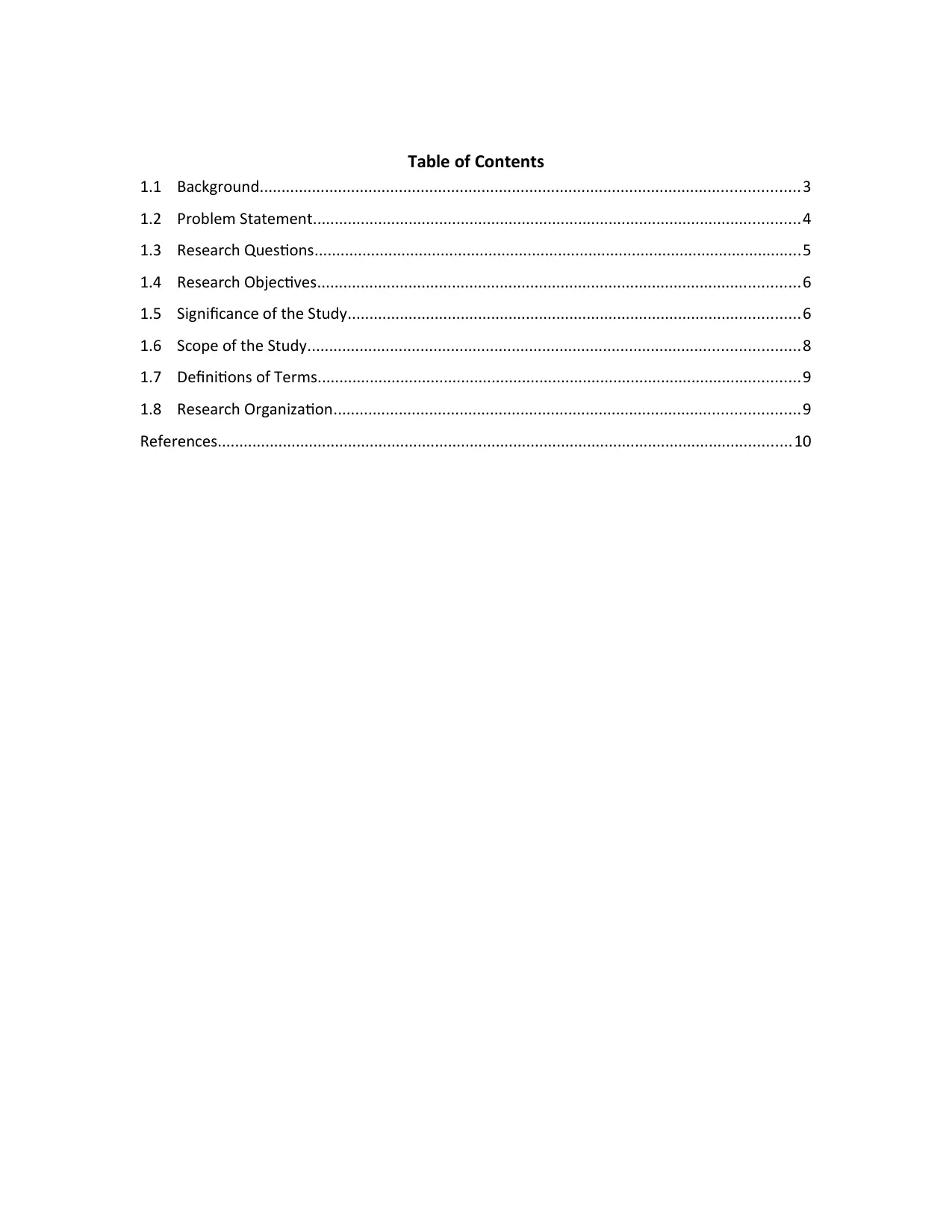
Table of Contents
1.1 Background............................................................................................................................3
1.2 Problem Statement................................................................................................................4
1.3 Research Questions................................................................................................................5
1.4 Research Objectives...............................................................................................................6
1.5 Significance of the Study........................................................................................................6
1.6 Scope of the Study.................................................................................................................8
1.7 Definitions of Terms...............................................................................................................9
1.8 Research Organization...........................................................................................................9
References....................................................................................................................................10
1.1 Background............................................................................................................................3
1.2 Problem Statement................................................................................................................4
1.3 Research Questions................................................................................................................5
1.4 Research Objectives...............................................................................................................6
1.5 Significance of the Study........................................................................................................6
1.6 Scope of the Study.................................................................................................................8
1.7 Definitions of Terms...............................................................................................................9
1.8 Research Organization...........................................................................................................9
References....................................................................................................................................10
CHAPTER 1
INTRODUCTION
1.1 Background
It is important to process effective risk management strategies that allow identifying the
strengths, weakness, threats as well as opportunities in business. In order to ensure success in a
project, it is required to define the process of handling the potential risks so that it can be
identified easily, mitigate or avoid the issues when it is required for successful project managers
recognizing the risk management is significant. Risk management plans have a contribution on
the process (van der Laan et al. 2016). It is also important to contribute success in projects
through developing a list of internal as well as external risks. The low risk events have any
impact on cost, schedule or performance. High-risk events have the cause an important increase
in budget, disruption of the particular schedule. On the other hand, it is required to ensure that
the projects run smoothly. In emergency field, it is important to analyze the importance of
operational risk on project performance. The NGOs in Yemen are seen facing difficulties to
manage the emergency operational field.
On the other hand, there a number of researchers studied about the effect of risk control size on
the effectiveness of a project. The assertion has also been confirmed by indicating that there is
an important relationship between small risk control as well as better project effectiveness. It
has been shown that there is a negative important relationship between market valuation of a
project as well as the size of risk control. It indicates that minimized risk control size may
enhance performance of the organization (Dube et al. 2016). The outcomes are considered as
constant that the structure of risk control is endogenously determined for one of the
operational risk control variables in the organizations. However, the composition of risk control
has any influence on effectiveness of the project. In addition, there is a negative collaboration
between the sizes of risk control along with efficiency.
However, the effect of risk control size on effectiveness of project listed on the stock exchange
where the outcomes of the study have a conclusion on positive relationship significantly on the
project success. On the other hand, a negative relationship is generally found in the size as well
as effectiveness of the project with the operational risk control as well as efficacy. The results
differ from the report of project effectiveness. The literature makes contradictory to the results,
where some of the results have greater performance on the process. The audit committee
becomes major components in operational risk control. Thus, in order to obtain the advantages
of independence it is required to focus on operational process that is achieved in the current
study. In order to evaluate success of the project, use of the best practices on the next projects
evaluates the impact of the activities. For an instance, delivering a training program, can create
awareness regarding internet security. It is also required to develop the process that has ability
INTRODUCTION
1.1 Background
It is important to process effective risk management strategies that allow identifying the
strengths, weakness, threats as well as opportunities in business. In order to ensure success in a
project, it is required to define the process of handling the potential risks so that it can be
identified easily, mitigate or avoid the issues when it is required for successful project managers
recognizing the risk management is significant. Risk management plans have a contribution on
the process (van der Laan et al. 2016). It is also important to contribute success in projects
through developing a list of internal as well as external risks. The low risk events have any
impact on cost, schedule or performance. High-risk events have the cause an important increase
in budget, disruption of the particular schedule. On the other hand, it is required to ensure that
the projects run smoothly. In emergency field, it is important to analyze the importance of
operational risk on project performance. The NGOs in Yemen are seen facing difficulties to
manage the emergency operational field.
On the other hand, there a number of researchers studied about the effect of risk control size on
the effectiveness of a project. The assertion has also been confirmed by indicating that there is
an important relationship between small risk control as well as better project effectiveness. It
has been shown that there is a negative important relationship between market valuation of a
project as well as the size of risk control. It indicates that minimized risk control size may
enhance performance of the organization (Dube et al. 2016). The outcomes are considered as
constant that the structure of risk control is endogenously determined for one of the
operational risk control variables in the organizations. However, the composition of risk control
has any influence on effectiveness of the project. In addition, there is a negative collaboration
between the sizes of risk control along with efficiency.
However, the effect of risk control size on effectiveness of project listed on the stock exchange
where the outcomes of the study have a conclusion on positive relationship significantly on the
project success. On the other hand, a negative relationship is generally found in the size as well
as effectiveness of the project with the operational risk control as well as efficacy. The results
differ from the report of project effectiveness. The literature makes contradictory to the results,
where some of the results have greater performance on the process. The audit committee
becomes major components in operational risk control. Thus, in order to obtain the advantages
of independence it is required to focus on operational process that is achieved in the current
study. In order to evaluate success of the project, use of the best practices on the next projects
evaluates the impact of the activities. For an instance, delivering a training program, can create
awareness regarding internet security. It is also required to develop the process that has ability
⊘ This is a preview!⊘
Do you want full access?
Subscribe today to unlock all pages.

Trusted by 1+ million students worldwide
for assuming the risk management initiatives (Chaudhri and Miller 2017). It is also important
to analyze the process and exploiting the scopes that can capitalize on strengths of the
organization. In this perspective, it is important to analyze the importance of operational risk on
the project performance in the emergency operation field especially in NGOs of Yemen.
On the other hand, project risk management processes an important position in the project
management framework of theory and methodology. The cause is unexpected events that will
occur at the time of conducting the project. The significance of project risk management
includes functioning as well as efficiency of the risk management, which is expected for
influencing performance of the project (Morrow et al. 2016). There is also an impact of risk
management strategies on the project performance where it is not adequate for the
organizations to process the project success. In this perspective, the organizations do not
emphasize on effective project management of an organization. Risk management strategies
need to be carried out in the project lifecycle of the NGOs projects in Yemen. On the other hand,
failure for managing the project risks throughout the life cycle of the projects will lead for
making poor performance. It has been indicated that low implementation of project risk
management strategies in the general causes failure in the projects. Thus, achieving the project
performance performs, one of the major adoption process is implementation of effective risk
management strategies. The ICT risk management strategy is generally embedded to the
internal control as well as audit of the organization. Thus, it is important to identify the
potential risks that can influence objectives of the project.
1.2 Problem Statement
In current years, there has been an increasing pressure on the NGO projects in order to
minimize spending as well as enhancing the management of technology projects. Thus,
mitigating the adverse impact regarding risks on performance of the projects has ability to
prevent the process. It is also important to manage the projects that can define risks in project
management. Hence, investigating the process would be helpful to make plan that has the
ability to complete the project successfully. There are several types of project risks faced by the
NGOs in Yemen in terms of managing projects in emergency field such as cost risk, scheduling
risk and performance risk (Burkle et al. 2018). There are several types of risks associated with
the projects. In addition, the risks like governance risks, strategic risks as well as operational
risks are considered as the major risks faced by the organizations on project performance. On
the other hand, the project risks consist of internal risks related to project success. The risks
arise from the organization. However, it is important to have seriousness of the risks that
depends on nature as well as magnitude of the consequences along with the responsibilities. In
addition, project deferral risks can occur whether there is a limited opportunities to conduct the
project. The projects have the potential from the source of risk whether the organization faced
issues in providing the scopes of a project. Hence, it is important to analyze the importance of
operational risk on the project performances in the emergency field.
to analyze the process and exploiting the scopes that can capitalize on strengths of the
organization. In this perspective, it is important to analyze the importance of operational risk on
the project performance in the emergency operation field especially in NGOs of Yemen.
On the other hand, project risk management processes an important position in the project
management framework of theory and methodology. The cause is unexpected events that will
occur at the time of conducting the project. The significance of project risk management
includes functioning as well as efficiency of the risk management, which is expected for
influencing performance of the project (Morrow et al. 2016). There is also an impact of risk
management strategies on the project performance where it is not adequate for the
organizations to process the project success. In this perspective, the organizations do not
emphasize on effective project management of an organization. Risk management strategies
need to be carried out in the project lifecycle of the NGOs projects in Yemen. On the other hand,
failure for managing the project risks throughout the life cycle of the projects will lead for
making poor performance. It has been indicated that low implementation of project risk
management strategies in the general causes failure in the projects. Thus, achieving the project
performance performs, one of the major adoption process is implementation of effective risk
management strategies. The ICT risk management strategy is generally embedded to the
internal control as well as audit of the organization. Thus, it is important to identify the
potential risks that can influence objectives of the project.
1.2 Problem Statement
In current years, there has been an increasing pressure on the NGO projects in order to
minimize spending as well as enhancing the management of technology projects. Thus,
mitigating the adverse impact regarding risks on performance of the projects has ability to
prevent the process. It is also important to manage the projects that can define risks in project
management. Hence, investigating the process would be helpful to make plan that has the
ability to complete the project successfully. There are several types of project risks faced by the
NGOs in Yemen in terms of managing projects in emergency field such as cost risk, scheduling
risk and performance risk (Burkle et al. 2018). There are several types of risks associated with
the projects. In addition, the risks like governance risks, strategic risks as well as operational
risks are considered as the major risks faced by the organizations on project performance. On
the other hand, the project risks consist of internal risks related to project success. The risks
arise from the organization. However, it is important to have seriousness of the risks that
depends on nature as well as magnitude of the consequences along with the responsibilities. In
addition, project deferral risks can occur whether there is a limited opportunities to conduct the
project. The projects have the potential from the source of risk whether the organization faced
issues in providing the scopes of a project. Hence, it is important to analyze the importance of
operational risk on the project performances in the emergency field.
Paraphrase This Document
Need a fresh take? Get an instant paraphrase of this document with our AI Paraphraser
On the other hand, small and medium projects in the NGOs of Yemen have developed heavily
that are reliable on successful delivery of information system in emergency fields. The
information system projects generally fail for having some common causes. One of the major
strategies is lack of effective project management in emergency field. It has been indicated by
Standish Group that 44% projects fail for failing to deliver schedule, required functions as well as
within the budget. It has been identified that missing the link between soft skills and project life
cycle as various projects fail as hard skills like Gantt chart, PERT as well as CPM as there are any
adequate skills not present (Bondokji 2016). However, inability of the project managers in
order to participate for appropriate or suitable soft skills such as effective communication,
working with culture of the enterprise, innovation in team as well as management of
stakeholders. In addition, understanding the proper business objectives would be helpful for the
business objectives. It would make soft skills significant for successful project management. It is
imperative integration of soft skills and hard skills in order to improve project management
discipline with the assistance of project methodologies (Cook et al. 2018). Activation of soft
skills requires soft skills in order to take the project placed at proper time. For example,
communication skills are important for execution, controlling and closing the phases at the time
of initiating and planning the process. It is important to consider the process as less important.
However, the procedure of initiating, planning and execution process consists of significant
flexibility along with creativity skills. These are important during initiating and execution of the
phases off the phases. It consists of flexibility as well as creativity skills, which are important for
the project. Thus, it is required to map the factors of soft skills over lifecycle of a project.
1.3 Research Questions
The research has the following questions.
What is the impact of operational risk on project performance in emergency operation
field in NGOs of Yemen?
How the issues related to operational risk on project performance in emergency
operation field in NGOs of Yemen can be mitigated?
1.4 Research Objectives
The research has the following objectives.
To critically evaluate the impact of operational risk on project performance in
emergency operation field in NGOs of Yemen
To recommend how the issues related to operational risk on project performance in
emergency operation field in NGOs of Yemen can be mitigated
that are reliable on successful delivery of information system in emergency fields. The
information system projects generally fail for having some common causes. One of the major
strategies is lack of effective project management in emergency field. It has been indicated by
Standish Group that 44% projects fail for failing to deliver schedule, required functions as well as
within the budget. It has been identified that missing the link between soft skills and project life
cycle as various projects fail as hard skills like Gantt chart, PERT as well as CPM as there are any
adequate skills not present (Bondokji 2016). However, inability of the project managers in
order to participate for appropriate or suitable soft skills such as effective communication,
working with culture of the enterprise, innovation in team as well as management of
stakeholders. In addition, understanding the proper business objectives would be helpful for the
business objectives. It would make soft skills significant for successful project management. It is
imperative integration of soft skills and hard skills in order to improve project management
discipline with the assistance of project methodologies (Cook et al. 2018). Activation of soft
skills requires soft skills in order to take the project placed at proper time. For example,
communication skills are important for execution, controlling and closing the phases at the time
of initiating and planning the process. It is important to consider the process as less important.
However, the procedure of initiating, planning and execution process consists of significant
flexibility along with creativity skills. These are important during initiating and execution of the
phases off the phases. It consists of flexibility as well as creativity skills, which are important for
the project. Thus, it is required to map the factors of soft skills over lifecycle of a project.
1.3 Research Questions
The research has the following questions.
What is the impact of operational risk on project performance in emergency operation
field in NGOs of Yemen?
How the issues related to operational risk on project performance in emergency
operation field in NGOs of Yemen can be mitigated?
1.4 Research Objectives
The research has the following objectives.
To critically evaluate the impact of operational risk on project performance in
emergency operation field in NGOs of Yemen
To recommend how the issues related to operational risk on project performance in
emergency operation field in NGOs of Yemen can be mitigated
1.5 Significance of the Study
Impact of Operational risk management on business modules are as follows. In case of
operational risk management the major advantage that the organization enjoys is that it ca
initially calculate the risks that might approach the organization. Leading of the fact that risk can
be avoided. In case of starting a business, the most important fact that must be taken into
consideration is that, an experienced project manager must perform project management. After
performing the operational risk management planning in an organization, they get to know the
risks that are present in the organization, on understanding the risks that are present in the
organization, proper defining of the risk terminology can be done (Searle 2018). For defining
this risk referencing of several book and other literary structures can be made. This takes into
consideration that the possibility of completing that risk management can be performed with
proper efficiency. This ensures the fact that the risks that are calculated in the course of the
project is done by the experienced project manager and the risks that are detected are
embarked in the book or the journal that is being prepared for the business organization. After
properly defining the risk the major work that is performed by the project manager is that they
categorize the risk. This is considered the biggest impact of implementing operational risk
management plan in the processing of the business. After categorising the risks that might
approach the business module, the major thing that they do is that they understand the sector
which is affected by the organization. After getting to know the sector in which the risk lies, the
major thing they is that the processing of data management of that assertor gets more serious
regarding the flaws that they possess n the internal framework of the organization.
Another advantage of operational risk management implementation is that this planning
prevents the business organization to suffer from sudden loss and facing risks that are genuinely
expected (Schneiker 2018). In this case, the operation management plans the project before
initiating the same, this leads to the fact that the organization gets access to the data that are to
be needed to complete the project in a risk free manner. After calculating the risks that r
approaching the organization, they spot the risks that are approaching the organization. This
helps the organization to stay prepared for this kind of problem. in this kind of management
issues that are created surfing the risk calculation process, benefits the business organization in
ling run as this kind of planning will help the organization to data prepared for completion of the
task (Schneiker 2017). This fact also ensures that the organization after calculating the risks
that are present in the section will get to know the fact that which section of the business
organization will be affected hence it will focus on mitigating techniques that can be
implemented by them. After implementation of thesis risk mitigating techniques the major
advantage that the organization enjoys is that the organization is well aware of the financial loss
that might occur in the completion of the p[project. This helps the organization to save money
for mitigating risk in a proper technique.
Better quality of decision-making is also a major reason for implementing the operational risk
management planning system. In this case once the organization is well aware of the process in
Impact of Operational risk management on business modules are as follows. In case of
operational risk management the major advantage that the organization enjoys is that it ca
initially calculate the risks that might approach the organization. Leading of the fact that risk can
be avoided. In case of starting a business, the most important fact that must be taken into
consideration is that, an experienced project manager must perform project management. After
performing the operational risk management planning in an organization, they get to know the
risks that are present in the organization, on understanding the risks that are present in the
organization, proper defining of the risk terminology can be done (Searle 2018). For defining
this risk referencing of several book and other literary structures can be made. This takes into
consideration that the possibility of completing that risk management can be performed with
proper efficiency. This ensures the fact that the risks that are calculated in the course of the
project is done by the experienced project manager and the risks that are detected are
embarked in the book or the journal that is being prepared for the business organization. After
properly defining the risk the major work that is performed by the project manager is that they
categorize the risk. This is considered the biggest impact of implementing operational risk
management plan in the processing of the business. After categorising the risks that might
approach the business module, the major thing that they do is that they understand the sector
which is affected by the organization. After getting to know the sector in which the risk lies, the
major thing they is that the processing of data management of that assertor gets more serious
regarding the flaws that they possess n the internal framework of the organization.
Another advantage of operational risk management implementation is that this planning
prevents the business organization to suffer from sudden loss and facing risks that are genuinely
expected (Schneiker 2018). In this case, the operation management plans the project before
initiating the same, this leads to the fact that the organization gets access to the data that are to
be needed to complete the project in a risk free manner. After calculating the risks that r
approaching the organization, they spot the risks that are approaching the organization. This
helps the organization to stay prepared for this kind of problem. in this kind of management
issues that are created surfing the risk calculation process, benefits the business organization in
ling run as this kind of planning will help the organization to data prepared for completion of the
task (Schneiker 2017). This fact also ensures that the organization after calculating the risks
that are present in the section will get to know the fact that which section of the business
organization will be affected hence it will focus on mitigating techniques that can be
implemented by them. After implementation of thesis risk mitigating techniques the major
advantage that the organization enjoys is that the organization is well aware of the financial loss
that might occur in the completion of the p[project. This helps the organization to save money
for mitigating risk in a proper technique.
Better quality of decision-making is also a major reason for implementing the operational risk
management planning system. In this case once the organization is well aware of the process in
⊘ This is a preview!⊘
Do you want full access?
Subscribe today to unlock all pages.
Trusted by 1+ million students worldwide
which the organization might suffer huge risks, this understanding god t risks that might occur in
the processing f the organization helps them to make better decision , leading t the fact that to
decision that are made by the organization are very much efficient I nature. This efficient
decision making prevents this risk t approach the organization (Bessant et al. 2015). Efficient
decision making not only assist the fact that there will be least risk in the processing of the
organization but also ensures that this organization will be able to understand the project utility
and risk factors and the dimensions that will be affected in this process. This will ensure the fact
that the data management that is doe in the business organization will be affected in a positive
way. Leading to the fact that proper security measures can be taken to improve the functioning
of the business organization. This will help the organization to flourish and expand in a huge
rate.
Escalations that are received during the project is being received is well expected and this helps
the organization in understanding the major issues that hurts the organisation. Due to the fact
that the implementation of risk in operation management includes the fact, the escalation that
might be approaching the organization will be well known to the higher authorities of the
organization (Salomonsen and Diachok 2015). It is leading to the fact that the project
managers and the operational managers will be cap[able enough to prepare themselves for the
difficulties that might arise in near future. Escalations that might come in the processing of the
task will be very much obvious in nature and this will helps the project manager to create
escalation mitigation techniques, leading to the fact that the operational manager successfully.
This successfully mitigating the problems will ensure the fact that the efficiency of the
organization increases.
Raw material estimation is one of the major things that ensures that the cost that will be
mitigated as there will be lesser wastage than risk management is incurred in the unplanned
strategies will be implemented as there will be no prior idea regarding the demands of
requirement of the raw material (Pica 2018). This process also ensures that the loss in raw
materials is lesser in this technology than when there is no such technology is used. This is the
major reason that leads to the fact that implementation of risk management is incurred the
operational management.
Major Scopes that are present in the processing of the studying of risk management in the
operational management processes are as follows. Credit risk: credit risks deals with the risks
that will incur the fact that might hurt the organization as it may lead to suffering loss of the
money during processing of the organization (Salem et al. 2018). In case of performing credit
risk detrimental technique proper study of risk management must be performed. This will also
help in understanding the profit the organization can earn in near future. This will help in proper
data evaluation and using the same in an efficient way. This is the reason that the scope of risk
mitigation is very high in this process.
Market risk: In the case the major issue that is mitigates is the marketing related issues that
harm the organization in a very bad way. This also helps in understanding the problems that
the processing f the organization helps them to make better decision , leading t the fact that to
decision that are made by the organization are very much efficient I nature. This efficient
decision making prevents this risk t approach the organization (Bessant et al. 2015). Efficient
decision making not only assist the fact that there will be least risk in the processing of the
organization but also ensures that this organization will be able to understand the project utility
and risk factors and the dimensions that will be affected in this process. This will ensure the fact
that the data management that is doe in the business organization will be affected in a positive
way. Leading to the fact that proper security measures can be taken to improve the functioning
of the business organization. This will help the organization to flourish and expand in a huge
rate.
Escalations that are received during the project is being received is well expected and this helps
the organization in understanding the major issues that hurts the organisation. Due to the fact
that the implementation of risk in operation management includes the fact, the escalation that
might be approaching the organization will be well known to the higher authorities of the
organization (Salomonsen and Diachok 2015). It is leading to the fact that the project
managers and the operational managers will be cap[able enough to prepare themselves for the
difficulties that might arise in near future. Escalations that might come in the processing of the
task will be very much obvious in nature and this will helps the project manager to create
escalation mitigation techniques, leading to the fact that the operational manager successfully.
This successfully mitigating the problems will ensure the fact that the efficiency of the
organization increases.
Raw material estimation is one of the major things that ensures that the cost that will be
mitigated as there will be lesser wastage than risk management is incurred in the unplanned
strategies will be implemented as there will be no prior idea regarding the demands of
requirement of the raw material (Pica 2018). This process also ensures that the loss in raw
materials is lesser in this technology than when there is no such technology is used. This is the
major reason that leads to the fact that implementation of risk management is incurred the
operational management.
Major Scopes that are present in the processing of the studying of risk management in the
operational management processes are as follows. Credit risk: credit risks deals with the risks
that will incur the fact that might hurt the organization as it may lead to suffering loss of the
money during processing of the organization (Salem et al. 2018). In case of performing credit
risk detrimental technique proper study of risk management must be performed. This will also
help in understanding the profit the organization can earn in near future. This will help in proper
data evaluation and using the same in an efficient way. This is the reason that the scope of risk
mitigation is very high in this process.
Market risk: In the case the major issue that is mitigates is the marketing related issues that
harm the organization in a very bad way. This also helps in understanding the problems that
Paraphrase This Document
Need a fresh take? Get an instant paraphrase of this document with our AI Paraphraser
might arise during the marketing of the project. This study will also help in detecting the
mitigating techniques that will help in dissolving the risks that are present in the organization.
On overcoming this problem, issues regarding marketing of the problem are mitigated (Lambert
2018). Structural risk: structural risk is also another risk that affects the functioning of the
project. This ensures the fact that the structure of the organization is directly optional to the
production rate of the organization. In case the organizational is very framework is very well
balanced and structure, the production rate also increase and accuracy is also directly related to
the structural framework of the organization. Mitigating structural risks are one of the major
problems that occur in the organization as this kind of risks occur due to internal stakeholder
management an lack of proficiency that is present in the organization.
1.6 Scope of the Study
The significance of practicing project risk management strategies is increasing the importance of
project performance. In this perspective, it is important to follow the strategy that can be
helpful for the organizations. Risk evaluation tool is one of the important approaches in the
organization. The projects are generally expected for several risk evaluation as well as
interdependent risks of several types of nature. Thus, the study will be helpful to analyze the
importance of operational risks on the project performance in the emergency field. However, it
is true that the project management skills are identified as an art and significant for getting
success in a project. It also continues including the important rate of failure in a project. It has
reported that the rate of failure in IT projects of the United States of America in between the
year 1994 to 2002. There are also maximum rate of failure from the same study that is recorded
as 40% in 1996. On the other hand, it has been recorded that the rate of success in projects
decreases to 15%. Same pattern is not applicable while considering the developing countries.
Current study presents the significance of project management soft skills for improving success
rate in project. In the present study, the data has been collected from Dubai, an emirate of UAE.
Moreover, it has been considered that in the developing countries, the results have a great
impact on the success or failure of a project in general. The outcomes can be utilized as overall
findings at the time of considering developed as well as developing countries across the world.
1.7 Definitions of Terms
Project risk: The risks faced whiles conducting the project in several stages in known as project
risks.
Risk management strategies: The risk management strategies taken by the organizations when
dealing with the project is known as risk management strategies.
mitigating techniques that will help in dissolving the risks that are present in the organization.
On overcoming this problem, issues regarding marketing of the problem are mitigated (Lambert
2018). Structural risk: structural risk is also another risk that affects the functioning of the
project. This ensures the fact that the structure of the organization is directly optional to the
production rate of the organization. In case the organizational is very framework is very well
balanced and structure, the production rate also increase and accuracy is also directly related to
the structural framework of the organization. Mitigating structural risks are one of the major
problems that occur in the organization as this kind of risks occur due to internal stakeholder
management an lack of proficiency that is present in the organization.
1.6 Scope of the Study
The significance of practicing project risk management strategies is increasing the importance of
project performance. In this perspective, it is important to follow the strategy that can be
helpful for the organizations. Risk evaluation tool is one of the important approaches in the
organization. The projects are generally expected for several risk evaluation as well as
interdependent risks of several types of nature. Thus, the study will be helpful to analyze the
importance of operational risks on the project performance in the emergency field. However, it
is true that the project management skills are identified as an art and significant for getting
success in a project. It also continues including the important rate of failure in a project. It has
reported that the rate of failure in IT projects of the United States of America in between the
year 1994 to 2002. There are also maximum rate of failure from the same study that is recorded
as 40% in 1996. On the other hand, it has been recorded that the rate of success in projects
decreases to 15%. Same pattern is not applicable while considering the developing countries.
Current study presents the significance of project management soft skills for improving success
rate in project. In the present study, the data has been collected from Dubai, an emirate of UAE.
Moreover, it has been considered that in the developing countries, the results have a great
impact on the success or failure of a project in general. The outcomes can be utilized as overall
findings at the time of considering developed as well as developing countries across the world.
1.7 Definitions of Terms
Project risk: The risks faced whiles conducting the project in several stages in known as project
risks.
Risk management strategies: The risk management strategies taken by the organizations when
dealing with the project is known as risk management strategies.
1.8 Research Organization
The research has five chapters. In the first chapter, research background, aims and objectives,
research questions, problem stamen and scope of the study is discussed.
On the other hand, second chapter includes literature review.
Third chapter deals with research methodologies that will be helpful to conduct the research in
proper way.
Forth chapter of the research deals with data analysis and findings.
In addition, fifth chapter of the research discusses conclusion and recommendations for the
research.
The research has five chapters. In the first chapter, research background, aims and objectives,
research questions, problem stamen and scope of the study is discussed.
On the other hand, second chapter includes literature review.
Third chapter deals with research methodologies that will be helpful to conduct the research in
proper way.
Forth chapter of the research deals with data analysis and findings.
In addition, fifth chapter of the research discusses conclusion and recommendations for the
research.
⊘ This is a preview!⊘
Do you want full access?
Subscribe today to unlock all pages.
Trusted by 1+ million students worldwide
References
Bessant, J., Rush, H. and Trifilova, A., 2015. Crisis-driven innovation: The case of
humanitarian innovation. International Journal of Innovation Management, 19(06),
p.1540014.
Bondokji, N., 2016. The Expectations Gap in Humanitarian Operations: Field Perspectives
from Jordan.
Burkle, F.M., Kushner, A.L., Giannou, C., Paterson, M.A., Wren, S.M. and Burnham, G.,
2018. Health Care Providers in War and Armed Conflict: Operational and Educational
Challenges in International Humanitarian Law and the Geneva Conventions, Part II.
Educational and Training Initiatives. Disaster medicine and public health preparedness,
pp.1-14.
Chaudhri, S. and Miller, N., 2017. Humanitarian programming and monitoring in
inacessible conflict settings: A Literature Review. Global Health Cluster.
Cook, A.D., Shrestha, M. and Htet, Z.B., 2018. An Assessment of International
Emergency Disaster Response to the 2015 Nepal Earthquakes. International Journal of
Disaster Risk Reduction.
Dube, N., Van der Vaart, T., Teunter, R.H. and Van Wassenhove, L.N., 2016. Host
government impact on the logistics performance of international humanitarian
organisations. Journal of Operations Management, 47, pp.44-57.
Lambert, K.M., 2018. Assessing the Impact of the Political Environment on INGO
Vulnerability to Terrorist Attack. Risk, Hazards & Crisis in Public Policy.
Morrow, N., Mock, N., Bauer, J.M. and Browning, J., 2016. Knowing Just in Time: Use
cases for mobile surveys in the humanitarian world. Procedia engineering, 159, pp.210-
216.
Pica, V., 2018. Beyond the Sendai Framework for Disaster Risk Reduction: Vulnerability
Reduction as a Challenge Involving Historical and Traditional Buildings. Buildings, 8(4),
p.50.
Salem, M., Van Quaquebeke, N. and Besiou, M., 2018. How field office leaders drive
learning and creativity in humanitarian aid: Exploring the role of boundary-spanning
leadership for expatriate and local aid worker collaboration. Journal of Organizational
Behavior, 39(5), pp.594-611.
Bessant, J., Rush, H. and Trifilova, A., 2015. Crisis-driven innovation: The case of
humanitarian innovation. International Journal of Innovation Management, 19(06),
p.1540014.
Bondokji, N., 2016. The Expectations Gap in Humanitarian Operations: Field Perspectives
from Jordan.
Burkle, F.M., Kushner, A.L., Giannou, C., Paterson, M.A., Wren, S.M. and Burnham, G.,
2018. Health Care Providers in War and Armed Conflict: Operational and Educational
Challenges in International Humanitarian Law and the Geneva Conventions, Part II.
Educational and Training Initiatives. Disaster medicine and public health preparedness,
pp.1-14.
Chaudhri, S. and Miller, N., 2017. Humanitarian programming and monitoring in
inacessible conflict settings: A Literature Review. Global Health Cluster.
Cook, A.D., Shrestha, M. and Htet, Z.B., 2018. An Assessment of International
Emergency Disaster Response to the 2015 Nepal Earthquakes. International Journal of
Disaster Risk Reduction.
Dube, N., Van der Vaart, T., Teunter, R.H. and Van Wassenhove, L.N., 2016. Host
government impact on the logistics performance of international humanitarian
organisations. Journal of Operations Management, 47, pp.44-57.
Lambert, K.M., 2018. Assessing the Impact of the Political Environment on INGO
Vulnerability to Terrorist Attack. Risk, Hazards & Crisis in Public Policy.
Morrow, N., Mock, N., Bauer, J.M. and Browning, J., 2016. Knowing Just in Time: Use
cases for mobile surveys in the humanitarian world. Procedia engineering, 159, pp.210-
216.
Pica, V., 2018. Beyond the Sendai Framework for Disaster Risk Reduction: Vulnerability
Reduction as a Challenge Involving Historical and Traditional Buildings. Buildings, 8(4),
p.50.
Salem, M., Van Quaquebeke, N. and Besiou, M., 2018. How field office leaders drive
learning and creativity in humanitarian aid: Exploring the role of boundary-spanning
leadership for expatriate and local aid worker collaboration. Journal of Organizational
Behavior, 39(5), pp.594-611.
Paraphrase This Document
Need a fresh take? Get an instant paraphrase of this document with our AI Paraphraser
Salomonsen, A. and Diachok, M., 2015. Operations and Maintenance of Rural
Infrastructure in Community-Driven Development and Community-Based Projects.
Schneiker, A., 2018. Risk-Aware or Risk-Averse? Challenges in Implementing Security
Risk Management Within Humanitarian NGOs. Risk, Hazards & Crisis in Public Policy.
Schneiker, A., 2017. NGOs as Norm Takers: Insider–Outsider Networks as Translators of
Norms. International Studies Review, 19(3), pp.381-406.
Searle, M.S., 2018. Is use of cyber-based technology in humanitarian operations leading
to the reduction of humanitarian independence?.
van der Laan, E., van Dalen, J., Rohrmoser, M. and Simpson, R., 2016. Demand
forecasting and order planning for humanitarian logistics: An empirical
assessment. Journal of Operations Management, 45, pp.114-122.
Infrastructure in Community-Driven Development and Community-Based Projects.
Schneiker, A., 2018. Risk-Aware or Risk-Averse? Challenges in Implementing Security
Risk Management Within Humanitarian NGOs. Risk, Hazards & Crisis in Public Policy.
Schneiker, A., 2017. NGOs as Norm Takers: Insider–Outsider Networks as Translators of
Norms. International Studies Review, 19(3), pp.381-406.
Searle, M.S., 2018. Is use of cyber-based technology in humanitarian operations leading
to the reduction of humanitarian independence?.
van der Laan, E., van Dalen, J., Rohrmoser, M. and Simpson, R., 2016. Demand
forecasting and order planning for humanitarian logistics: An empirical
assessment. Journal of Operations Management, 45, pp.114-122.

1 out of 11


Related Documents


Your All-in-One AI-Powered Toolkit for Academic Success.
+13062052269
info@desklib.com
Available 24*7 on WhatsApp / Email
![[object Object]](/_next/static/media/star-bottom.7253800d.svg)
Unlock your academic potential
Copyright © 2020–2026 A2Z Services. All Rights Reserved. Developed and managed by ZUCOL.