RDIT - Credit Task 6.3: Evaluating a Simulation Tool for Road Traffic

Verified

Added on  2020/05/28

|5
|427
|375
Report
AI Summary
This report investigates a simulation tool designed to address road traffic challenges. The report explores the features and functionalities of the simulation tool, highlighting its ability to model road networks, simulate traffic flow, and identify potential congestion points. The tool's advantages include the ability to generate results for various scenarios, while its complexity presents a disadvantage. The report includes screenshots of the simulation in action, showcasing the road network, its logical design, junction designs, and the simulation process. The simulation tool is also equipped with a command line interface to design the simulation program. The report concludes with references to relevant research papers that support the study.
Document Page
Running head: RDIT - CREDIT TASK 6.3
SIT740 Research and Development in Information Technology
Credit Task 6.3: Investigate the tool, for a given problem
Student Name:
University Name:
tabler-icon-diamond-filled.svg

Paraphrase This Document

Need a fresh take? Get an instant paraphrase of this document with our AI Paraphraser
Document Page
1RDIT - CREDIT TASK 6.3
In this modern world of technology, the commuters still face a major issue while
travelling from one place to another that is either for holiday or for work. There arises a question
every day that are they satisfied with the navigational facilities and do they feel safe, hence it has
been decided that a transit management system will help to ease the problems of commuters. The
objective of this simulation is a tool that will help to simulate the solution in a better way so that
the real life consequences of the system can be well understood. In this report, the features of the
tool “Sumo” is also presented that will help to achieve a better idea of the simulation tool. The
advantage that is being offered by the simulation tool is that it helps to achieve results for any
simulation being designed by the users. The tool also helps to find the anomalies easier such that
those can be modified accurately. The disadvantage of the tool is that it has a complex interface
due to which users often find it difficult to operate. The basic feature of this tool is that
simulation can be run until the connections have been properly made with every object. This tool
also features command line that can be used for designing of the simulation program.
Document Page
2RDIT - CREDIT TASK 6.3
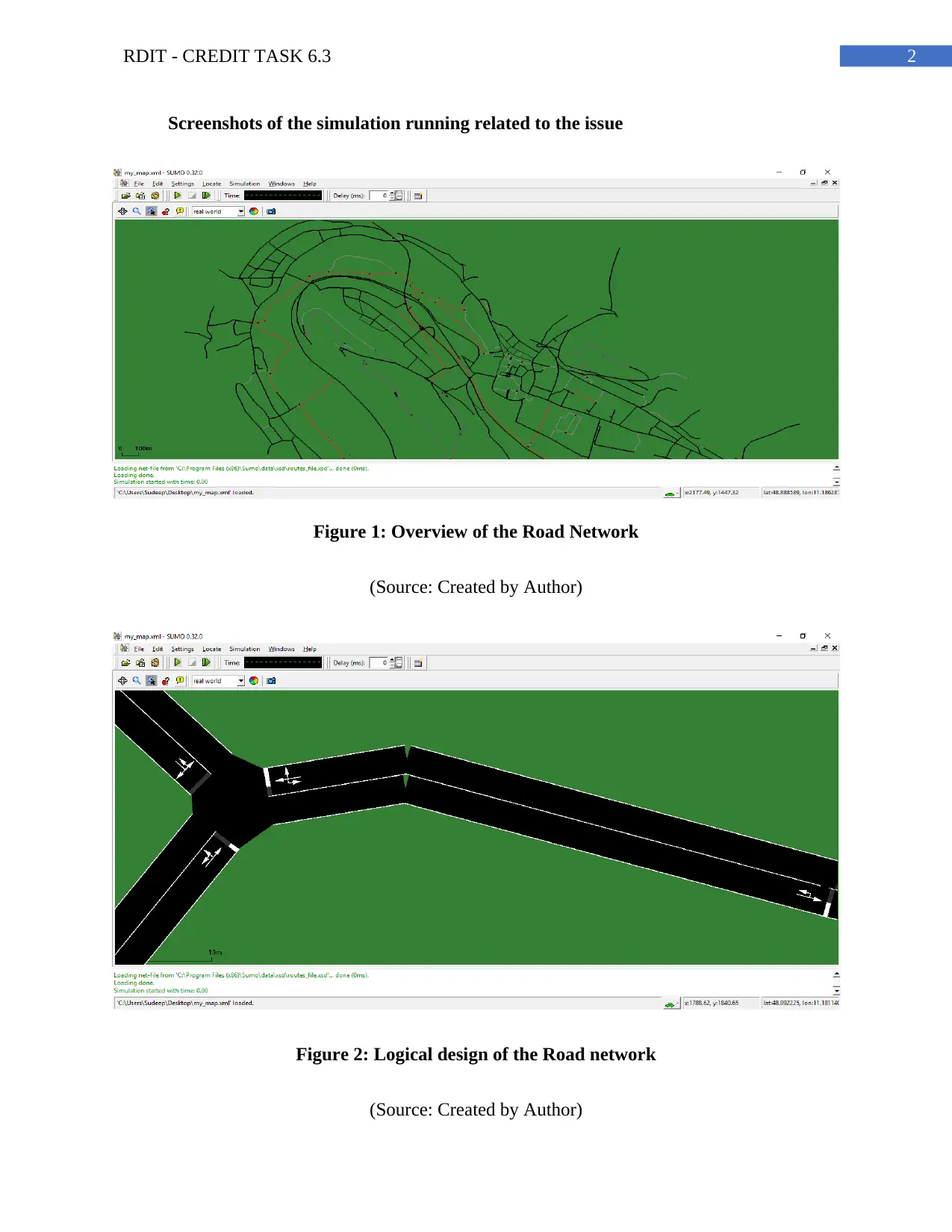
Screenshots of the simulation running related to the issue
Figure 1: Overview of the Road Network
(Source: Created by Author)
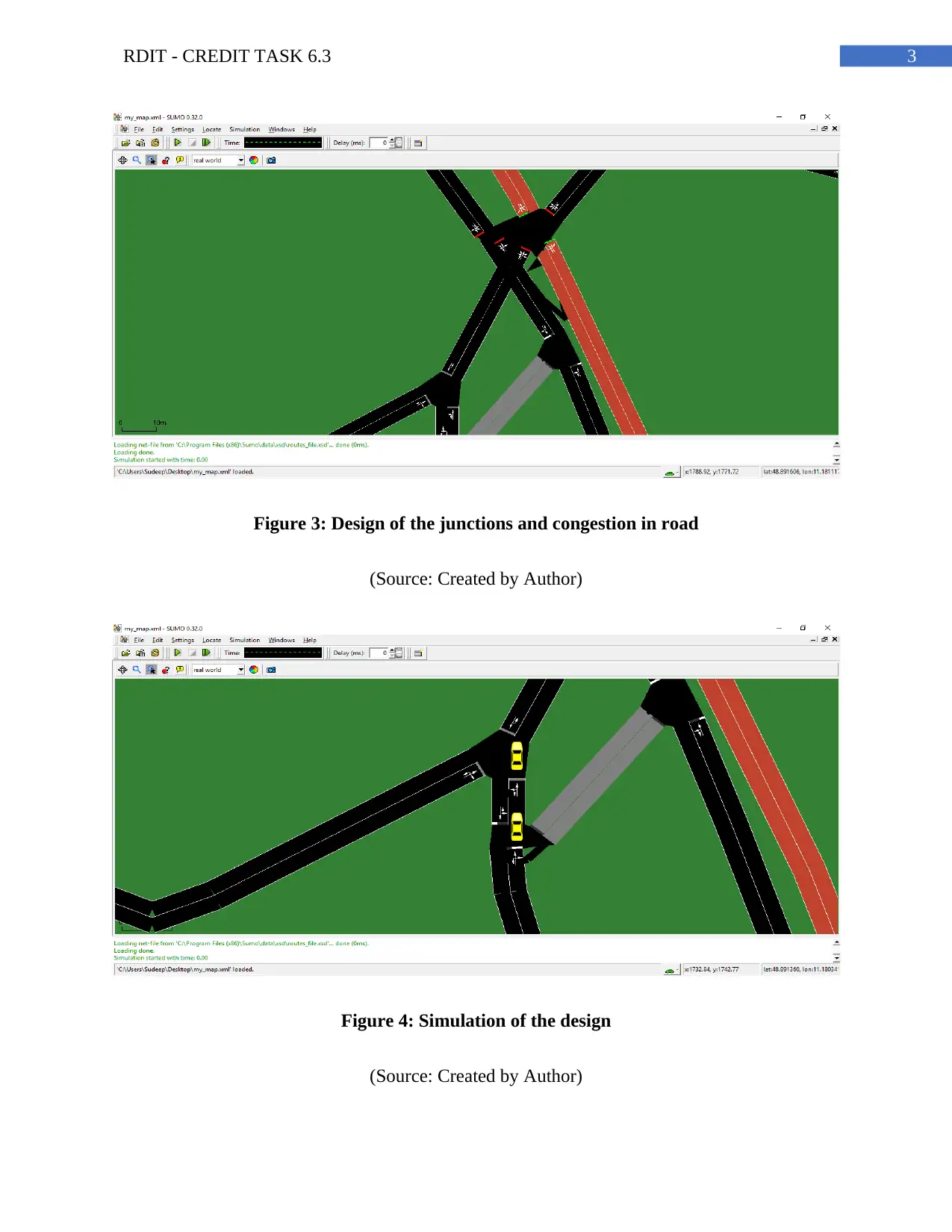
Figure 2: Logical design of the Road network
(Source: Created by Author)
Document Page
3RDIT - CREDIT TASK 6.3
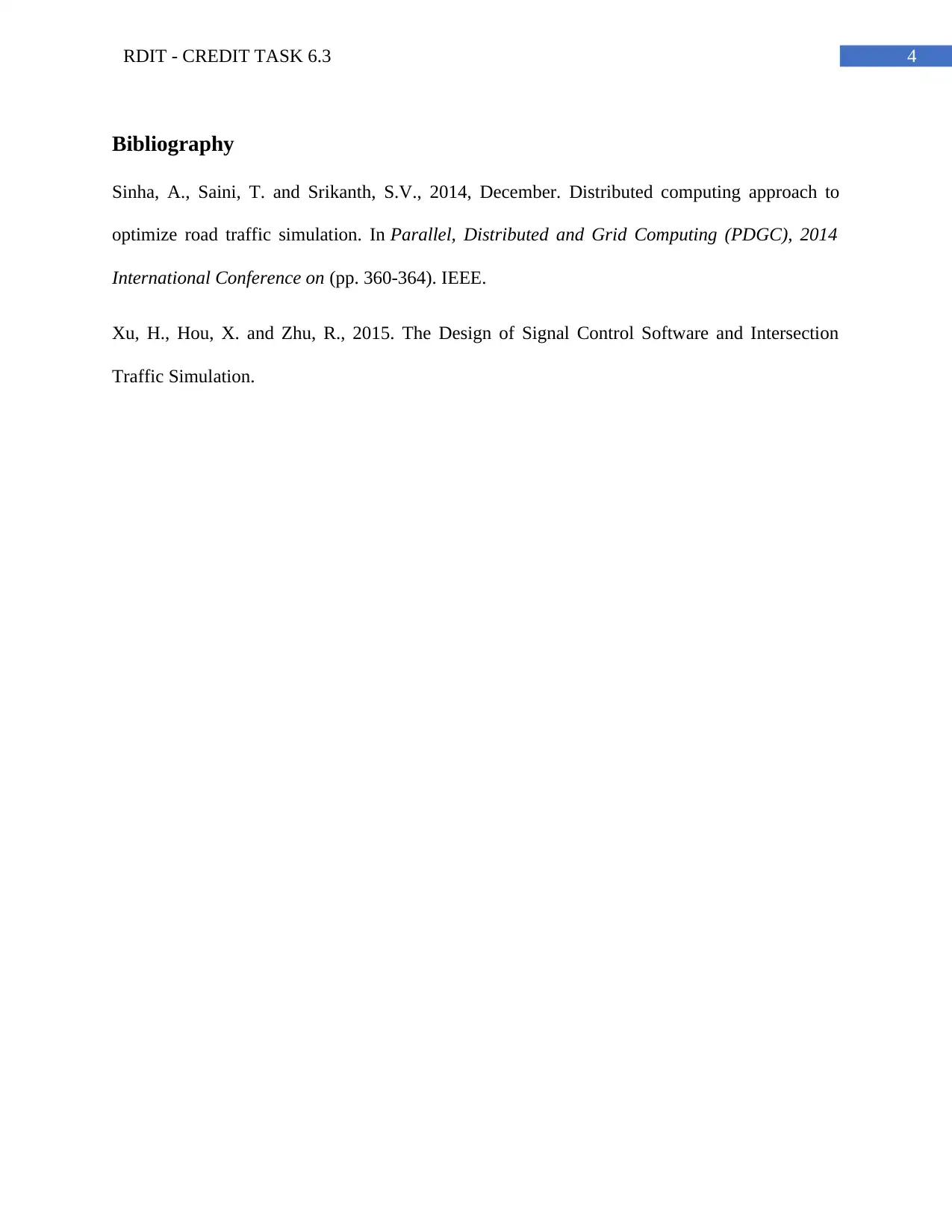
Figure 3: Design of the junctions and congestion in road
(Source: Created by Author)
Figure 4: Simulation of the design
(Source: Created by Author)
tabler-icon-diamond-filled.svg

Paraphrase This Document

Need a fresh take? Get an instant paraphrase of this document with our AI Paraphraser
Document Page
4RDIT - CREDIT TASK 6.3
Bibliography
Sinha, A., Saini, T. and Srikanth, S.V., 2014, December. Distributed computing approach to
optimize road traffic simulation. In Parallel, Distributed and Grid Computing (PDGC), 2014
International Conference on (pp. 360-364). IEEE.
Xu, H., Hou, X. and Zhu, R., 2015. The Design of Signal Control Software and Intersection
Traffic Simulation.
chevron_up_icon
1 out of 5
circle_padding
hide_on_mobile
zoom_out_icon
[object Object]