ABC Costing and Performance Analysis: Management Accounting Homework
VerifiedAdded on 2022/09/02
|15
|2132
|29
Homework Assignment
AI Summary
This homework assignment from a Management Control and Finance course at Copenhagen Business School explores Activity Based Costing (ABC) and its application. The student analyzes the profitability of three products using both traditional absorption costing and ABC methods, calculating overhead allocations based on machine hours and assembly hours. The assignment compares the results of the two costing methods, highlighting the differences in profit before tax for each product and explaining the impact of different overhead allocation bases. It also examines budgeting and accounting systems within a Social Assistance department, evaluating budget variances and suggesting improvements, emphasizing the importance of stakeholder coordination and communication. Finally, the assignment assesses the performance of a restaurant using financial data, market share, and a balanced scorecard, while also considering the restaurant's intellectual capital components such as the number of meals served, turnover, and special themes. The assignment aims to provide a comprehensive understanding of cost accounting, budgeting, and performance evaluation techniques.
Running head: MANAGEMENT ACCOUNTING
Management Accounting
Name of the Student:
Name of the University:
Authors Note:
Management Accounting
Name of the Student:
Name of the University:
Authors Note:
Paraphrase This Document
Need a fresh take? Get an instant paraphrase of this document with our AI Paraphraser

1
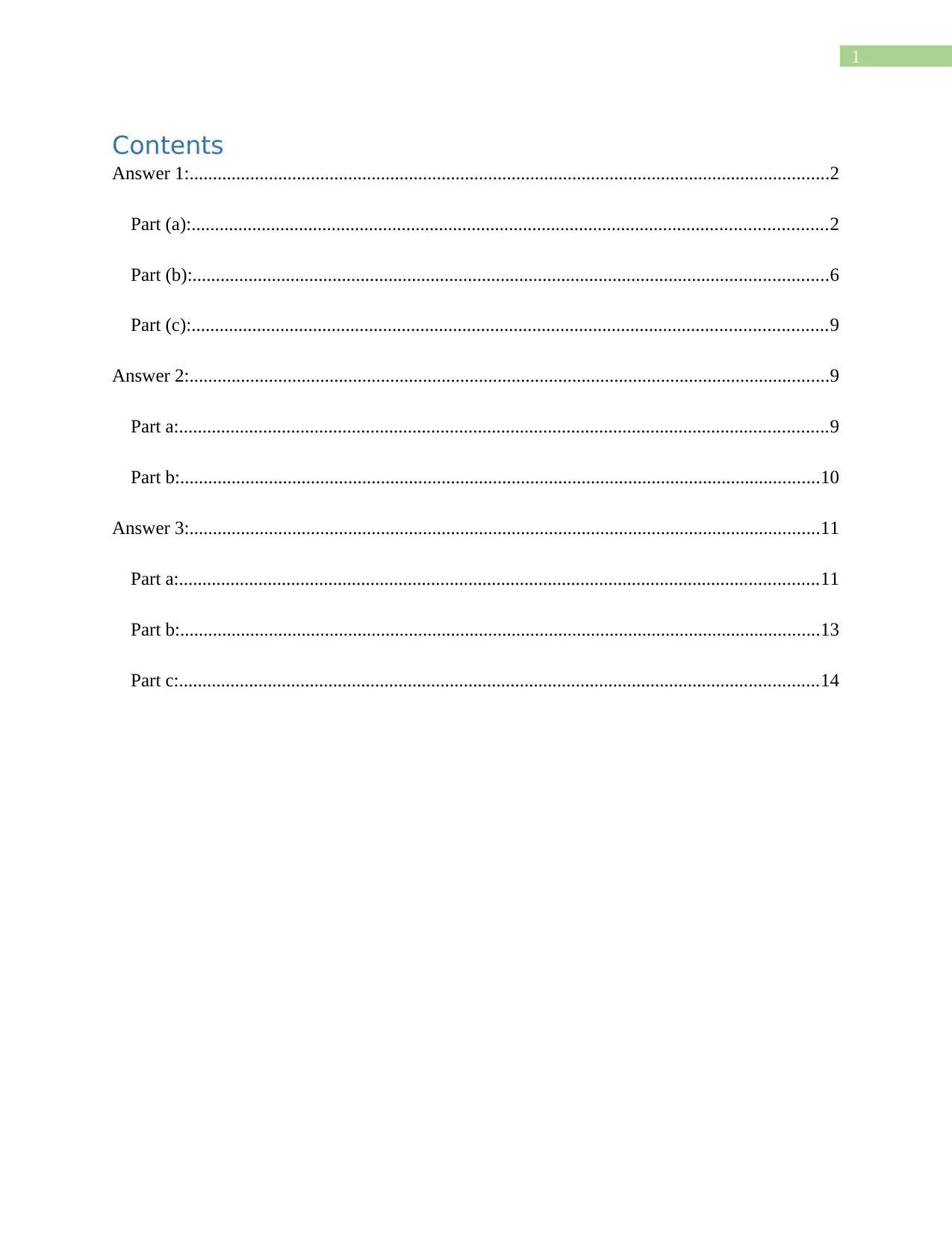
Contents
Answer 1:.........................................................................................................................................2
Part (a):........................................................................................................................................2
Part (b):........................................................................................................................................6
Part (c):........................................................................................................................................9
Answer 2:.........................................................................................................................................9
Part a:...........................................................................................................................................9
Part b:.........................................................................................................................................10
Answer 3:.......................................................................................................................................11
Part a:.........................................................................................................................................11
Part b:.........................................................................................................................................13
Part c:.........................................................................................................................................14
Contents
Answer 1:.........................................................................................................................................2
Part (a):........................................................................................................................................2
Part (b):........................................................................................................................................6
Part (c):........................................................................................................................................9
Answer 2:.........................................................................................................................................9
Part a:...........................................................................................................................................9
Part b:.........................................................................................................................................10
Answer 3:.......................................................................................................................................11
Part a:.........................................................................................................................................11
Part b:.........................................................................................................................................13
Part c:.........................................................................................................................................14

2
Answer 1:
Part (a):
Sub part (i):
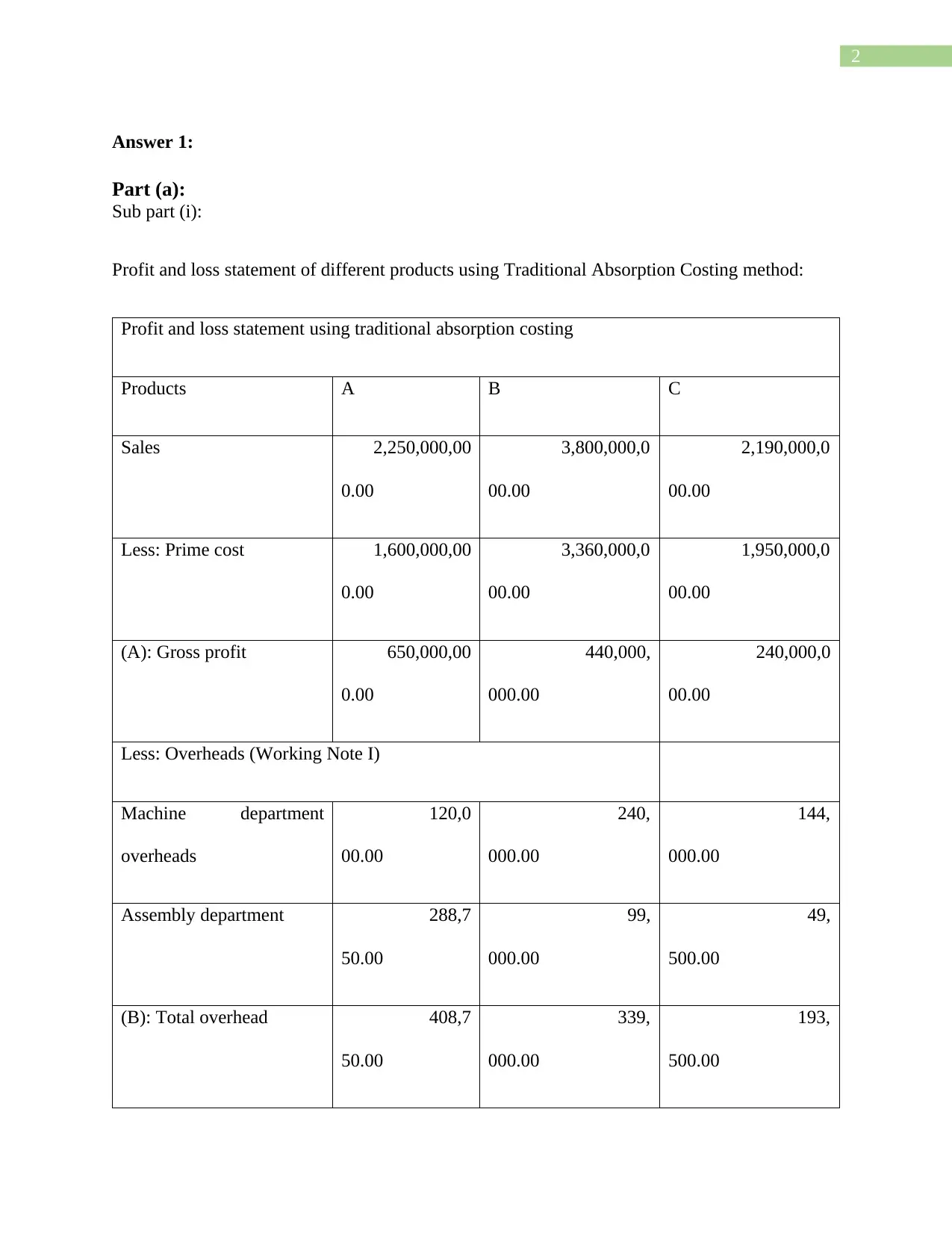
Profit and loss statement of different products using Traditional Absorption Costing method:
Profit and loss statement using traditional absorption costing
Products A B C
Sales 2,250,000,00
0.00
3,800,000,0
00.00
2,190,000,0
00.00
Less: Prime cost 1,600,000,00
0.00
3,360,000,0
00.00
1,950,000,0
00.00
(A): Gross profit 650,000,00
0.00
440,000,
000.00
240,000,0
00.00
Less: Overheads (Working Note I)
Machine department
overheads
120,0
00.00
240,
000.00
144,
000.00
Assembly department 288,7
50.00
99,
000.00
49,
500.00
(B): Total overhead 408,7
50.00
339,
000.00
193,
500.00
Answer 1:
Part (a):
Sub part (i):
Profit and loss statement of different products using Traditional Absorption Costing method:
Profit and loss statement using traditional absorption costing
Products A B C
Sales 2,250,000,00
0.00
3,800,000,0
00.00
2,190,000,0
00.00
Less: Prime cost 1,600,000,00
0.00
3,360,000,0
00.00
1,950,000,0
00.00
(A): Gross profit 650,000,00
0.00
440,000,
000.00
240,000,0
00.00
Less: Overheads (Working Note I)
Machine department
overheads
120,0
00.00
240,
000.00
144,
000.00
Assembly department 288,7
50.00
99,
000.00
49,
500.00
(B): Total overhead 408,7
50.00
339,
000.00
193,
500.00
⊘ This is a preview!⊘
Do you want full access?
Subscribe today to unlock all pages.

Trusted by 1+ million students worldwide

3
Profit before tax (A - B) 649,591,25
0.00
439,661,
000.00
239,806,5
00.00
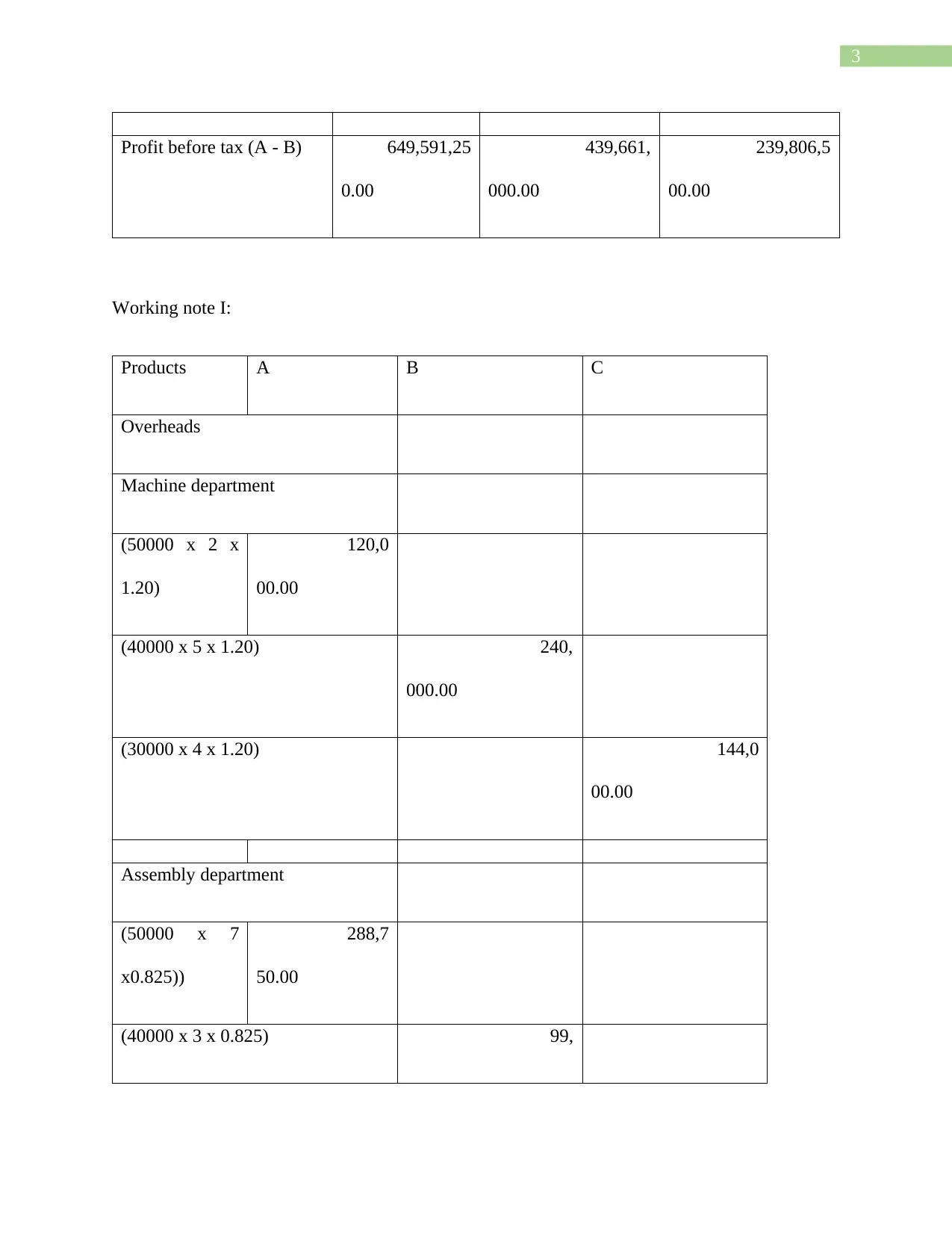
Working note I:
Products A B C
Overheads
Machine department
(50000 x 2 x
1.20)
120,0
00.00
(40000 x 5 x 1.20) 240,
000.00
(30000 x 4 x 1.20) 144,0
00.00
Assembly department
(50000 x 7
x0.825))
288,7
50.00
(40000 x 3 x 0.825) 99,
Profit before tax (A - B) 649,591,25
0.00
439,661,
000.00
239,806,5
00.00
Working note I:
Products A B C
Overheads
Machine department
(50000 x 2 x
1.20)
120,0
00.00
(40000 x 5 x 1.20) 240,
000.00
(30000 x 4 x 1.20) 144,0
00.00
Assembly department
(50000 x 7
x0.825))
288,7
50.00
(40000 x 3 x 0.825) 99,
Paraphrase This Document
Need a fresh take? Get an instant paraphrase of this document with our AI Paraphraser

4
000.00
(30000 x 2 x 0.825) 49,5
00.00
Sub part (ii):
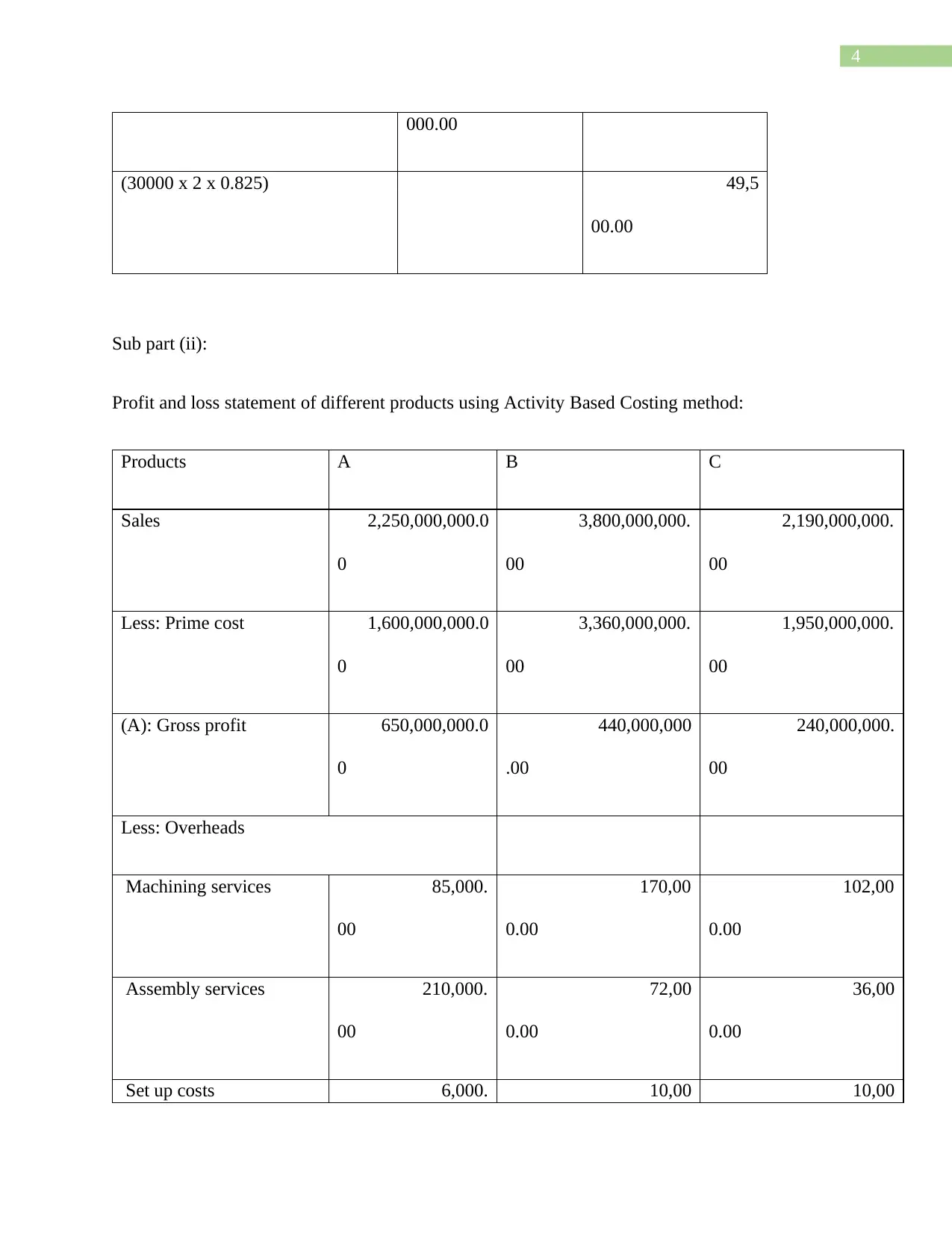
Profit and loss statement of different products using Activity Based Costing method:
Products A B C
Sales 2,250,000,000.0
0
3,800,000,000.
00
2,190,000,000.
00
Less: Prime cost 1,600,000,000.0
0
3,360,000,000.
00
1,950,000,000.
00
(A): Gross profit 650,000,000.0
0
440,000,000
.00
240,000,000.
00
Less: Overheads
Machining services 85,000.
00
170,00
0.00
102,00
0.00
Assembly services 210,000.
00
72,00
0.00
36,00
0.00
Set up costs 6,000. 10,00 10,00
000.00
(30000 x 2 x 0.825) 49,5
00.00
Sub part (ii):
Profit and loss statement of different products using Activity Based Costing method:
Products A B C
Sales 2,250,000,000.0
0
3,800,000,000.
00
2,190,000,000.
00
Less: Prime cost 1,600,000,000.0
0
3,360,000,000.
00
1,950,000,000.
00
(A): Gross profit 650,000,000.0
0
440,000,000
.00
240,000,000.
00
Less: Overheads
Machining services 85,000.
00
170,00
0.00
102,00
0.00
Assembly services 210,000.
00
72,00
0.00
36,00
0.00
Set up costs 6,000. 10,00 10,00

5
00 0.00 0.00
Ordering costs 39,000.
00
39,00
0.00
78,00
0.00
Purchasing costs 22,500.
00
30,00
0.00
31,50
0.00
(B): Total overhead 362,500.
00
321,00
0.00
257,50
0.00
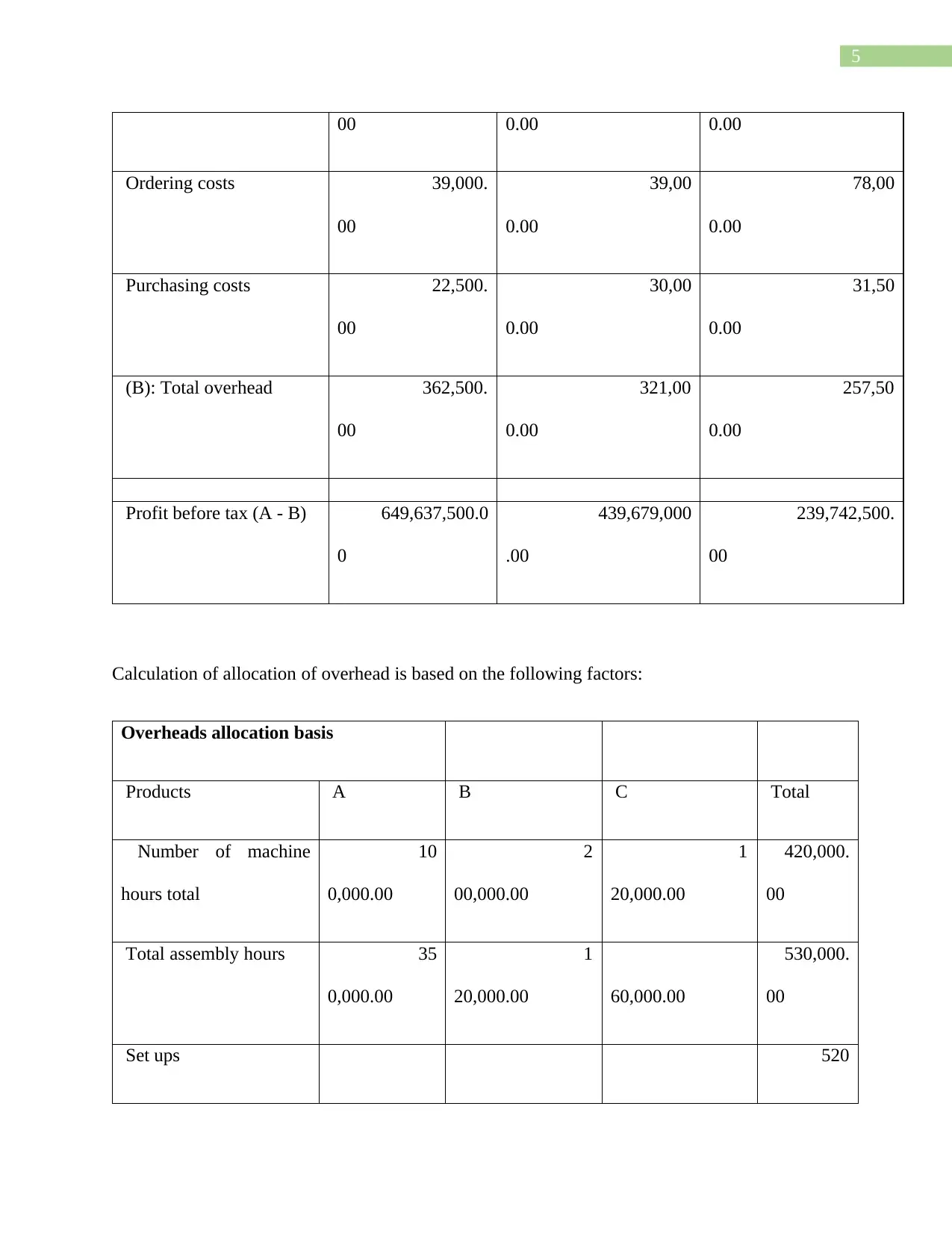
Profit before tax (A - B) 649,637,500.0
0
439,679,000
.00
239,742,500.
00
Calculation of allocation of overhead is based on the following factors:
Overheads allocation basis
Products A B C Total
Number of machine
hours total
10
0,000.00
2
00,000.00
1
20,000.00
420,000.
00
Total assembly hours 35
0,000.00
1
20,000.00 60,000.00
530,000.
00
Set ups 520
00 0.00 0.00
Ordering costs 39,000.
00
39,00
0.00
78,00
0.00
Purchasing costs 22,500.
00
30,00
0.00
31,50
0.00
(B): Total overhead 362,500.
00
321,00
0.00
257,50
0.00
Profit before tax (A - B) 649,637,500.0
0
439,679,000
.00
239,742,500.
00
Calculation of allocation of overhead is based on the following factors:
Overheads allocation basis
Products A B C Total
Number of machine
hours total
10
0,000.00
2
00,000.00
1
20,000.00
420,000.
00
Total assembly hours 35
0,000.00
1
20,000.00 60,000.00
530,000.
00
Set ups 520
⊘ This is a preview!⊘
Do you want full access?
Subscribe today to unlock all pages.

Trusted by 1+ million students worldwide

6
120.00 200.00 200.00 .00
Number of customer
orders 8,000.00 8,000.00 16,000.00
32,000.
00
Number of supplier
orders 3,000.00 4,000.00 4,200.00
11,200.
00
Part (b):
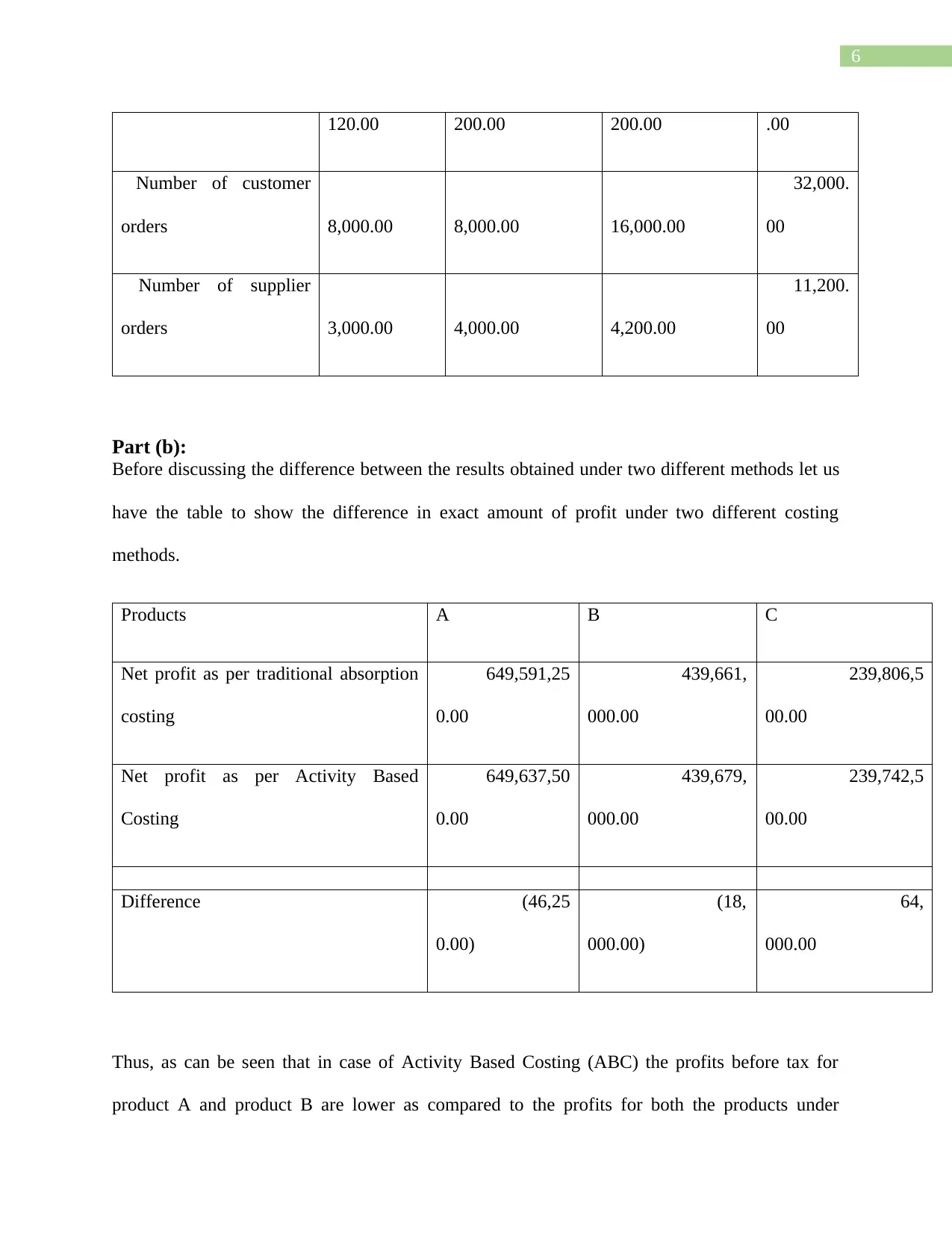
Before discussing the difference between the results obtained under two different methods let us
have the table to show the difference in exact amount of profit under two different costing
methods.
Products A B C
Net profit as per traditional absorption
costing
649,591,25
0.00
439,661,
000.00
239,806,5
00.00
Net profit as per Activity Based
Costing
649,637,50
0.00
439,679,
000.00
239,742,5
00.00
Difference (46,25
0.00)
(18,
000.00)
64,
000.00
Thus, as can be seen that in case of Activity Based Costing (ABC) the profits before tax for
product A and product B are lower as compared to the profits for both the products under
120.00 200.00 200.00 .00
Number of customer
orders 8,000.00 8,000.00 16,000.00
32,000.
00
Number of supplier
orders 3,000.00 4,000.00 4,200.00
11,200.
00
Part (b):
Before discussing the difference between the results obtained under two different methods let us
have the table to show the difference in exact amount of profit under two different costing
methods.
Products A B C
Net profit as per traditional absorption
costing
649,591,25
0.00
439,661,
000.00
239,806,5
00.00
Net profit as per Activity Based
Costing
649,637,50
0.00
439,679,
000.00
239,742,5
00.00
Difference (46,25
0.00)
(18,
000.00)
64,
000.00
Thus, as can be seen that in case of Activity Based Costing (ABC) the profits before tax for
product A and product B are lower as compared to the profits for both the products under
Paraphrase This Document
Need a fresh take? Get an instant paraphrase of this document with our AI Paraphraser

7
traditional costing method. Net profit before tax for product A under Traditional Method is
€649,591,250 whereas the net profit before tax for the same under ABC method is €649,637,500.
Thus, the profit under Traditional method from product A is lowered by €46,250. Though this
seems a small amount in respect of the total profit but it is material simply because the scientific
justification behind the ABC method and its use for determination of proper cost of product over
traditional costing method.
Similarly, the net profit before tax for product B under Traditional costing system is
€439,661,000 which is lower by €18,000 compared to the net profit before tax under ABC
method of costing. As per the ABC method profit and loss statement of product B the net profit
before tax is €439,679,000.
On the other hand the net profit before tax from product C as per Traditional costing method is
higher by €64,000 as compared to the net profit before tax for the product under ABC method.
The net profit before tax for product C is €239,806,500 as per the profit and loss statement
prepared in accordance with the traditional costing system.
Now the main reason for the difference between the net profits of three different products under
traditional costing and ABC method is the difference in allocation of overheads. As per
traditional costing method the overheads are allocated to the products in accordance with pre-
determined rates. In this case the overheads of Machining department have been allocated at
€1.20 per machine hour whereas the overheads of Assembly department have been allocated at
€0.825 per hour. In case of ABC method the procedure to allocate the overheads to products is
completely different and much more logical with the overheads classified into different cost
traditional costing method. Net profit before tax for product A under Traditional Method is
€649,591,250 whereas the net profit before tax for the same under ABC method is €649,637,500.
Thus, the profit under Traditional method from product A is lowered by €46,250. Though this
seems a small amount in respect of the total profit but it is material simply because the scientific
justification behind the ABC method and its use for determination of proper cost of product over
traditional costing method.
Similarly, the net profit before tax for product B under Traditional costing system is
€439,661,000 which is lower by €18,000 compared to the net profit before tax under ABC
method of costing. As per the ABC method profit and loss statement of product B the net profit
before tax is €439,679,000.
On the other hand the net profit before tax from product C as per Traditional costing method is
higher by €64,000 as compared to the net profit before tax for the product under ABC method.
The net profit before tax for product C is €239,806,500 as per the profit and loss statement
prepared in accordance with the traditional costing system.
Now the main reason for the difference between the net profits of three different products under
traditional costing and ABC method is the difference in allocation of overheads. As per
traditional costing method the overheads are allocated to the products in accordance with pre-
determined rates. In this case the overheads of Machining department have been allocated at
€1.20 per machine hour whereas the overheads of Assembly department have been allocated at
€0.825 per hour. In case of ABC method the procedure to allocate the overheads to products is
completely different and much more logical with the overheads classified into different cost

8
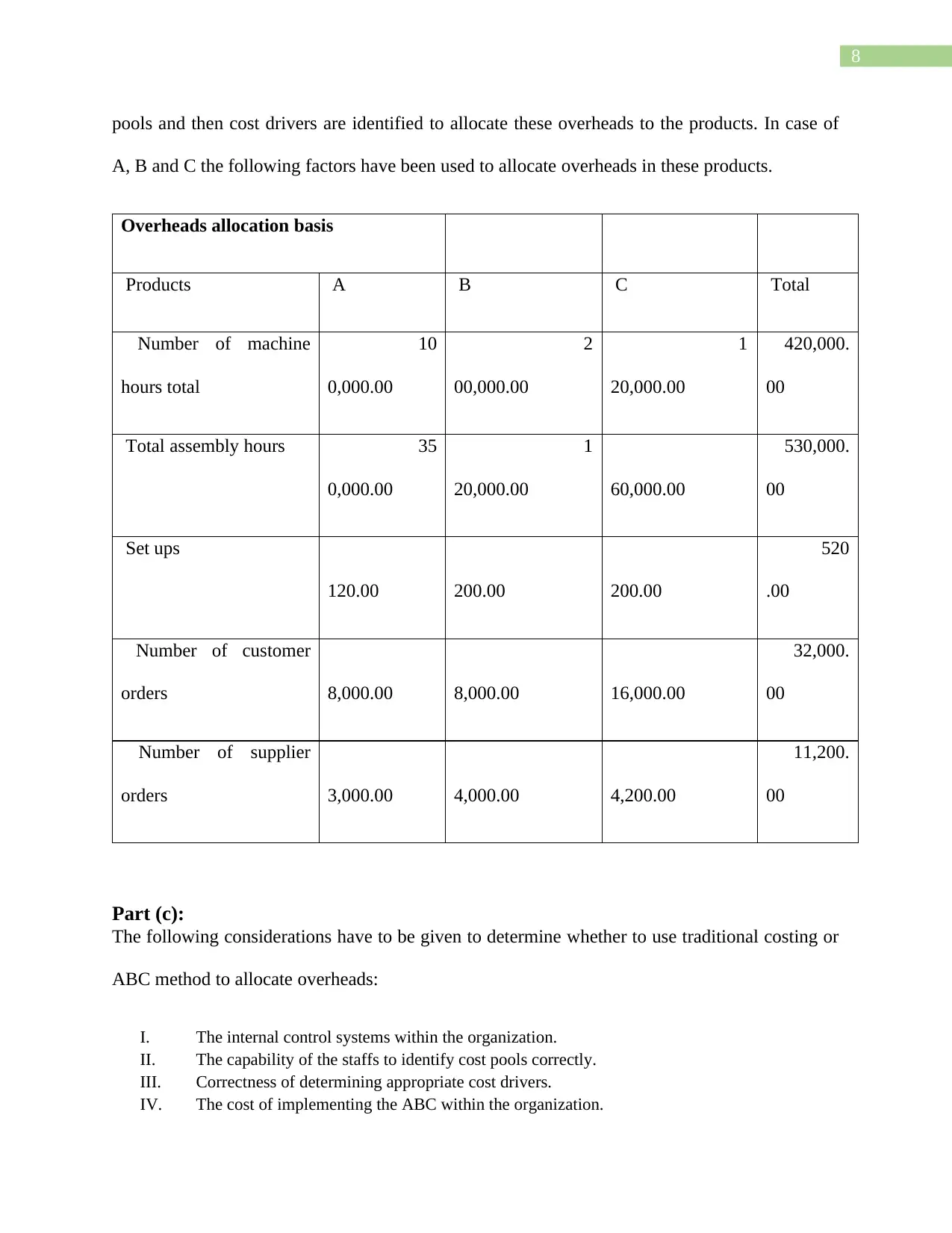
pools and then cost drivers are identified to allocate these overheads to the products. In case of
A, B and C the following factors have been used to allocate overheads in these products.
Overheads allocation basis
Products A B C Total
Number of machine
hours total
10
0,000.00
2
00,000.00
1
20,000.00
420,000.
00
Total assembly hours 35
0,000.00
1
20,000.00 60,000.00
530,000.
00
Set ups
120.00 200.00 200.00
520
.00
Number of customer
orders 8,000.00 8,000.00 16,000.00
32,000.
00
Number of supplier
orders 3,000.00 4,000.00 4,200.00
11,200.
00
Part (c):
The following considerations have to be given to determine whether to use traditional costing or
ABC method to allocate overheads:
I. The internal control systems within the organization.
II. The capability of the staffs to identify cost pools correctly.
III. Correctness of determining appropriate cost drivers.
IV. The cost of implementing the ABC within the organization.
pools and then cost drivers are identified to allocate these overheads to the products. In case of
A, B and C the following factors have been used to allocate overheads in these products.
Overheads allocation basis
Products A B C Total
Number of machine
hours total
10
0,000.00
2
00,000.00
1
20,000.00
420,000.
00
Total assembly hours 35
0,000.00
1
20,000.00 60,000.00
530,000.
00
Set ups
120.00 200.00 200.00
520
.00
Number of customer
orders 8,000.00 8,000.00 16,000.00
32,000.
00
Number of supplier
orders 3,000.00 4,000.00 4,200.00
11,200.
00
Part (c):
The following considerations have to be given to determine whether to use traditional costing or
ABC method to allocate overheads:
I. The internal control systems within the organization.
II. The capability of the staffs to identify cost pools correctly.
III. Correctness of determining appropriate cost drivers.
IV. The cost of implementing the ABC within the organization.
⊘ This is a preview!⊘
Do you want full access?
Subscribe today to unlock all pages.

Trusted by 1+ million students worldwide

9
V. The cost benefit analysis of implementing the new costing system within the organization.
All the above considerations must be given due importance before taking a final decision on the
cost method to be used within an organization.
Answer 2:
Part a:
An organization and its efficient management to a large extent is dependent on the ability of the
management to correct draft its budgets and account for resources accordingly. The correctness
of budget and effective accountability of resources will enable an organization to achieve its
desired objectives in the future. The responsibility of the accounting and budgeting system is
extremely crucial to ensure that the organization goes a long way in the future.
In this case the responsibility of accounting and budgeting system of Social Assistance (SA)
department is the combined responsibility of the director, SA department manager and the
employees of SA department. Thus, while developing the budgeting and accounting system for
the SA department the director should have consulted with the other stakeholders, i.e. the
manager of SA department and the employees of the department. This would have resulted in
development of an efficient budgeting and accounting system for the department. It is also
important to note that the objective of SA department is not to make profit but to provide social
assistance to the elderly customers to help them in their daily needs. Thus, the budgeting and
accounting system for the department must consider the importance of providing best possible
services to the elderly customers to help them in their daily lives.
Part b:
As can be seen from the cost control report of SA department for the month of May, 2019 that
the actual costs are significantly different from the budgeted expenditures. The whole purpose of
V. The cost benefit analysis of implementing the new costing system within the organization.
All the above considerations must be given due importance before taking a final decision on the
cost method to be used within an organization.
Answer 2:
Part a:
An organization and its efficient management to a large extent is dependent on the ability of the
management to correct draft its budgets and account for resources accordingly. The correctness
of budget and effective accountability of resources will enable an organization to achieve its
desired objectives in the future. The responsibility of the accounting and budgeting system is
extremely crucial to ensure that the organization goes a long way in the future.
In this case the responsibility of accounting and budgeting system of Social Assistance (SA)
department is the combined responsibility of the director, SA department manager and the
employees of SA department. Thus, while developing the budgeting and accounting system for
the SA department the director should have consulted with the other stakeholders, i.e. the
manager of SA department and the employees of the department. This would have resulted in
development of an efficient budgeting and accounting system for the department. It is also
important to note that the objective of SA department is not to make profit but to provide social
assistance to the elderly customers to help them in their daily needs. Thus, the budgeting and
accounting system for the department must consider the importance of providing best possible
services to the elderly customers to help them in their daily lives.
Part b:
As can be seen from the cost control report of SA department for the month of May, 2019 that
the actual costs are significantly different from the budgeted expenditures. The whole purpose of
Paraphrase This Document
Need a fresh take? Get an instant paraphrase of this document with our AI Paraphraser

10
budgeting and accounting systems is to prepare for the uncertain future and make necessary
provision for the future to reduce the effects of uncertainties on the operations of an organization.
Thus, the accuracy of budgets will help an organization to improve its performances in the
future. In this the significant variance between the actual and budgeted expenditures of SA
department May 2019 is the lack of coordination between all the stakeholders of the department
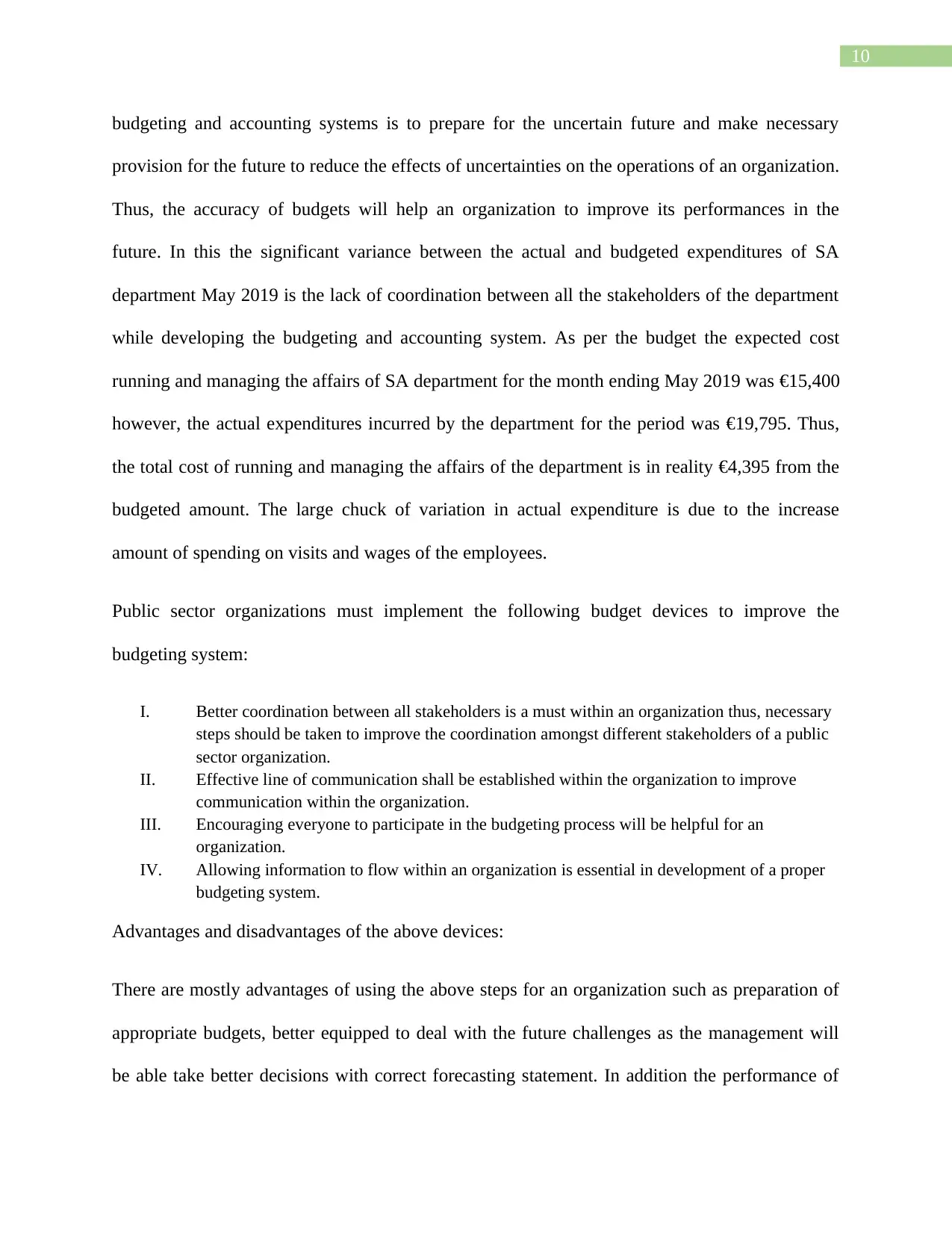
while developing the budgeting and accounting system. As per the budget the expected cost
running and managing the affairs of SA department for the month ending May 2019 was €15,400
however, the actual expenditures incurred by the department for the period was €19,795. Thus,
the total cost of running and managing the affairs of the department is in reality €4,395 from the
budgeted amount. The large chuck of variation in actual expenditure is due to the increase
amount of spending on visits and wages of the employees.
Public sector organizations must implement the following budget devices to improve the
budgeting system:
I. Better coordination between all stakeholders is a must within an organization thus, necessary
steps should be taken to improve the coordination amongst different stakeholders of a public
sector organization.
II. Effective line of communication shall be established within the organization to improve
communication within the organization.
III. Encouraging everyone to participate in the budgeting process will be helpful for an
organization.
IV. Allowing information to flow within an organization is essential in development of a proper
budgeting system.
Advantages and disadvantages of the above devices:
There are mostly advantages of using the above steps for an organization such as preparation of
appropriate budgets, better equipped to deal with the future challenges as the management will
be able take better decisions with correct forecasting statement. In addition the performance of
budgeting and accounting systems is to prepare for the uncertain future and make necessary
provision for the future to reduce the effects of uncertainties on the operations of an organization.
Thus, the accuracy of budgets will help an organization to improve its performances in the
future. In this the significant variance between the actual and budgeted expenditures of SA
department May 2019 is the lack of coordination between all the stakeholders of the department
while developing the budgeting and accounting system. As per the budget the expected cost
running and managing the affairs of SA department for the month ending May 2019 was €15,400
however, the actual expenditures incurred by the department for the period was €19,795. Thus,
the total cost of running and managing the affairs of the department is in reality €4,395 from the
budgeted amount. The large chuck of variation in actual expenditure is due to the increase
amount of spending on visits and wages of the employees.
Public sector organizations must implement the following budget devices to improve the
budgeting system:
I. Better coordination between all stakeholders is a must within an organization thus, necessary
steps should be taken to improve the coordination amongst different stakeholders of a public
sector organization.
II. Effective line of communication shall be established within the organization to improve
communication within the organization.
III. Encouraging everyone to participate in the budgeting process will be helpful for an
organization.
IV. Allowing information to flow within an organization is essential in development of a proper
budgeting system.
Advantages and disadvantages of the above devices:
There are mostly advantages of using the above steps for an organization such as preparation of
appropriate budgets, better equipped to deal with the future challenges as the management will
be able take better decisions with correct forecasting statement. In addition the performance of

11
an organization will be improved significantly with the use of above steps. However, there are
certain disadvantages of the above devices.
Answer 3:
Part a:
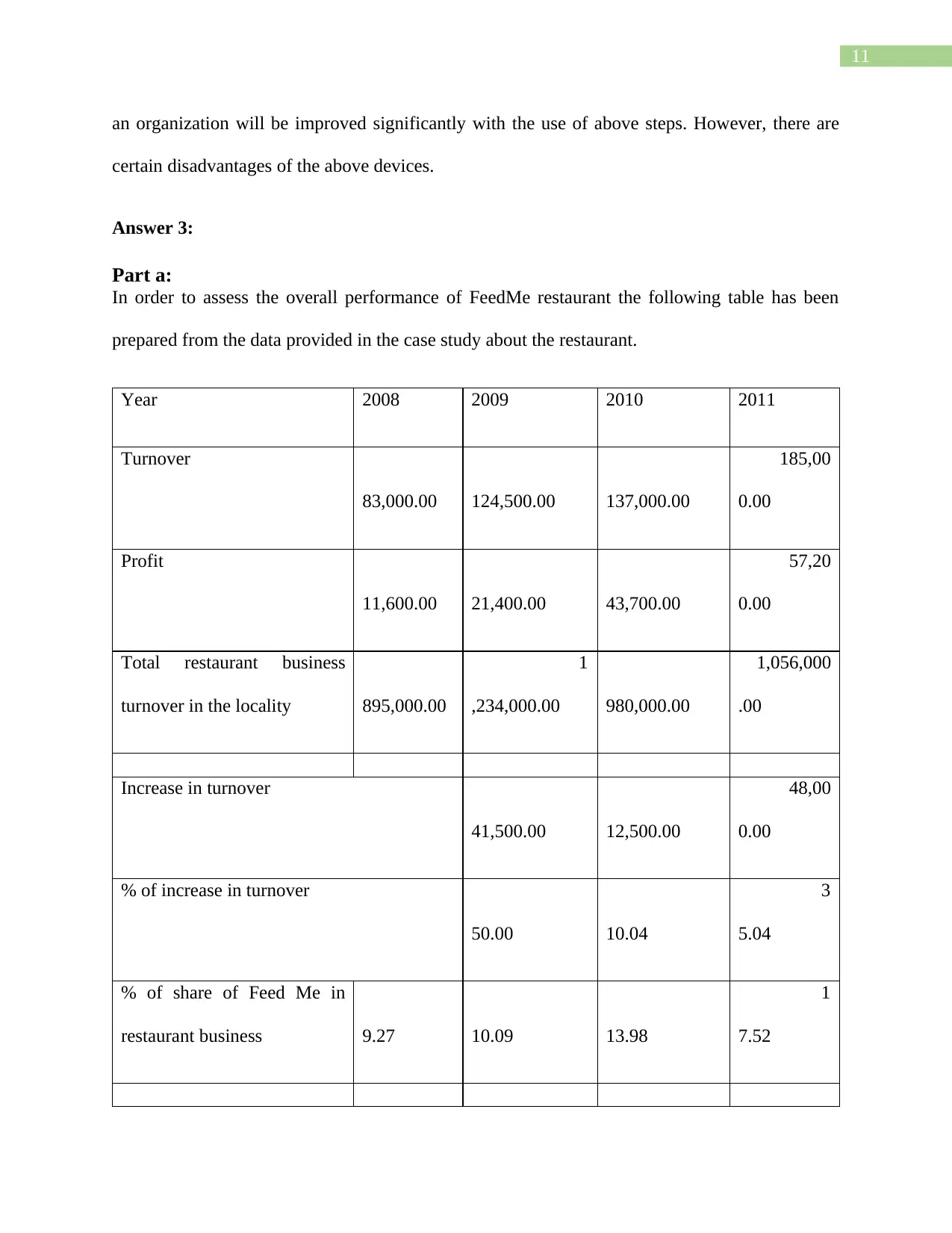
In order to assess the overall performance of FeedMe restaurant the following table has been
prepared from the data provided in the case study about the restaurant.
Year 2008 2009 2010 2011
Turnover
83,000.00 124,500.00 137,000.00
185,00
0.00
Profit
11,600.00 21,400.00 43,700.00
57,20
0.00
Total restaurant business
turnover in the locality 895,000.00
1
,234,000.00 980,000.00
1,056,000
.00
Increase in turnover
41,500.00 12,500.00
48,00
0.00
% of increase in turnover
50.00 10.04
3
5.04
% of share of Feed Me in
restaurant business 9.27 10.09 13.98
1
7.52
an organization will be improved significantly with the use of above steps. However, there are
certain disadvantages of the above devices.
Answer 3:
Part a:
In order to assess the overall performance of FeedMe restaurant the following table has been
prepared from the data provided in the case study about the restaurant.
Year 2008 2009 2010 2011
Turnover
83,000.00 124,500.00 137,000.00
185,00
0.00
Profit
11,600.00 21,400.00 43,700.00
57,20
0.00
Total restaurant business
turnover in the locality 895,000.00
1
,234,000.00 980,000.00
1,056,000
.00
Increase in turnover
41,500.00 12,500.00
48,00
0.00
% of increase in turnover
50.00 10.04
3
5.04
% of share of Feed Me in
restaurant business 9.27 10.09 13.98
1
7.52
⊘ This is a preview!⊘
Do you want full access?
Subscribe today to unlock all pages.

Trusted by 1+ million students worldwide
1 out of 15
Related Documents
Your All-in-One AI-Powered Toolkit for Academic Success.
+13062052269
info@desklib.com
Available 24*7 on WhatsApp / Email
Unlock your academic potential
Copyright © 2020–2025 A2Z Services. All Rights Reserved. Developed and managed by ZUCOL.