Comprehensive Report on Autoimmune Hepatitis Pathophysiology
VerifiedAdded on 2023/06/11
|4
|518
|251
Report
AI Summary
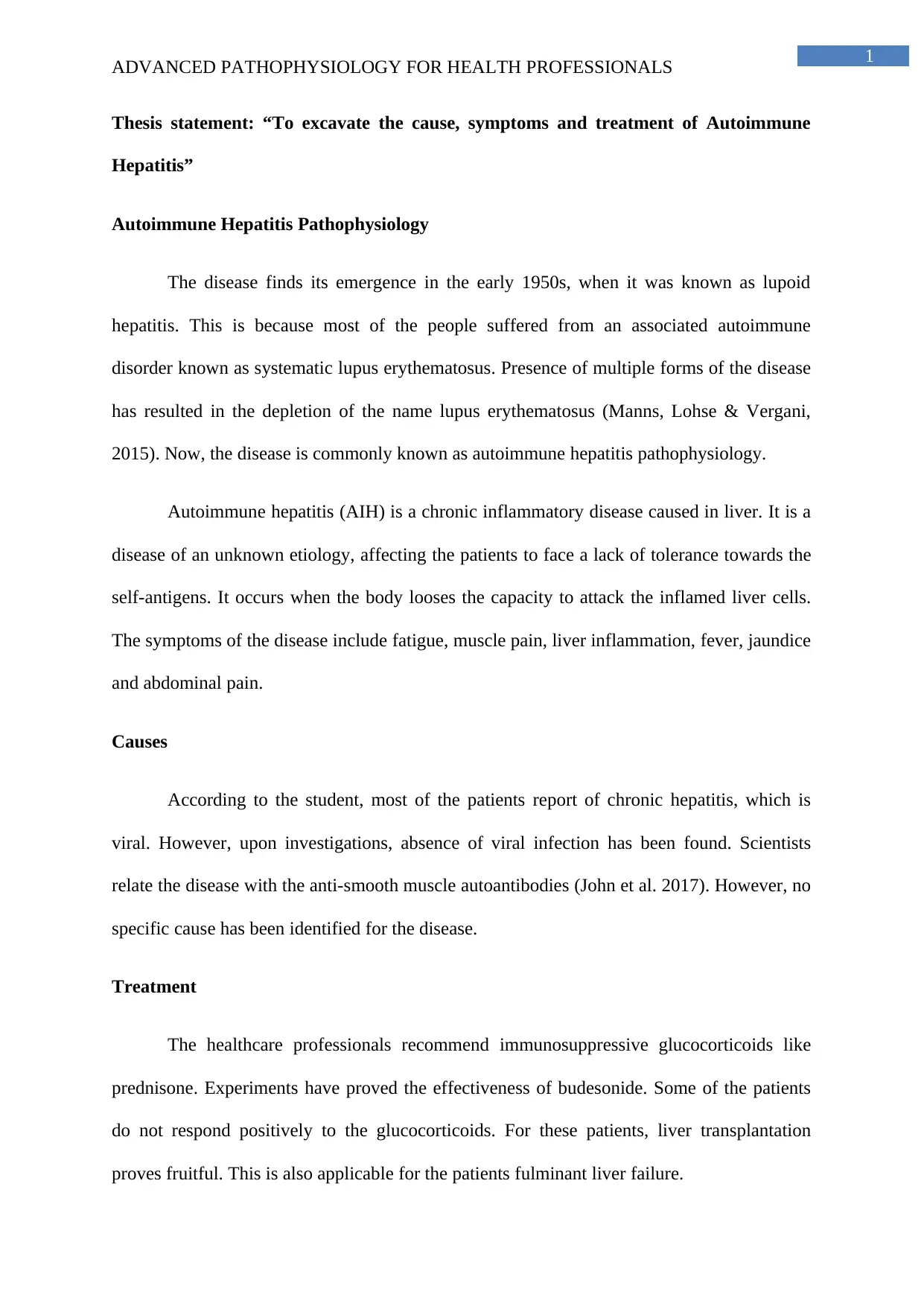
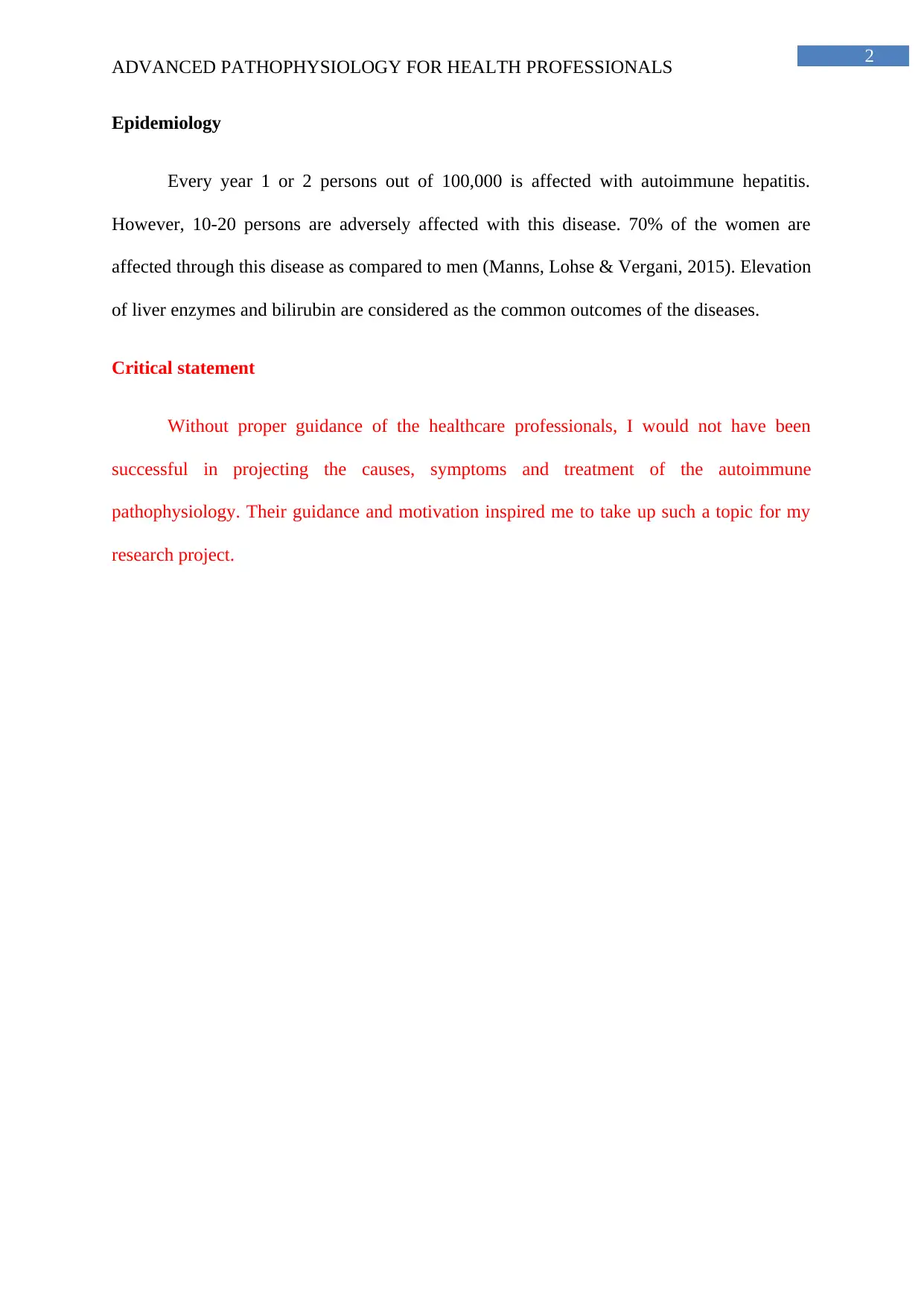
This report delves into the pathophysiology of Autoimmune Hepatitis (AIH), a chronic inflammatory liver disease characterized by a loss of tolerance to self-antigens. Originating in the 1950s and initially termed lupoid hepatitis due to its association with systemic lupus erythematosus, AIH presents with symptoms such as fatigue, muscle pain, liver inflammation, fever, jaundice, and abdominal pain. While the exact etiology remains unknown, research suggests a link with anti-smooth muscle autoantibodies, though no specific cause has been definitively identified. Treatment strategies primarily involve immunosuppressive glucocorticoids like prednisone and, in some cases, budesonide. Liver transplantation is considered for patients unresponsive to glucocorticoids or those experiencing fulminant liver failure. Epidemiological data indicates that approximately 1-2 individuals per 100,000 are affected annually, with women being disproportionately affected (70% of cases). The report concludes by acknowledging the invaluable guidance of healthcare professionals in understanding the complexities of autoimmune pathophysiology. Desklib provides a platform to access similar solved assignments.





1 out of 4


Related Documents


Your All-in-One AI-Powered Toolkit for Academic Success.
+13062052269
info@desklib.com
Available 24*7 on WhatsApp / Email
![[object Object]](/_next/static/media/star-bottom.7253800d.svg)
Copyright © 2020–2026 A2Z Services. All Rights Reserved. Developed and managed by ZUCOL.