COSC2511 Introduction to Programming: Dragon Adventure Game Project
VerifiedAdded on 2023/06/03
|10
|2325
|321
Project
AI Summary
This report details a Dragon Adventure Game project, focusing on its design and implementation. The project involves creating a text-based adventure game with different skill levels, user interfaces, and software interfaces. The game's system perspective is analyzed, emphasizing the role of command-line interfaces and dialogue management. The report covers various aspects, including system functions, user interfaces, software interfaces, and functional requirements such as dialogue management, artefact management, and creature fight management. The project also includes a mapping system to track rooms and objects. The provided solution outlines the game's structure, data management, and control structure, including how the game processes user commands and manages game states. The document provides a comprehensive overview of the project, including references to relevant programming concepts and techniques. The project utilizes Java and UNIX systems.
Programming

Paraphrase This Document
Need a fresh take? Get an instant paraphrase of this document with our AI Paraphraser
Table of Contents
1. Introduction.................................................................................................................................2
2. Scope.............................................................................................................................................2
3. Overall project description.........................................................................................................3
3.1 System perspective...............................................................................................................3
3.2 System function....................................................................................................................3
4. Overview of the dragon games....................................................................................................3
4.1 User interfaces......................................................................................................................3
4.2 Software interfaces..............................................................................................................4
4.3 Function requirements........................................................................................................4
4.4 Dm internal data..................................................................................................................4
4.5 Dialogue management control structure............................................................................5
5. Mapping CSCI (MP)...................................................................................................................5
References..........................................................................................................................................10
1
1. Introduction.................................................................................................................................2
2. Scope.............................................................................................................................................2
3. Overall project description.........................................................................................................3
3.1 System perspective...............................................................................................................3
3.2 System function....................................................................................................................3
4. Overview of the dragon games....................................................................................................3
4.1 User interfaces......................................................................................................................3
4.2 Software interfaces..............................................................................................................4
4.3 Function requirements........................................................................................................4
4.4 Dm internal data..................................................................................................................4
4.5 Dialogue management control structure............................................................................5
5. Mapping CSCI (MP)...................................................................................................................5
References..........................................................................................................................................10
1
1. Introduction
The proposal of the start-up project is presented in this report. The console based text
dragon adventure games application is presented here. The main aim of this report is to
analyze the application part which is first used for analyzing the game, to design the platform
tools and to display the output on the console of the application. The adventure game offers
different skills levels. The level 1 is the easiest game to play, because it uses the simplified
room layout which misses just castle and maze. On the other hand, it hardly contains bats and
dragons. The level 2 represents the game’s full version which has several defined objects to
appear in the set of positions, when the game starts. The level 3 represents the same level 2,
but the dragon can be moved on the object’s location which is randomized for delivering a
game that is highly challenging. In addition to the dragon adventure games, the players can
used for difficulty switches on the control of the games it will difficultly by affecting the
behaviours of the dragons and the players: it will switch controls of the dragon speed, and it
also lets to fly, while the players are wielding when clicking on the continue button of the
game application interfaces (Farrell, 2018).
2. Scope
The specification of the games application is used for various kind of steps it will be
followed on the gaming application, which includes developing the specified functional
systems, performance of dragon in terms of speed, and to know the requirements for the
development of dragon adventure game software application’s release 1.
Instructions:
Step1: Start the game and enter the unique ID and password.
Step2: Continue to the interface game.
Step3: In order to run the game, press the command line on the top on the start pages of the
game.
Step4: Once entering the room is completed successful, then go to the next room of the
interface using the textual adventure command line of the application.
Step5: The resetting of the game to go back to the press on the compile button. The player is
each room successful completes and collects the items like weapons on the interface system.
Step 6: The player can win the game, where the command lines can be used for some secret
words and to execute it successfully.
2
The proposal of the start-up project is presented in this report. The console based text
dragon adventure games application is presented here. The main aim of this report is to
analyze the application part which is first used for analyzing the game, to design the platform
tools and to display the output on the console of the application. The adventure game offers
different skills levels. The level 1 is the easiest game to play, because it uses the simplified
room layout which misses just castle and maze. On the other hand, it hardly contains bats and
dragons. The level 2 represents the game’s full version which has several defined objects to
appear in the set of positions, when the game starts. The level 3 represents the same level 2,
but the dragon can be moved on the object’s location which is randomized for delivering a
game that is highly challenging. In addition to the dragon adventure games, the players can
used for difficulty switches on the control of the games it will difficultly by affecting the
behaviours of the dragons and the players: it will switch controls of the dragon speed, and it
also lets to fly, while the players are wielding when clicking on the continue button of the
game application interfaces (Farrell, 2018).
2. Scope
The specification of the games application is used for various kind of steps it will be
followed on the gaming application, which includes developing the specified functional
systems, performance of dragon in terms of speed, and to know the requirements for the
development of dragon adventure game software application’s release 1.
Instructions:
Step1: Start the game and enter the unique ID and password.
Step2: Continue to the interface game.
Step3: In order to run the game, press the command line on the top on the start pages of the
game.
Step4: Once entering the room is completed successful, then go to the next room of the
interface using the textual adventure command line of the application.
Step5: The resetting of the game to go back to the press on the compile button. The player is
each room successful completes and collects the items like weapons on the interface system.
Step 6: The player can win the game, where the command lines can be used for some secret
words and to execute it successfully.
2
⊘ This is a preview!⊘
Do you want full access?
Subscribe today to unlock all pages.

Trusted by 1+ million students worldwide
Step7: Stop or exit the adventure game software.
3. Overall project description
3.1 System perspective
The designing of this software can be used in the earlier days for the popular user
interfaces, where various text based games were popular to develop which were present in the
Unix operating systems. In gaming, the role system will proceed serious interconnection of
rooms which can be used with the rooms organized by the textual dialogue, within the
system. The system described player can see various commands and follow the instruction of
the gaming section along with the object or direction of the instructions. During the game, the
player is encountered. The particular game will be entered in a sequence of the command
lines to be encountered. This particular game used by the players would be collecting various
artefacts like, weapons, magical potions, treasure and fighting the encountered monsters. The
gaming process is visually impossible to escape the application. It is beneficial if you draw
your map, however it is not simple to do it, because there is complication with the rooms’
interconnectivity (Pandey, 2012).
3.2 System function
The system is used for the simple command line interfaces, which uses the simplified
natural language interface. Only restricted vocabulary is utilized, however beforehand the
vocabulary is said to be defined. The interaction carries out among the user and the game will
move on like a dialogue, where the player can enter the command, and system will describe
the command’s response, on the code line. player can used for the simple code line of the
commands and may trying on the creating of the further command of the guessing vocabulary
of the gaming application software system interface.
4. Overview of the dragon games
4.1 User interfaces
All the system interface, which handles the interaction of the player is based on the
command line interfaces. As the adventure game starts, the player will be prompted about the
command line application. The gaming prints out the response and prompts the next
command code line. Once it enters the command which is formed badly, the system reports
that the player side interface was unable to understand the command (The Java Programming
Language, 2012).
3
3. Overall project description
3.1 System perspective
The designing of this software can be used in the earlier days for the popular user
interfaces, where various text based games were popular to develop which were present in the
Unix operating systems. In gaming, the role system will proceed serious interconnection of
rooms which can be used with the rooms organized by the textual dialogue, within the
system. The system described player can see various commands and follow the instruction of
the gaming section along with the object or direction of the instructions. During the game, the
player is encountered. The particular game will be entered in a sequence of the command
lines to be encountered. This particular game used by the players would be collecting various
artefacts like, weapons, magical potions, treasure and fighting the encountered monsters. The
gaming process is visually impossible to escape the application. It is beneficial if you draw
your map, however it is not simple to do it, because there is complication with the rooms’
interconnectivity (Pandey, 2012).
3.2 System function
The system is used for the simple command line interfaces, which uses the simplified
natural language interface. Only restricted vocabulary is utilized, however beforehand the
vocabulary is said to be defined. The interaction carries out among the user and the game will
move on like a dialogue, where the player can enter the command, and system will describe
the command’s response, on the code line. player can used for the simple code line of the
commands and may trying on the creating of the further command of the guessing vocabulary
of the gaming application software system interface.
4. Overview of the dragon games
4.1 User interfaces
All the system interface, which handles the interaction of the player is based on the
command line interfaces. As the adventure game starts, the player will be prompted about the
command line application. The gaming prints out the response and prompts the next
command code line. Once it enters the command which is formed badly, the system reports
that the player side interface was unable to understand the command (The Java Programming
Language, 2012).
3
Paraphrase This Document
Need a fresh take? Get an instant paraphrase of this document with our AI Paraphraser
4.2 Software interfaces
The main application system is able to run the system on the version of java
development system and UNIX system. The file management system can use the operating
system that can be called on the store and retrieve the game’s state.
4.3 Function requirements
They are using four ways of functional requirements of the application which
includes, (DM) Dialogue management, (AM) artefacts management, mapping (MP) and the
(CFM) Creature fight management.
Gaming of data management where the responsibility to represent the information of
the objects during the games distributed among AM, MP and CFM. The mapping has been
used for storing all the information of the fixed objects that includes the location of the
movable objects which specifies the allocated rooms, at the initialization time. AM is used for
the description and for the usage of the responsible artefacts. CFM is used for storing the data
of the creature instead of the player and thus CFM is held responsible to keep track of the
players’ information (i.e. the left out strength, and the accumulated points in the application
system interface.) (Harold, 2014).
4.4 Dm internal data
i) Movement words: They have specified the used direction among the rooms. The
direction should be considered as the valid portal which is supplied to the current
state.
ii) Fight-words –The fight words are utilized for attacking the monster with the help
of the currently available weapon. In case, where the player currently holds the
weapon, but initially his/ her hands might be bare, which contains player’s
strength. If in the state, many monsters are available then the fight word should
utilize the monster’s short name. If not, the fight word could be continued on its
own or by using "it".
iii) Information-words- These words are utilized for getting the detailed description.
Generally, it is applicable on the room, when used on their own. Whereas, when
mixed with the direction, it provides the portal’s description with direction. If the
moveable objects are utilized, it delivers the object’s complete description.
iv) Inventory-words- Such words are utilized for manipulating the artefacts. In the
current state, the players could pick any type of artefacts, by providing the verb
which is appropriate with short name artefacts. Artefacts picked are discarded
4
The main application system is able to run the system on the version of java
development system and UNIX system. The file management system can use the operating
system that can be called on the store and retrieve the game’s state.
4.3 Function requirements
They are using four ways of functional requirements of the application which
includes, (DM) Dialogue management, (AM) artefacts management, mapping (MP) and the
(CFM) Creature fight management.
Gaming of data management where the responsibility to represent the information of
the objects during the games distributed among AM, MP and CFM. The mapping has been
used for storing all the information of the fixed objects that includes the location of the
movable objects which specifies the allocated rooms, at the initialization time. AM is used for
the description and for the usage of the responsible artefacts. CFM is used for storing the data
of the creature instead of the player and thus CFM is held responsible to keep track of the
players’ information (i.e. the left out strength, and the accumulated points in the application
system interface.) (Harold, 2014).
4.4 Dm internal data
i) Movement words: They have specified the used direction among the rooms. The
direction should be considered as the valid portal which is supplied to the current
state.
ii) Fight-words –The fight words are utilized for attacking the monster with the help
of the currently available weapon. In case, where the player currently holds the
weapon, but initially his/ her hands might be bare, which contains player’s
strength. If in the state, many monsters are available then the fight word should
utilize the monster’s short name. If not, the fight word could be continued on its
own or by using "it".
iii) Information-words- These words are utilized for getting the detailed description.
Generally, it is applicable on the room, when used on their own. Whereas, when
mixed with the direction, it provides the portal’s description with direction. If the
moveable objects are utilized, it delivers the object’s complete description.
iv) Inventory-words- Such words are utilized for manipulating the artefacts. In the
current state, the players could pick any type of artefacts, by providing the verb
which is appropriate with short name artefacts. Artefacts picked are discarded
4
from the state and are further included into the artefact list of the player. Same
items might put down the artefacts which are picked up and used for the weapon,
with the help of the artefacts times of the games application.
4.5 Dialogue management control structure
Once the state is initialized, the program will describe the first state and next it enters in
to the main loop, which executes the below listed steps:
1) System will prompt the user to give the input.
2) User will type the command.
3) The commands of the user will be parsed, and completed checking the verb and
the object, to confirm they are present on the master list.
i. From the current state, if the word movement and the direction refers to a valid
portal, then it will move the player to the new state. The user will be provided
with a complete state portal description and mentions the short name of the
movable object of the state.
ii. In the current state, if the fight-word and the named monster is present, then the
monster will be attacked. Whereas, if the monster is not mentioned and just one
monster is present in the room in such case the present monster will be attacked.
The fighting is handled by CFM.
iii. If there is information-word, in such case the output will be the description. If
only the word is utilized, then along with the room’s description its existing
location is provided. In case, if it utilizes the portal direction then its direction
will be described. Whereas, if it utilizes the artefact, then the artefact’s complete
description will be provided.
iv. Inventory word is used for performed action, then the added named artefacts is
removed from the player’s artefact list or else it will be wielded as the weapons
of the investor list.
v. Action word that has used for the artefacts is checked on the valid action that can
perform on the artefacts. The user will be described the result of the commands,
with respect to the strength of the artefacts and the player’s strength.
5
items might put down the artefacts which are picked up and used for the weapon,
with the help of the artefacts times of the games application.
4.5 Dialogue management control structure
Once the state is initialized, the program will describe the first state and next it enters in
to the main loop, which executes the below listed steps:
1) System will prompt the user to give the input.
2) User will type the command.
3) The commands of the user will be parsed, and completed checking the verb and
the object, to confirm they are present on the master list.
i. From the current state, if the word movement and the direction refers to a valid
portal, then it will move the player to the new state. The user will be provided
with a complete state portal description and mentions the short name of the
movable object of the state.
ii. In the current state, if the fight-word and the named monster is present, then the
monster will be attacked. Whereas, if the monster is not mentioned and just one
monster is present in the room in such case the present monster will be attacked.
The fighting is handled by CFM.
iii. If there is information-word, in such case the output will be the description. If
only the word is utilized, then along with the room’s description its existing
location is provided. In case, if it utilizes the portal direction then its direction
will be described. Whereas, if it utilizes the artefact, then the artefact’s complete
description will be provided.
iv. Inventory word is used for performed action, then the added named artefacts is
removed from the player’s artefact list or else it will be wielded as the weapons
of the investor list.
v. Action word that has used for the artefacts is checked on the valid action that can
perform on the artefacts. The user will be described the result of the commands,
with respect to the strength of the artefacts and the player’s strength.
5
⊘ This is a preview!⊘
Do you want full access?
Subscribe today to unlock all pages.
Trusted by 1+ million students worldwide
5. Mapping CSCI (MP)
The mapping of the CSCI that can used for the that has connection of the list of rooms
that can maintained, and then keeps track of the objects that contain each room. It even gives
the used textual description of each room’s action, to be used whenever needed.
MP internal data
Each room represents the below listed information.
1) Unique ID: Every single room is provided with a unique number or ID, which is
never revealed to the user. Every time the player will begin with room 0.
2) Description: The description refers to a textual description which will be
provided to the user, when the room is enter by the player. It is suggested that the
description must never disclose the information related to exit, monster or any
removable objects. Because, all these are addressed separately. Instead, it is
required to deliver the furniture information which is mapped on the fixed
objects.
3) Portal list: Every single room’s exit will be represented with the help of a unique
ID, direction description and successor room’s number which connects to the
adjacent room. The direction will permit the users to mention which exit they
would wish to opt and provide the mapping object’s description.
Successor functions: That has used for the unique room id of the director.
Room initialize: With the provided set of moveable objects, the rooms
contain a list of unique IDs, the things in the room are placed randomly and will
return an ordered list of room’s unique IDs where the moveable objects are
placed.
Add moveable object function: With the provided object’s unique ID, its class (creature or
artefact) and room’s unique ID, this function will add the object to the respective thing’s list
of the room.
Remove moveable object function: With the provided object’s unique ID, its class (creature
or artefact) and room’s unique ID, this function will remove the object from the respective
thing’s list of the room.
Mapping the room which has the following players who own the user name and
password and enter the initial stages are used for the command line. Then goes to the next
stage of the interface of mountains or landslides and those pages can be used for the
weapon’s action and once it is successful, we can move on to the next stage of the interface
6
The mapping of the CSCI that can used for the that has connection of the list of rooms
that can maintained, and then keeps track of the objects that contain each room. It even gives
the used textual description of each room’s action, to be used whenever needed.
MP internal data
Each room represents the below listed information.
1) Unique ID: Every single room is provided with a unique number or ID, which is
never revealed to the user. Every time the player will begin with room 0.
2) Description: The description refers to a textual description which will be
provided to the user, when the room is enter by the player. It is suggested that the
description must never disclose the information related to exit, monster or any
removable objects. Because, all these are addressed separately. Instead, it is
required to deliver the furniture information which is mapped on the fixed
objects.
3) Portal list: Every single room’s exit will be represented with the help of a unique
ID, direction description and successor room’s number which connects to the
adjacent room. The direction will permit the users to mention which exit they
would wish to opt and provide the mapping object’s description.
Successor functions: That has used for the unique room id of the director.
Room initialize: With the provided set of moveable objects, the rooms
contain a list of unique IDs, the things in the room are placed randomly and will
return an ordered list of room’s unique IDs where the moveable objects are
placed.
Add moveable object function: With the provided object’s unique ID, its class (creature or
artefact) and room’s unique ID, this function will add the object to the respective thing’s list
of the room.
Remove moveable object function: With the provided object’s unique ID, its class (creature
or artefact) and room’s unique ID, this function will remove the object from the respective
thing’s list of the room.
Mapping the room which has the following players who own the user name and
password and enter the initial stages are used for the command line. Then goes to the next
stage of the interface of mountains or landslides and those pages can be used for the
weapon’s action and once it is successful, we can move on to the next stage of the interface
6
Paraphrase This Document
Need a fresh take? Get an instant paraphrase of this document with our AI Paraphraser
system.
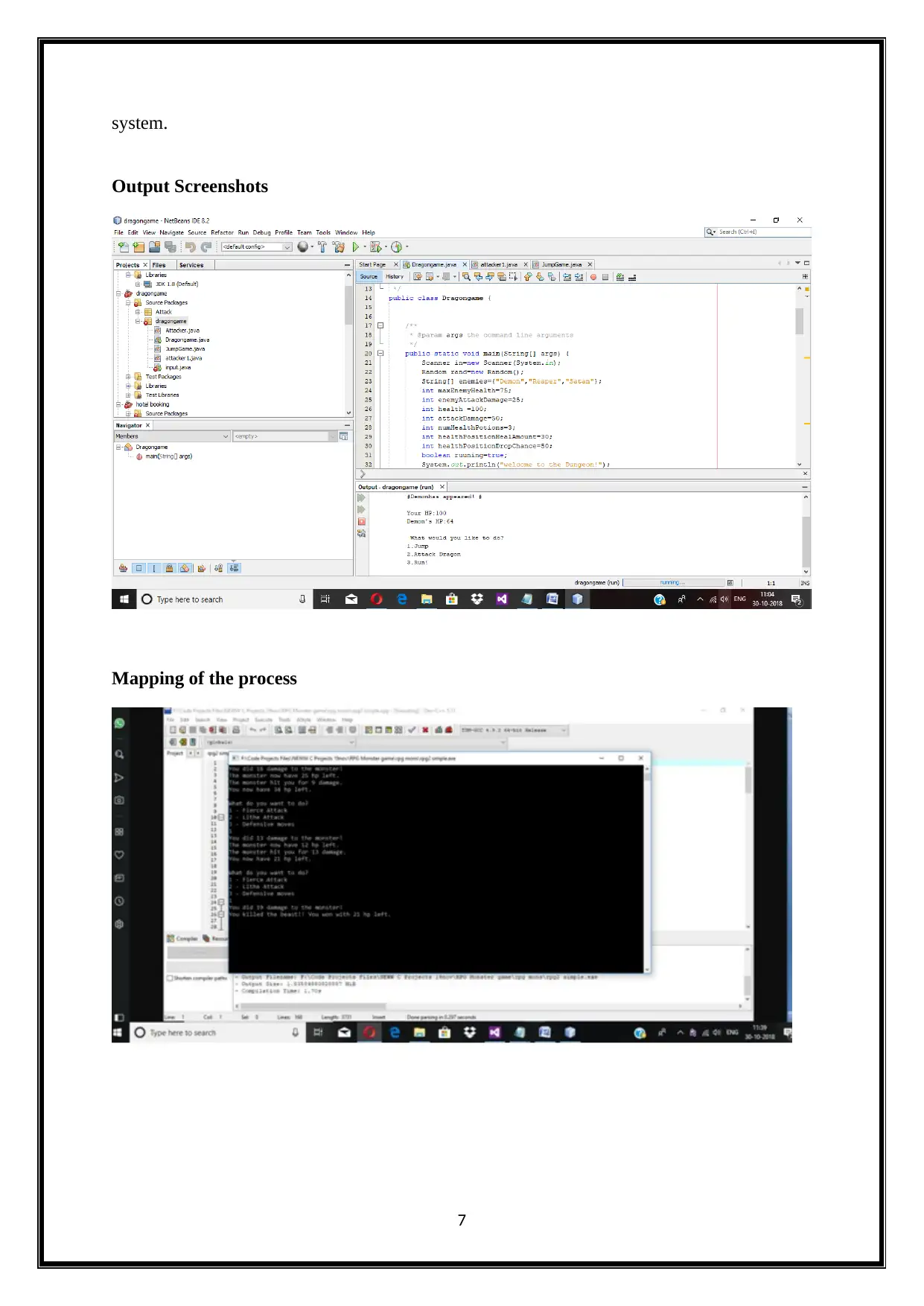
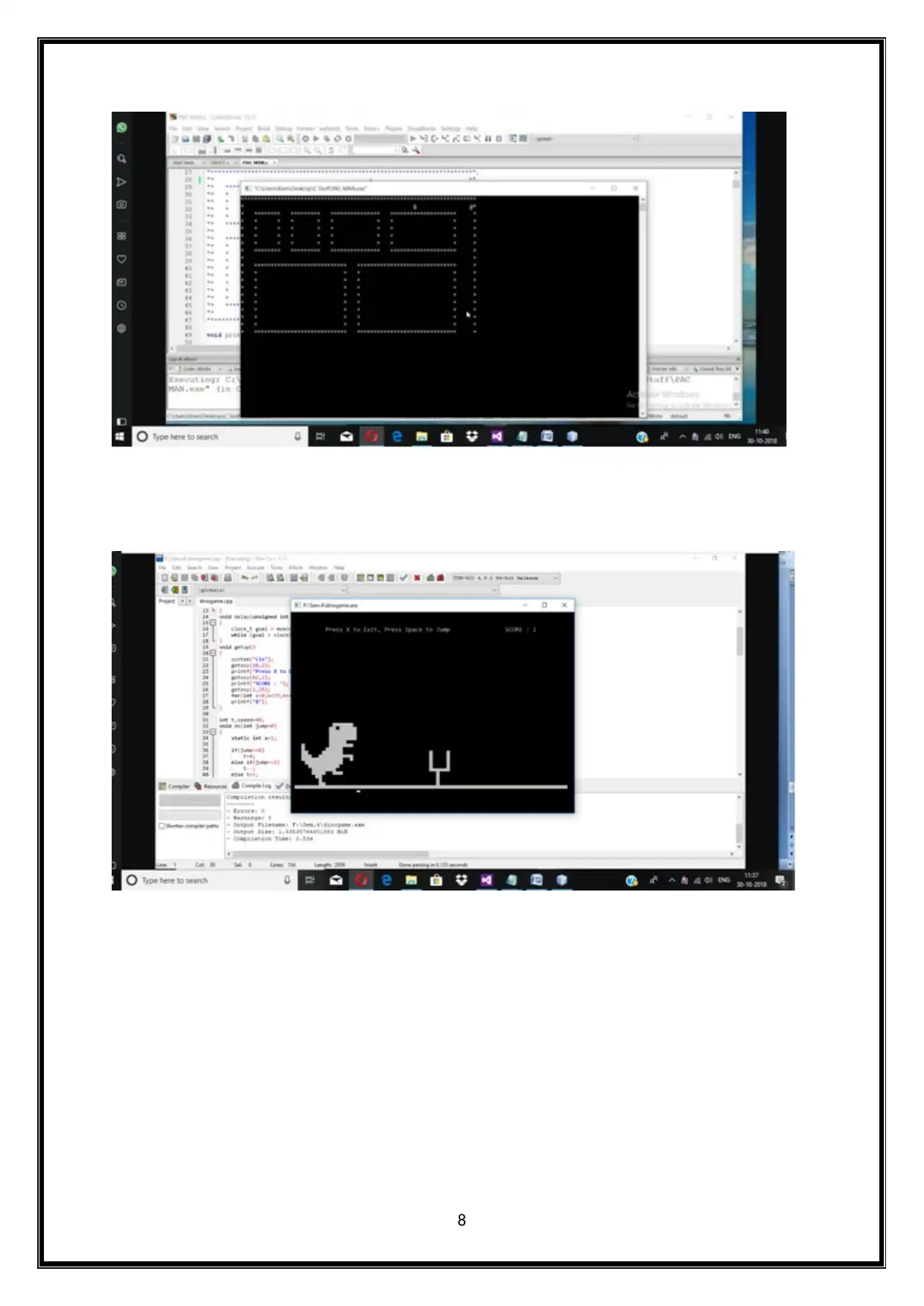
Output Screenshots
Mapping of the process
7
Output Screenshots
Mapping of the process
7
8
⊘ This is a preview!⊘
Do you want full access?
Subscribe today to unlock all pages.
Trusted by 1+ million students worldwide
References
Farrell, J. (2018). Java programming. Boston, MA: Cengage Learning.
Harold, E. (2014). Java network programming. Cambridge: O'Reilly.
Pandey, H. (2012). Java programming. New Delhi: Dorling Kindersley (India)/Pearson.
Prentice Hall. (2012). The Java Programming Language.
9
Farrell, J. (2018). Java programming. Boston, MA: Cengage Learning.
Harold, E. (2014). Java network programming. Cambridge: O'Reilly.
Pandey, H. (2012). Java programming. New Delhi: Dorling Kindersley (India)/Pearson.
Prentice Hall. (2012). The Java Programming Language.
9

1 out of 10


Related Documents


Your All-in-One AI-Powered Toolkit for Academic Success.
+13062052269
info@desklib.com
Available 24*7 on WhatsApp / Email
![[object Object]](/_next/static/media/star-bottom.7253800d.svg)
Unlock your academic potential
Copyright © 2020–2025 A2Z Services. All Rights Reserved. Developed and managed by ZUCOL.